Color is one of the easiest diamond qualities to overpay for and one of the hardest to judge from a grading report alone. A diamond can look bright and white in real life even when its grade is not the highest, while another stone with a higher color grade may look nearly identical once it is set in a ring.
That is why the Best Diamond Color Under a Budget is not simply the highest grade you can afford. It is the grade that gives you the whitest appearance for the least money, while still leaving room in your budget for the factors people usually notice first, such as cut, carat weight, and overall proportions.
Quick Answer: What Is the Best Diamond Color Under a Budget?
For most buyers, the best budget-friendly diamond color is usually in the near-colorless range, especially G or H. These grades often look white to the naked eye in everyday settings, especially once the diamond is set in jewelry.
If you want to spend even less, I and J can still be excellent value choices, particularly in yellow gold or rose gold settings, or in smaller diamonds where color is less noticeable. The best choice depends on the diamond shape, metal color, setting style, and how closely you expect to inspect the stone.
In practical terms, the smartest budget decision is often to stop paying for color once the stone looks white enough in your preferred setting. Beyond that point, the added cost usually brings very little visible improvement.
Why Diamond Color Matters to Budget Buyers
Diamond color refers to how much body color a diamond shows, usually measured on a scale from D to Z. In this grading system, D is the most colorless, and the grades become progressively warmer or more tinted as you move down the scale.
For most shoppers, color matters because it affects how white the diamond appears. A whiter-looking diamond often feels cleaner and brighter, especially in white gold or platinum. At the same time, diamond color is also one of the easiest qualities to spend too much on, because the visible difference between neighboring grades is often very small.
This is especially true in lab grown diamonds. Since lab grown diamonds are usually priced lower than natural diamonds, some buyers feel more comfortable choosing higher color grades. That can make sense, but it is still worth asking whether the upgrade creates a visible benefit or just a better number on the grading report.
How the Diamond Color Scale Works
The standard diamond color scale used by major grading labs runs from D to Z. The scale is based on how much yellow or brown tint is visible when the diamond is examined under controlled lighting against a white background.
D to F: Colorless
These are the highest color grades. They are graded as colorless, which means they show very little to no body color under laboratory conditions.
In real-world wear, D, E, and F diamonds usually appear very white. The difference between them is often extremely subtle, and most people will not be able to distinguish one from another without a side-by-side comparison.
G to J: Near-colorless
These grades are considered near-colorless. This is the range where many budget-conscious buyers find the best balance between appearance and price.
G and H diamonds often look very white to most people, especially when set in jewelry. I and J may show a slight warmth in some lighting or when viewed closely, but they can still look attractive and bright, particularly in settings that do not emphasize color.
K and below
Once you move below J, color becomes increasingly easier to notice. Some buyers prefer the warmer look, but if your goal is a white appearance on a budget, K and lower usually require more caution.
For this article, the most useful budget discussion is usually centered on G through J, since those are the grades where shoppers often find the best value.
What the Different Color Grades Actually Look Like
Grading terms can sound more dramatic than what you actually see. A diamond graded H is not visibly “off-color” in the way many people imagine, especially once it is mounted in a ring.
How G and H usually appear
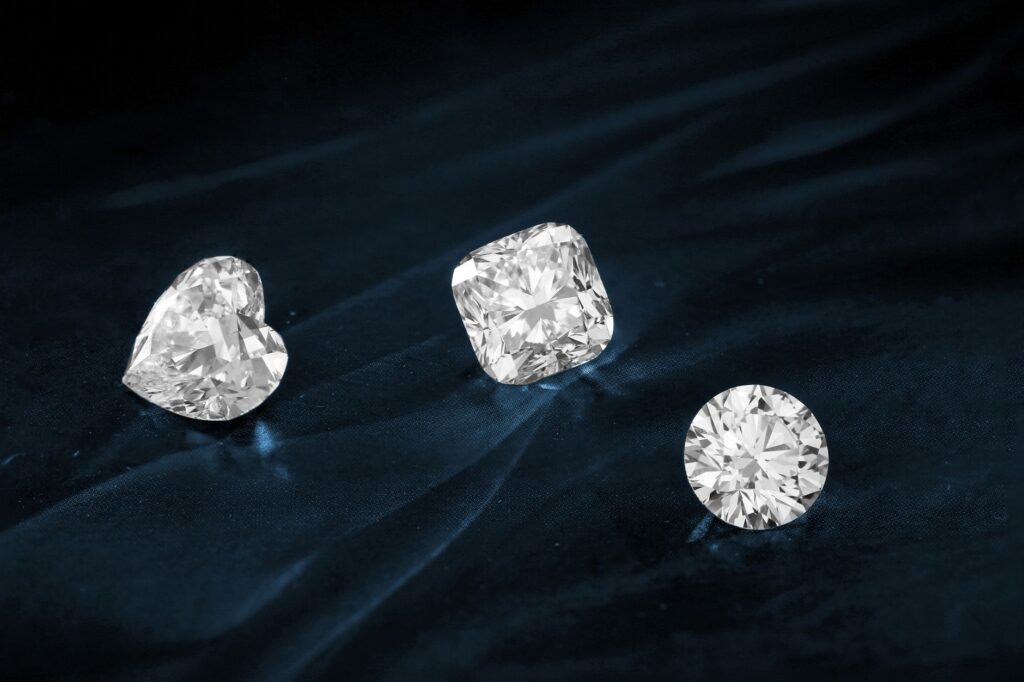
G and H diamonds are usually bright and white-looking in everyday conditions. Most consumers would describe them as white diamonds, not warm diamonds.
In a finished piece of jewelry, these grades often look very close to higher color grades. If you are shopping on a budget and want a stone that still appears clean and colorless to the eye, G and H are often the safest value range.
How I and J usually appear
I and J grades may show a faint warmth if you compare them directly against higher-color diamonds. That warmth is usually subtle, not obvious, and often depends on the stone’s size, cut, setting, and lighting.
Some buyers are perfectly happy with I or J because the savings can be meaningful. Others prefer the slightly whiter look of G or H. The right answer depends less on the grading chart and more on how much you care about a faint tint in everyday wear.
How D through F usually appear
Higher color grades are most noticeable when you place them next to lower grades. On their own, D, E, and F stones all look very white and very clean to most shoppers.
For buyers on a budget, the issue is not whether these grades are beautiful. They are. The issue is whether the additional cost produces a meaningful visual difference in your actual ring.
Can Most People See the Difference?
In normal shopping conditions, most people cannot reliably distinguish between adjacent diamond color grades. The difference between D and E, or between G and H, is often too subtle to notice without side-by-side comparison under controlled lighting.
This is why grading reports are helpful, but not always enough to guide a purchase. Color grade tells you where a diamond sits on a scale, but it does not always tell you how white it will look once set in a ring and seen from a normal viewing distance.
Side-by-side visibility
When diamonds are placed next to each other in controlled lighting, differences are easier to see. A trained gemologist may notice variation between several grades very quickly. A typical buyer usually notices only when the color gap is larger or when the lower-color stone is viewed next to a much whiter diamond.
This means a diamond may look perfectly white on its own and still rank lower on the grading scale. That is normal. It is also why a stone that is graded higher is not always a smarter value purchase.
Everyday visibility
In everyday wear, most people see a diamond from a short distance, often moving, and usually without direct comparison to another stone. Under those conditions, subtle color differences become much harder to detect.
For that reason, many buyers can safely choose a near-colorless diamond without feeling like they sacrificed visual quality. If the stone is well cut and set thoughtfully, the face-up appearance can still be very white.
Professional vs consumer perception
Diamond professionals are trained to notice small differences in color. That skill is useful for grading and evaluation, but it does not always match what consumers see in real life.
A buyer should not assume that a difference a grader can see will also be obvious to friends, family, or even the wearer. In most cases, the naked-eye difference is much smaller than the price difference.
How Diamond Shape Affects Color Visibility
Diamond shape plays a major role in how color appears. Some shapes hide color more effectively, while others make it easier to see warmth or tint.
Shapes that hide color well
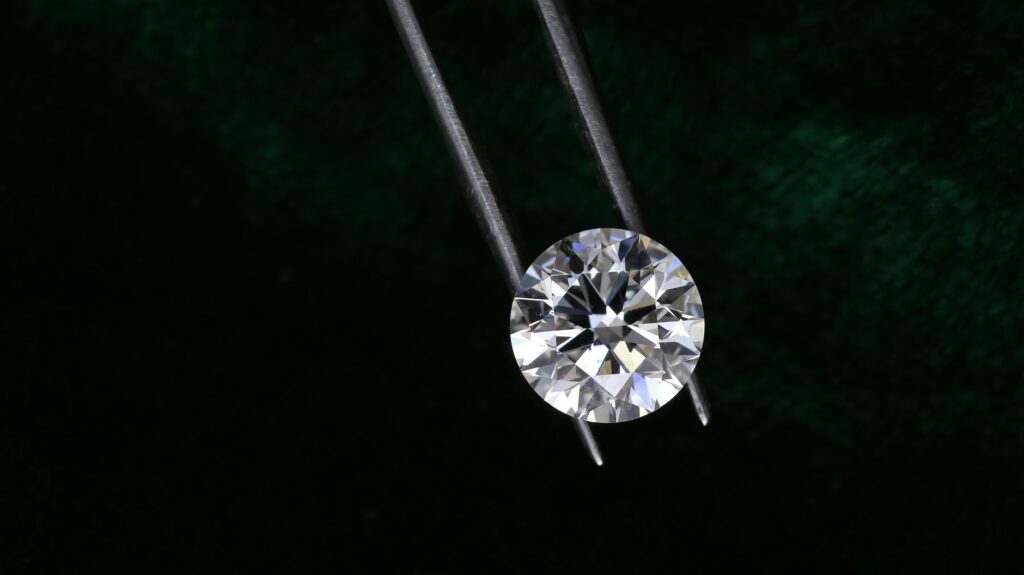
Round brilliant diamonds are often the most forgiving when it comes to color. Their faceting pattern creates strong sparkle and light return, which can help mask faint body color.
Many buyers can choose a slightly lower color grade in a round diamond and still get a very white appearance, especially in G through I.
Shapes that show color more easily
Fancy shapes such as emerald cut, Asscher, oval, pear, and marquise may reveal color more readily than rounds. These shapes either have larger open areas, long facet patterns, or less sparkle concentration in certain viewing angles.
That does not mean you need the highest grade in every fancy shape. It does mean you should be more careful when buying lower color grades, especially if you want a crisp white appearance.
Budget-friendly color choices by shape
If you are buying a shape that tends to show color, it can be worth spending slightly more on color and slightly less on carat weight. In contrast, with a round brilliant, you may be able to stay in the G to I range and still get excellent face-up color.
This is one reason there is no single best diamond color under a budget for every shopper. Shape changes the equation.
How Metal Color Changes the Way a Diamond Looks
The metal you choose can affect how much diamond color you notice. This is one of the most overlooked buying factors, especially for first-time shoppers.
White gold and platinum
White metals make color differences easier to evaluate because they reinforce the white appearance people want from a diamond. They also make faint warmth more noticeable in lower grades.
If you are setting a diamond in white gold or platinum, G and H often remain strong value choices. I and J can still work, but the stone may show a little more warmth, especially in larger sizes or step-cut shapes.
Yellow gold
Yellow gold can make a diamond appear whiter by contrast. This is why many buyers can choose a lower color grade in yellow gold without it looking obviously tinted.
If your goal is to save money, yellow gold is often the easiest setting color for choosing I or J without regret. In some cases, even K can look attractive if the design and stone proportions are right.
Rose gold
Rose gold also tends to soften the look of lower color grades. Its warm tone can make slight diamond warmth less noticeable.
For budget shoppers who like the look of rose gold, this metal can make a lower diamond color easier to live with. It is still important to evaluate the stone in the actual setting, not just on paper.
How Lighting Changes Diamond Color
Diamond color is not fixed in the way many buyers expect. It can look different depending on lighting conditions, background, and even the angle you are viewing it from.
Daylight
Natural daylight is one of the best places to judge a diamond’s color. It tends to show subtle tint more honestly than jewelry store lighting, which can be intentionally flattering.
In daylight, a higher color grade will usually look very clean, while lower grades may reveal a slight warmth more easily. Even then, the effect is often subtle rather than dramatic.
Indoor lighting
Standard indoor lighting can make diamonds look brighter or warmer depending on the bulb type. Cool LED lighting may enhance a crisp appearance, while warm bulbs can bring out a yellowish tone.
This is important because a diamond that looks perfectly white in one room may show a faint tint in another. Buyers should not rely on one lighting environment alone.
Jewelry store lighting
Stores often use bright, controlled lighting that makes diamonds sparkle and appear very white. That environment can reduce the visibility of color differences and make several grades look more similar than they do in everyday wear.
A diamond judged only under store lights may not tell the full story. It is better to think about how the stone will look at home, outdoors, and during daily wear.
Warm and cool lighting
Warm lighting can make lower color grades look slightly softer or more tinted. Cool lighting can make a diamond seem whiter, especially in the near-colorless range.
If you know where the ring will be worn most often, it helps to consider those lighting conditions. A diamond that looks great in one environment should still look acceptable in the places that matter most to the wearer.
Price Premium vs Visual Benefit
The central budget question is not just which diamond color is best. It is whether paying more for a higher grade creates a visible improvement that matters to you.
In many cases, the answer is only partially. The price difference between grades can be meaningful, but the visual difference may be small, especially after the diamond is set.
Where diminishing returns begin
Diminishing returns begin when you pay a noticeable premium for a change that most people cannot easily see. This often happens when moving from H to G, or from F to E, depending on the stone’s shape and setting.
For budget shoppers, this is the key concept. The higher you go on the color scale, the more you tend to pay for increasingly small visible gains.
When the premium may be worthwhile
Paying more for higher color can make sense if you want the best possible white appearance, you are choosing a shape that shows color easily, or you prefer a white metal setting and want peace of mind.
It can also make sense if you are buying a larger diamond, since color is often easier to see as carat weight increases. In those cases, moving up one grade may be more noticeable than it would be in a smaller stone.
When the premium is harder to justify
If the diamond is well cut, set in yellow or rose gold, and viewed mostly in normal daily conditions, the jump from H to F or from G to D may be hard to justify on budget grounds alone.
In that situation, many buyers are better served by using the savings for better cut quality, a slightly larger diamond, or a more balanced overall ring design.
Best Diamond Color Under a Budget by Buyer Type
There is no universal answer, but there are practical patterns that help buyers make smarter decisions. The right color grade depends on what you care about most.
If you want the whitest look for the money
Look first at G or H. These grades are often the strongest balance of appearance and price for buyers who want a white-looking diamond without paying a premium for the highest color grades.
For many people, this is the sweet spot. The diamond looks clean, but the price often stays far more manageable than D through F.
If you want maximum value and are color-sensitive but budget-conscious
Consider H or I, especially if the diamond is round, well cut, and set in a warm metal. These grades can offer strong visual performance without the cost of top-tier color.
This is often a practical choice for buyers who would rather allocate budget toward carat weight or setting design.
If you want to save as much as possible
Look at I or J, and evaluate them carefully in the intended setting. For many buyers, these grades still look attractive and white enough, particularly in yellow gold or rose gold.
This approach makes the most sense when budget is tight and the diamond is not unusually large or difficult to color-match.
If you are buying a larger stone
As carat weight increases, color can become more visible. In larger diamonds, it may be worth choosing a slightly higher color grade if you want a crisp white appearance.
In that case, a higher grade may be a smarter visual investment than it would be in a smaller stone.
Lab Grown Diamonds and Color: What Budget Buyers Should Know
Lab grown diamonds often give buyers more flexibility with color because they are usually priced lower than natural diamonds of similar size and quality. That means shoppers can sometimes choose a higher color grade without stretching the budget as much.
Still, the same basic rules apply. Color is about visible appearance, not just the grade on the report.
Why lab grown diamonds often come in higher colors
Lab grown production can often achieve high color grades more consistently than mined diamonds. For buyers, this can mean more access to D, E, F, or G color at a lower price point than many natural diamond options.
That said, higher availability does not automatically mean higher color is necessary. If a G or H lab grown diamond already looks white to you, paying more for D or E may not add much visible value.
Does color behave differently in lab grown diamonds?
Not in a way that changes the fundamentals. Color is still color, and the same visual principles apply. Shape, cut, lighting, and setting still influence how white the stone appears.
What does change is pricing. Because lab grown diamonds can be more affordable, some buyers choose to spend more on top color grades simply because the premium feels manageable. That can be reasonable, but it is still worth checking whether the added cost creates a real visual difference.
Is higher color worth it in lab grown diamonds?
Sometimes, but not always. Because lab grown diamonds often allow more room in the budget, a buyer may choose a colorless grade for personal preference, peace of mind, or a specific setting style.
However, from a value standpoint, many shoppers still find the best balance in the near-colorless range. If the goal is a white-looking diamond without overpaying, G or H often remains the strongest practical answer.
Common Mistakes Buyers Make When Choosing Diamond Color
Color shopping becomes easier once you understand the most common traps. These mistakes are often expensive because they lead people to pay for qualities they cannot actually see.
Overpaying for invisible upgrades
One of the most common mistakes is assuming that a higher grade always means a better-looking diamond. Sometimes it does, but often the visible difference is too small to justify the price jump.
Buyers can avoid this by asking a simple question: will I notice the improvement in real life, or only on the certificate?
Ignoring metal color
Another mistake is choosing a color grade without considering the setting metal. A diamond that looks fine in yellow gold may show more warmth in white gold, and vice versa.
Matching the color grade to the metal can help you save money or improve appearance without overspending.
Buying based only on the grading report
A grading report is important, but it does not replace an actual visual evaluation. Two diamonds with the same color grade can still look different because of cut, fluorescence, size, and shape.
That is why the best budget decisions usually combine grading information with real-world viewing whenever possible.
Assuming every buyer sees color the same way
Color sensitivity varies. Some people notice very slight warmth quickly, while others do not see it unless the difference is obvious.
If you are not especially color-sensitive, you may be able to save money by choosing a lower grade. If you are very sensitive, you may prefer to stay higher in the range and accept the added cost.
How Cut Affects the Way Color Is Perceived
Cut has a major influence on appearance, sometimes even more than color grade. A well-cut diamond returns more light and can look brighter, which may make faint color less noticeable.
This is why a slightly lower color grade in a well-cut stone can sometimes look better than a higher color grade in a poorly cut stone.
Why cut can mask subtle color
When a diamond is cut well, it reflects light efficiently. That sparkle and brightness can draw attention away from faint body color.
When a diamond is cut poorly, light leaks out instead of returning to the eye. A dull stone can make color easier to notice and reduce the overall whiteness of the diamond.
Budget tip: prioritize cut first
If your budget forces a trade-off, cut is often the first quality to protect. A well-cut G or H diamond will usually appear more attractive than a poorly cut D or E diamond.
For most buyers, that is a much more meaningful use of money than chasing the highest color grade.
Best Color Choices by Shape and Setting Style
Not every ring needs the same color strategy. Some combinations are more forgiving than others.
| Diamond Shape or Setting | Budget-Friendly Color Range | Why It Works |
|---|---|---|
| Round brilliant | G to I | Strong sparkle helps mask faint tint |
| Oval, pear, marquise | G to H, sometimes I | May show more color at the ends, so balance matters |
| Emerald cut, Asscher | F to H | Step cuts show body color more easily |
| Yellow gold setting | H to J | Warm metal helps lower grades look whiter |
| White gold or platinum | G to H, sometimes I | White metals make subtle color differences more noticeable |
| Smaller diamond | H to J | Color is generally less obvious in smaller sizes |
| Larger diamond | G to H, sometimes higher | Color becomes easier to see as size increases |
How to Decide Which Color Grade Is Right for Your Budget
The most useful way to shop is to start with your setting, shape, and budget, then choose the lowest color grade that still looks white enough for your preference.
That approach keeps the focus on what you actually see. It also helps prevent overspending on a grade that adds little visible improvement.
Ask yourself these questions
- Will the diamond be set in white metal or warm metal?
- Is the shape one that hides color well or shows it easily?
- Will the diamond be small, medium, or large?
- Am I very sensitive to warmth, or mostly focused on overall beauty?
- Would I rather spend more on color or on cut and size?
A simple budget rule
If you cannot clearly see the improvement with your own eyes, the color upgrade may not be the best use of your money. This is especially true if the upgrade forces you to compromise on cut or overall design.
For many buyers, the value sweet spot sits in the near-colorless range, where the diamond still looks white but the premium is more reasonable.
Frequently Asked Questions
Is G color diamond good enough?
Yes. G color is widely considered an excellent balance of whiteness and value. In most settings, it looks very white to the naked eye.
Is H color diamond worth it?
For many budget buyers, yes. H color often looks very similar to higher grades in real-world wear and can save money compared with colorless grades.
Can I buy I or J color and still get a white-looking diamond?
Yes, especially in yellow gold or rose gold, or in smaller stones. In white metals or larger sizes, you may notice a bit more warmth, but many buyers still find these grades attractive.
Should I pay more for D color?
Only if the difference matters to you personally. D color is top tier, but the visual improvement over G or H is usually small in everyday wear.
Does lab grown mean I should always choose higher color?
Not necessarily. Lab grown diamonds can make higher grades more affordable, but the same value question still applies. If a lower grade already looks white enough, that may be the better budget decision.
What color grade looks best in white gold?
G or H is often the sweet spot in white gold. It usually looks very white without the cost of top color grades.
What color grade looks best in yellow gold?
Yellow gold is forgiving, so H, I, and sometimes J can look excellent. The warm metal can make a lower color grade appear whiter by contrast.
Should I prioritize color over cut?
Usually no. Cut has a larger effect on sparkle and overall beauty. A well-cut diamond in a near-colorless grade often looks better than a higher-color diamond with poor cut quality.
Conclusion: The Best Diamond Color Under a Budget Is the One That Still Looks White in Real Life
The best diamond color under a budget is usually not the highest grade you can afford. It is the lowest grade that still looks white enough in the setting, shape, and lighting conditions that matter to you.
For most buyers, G and H offer the strongest mix of value and appearance. If you want to save more, I and J can still be smart choices, especially in warmer metals or less color-sensitive shapes. If your budget allows and you are especially focused on a crisp white look, higher grades can provide peace of mind, but the visual payoff is often smaller than the price increase suggests.
The most practical way to buy is to focus on what you will actually see every day. If the diamond looks white to your eye, performs well in its setting, and leaves room in the budget for strong cut quality, you are usually making a sound decision.