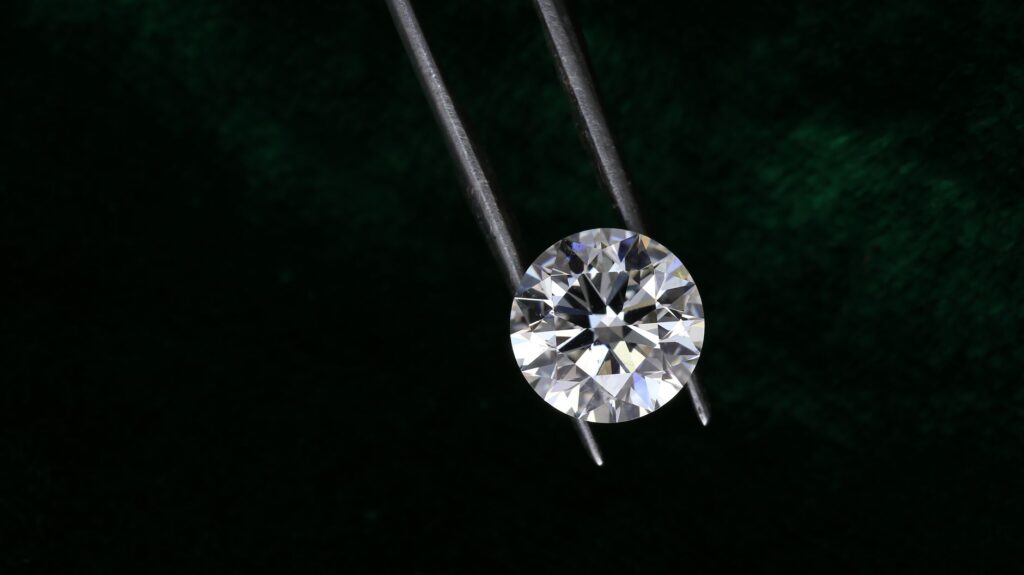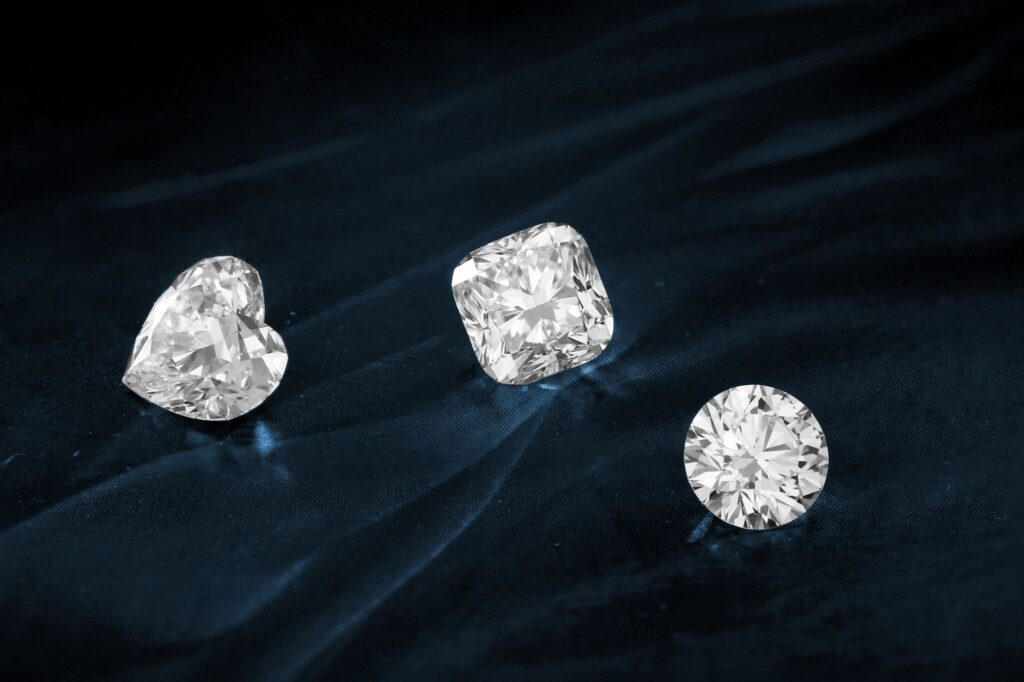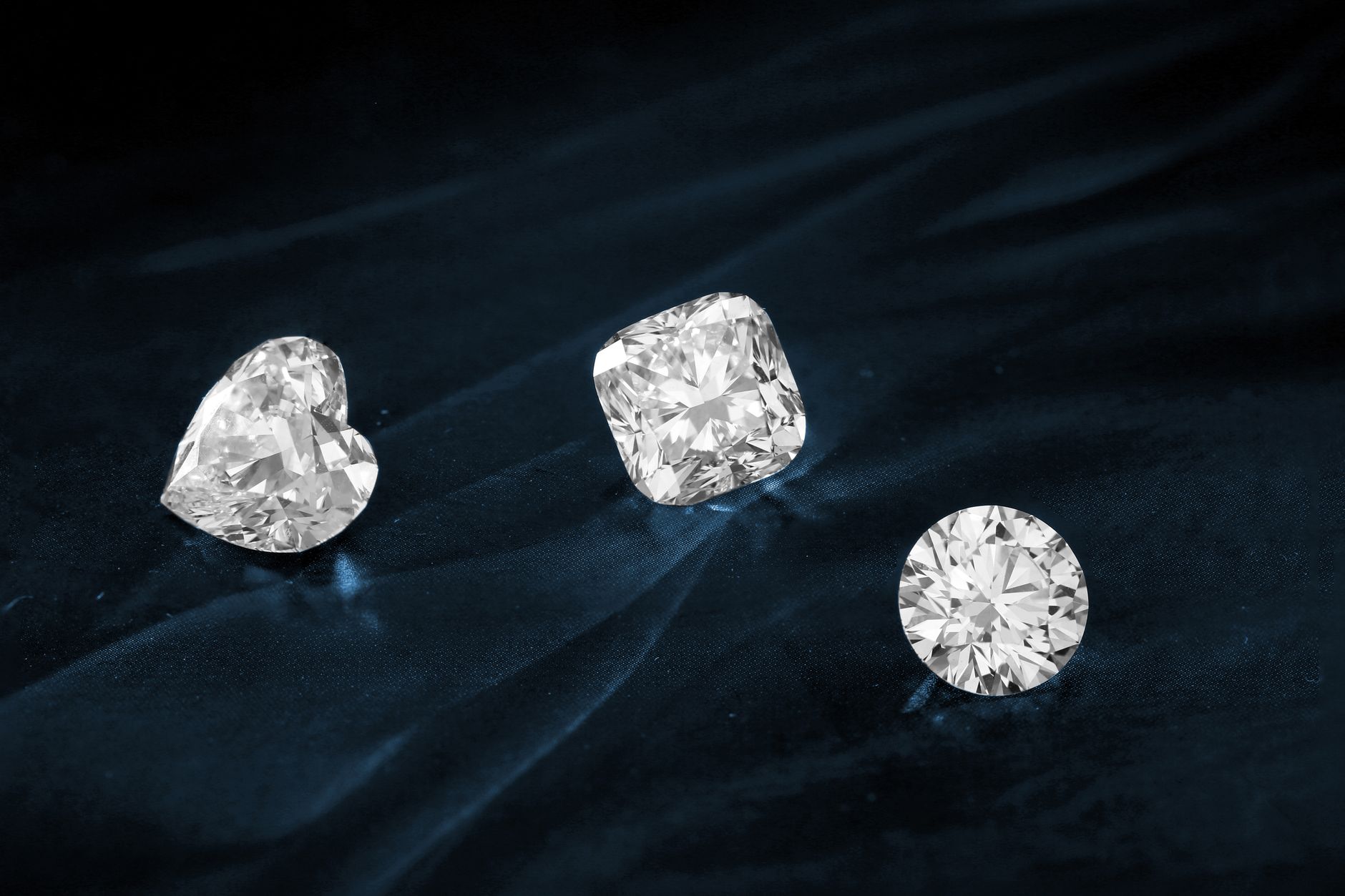
Hearts and Arrows diamonds are a specific type of round brilliant diamond known for unusually precise optical symmetry. They are discussed so often because the pattern is created only when proportions, facet alignment, and finishing all work together very closely. For buyers, the real question is not whether the pattern looks interesting under magnification. It is whether that level of precision creates a visible improvement in everyday sparkle and whether the added cost is justified.
If you are asking Are Hearts and Arrows Diamonds Worth It, the short answer is: sometimes, but not always. They can be worth paying more for if you want a round diamond with very consistent light performance and you value symmetry-related details. They are less compelling if your main goal is to maximize size for the budget, or if the premium is large enough that you could get a better overall diamond by spending that money elsewhere.
For many buyers, the value of a Hearts and Arrows diamond depends on whether the stone is truly well cut, not just marketed that way. The pattern can be a sign of excellent craftsmanship, but it is not a substitute for evaluating cut grade, proportions, and light performance. In other words, the label matters less than the actual visual result.
Quick Answer: Are Hearts and Arrows Diamonds Worth It?
Hearts and Arrows diamonds can be worth it when the premium is modest and the diamond has excellent overall cut quality. In that case, buyers often get a round diamond with strong brilliance, crisp scintillation, and a very balanced appearance. The improvement is real, but for many people it is subtle rather than dramatic.
If a Hearts and Arrows diamond costs much more than a comparably beautiful non-H&A diamond, the value becomes less clear. Most buyers will notice the overall sparkle more than the technical pattern, especially in normal lighting and at typical viewing distances. If you are choosing between a visibly better diamond and a diamond that simply carries the Hearts and Arrows label, the visibly better stone is usually the smarter purchase.
For shoppers evaluating lab grown diamonds, the same logic applies. A lab grown diamond can be Hearts and Arrows if it is cut with great precision. The fact that it is lab grown does not change the core buying question, which is whether the diamond’s appearance justifies the price.
What Hearts and Arrows Means
Hearts and Arrows, often shortened to H&A, refers to an optical pattern seen in some round brilliant diamonds when viewed with specialized tools. From one angle, the pattern looks like eight hearts. From another, it looks like eight arrows. This pattern appears when the facets are aligned with unusual precision.
It is important to understand that Hearts and Arrows is not a formal grading category like color or clarity. It is an optical pattern, and in practice it often indicates careful cutting and strong symmetry. However, not every diamond with a good cut grade shows a crisp Hearts and Arrows pattern, and not every diamond advertised as Hearts and Arrows is equally precise.
Why the pattern appears
Round brilliant diamonds are made of many small facets that reflect light back to the viewer. When the facet angles and alignments are very precise, the reflections form a highly organized pattern. That pattern is what gemologists and experienced diamond buyers recognize as Hearts and Arrows.
Because it depends on exact alignment, the pattern is most associated with round brilliant diamonds. It is not typically used as a standard descriptor for fancy shapes like oval, cushion, or emerald cuts, although those shapes can still have excellent cut quality and light performance.
What it does not mean
Hearts and Arrows does not automatically mean the diamond is the brightest or most beautiful diamond in every case. It also does not guarantee a high color grade, high clarity grade, or larger face-up size. A diamond can have a crisp H&A pattern and still be too small, too tinted, or too expensive for a particular buyer’s priorities.
That is why the phrase should be viewed as one piece of information, not the whole story.
Why Hearts and Arrows Diamonds Are Different
Most round brilliant diamonds are cut to look attractive face-up. Hearts and Arrows diamonds go a step further by aiming for unusually consistent facet precision. This means the diamond may show more balanced light return and a cleaner visual pattern when examined carefully.
Buyers often hear that H&A diamonds have “better sparkle.” That statement is only partly true. Sparkle comes from multiple factors, including cut proportions, polish, symmetry, and how the diamond interacts with light. Hearts and Arrows can support excellent sparkle, but it is not sparkle by itself. It is a sign that the diamond was cut with a high level of precision, which often helps optical performance.
Hearts and Arrows versus ordinary excellent cut
Many excellent round diamonds do not show a perfect Hearts and Arrows pattern. They can still be beautiful, bright, and highly desirable. The difference is that H&A diamonds tend to show a more refined and consistent facet structure when inspected closely.
For most buyers, the visual difference between a strong excellent cut diamond and a true Hearts and Arrows diamond is subtle, especially in store lighting or on the hand. A gemologist or trained buyer may notice the more orderly pattern and tighter symmetry. An everyday observer usually notices the overall sparkle, not the naming convention.
Understanding the Core Concepts
To judge whether a Hearts and Arrows diamond is worth the premium, it helps to understand a few terms that buyers hear constantly. These words are often used together, but they describe different parts of how a diamond looks.
Cut
Cut refers to how well a diamond’s proportions, angles, symmetry, and finish work together to return light to the eye. Among the major quality factors, cut has the biggest impact on a diamond’s visual beauty in round brilliant diamonds.
A diamond with strong cut quality can look brighter, livelier, and more balanced than a larger diamond with weaker proportions. This is one reason cut often matters more than people expect when comparing stones in person.
Symmetry
Symmetry describes how precisely the facets are arranged and aligned. In simple terms, it is about how neatly the diamond is constructed. Good symmetry helps create a clean, orderly reflection pattern and supports consistent light performance.
Hearts and Arrows is closely tied to symmetry because the pattern only appears when facet alignment is very precise. That said, symmetry alone does not guarantee great beauty if other factors are weak.
Polish
Polish refers to the quality of the facet surfaces after cutting. Smooth, well-polished facets allow light to pass and reflect more cleanly. Poor polish can reduce the crispness of sparkle, even if the diamond has good proportions.
Polish is often less visible than cut quality to an average buyer, but it still matters in the overall look of the diamond.
Light performance
Light performance is how well a diamond handles incoming light. It includes brightness, fire, contrast, and how efficiently light is returned to the viewer. Buyers usually experience light performance as sparkle and liveliness rather than as a technical concept.
Hearts and Arrows diamonds are often cut to support strong light performance, but the pattern itself is not a guarantee. The proportions still need to be right.
Hearts and arrows pattern
The hearts and arrows pattern is the visible result of exceptionally precise facet alignment in a round brilliant diamond. The pattern is normally seen only under special viewing conditions, not in everyday wear.
What matters most for most buyers is not the pattern itself, but whether the diamond looks bright, crisp, and attractive under real-world lighting.
What Buyers Actually See in Real Life
When a diamond is well cut, the main visible effects are brightness, sparkle, and a sense that the stone looks lively from different angles. Hearts and Arrows diamonds often perform well in these areas because the facet arrangement supports strong light return.
Still, the pattern itself is not usually visible in normal wear. You do not walk around seeing hearts and arrows from across the room. Instead, what you may notice is that the diamond looks balanced, crisp, and lively under different lighting conditions.
Sparkle, brilliance, fire, and scintillation
These terms are often used together, but they mean different things.
- Brilliance is the return of white light. It affects how bright a diamond looks.
- Fire is the flash of colored light you see when the diamond moves.
- Scintillation is the pattern of light and dark flashes as the diamond or viewer moves.
- Sparkle is the everyday word buyers use to describe all of these effects together.
A well-made Hearts and Arrows diamond can score strongly in all of these categories, but it is not automatically superior to every non-H&A diamond. Some non-H&A stones have outstanding light performance and are easier to buy at a better price.
Why the difference can be hard to notice
Most diamond viewing happens under jewelry store lighting, office lighting, or daylight. These environments can make many diamonds look impressive. The advantage of a Hearts and Arrows diamond is usually most meaningful when comparing two stones side by side under the same conditions.
If you are not comparing closely, the difference may be hard to isolate. This is one reason some buyers pay for the label without being certain they are getting a meaningful visual upgrade.
What happens in everyday wear
In daily life, most buyers notice a diamond as a whole, not as a list of technical traits. The stone either looks lively and clean or it does not. A Hearts and Arrows diamond can create a very refined appearance, but the improvement is usually in consistency and polish rather than a dramatic visual leap.
That is why the best way to judge it is not by the label alone, but by how the diamond looks when viewed face-up, moved slightly, and compared with alternatives.
How Hearts and Arrows Relates to Cut Quality
Cut quality is one of the most important factors in a diamond’s appearance. It describes how well the diamond’s proportions, symmetry, and polish work together to handle light. For round diamonds, cut quality has a huge impact on brightness and sparkle.
Hearts and Arrows is closely connected to cut quality because the pattern generally appears only when the diamond has been crafted with very high precision. However, it is not the same as a cut grade. A diamond can be graded Excellent by a major lab and still not be a classic Hearts and Arrows stone. It can also be a Hearts and Arrows diamond and still vary somewhat in overall beauty based on other factors.
Cut grade versus optical pattern
Cut grade is a broader evaluation. It considers how well the diamond is proportioned and finished according to a grading system. Hearts and Arrows is more specific. It tells you something about facet precision and symmetry.
Think of cut grade as the broad quality category and Hearts and Arrows as a sign of especially careful execution within that category. They overlap, but they are not identical.
| Factor | What it tells you | What buyers notice |
|---|---|---|
| Cut grade | Overall evaluation of diamond proportions, symmetry, and polish | Brightness, sparkle, and face-up appeal |
| Hearts and Arrows | Precise facet alignment and optical symmetry in round diamonds | Cleaner pattern, often refined light performance |
Cut grade is not the whole story
Even a top cut grade does not automatically tell you how a diamond will look in real life. A diamond can have excellent paper grades and still be less impressive than another stone with slightly different proportions. The eye sees light behavior, not just laboratory labels.
That is why serious buyers often combine grading reports with actual images, videos, or trusted visual inspection.
Why Hearts and Arrows Can Matter
There are several reasons buyers consider paying extra for Hearts and Arrows diamonds. The strongest reason is not prestige. It is the possibility of getting a diamond with exceptional symmetry and very consistent light performance.
For a buyer who wants a round brilliant diamond with especially refined optical behavior, this can matter. It may also matter to someone who appreciates craftsmanship and wants confidence that the diamond was cut with a high degree of precision.
Appearance
A well-cut Hearts and Arrows diamond can look balanced and lively from multiple viewing angles. The symmetry can create a sense of order in the stone’s appearance, especially when viewed by someone who knows what to look for.
In practical terms, the visual advantage is often modest but real. It is more about refinement than transformation.
Value
Value depends on the premium. If the price difference is small, the additional precision may be worthwhile for buyers who prioritize cut above all else. If the premium is large, the value case weakens, because the visual improvement may not be large enough to justify the cost for every shopper.
This is especially true when the extra money could buy a larger carat weight, a better color grade, or a diamond with stronger light performance in a non-H&A package.
Confidence in craftsmanship
Some buyers are comforted by the fact that a Hearts and Arrows diamond generally signals disciplined cutting. That does not mean every other diamond is poorly made. It simply means the H&A diamond was likely finished to a very precise standard.
For shoppers who value craftsmanship as much as visible performance, that can be a meaningful part of the purchase.
When Hearts and Arrows Is Worth Paying For
There are situations where paying more for a Hearts and Arrows diamond makes practical sense. The strongest case is when the premium is reasonable and the diamond is already strong in the other quality factors that matter to you.
Good reasons to consider it
- You want a round brilliant diamond with top-tier symmetry.
- You are comparing two similar stones and the H&A diamond has visibly better light performance.
- The price increase is modest relative to the total budget.
- You care about optical precision and craftsmanship.
- You are buying a diamond that will be examined closely, such as for an engagement ring where you want refined detail.
In these cases, the premium may be justified because you are paying for a real improvement in the diamond’s construction, not just a marketing term.
When the premium is usually less justified
The case is weaker if the H&A diamond costs significantly more than an equally attractive alternative. It is also less compelling if the rest of the diamond is not balanced. For example, a diamond with strong symmetry but mediocre color, clarity, or size may not satisfy the same buyer as a non-H&A stone with a better overall profile.
In short, Hearts and Arrows can be a fine feature, but it should not force you to compromise on the qualities you will notice most.
How Hearts and Arrows Affects Light Performance
Light performance is the way a diamond handles incoming light. This includes how much light is returned to the eye, how much is lost through the bottom of the stone, and how the reflections are organized across the face of the diamond.
Hearts and Arrows stones often perform well because precise facet alignment helps light return in a controlled and efficient way. This can produce crisp brightness and appealing contrast patterns. However, the presence of the pattern does not guarantee excellent light performance if the proportions are off in other ways.
Light leakage
Light leakage happens when light enters a diamond and escapes instead of reflecting back to the viewer. Buyers usually do not see light leakage as a technical issue. They see it as a diamond that looks dull, glassy, or less lively in certain areas.
Well-cut Hearts and Arrows diamonds often minimize noticeable leakage, but not every stone with the label is equal. A buyer should still review performance images, ideal scope images, or trusted vendor cut data when available.
Contrast and patterning
One advantage of precise symmetry is that it creates attractive contrast patterning. Contrast is the balanced mix of bright and dark areas that helps a diamond look lively rather than flat. Many buyers interpret this as sparkle, even if they cannot explain why the stone looks better.
This is one reason experienced observers often prefer diamonds with strong optical symmetry. The stone can appear more structured and visually dynamic.
Practical meaning for the buyer
For an everyday buyer, the most important result is not whether a diamond has perfect technical charts. It is whether the stone looks crisp in normal lighting and retains its liveliness when moved. Hearts and Arrows can support that look, but buyers should still judge the diamond as a whole.
Hearts and Arrows in Lab Grown Diamonds
Lab grown diamonds can absolutely be cut into Hearts and Arrows patterns. The growth method does not prevent optical symmetry. What matters is the cutting and finishing after the rough crystal is grown.
For buyers evaluating lab grown diamonds, the same principles apply as they do for natural diamonds. A Hearts and Arrows lab grown diamond may offer excellent beauty and precision, but the premium should still be measured against the actual visual improvement and the total price.
Why this can matter more with lab grown diamonds
Because lab grown diamonds often cost less than natural diamonds of comparable size and quality, buyers sometimes have room in the budget to upgrade cut precision. In some cases, a Hearts and Arrows lab grown diamond provides a very strong combination of beauty and value.
That said, lab grown pricing can vary widely based on brand, grading report, carat weight, and quality range. A H&A label should not be treated as automatically superior if the diamond is already overpriced in other respects.
Certification still matters
When buying lab grown diamonds, certification is still important. Look for a respected grading report that clearly states the diamond’s cut, color, clarity, and measurements. If the diamond is presented as Hearts and Arrows, try to confirm that the claim is supported by images, inspection notes, or vendor documentation rather than marketing language alone.
Buyers should be especially careful when a seller uses the Hearts and Arrows term as a premium-sounding description without offering visual proof. A good report helps, but supporting images are even more useful when you are comparing stones online.
Practical Comparison: Hearts and Arrows versus Non-Hearts and Arrows
A simple way to think about the difference is this. A Hearts and Arrows diamond is usually a round diamond with exceptional precision. A non-H&A diamond can still be beautiful, and in many cases the difference in everyday life is smaller than people expect.
| Category | Hearts and Arrows Diamond | Well-Cut Non-H&A Diamond |
|---|---|---|
| Sparkle | Often very crisp and balanced | Can still be excellent |
| Brilliance | Usually strong and even | Can be equally strong if cut well |
| Fire | Often attractive and well organized | Can be comparable |
| Scintillation | Frequently precise and lively | Can also be lively |
| Visible difference to most buyers | Subtle unless compared side by side | Subtle unless compared side by side |
| Value | Depends on premium | May offer better price efficiency |
The main takeaway is that H&A is a refinement, not a guarantee of superiority in every buying scenario. Many shoppers are happiest when they choose the diamond that looks best to them in person and fits their budget, regardless of the label.
Practical Examples Buyers Can Relate To
Real-world comparison is often the easiest way to understand whether Hearts and Arrows is worth it.
Example 1: A 1.5-carat Hearts and Arrows diamond versus a poorly cut 2-carat diamond
This is a common mistake scenario. Buyers see a larger diamond and assume it will look better. In reality, a poorly cut 2-carat diamond can look dull, uneven, or smaller than expected face-up because of cut inefficiency.
The 1.5-carat Hearts and Arrows diamond may appear brighter, more attractive, and sometimes even more impressive in person. That is because cut quality influences how much of the diamond’s visual size and sparkle are actually delivered to the eye.
Example 2: Excellent Cut versus Very Good Cut in everyday lighting
In normal lighting, the difference can be smaller than people think. A very good cut diamond can still look excellent if its proportions are strong. However, an exceptional Hearts and Arrows diamond may show slightly better contrast, more consistent reflections, and a more refined appearance when moved around.
Whether that justifies extra cost depends on how closely you inspect diamonds and how much you value those subtleties.
Example 3: Higher clarity with weaker cut versus lower clarity with stronger cut
Many buyers overpay for clarity because it sounds important. But if a diamond has excellent cut, light performance often masks small clarity differences that are not visible without magnification. A diamond with slightly lower clarity can look better to the eye than a cleaner diamond with poor cut.
This is one reason experienced shoppers often prioritize cut before clarity. A beautiful diamond is first and foremost a well-performing diamond.
Example 4: A premium label versus a better visual match
Sometimes a Hearts and Arrows diamond looks great on paper, but another diamond without the label has more appealing spread, brightness, or face-up size. In that case, the practical choice is often the diamond that gives you the better overall visual result, not the one with the more technical-sounding description.
What Experienced Jewelers Often Look For
Professional jewelers and diamond specialists do not rely on the Hearts and Arrows label alone. They usually look at the full combination of proportions, symmetry, polish, light return, and the diamond’s actual visual behavior.
They look for consistency
A true advantage of H&A diamonds is consistency across the stone. Expert observers often value the fact that each facet seems to work in harmony with the others. This can make the diamond feel more refined.
That consistency is one reason many jewelers regard Hearts and Arrows as a quality signal. It is not the only signal, but it is a meaningful one when supported by real performance.
They look for measurable performance
Measurements and grading reports help, but images matter too. Ideal scope or ASET-style images can reveal how a diamond handles light and contrast. These tools help confirm whether the diamond’s visual performance matches its labeling.
When those images are unavailable, buyers should be cautious about assuming that the Hearts and Arrows label tells the whole story.
They compare the stone, not just the report
Reports are useful, but the diamond itself is what you will wear. A diamond can have an appealing report and still fail to impress in person if proportions or optical behavior are not strong. That is why in-person review, video, and trusted images are often more useful than labels alone.
Experienced jewelers also know that the best-looking stone is not always the one with the most impressive terminology. It is the one whose light performance, size, and budget balance well together.
Advantages of Hearts and Arrows Diamonds
Hearts and Arrows diamonds have real strengths. These advantages are most meaningful when the diamond is genuinely well cut and the price premium is reasonable.
- Excellent symmetry: The facet alignment is usually very precise.
- Strong light performance: These diamonds often return light very efficiently.
- Refined appearance: The stone may look especially orderly and balanced.
- Useful quality signal: A crisp pattern can indicate careful craftsmanship.
- Appeal to detail-focused buyers: Some people value precision as much as size.
These benefits are real, but they are not automatic. A buyer still needs to confirm that the diamond’s overall performance is strong.
Disadvantages and Trade-Offs
Hearts and Arrows diamonds also come with trade-offs that buyers should understand.
Higher price
The most obvious drawback is cost. Precision cutting takes time, skill, and material planning, so these diamonds may be priced higher than more standard stones. If the premium is substantial, the buyer has to decide whether the extra refinement is worth the money.
Possible diminishing returns
At a certain point, improvements in cut precision become harder to notice without careful comparison. A diamond may be technically better, but the everyday visual difference can be small. This is especially important for buyers trying to maximize size or stay within a fixed budget.
Marketing confusion
Some sellers use Hearts and Arrows as a shorthand for quality without explaining what it actually means. That can lead buyers to assume they are getting a superior diamond in every sense. In reality, the label should prompt questions, not end them.
Not the best use of every budget
For some shoppers, a slightly smaller diamond with excellent cut and a better color or clarity balance may be the better choice. For others, the extra precision is worth it. There is no universal answer, only the best trade-off for your priorities.
In practical terms, the right choice depends on whether you value subtle refinement more than size or budget flexibility.
Common Buyer Mistakes
People shopping for diamonds often make the same mistakes when they focus too heavily on the Hearts and Arrows label.
- Assuming all Hearts and Arrows diamonds are equally good. They are not. Cut quality still varies.
- Prioritizing the pattern over overall performance. The pattern is useful, but the diamond must still look good.
- Overpaying for the label. A big premium is not always justified by a small visible improvement.
- Ignoring proportions and light leakage. These factors affect appearance more than the label alone.
- Choosing H&A instead of better overall balance. Size, color, clarity, and budget still matter.
- Assuming the pattern will be visible in daily wear. It usually will not be.
Another common error is assuming a branded or marketed “ideal” stone is automatically the best choice. Buyers benefit more from understanding actual diamond performance than from relying on a single term.
How to Evaluate Whether It Is Worth the Price
If you are deciding whether to pay extra for a Hearts and Arrows diamond, the most useful approach is to compare the premium against the likely visual benefit. The question is not whether H&A is good. It usually is. The question is whether it is good enough more to justify the extra cost for you.
Ask these questions
- Does the diamond have strong overall cut quality, not just the H&A label?
- Is the premium small enough to fit comfortably within my budget?
- Would I rather have a slightly larger diamond or a more precisely cut one?
- Am I comparing diamonds side by side, or just buying based on a description?
- Does the vendor provide images or performance data that support the claim?
If the answer to most of these questions supports the premium, the diamond may be worth it. If not, you may be better served by choosing a non-H&A diamond with excellent overall visual performance.
What to ask a seller
If a diamond is being marketed as Hearts and Arrows, ask whether the claim is supported by actual optical images, detailed measurement data, or an established brand standard. Ask how the stone performs in light and whether there are any trade-offs in color, clarity, or spread.
Those questions help separate a real precision-cut diamond from a generic marketing description.
Where Hearts and Arrows Fits in a Diamond Buying Strategy
For most buyers, cut should be one of the first quality factors evaluated. That is true for natural and lab grown diamonds alike. Within the cut discussion, Hearts and Arrows is a more specialized question about precision and symmetry.
A practical buying strategy is to prioritize these in order:
- Choose a shape that suits your preferences, usually round brilliant if H&A is important.
- Look for a strong cut grade and trustworthy documentation.
- Review visual performance, including brightness and contrast.
- Balance color, clarity, and carat weight against budget.
- Consider Hearts and Arrows as a refinement, not the starting point.
This approach helps prevent buyers from paying extra for a feature they do not actually notice later.
How this applies to round brilliant diamonds
Hearts and Arrows is most relevant when you are already shopping for a round diamond and you care about top-tier light performance. If you are considering a fancy shape, the buying process should focus more on that shape’s cut style and visible light return than on Hearts and Arrows terminology.
In other words, the concept is important, but it is shape-specific. The term is most useful when it matches the diamond type you are actually shopping for.
Frequently Asked Questions
Do Hearts and Arrows diamonds sparkle more?
They often sparkle very well because they are typically cut with high precision. However, sparkle also depends on proportions, polish, and the viewing environment. A well-cut non-H&A diamond can also sparkle beautifully.
Can only round diamonds be Hearts and Arrows?
In practice, the term is primarily used for round brilliant diamonds because the pattern is tied to that facet structure. Other shapes can have excellent cut and light performance, but they are not usually described as Hearts and Arrows in the same way.
Is Hearts and Arrows the same as ideal cut?
No. “Ideal cut” is a broad term that generally refers to top-tier cutting quality, while Hearts and Arrows refers to a precise optical symmetry pattern. Some diamonds can be both, but the terms are not identical.
Will I see the hearts and arrows pattern without magnification?
No, not in normal wear. The pattern is typically seen through special viewing tools or during close inspection. What you will notice in everyday use is the diamond’s overall appearance, not the pattern itself.
Are Hearts and Arrows diamonds better for engagement rings?
They can be a strong choice for engagement rings because round brilliant diamonds are popular and the pattern is associated with refined cut quality. Still, the best engagement ring diamond is the one that balances beauty, budget, and personal priorities.
Do lab grown Hearts and Arrows diamonds hold value better?
Not necessarily. Like most lab grown diamonds, resale value is usually limited compared with the original purchase price. Hearts and Arrows may help with appeal and visual quality, but it does not guarantee stronger resale performance.
Should I pay more for Hearts and Arrows or for larger carat size?
It depends on your priorities. If you want the most visually impressive diamond per dollar, a well-cut larger stone may be the better use of budget. If you care more about precision and refined appearance, a smaller Hearts and Arrows stone may be more satisfying.
How can I tell if a diamond is truly Hearts and Arrows?
Look for supporting evidence such as optical images, symmetry details, and a reputable seller who can explain the claim clearly. A marketing description alone is not enough. It is best to confirm that the stone’s actual pattern and performance match the label.
Bottom Line
Hearts and Arrows diamonds can be worth it, but only when the premium makes sense relative to the actual visual improvement. They are best understood as highly precise round brilliant diamonds that often deliver excellent light performance and refined symmetry. For buyers who value craftsmanship and want a top-quality round diamond, that can be a meaningful advantage.
At the same time, the label should not distract from the fundamentals. Cut quality, light performance, certification, color, clarity, and budget all matter. A non-H&A diamond with superior overall value may be the better buy, especially if the price gap is large.
The most practical approach is simple. Compare the diamonds in person or through trusted imaging, focus on what you can actually see, and pay for the features that matter most to your eyes and your budget. That is the clearest way to decide whether a Hearts and Arrows diamond is truly worth it.