H and I color diamonds sit in a useful middle ground that many buyers overlook. They are not in the top tier of the color scale, but they can still appear very white in the right setting, especially once a diamond is mounted in a ring. For shoppers trying to balance appearance and budget, the real question is not what the grading report says, but whether the color difference is actually noticeable in everyday wear.
The short answer is that H vs I Color Diamonds are usually very close in appearance, and the difference is often subtle enough that many people will not notice it without side-by-side comparison. In most normal viewing conditions, both grades can look bright and attractive, particularly in smaller stones or in settings that do not make color more obvious. The best choice usually depends on diamond shape, carat size, metal color, and how sensitive you are to slight warmth.
What H and I Color Mean
Diamond color is graded on a scale that starts with D, which is considered colorless, and moves downward through the alphabet as a faint yellow or brown tint becomes more noticeable. H and I sit in the near-colorless range. That means they are not fully colorless, but they are also far from noticeably tinted in many real-world situations.
In practical terms, the difference between H and I is a small step on the grading scale. H is the stronger option of the two because it sits one grade closer to colorless. I is slightly warmer, but that warmth is often very subtle unless the stone is viewed under controlled conditions or compared directly with a higher-grade diamond.
For buyers, the important point is that grading letters do not always translate into dramatic visual differences. A diamond’s cut, shape, size, and mounting can influence color visibility as much as the grade itself. That is why it helps to think about appearance rather than relying only on the letter printed on the certificate.
Quick Answer: Is H or I Better?
Neither grade is automatically better for every buyer. H color is the safer choice if you want a slightly whiter look and a little more flexibility in white metal settings. I color is often the better value if you want to save money and are comfortable with a small amount of warmth that may not be obvious in everyday wear.
If the stones are well cut, both H and I can look attractive and bright. In many engagement rings, the difference is minor enough that the setting, shape, and overall design matter more than the color grade alone. For buyers who are trying to maximize size or cut quality within a fixed budget, an I color diamond can be a smart trade-off.
What H Color Diamonds Actually Look Like
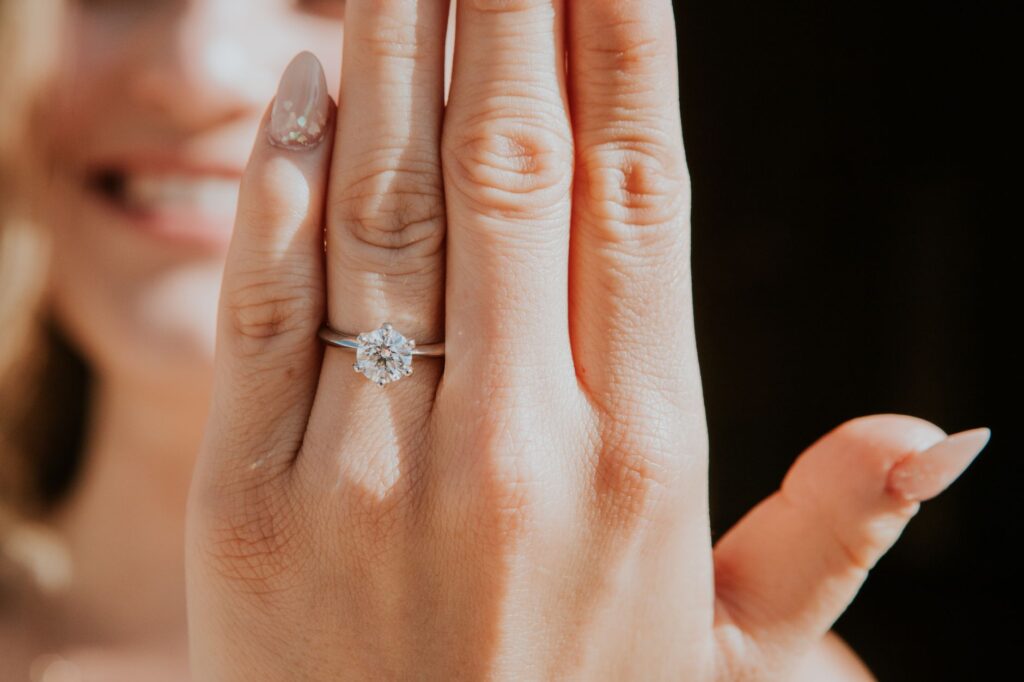
H color diamonds usually appear very white when viewed face up, especially once set in jewelry. Face up means looking at the diamond from the top, which is the normal angle people see in a ring. In this view, H diamonds often show only a faint trace of warmth, and many buyers would describe them simply as white.
The slight warmth in H color is more likely to show up when the diamond is compared side by side with D, E, or F color stones, or when it is viewed loose against a white background. Once mounted, the color can become less noticeable because the setting and surrounding metal affect how the eye reads the stone.
H is often considered a strong value point because it sits high enough on the scale to look white to most people, while avoiding the premium charged for top colorless grades. For many buyers, H is the point where the visible improvement from higher colors starts to become less important than the extra cost.
What I Color Diamonds Actually Look Like
I color diamonds are still near-colorless, but they may show a slightly warmer appearance than H when examined closely. In everyday use, that warmth is often mild, especially in well-cut stones and in smaller sizes. Many people would not notice the difference unless the diamond is placed next to a higher-color diamond for comparison.
The visual effect of I color depends heavily on shape and setting. In shapes that tend to show body color more easily, such as emerald cuts or elongated step cuts, the slight warmth of I may be more visible. In brilliant cuts, especially round brilliant diamonds, the sparkle can help mask color and make I look quite white.
I color is often chosen by buyers who want to improve value without moving into grades where tint becomes more obvious. It can be a practical choice, particularly in lab grown diamonds, where buyers may be able to afford a larger or better-cut stone by accepting a small step down in color.
Can Most People See the Difference Between H and I?
In normal wear, most people cannot easily tell H and I apart without direct comparison. The difference is real on paper, but it is usually subtle in the hand or on the finger. A consumer looking at one diamond at a time is far more likely to notice cut quality, sparkle, and size than a one-step color difference between H and I.
Side-by-side viewing is the key issue. If two otherwise similar diamonds are placed next to each other in strong lighting, H may look a touch brighter or whiter. I may appear slightly warmer. Even then, the difference is usually modest, not dramatic.
Professional graders work under controlled lighting and compare stones against master color stones. That is a very different experience from how a diamond is seen in a ring during daily life. Buyers should therefore be cautious about assuming that a report grade always reflects an easily visible difference.
What affects visibility most?
- Carat size: Larger diamonds tend to show color more easily.
- Cut quality: Better cut can make a diamond look brighter and whiter.
- Shape: Some shapes reveal color more than others.
- Metal color: White metals can make warmth easier to notice.
- Lighting: Warm and cool lighting can change how color appears.
How H vs I Looks in Different Diamond Shapes
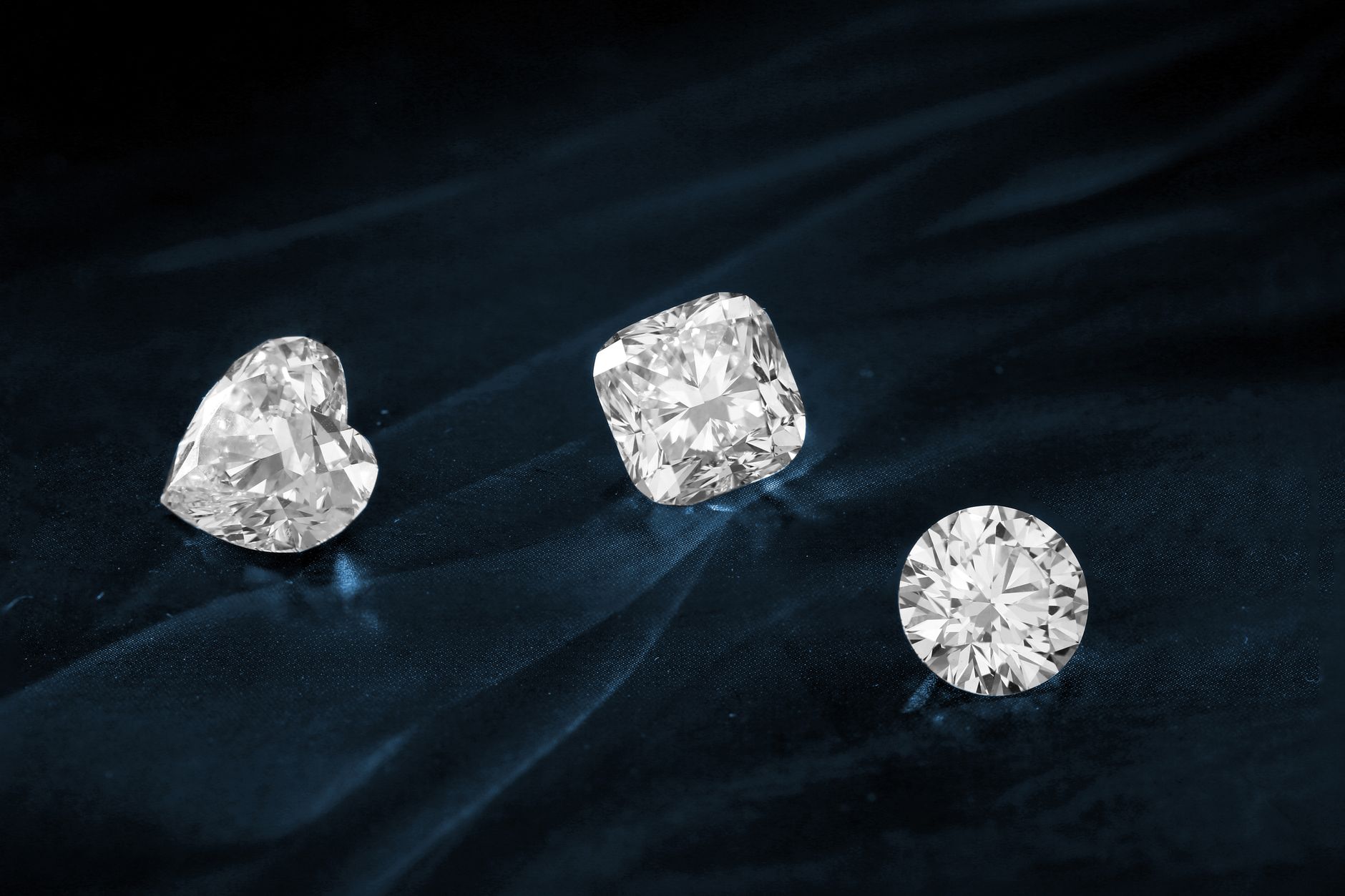
Diamond shape matters because not all cuts handle color in the same way. Brilliant cuts are designed to reflect light in a way that tends to disguise small amounts of body color. Step cuts and some elongated shapes are more transparent in their appearance, which can make color easier to see.
Round brilliant
Round brilliant diamonds are the most forgiving when it comes to color. Their strong sparkle and light return help H and I both look bright and white in many settings. For this reason, buyers can often choose I color in a round diamond without noticing much warmth in normal wear.
Oval, cushion, pear, and radiant
These shapes can vary more, but many still hide color reasonably well. Radiant cuts are especially good at masking tint because of their faceting style. Oval and cushion diamonds may show a little more warmth near the edges or along the body, but the difference between H and I is still usually subtle.
Emerald and Asscher cuts
Step cuts such as emerald and Asscher tend to show more of the diamond’s interior. That means color is often easier to detect. In these shapes, H may offer a better balance if the buyer wants a crisp white appearance, while I may be acceptable if the buyer is comfortable with a soft, slightly warmer look.
How Metal Choice Changes Color Perception
The metal around the diamond can influence how white or warm it appears. This matters because many buyers focus only on the diamond grade and forget that the setting changes the visual result. A diamond that looks perfectly white in one metal may appear slightly warmer in another.
White gold and platinum
White gold and platinum can make color differences easier to notice because they create a cooler, whiter frame around the stone. In these settings, H color usually looks very clean, and I color may still look white but can show a hint of warmth in certain lighting. This is most noticeable in larger stones or in shapes that reveal more body color.
Yellow gold
Yellow gold is more forgiving of near-colorless diamonds. The warm tone of the metal naturally blends with slight warmth in the diamond, which can make both H and I look white by comparison. Buyers who prefer yellow gold can often choose I color with confidence if they want better value.
Rose gold
Rose gold also tends to soften the appearance of small color differences. Its warm tone can complement H and I color diamonds very well. For buyers who like this metal, I color can be a very practical choice because the setting does some of the visual work.
How H vs I Looks in Different Lighting
Lighting has a major impact on diamond color perception. A stone can look brighter in one environment and slightly warmer in another, even though the diamond itself has not changed. This is one reason why buyers can be surprised when a diamond looks different at home than it did in a store.
Daylight
Natural daylight tends to reveal color more honestly than many indoor lights. In daylight, H and I can both look white, but I may show a bit more warmth if the stone is larger or less well cut. The difference is usually still subtle unless the diamond is viewed loose and compared directly with a higher color grade.
Indoor lighting
Most indoor lighting, especially in homes and offices, is less revealing than daylight. Under these conditions, H and I often look quite similar. Sparkle and brightness usually draw more attention than body color.
Jewelry store lighting
Jewelry store lighting is often designed to maximize sparkle and make diamonds look lively. It can make both H and I appear very attractive, but it may also reduce the buyer’s ability to see small differences in color. This is one reason it is helpful to ask to compare stones under more than one lighting environment if possible.
Warm household lighting
Warm lights can make diamonds look slightly more yellow or creamy than they are in daylight. Because of that, I color may show more warmth in a room with soft warm bulbs. H may also pick up some warmth, though usually to a lesser degree.
Cool lighting
Cool, bluish lighting can make diamonds appear whiter. Under this type of light, the difference between H and I may become even harder to detect. This is useful to know because many people spend most of their time under mixed indoor lighting rather than under laboratory-style viewing conditions.
Price Premium vs Visual Benefit
The price difference between H and I is real, but the visual difference is often modest. That creates a classic diamond buying question: is the extra money for H actually buying a noticeable improvement? In many cases, the answer is only somewhat, and sometimes not much at all.
Higher color grades command higher prices because they are rarer and are perceived as more desirable. But rarity does not always mean visible value for every buyer. Once a diamond is in the near-colorless range, the price jumps can be less about what the eye easily sees and more about what the grading scale says.
This is where diminishing returns become important. Moving from a noticeably warm diamond into H can be a meaningful improvement. Moving from H to I is usually a much smaller change, especially in well-cut stones. For buyers on a budget, that means I can offer a better balance of price and appearance.
| Factor | H Color | I Color |
|---|---|---|
| Overall appearance | Very white, slightly stronger face-up appearance | Very white in many settings, slightly warmer |
| Visibility of tint | Usually subtle | Still subtle, but a little more likely to show |
| Best in white metals | Excellent | Very good, especially in smaller sizes |
| Best in yellow or rose gold | Strong choice | Very practical choice |
| Price | Usually higher | Usually lower |
| Value focus | Whiter look with moderate premium | Better budget efficiency |
When H Color Makes Sense
H color can be a smart choice if you want a little extra confidence that the diamond will look white in a wide range of situations. It is often a comfortable middle point for buyers who do not want to think much about warmth or about how the setting might affect appearance.
H can also make sense for larger diamonds, where color becomes easier to see. As carat size increases, the center of the diamond can show body color more clearly. In those cases, moving one step higher can be worthwhile if you prefer a cleaner look.
Buyers choosing white gold or platinum often lean toward H because it pairs well with cooler metals. That does not mean I is a poor choice, only that H provides a bit more margin if the buyer is sensitive to color.
When I Color Makes Sense
I color often makes sense for buyers who want strong value and do not want to pay extra for a difference that may be difficult to see. If the diamond is well cut, I can still appear bright and attractive, especially once it is mounted. The visual trade-off is usually modest.
I is also a practical choice in yellow or rose gold, where slight warmth is less likely to stand out. For buyers who like the look of a warmer metal anyway, I can be an especially efficient use of budget.
In lab grown diamonds, where shoppers often compare size, cut, and color together, I can be a sensible way to keep overall cost down while still purchasing a stone that looks quite white. This is particularly relevant when the budget is being stretched to improve carat weight or cut quality.
Who Should Upgrade to H?
Paying more for H color may be justified for buyers who are highly color-sensitive or who want a slightly safer choice in white metals. It can also be worthwhile for larger diamonds and for shapes that tend to reveal more body color. In those situations, the extra cost may buy peace of mind as much as visible improvement.
H may also be the better option if the diamond will be compared often against higher-color stones. Some buyers know they want a noticeably whiter appearance and do not want to wonder whether the diamond is warm in certain lights. For them, H can be a comfortable middle ground.
Who Can Save Money with I?
Buyers who want the best value per dollar often do well with I color. If the diamond is well cut and not unusually large, I can still look very clean to the eye. This makes it attractive for shoppers who care more about overall appearance than about chasing a higher letter on the report.
I can also be a smart choice for buyers who prefer yellow gold or rose gold. In those settings, the small warmth of I is less likely to matter. If the goal is to maximize size or cut quality within a fixed budget, stepping down from H to I may free up meaningful money for a better overall ring.
Common Buyer Mistakes
One of the most common mistakes is paying for a higher color grade without considering whether the difference will actually be visible. Buyers sometimes focus on H versus I in isolation and forget that cut quality, shape, and setting can matter more. A poorly cut H can look less impressive than a well-cut I.
Another mistake is ignoring the metal color. White metals can make color more noticeable, while yellow and rose gold can soften the impact of a slightly warmer stone. Choosing a diamond color without considering the setting can lead to unnecessary spending or avoidable disappointment.
A third mistake is assuming all color differences are equally easy to see. They are not. The jump from a visibly tinted stone to a near-colorless diamond is much easier to notice than the jump from H to I. Buyers should keep the size of the change in perspective.
Finally, some shoppers rely too heavily on the grading report alone. The report is important, but it does not show sparkle, face-up brightness, or how the diamond interacts with its setting. Real-world appearance always matters.
H vs I Color in Lab Grown Diamonds
Lab grown diamonds often give buyers more color flexibility because they are typically priced lower than natural diamonds of similar appearance. That means some shoppers can choose higher color grades than they might otherwise afford. Still, H and I remain relevant because the goal is not always to buy the highest grade, but to buy the best overall diamond for the budget.
Lab grown diamonds can be found in a wide range of color grades, and many are produced in higher color ranges because of how they are created and sorted. Even so, near-colorless grades like H and I are common and can offer strong value. The same visual principles still apply: cut, shape, and metal choice affect how much warmth is actually seen.
Some lab grown buyers expect the diamond to look perfectly colorless simply because it is lab created. That is not always necessary. A well-cut I color lab grown diamond can still appear bright and attractive, especially if the goal is to allocate more of the budget toward size or clarity.
One practical difference in lab grown diamonds is that buyers often compare more stones within a tighter price range. That can make the H versus I decision feel more relevant, because the budget savings may be large enough to influence carat size or setting quality. In that case, I can be a sensible value move without creating a noticeable visual compromise.
How to Decide Between H and I
The best way to decide is to think about what matters most to you when you look at the ring. If your priority is a slightly whiter appearance and a little more comfort in white metals, H is the safer choice. If your priority is value and you are comfortable with a tiny bit more warmth, I is often enough.
It also helps to ask how the diamond will actually be worn. A diamond set in yellow gold, worn in mixed lighting, and chosen for strong cut quality may make the H versus I difference almost irrelevant. A larger round diamond in platinum may make the difference slightly more visible, which could justify H for some buyers.
As a practical rule, many buyers should think of H and I as adjacent options rather than dramatically different ones. The choice is usually less about right or wrong and more about where you want to spend your money.
What Matters More Than Color Grade?
For many buyers, cut quality matters more than the small gap between H and I. Cut affects sparkle, brightness, and the way the diamond returns light. A well-cut diamond often looks whiter and more attractive because it handles light more effectively.
Carat size also matters because color becomes easier to notice in larger stones. Clarity matters too, though mostly for visibility of inclusions rather than color. Shape and setting round out the picture. In real buying decisions, these factors often have more impact than one step of color grade.
If you are comparing several diamonds, it can help to rank priorities in this order: cut, size, color, and clarity, though the exact order may vary by buyer. That approach usually leads to better value than chasing a higher color grade at the expense of the overall appearance.
Frequently Asked Questions
Does H color look white?
Yes, H color usually looks white to most people, especially once the diamond is set in jewelry. It is near-colorless, so any warmth is generally subtle rather than obvious.
Does I color look yellow?
No, I color does not usually look yellow in a way most buyers would describe as yellow. It may show a slight warmth, but in many settings it still appears white or nearly white.
Is H better than I for an engagement ring?
H is a little whiter than I, so it can be better if you want a safer option in white metal settings. But I can be a better value if you want to save money and the slight warmth does not matter to you.
Will H and I look different to the naked eye?
Sometimes, but usually only a little. Side-by-side comparison can reveal the difference, but in everyday wear many people will not notice it.
Which looks better in platinum?
H generally pairs more easily with platinum because it is slightly whiter. I can still look very good, but platinum may make subtle warmth a bit more visible.
Which looks better in yellow gold?
Both can look good in yellow gold, but I color is often a particularly practical choice because the warm metal helps soften any slight tint.
Is I color okay for a round diamond?
Yes, I color is often very suitable for a round brilliant diamond because the cut tends to mask color well. In many cases, the diamond will still look bright and white in normal viewing.
Should I pay more for H in a lab grown diamond?
Only if you specifically want a slightly whiter appearance or are buying a larger stone in a white metal setting. If value matters more, I can be a sensible choice in lab grown diamonds.
Conclusion
H vs I color diamonds are close enough that the difference is often less important than buyers expect. H is a little whiter and may offer more comfort in white metal settings or larger stones. I is usually the stronger value choice and can still look very white in many real-world situations.
The most useful way to think about the comparison is not “which one is best” but “which one offers the right balance for my ring, setting, and budget.” In many cases, the answer will depend more on shape, cut, and metal color than on the one-step difference between H and I. For buyers who want a practical near-colorless diamond, both grades can be smart choices when evaluated in context.