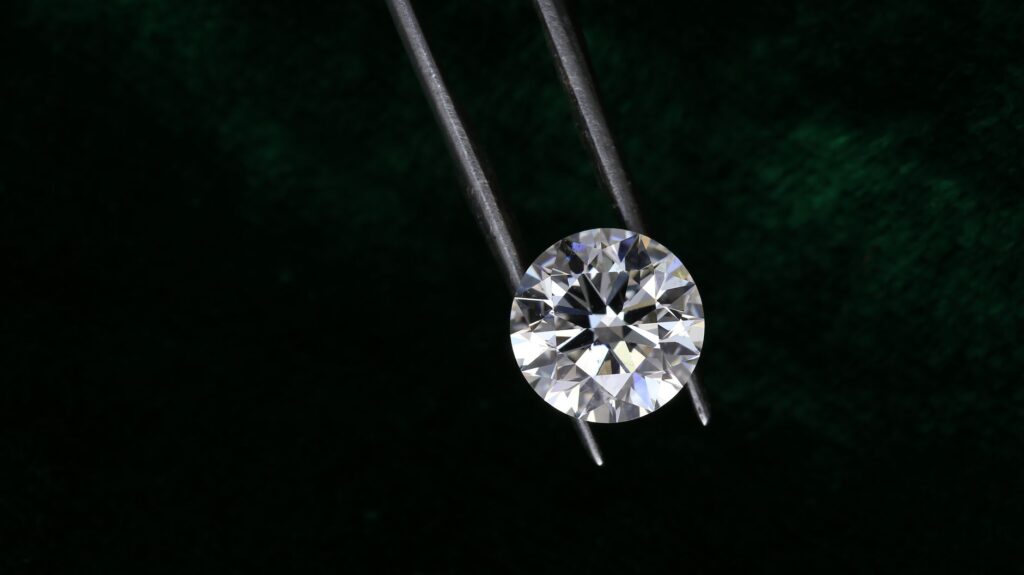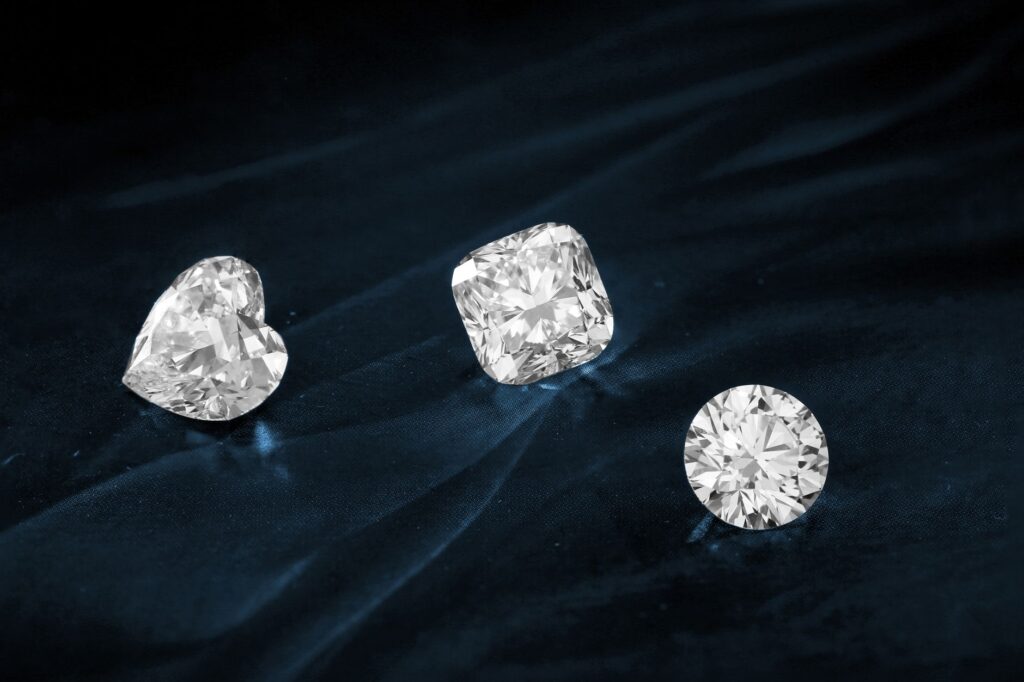
When comparing Very Good Cut vs Good Cut Diamonds, the real question is not which grade sounds better on paper, but which diamond will actually look better once it is set in a ring and viewed in normal lighting. Cut affects how much light a diamond returns to your eye, which influences sparkle, brightness, fire, and overall beauty.
For many buyers, the difference between Very Good and Good cut is subtle at first glance, but it can become more noticeable when you compare diamonds side by side, especially in larger stones or under brighter lighting. In practical terms, a Very Good cut diamond usually offers stronger visual performance, while a Good cut diamond can still be attractive and may cost less.
If you are shopping for an engagement ring or comparing lab grown diamonds, understanding this difference can help you avoid paying more for appearance you may not actually notice. It can also help you decide when a lower cut grade is acceptable and when it is worth upgrading for better light performance.
Quick Answer: Very Good Cut vs Good Cut Diamonds
Very Good cut diamonds usually look brighter, more balanced, and more lively than Good cut diamonds. The difference is not always dramatic, but it is often visible in how evenly the diamond reflects light and how much sparkle it produces in everyday conditions.
Good cut diamonds can still be appealing, especially if the price is meaningfully lower or if the stone is smaller. However, a Good cut diamond is more likely to show minor inefficiencies in light return, which can make it appear a little less lively than a Very Good cut diamond of similar size, color, and clarity.
For most buyers, the best choice depends on budget and priorities. If visual performance matters most, Very Good is usually the safer choice. If you are trying to maximize size or stay within a budget, Good can be a practical compromise, especially if the diamond still has favorable proportions and strong certification.
What Diamond Cut Grade Really Means
Diamond cut is one of the most important quality factors because it controls how light moves through the stone. A diamond does not sparkle simply because it is a diamond. It sparkles because light enters, reflects internally, and returns through the top of the stone in a way that the eye finds bright and attractive.
Cut grade is not just about shape. It refers to how well the diamond has been proportioned and finished, including factors like table size, depth, pavilion angle, crown angle, symmetry, and polish. These details influence the diamond’s ability to return light efficiently.
That is why cut often has more impact on a diamond’s real-world appearance than many buyers expect. A well-cut diamond can appear more beautiful than a larger diamond with poorer cut quality, even if the larger stone has a higher carat weight.
Why cut is different from carat, color, and clarity
Carat tells you the diamond’s weight. Color describes how much visible tint is present. Clarity refers to internal features and surface marks. Cut, on the other hand, affects how all those traits actually look to your eye.
For example, a diamond with excellent clarity can still look dull if the cut is weak. Meanwhile, a slightly included diamond with excellent cut may appear more vibrant because the sparkle draws attention away from small clarity characteristics.
Very Good Cut vs Good Cut Diamonds: Side-by-Side Comparison
The easiest way to understand this comparison is to look at how each grade tends to perform in real life. Different labs use slightly different standards, but the general buying experience is similar.
| Feature | Very Good Cut | Good Cut |
|---|---|---|
| Brightness | Usually strong and even | Often good, but may be a little less lively |
| Sparkle | Typically more consistent and noticeable | Can still sparkle well, but may be less crisp |
| Fire | Generally better color flashes in favorable lighting | May show slightly less fire |
| Scintillation | Usually sharper contrast and more appealing movement | Can look a bit softer or less dynamic |
| Light return | More efficient on average | Good, but not as optimized |
| Visual difference | Often noticeable when compared directly | Often acceptable in isolation |
| Value | Often worth paying a bit more for many buyers | Can offer savings if appearance is still strong |
The important point is that both grades can produce a beautiful diamond. The difference is usually about refinement and consistency, not a complete shift from good to bad. The more important question is whether the price difference is justified by the visible improvement.
How Diamond Cut Affects What You Actually See
Buyers often hear the word “sparkle,” but cut affects several different visual effects. Understanding these helps you judge whether a diamond looks lively, balanced, and appealing in daily wear.
Brightness
Brightness is the white light a diamond reflects back to the eye. A well-cut diamond tends to look bright across its face, while a weaker cut may show dark or dull areas that reduce the sense of life in the stone.
In a Very Good cut diamond, brightness is often more even and pleasing. In a Good cut diamond, brightness may still be strong, but the light pattern can be slightly less efficient, especially if proportions are less ideal.
Fire
Fire refers to flashes of colored light, usually seen when the diamond moves under lighting. It is caused by dispersion, which is the splitting of white light into spectral colors.
Very Good cut diamonds often handle fire better because they are proportioned to return light in a more effective way. Good cut stones can still show fire, but the effect may be less pronounced or less consistent.
Scintillation
Scintillation is the pattern of sparkle and contrast you see when the diamond moves. It includes the flashes of light and dark that create visual “life.”
This is one of the areas where small cut differences can become noticeable. Very Good cut diamonds usually create more attractive scintillation, while Good cut diamonds may appear a bit less sharp or dynamic.
Light return
Light return is the diamond’s ability to send light back to your eye instead of losing it through the sides or bottom. When light return is strong, the stone appears brighter and more lively.
A Good cut diamond can still have solid light return, but Very Good cut diamonds are more likely to optimize it. That is one reason many shoppers notice a clearer visual advantage when comparing these grades directly.
Face-up appearance
Face-up appearance describes how the diamond looks when viewed from the top, which is how most people see it in a ring. This is what matters most in everyday wear.
Good cut diamonds may lose a little face-up presence because the light is not distributed as efficiently. Very Good cut diamonds usually look more balanced across the top, which can make them appear cleaner and more polished overall.
What Buyers Usually Notice in Real Life
Most shoppers do not inspect diamonds under a microscope. They see them in stores, at home, in office lighting, outdoors, and at different distances. That makes real-world appearance far more important than grading terminology alone.
In casual viewing, many people will not immediately identify a Good cut diamond as inferior if it is attractive overall. However, they may notice that a Very Good cut diamond looks a little brighter, more lively, or more “finished” when placed next to it.
The difference becomes easier to notice in larger stones, usually around 1.5 carats and up, because there is more surface area to reveal how light behaves. In smaller diamonds, the gap can be harder to detect without a direct comparison.
Lighting conditions matter
Lighting has a major influence on perceived sparkle. Under bright store lighting, many diamonds look impressive, even if the cut grade is not ideal. Under softer indoor lighting, differences in light return become more revealing.
That is why a diamond should never be judged only by a quick glance in a showroom. If possible, look at it in mixed light, or review images and video from a seller that demonstrates the diamond in several conditions.
Why the Difference Matters for Lab Grown Diamonds
The cut conversation is especially relevant when shopping for lab grown diamonds because the market often offers a wide range of sizes and prices. Many buyers use the savings from lab grown stones to prioritize better cut quality while still staying within budget.
Lab grown diamonds do not look different from natural diamonds just because they are lab grown. Cut still controls appearance in the same way. A poorly cut lab grown diamond can look less lively than a better-cut one, even if the lab grown stone is larger or has a higher color grade.
This means buyers should not assume that every lab grown diamond is automatically a smart value. Quality still matters, and cut is one of the most important things to check when comparing lab grown diamonds.
How Cut Affects Value
Value is not just about price. It is about what you can actually see and enjoy relative to what you pay. In many cases, cut has a stronger influence on satisfaction than a small difference in color or clarity.
Very Good cut diamonds often command a premium over Good cut stones because they generally perform better visually. Whether that premium is worth it depends on the price gap and on how much sparkle matters to you.
If the difference in cost is small, upgrading to Very Good cut often makes sense. If the savings are substantial, a Good cut diamond may be a practical choice, especially if the stone still has appealing proportions and is being mounted in a setting that suits it well.
When paying more for Very Good makes sense
- You want stronger sparkle and brightness in everyday wear.
- You are buying a larger diamond where cut differences are easier to see.
- You want a strong all-around choice without paying for the very top end of the market.
- You care about long-term satisfaction and are sensitive to visual quality.
When Good cut can be reasonable
- You are working within a tighter budget.
- You are prioritizing carat size or a specific shape.
- The diamond will be viewed from a normal distance most of the time.
- The price difference to Very Good is large enough to matter more than the visual gain.
Practical Examples Buyers Can Relate To
Real buying decisions are rarely about grading categories alone. They are about trade-offs. The examples below show how cut quality can matter more than size or other grades in everyday viewing.
Example 1: A well-cut 1.5-carat diamond versus a poorly cut 2-carat diamond
A 2-carat diamond sounds more impressive on paper, but if the cut is weak, it may not look as bright or lively as a smaller stone with better cut quality. In some cases, the 1.5-carat diamond can appear more beautiful because it returns light more efficiently.
Most buyers would notice the 2-carat diamond’s size first, but over time they are more likely to respond positively to the diamond that looks brighter and more balanced. This is one reason experienced shoppers often put cut ahead of carat once they reach a minimum size preference.
Example 2: Very Good Cut versus Good Cut in everyday lighting
In common indoor lighting, a Very Good cut diamond is more likely to look crisp and evenly bright. A Good cut diamond may still sparkle well, but it can appear slightly softer or less lively depending on its proportions.
The lesson is that small changes in cut grade do not always create dramatic differences in casual viewing. Buyers should pay attention to whether the extra cost produces a real visible benefit, not just a better number on a report.
Example 3: Higher clarity with a weaker cut versus lower clarity with a stronger cut
Many first-time buyers assume clarity should always be prioritized because it sounds like a purity metric. In reality, a diamond with slightly lower clarity but excellent or Very Good cut often looks more attractive than a higher-clarity diamond with a duller cut.
That is because sparkle draws the eye. If the stone is lively and bright, minor inclusions are often less noticeable than they would be in a stone with weaker light performance.
Understanding the Technical Factors Behind the Grade
Cut grade is the overall result of several measurement and finishing factors. You do not need to become a gemologist, but it helps to know the basics so you can interpret grading reports more confidently.
Table percentage
The table is the flat top surface of the diamond. Table percentage describes how large that top surface is relative to the diamond’s width.
Why it matters: the table affects how light enters and exits the stone. What buyers actually see is the balance between brightness, fire, and overall openness. Differences are often subtle, but extreme proportions can reduce beauty.
Depth percentage
Depth percentage measures how tall the diamond is relative to its width.
Why it matters: if a diamond is too deep, it can hide weight below the surface and face up smaller. If it is too shallow, light may leak out the bottom and reduce sparkle. Buyers usually notice whether the diamond looks smaller than expected or less lively than other stones of similar size.
Symmetry
Symmetry refers to how precisely the facets line up and mirror one another.
Why it matters: better symmetry often supports more even light return and a more polished appearance. Buyers usually notice it as a cleaner, more orderly pattern, especially in well-cut round diamonds. Minor symmetry differences are not always easy to spot without comparison.
Polish
Polish describes how smooth and refined the facet surfaces are after cutting and finishing.
Why it matters: good polish helps light move across the diamond more cleanly. Most buyers will not see polish as a separate feature, but poor polish can interfere with overall sparkle and surface appearance.
Light leakage
Light leakage happens when light enters the diamond but escapes instead of being reflected back to the eye.
Why it matters: leakage reduces brightness and can create dark or lifeless areas. Buyers may see this as a diamond that looks less vibrant, especially under certain angles or lighting conditions.
Does Very Good Cut Always Look Better Than Good Cut?
Not always in a dramatic way. Some Good cut diamonds are very attractive and can look excellent to most buyers, especially if other proportions are strong. The problem is that the Good grade covers a wider range of performance, so visual consistency is less predictable.
Very Good cut diamonds are usually a safer bet if you want a stronger chance of getting a lively, balanced stone. In other words, Very Good does not guarantee perfection, but it generally gives you a better starting point.
That is why many buyers use cut as a filtering tool before comparing color and clarity. It helps narrow down diamonds that are more likely to perform well in person.
How Shape Changes the Comparison
The Very Good versus Good question matters most in round brilliant diamonds because that shape is usually evaluated closely for light performance. In other shapes, cut grading can be more complex, and appearance depends more heavily on proportions and facet style.
For fancy shapes such as oval, pear, marquise, emerald, and radiant, buyers often need to look beyond the label and examine actual images or videos. In those cases, a “Good” grade might still hide a very appealing stone, while a “Very Good” grade does not guarantee the best face-up look.
If you are buying a fancy shape, it helps to review photos or ask for performance imagery rather than relying only on the grade on paper.
Common Buyer Mistakes When Comparing Cut Grades
Cut is one of the most misunderstood diamond topics because it sounds technical, yet it has the biggest day-to-day impact on beauty. Buyers often make avoidable mistakes when comparing Very Good and Good diamonds.
- Prioritizing carat over cut. A bigger diamond can still look less impressive if it does not return light well.
- Assuming all sparkle is the same. Sparkle quality varies a lot depending on proportions and finishing.
- Focusing only on the grading label. Two diamonds with the same cut grade can still look different.
- Overpaying for color or clarity before securing strong cut. Cut often has the most visible impact.
- Not checking real images or videos. A report does not show how the stone looks in motion.
- Ignoring how the diamond will be worn. Ring style, finger size, and lighting all affect appearance.
How to Shop Smart When Choosing Between Very Good and Good
The smartest approach is to start with the diamond’s visual performance, then refine based on budget. This is especially true when buying online, where the grading report may be the first filter but should not be the only one.
Start with the shape and the size you want
Before comparing cut grades, decide the shape and approximate carat size that fit your preferences. Cut quality matters more when the shape is easy to evaluate, such as a round brilliant.
For example, if you want a round lab grown diamond for an engagement ring, cut should be one of the first filters you apply.
Check the grading report carefully
Look at the cut grade, but also review the proportions when available. Table, depth, symmetry, and polish can help you understand whether the diamond is likely to perform well.
Do not assume that a single grade tells the whole story. The report is a starting point, not the final answer.
Use photos or videos when possible
Images and video can reveal whether the diamond has strong brightness and balanced contrast. This is especially useful when deciding between Good and Very Good, because the label alone may not show the full difference.
Look for evenness, liveliness, and how the diamond flashes as it moves. A diamond that looks flat in video may feel less satisfying in person.
Balance cut against other priorities
If your budget is fixed, think about where the money is best spent. In many cases, a slightly smaller diamond with better cut is the more satisfying choice than a larger diamond with weaker visual performance.
That does not mean larger stones are never worth it. It means size should not come at the expense of a diamond that fails to look brilliant in normal wear.
Advantages of Very Good Cut Diamonds
Very Good cut diamonds offer a strong balance between performance and price. They often provide most of the beauty many buyers want without paying the premium associated with top-tier cut grades.
- Typically stronger sparkle and brightness than Good cut.
- Often a better visual choice for engagement rings and everyday wear.
- Usually a safer option if you want a diamond that looks lively in different lighting.
- Can offer strong value when compared with more expensive top grades.
Disadvantages of Very Good Cut Diamonds
Very Good is not the same as perfect, and some diamonds in this category still vary in how well they perform. The grade is strong, but buyers should not assume every Very Good stone will look identical.
- Can cost more than Good cut, sometimes noticeably more.
- May still fall short of top-tier light performance in some cases.
- Not all Very Good diamonds are equal, so you still need to review the stone itself.
Advantages of Good Cut Diamonds
Good cut diamonds can be a practical choice when budget matters. They often offer an acceptable level of sparkle and can still look pleasing in a ring.
- Usually lower priced than Very Good cut stones.
- Can help buyers afford a larger size or better setting.
- May look attractive in normal viewing conditions if proportions are solid.
- Can be a reasonable value choice if the price difference is meaningful.
Disadvantages of Good Cut Diamonds
The main limitation of Good cut is that the diamond may not perform as consistently as a Very Good stone. Some Good diamonds are perfectly acceptable, but others can appear slightly less bright or less dynamic.
- More likely to show minor light loss or uneven sparkle.
- Can appear less lively than Very Good cut in side-by-side comparisons.
- Quality range can be wider, so the grade alone may not predict appearance as well.
What Matters More: Cut Grade or Cut Performance?
For most buyers, actual cut performance matters more than the label itself. The label is useful because it narrows the field, but it does not replace visual assessment.
A well-proportioned Good cut diamond may outshine a weak Very Good diamond in some situations. This is why experienced buyers and jewelers often study proportions, images, and sometimes advanced light performance data instead of relying solely on one grade.
If you are shopping for a diamond online, this is especially important. The grading report tells part of the story, but not all of it.
How Cut Interacts with Color and Clarity
Cut can make color and clarity look better or worse. That is one reason it deserves so much attention during the buying process.
Cut and color
A stronger cut can make a diamond look brighter and more lively, which can help distract from subtle warmth in the stone. In contrast, a weaker cut may make color more noticeable because the diamond lacks the brightness that helps mask it.
This is especially relevant when comparing near-colorless lab grown diamonds, where buyers often want the stone to appear crisp and white.
Cut and clarity
A diamond with strong cut can draw the eye to sparkle instead of inclusions. That does not erase clarity characteristics, but it can make them less visible in normal viewing.
With weaker cut, the stone may look less lively and make imperfections easier to notice. This is why some buyers can choose a slightly lower clarity grade if the cut is stronger.
Frequently Asked Questions
Is Very Good cut worth paying more than Good cut?
Often yes, if the price increase is moderate and you care about visible sparkle and brightness. The extra cost can be worthwhile because Very Good cut usually looks more refined. If the price gap is large, Good cut may still be a sensible value choice.
Can a Good cut diamond still be beautiful?
Yes. A Good cut diamond can still look attractive, especially if the proportions are decent and the diamond is viewed in normal lighting. The main difference is that it may not have the same level of consistency or liveliness as a Very Good cut stone.
Will most people notice the difference between Very Good and Good?
Many people will notice it more when the diamonds are compared side by side. In isolation, a Good cut diamond can still look appealing. The difference usually becomes more visible to buyers who are sensitive to sparkle or who compare several stones directly.
Should I choose a smaller Very Good diamond or a larger Good diamond?
That depends on what matters most to you. If you want the best visual performance, the smaller Very Good diamond may be more satisfying. If size is your top priority and the Good cut still looks lively, the larger stone may be the better fit.
Does cut matter more for lab grown diamonds?
Yes, in the sense that buyers often focus on size and value with lab grown diamonds, so cut becomes even more important for making sure the stone looks beautiful in real life. Lab grown diamonds can offer excellent value, but cut still determines how well they sparkle.
Can a grading report alone tell me which diamond looks better?
No. The grading report is helpful, but it does not show the diamond in motion or under real-world lighting. Photos, videos, and proportion details are also useful when comparing diamonds, especially between adjacent cut grades like Good and Very Good.
Is Excellent cut always better than Very Good cut?
Not always in a noticeable way, but it is usually a step up in potential visual performance. The difference can be subtle and depends on the specific diamond. Buyers should still compare actual stones rather than assume every higher grade will look dramatically better.
What should I prioritize first when buying a diamond?
For most buyers, cut should be near the top of the list because it has the strongest influence on appearance. After that, you can balance carat, color, and clarity based on budget and personal preference.
Final Takeaway: Which Grade Should You Choose?
When comparing Very Good Cut vs Good Cut Diamonds, the best choice depends on how much you value visible sparkle and how much flexibility you have in your budget. Very Good cut is generally the better performer and the safer choice for buyers who want stronger brightness, fire, and overall visual appeal.
Good cut can still be a reasonable option, especially if it allows you to afford the size, shape, or setting you prefer. The key is to make sure the diamond still looks lively and balanced in real viewing conditions, not just on a grading report.
If you remember one thing, let it be this: cut quality is not just a technical detail. It is one of the biggest reasons one diamond looks impressive and another looks ordinary, even when their carat weight and clarity seem similar.