When people ask whether emerald cut diamonds are more elegant, they are usually asking about more than shape alone. They want to know how the diamond looks on the hand, how it handles light, and whether the style feels refined in everyday wear. Emerald cuts have a very distinct visual identity, so the answer depends partly on personal taste and partly on how you define elegance.
In general, emerald cut diamonds are often considered one of the most elegant diamond shapes because of their clean lines, elongated silhouette, and understated style. They do not sparkle in the same busy way as round brilliants or many cushion cuts. Instead, they create a calm, sophisticated look that many buyers associate with classic luxury.
That said, elegance is subjective. Some buyers prefer the bright, fiery look of a brilliant-cut diamond, while others prefer the architectural simplicity of an emerald cut. Understanding why emerald cuts look the way they do can help you decide whether this shape fits your style, budget, and ring design goals.
Quick Answer
Are emerald cut diamonds more elegant? Many buyers and jewelers would say yes, because emerald cuts have a refined, elongated shape and a clean step-cut pattern that gives them a graceful, polished appearance. Their elegance comes from restraint rather than intense sparkle.
Emerald cuts often appeal to people who want a diamond that looks sophisticated, balanced, and timeless. However, they are not automatically the most elegant shape for every buyer. If you prefer maximum brilliance or a softer, more romantic look, another shape may feel more elegant to you personally.
What Makes an Emerald Cut Diamond Look Elegant?
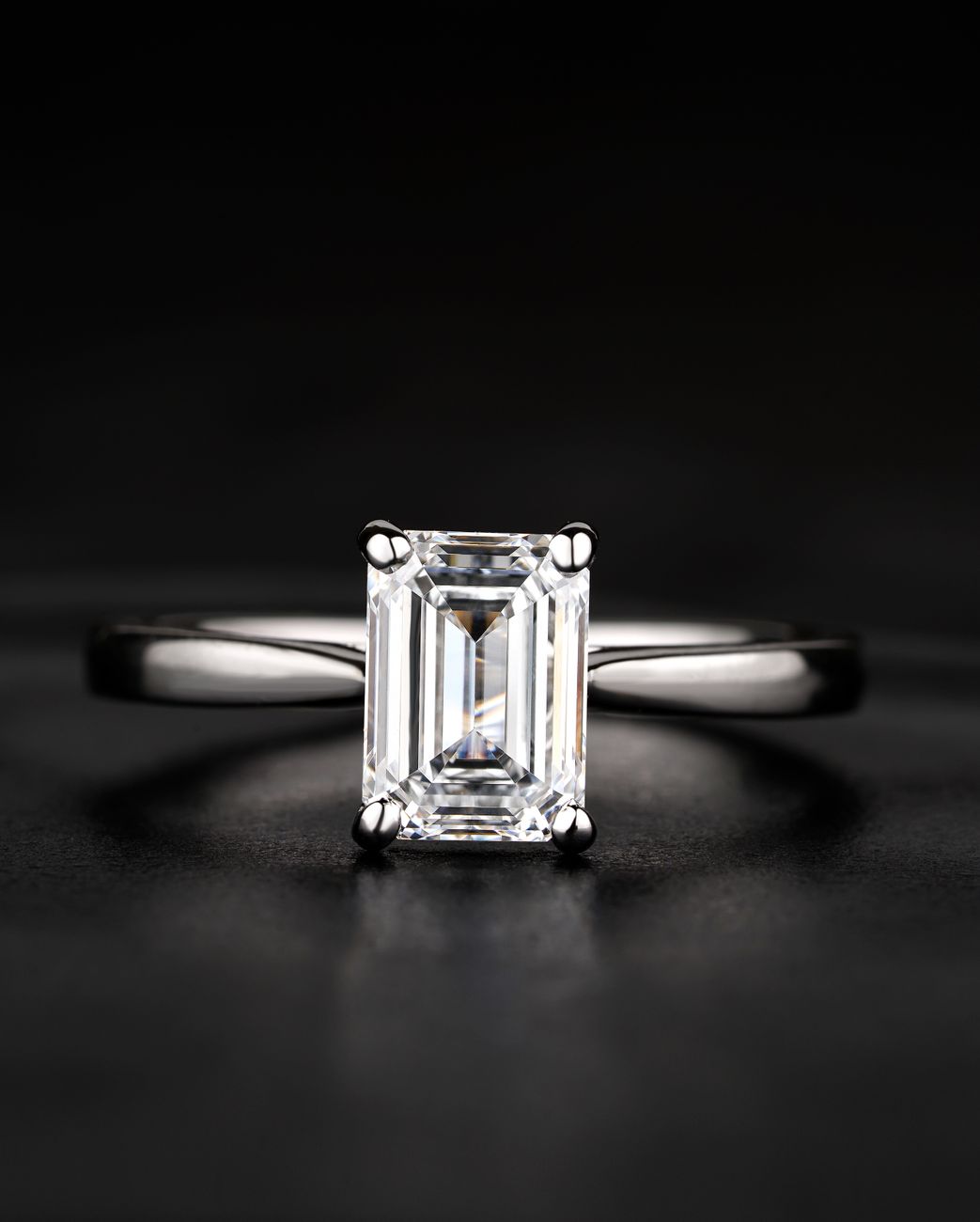
Elegance in diamond design usually comes from proportion, symmetry, and visual simplicity. Emerald cut diamonds express those qualities clearly. Their rectangular outline, clipped corners, and large open table create a calm, architectural look that feels polished rather than flashy.
This is very different from brilliant cuts, which are designed to produce lots of sparkle from many small facets. Emerald cuts use a step-cut faceting style, meaning the facets are arranged in parallel rows that reflect light in broader flashes. The result is a more deliberate, mirror-like appearance.
Clean lines and elongated shape
One reason emerald cuts are often linked to elegance is their shape. The rectangular outline tends to elongate the finger, which many buyers find flattering. The clipped corners also make the shape feel tailored and finished rather than sharp or severe.
Because the shape is simple, it draws attention to proportion and craftsmanship. A well-cut emerald cut looks balanced and refined, while a poorly proportioned one can look too narrow, too flat, or overly bulky. This is why cut quality matters so much in this shape.
Step-cut faceting
Step cuts create broad flashes of light instead of intense sparkle. This style often feels more restrained and luxurious. Some people describe emerald cuts as elegant because they do not try to compete for attention in the same way as round or pear-shaped diamonds.
The open facet pattern also creates a more transparent appearance, which many buyers associate with high-end jewelry. Because emerald cuts reveal more of the stone’s interior, they reward precise cutting and careful selection.
Classic and vintage associations
Emerald cut diamonds have long been connected with vintage glamour and classic design. They were especially popular in Art Deco jewelry, where symmetry and geometric forms were central. That historical association gives the shape a sense of permanence and sophistication.
For many buyers, elegance is tied to design history. A shape that has remained desirable for decades often feels more refined than one that appears trend-driven. Emerald cuts fit that expectation well.
Understanding Emerald Cut Diamonds
Before comparing elegance across shapes, it helps to understand what makes an emerald cut unique. Unlike round brilliant diamonds, which are engineered for maximum sparkle, emerald cuts are designed to show clarity, structure, and long lines. This changes how the diamond looks in every lighting condition.
The shape is usually rectangular, although some stones are slightly more square than others. The corners are cut off, creating an octagonal outline. This gives the diamond a softer and more wearable profile while still preserving its geometric character.
Step-cut versus brilliant-cut
The biggest technical difference is the faceting style. Step cuts use long, linear facets arranged like stairs. Brilliant cuts use many triangular and kite-shaped facets arranged to maximize sparkle.
This difference affects how each shape appears:
- Step cuts produce broad flashes and a hall-of-mirrors effect.
- Brilliant cuts produce more sparkle, fire, and overall light return.
- Emerald cuts emphasize clarity, symmetry, and visual calm.
Because of this, an emerald cut may look more elegant in a formal, understated sense, while a brilliant cut may look more lively or radiant. Neither is inherently better. They simply express beauty differently.
The hall-of-mirrors effect
Emerald cuts are known for a phenomenon often called the hall-of-mirrors effect. Instead of glittery sparkle, the facets create large flashes of light that seem to move across the stone in wide panels.
This effect gives the diamond a more sophisticated visual rhythm. Some people interpret that as elegance because the light is controlled and graceful rather than highly fragmented. Others find it less exciting than a brilliant cut. Preference matters here.
Appearance and Visual Performance
If you are wondering whether emerald cut diamonds are more elegant, appearance is the main reason people say yes. Their look is distinctive. They do not overwhelm the eye, but they still feel substantial and intentional.
Sparkle, brilliance, and fire
Emerald cuts generally have less sparkle than brilliant-cut shapes. That does not mean they are dull. It means their light performance is different. Instead of a dense pattern of tiny flashes, they give off broader flashes of brightness.
To understand the difference, it helps to separate three terms:
- Brilliance refers to white light return.
- Fire refers to colored flashes of light.
- Scintillation refers to the pattern of sparkle and movement when the diamond shifts.
Emerald cuts usually score lower on fire and scintillation than round brilliants, but their structured brilliance can feel more refined. Their light play is less chaotic, which is one reason they are often viewed as elegant.
Why the sparkle looks different
With emerald cuts, the larger, more linear facets act like windows and mirrors. They reflect broad bands of light rather than many tiny points. That creates a slower, calmer visual effect that some buyers find more luxurious because it reads as intentional and architectural.
By contrast, brilliant cuts break light into many small reflections, which creates more sparkle but also a more animated look. If you want the diamond to feel understated rather than lively, the emerald cut often makes that easier to achieve.
Color appearance
Emerald cuts tend to show color more readily than round brilliant diamonds. This is because the large open facets and transparent windows do not hide body color as effectively. For buyers, that means color choice matters more in this shape than in many others.
If you want a bright white look, many buyers prefer to stay in the near-colorless range, especially for white gold or platinum settings. If you are considering a lab grown diamond, this can sometimes allow you to prioritize a higher color grade within a given budget.
Clarity visibility
Emerald cuts are less forgiving of clarity issues than many brilliant cuts. The open facet pattern can make inclusions easier to see. That is another reason why the shape is associated with elegance, but also why it requires more careful selection.
A clean-looking emerald cut often appears especially refined because the eye is not distracted by heavy sparkle. If the stone has visible inclusions, however, that elegant look can be lost quickly. This is one reason shoppers often focus more closely on clarity when choosing an emerald cut than they might with a round diamond.
Face-up size and visual presence
Emerald cuts usually give good face-up presence for their weight, especially in elongated proportions. The rectangular outline can make the diamond look larger on the finger than a round stone of the same carat weight, depending on the exact dimensions.
That visual length contributes to the shape’s elegant reputation. A long, clean center stone often looks sleek and intentional in a ring setting. This effect can be especially appealing in minimalist or solitaire designs.
Why proportions matter so much
Not every emerald cut has the same presence. Two diamonds with the same carat weight can look noticeably different if one is deeper, wider, or more elongated than the other. A stone that is too deep may carry weight hidden below the surface, while a shallow stone may face up larger but risk less ideal light behavior.
This is why buyers should compare measurements, not just carat weight. For emerald cuts, elegance is closely tied to balance, and balance comes from proportions as much as from the setting.
Are Emerald Cut Diamonds More Elegant Than Other Shapes?
To answer the question fairly, it helps to compare emerald cuts with other popular diamond shapes. Elegance is not just about how much a diamond sparkles. It is also about proportion, personality, and how the shape fits the wearer.
| Shape | General Look | How It Reads as Elegant | Typical Buyer Impression |
|---|---|---|---|
| Emerald cut | Clean, architectural, elongated | High for buyers who like understated luxury | Refined, classic, sophisticated |
| Round brilliant | Bright, symmetrical, highly sparkly | Elegant in a traditional sense, but more dazzling than restrained | Timeless, brilliant, versatile |
| Oval | Soft, elongated, bright | Elegant with a more romantic feel | Graceful, flattering, popular |
| Pear | Teardrop-shaped, distinctive | Elegant when well-proportioned, but more stylized | Fashion-forward, feminine, eye-catching |
| Marquise | Long and dramatic | Elegant for statement wear, but less traditional | Bold, elongated, vintage-inspired |
| Princess | Square, modern, sparkly | Less often described as elegant, more often as lively or contemporary | Sharp, bright, modern |
| Cushion | Soft corners, romantic sparkle | Elegant in a softer, vintage sense | Warm, romantic, classic |
This comparison shows that emerald cuts are often seen as more elegant because their style is more restrained and structured. But that does not mean they are more beautiful than other shapes. It simply means they communicate a different kind of luxury.
Compared with round brilliant diamonds
Round brilliants are the most popular diamond shape because they maximize sparkle and are highly versatile. They often look bright and lively, which many buyers love. Elegance in a round diamond comes from symmetry and polish, but not from visual restraint.
Emerald cuts, by contrast, feel more deliberate and architectural. If round diamonds are like a bright performance, emerald cuts are more like a tailored suit. Both can be elegant, but in different ways.
Compared with oval diamonds
Oval diamonds are also elongated, but they usually show more sparkle than emerald cuts. Their shape tends to feel softer and more romantic. Many buyers consider ovals elegant because they flatter the hand and have a graceful outline.
Emerald cuts feel more formal and precise. Ovals feel more fluid. If you want elegance with a slightly softer personality, an oval may be the better fit. If you want elegance with a sharper, more architectural feel, emerald cut often wins.
Compared with cushion cuts
Cushion cuts have rounded corners and often a vintage-inspired sparkle pattern. They feel romantic and approachable, which some people describe as elegant in a softer way. However, they usually do not have the same crisp geometry as emerald cuts.
Emerald cuts look more structured and refined, while cushion cuts look more plush and sentimental. The choice depends on whether you prefer disciplined lines or softer curves.
Advantages of Emerald Cut Diamonds
Emerald cuts offer several practical advantages, especially for buyers who value style and design clarity over intense sparkle.
Sophisticated visual style
The most obvious advantage is appearance. Emerald cuts have a polished, mature look that many buyers associate with sophistication. They often feel less tied to short-lived trends, which can help them age well over time.
Flattering finger coverage
The elongated shape can make fingers look longer and slimmer. This is a common reason buyers choose emerald cuts for engagement rings. The effect is subtle but noticeable, especially in a solitaire or three-stone setting.
Strong presence without excess sparkle
Some people want a diamond that is noticeable but not overly flashy. Emerald cuts fit that preference well. Their broad flashes of light give the stone presence, while the step-cut pattern keeps the look controlled.
Timeless appeal
Because emerald cuts have been admired for decades, they tend to feel less tied to short-lived fashion cycles. That makes them attractive to buyers who want a ring that will still look appropriate many years from now.
Pairs well with many settings
Emerald cuts look especially good in clean, minimalist settings, but they also work in halos, side-stone designs, and vintage-inspired rings. Their geometry gives designers a lot to work with.
Disadvantages of Emerald Cut Diamonds
Emerald cuts are not ideal for everyone, and their drawbacks are worth understanding before making a purchase.
Less sparkle than brilliant cuts
If you want a diamond that throws off lots of sparkle in all lighting, an emerald cut may feel underwhelming. The step-cut style is intentionally less sparkly than round, oval, or princess cuts.
More demanding on clarity
The open facets can reveal inclusions more easily. Buyers often need to pay closer attention to clarity grades and visual inspection. This is especially important for larger stones, where internal characteristics may be easier to see.
Color can be more visible
Because emerald cuts do not mask body color as effectively, lower color grades can appear warmer than expected. This does not mean you must buy the highest color grade available. It means you should compare stones carefully, especially if you want a bright white look.
Quality differences are easier to notice
A well-cut emerald diamond looks sleek and elegant, but proportion issues can show quickly. Uneven steps, poor symmetry, or awkward length-to-width ratios can make the stone look less refined.
This means shopping by certificate alone is not enough. Videos, measurements, and ideally an in-person viewing matter more with emerald cuts than with some more forgiving shapes.
Who Emerald Cut Diamonds Are Best For
Emerald cuts are best for buyers who value elegance in a quiet, structured way. They suit people who want a diamond that looks refined rather than highly sparkly or overtly romantic.
Emerald cut may be a good fit if you:
- Prefer clean lines and symmetry
- Like a sophisticated, understated look
- Want a diamond that feels classic rather than trendy
- Appreciate elongated shapes that flatter the finger
- Are comfortable paying close attention to clarity and color
- Want a ring design with an elegant, tailored feel
Emerald cuts can also be appealing for buyers looking at lab grown diamonds, because the shape often allows room in the budget for a larger size or higher color grade. That said, the same buying rules apply. A larger emerald cut still needs good proportions and an eye-clean appearance to look truly refined.
Emerald cut may not be ideal if you:
- Want maximum sparkle and fire
- Prefer a diamond that hides inclusions more easily
- Like a soft, romantic look over a geometric one
- Want a shape that feels highly traditional in the round-brilliant sense
Important Buying Considerations for Emerald Cut Diamonds
If you are shopping for an emerald cut, elegance depends heavily on the quality of the stone itself. A beautiful shape can be undermined by weak proportions, obvious inclusions, or color that is more noticeable than expected.
Length-to-width ratio
The length-to-width ratio affects how rectangular or square the stone appears. Many buyers prefer a ratio somewhere around 1.30 to 1.50 for a classic emerald cut look, though personal taste varies.
A lower ratio creates a squarer look, while a higher ratio creates a longer, more slender outline. Since elegance is often linked to balance, the best ratio is the one that looks proportionate to your eye and your ring setting.
Clarity grade and eye-clean appearance
Emerald cuts often need better clarity than brilliant cuts because inclusions are easier to see. A diamond can technically have a respectable lab report and still show visible marks if the inclusions are poorly placed.
For this shape, buyers should focus on whether the diamond is eye-clean, meaning no flaws are visible without magnification from a normal viewing distance. That practical standard matters more than chasing a perfect grade if it does not improve appearance.
Color grade
Because emerald cuts show color more clearly, many buyers aim a little higher in color than they might for a round brilliant. For example, a diamond that looks white in a round shape may appear warmer in an emerald cut.
This is especially important in solitaire settings and in white metals like platinum and white gold. In yellow gold or rose gold, a slightly warmer stone may blend more naturally, depending on the look you want.
Cut quality and symmetry
There is no single universally accepted cut grade standard for emerald cuts in the way there is for round brilliants. That means visual evaluation is especially important. You want even step spacing, balanced corners, and a shape that looks harmonious from multiple angles.
Try to evaluate both face-up appearance and the stone’s side profile if possible. A diamond that looks elegant from the top but awkward from the side may not deliver the refined look you expect in a finished ring.
Windowing and extinction
Two visual issues are worth knowing about. Windowing happens when you can see too much through the stone, making it look washed out or see-through in spots. Extinction happens when parts of the diamond appear dark because of how light is blocked or reflected.
Both issues can weaken the elegant appearance of an emerald cut. A good stone should have a lively but controlled light pattern, not a dead or overly transparent look.
Setting style
The setting can strongly influence whether an emerald cut feels elegant. Simple solitaires, tapered baguettes, and delicate halos often highlight the shape well. Heavy prongs, overly ornate halos, or cluttered side details can compete with the stone’s clean structure.
Since this shape is already visually distinct, many buyers prefer settings that support rather than distract from the center diamond. That does not mean the ring has to be plain. It just means the design should feel intentional.
Certification and what to look for
If you are comparing certified diamonds, the report is useful, but it should not be the only thing you rely on. For emerald cuts, certification helps confirm measurements, color, clarity, and other key details, but visual inspection still matters a great deal.
When shopping online, look for photos or videos that show the stone from multiple angles. If possible, compare the report with the diamond in motion so you can judge whether the shape looks balanced and whether the light pattern feels clean and attractive.
How Emerald Cut Diamonds Compare on Practical Buyer Concerns
Elegant or not, a diamond also has to work in real life. If you are considering an emerald cut engagement ring, here is how the shape tends to perform on the factors most buyers care about.
Durability
Emerald cuts are generally durable for everyday wear, but the clipped corners matter. Those corners help reduce the risk of chipping compared with sharp corners on square shapes, but they still need reasonable protection in the setting.
For active wearers, a secure setting with prongs that protect the corners is important. Durability is not usually the main problem with emerald cuts. Visibility of inclusions and color is more often the bigger issue.
Face-up size
Emerald cuts can look large for their weight because of their elongated shape and broad top surface. The face-up appearance depends on exact measurements, not just carat weight. Two diamonds with the same carat can look noticeably different in size.
If size matters, compare millimeter dimensions rather than relying on carat alone. This is especially helpful when shopping for lab grown diamonds, where buyers often compare multiple stones at higher sizes.
Finger appearance
Many buyers feel emerald cuts make the finger look longer and more graceful. The elongated shape creates a smooth vertical line, which can be visually flattering on many hand shapes.
If your fingers are already long and slender, you may prefer a slightly squarer ratio for balance. If you want a more elongated look, a longer ratio can reinforce that effect.
Daily wear practicality
Emerald cuts are practical in the sense that they do not look overly trendy or complicated. However, they do ask more of the buyer during selection because imperfections are easier to see.
For someone who wants a low-drama, polished ring and is willing to evaluate stones carefully, emerald cut can be an excellent daily-wear shape. For someone who wants to minimize shopping complexity, a round brilliant may be easier.
Maintenance and cleaning
Because emerald cuts have large, open facets, dirt and oils can affect their appearance more noticeably than on some brilliant cuts. A stone that is slightly cloudy from daily wear may lose some of its crisp elegance.
Regular cleaning helps maintain the clean, mirror-like look this shape is known for. This is not difficult, but it is worth keeping in mind if you want the stone to always appear polished.
How Emerald Cut Diamonds Fit Current Trends
Emerald cuts have remained consistently popular, and their popularity often grows when buyers want a more understated alternative to highly sparkly shapes. They also fit well with the current interest in elongated diamond shapes.
Still, trends should not be the only reason to choose a shape. Emerald cuts have lasting appeal because they offer a specific visual language, not because they are simply fashionable. That is one reason they are often seen as elegant rather than trendy.
In the lab grown diamond market, emerald cuts are especially common among buyers who want a larger-looking center stone with a sophisticated style. Because lab grown diamonds can provide more size for the budget, the shape often looks particularly impressive when proportioned well and paired with a quality setting.
Emerald cuts also fit well into modern minimalism. Their clean outline works with slim bands, bezel settings, and other design choices that emphasize shape instead of extra detail. At the same time, they still carry enough history to feel classic rather than stark.
Common Mistakes Buyers Make With Emerald Cut Diamonds
Emerald cuts are beautiful, but they can be unforgiving if buyers rely only on basic specifications. These are the most common mistakes to avoid.
Choosing by carat alone
Carat weight does not guarantee elegant appearance. A poorly proportioned emerald cut can look awkward even at a higher carat weight, while a well-cut smaller stone can look much more refined.
Always compare the stone’s dimensions, not just its weight.
Ignoring clarity
Because the shape reveals more of the stone, clarity matters more than many first-time buyers expect. A diamond with visible inclusions can lose the very refinement that makes emerald cuts appealing.
Ask whether the diamond is eye-clean at normal viewing distance, not just what grade appears on the report.
Overlooking color
Buyers sometimes assume all diamond shapes hide color equally well. Emerald cuts do not. A lower color grade can appear warmer more quickly in this shape, especially in larger stones.
If you are comparing stones in person or through video, look at them side by side in similar lighting whenever possible.
Not checking proportions
Length-to-width ratio, depth, and table size all influence the finished look. Two emerald cuts with the same carat weight may feel very different on the hand because of proportion differences.
Proportions are part of what makes the shape elegant. Skipping that review can lead to disappointment.
Using settings that fight the shape
Highly ornate settings can overwhelm the simplicity of an emerald cut. That does not mean you must choose a plain ring, but the setting should complement the stone’s geometry.
If the ring design competes with the diamond, the elegance of the shape can get lost.
Buying without a video or side-by-side comparison
Emerald cuts often look different in motion than they do in still photos. A video can reveal windowing, dark areas, or uneven light return that a single image may not show. Side-by-side comparisons are especially helpful if you are choosing between multiple stones with similar grades.
This is one of the easiest ways to avoid disappointment when shopping online.
How to Decide Whether Emerald Cut Diamonds Feel Elegant to You
One useful way to approach this question is to think about the feeling you want the ring to create. Elegant can mean many different things. For some people, it means bright and luxurious. For others, it means structured, balanced, and understated.
Emerald cuts tend to suit buyers who like design that feels intentional. They often look best on people who appreciate clean lines, quiet confidence, and a more editorial style. If that description fits your taste, the shape may feel especially elegant on your hand.
If you are drawn to sparkle first and structure second, another shape may fit better. That does not mean emerald cuts are less beautiful. It simply means their version of elegance is more restrained and less animated.
Frequently Asked Questions
Do emerald cut diamonds sparkle less than other shapes?
Yes, emerald cuts usually sparkle less than round brilliant, oval, or princess cuts. They are designed to show broad flashes of light rather than intense sparkle. Many buyers like this because it creates a calmer, more elegant look.
Are emerald cut diamonds a good choice for engagement rings?
Yes, they can be an excellent engagement ring choice if you like a sophisticated and classic style. They are especially appealing for buyers who want an elegant look without excessive sparkle. The main trade-off is that they require closer attention to clarity and color.
Why do emerald cuts show inclusions more easily?
The large, open facets of an emerald cut do not hide internal features as well as the many small facets in a brilliant cut. This means inclusions can be easier to notice. Buyers often need to focus more on eye-clean appearance when selecting one.
Are emerald cut diamonds more expensive than round diamonds?
Pricing depends on many factors, including carat, color, clarity, and cut quality. Emerald cuts are not automatically more expensive than round diamonds, but high-quality stones can carry a premium because the shape is less forgiving and requires careful selection.
In the lab grown market, emerald cuts can sometimes offer strong value because buyers may be able to choose a larger or higher-grade stone within the same budget.
What ring setting looks best with an emerald cut diamond?
Settings that highlight clean lines often work best. Popular choices include solitaire settings, tapered baguette side stones, simple halos, and Art Deco-inspired designs. The best setting depends on whether you want a modern, vintage, or more decorative look.
Are emerald cut diamonds timeless?
Yes, they are widely considered timeless because their shape has remained desirable for many decades. Their appeal is tied to classic design principles rather than fast-moving trends. That said, the exact setting style can still influence whether the ring feels vintage, modern, or contemporary.
Is a lab grown emerald cut a good option?
It can be, especially for buyers who want a larger-looking or higher-quality diamond within a set budget. Lab grown emerald cuts can offer excellent visual value, but the same selection rules apply. You still need to evaluate color, clarity, proportions, and overall appearance carefully.
Conclusion
Emerald cut diamonds are often considered more elegant because they express beauty through restraint, symmetry, and clean geometry. Their step-cut faceting, elongated silhouette, and classic history give them a refined look that many buyers find especially sophisticated.
At the same time, elegance is personal. If you prefer maximum sparkle, a different shape may feel more elegant to you. If you value calm, tailored design and a timeless profile, emerald cut diamonds are one of the strongest options to consider.
When shopping for this shape, focus on the details that most affect appearance: proportions, clarity, color, and the setting style. Those factors determine whether the diamond looks merely rectangular or truly polished and elegant in everyday wear.