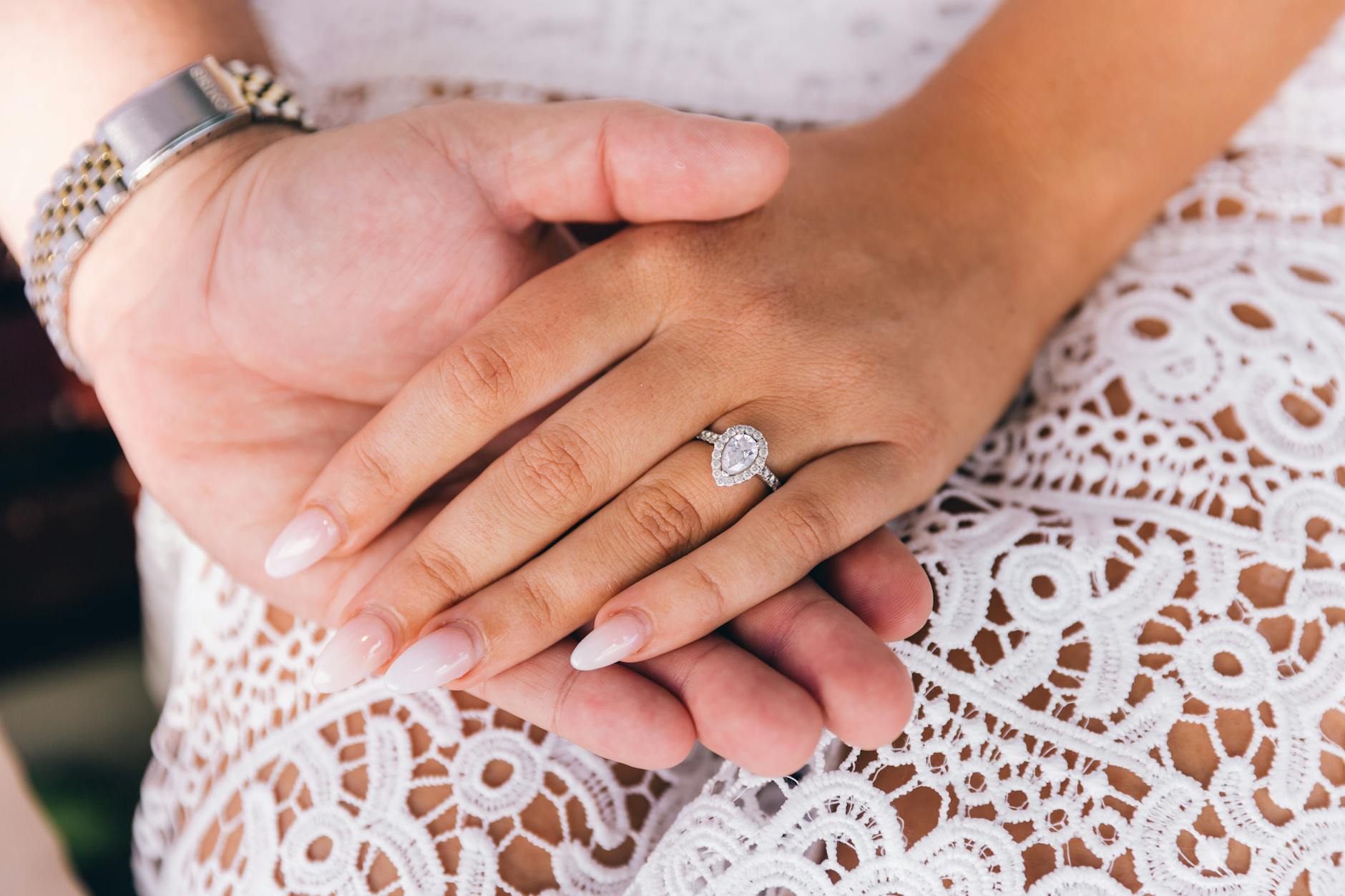
Pear shape diamonds often appear larger than round diamonds of the same carat weight, but the answer is more nuanced than a simple yes or no. A pear cut can create a strong face-up presence because of its elongated outline, tapered point, and broad rounded end. That combination can make the stone look bigger on the finger, especially when compared with more compact shapes.
For buyers comparing engagement ring options, this matters because visual size is not the same as carat weight. Two diamonds can weigh the same and still look noticeably different in how much of the finger they cover. In many cases, the right pear shape can offer a larger-looking appearance without increasing the budget as much as moving to a higher carat weight in another shape.
That said, pear shape diamonds do not always look bigger in every setting or at every proportion. Cut quality, length-to-width ratio, table size, depth, and even the ring design can change how much size the stone seems to have. Understanding those factors helps buyers make a more informed decision, whether they are shopping for a natural diamond or a lab grown diamond.
Quick Answer
Yes, pear shape diamonds often look bigger than round diamonds of the same carat weight because they spread their weight across a longer face-up shape. The elongated silhouette creates more visible surface area, so the stone can seem larger when viewed from above.
However, the effect depends on the diamond’s proportions. A pear with a shallow enough depth and a balanced length-to-width ratio may look impressively large, while a deep pear can hide weight below the surface and appear smaller than expected.
Why Pear Shape Diamonds Can Look Larger
The main reason pears can appear larger is simple geometry. Carat weight measures how much a diamond weighs, not how large it looks. A pear shape distributes that weight across a teardrop outline, which tends to cover more finger space than a round or square shape of the same weight.
This is often called face-up size, meaning how large the diamond appears when you look at it from the top. Face-up size matters a great deal in engagement rings because most people see the diamond from above most of the time.
Elongated Shape Creates More Visual Spread
Pear diamonds have a pointed end and a rounded end, which naturally stretch the outline lengthwise. That elongated form can make the diamond feel larger because the eye reads it as covering more area. On a ring, this can also help the diamond look elegant and lengthening on the finger.
Many buyers are surprised that a pear diamond with a lower carat weight can look comparable in presence to a heavier round diamond. This is one reason the shape is popular among shoppers looking for more visual impact per dollar.
Carat Weight Is Not the Same as Visible Size
A diamond’s weight is only one part of the size story. Two stones with the same carat weight can have different dimensions depending on how the weight is distributed. A deep diamond keeps more of its mass below the girdle, which can reduce face-up size. A shallower diamond can look larger, though too much shallow depth may hurt brilliance or durability.
This is especially relevant when considering lab grown diamonds, where buyers often have access to larger carat sizes for the same budget. In that context, choosing a shape that maximizes spread, like a pear, can make the stone appear even more substantial.
Understanding Pear Shape Diamonds
A pear shape diamond is a hybrid cut that combines a round end with a pointed end. It is sometimes called a teardrop shape. The design blends features of round brilliant and marquise style outlines, which gives it both softness and elongation.
Pear shapes are usually cut as brilliant-style diamonds, meaning they are designed to return a lot of light and sparkle. That makes them very different from step cuts like emerald cuts, which show larger mirror-like flashes but less glitter. The cutting style is one reason pears can feel lively and bright when proportioned well.
Common Features of Pear Shapes
- Rounded end that creates a softer appearance
- Pointed end that lengthens the stone visually
- Brilliant-style faceting that supports sparkle
- Asymmetrical outline that requires careful cutting and setting
Because the shape is asymmetrical, quality control matters. A well-cut pear should look balanced from left to right, with no awkward bulges or overly sharp tapering. Small proportion differences can noticeably affect both appearance and performance.
Key Characteristics That Affect How Big a Pear Looks
If you are asking whether pear shape diamonds look bigger, the most useful answer depends on several measurable traits. These include length-to-width ratio, depth percentage, table size, and the overall outline of the stone. Together, they influence how much of the diamond is visible from above.
Length-to-Width Ratio
The length-to-width ratio compares how long the pear is relative to its width. A lower ratio creates a wider, fuller look. A higher ratio creates a more elongated look, which may appear larger in length but less wide across the finger.
Most buyers prefer a balanced ratio somewhere around 1.40 to 1.60, though personal taste matters. A ratio that is too short can make the stone feel bulky, while one that is too long can make it look narrow or less evenly proportioned.
Depth Percentage
Depth refers to how tall the diamond is from top to bottom. A deep pear can look smaller because more of its weight sits below the surface. A shallow pear can look larger, but if it is too shallow, light performance may suffer and the stone may face durability concerns at the point.
This is why a diamond that looks large on paper may not always appear large in real life. Buyers should look at actual millimeter dimensions, not carat weight alone. Two pears with the same weight can have very different visible sizes.
Table Size and Crown Balance
The table is the flat top facet of the diamond. A very large table can make a pear seem wider, but if pushed too far, it may reduce the richness of sparkle. A smaller table may increase contrast and fire, but the diamond could look slightly more compact.
The goal is balance. A well-proportioned pear should look open and bright without appearing washed out or carrying too much hidden weight.
Pointed End and Outline Precision
The pointed tip has an effect on both visual size and practical wear. A sharp, clean point can make the diamond look elegant and elongated. At the same time, the point is one of the more vulnerable areas in any pear shape, so it needs a protective setting for everyday wear.
The outline also affects how large the diamond feels. A smooth, evenly curved silhouette can make the stone look fuller, while uneven shoulders or lopsided tapering can distract from its size.
Appearance and Visual Performance
Size perception is only part of the story. A diamond can look larger, but if it does not sparkle well, the visual effect may be less appealing. Pear shapes are popular partly because they can combine a larger face-up look with strong brilliance when cut properly.
Brilliance, Fire, and Sparkle
Brilliance is the white light returned from a diamond. Fire is the colored light flashes produced when light splits inside the stone. Both contribute to sparkle, but in different ways.
Pear shapes usually perform well in brilliance because they are cut in a brilliant style. Their faceting is designed to return lots of light, which can make them eye-catching even at modest carat weights. Fire can vary by cut quality, with better cut pears producing more lively flashes.
Because of the pointed end and asymmetrical shape, pears can be slightly more challenging to cut evenly than rounds. That means one pear may sparkle beautifully while another of the same size may show less even light return. This is another reason why cut quality matters more than carat weight alone.
Scintillation and Movement
Scintillation refers to the pattern of sparkle and dark-light contrast as the diamond moves. Pears can have attractive scintillation because their long outline creates varied flash patterns. When the stone moves, the different zones of the diamond can create lively sparkle across the face.
This can make the diamond seem active and eye-catching from several angles. However, if the proportions are off, the sparkle may become uneven, with dark areas that reduce the impression of size.
The Bow Tie Effect
Many elongated shapes, including pears, can show a bow tie effect. This is a dark shadow across the center of the stone that can resemble a bow tie. It happens because of how light enters and exits the diamond.
A slight bow tie is common and not always a problem. In some stones it is barely noticeable, while in others it is obvious and can make the diamond appear less bright in the center. Since the center of the stone is a major part of what the eye sees, a heavy bow tie can reduce the “looks bigger” effect.
Do Pear Shape Diamonds Look Bigger Than Other Shapes?
Compared with many other shapes, pears often look larger for the same carat weight. But the degree of difference depends on what you compare them with. Round brilliants, for example, are often cut deeper relative to their outline, so they may appear smaller face-up than a pear of equal weight. Princess cuts and cushions can also hold more weight in the depth, reducing visual spread.
Below is a practical comparison of how pears tend to compare visually.
| Shape | Typical Face-Up Appearance | Why It Looks That Way |
|---|---|---|
| Pear | Often looks large and elongated | Weight is spread across a longer outline |
| Round | Very balanced, but not usually the largest-looking per carat | More weight may sit in the depth to preserve symmetry and brilliance |
| Princess | Appears compact and geometric | Square outline can carry more weight below the surface |
| Cushion | Varies widely, often softer and less spread-focused | Brushed corners and deeper cut can reduce face-up size |
| Oval | Also looks large, often similar to pear in presence | Elongation increases visible surface area |
| Marquise | Can look very large and dramatic | Extremely elongated shape creates strong visual spread |
Among popular engagement ring shapes, pears and ovals are often considered strong choices for buyers who want a bigger-looking stone without necessarily increasing carat weight. Marquise shapes can sometimes look even larger, but their pointed ends and style preferences make them less universally chosen.
Advantages of Pear Shape Diamonds
Pear diamonds have several practical advantages beyond their large-looking appearance. These benefits help explain why the shape remains a steady choice in both natural and lab grown diamond markets.
1. Strong Face-Up Size
The most obvious advantage is that pears often look larger than round or square shapes of equal weight. This is useful for buyers who want a ring with noticeable presence but want to manage budget carefully. When cut well, the shape offers an efficient use of visible surface area.
2. Elegant, Lengthening Effect on the Finger
Pear shapes tend to draw the eye along the length of the finger. This can create a flattering appearance, especially on shorter fingers or hands where the wearer wants a more elongated look. The effect is subtle, but it is one reason many people find the shape graceful.
3. Good Sparkle Potential
Because pears are brilliant-style cuts, they can deliver strong sparkle. Buyers who like a lively look often appreciate that the shape combines visual size with bright light return. This makes pears a practical choice for engagement rings and other statement jewelry.
4. Flexible Style Options
Pear diamonds work in a variety of settings. They can look modern in a solitaire, elegant in a halo, or distinctive in a three-stone design. The shape also suits east-west settings in some cases, although that is less traditional for pears than for ovals or emeralds.
5. Good Value Perceived by Eye
Since pears can appear larger than some other shapes, buyers often feel they get strong visual impact for their money. This is especially relevant in the lab grown diamond market, where larger sizes are more accessible and a visually efficient shape can stretch the budget further.
Disadvantages and Trade-Offs
No diamond shape is perfect, and pears have trade-offs that shoppers should understand before buying. These limitations do not make the shape a poor choice. They simply mean the buyer needs to pay attention to a few extra details.
1. More Sensitive to Cut Quality
Pear diamonds can vary more widely in appearance than round brilliants because the shape is less standardized. A round diamond has stricter cut expectations, while pears leave more room for proportion differences. That flexibility means more variation in how they look, both positively and negatively.
In practical terms, one pear may look beautifully balanced while another may appear lopsided, deep, or dull in the center. Buyers should review measurements and images carefully, and if possible, compare actual stones rather than relying on carat weight alone.
2. Bow Tie Can Reduce Brightness
Because many pears are elongated, they can show a bow tie effect. If the bow tie is strong, it can reduce the sense of brightness in the center and make the diamond seem less impressive. A small amount is often acceptable, but buyers should avoid stones where the shadow dominates the face-up view.
3. Point Vulnerability
The pointed tip is more exposed to impact than a rounded edge. For daily wear, especially in engagement rings, the point should ideally be protected by a secure setting. A V-prong or similar protective design is commonly used to reduce the chance of chipping.
4. Inclusion and Color Visibility Can Be Mixed
Pears can hide some imperfections well because sparkle distracts the eye, but the pointed end and broader surface can also reveal flaws if the clarity is too low. Color can show more readily in the body of the diamond, especially in larger pears, so buyers may need to pay attention to color grade as size increases.
5. Asymmetry Can Be Noticeable
Since pears are not perfectly symmetrical in the way rounds are, even small cutting inconsistencies can be visible. An off-center point or uneven shoulders can make the diamond look less refined. This is especially important for buyers who value precision in the overall look.
Who Pear Shape Diamonds Are Best For
Pear diamonds work well for many buyers, but they are especially suitable for people who want a larger-looking stone with a softer, more distinctive outline. They are often a good choice for shoppers who value personality and elegance over strict symmetry.
Pear Shapes May Suit Buyers Who Want:
- A diamond that looks larger than its carat weight might suggest
- An elongated shape that flatters the finger
- Strong sparkle with a distinctive outline
- A shape that feels elegant but not overly common
- Good visual value, especially in a lab grown diamond
Pears may be less ideal for buyers who want the most durable shape with the least maintenance concerns, or for those who prefer a perfectly symmetrical look. They also require a bit more inspection than a round diamond because cut quality varies more noticeably.
How Pear Shape Diamonds Compare With Other Popular Shapes
If you are trying to answer “do pear shape diamonds look bigger,” it helps to compare them directly with other popular shapes. The comparison below focuses on how the shapes generally perform in real-world buying situations.
| Shape | Looks Bigger Per Carat? | Sparkle Style | Durability | Visual Notes |
|---|---|---|---|---|
| Pear | Often yes | Bright, brilliant sparkle | Good, but point needs protection | Elongated and elegant |
| Round | Usually less face-up spread than pears | Strongest overall brilliance | Excellent | Classic and balanced |
| Oval | Yes, often similar to pear | Bright sparkle, may show bow tie | Good | Sleek and elongated |
| Marquise | Very often yes | Brilliant but more stylized | Pointed ends need care | Most dramatic spread |
| Princess | Usually less than pear | Sharp, lively sparkle | Good, corners need protection | Modern and geometric |
| Cushion | Varies, often moderate | Soft sparkle, depends on cut style | Good | Rounded and romantic |
Pear vs Round
Rounds are the standard for brilliance and symmetry. They are often the benchmark for sparkle, but not necessarily for visual size. Pears commonly look larger because their shape spreads more visibly across the finger.
Buyers who prioritize maximum sparkle and timeless appeal often lean round. Buyers who want more size appearance and a slightly more distinctive outline may prefer pear.
Pear vs Oval
Ovals and pears are close in how they spread visually. Both are elongated and can look larger than square or round shapes of the same weight. Ovals usually have a more uniform outline, while pears add the pointed end that creates a teardrop effect.
Ovals may be simpler to style in some settings, but pears often feel a little more distinctive. Both can show bow tie effect, so cutting quality matters in each case.
Pear vs Marquise
Marquise diamonds often look the largest per carat because they are extremely elongated. However, they are also more stylized and can feel less conventional than pears. Pears offer a softer look with a rounded end, which many buyers find more versatile.
Marquise stones can also show prominent points at both ends, which raises durability concerns. Pears typically feel easier to wear in daily jewelry because only one tip is exposed.
Pear vs Princess
Princess cuts are square and compact. They can appear smaller face-up than pears because more of their weight sits in the depth. Their shape is bold and modern, but not as spread-efficient as a pear.
Princess cuts are also known for corner vulnerability, though the issue is different from the pear’s pointed end. Buyers who want a larger-looking stone often find pears a better fit visually.
Important Buying Considerations for Pear Shape Diamonds
To decide whether a pear shape diamond is right for you, it helps to look beyond carat weight. The most useful information comes from dimensions, proportion data, and visual inspection. This is true whether you are buying natural or lab grown diamonds.
Check Millimeter Measurements
Millimeter size tells you how large the diamond is in physical dimensions. This is often more useful than carat weight when comparing shape-to-shape. A well-proportioned pear with strong dimensions can look noticeably larger than another pear with the same carat weight but a deeper cut.
When shopping online, compare length, width, and depth rather than relying on a single number. If the retailer provides an image or video, use that to assess how the stone actually presents face-up.
Look Closely at Cut Quality
Cut quality affects how much light the diamond returns and how balanced the shape appears. A well-cut pear should have even shoulders, a centered point, and no severe darkness across the middle. Since cut is one of the biggest factors in how large a diamond appears, this deserves close attention.
Unlike round diamonds, pears do not always come with a standardized cut grade from major labs. That means buyers need to rely more on proportion details, light performance images, and expert review.
Choose a Protective Setting
The pointed tip should be protected in everyday jewelry. A setting that includes a V-prong or another secure point guard can help reduce the chance of chipping. This is especially important for engagement rings that will be worn daily.
Halo settings can also increase the overall size appearance, although they change the style of the ring. If your main goal is size, the setting matters almost as much as the stone itself.
Consider Color and Clarity Carefully
Pears can show color more than some round diamonds, especially at larger sizes. For many buyers, a near-colorless grade offers a good balance between appearance and value. Clarity is also important, but pears can hide some inclusions well if the sparkle is strong.
For more detail, readers often compare shape choices alongside diamond color grades and diamond clarity grades. Those factors can influence the overall visual impression more than buyers expect.
Think About Lab Grown Diamond Value
Lab grown diamonds often make pear shapes especially appealing because buyers can choose larger sizes or better specifications within a given budget. If visual size is a priority, a pear lab grown diamond can be an efficient use of budget. That does not mean it is inherently better, but it can offer strong value for certain shoppers.
As with all lab grown diamond purchases, it is important to look at certification, proportions, and overall appearance rather than assuming every stone of the same carat will look identical. The basics of diamond quality still matter.
Common Mistakes Buyers Make
Pear shape diamonds can be a smart choice, but several common mistakes can reduce satisfaction after purchase. Avoiding these issues helps ensure the diamond actually looks as large and attractive as expected.
Buying by Carat Weight Alone
One of the biggest mistakes is assuming a higher carat automatically means a larger-looking stone. In pear shapes, depth and proportions can change the visible size significantly. A lighter pear can sometimes look more substantial than a heavier one if it is cut with better spread.
Ignoring the Bow Tie
Some buyers focus only on size and forget to inspect the center of the stone. A strong bow tie can make the diamond appear dark or dull in the middle, which reduces its overall presence. A stone that looks big but has poor light return often disappoints in real life.
Overlooking the Point
The tip is a practical wear concern, not just a visual detail. If the setting does not protect the point, the diamond may be more exposed to chips or knocks. This is especially relevant for everyday rings and active lifestyles.
Choosing an Awkward Ratio
Not every pear shape is equally attractive. Some are too short and wide, which can make them look heavy. Others are too long and narrow, which can make them feel thin or stretched. A balanced ratio generally produces the most pleasing effect.
Not Comparing Actual Dimensions
Because pears can vary greatly, comparing only carat weight is not enough. Buyers should compare dimensions and, ideally, actual images of the stone. This is especially important when buying online and when comparing natural diamonds with lab grown diamonds across different vendors.
Frequently Asked Questions
Do pear shape diamonds look bigger than round diamonds?
Often, yes. Pear diamonds usually look bigger face-up than round diamonds of the same carat weight because their elongated shape spreads across more visible area. The effect depends on cut quality and depth.
Do pear diamonds look bigger than oval diamonds?
They can look similar in size appearance. Both shapes are elongated and efficient in face-up spread. Oval and pear diamonds are often compared for this reason, and the choice usually comes down to personal style more than size alone.
Why do some pear diamonds look smaller than expected?
A pear can look smaller if it is too deep, has an awkward ratio, or hides weight below the surface. A strong bow tie or poor proportions can also reduce the sense of size. That is why visual inspection and measurements matter.
Is the bow tie effect a problem in pear diamonds?
Not always. A slight bow tie is common and may not be noticeable in normal wear. A strong bow tie, however, can reduce brightness in the center and make the diamond seem less lively.
Are pear shape diamonds good for engagement rings?
Yes, many buyers choose pears for engagement rings because they look elegant, can appear larger than their carat weight suggests, and offer strong sparkle. The tip should be protected in the setting for daily wear.
Do lab grown pear diamonds look bigger than natural pear diamonds?
The growth method does not change the shape’s basic face-up size. A lab grown pear and a natural pear of the same proportions will look similarly large. The main difference is that lab grown diamonds often let buyers access larger sizes or better quality within budget.
What length-to-width ratio is best for a pear diamond?
There is no single best ratio, but many buyers prefer a balanced look in the range of about 1.40 to 1.60. Lower ratios look wider, while higher ratios look longer. The ideal choice depends on personal taste and finger shape.
Are pear diamonds more fragile than round diamonds?
They can be slightly more vulnerable at the pointed tip, which is why setting protection is important. The overall diamond is still durable for daily wear if designed and mounted properly. Most concerns are about the point rather than the entire shape.
Conclusion
Pear shape diamonds often do look bigger than other shapes of the same carat weight because they spread their mass across a long, teardrop outline. That larger face-up presence, combined with strong brilliance, is one of the main reasons buyers choose them. For many shoppers, especially those comparing engagement ring options or looking at lab grown diamonds, a pear can offer excellent visual impact.
Still, size appearance is only part of the buying decision. Cut quality, bow tie effect, length-to-width ratio, and point protection all influence whether the diamond looks beautiful in real life. A well-proportioned pear can be a strong choice for buyers who want elegance, presence, and good value, while a poorly cut one may disappoint even if the carat weight is high.
If your goal is a diamond that looks substantial on the hand without relying solely on carat weight, pear shape is worth serious consideration. The best results come from comparing actual dimensions, examining light performance, and choosing a setting that supports both beauty and durability.