Oval diamonds are popular because they often look larger than round diamonds of the same carat weight and can create an elegant, elongated look on the hand. But an oval diamond can also be tricky to judge, especially if you are comparing stones online or in a showroom without knowing what to look for. Cut has a major effect on how bright, balanced, and lively an oval diamond appears, and that makes it one of the most important factors in the buying process.
If you are trying to learn How to Evaluate Oval Diamond Cut, the short answer is that you should look beyond the basic cut grade on a grading report. For oval diamonds, cut quality is usually judged by a combination of proportions, symmetry, brightness, bow-tie appearance, and overall light performance. Two oval diamonds with the same carat weight and similar color and clarity can look very different if one is well cut and the other is not.
That difference matters in real life. A well-cut oval tends to show stronger brilliance, better sparkle, and a more even face-up appearance. A poorly cut oval may have dark zones, uneven brilliance, or a distracting bow-tie effect across the center. Knowing how to evaluate those traits can help you choose a diamond that looks beautiful in everyday lighting instead of relying on size alone.
Quick Answer: How to Evaluate Oval Diamond Cut
To evaluate oval diamond cut, focus on how the diamond handles light rather than only on its measurements. The most important visual factors are brightness, sparkle, symmetry, bow-tie visibility, and whether the stone looks balanced from edge to edge. These traits tell you much more about real-world beauty than carat weight alone.
Because oval diamonds do not receive a single universal cut grade from most grading labs, buyers need to assess them more carefully than round brilliants. That does not mean the process is difficult, but it does mean you should compare stones visually, review proportions, and, when possible, use video or ideal light images. A well-cut oval can look lively and refined, while a poorly cut one may appear dull, overly shallow, or uneven.
The most practical approach is to combine proportion analysis with visual inspection. In other words, use the numbers as a guide, but trust what you can actually see. That is especially important for lab grown oval diamonds, where buyers often compare several similar stones online and need a reliable way to separate the ones that look truly attractive from the ones that only look good on paper.
What Makes Oval Diamond Cut Different From Round Cut
Round diamonds have the simplest cut evaluation because they are cut to a standardized brilliant style and graded with widely recognized cut grades. Ovals are different. They belong to the family of fancy shapes, which means there is much more variation in how they are proportioned and how they return light.
An oval diamond can be shallow, deep, narrow, wide, long, or compact. Each of those choices affects how the diamond looks once it is set in a ring. Two ovals with identical carat weights can have noticeably different face-up sizes and sparkle patterns because oval cutting is less standardized than round cutting.
That is why buyers should not assume that an oval with a higher carat weight automatically looks better. Shape balance, brightness, and the presence or absence of a visible bow tie often matter more in the finished appearance than the weight number alone.
Understanding the Main Parts of Oval Cut Quality
Brilliance
Brilliance is the white light a diamond reflects back to the eye. In practical terms, it is the bright, lively look that makes a diamond seem full of life. A well-cut oval should reflect light evenly across most of its surface, not just in a few isolated spots.
Buyers usually notice brilliance first when they view a stone in normal indoor lighting. If the diamond has strong brilliance, it will look bright and well illuminated from a typical viewing distance. If brilliance is weak, the stone may seem flat or dark in the center or around the edges.
Fire
Fire refers to the colored flashes of light, usually seen as brief rainbow-like sparkle when the diamond moves. Fire is influenced by the cut’s ability to split light into spectral colors. Ovals can show lovely fire, although the effect is often more subtle than what people expect from advertisements or idealized images.
In everyday buying, fire should not be the only measure you focus on. A diamond can show attractive fire and still have poor overall balance if its light return is weak. The best ovals usually offer a good mix of brilliance and fire rather than emphasizing one at the expense of the other.
Scintillation
Scintillation is the pattern of sparkle and contrast you see when the diamond moves. It includes the sharp flashes of light and dark that make a diamond feel lively. In a well-cut oval, scintillation should look crisp and balanced rather than messy or overly blocky.
This is one of the reasons viewers often say a diamond “comes alive” when it moves under light. Scintillation is not just about how much sparkle exists, but about how attractive and dynamic that sparkle appears. A diamond with poor cut can still have flashes, but they may not look well organized or pleasing.
Light Return
Light return describes how much light enters the diamond and comes back to your eye. Strong light return usually means better brightness and more visible sparkle. Weak light return can leave parts of the oval looking dead, gray, or transparent in a way that reduces beauty.
For oval diamonds, light return is especially important because the shape has more room for unevenness than a round brilliant. When you are learning How to Evaluate Oval Diamond Cut, this is one of the biggest visual priorities. If the stone does not return light well, the rest of the numbers matter much less.
Symmetry
Symmetry refers to how well the diamond’s shape and facet arrangement line up. For ovals, symmetry affects whether the stone looks balanced from one side to the other, whether the tips are aligned, and whether the shape feels graceful or awkward. It also influences the overall pattern of brightness and dark areas.
Symmetry is important, but it should be understood in practical terms. A diamond can have a technically acceptable symmetry grade and still look less attractive than another stone with better visual balance. What buyers see in person is often more important than a grading label alone.
Polish
Polish describes how smoothly the diamond’s surface facets are finished. Good polish allows light to move cleanly through and out of the stone. Poor polish can reduce the crispness of sparkle, though severe issues are uncommon in well-made diamonds.
For most buyers, polish matters less than overall cut performance, but it is still part of the picture. If you are comparing stones with similar proportions and appearance, better polish can be a useful tie-breaker. It is usually a secondary factor, not the main deciding point.
Why Oval Cut Quality Matters So Much
Oval diamonds can look beautiful, but they are also more sensitive to cut variation than many buyers realize. Because the shape is elongated, even a small proportion change can affect how large the stone appears, how much sparkle it shows, and whether the center looks dark.
In practical buying terms, cut quality affects three major things: appearance, durability of visual appeal over time, and value. A well-cut oval often looks more expensive than its carat weight might suggest, while a poorly cut one can seem disappointing even if it is larger or has better paper grades in other categories.
This is especially relevant for engagement rings and other everyday jewelry. Most buyers want a diamond that looks consistently good in real lighting, not just under ideal store lights. Cut quality is what makes that possible.
What Buyers Actually See in an Oval Diamond
Face-up appearance
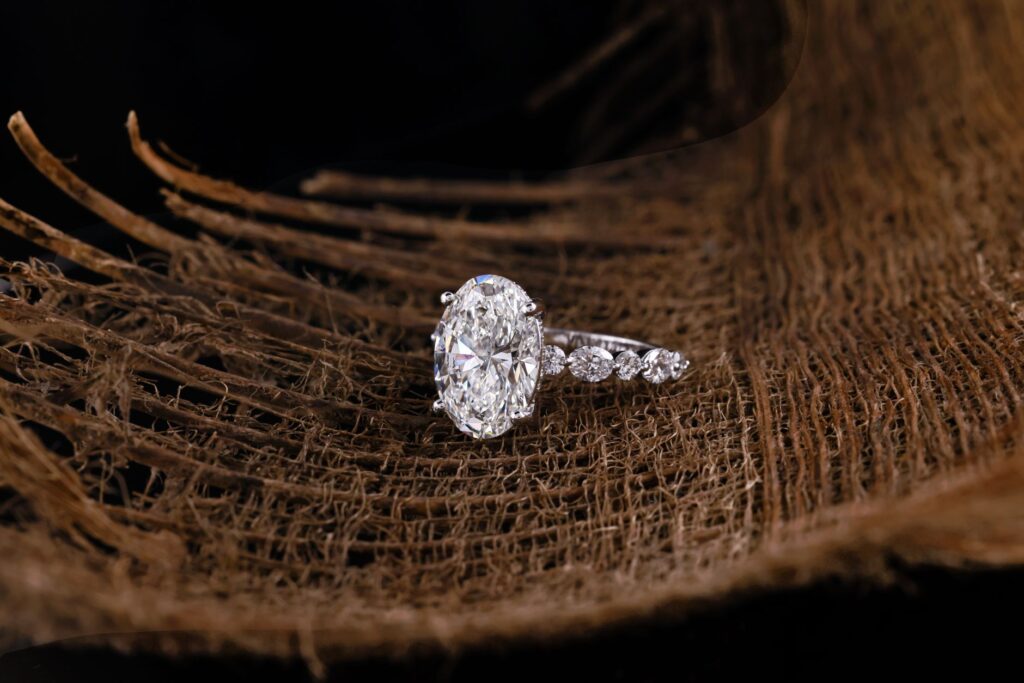
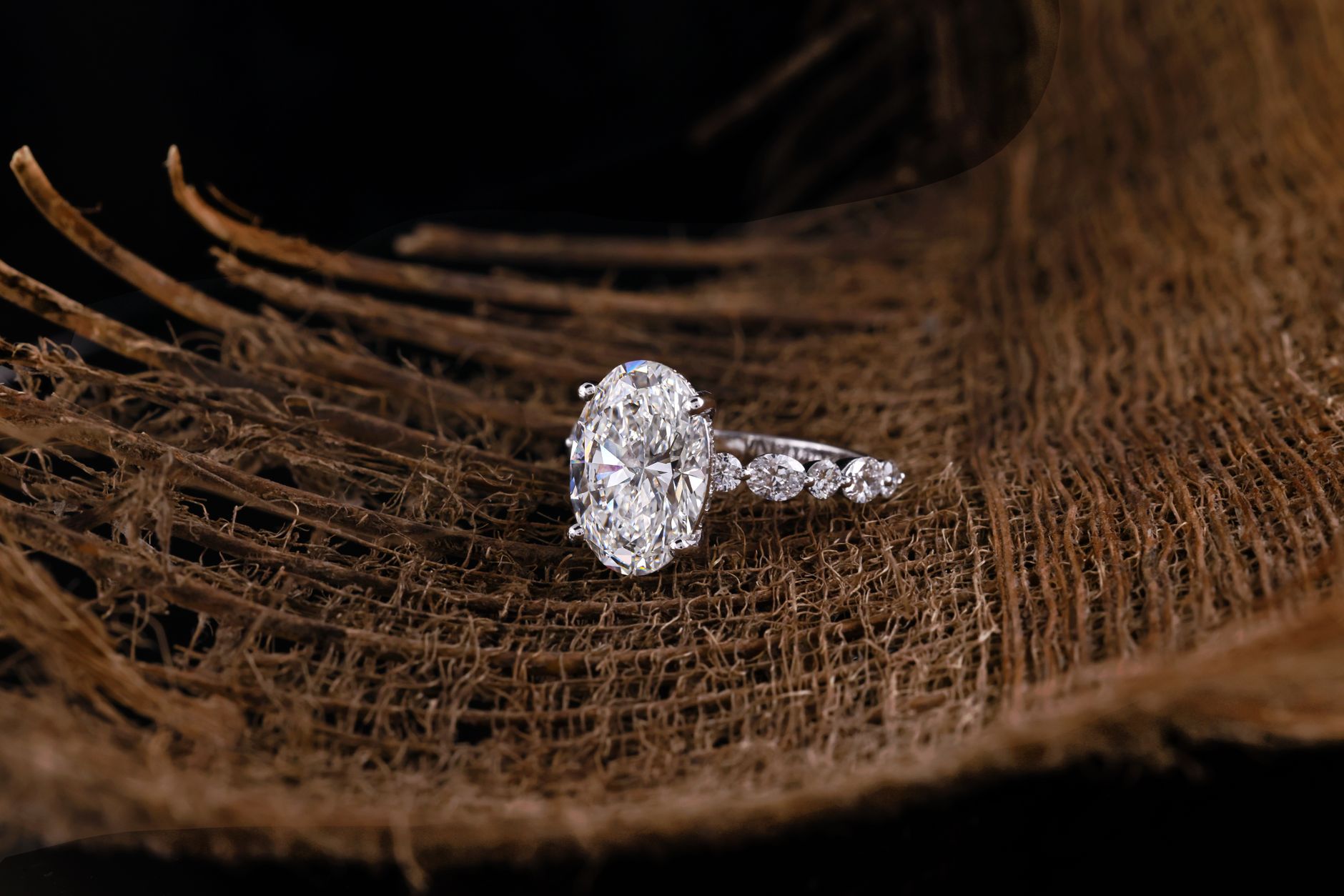
“Face-up” means how the diamond looks from above when worn in a ring. This is how most people will see the stone most of the time. A well-cut oval should appear evenly bright, balanced, and lively across the face-up view.
If the cut is less successful, you may notice a center that looks too dark, overly bright outer edges, or areas that seem washed out. These traits are not always obvious in photos unless you know what to look for, which is why careful visual review is so important.
The bow-tie effect
The bow-tie effect is the dark, bow-shaped shadow that often appears across the center of oval, pear, and marquise diamonds. Almost all oval diamonds show some degree of bow tie, but the severity can vary a lot. A small, subtle bow tie is common. A large, distracting one can make the diamond look uneven or dull.
Buyers should not assume any bow tie is automatically a problem. The key question is whether it is mild and balanced or dark and obvious. A minimal bow tie may be barely noticeable in everyday viewing, while a strong one can be seen immediately and reduce the diamond’s overall beauty.
Brightness and contrast
Good oval cut often creates a pleasing mix of bright areas and contrast. That contrast is part of what makes the diamond sparkle. However, too much contrast in the wrong areas can create a dark center or uneven appearance.
What buyers usually want is not a perfectly uniform oval, but one that looks bright without appearing flat. A little contrast is natural and desirable. The goal is visual balance.
Shape outline and ratio
The length-to-width ratio affects the overall look of an oval. Lower ratios create a wider, more compact shape. Higher ratios create a longer, slimmer appearance. Neither is automatically better, but the shape should look proportionate and intentional.
Many buyers prefer an oval that feels elegant without becoming too narrow. A shape that is too wide can appear roundish or heavy, while one that is too long can feel thin. This is partly a matter of personal taste, but it also affects how balanced the cut appears.
How to Evaluate Oval Diamond Cut Using Proportions
Proportions are useful because they offer clues about how a diamond may perform. They are not perfect predictors, but they can help you narrow down your options before you even see the diamond. The most commonly reviewed measurements for oval diamonds are length-to-width ratio, table percentage, depth percentage, and girdle thickness.
Length-to-width ratio
The length-to-width ratio shows how elongated the diamond appears. A ratio around 1.30 to 1.45 is common for many oval diamonds, though preferences vary. Lower ratios appear slightly wider, while higher ratios look longer and slimmer.
What matters most is not hitting a single “ideal” number, but choosing a ratio that looks pleasing to your eye. Some buyers love a softer, fuller oval. Others want a more elongated, finger-lengthening look. The best ratio is the one that matches your taste and still maintains good visual balance.
Table percentage
The table is the large flat facet on top of the diamond, and table percentage compares its size to the overall width of the stone. In simple terms, it can influence how the diamond handles light. A very large table may sometimes reduce fire, while a very small table can affect brightness and visual spread.
There is no single perfect table percentage for every oval, but extremely high or low values may be worth a closer look. Think of table percentage as one clue, not a verdict. If a diamond looks lively and balanced, a slightly outside-average table may still be fine.
Depth percentage
Depth percentage measures how deep the diamond is relative to its width. Depth can affect both sparkle and face-up size. A diamond that is too deep may face up smaller than expected for its weight, while one that is too shallow may look larger but risk weak light return or windowing.
Windowing happens when light passes through the diamond instead of reflecting back, creating a see-through or washed-out area. This is more likely in stones that are cut too shallow. On the other hand, overly deep ovals may hide weight in the bottom of the stone, which can make them less efficient from a value standpoint.
Girdle thickness
The girdle is the outer edge of the diamond. It should be thick enough to protect the stone, but not so thick that it adds unnecessary weight without improving appearance. Extremely thin girdles can raise durability concerns, while very thick girdles can reduce visual efficiency.
For buyers, girdle thickness is mainly a practical concern. It affects how the diamond handles wear and whether you are paying for weight that does not contribute much to size. It is usually best viewed alongside the diamond’s overall proportions rather than in isolation.
How to Evaluate Oval Diamond Cut Visually
Numbers matter, but oval diamonds are best judged by how they actually look. If possible, view the diamond in different lighting environments, including bright spot lighting, softer indoor lighting, and daylight. That gives you a better sense of whether the stone remains attractive outside the showroom.
Look for even brightness
A good oval should look bright across most of its face. You do not want large dead zones or obvious dark patches unless they are part of a controlled contrast pattern that still looks pleasing. Even brightness usually signals good light return.
If the center is consistently dark, or if the outer edges are bright but the middle appears sleepy, the cut may not be ideal. This is especially important when buying online, because photos can make brightness look better or worse depending on lighting and camera settings.
Check the bow tie carefully
Hold the diamond at normal viewing distance and look for a dark band across the middle. Some bow tie is normal, but it should not dominate the stone. If the bow tie draws your eye immediately and stays obvious from many angles, the diamond may not be the best candidate.
It helps to look at video, not just still images. A still photo can freeze the stone at a flattering angle, while a video shows how the bow tie behaves as the diamond moves. That gives you a more realistic sense of what the diamond will look like in daily wear.
Observe sparkle movement
Move the diamond gently under light and watch how the sparkle changes. A well-cut oval should show lively flashes with a pleasing mix of small and larger sparkles. If the sparkle seems weak, smeared, or concentrated only in a few areas, cut quality may be the reason.
Buyers often describe good scintillation as “life” or “movement.” That is a useful way to think about it. A diamond should not just be bright when still, but active and interesting when it moves.
Watch the outline
The oval outline should look graceful and balanced. The sides should curve evenly, and the ends should not feel too pointed or too flat. Some ovals are a little asymmetrical by nature, but major imbalance can reduce visual appeal.
Experienced jewelers often notice shape balance quickly because it affects how natural and refined the diamond looks in a setting. A well-proportioned outline is one of the easiest ways to spot quality, even before examining the light performance in detail.
Light Performance Versus Paper Grades
Many buyers assume that a diamond with strong grades on paper must look great in person. That is not always true, especially for fancy shapes like ovals. Grading reports can help, but they do not replace visual inspection.
Some certificates list symmetry and polish grades, and some lab grown diamonds may include additional information or imaging tools from the seller. Those details are useful, but they still do not show how the diamond handles light in a real-world setting. A diamond can have respectable report numbers and still look less appealing than another stone with better visual performance.
This is why experienced buyers often prioritize actual appearance over perfect-looking specifications. The report is part of the decision, not the decision itself.
How Oval Cut Affects Sparkle Compared With Other Shapes
Oval diamonds are cut in a brilliant style, which means they are designed to maximize sparkle rather than show large step-like reflections. They often have a lively look, and many buyers appreciate how they combine sparkle with a softer shape than a round diamond.
Compared with rounds, ovals can sometimes have more variation in light performance because there is less standardization. Compared with step cuts like emerald cuts, ovals usually show more glitter and scintillation, though less mirror-like structure. This makes them a strong choice for buyers who want sparkle with a distinct shape.
That said, not all ovals sparkle the same way. Some show broad flashes, while others show smaller, more numerous sparkles. Neither is automatically superior, but the overall effect should feel balanced and bright.
How Cut Quality Affects Value
Cut quality often has one of the strongest impacts on a diamond’s real value because it affects what people actually notice. A well-cut oval can look more expensive and more attractive than a larger diamond with mediocre cut quality. That makes cut an efficiency issue as much as a beauty issue.
If you are shopping with a budget, a slightly smaller oval with better cut may be a smarter choice than a larger stone with visible light-performance problems. The larger diamond may sound impressive, but if it looks dull or awkward, much of that size advantage is lost in practice.
For lab grown diamonds, this principle is especially relevant because buyers often compare many stones with similar prices. Since lab grown diamonds usually offer more size for the money, cut becomes one of the best ways to separate merely large stones from genuinely attractive ones.
When paying more makes sense
Paying more for a better-cut oval can make sense when the visual difference is obvious or when the diamond will be worn daily. If a better stone offers noticeably stronger brightness, cleaner symmetry, and a less distracting bow tie, that premium can be worthwhile.
This is especially true if you care most about the diamond’s face-up appearance. Since most people judge diamonds by how they look from above, improvements in cut often deliver more satisfaction than small gains in other categories.
When the premium may not be worth it
If the difference between two stones is subtle and you need to stay within a strict budget, paying a large premium for minor improvements may not be necessary. In some cases, two ovals may both look good enough that the extra cost is not justified.
That is where personal priorities matter. If a buyer is more focused on size or setting design, a very small cut improvement may not be worth a significant jump in price. The key is to know whether you are paying for a visible benefit or just a better number on a report.
Practical Buying Examples
A well-cut 1.5-carat oval versus a poorly cut 2-carat oval
This is a common real-world comparison. The 2-carat stone may sound like the better value because it is larger, but if the cut is poor, it may face up smaller than expected or show a distracting bow tie. In everyday wear, the 1.5-carat oval may actually look more brilliant and more elegant.
Buyers often remember size first, but appearance tends to matter more once the diamond is set. A well-cut 1.5-carat oval can look more attractive than a heavier stone that fails to return light properly.
Excellent cut versus Very Good cut in normal lighting
In practice, the difference between Excellent and Very Good can be small or noticeable depending on the individual stone. If both diamonds are well made, the gap may be subtle and difficult to detect casually. If the Very Good stone has a slightly weaker light pattern or a more noticeable bow tie, the difference becomes easier to see.
What matters most is not the label itself but the actual performance. Some Very Good stones look superb, while some Excellent stones are only marginally better than average. That is why visual evaluation remains essential for oval diamonds.
Higher clarity with poor cut versus lower clarity with excellent cut
This is a useful example because many buyers overvalue clarity. A slightly lower clarity diamond with an excellent oval cut may look more beautiful than a higher clarity diamond that is dull or uneven. If the inclusions are not visible to the naked eye, cut quality often provides the bigger visual payoff.
In other words, a diamond that sparkles well can hide minor clarity differences better than one that lacks life. That does not mean clarity does not matter, but it does mean cut should usually come first in the priority list.
Lab Grown Oval Diamond Considerations
Lab grown oval diamonds follow the same visual principles as natural diamonds. Cut quality still determines brightness, sparkle, bow tie visibility, and face-up balance. The main difference is that lab grown stones often give buyers more room to prioritize cut without sacrificing size too dramatically.
Because lab grown diamonds can be more affordable, some shoppers choose to maximize carat weight. That can work well, but only if the cut remains strong. A larger lab grown oval with poor proportions still looks less appealing than a slightly smaller stone with better light performance.
Lab grown diamonds are also often purchased online, which makes video review and proportion analysis especially valuable. If you are buying this way, it helps to compare multiple stones side by side and pay close attention to how each one handles light.
How to Read Certification Information
Certification is important because it gives you an independent record of the diamond’s characteristics. For oval diamonds, the report can confirm carat, color, clarity, measurements, and sometimes symmetry and polish grades. That information is helpful, but it is not the full story.
For many buyers, it is useful to pair the certificate with photos, video, and, when available, light performance images. If a seller offers imaging that shows brightness patterns or contrast distribution, that can help you better understand the stone’s actual appearance. Use the report as a foundation, not as the final answer.
If you are also comparing lab grown diamonds, certification becomes even more important because it helps you verify the stone’s origin and characteristics. You can also learn more by reviewing resources on certifications, diamond cut, and lab grown diamonds.
Common Mistakes Buyers Make When Evaluating Oval Cut
- Prioritizing carat over cut. Bigger is not better if the stone looks dark, flat, or unbalanced.
- Assuming all ovals sparkle the same. Oval diamonds can vary a lot in brightness and scintillation.
- Ignoring the bow tie. A mild bow tie is normal, but a strong one can hurt the stone’s appearance.
- Relying only on the grading report. Oval cut quality often requires visual inspection.
- Overlooking the ratio. A shape that feels too wide or too narrow may not match your preference.
- Chasing a perfect number. Slightly outside-average proportions can still produce a beautiful stone.
- Overpaying for clarity. If the stone’s cut is weak, high clarity will not fully compensate.
These mistakes are common because diamond buying can feel technical, and numbers are easy to fixate on. But with oval diamonds, the visible result is what matters most. A well-balanced stone usually delivers more long-term satisfaction than a theoretically perfect-looking specification sheet.
Advantages of Choosing a Well-Cut Oval Diamond
- Better brightness. Good cut improves how much light the diamond returns.
- More attractive sparkle. The stone looks livelier in motion and under everyday lighting.
- Better face-up appeal. The diamond can appear more balanced and elegant on the hand.
- Smarter use of budget. Money spent on cut often improves visible beauty more than spending the same amount on a slightly larger stone.
- More satisfying long-term ownership. A diamond that performs well in different lighting is less likely to disappoint later.
Disadvantages and Trade-Offs to Keep in Mind
- Harder to evaluate. Oval cut is less standardized than round cut, so comparison takes more care.
- Some bow tie is common. Buyers need to accept that a completely bow-tie-free oval is uncommon.
- Numbers can be misleading. A good-looking oval may not have the “best” proportions on paper.
- Premium stones cost more. The best-performing ovals can command higher prices even when the differences are not dramatic.
- Online photos can be deceptive. Lighting and camera angles can hide problems or exaggerate them.
These trade-offs do not make oval diamonds difficult to buy. They simply mean that buyers should be thoughtful and patient. A little extra evaluation up front usually leads to a better result.
What to Prioritize When Shopping
1. Light performance first
If you remember only one thing, make it this: evaluate how the diamond handles light. Brightness, sparkle, and bow-tie behavior are the strongest indicators of real beauty. If those are weak, the diamond will not look as appealing regardless of its other statistics.
2. Balance second
Next, look at the overall shape and symmetry. A balanced oval looks intentional and refined. If the shape feels awkward, too stretched, or too flat, keep looking.
3. Size and budget third
Carat weight matters, but it should be considered after cut quality. A smaller well-cut oval may be a better purchase than a larger stone with visual flaws. This is one of the most important lessons for first-time buyers.
4. Color and clarity as supporting factors
Color and clarity still matter, but they are usually secondary to cut in determining how attractive an oval appears. For many buyers, it is reasonable to choose a clean-looking stone with a strong cut rather than chasing higher grades that do not noticeably improve appearance.
Useful Comparison Table for Oval Cut Evaluation
| Factor | What It Means | What Buyers Usually See | How Important It Is |
|---|---|---|---|
| Brilliance | White light return | Brightness and liveliness | Very important |
| Fire | Colored flashes of light | Brief rainbow sparkle | Important, but secondary to brilliance |
| Scintillation | Sparkle movement and contrast | How active the diamond looks when it moves | Very important |
| Bow tie | Dark center area common in ovals | A shadow across the middle | Important to evaluate carefully |
| Symmetry | How evenly the shape and facets line up | Balance and outline quality | Important |
| Polish | Surface finish of the facets | Slight effect on crispness | Helpful, but usually secondary |
| Proportions | Measurements like depth and table | Clues about face-up look and light return | Useful, but not enough on their own |
How Experienced Jewelers Often Judge Oval Diamonds
Experienced jewelers usually do not rely on a single number. They look for a combination of good brightness, an attractive shape, limited bow tie, and proportions that support strong light return. If one feature looks weak, they know it can affect the entire stone.
They also tend to evaluate diamonds in motion, not just while the stone is still. That is because many cut issues only reveal themselves when the diamond shifts under light. A diamond that looks impressive in a single photo may not hold up when viewed from multiple angles.
Another common professional habit is comparing several stones at the same time. Side-by-side comparison makes differences in cut quality much easier to identify. If possible, that is one of the best methods for buyers too.
Frequently Asked Questions
What is the most important factor in oval diamond cut?
Light performance is the most important factor. You want a diamond that looks bright, lively, and balanced in normal viewing conditions. If the stone has weak light return or a distracting bow tie, it will usually look less attractive regardless of other grades.
Do oval diamonds always have a bow tie?
Most oval diamonds show some bow tie, but the amount varies. A subtle bow tie is common and usually acceptable. A strong, dark bow tie that draws attention away from the rest of the diamond is more of a concern.
Is Excellent cut always better than Very Good for oval diamonds?
Not always. Because oval diamonds are fancy shapes, grading labels do not tell the whole story. Some Very Good ovals look excellent in person, while some Excellent stones may not stand out visually. Always review the actual stone when possible.
Should I choose a smaller well-cut oval or a larger poorly cut one?
In most cases, the smaller well-cut diamond is the better visual choice. Good cut can make a diamond look brighter, more elegant, and sometimes even larger than its weight suggests. A poorly cut larger stone often loses much of its appeal.
How do lab grown oval diamonds compare on cut quality?
Lab grown oval diamonds follow the same cut principles as natural diamonds. The advantage is that buyers may have more budget flexibility, which can make it easier to prioritize cut quality. The same warning applies, though, a larger or lower-priced stone is not necessarily the better-looking one.
Are proportions more important than color or clarity for oval diamonds?
For many buyers, yes. Proportions and light performance have a stronger effect on what the diamond looks like at a glance. Color and clarity still matter, but they usually play a supporting role unless the grades are very low or the inclusions are visible.
Can I trust online videos when evaluating oval cut?
Online videos are helpful, but they should be viewed carefully. Lighting, angle, and editing can affect how the diamond appears. Use videos as one part of the evaluation, then compare them with measurements, certification details, and, if possible, independent images or light performance data.
What is the easiest way for a first-time buyer to judge an oval diamond?
Start with brightness and bow tie. If the stone looks lively, balanced, and attractive in several lighting conditions, you are on the right track. Then check the ratio, symmetry, and overall shape to make sure it matches your preferences.
Conclusion
Learning How to Evaluate Oval Diamond Cut is mostly about understanding what you can actually see. The best oval diamonds are bright, balanced, and lively, with sparkle that looks attractive in everyday lighting. The worst ones may be larger on paper but less satisfying in real life because of weak light return, visible bow tie, or uneven proportions.
For most buyers, the smartest approach is to prioritize light performance, then judge shape balance, then consider size, color, and clarity. That is especially true for lab grown diamonds, where it is often possible to focus more carefully on visible quality without giving up the budget advantages that make the category appealing.
If you keep your attention on brightness, symmetry, bow tie visibility, and overall face-up appearance, you will be much better prepared to choose an oval diamond that looks beautiful in real-world wear rather than just on a grading report.