Yes, oval diamonds can have a bow tie effect, and it is one of the most important things buyers should understand when considering this shape. A bow tie is a dark area that can appear across the center of the diamond in certain lighting conditions. It does not mean the diamond is flawed or poorly made in every case, but it can affect how attractive and lively the stone looks in person.
Oval diamonds are popular because they often look elegant, elongate the finger, and offer a larger face-up appearance than many other shapes of the same carat weight. At the same time, their elongated brilliant-cut structure makes them more likely than round diamonds to show uneven light return if the proportions are not well balanced. For buyers comparing oval stones, especially in the lab grown diamond market, understanding bow ties is just as important as understanding color, clarity, and carat weight.
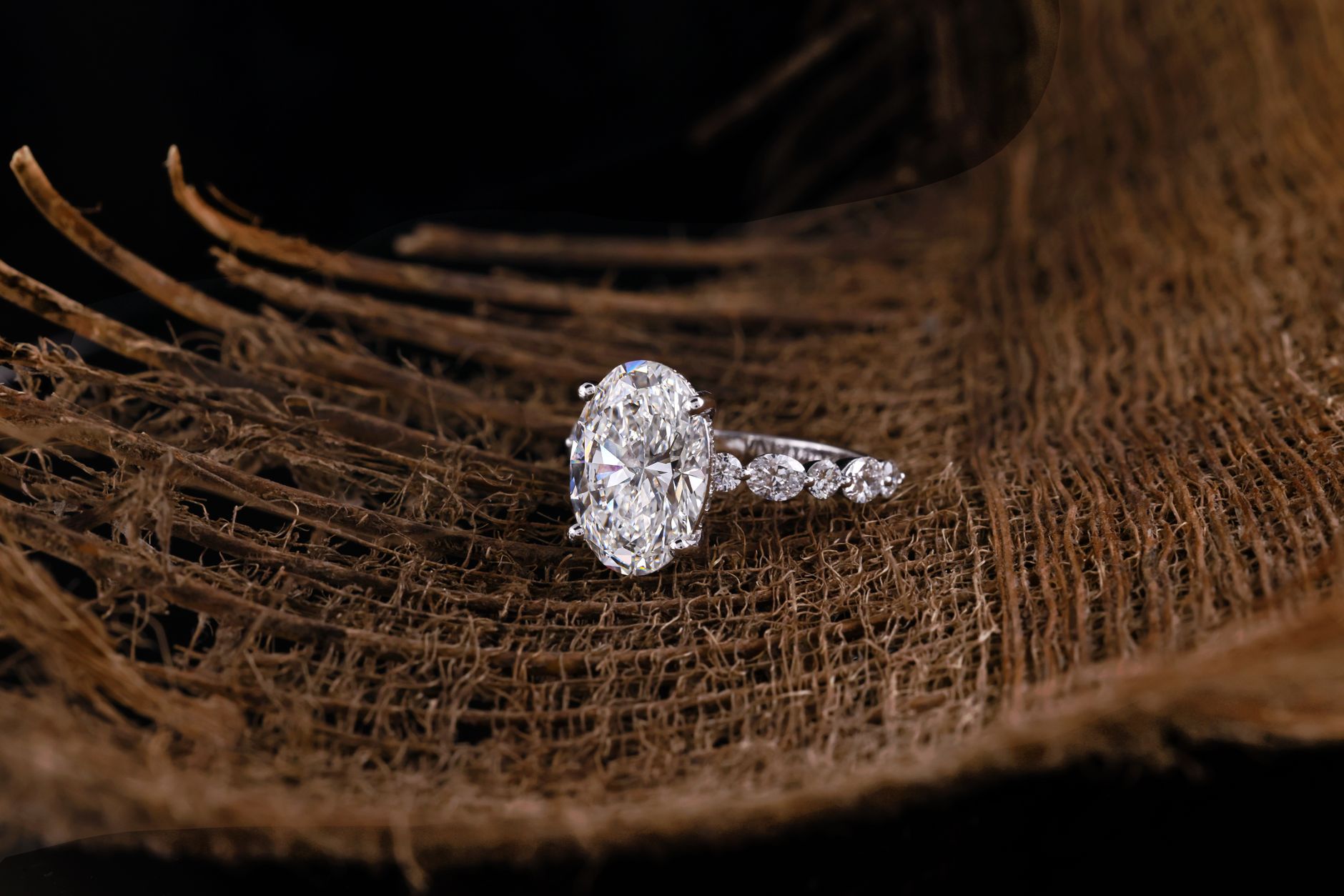
For shoppers comparing styles, 8 Best Lab Grown Diamond Oval Cut Rings highlights options that balance shape and sparkle.
Quick Answer
Do oval diamonds have a bow tie effect? Yes, many oval diamonds do. The bow tie appears as a shadowy band across the center of the stone and is caused by how the diamond reflects light back to the eye.
The effect is common in oval cuts because of their elongated shape and faceting pattern. Some oval diamonds show only a faint bow tie, while others show a stronger one that is noticeable face-up. The difference usually comes down to proportions, facet arrangement, depth, and how the diamond is cut.
Not every bow tie is a deal-breaker. A subtle bow tie may be visible only in certain lighting and may not bother many buyers. A strong, dark bow tie that stays visible in most lighting, however, can make the stone look less bright and less evenly lit.
What Is the Bow Tie Effect?
The bow tie effect is a dark area that stretches horizontally across the center of certain elongated diamond shapes. It gets its name because it often resembles the shape of a bow tie. You may notice it most easily when looking at the diamond from the top, especially under direct lighting.
This shadow does not come from dirt or damage. It is an optical effect caused by the way the diamond’s facets interact with light. In some stones, parts of the diamond reflect light away from the viewer, which creates a dark zone. In other stones, the light return is more balanced, and the bow tie is much less noticeable.
Bow tie is most commonly discussed in oval diamonds, but it can also appear in other elongated shapes such as pear, marquise, and some radiant cuts. Oval diamonds are simply one of the shapes where buyers are most likely to notice it.
Why Oval Diamonds Are Prone to Bow Tie
Oval diamonds are cut in a way that stretches the round brilliant style into an elongated outline. This creates a beautiful silhouette and often a flattering look on the hand, but it can also create areas where light does not return evenly.
The center of the diamond is the most sensitive zone. If the facets are not arranged well, light can reflect out of the stone instead of back to the eye. That is what creates the darker middle band.
In simple terms, the oval shape has more opportunity for light leakage and contrast than a round diamond. That does not mean ovals are worse. It means they require more careful evaluation, especially if you are trying to choose between several stones of similar size and price.
How Strong Bow Tie Affects Appearance
Bow tie is not automatically bad. In fact, many oval diamonds have a mild contrast zone that is part of the shape’s natural look. The problem is when the bow tie becomes too dark, too wide, or too obvious.
A faint bow tie may only show under certain lighting conditions, such as when the diamond is viewed under spotlights or in a store with strong overhead lighting. In everyday settings, it may be barely noticeable.
A moderate bow tie can be visible in some normal environments and may slightly reduce the overall brightness of the stone. This does not always ruin the diamond, but it can make the center look less lively than the ends.
A strong bow tie often looks like a dark stripe that remains visible in many lighting environments. It can make the diamond seem less brilliant and may be distracting, especially to buyers who want a bright, even face-up appearance.
What buyers usually notice
- The center of the diamond looks darker than expected.
- Brightness appears uneven from one end of the stone to the other.
- The stone may look less lively when viewed from straight on.
- Lighting changes cause the shadow to appear and disappear.
Bow Tie, Brilliance, and Sparkle: What Is the Difference?
Many shoppers use the word “sparkle” to describe several different visual effects, but it helps to separate them. In diamonds, the main visual traits are brilliance, fire, and scintillation.
Brilliance is the amount of white light a diamond returns. A bright diamond looks lively and well lit.
Fire is the colorful flashes of light you see when the diamond moves. This is more noticeable in certain lighting and depends partly on facet arrangement.
Scintillation is the pattern of sparkle and darkness created when the diamond moves. It is what gives a diamond that lively, flashing look.
The bow tie effect is different from these traits, but it can influence how you perceive them. A diamond may still have good sparkle overall while showing a bow tie in the center. However, if the bow tie is strong, it can reduce the sense of brightness and make the stone appear less balanced.
Which Oval Diamonds Show Less Bow Tie?
No diamond shape comes with a guarantee, but certain proportion ranges tend to perform better than others. That said, there is no single perfect oval ratio that eliminates bow tie in every case. The cut quality and facet arrangement matter just as much as basic measurements.
Buyers often evaluate oval diamonds using the following factors:
- Length-to-width ratio, which affects how elongated the stone looks.
- Depth, which influences how the diamond handles light.
- Table size, which is the flat top surface of the diamond.
- Facet symmetry, which can influence how evenly the diamond reflects light.
Some ovals with ideal-looking numbers still show a pronounced bow tie. Others with less commonly discussed proportions may face up beautifully. This is why viewing the diamond in person, or closely reviewing videos from multiple angles, is so important.
Typical proportion considerations
| Factor | Why it matters | Buying note |
|---|---|---|
| Length-to-width ratio | Changes the overall shape and finger appearance | Most buyers prefer something between slightly rounded and moderately elongated, depending on style |
| Depth | Affects how light travels through the stone | Too shallow or too deep can reduce face-up performance |
| Table size | Influences brightness and visual balance | Very large or very small tables may affect appearance |
| Facet arrangement | Determines how evenly the diamond returns light | Often the biggest factor in bow tie visibility |
How to Judge Bow Tie When Shopping for an Oval Diamond
The best way to judge bow tie is to look at how the diamond performs in real images and video, not just on paper. Lab grown diamonds make this especially practical because buyers often compare multiple stones online before choosing one.
Look for a diamond shown in several lighting environments. A good vendor or jeweler may provide videos under diffused lighting, spotlighting, and neutral light. This helps you see whether the bow tie is faint, moderate, or strong.
When reviewing images, focus on the center area of the diamond. If the middle remains dark while the rest of the stone is bright, that can be a sign of a stronger bow tie. If the dark zone appears and disappears depending on the angle, it may be less noticeable in daily wear.
Questions to ask when reviewing an oval diamond
- Does the center stay bright face-up?
- Is the bow tie visible in normal lighting, or only under spotlights?
- Are the ends of the diamond equally lively?
- Does the diamond look balanced when viewed straight on?
Appearance and Visual Performance of Oval Diamonds
Oval diamonds are often chosen for their soft outline and elegant presence on the finger. They usually look larger than round diamonds of the same carat weight because their elongated shape spreads the surface area visually.
That face-up size advantage is one reason many buyers consider ovals, including those comparing natural and lab grown diamonds. A lab grown oval can sometimes provide a larger-looking stone for the same budget than a round diamond, which is attractive to buyers focused on visible size.
Still, a larger face-up appearance should not be confused with better visual performance. An oval with a significant bow tie may look big, but not as bright or balanced as a smaller oval with better light return.
What good oval performance looks like
A well-cut oval diamond should appear lively across most of the stone, with brightness distributed in a pleasing way. You may still see a narrow contrast zone, but it should not dominate the center.
The best-performing ovals typically have:
- Even brightness from end to end
- A center that does not look overly dark
- Balanced sparkle when the stone moves
- A pleasing shape with no awkward bulging or pinching
Advantages of Oval Diamonds
Bow tie concerns aside, oval diamonds remain one of the most popular fancy shapes for good reasons. They offer a combination of elegance, size appearance, and versatility that appeals to many buyers.
1. They often look larger than round diamonds of the same carat weight
The elongated shape spreads the visual area across the finger. This can make the diamond appear bigger from the top, even when the actual carat weight is the same.
2. They create a flattering finger shape
Many people like how oval diamonds lengthen the look of the hand. This is a style preference, but it is one of the most common reasons buyers choose the shape for engagement rings.
3. They can provide strong brilliance
Oval diamonds are brilliant cuts, so they are designed to sparkle. A well-cut oval can show lively flashes of light and a bright face-up appearance.
4. They work well in many ring styles
Ovals can suit solitaire settings, halo designs, side stones, and three-stone rings. This flexibility makes them a practical choice for many ring shoppers.
5. They can be a value-conscious alternative
Because some buyers focus on round diamonds first, ovals may sometimes offer better visual size for the budget. In the lab grown market, this can be especially noticeable, since buyers may be able to choose a larger or higher-quality oval within the same price range.
Disadvantages of Oval Diamonds
Oval diamonds are attractive, but they also require more careful selection than some other shapes. The bow tie effect is the most commonly discussed drawback, but it is not the only one.
1. Bow tie can be distracting
If the bow tie is strong, it may reduce brightness and make the diamond look uneven. Some buyers are comfortable with a little contrast, but others prefer a more uniform appearance.
2. Cut quality is harder to judge from grading reports alone
Unlike round diamonds, oval diamonds do not usually receive a universally standardized cut grade from major labs. This means buyers cannot rely on a single cut rating to tell them how the diamond will look.
3. Some ovals can show a less predictable shape
Poorly proportioned ovals can appear too narrow, too thick, or uneven from one end to the other. The outline should look graceful and balanced, not awkward.
4. Color and clarity can be more noticeable in certain stones
Because ovals have large open surfaces, certain inclusions or faint color may be easier to see than in some more faceted or deeper-looking shapes. This depends on the individual diamond, but it is worth considering.
Who Oval Diamonds Are Best For
Oval diamonds are a good fit for buyers who like a shape that feels elegant, modern, and slightly different from the standard round brilliant. They are especially appealing to shoppers who want a larger-looking stone without increasing carat weight too much.
They may also suit people who want a softer, more elongated look on the hand. Many engagement ring buyers like oval diamonds because they can feel classic while still offering a bit of visual distinction.
Oval diamonds are less ideal for buyers who want the most predictable light performance with the least variation. If you want a shape that is easier to assess based on standard grading and established cutting norms, round diamonds are still simpler to evaluate.
Oval diamonds may suit you if you want:
- A shape that looks graceful and elongated
- Strong visual size for the carat weight
- A modern but still familiar engagement ring look
- Flexibility across different settings and styles
How Oval Diamonds Compare to Other Popular Shapes
Bow tie is not exclusive to ovals, so it helps to compare the shape with other common choices. This can clarify what buyers gain and give up when choosing oval versus round, pear, marquise, or radiant cuts.
| Shape | Bow tie risk | Brilliance | Size appearance | Buyer note |
|---|---|---|---|---|
| Oval | Moderate | High when well cut | Strong face-up size | Popular, elegant, and requires close viewing for bow tie |
| Round | Low | Very high and predictable | Good, but less elongated | Most consistent light performance and easiest to evaluate |
| Pear | Moderate to high | Good, but varies | Strong size appearance | Also prone to bow tie, especially near the center |
| Marquise | Moderate to high | Variable | Very strong spread | Striking shape, but shadows can be noticeable |
| Radiant | Lower to moderate | High and lively | Good spread | Can hide some unevenness better because of mixed faceting |
Oval vs round diamond
Round diamonds are usually the easiest shape to assess because their cutting standards are more established. They tend to deliver very consistent brilliance and are less likely to show a visible bow tie.
Oval diamonds can look larger and more distinctive, but they need more close inspection. Buyers choosing between the two usually decide between predictability and elongated style.
Oval vs pear diamond
Pear diamonds can also show bow tie, and sometimes even more noticeably than ovals. They have one pointed end, which changes how light behaves across the stone.
If you like the elongated look but want to compare options, ovals often feel a little more balanced and symmetrical than pears. Pears, however, can be a strong stylistic choice for buyers who want a more distinctive silhouette.
Oval vs radiant cut
Radiant cuts use a different facet pattern that can help mask some contrast issues. They often have a more lively, crushed-ice or brilliant look, depending on the stone.
Radiants may be less prone to a noticeable bow tie than ovals, but they offer a different visual style. If your priority is a softer outline and elegant shape, oval may still be the better fit.
Important Buying Considerations for Oval Diamonds
When shopping for an oval diamond, the bow tie should be part of a broader evaluation. A good stone needs balance, brightness, size, and beauty, not just a favorable specification sheet.
1. Look at the diamond in motion
Movement reveals how the diamond handles light. A still image can hide problems or overstate them, while a short video usually provides a more reliable sense of performance.
2. Pay attention to the length-to-width ratio
This ratio affects the overall shape. A lower ratio looks rounder and fuller, while a higher ratio looks more elongated. Neither is automatically better, but the ratio should match your style preference.
3. Check for a balanced outline
The shape should look even and graceful. If the ends are too pointed, the belly is too wide, or the outline looks irregular, the diamond may not be visually pleasing even if the carat weight is attractive.
4. Do not rely on carat weight alone
Two oval diamonds with the same carat weight can look very different. One may have better spread and lighter appearance, while the other may be deeper and face up smaller.
5. Consider the setting
A setting can change how the diamond appears. A thin solitaire band may make the oval look larger, while a halo can add visual size but also change the overall style. The setting will not remove bow tie, but it can influence how the diamond reads on the hand.
6. Use color and clarity wisely
Oval diamonds can sometimes show body color more than round diamonds, especially in larger stones or lighter settings. Clarity is also important because inclusions may be visible in the open center area.
For many buyers, a near-colorless range and a clarity grade that balances beauty with value is a practical starting point. This is especially relevant when reading about diamond color, diamond clarity, and diamond cut.
How Lab Grown Diamonds Fit Into Oval Diamond Shopping
Lab grown diamonds are especially relevant for oval shoppers because they can make size and quality trade-offs more flexible. Many buyers use lab grown options to get a larger oval with stronger color and clarity within a set budget.
This can be helpful when you want a visually impressive stone without stretching into a price range that would be difficult with a natural diamond. It also gives buyers more room to be selective about bow tie, proportions, and overall appearance.
That said, lab grown diamonds do not automatically solve the bow tie issue. The same optical principles apply. A poorly proportioned lab grown oval can show a noticeable bow tie just like a poorly proportioned natural oval.
For that reason, shoppers should still evaluate each stone on its individual visual performance rather than assuming every oval diamond will look similar. A strong understanding of lab grown diamonds and diamond pricing can make comparison shopping much easier.
Common Mistakes Buyers Make
Oval diamonds can be beautiful, but buyers sometimes make avoidable errors when comparing stones online or in store. Many of these mistakes come from focusing too much on size and too little on visual performance.
1. Buying based only on the grading report
A grading report is important, but it does not tell the whole story for oval diamonds. It can confirm basic details such as measurements, color, clarity, and sometimes polish and symmetry, but it may not reveal how visible the bow tie will be.
2. Assuming a lower price means a better deal
Some ovals are priced lower because of proportions or light performance issues. A bargain stone with a strong bow tie may not be a better value than a slightly more expensive diamond that looks brighter and more balanced.
3. Ignoring video or side-by-side images
Oval diamonds can vary dramatically from one stone to another. Still photos can be misleading, especially if the lighting is controlled to make the diamond appear more attractive.
4. Choosing a shape that is too narrow or too wide
The outline of an oval affects both style and how the diamond handles light. Extreme proportions may look less natural or emphasize certain visual issues.
5. Not considering the wearer’s style
Some people love an elongated, elegant look. Others prefer a more compact, classic shape. The right oval diamond should match the wearer’s taste, not just a trend.
Can You Avoid the Bow Tie Effect Entirely?
In most cases, you cannot guarantee that an oval diamond will have no bow tie at all. The shape itself makes some contrast zones common. The real goal is not necessarily to eliminate bow tie completely, but to find a diamond where it is subtle and not visually distracting.
That is why many experienced buyers compare several ovals before making a final decision. A small difference in proportions or facet pattern can make a surprisingly large difference in appearance.
If your priority is maximum consistency and minimal shape-related surprises, a round diamond may be easier. If your priority is an elongated look with strong visual spread, an oval can still be an excellent choice if carefully selected.
Frequently Asked Questions
Is a bow tie in an oval diamond always bad?
No. A slight bow tie is common and can be acceptable if the diamond still looks bright and balanced. It becomes a problem when the dark area is strong enough to make the center look dull or uneven.
Do all oval diamonds have a bow tie?
Not all oval diamonds show a noticeable bow tie, but many have some level of contrast in the center. The key difference is whether it is faint and attractive or strong and distracting.
Can lab grown oval diamonds have bow tie too?
Yes. Bow tie is an optical effect caused by cut and light behavior, not by whether the diamond is natural or lab grown. The same rules apply to both.
How can I tell if an oval diamond has too much bow tie?
Look at videos or in-person views from straight above in different lighting. If the center remains dark in most conditions and noticeably breaks up the sparkle, the bow tie may be too strong.
Does a higher price mean less bow tie?
Not always. Price can reflect size, color, clarity, and market demand, but it does not guarantee better light performance. Some expensive ovals still have noticeable bow ties if the cut is not ideal.
What length-to-width ratio is best for an oval diamond?
There is no single best ratio. Some buyers prefer a slightly rounder oval, while others like a longer, more elegant outline. The right choice depends on personal style and how the shape looks on the hand.
Should I avoid oval diamonds if I do not want any shadow?
If you want the most uniform light performance possible, round diamonds are usually the safer option. If you like the oval shape, focus on finding one with a faint bow tie rather than trying to avoid all contrast.
Conclusion
Oval diamonds do have a bow tie effect in many cases, and that is a normal part of the shape’s optical behavior. The important question is not whether a bow tie exists, but whether it is subtle enough to preserve brightness and visual appeal.
For buyers, the best approach is to evaluate the diamond as a whole. Consider the center brightness, the shape outline, the length-to-width ratio, the color and clarity, and how the stone looks in real lighting rather than relying on the grading report alone.
Oval diamonds remain a strong choice for shoppers who want an elegant, elongated shape with good face-up size. They can be especially appealing in the lab grown market, where buyers often have more flexibility to prioritize cut quality and visual performance within budget. The key is to choose carefully, because the best oval is usually the one that looks balanced and lively in person, not simply the one with the largest measurements on paper.