When buyers compare diamond clarity grades, one of the most confusing details is the type of inclusion listed on a grading report. Two of the most common are feather and crystal inclusions. They sound similar at first, but they are very different in how they form, how they look, and how much they matter in real-world buying decisions.
If you are shopping for a diamond, especially a lab grown diamond, understanding the difference between feather and crystal inclusions can help you judge whether a stone is truly eye clean, whether a clarity grade is meaningful, and whether a lower-priced diamond is still a smart choice. In many cases, the inclusion type matters less than its size, location, and visibility, but there are important exceptions.
This guide explains what each inclusion is, how it affects appearance and durability, and how to think about feather vs crystal inclusion when comparing diamonds side by side. The goal is not to memorize gemological terms, but to help you make a more informed buying decision.
Quick Answer
A feather inclusion is a fracture or internal break in the diamond, while a crystal inclusion is a tiny mineral crystal trapped inside the diamond during formation. In plain English, a feather is a structural irregularity, and a crystal is a separate tiny object inside the stone.
In everyday viewing, both can be completely invisible in many diamonds. What matters most is not just whether the inclusion is a feather or a crystal, but where it sits, how large it is, whether it affects transparency, and whether it reaches the surface. A small feather deep inside the diamond is often not a concern. A crystal near the center may be visible under magnification and occasionally to the naked eye.
For most buyers, a well-placed VS2 or SI1 diamond with either inclusion type can be a better value than paying a large premium for higher clarity that looks the same in normal wear. The better question is usually not “feather or crystal?” but “Will I actually see it, and does it affect the diamond in any practical way?”
What Is a Feather Inclusion?
A feather inclusion is a small internal fracture in the diamond. It gets its name because the fracture can look wispy, soft-edged, or feathery under magnification. In some stones, a feather looks like a thin white line. In others, it looks like a reflective internal break with a more irregular shape.
Feathers can form naturally during a diamond’s growth, or they can occur during cutting and polishing. In lab grown diamonds, feathers are also observed, although the exact growth conditions can influence how they appear. A feather does not automatically mean a diamond is fragile, but it is one inclusion type buyers should evaluate carefully if it reaches the surface or sits near a vulnerable area.
What buyers actually see
Most feathers are only visible under magnification. In normal viewing, a small feather may not be noticeable at all, especially in a well-cut diamond with good brilliance and sparkle. If a feather is white, tiny, and located near the edge or under a prong, it is often not an issue from a visual standpoint.
However, a larger feather, or one near the girdle or surface, may be easier to spot and could slightly affect transparency or durability. This is why the location matters as much as the inclusion type itself.
Does a feather affect durability?
Sometimes it can, but not always. A feather that sits safely inside the stone and does not break through the surface usually creates little practical risk. A feather that reaches the surface, especially near the edge, corner, or a stress point, deserves more attention because it may make the diamond more vulnerable to chipping or damage during setting or wear.
This is especially important for fancy shapes such as marquise, pear, and oval diamonds, where points and edges can be more exposed. In a round brilliant, feathers near the girdle still need review, but the stone’s shape may offer slightly different protection depending on how it is set.
What Is a Crystal Inclusion?
A crystal inclusion is a tiny mineral crystal trapped inside the diamond during its formation. In practical terms, it is a foreign crystal embedded within the diamond. These crystals can be white, transparent, dark, or colored, and they may reflect light differently depending on their composition.
Crystals are among the most common inclusions in both natural and lab grown diamonds. They are not automatically a sign of poor quality. In many stones, they are very small and only visible under magnification. Some crystals, especially dark ones, can be easier to see than a white feather because they may create stronger contrast.
What buyers actually see
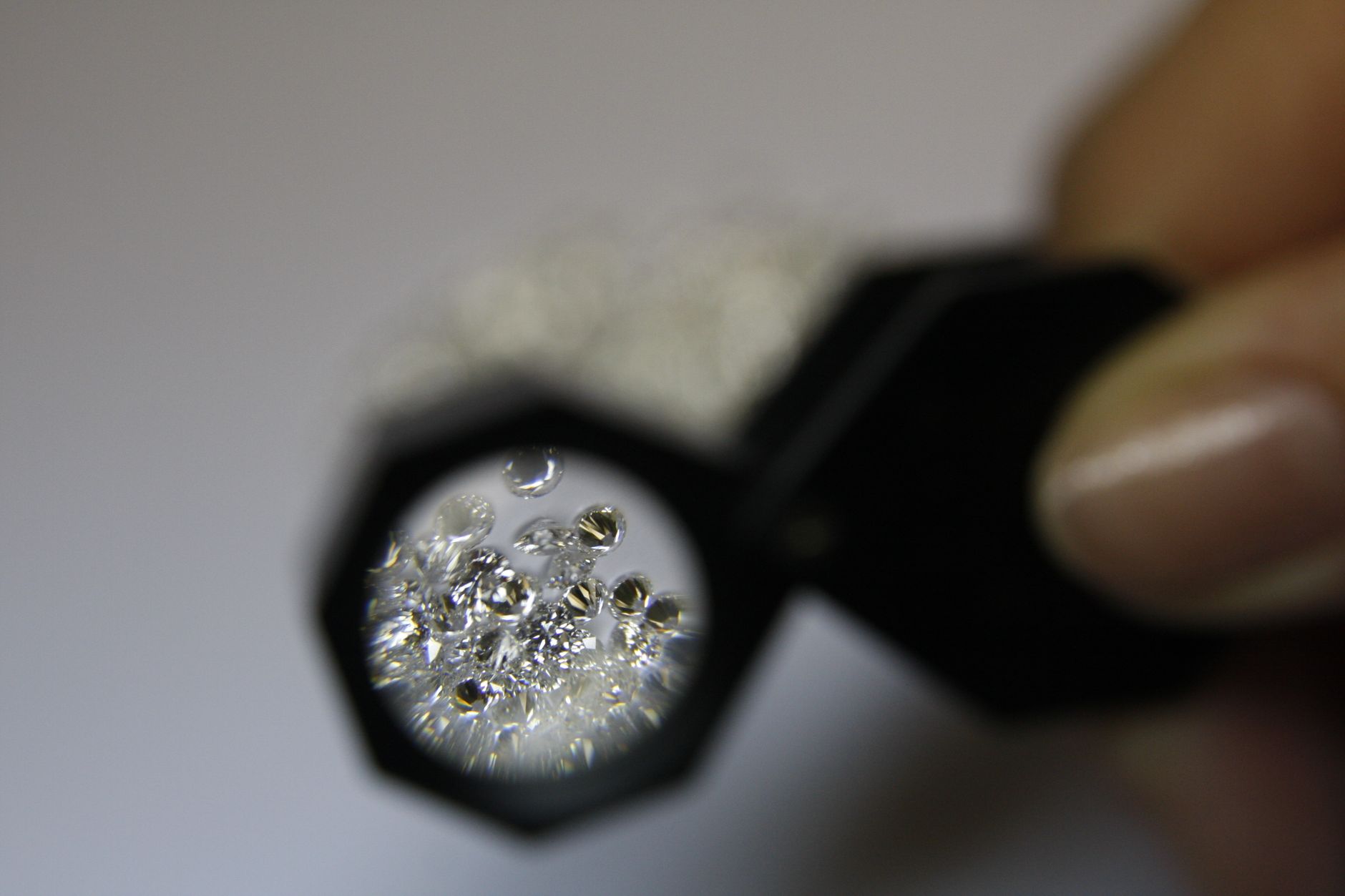
Crystals can appear as tiny pinpoints, little reflective dots, or slightly larger mineral specks under a loupe. In a face-up view, a crystal may be invisible in a clean-looking diamond, particularly if it sits off to the side or blends into facet reflections.
When a crystal is dark, centrally located, or clustered with other inclusions, it may become more noticeable. This is one reason why two diamonds with the same clarity grade can look different to the eye. The grading category does not tell the entire story.
Does a crystal affect durability?
Usually not, unless it is associated with surface-reaching damage or sits in a structurally sensitive area. A crystal is simply an internal foreign object. It is not usually a weakness in the diamond itself, but if it is large enough or near the surface, it may become a visibility concern.
Compared with a feather, a crystal is often thought of more as a visual issue than a structural one. Still, every inclusion must be evaluated in context. A small crystal hidden near the pavilion may never matter in normal wear, while a larger crystal in the center of the diamond may be obvious even if the clarity grade is still acceptable.
Feather vs Crystal Inclusion: The Main Differences
The most important difference is that a feather is a break or fracture pattern, while a crystal is a trapped mineral. That difference matters because feathers can occasionally raise more durability questions, especially if they are surface-reaching, while crystals are more often judged by their visibility.
| Feature | Feather Inclusion | Crystal Inclusion |
|---|---|---|
| What it is | Internal fracture or break | Tiny trapped mineral crystal |
| Typical appearance | Wispy, white, or reflective line-like feature | Dot, speck, mineral grain, or reflective point |
| Visibility | Often invisible unless larger or centrally located | Often invisible unless dark, large, or central |
| Durability concern | Can matter if surface-reaching or near a vulnerable area | Usually minimal unless associated with other issues |
| Buyer concern level | Moderate if near the surface | Usually low to moderate depending on visibility |
| Common impact on price | Depends on size and location, not just type | Depends on size, color contrast, and location |
Why Inclusion Type Matters to Buyers
Most buyers start by looking at clarity grades such as VS1, VS2, or SI1. That is useful, but the grade alone does not explain how a diamond will look in everyday life. Two diamonds with the same grade can have very different inclusion patterns, and a feather vs crystal inclusion can influence that pattern in different ways.
For practical shopping, inclusion type matters because it affects three things: how visible the inclusion is, whether it could influence durability, and whether the stone still looks clean and bright in normal wear. If a diamond is eye clean, stable, and well-priced, the inclusion type may be far less important than buyers assume.
That is especially true for lab grown diamonds, where buyers often compare high-clarity stones and may be tempted to pay more for grades that do not create a visible improvement. In that context, it is worth understanding whether the inclusion is actually something you can see without magnification.
How Feather and Crystal Inclusions Affect Appearance
Inclusions influence appearance in different ways. A feather can create a soft white area, a thin line, or a slight haziness if there are many feathers or if one is large enough. A crystal often creates a more defined speck or reflective point, and dark crystals can be easier to spot than lighter ones.
The size, contrast, and location of the inclusion matter more than the type alone. A tiny feather near the edge may disappear in the sparkle pattern, while a crystal right under the table, the large top facet of the diamond, may draw the eye more quickly.
Eye clean appearance
“Eye clean” means you cannot see inclusions with the naked eye in normal viewing conditions, usually at a typical face-up distance. For many buyers, this is the most practical clarity standard. A diamond may contain a feather or a crystal and still look eye clean.
The diamond’s cut also affects how noticeable inclusions are. A well-cut stone can hide small features better because brightness and sparkle distract the eye. A poorly cut diamond may make inclusions easier to notice because the stone returns less light and looks less lively overall.
Transparency and visual texture
Some inclusions do more than create visible dots or lines. A cluster of small feathers or crystals can create a slightly cloudy or textured appearance. Buyers sometimes describe this as “a sleepy look,” “a smudge,” or “less crisp transparency.”
This is not guaranteed, and it depends heavily on the stone. But if a diamond appears less sharp or less bright than another stone of similar size and grade, inclusion type may be part of the reason. In general, a single small inclusion is less concerning than a cluster spread across a visible area.
How Feather and Crystal Inclusions Affect Value
Clarity affects value, but not always in a linear way. Moving from a visibly included diamond to an eye-clean diamond can be worth it for many buyers. Moving from eye clean to a much higher clarity grade is often where value starts to diminish quickly.
That is why the feather vs crystal inclusion question is best viewed through the lens of value. If both stones are eye clean, the better value is often the one with the more favorable price and the better overall appearance, not necessarily the one with the “better” inclusion type on paper.
When paying more makes sense
Paying more for clarity can make sense when the higher grade delivers a real visual benefit. If one stone has a central crystal visible without magnification and another has a smaller feather hidden near the edge, the higher-clarity stone may be worth the premium. The same is true if a feather raises a durability concern because it reaches the surface in a risky location.
Some buyers also prefer a higher clarity diamond for peace of mind. That is a personal value judgment. If you know you are sensitive to visible inclusions, paying extra for a cleaner-looking diamond can improve long-term satisfaction.
When the premium is not justified
Premiums become harder to justify when the clarity improvement is not visible in daily wear. For example, a diamond with VS1 clarity may cost noticeably more than a very clean VS2 or a carefully chosen SI1, even though the stones look nearly identical face-up. In that case, the extra money may not improve appearance enough to matter.
This is one reason experienced buyers often focus on eye-clean performance rather than chasing the highest clarity grade. If a feather and a crystal are both invisible to the naked eye, the better value often lies in the less expensive option.
Practical Examples Buyers Often Encounter
VS2 versus SI1 in normal viewing conditions
A common comparison is a VS2 stone with a few small inclusions, perhaps including a tiny crystal, versus an SI1 stone with a feather or crystal that is still eye clean. In normal viewing, these two diamonds may look nearly the same. The difference is often only visible under magnification or when viewed from very close range.
In this scenario, the SI1 may offer better value if it is truly eye clean and has no durability concerns. The VS2 may offer more comfort for a cautious buyer, but not always enough visual improvement to justify a much higher price.
Eye-clean SI1 versus non-eye-clean SI1
Not all SI1 diamonds are alike. One SI1 might be eye clean because its inclusions are small, off to the side, or broken up by facet reflections. Another SI1 might have a dark crystal directly under the table that is easy to see. Both can share the same grade, yet they are very different buying experiences.
This is where inclusion type becomes helpful. A small feather near the edge may be a reasonable SI1 choice. A dark crystal at the center may push a diamond out of the “good value” category for some buyers, even if the paper grade is acceptable.
VVS versus VS clarity for everyday wear
VVS diamonds are very, very slightly included, and VS diamonds are very slightly included. The practical difference is often minimal to the naked eye. A VVS diamond may contain microscopic feathers or crystals, but most buyers will not see a visual difference in normal viewing.
For everyday wear, many people find that a well-chosen VS diamond offers nearly the same appearance as VVS at a lower price. The premium for VVS often reflects rarity more than visible benefit.
Inclusion Type and Lab Grown Diamonds
Lab grown diamonds are graded for clarity in much the same way as natural diamonds, and inclusion types such as feathers and crystals can appear in both. The difference is that lab grown diamonds may show certain growth-related features more commonly, depending on how they were produced. That does not mean they are lower quality. It simply means the inclusion mix can look a little different.
For buyers comparing lab grown diamonds, feather vs crystal inclusion can be especially important because many stones are already very high in clarity. When the overall clarity is high, small differences in inclusion type often have limited practical impact. The bigger questions become: Is the diamond eye clean? Is there any structural concern? Does the grading report describe the inclusion in a way that makes sense for the price?
It is also worth remembering that lab grown diamonds can sometimes show color zoning, growth features, or clusters of tiny inclusions that are part of the manufacturing process. None of these automatically make the diamond unattractive, but they are worth reviewing carefully on the report and in photos or videos.
Which Inclusion Is More Concerning?
There is no universal answer, because the context matters. A feather is more concerning when it is surface-reaching, large, or located in a stressed area. A crystal is more concerning when it is dark, central, or large enough to be seen easily.
If both inclusions are small and well hidden, neither may be a real problem. If both are visible, the crystal may be more obvious in appearance, while the feather may raise more questions about durability if it breaks the surface. So the answer is usually not about which inclusion is “bad,” but about how it behaves in the specific stone.
General buying rule of thumb
For most shoppers, a small hidden feather is often less concerning than a dark central crystal. But that is not a strict rule. Some feathers are harmless and invisible, while some crystals are so tiny they are of no practical concern at all.
The safest approach is to evaluate the stone, not just the inclusion name. Grading reports, magnified images, and the diamond’s overall appearance matter more than the label alone.
How Gemologists and Jewelers Look at These Inclusions
Experienced jewelers do not treat all feathers and crystals the same. They look at their position, size, number, contrast, and whether they affect the diamond’s face-up view or structure. A feather near the girdle may be examined closely before setting, while a crystal tucked near the pavilion might be considered acceptable if it does not affect the appearance.
Professional assessment also takes setting style into account. A bezel setting, for example, protects edges better than an exposed setting, which can make some feather-related concerns less important. On the other hand, a prong setting may leave certain points more vulnerable, especially on fancy shapes.
This is why an experienced buyer often asks not only about the clarity grade, but also whether the diamond is eye clean, whether any inclusion reaches the surface, and whether the inclusion is positioned in a high-risk area.
Advantages of Diamonds With Small Feathers or Crystals
Diamonds with minor inclusions can offer excellent value. In many cases, a small feather or crystal helps lower the price without affecting everyday appearance. For buyers who are focused on beauty and budget rather than grading perfection, this can be a smart trade-off.
Another advantage is flexibility. A diamond that is slightly lower in clarity may allow you to prioritize other important factors, such as cut quality, carat size, or color. Since cut has such a strong effect on sparkle, many buyers are better served by choosing a slightly included but beautifully cut stone than by overspending on invisible clarity.
Finally, small inclusions are common and normal. A diamond does not need to be flawless to be beautiful, durable, or suitable for everyday wear. Understanding that helps buyers avoid paying for perfection they cannot actually see.
Disadvantages and Trade-Offs
The main disadvantage of feathers is potential durability concern in the wrong location. A surface-reaching feather, especially near the edge or corner, deserves closer inspection. If a jeweler flags the inclusion as fragile or if it sits in a high-stress area, you may want to consider a different stone.
The main disadvantage of crystals is visibility. A dark crystal, especially when centered under the table, can be more obvious than buyers expect. It may not affect durability, but it can affect the visual cleanliness of the diamond.
Another trade-off is that clarity grades can create false confidence. Buyers sometimes assume a diamond with a better grade is automatically better in every way, but that is not always true. A high-clarity diamond with poor cut may look less attractive than a lower-clarity diamond with excellent sparkle and no visible inclusions.
Buying Considerations When Comparing Feather vs Crystal Inclusion
Budget
If your budget is fixed, clarity should be evaluated in relation to the other characteristics of the diamond. Many buyers are better off aiming for an eye-clean stone in a practical clarity range than chasing a higher grade with no visible advantage. That is especially true in lab grown diamonds, where the price structure can make clarity upgrades tempting.
Ask whether the higher price actually changes what you see. If not, the extra cost may be better allocated toward a better cut, a preferred shape, or a larger carat size.
Eye-clean priority
If eye cleanliness matters most to you, prioritize actual appearance over the inclusion name. A tiny feather that cannot be seen in normal viewing is often a better buy than a small but obvious crystal. What you want is a diamond that looks clean in real life, not one that simply sounds cleaner on a report.
Inclusion placement
Placement can matter more than type. An inclusion near the edge can often be hidden by prongs, while one under the table is more likely to draw attention. If a feather sits at the girdle and a crystal sits off to the side, the better choice depends on whether you care more about durability or visibility.
For fancy shapes and larger stones, placement deserves even more attention because there is more area for inclusions to appear. Review magnified images whenever possible and ask whether the inclusion is centrally located or hidden by the setting.
Lab grown diamond considerations
Lab grown diamonds often provide excellent value at higher sizes and better color grades, which means some buyers become more selective about clarity. That is understandable, but it can lead to overpaying for grades beyond what the eye can detect. In many lab grown stones, a VS or even an eye-clean SI grade is enough for a clean-looking result.
At the same time, lab grown diamonds should still be evaluated carefully for inclusion type. If a feather is surface-reaching or a crystal is obvious in a video, that detail matters regardless of how attractive the price may be.
Long-term satisfaction
Think about how you will feel wearing the diamond over time. Some people are very comfortable choosing a slightly included stone if it is clean to the eye. Others prefer the reassurance of higher clarity, even when the visual difference is small. Neither approach is wrong, but it helps to know your own comfort level before buying.
Common Buyer Mistakes
- Overpaying for invisible clarity improvements. Many buyers pay more for a better clarity grade without gaining any visible benefit.
- Ignoring inclusion location. A tiny inclusion under a prong is very different from one under the table.
- Assuming all SI diamonds look the same. SI1 and SI2 diamonds can vary widely in visibility and appearance.
- Thinking a feather is always dangerous. Many feathers are harmless if they are small and internal.
- Thinking a crystal is always visible. Many crystals are too small to matter in normal wear.
- Buying from the grade only. Clarity grade is helpful, but images and actual eye-clean appearance matter more.
- Ignoring cut quality. A well-cut diamond can make inclusions less noticeable and improve overall beauty.
How to Read a Clarity Report More Smartly
A grading report tells you the clarity grade and may identify the type of inclusion, but it does not always tell the whole story. Two diamonds can both be graded VS2 and still look different because one has a feather near the edge while the other has a crystal under the center.
When reading a report, look for the following questions:
- What is the clarity grade?
- What type of inclusion is listed?
- Where is the inclusion located?
- Is it surface-reaching?
- Does the diamond still look eye clean in photos or video?
If the grading report includes a plot diagram, use it as a guide rather than a final verdict. The diagram shows the inclusion location, but not always how visible it will be in person. That is why many buyers combine the report with high-resolution images or video.
Real-World Viewing Conditions Matter Most
Diamond clarity should be judged in the same conditions in which people actually wear and view the stone. Most people do not inspect a diamond under a microscope in daily life. They see it from a normal distance, in moving light, and often in bright or mixed lighting.
That means the practical question is simple: can you see the feather or crystal without magnification? If the answer is no, the inclusion may have little impact on enjoyment. If the answer is yes, then the stone may need a closer look, especially if the visible inclusion is near the center or if it affects the diamond’s overall crispness.
Experienced jewelers often notice that a diamond can look cleaner in motion than it does in a still magnified image. Sparkle draws attention away from small inclusions. This is one reason why face-up appearance should always be considered alongside report data.
Frequently Asked Questions
Is a feather inclusion worse than a crystal inclusion?
Not always. A feather can be more concerning if it reaches the surface or sits in a vulnerable area. A crystal can be more visible if it is dark or located in the center. The better question is which one creates more practical concern in the specific diamond.
Can I see a feather with the naked eye?
Usually no, not if it is small and well placed. Larger feathers or surface-reaching feathers may sometimes be visible, especially in lower clarity grades or if they create a white line in the middle of the stone.
Can I see a crystal with the naked eye?
Sometimes yes, if the crystal is dark, large, or centrally located. Many crystals are too small to notice without magnification, especially in bright, well-cut diamonds.
Does a feather make a diamond weak?
Not necessarily. A small internal feather often has no meaningful effect on durability. The concern increases when the feather reaches the surface or sits near an edge, corner, or point that may be more exposed to impact.
Should I avoid all diamonds with feathers?
No. Many diamonds with feathers are perfectly fine for everyday wear. The inclusion should be evaluated by size, location, and whether it affects durability or visibility.
Should I avoid all diamonds with crystals?
No. Crystals are very common and often harmless. A small crystal may be completely acceptable if it does not create a visible spot or reduce the diamond’s overall appearance.
Is VS2 enough for an engagement ring?
For many buyers, yes. A good VS2 can be eye clean and offer strong value. The key is to confirm that the specific diamond does not have an obvious inclusion in the center or a feather that raises durability concerns.
Is SI1 too low in clarity?
Not necessarily. Many SI1 diamonds are eye clean and represent excellent value. The quality of the specific stone matters much more than the grade label alone.
Conclusion
When comparing feather vs crystal inclusion, the most important takeaway is that inclusion type matters, but not as much as visibility, placement, and durability risk. A feather is a fracture-like feature that can matter if it reaches the surface. A crystal is a trapped mineral that is usually more of a visibility question than a structural one.
For most buyers, the best choice is not the diamond with the “best-sounding” clarity description. It is the diamond that looks clean in normal viewing, fits the budget, and does not create unnecessary durability concerns. In many cases, a thoughtfully chosen VS2 or SI1 diamond will offer better value than paying significantly more for a cleaner grade that looks the same to the eye.
If you are comparing diamonds, use the grading report, magnified images, and real-world eye-clean appearance together. That approach gives you a far more accurate picture of what you are actually buying than the inclusion name alone.