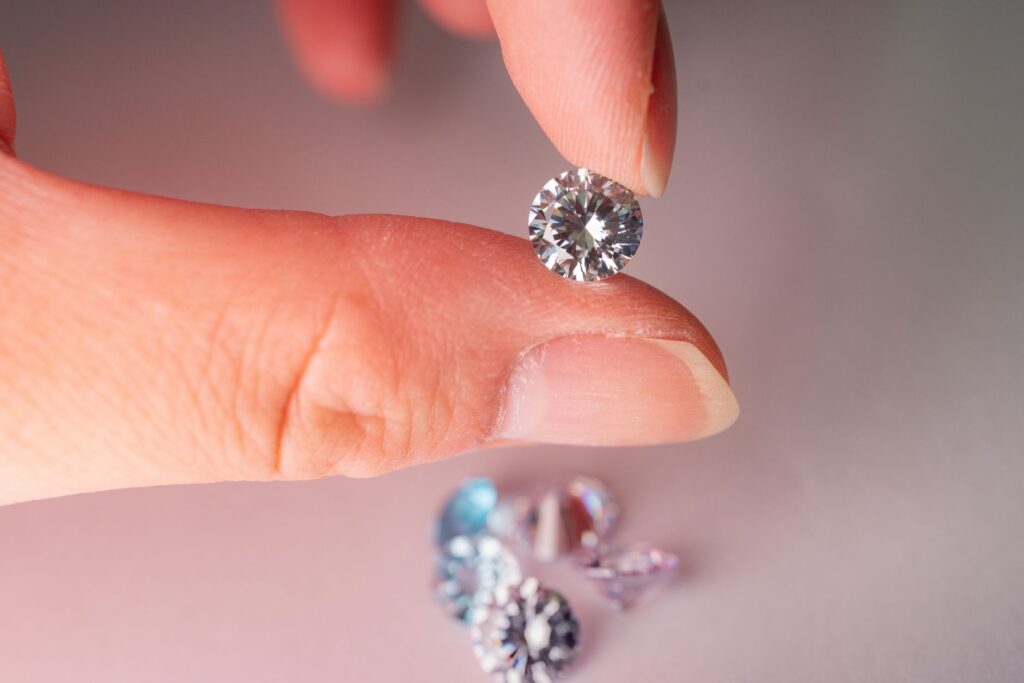
When people ask What Is Diamond Fire, they are usually trying to understand one of the most visible parts of a diamond’s sparkle. In simple terms, fire is the colored flashes of light you sometimes see when a diamond moves. Those flashes can appear as red, blue, green, yellow, or other colors, depending on the lighting and the diamond’s cut.
Fire matters because it helps determine whether a diamond looks lively and attractive in everyday wear. For buyers comparing diamonds, especially lab grown diamonds, understanding fire can make it easier to judge whether a stone is truly well cut or just looks bright under one type of light. It also helps explain why two diamonds with the same carat weight can look noticeably different in person.
Many first-time buyers focus on size and color, but cut has a major impact on how much fire a diamond shows. A well-cut diamond usually handles light better, which often means stronger sparkle, better brightness, and more pleasing colored flashes. A poorly cut diamond may still be large or high on paper, but it can look dull or watery in real life.
Quick Answer: What Is Diamond Fire
Diamond fire is the dispersion of light into different colors, seen as brief rainbow-like flashes when the diamond moves. It is one part of a diamond’s overall light performance, along with brilliance, scintillation, and brightness. Fire is easiest to notice in areas where the lighting has a mix of bright points and darker surroundings, such as sunlight, spot lighting, or a well-lit indoor setting.
Not every diamond shows fire in the same way. Cut quality, proportions, and facet arrangement all affect how much fire appears and how attractive it looks. A diamond with excellent cut often shows a more balanced mix of fire and brilliance, while a poorly cut stone may lose both color flashes and overall life.
For most buyers, the practical question is not whether fire exists, but whether it is strong enough to make the diamond look lively and appealing in daily wear. If you are comparing diamonds, fire is worth paying attention to because it can be a visible sign of good craftsmanship and strong optical performance.
Understanding Diamond Fire
What fire means in plain English
Fire is the colored light you see when white light enters a diamond, slows down, and splits into different wavelengths before exiting the stone. That separation is what creates the tiny flashes of color. In everyday terms, it is the diamond’s rainbow effect.
This effect is natural and expected in all diamonds, but some stones show it more clearly than others. The amount and style of fire depend heavily on the diamond’s cut. That is why two diamonds with the same grading report can look very different when placed side by side.
How fire differs from brilliance and sparkle
Buyers often use the word “sparkle” to describe everything bright about a diamond, but gemologists separate that into a few different parts. Brilliance refers to white light return, or how much bright white light the diamond reflects back to the eye. Fire is the colored light dispersion. Scintillation is the pattern of flashes and contrast you see when the diamond moves.
All three work together to create the diamond’s overall look. A diamond can be very bright but show limited fire, or it can show strong fire but less brightness if its cut is not balanced. Most attractive diamonds combine good brilliance, noticeable fire, and crisp scintillation.
Why fire is not the same in every lighting environment
Lighting has a huge effect on how much fire you see. In spotlighting, a diamond may produce intense flashes of color because the light is concentrated. In diffuse lighting, such as a cloudy day or a softly lit room, the fire may be subtler.
This is important because many buyers judge a diamond under store lighting that can exaggerate certain effects. A stone that looks extremely fiery under intense spotlights might not look quite the same in normal home lighting. For this reason, it is better to evaluate fire in a range of lighting conditions when possible.
Why Diamond Fire Matters to Buyers
It affects visual appeal
Fire adds liveliness to a diamond. Without it, a diamond can appear bright but somewhat flat. With it, the stone may show more depth and visual interest, especially when it moves.
For engagement rings and other daily-wear jewelry, that can make a real difference. Most people do not evaluate diamonds with gemological equipment. They notice how the stone looks on the hand, in motion, and under ordinary lighting.
It can help reveal cut quality
Fire is often a useful clue about cut quality because well-proportioned diamonds usually return light more effectively. That does not mean fire alone determines cut grade, but it is one of the visible signs shoppers can learn to recognize. In many cases, a diamond with strong, attractive fire is simply more pleasing to the eye.
Still, buyers should be careful not to judge a diamond only by fire. A stone can have noticeable color flashes and still suffer from other cut problems, such as poor brightness or weak contrast. That is why cut must be evaluated as a whole, not by one feature alone.
It influences value perception
Diamonds with better optical performance often command higher prices because buyers can see the difference. Fire is part of that value equation, especially in well-cut diamonds where the effect is balanced and natural-looking. Many shoppers are willing to pay more for a diamond that looks lively in person, even if the grading report only slightly changes on paper.
At the same time, there are diminishing returns. Paying more for a tiny improvement in fire may not make sense if the difference is barely noticeable. The goal is to find a diamond that looks beautiful to your eye, not just one with the highest possible technical score.
How Diamond Fire Is Created
The role of light dispersion
Diamond fire comes from dispersion, which is the splitting of white light into spectral colors. Diamonds have strong dispersion compared with many other gemstones, which is one reason they can show such lively flashes. This optical property is built into the material itself.
However, material alone does not guarantee beauty. The diamond’s cut determines how effectively light enters the stone, bounces inside it, and exits toward the viewer. Without a good cut, much of that potential fire is lost.
The role of facet arrangement
Facets are the small flat surfaces cut into a diamond. Their angles and placement influence how light behaves inside the stone. When those facets are arranged well, the diamond can separate white light into flashes of color while also reflecting strong brightness.
If the facets are too shallow, too deep, or out of balance, the diamond may leak light instead of returning it to the eye. That can reduce both brilliance and fire. This is why proportions matter so much in diamond buying.
The role of movement
Fire is often most visible when the diamond moves. As the stone shifts, different facets catch the light at different times, producing tiny bursts of color. That motion is part of what makes diamonds feel lively rather than static.
Even a well-cut diamond may not show constant fire at all times. The effect depends on angle, motion, and lighting. Buyers should expect intermittent flashes, not a permanent rainbow display.
How Cut Quality Affects Diamond Fire
Excellent cut usually enhances fire
Cut quality is one of the biggest factors influencing how much fire a diamond shows. An excellent cut generally provides the right balance of angles and symmetry so that light returns efficiently and dispersion is visible. The result is usually a diamond that looks bright, crisp, and lively.
For many buyers, this is where the most obvious difference appears. A well-cut diamond often outperforms a larger stone with poorer cut quality because the smaller stone returns light more effectively. The eye tends to notice liveliness before it notices raw carat weight.
Very good and good cuts can still perform well
Not every diamond needs a top-tier cut grade to look attractive. Many Very Good cut diamonds still show strong sparkle and decent fire, especially if their proportions are well managed. In everyday wear, the difference from an Excellent cut may be subtle rather than dramatic.
This is where budget and personal preference matter. Some buyers are comfortable choosing a slightly lower cut grade if it allows them to prioritize size or color. Others prefer the sharper optical performance of a top cut grade, even if it means a smaller stone.
Poor cut can reduce fire noticeably
When a diamond is cut too shallow or too deep, light may escape instead of being dispersed and returned. The result can be a dull, glassy, or uneven look. In such stones, fire may be limited, inconsistent, or lost behind areas of dead light.
That is one reason experienced jewelers often emphasize cut before many other factors. A diamond with higher clarity or carat weight may still underperform visually if the cut is weak. For most buyers, that is money spent on weight that does not translate into beauty.
Fire, Brilliance, and Scintillation: How They Work Together
| Light performance factor | What it means | What buyers see | Why it matters |
|---|---|---|---|
| Brilliance | White light returned to the eye | Brightness and overall lightness | Makes the diamond look lively and full of life |
| Fire | White light split into colored flashes | Rainbow-like sparkles | Adds visual interest and richness |
| Scintillation | The pattern of flashes and contrast during movement | Twinkling and on-off sparkle | Creates excitement and sharp visual contrast |
These three elements are closely connected, but they are not identical. A diamond with high fire may still need good brilliance to avoid looking dark. A diamond with strong brilliance but weak scintillation can look bright yet less dynamic. The best stones balance all three.
For buyers, this means that focusing only on one feature can be misleading. A diamond that shows a lot of fire under one lighting setup may not have equally strong brilliance. When possible, look for a stone that performs well in several settings, not just one.
What Buyers Actually Notice in Real Life
Fire is usually most obvious in motion
Most people do not stand still and inspect a diamond under a microscope. They see it while the hand moves naturally, while walking, talking, or gesturing. In those moments, the combination of fire and scintillation becomes visible.
A diamond with strong fire may produce tiny color flashes that make the stone feel more animated. In daily wear, those flashes are usually brief and subtle rather than large and dramatic. That subtlety is normal and often what makes well-cut diamonds appealing.
It is easier to spot in certain shapes
Round brilliant diamonds often show a balanced mix of brilliance and fire because their facet pattern is optimized for light return. Fancy shapes like oval, cushion, pear, and radiant can also show beautiful fire, but the pattern may look different. Each shape has its own visual behavior.
Some buyers prefer the crisp, symmetrical flashes of a round stone. Others like the broader, softer color flashes common in certain fancy shapes. There is no universal best choice, only different appearances.
Lighting conditions can make a big difference
Under spotlights or sunlight, fire may appear more noticeable. Under diffuse office lighting, it may be more restrained. This is why buyers should be cautious about judging a diamond only by how it looks in a jewelry store.
If you are comparing lab grown diamonds or natural diamonds, ask to see the stones in several lighting environments if possible. That gives a more realistic sense of how the diamond will perform in daily life.
Fire in Lab Grown Diamonds
Lab grown diamonds show fire in the same way natural diamonds do because they have the same crystal structure and optical properties. A well-cut lab grown diamond can show excellent fire, brilliance, and scintillation. In fact, many buyers are drawn to lab grown diamonds because they can often get a larger, well-cut stone for the same budget.
That said, the same cut rules still apply. A lab grown diamond is not automatically better cut just because it is lab created. Buyers still need to pay attention to proportions, symmetry, and overall light performance.
One practical advantage is that lab grown diamonds can sometimes make it easier to prioritize cut quality within a given budget. If you can afford a better cut grade or a more carefully selected stone, that may translate into stronger visible fire and better overall sparkle. This is one reason many buyers compare lab grown diamonds by cut first, not by size alone.
How Fire Affects Value
When paying more can make sense
Paying more for a diamond with better fire can be worthwhile when the improvement is clearly visible. If the stone looks more vibrant, brighter, and more alive in person, many buyers find that extra cost justified. This is especially true for engagement rings, where the diamond will be seen often and at close range.
Higher cut quality can also help protect your purchase from looking flat over time. Since styles and preferences change, a diamond with strong visual performance tends to hold personal appeal better than a stone that looks merely adequate.
When the premium may not be worth it
If the difference in fire is very subtle and only visible under ideal lighting, a large premium may not be justified. Some buyers are better served by balancing cut with size, color, or setting choice. The right answer depends on what matters most to you.
For example, if two diamonds are nearly identical in appearance to your eye, paying significantly more for a marginal improvement in fire may not be practical. In those cases, it can make more sense to save money or redirect the budget toward a setting or larger carat weight.
What has the largest visual impact
For most shoppers, cut quality has the largest visual impact on fire and overall sparkle. After that, lighting conditions and diamond shape matter a lot. Carat weight matters too, but bigger is not always better if the cut is weak.
This is why many experienced buyers and jewelers would rather see a slightly smaller diamond with excellent performance than a larger diamond with obvious light leakage. The smaller stone often looks more attractive from a normal viewing distance.
Practical Examples Buyers Can Relate To
A well-cut 1.5-carat diamond versus a poorly cut 2-carat diamond
On paper, the 2-carat diamond sounds more impressive. In person, though, a poorly cut 2-carat stone may look lifeless, dark in areas, or less crisp. The 1.5-carat diamond with better cut can appear more brilliant, more fiery, and more refined.
This is a classic example of cut outperforming size. Many shoppers expect carat to dominate appearance, but once you compare stones side by side, light performance often becomes the deciding factor. The more attractive diamond is not always the larger one.
Excellent Cut versus Very Good Cut in everyday lighting
In many everyday settings, the difference between Excellent and Very Good cut can be small. Sometimes it is visible only when the stones are compared directly. In other cases, the Excellent cut will show a little more crispness, better contrast, or slightly more balanced fire.
Whether that difference matters depends on your eye and your budget. Some buyers care deeply about fine visual distinctions. Others are satisfied if the diamond looks lively and beautiful without paying the highest premium.
Higher clarity with poor cut versus lower clarity with excellent cut
A diamond with higher clarity may have fewer internal inclusions, but that advantage can be overshadowed by weak cut performance. If the stone lacks brightness and fire, it may still look less appealing than a lower-clarity diamond with excellent light return. Many inclusions are difficult to see without magnification, while poor cut is often visible immediately.
This is why cut is usually the best place to start when evaluating beauty. Clarity matters, but mostly because of visibility and durability, not because it directly creates sparkle. If your goal is a diamond that looks beautiful at normal viewing distance, cut often deserves the most attention.
What Affects Diamond Fire Besides Cut
Shape
Different diamond shapes handle light differently. Round brilliants are often considered the most efficient at balancing brilliance and fire. Fancy shapes can still be beautiful, but their patterns of light and color flashes can vary more widely.
For example, a cushion cut may show broader fire flashes, while a radiant cut may combine strong brilliance with lively color. Oval and pear shapes can show attractive fire too, though the distribution may be less uniform across the stone.
Facet style
Facet patterns influence how light is broken up inside the diamond. Some designs emphasize brilliance, while others allow more visible fire. That is one reason diamond shape is not just about outline, but also about how the stone interacts with light.
Buyers do not need to memorize every facet arrangement. It is enough to know that facet style changes the look of the stone, and that this is part of why different shapes appeal to different people.
Color and tint
Diamond color can affect how fire appears. In very white diamonds, color flashes may stand out cleanly. In diamonds with noticeable body color, especially warmer tones, the overall look of the fire can be influenced by that tint.
This does not mean warmer diamonds are unattractive. It simply means the background color can slightly change how colored flashes are perceived. Buyers comparing diamond color grades should keep that in mind.
Environment and viewing distance
Fire is easier to notice up close and in stronger light. From a distance, the overall brightness and movement of the stone matter more than individual color flashes. That is why a diamond should look good in both close inspection and normal social viewing distance.
For many engagement ring buyers, the practical goal is not to have maximum fire at all costs. It is to have a diamond that looks balanced, lively, and attractive in everyday life.
Advantages of Strong Diamond Fire
- It adds color and liveliness to the diamond.
- It can make the stone look more dynamic when it moves.
- It often reflects good cut quality and light performance.
- It can enhance the overall beauty of engagement rings and fine jewelry.
- It may improve buyer satisfaction because the diamond looks more active in real-world lighting.
Limitations and Trade-Offs
- Fire is lighting-dependent, so it may not appear strongly in every setting.
- Too much focus on fire can cause buyers to overlook brightness or contrast.
- High fire alone does not guarantee a well-balanced diamond.
- Premium pricing for small gains may not be worthwhile for every buyer.
- Some shapes naturally show fire differently, so expectations should be shape-specific.
Buying Considerations for Fire and Cut Quality
Start with cut quality
If you want a diamond with good fire, start by evaluating cut quality. For round diamonds, look closely at the overall cut grade and the underlying proportions. For fancy shapes, look for vendors or grading information that discuss light performance rather than relying on a single number alone.
Cut is the framework that determines whether the diamond can handle light well. Without that foundation, fire will be limited no matter how attractive the other specs look on paper.
Use certification carefully
A diamond grading report is useful, but it does not always tell the full story of fire. It may list measurements, grades, and quality factors such as symmetry and polish, yet the actual appearance still depends on how those details work together. Certificates from respected labs can help narrow the field, but they do not replace visual inspection.
When reading a report, pay attention to the cut grade, symmetry, polish, and proportions. These factors influence light return and therefore influence how much fire you are likely to see.
Consider the whole light performance picture
Fire should be viewed as part of a broader optical package. A diamond with strong fire but weak brightness may not look as attractive as one with more balanced performance. In real life, buyers usually prefer a diamond that looks consistently lively rather than one with a single standout feature.
If possible, compare stones side by side in different lighting. That can reveal whether the fire is balanced with brilliance and scintillation or whether one aspect is being exaggerated by a specific light source.
Match your budget to your priorities
If fire and visual liveliness are important to you, it may be worth allocating more budget toward cut quality and a shape known for strong optical performance. If size is your main concern, you may accept a slightly lower cut grade, but it is wise to understand the trade-off.
Most buyers are happiest when the diamond’s beauty matches their expectations in everyday wear. That usually comes from smart balancing, not from maximizing one specification at the expense of everything else.
Common Buyer Mistakes About Diamond Fire
Prioritizing carat over cut
One of the most common mistakes is assuming a larger diamond will always look better. In reality, a poorly cut large stone may show less fire and less sparkle than a smaller, well-cut diamond. Size matters, but visual performance often matters more.
Assuming all diamonds sparkle equally
Not all diamonds are equal in light performance. Some have crisp, lively sparkle, while others look subdued. Fire is one of the easiest ways to see that difference, especially when comparing stones side by side.
Judging only under store lighting
Store lighting can make many diamonds look more dramatic than they will in normal use. Buyers sometimes overestimate fire because the display environment is designed to show off sparkle. Always try to imagine how the diamond will look in everyday settings.
Ignoring symmetry and polish
Symmetry and polish may sound technical, but they matter because they affect how cleanly light travels through the diamond. Poor symmetry can disrupt the balance of fire and brilliance. Poor polish can interfere with the stone’s overall visual crispness.
Overpaying for invisible differences
Some buyers pay extra for a subtle improvement that is hard to detect without direct comparison. That is not always a bad choice, but it should be a conscious one. If you cannot see the difference, the premium may not add much practical value.
Frequently Asked Questions
Is diamond fire the same as rainbow sparkle?
Yes, in everyday language, diamond fire is often described as rainbow sparkle. More precisely, it is the colored flashes created when white light disperses inside the diamond. The effect is usually brief and subtle rather than a constant rainbow.
Do lab grown diamonds have less fire than natural diamonds?
No. Lab grown diamonds have the same basic crystal structure and optical properties as natural diamonds, so they can show the same level of fire. The difference comes down to cut quality and individual stone performance, not whether the diamond was grown in the earth or in a lab.
Which diamond shape shows the most fire?
Round brilliant diamonds are often considered the most balanced in fire and brilliance because of their facet arrangement. Some fancy shapes, such as cushions and radiants, can also show strong fire. The best choice depends on the look you prefer.
Can a diamond have too much fire?
In most cases, buyers worry less about too much fire and more about fire that is unbalanced with brightness. A diamond that shows lots of color flashes but lacks white light return may look less crisp overall. The goal is balance, not maximum fire in isolation.
Does higher clarity mean more fire?
Not directly. Clarity refers to internal inclusions and external blemishes, not light dispersion. A high-clarity diamond may still have poor fire if the cut is weak, while a slightly lower-clarity diamond can show excellent fire if the cut is strong.
Can I see fire without a magnifier?
Yes, fire is visible to the naked eye in many diamonds, especially in good lighting and with movement. You do not need magnification to notice it. In fact, if a diamond is well cut, ordinary viewing is usually enough to appreciate the effect.
Is fire more important than brilliance?
Neither is universally more important. Brilliance gives a diamond its bright, lively appearance, while fire adds color and richness. Most buyers prefer a balanced combination of both rather than maximizing one at the expense of the other.
Should I choose a diamond based on fire alone?
No. Fire is important, but it is only one part of a diamond’s overall appearance. Cut grade, brightness, contrast, shape, and value all matter too. A good buying decision looks at the whole stone, not just one optical feature.
Conclusion
Diamond fire is the colored light you see when a diamond disperses white light into flashes of rainbow-like sparkle. It is one of the most attractive parts of a diamond’s appearance, but it works best when paired with strong brilliance, good scintillation, and balanced cut quality. For buyers, that means fire should be evaluated as part of the diamond’s overall light performance, not as a standalone feature.
If you are comparing diamonds, remember that a well-cut stone often looks better than a larger or higher-clarity stone with weak optical performance. Fire can be a useful sign that the diamond is handling light effectively, but it is not the only thing that matters. The most satisfying purchase is usually the one that looks beautiful in everyday light, fits your budget, and performs well in real-world wear.
For anyone researching diamond quality, the most practical next step is to compare cut, proportions, symmetry, and overall visual performance together. That approach gives you a much clearer picture of whether a diamond will actually look lively, bright, and appealing once it is on the hand.