H color is often the point where diamond color stops being a theoretical grading question and becomes a practical buying decision. In real-world viewing, an H color diamond can still look bright and white, especially once it is set in jewelry and viewed from a normal distance. For many buyers, that makes H one of the strongest value grades in the near-colorless range.
Still, the answer is not the same for every shopper. Whether H color is good enough depends on the diamond shape, size, setting metal, lighting, and how sensitive you are to subtle warmth. In lab grown diamonds, where higher color grades are often more accessible, H can be a smart choice when you want to balance appearance and price without paying extra for a difference that may be hard to see.
Quick Answer: Is H Color Good Enough?
Yes, H color is good enough for most buyers. It sits in the near-colorless range on the diamond color scale, which means it usually appears white to the eye once mounted in jewelry. In most everyday situations, the difference between H and higher grades like D, E, or F is subtle rather than dramatic.
If you are buying for appearance rather than the grading report, H color is often a sensible value point. It can offer a clean, bright look without the premium attached to top colorless grades. The main exceptions are buyers who want the whitest possible diamond, are choosing certain large stones, or are especially sensitive to color.
Understanding What H Color Means
Diamond color grading measures the amount of noticeable body color in a diamond, usually a hint of yellow or brown. The scale used most often by the GIA runs from D, which is colorless, down through Z, which shows increasingly obvious color. H sits near the top of the near-colorless range.
That grading language matters because it does not mean H is visibly tinted in a way most people would notice. The grade is determined under controlled lighting and comparison conditions, often by experienced graders. What a buyer actually sees in a ring is usually less strict than what the report suggests.
Where H Sits on the Diamond Color Scale
On the standard diamond color scale:
- D to F are considered colorless.
- G to J are considered near-colorless.
- K and below begin to show more obvious warmth.
H is near the top of the near-colorless range. That is an important position because it often looks very white in real jewelry while costing less than the colorless grades above it. For many shoppers, that combination is what makes H color attractive.
What H Color Actually Looks Like
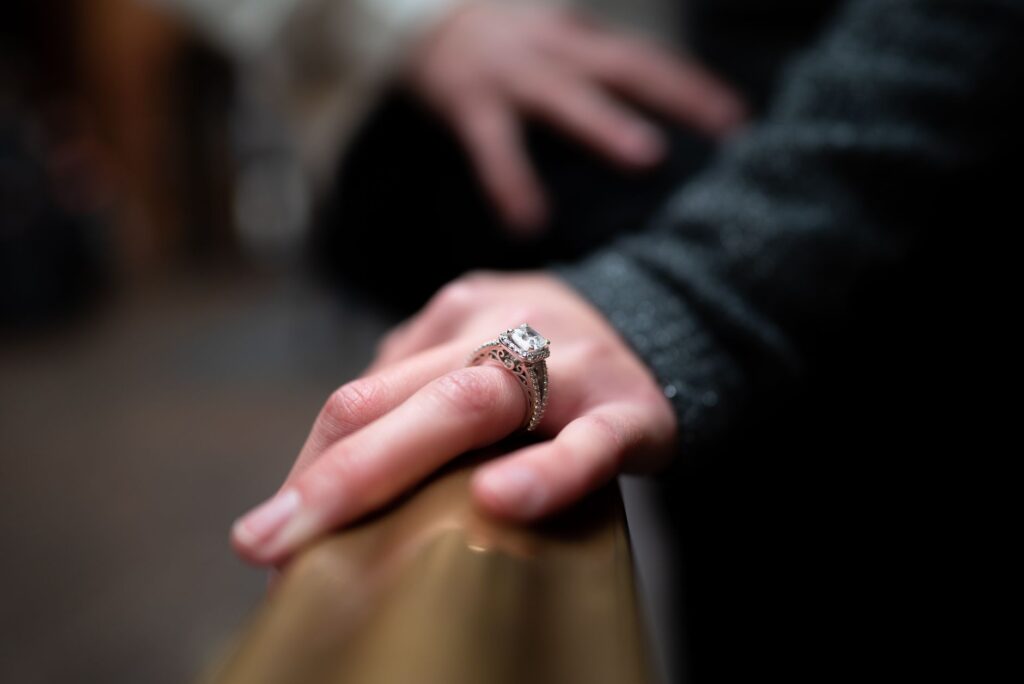
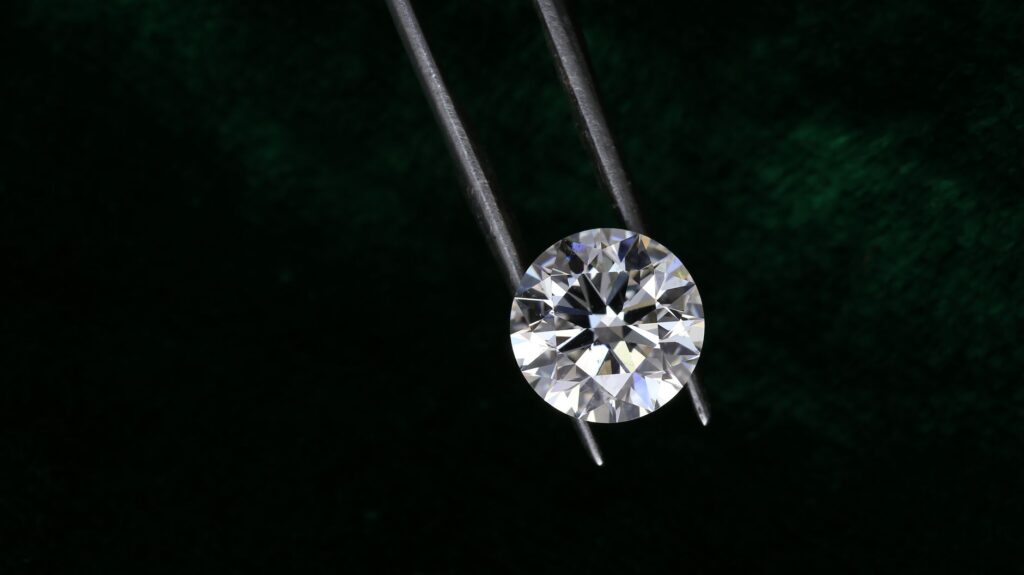
An H color diamond usually looks white to most people when viewed face-up, especially if the cut is good. The face-up view is the top view you see when the diamond is in a ring. Because a well-cut diamond returns a lot of brightness and sparkle, that visual performance can mask slight warmth very effectively.
If you compare H side by side with a D or E diamond under controlled lighting, you may notice a small difference. The H stone can look just a touch warmer or less icy. Outside of a direct comparison, though, that difference often becomes difficult to identify.
Whiteness and Warmth
Buyers often describe H color as having a balanced look. It is usually white enough for most settings, but not so high-priced that you are paying heavily for a difference that only shows under close inspection.
The warmth in an H diamond is typically subtle. It is not the kind of color most people would describe as yellow. Instead, it is usually a slight softness in the whiteness, and even that may not be obvious once the diamond is set.
How Cut Affects Color Appearance
Cut has a major influence on how white a diamond appears. A well-cut diamond reflects more light back to the eye, which can reduce the visibility of body color. A poorly cut diamond may look duller and make warmth easier to notice, even if the color grade is the same.
This is why color should never be judged in isolation. When a diamond is well cut, H color can appear brighter and cleaner than a lower-cut stone with a higher grade. For buyers comparing lab grown diamonds, cut quality is often just as important as color when judging appearance.
Can Most People See the Difference?
In everyday viewing, most people cannot clearly distinguish H color from higher near-colorless or even some colorless grades once the diamond is mounted. The difference is usually most noticeable in controlled side-by-side comparisons, not in normal wear.
That does not mean the difference is imaginary. It means the difference is often subtle enough that it matters more on paper than in real life. For buyers, that is a key distinction.
Side-by-Side Visibility
When an H diamond is placed next to a D, E, or F diamond under neutral lighting, a trained eye may detect a slight warmth. The contrast can be more obvious if the stones are loose, viewed from the side, or compared directly against each other.
Without a comparison stone, however, most shoppers do not notice that difference right away. The eye tends to focus more on sparkle, size, and overall brightness than on slight color variations. This is especially true in natural viewing conditions rather than under grading lights.
Everyday Visibility
In normal daily wear, H color usually looks white to the casual observer. Friends, family, and even many jewelry buyers will see it as a bright, attractive diamond without noticing the grade at all.
If you are buying a ring to be worn regularly, that practical visibility matters more than lab-style comparison. A diamond should look good in the situations where it will actually be seen, not only under examination at a jeweler’s counter.
Professional vs Consumer Perception
Professionals are trained to notice small differences in color that the average buyer may never detect. That does not make the lower grade poor. It simply means professionals evaluate diamonds with a more exacting eye than most consumers use in daily life.
Consumers usually care about whether the diamond looks white and attractive in a ring. For that standard, H color often performs very well. The practical question is not whether someone with gemological training can see a difference, but whether the difference matters to you in actual use.
How H Color Looks in Different Metals
Setting metal can change the way diamond color appears. Some metals make near-colorless diamonds seem brighter, while others can reveal subtle warmth more easily. This is one of the most important buying factors for H color.
| Metal | How H Color Usually Appears | Buying Consideration |
|---|---|---|
| Platinum | Very white and clean | Often a strong match for H color |
| White gold | White appearance with some contrast depending on plating wear | Good choice if the setting is bright and well maintained |
| Yellow gold | Warmth is usually masked by the setting | Can allow buyers to save money on color |
| Rose gold | Warmth is often less noticeable | H can be a very practical grade here |
H Color in White Gold and Platinum
White metals are the most common setting choice when buyers want a diamond to look bright and color-neutral. H color usually performs well in platinum and white gold because the setting supports a clean overall look.
That said, if you are very sensitive to color or choosing a larger stone, you may still prefer a higher grade in a white metal setting. The bigger and more open the stone looks, the more likely color differences can become noticeable. For many standard-size engagement rings, however, H remains a solid match.
H Color in Yellow Gold
Yellow gold can make H color look even whiter because the warm tone of the metal provides contrast. In many cases, buyers can comfortably choose H or even slightly lower grades in yellow gold without the diamond appearing obviously tinted.
This is one reason yellow gold is often a practical choice for value-conscious shoppers. It allows the setting to do part of the visual work. If your style preference leans warm anyway, H color can be an efficient and attractive option.
H Color in Rose Gold
Rose gold also tends to soften the appearance of slight color. The pinkish warmth of the metal makes subtle body color in the diamond less noticeable, which can be helpful for H color.
For buyers who like rose gold, H can often look very balanced and harmonious. It is usually not necessary to pay for a higher color grade purely for visual reasons in many rose gold designs.
How H Color Looks in Different Lighting
Lighting has a major effect on diamond appearance. The same H color diamond can look different depending on whether it is viewed outdoors, under warm indoor lights, or in a jewelry store with bright display lighting. This is true for all diamonds, not just H color.
Daylight
Natural daylight is one of the best environments for judging diamond color because it shows the stone in a neutral, real-world setting. In daylight, H color usually looks bright and white to most viewers, especially when the diamond is well cut.
If there is any warmth, daylight may make it easier to notice than some store lights do. Even so, the difference is generally subtle. Most shoppers looking at an H diamond outside of a direct comparison will still view it as a white stone.
Indoor Lighting
Indoor lighting can vary widely, from cool LED bulbs to warmer household lights. Under many indoor conditions, H color appears very white because the surrounding light and reflections help disguise faint body color.
Warm indoor lighting can sometimes make all diamonds look slightly warmer, regardless of grade. That effect is not unique to H. It is simply part of how diamonds interact with their environment.
Jewelry Store Lighting
Jewelry stores often use bright lighting designed to make diamonds sparkle. This can make color differences harder to see and can also make a diamond look more brilliant than it may appear in everyday settings.
That is why it is smart not to rely only on store lighting when deciding whether H color is good enough. Ask to view the stone under more neutral lighting if possible, or review the diamond in several environments if buying online with a return policy.
Warm vs Cool Lighting
Cool lighting can make a diamond appear crisper and sometimes emphasize whiteness. Warm lighting can make the same diamond look softer and slightly warmer. H color is generally stable across these conditions, but the exact impression can shift.
For that reason, buyers should think in terms of typical wear rather than idealized lighting. A diamond that looks great under one type of light but disappointing under another may not be the best practical choice. H color usually handles a range of lighting conditions well.
Price Premium vs Visual Benefit
One of the strongest arguments for H color is value. As you move up the color scale toward D, the price often rises faster than the visible improvement. That creates a point of diminishing returns, where you are paying more for a difference that may be difficult to notice.
In many cases, H offers a sweet spot. It sits high enough on the color scale to look clean and bright, yet it avoids the steep premiums attached to top colorless grades. For buyers prioritizing overall appearance per dollar, that balance can be very appealing.
What You Pay For
With higher color grades, part of what you are paying for is rarity and grading prestige. That matters to some buyers, especially those who want the most elite grade available. But rarity does not always translate to a visible difference once the diamond is in a ring.
From a practical standpoint, many buyers would rather put budget toward better cut quality, a more desirable shape, or a slightly larger diamond. Those factors can have a bigger impact on what the diamond looks like day to day.
Diminishing Returns Above H
The jump from H to G or F may be visible in direct comparison, but the real-world improvement is often modest. Moving from H to D can be even less meaningful for the average buyer unless the diamond is large, the setting is white, and the viewer is color sensitive.
This is where the value discussion becomes important. If the goal is to create a beautiful-looking diamond rather than chase the highest grade on paper, H is often a rational stopping point.
Who Should Consider Upgrading Above H?
H color is good enough for many buyers, but there are situations where upgrading to G, F, or even higher can be justified. The key is to understand why you are paying more and whether the added whiteness will actually matter in your specific ring.
Buyers Who Are Sensitive to Color
Some people notice subtle color differences more easily than others. If you have a sensitive eye or know you prefer a very icy, colorless look, moving above H may be worth it. Your personal perception matters more than generic recommendations.
This is especially true if you have looked at diamonds side by side before and consistently preferred the highest grades. A diamond is a visual object, and individual preference plays a real role in satisfaction.
Larger Diamonds
As diamond size increases, color can become more noticeable. A larger surface area gives the eye more opportunity to detect subtle warmth, especially in the center of the stone or from the side.
For this reason, buyers considering larger round brilliants, ovals, cushions, or emerald cuts may choose to move above H if they want a more colorless appearance. The same grade that looks excellent in a one-carat stone may feel a bit warmer in a much larger diamond.
White Metal Settings for a Very Clean Look
If the goal is a bright, icy appearance in platinum or white gold, a higher grade can provide extra assurance. This may matter more in minimalist settings, east-west styles, or designs with large open galleries where the diamond is viewed from multiple angles.
That said, H still works well in many white metal settings. Upgrading is more about maximizing whiteness than correcting a problem.
Who Can Save Money with H Color?
H color is often a smart choice for buyers who want a visually appealing diamond without paying for the top end of the color scale. In many cases, the money saved can be used where it may have more visual impact.
Buyers Focused on Cut
Cut affects brilliance, sparkle, and overall beauty more than color does for many shoppers. A well-cut H diamond can look more impressive than a poorly cut stone with a higher color grade.
If you have to choose between a slightly better cut and a slightly better color grade, cut is often the more noticeable upgrade. That is especially true for round brilliant diamonds, where light performance is central to the look.
Yellow Gold and Rose Gold Buyers
Because warm metals can mask subtle color, buyers using yellow or rose gold settings often do not need to pay for a higher color grade. H can be particularly efficient in these metals.
This allows for a more balanced budget. You may be able to choose a better shape, a higher clarity grade, or a larger carat weight while still getting a diamond that looks white in the setting.
Lab Grown Diamond Buyers
Lab grown diamonds frequently offer excellent color grades at more accessible prices than natural diamonds. Because of that, some buyers assume they should always aim for the highest color available. That is not necessarily the best value strategy.
In lab grown diamonds, H is still a very respectable color grade. Since lab grown diamonds are often selected for maximizing size and appearance within a budget, choosing H can preserve funds for cut quality or carat size without creating an obvious loss in visual beauty.
Common Buyer Mistakes with H Color
H color is a useful grade, but buyers still make mistakes when evaluating it. The most common issues involve overestimating visible differences or ignoring the other factors that shape appearance.
Overpaying for Invisible Upgrades
One of the biggest mistakes is assuming that a higher color grade will always look dramatically better. In many rings, the visual difference between H and a higher grade is very small.
If the upgrade costs a meaningful amount but produces little everyday benefit, that money may be better used elsewhere. This is especially true for buyers with a fixed budget.
Ignoring the Metal Color
Color grade should always be considered together with the setting. A buyer who chooses yellow gold may not need to spend as much on color as someone choosing platinum. Ignoring that relationship can lead to unnecessary spending.
Matching the diamond to the metal is one of the simplest ways to make a smart buying decision. H color often becomes more attractive once the setting choice is factored in.
Judging Only from the Grading Report
A report tells you the color grade, but it does not tell you exactly how the diamond will look in your hand or in your ring. Cut, shape, setting, and lighting all influence the final appearance.
This is why two diamonds with the same H color grade can look slightly different. The grade is important, but it is not the full story.
Assuming All Shapes Behave the Same Way
Not every diamond shape hides color equally well. Round brilliants can mask warmth differently than step-cut shapes like emerald cuts. Fancy shapes such as ovals and pears can also show color in different ways depending on their faceting pattern.
If you are choosing H color, shape matters. A buyer considering a shape that tends to reveal more color may want to compare the stone carefully before deciding.
How Shape Affects Whether H Color Is Good Enough
Diamond shape plays a major role in color visibility. Some shapes return more light and mask warmth better, while others create larger open areas where color may be easier to see. Understanding this can help you decide whether H is the right grade.
Round Brilliant
Round brilliants are often the most forgiving shape for color. Their strong sparkle and light return can make H color look bright and clean. For many round diamond buyers, H is a very comfortable grade.
If the cut is excellent, a round H diamond can appear impressively white. This is one reason H is often recommended as a balanced choice in round diamonds.
Oval, Pear, and Marquise
Elongated shapes can sometimes show color more readily in the pointed ends or along broader facets. This does not mean H is a bad choice, but it does mean buyers should evaluate the stone carefully.
In these shapes, some buyers prefer G or higher if they want the most colorless appearance. Others are perfectly happy with H, especially if the diamond is well cut and set in a warm metal.
Emerald and Asscher Cuts
Step cuts like emerald and Asscher show clarity and color more openly because they have larger, more open facets and less sparkle than brilliant cuts. For these shapes, H color may be more visible than it would be in a round brilliant.
That does not automatically make H unsuitable. It simply means buyers should be more attentive. If you want a very crisp appearance in a step cut, you may decide to move up a grade or two.
Cushion and Radiant Cuts
Cushion and radiant cuts can vary widely in how they handle color depending on the facet style. Some versions mask warmth well, while others reveal it more readily.
If you are considering H color in one of these shapes, viewing the actual diamond is helpful. The same grade can look different from stone to stone because cut style strongly influences visual appearance.
What Matters More Than H vs G or H vs F?
For most buyers, the H versus G or H versus F decision should be part of a bigger evaluation. Color matters, but it is only one factor in the diamond’s overall look. Cut quality, shape, carat size, and setting often have a larger impact on what you actually notice.
If you are trying to decide where to spend your budget, ask yourself what visual difference you are trying to solve. If the answer is simply “I want it to look white,” H often already accomplishes that in a practical way.
In lab grown diamonds especially, buyers often have room to optimize. Because lab grown pricing can make higher color grades more accessible, it may be tempting to push upward. Still, H remains a very reasonable grade if the rest of the diamond is strong.
H Color in Lab Grown Diamonds
Lab grown diamonds often appear in higher color grades more frequently than many natural diamonds because the production process can be controlled more tightly. That means colorless or near-colorless options are often common in the lab grown market.
Even so, H color is still an excellent practical grade in lab grown diamonds. The fact that higher color grades may be available does not automatically mean they are necessary. Buyers should still judge color based on visible benefit, not just availability.
Does Color Behave Differently in Lab Grown Diamonds?
The visual behavior of color is essentially the same whether a diamond is lab grown or natural. Color is color from the buyer’s point of view. What changes is the pricing and sometimes the distribution of grades available in the marketplace.
That means H color in a lab grown diamond should be evaluated the same way as H color in a natural diamond. Ask whether the stone looks white to the eye, whether the setting supports the appearance, and whether the price difference is justified.
Is Upgrading Color Worth It in Lab Grown Diamonds?
Sometimes yes, but not always. Because lab grown diamonds are often bought for value, buyers frequently get the best overall result by balancing color with cut and size instead of automatically chasing the top grade.
If the diamond is in a white metal and you know you are sensitive to even slight warmth, upgrading above H may be worthwhile. If not, H may already deliver the look you want at a more efficient price point.
Buyer Scenarios: When H Color Makes Sense
It can be helpful to think in real shopping scenarios rather than abstract grading terms. These examples show how H color tends to perform in practical buying situations.
Scenario 1: A Round Lab Grown Diamond in Platinum
For a well-cut round lab grown diamond in platinum, H color is often a very balanced choice. The cut helps the stone look bright, and the white metal supports the appearance of whiteness.
In this situation, many buyers would see little reason to pay extra for D, E, or F unless they have a very specific preference for the highest grades.
Scenario 2: An Oval Diamond in Yellow Gold
For an oval diamond in yellow gold, H color is usually a comfortable grade. The warm setting helps mask slight color, and the shape can still look elegant and bright with the right cut.
In this scenario, paying more for a higher color grade may offer only a modest visual benefit.
Scenario 3: An Emerald Cut in White Gold
An emerald cut in white gold can reveal more color because of its open facet structure. H may still work, but the buyer should inspect the stone carefully.
If the goal is a very crisp, icy look, stepping up to G or F may be more noticeable here than in a round brilliant.
Frequently Asked Questions
Does H color look yellow?
Usually, no. H color is near-colorless, so it generally looks white to most people. Under normal wear, it should not appear obviously yellow.
Some subtle warmth may be detectable in side-by-side comparisons or certain lighting, but that is different from looking yellow in an everyday sense.
Is H color good for an engagement ring?
Yes, H color is commonly a very good choice for an engagement ring. It offers a bright appearance without the high premium of top colorless grades.
For many buyers, H hits a strong balance between beauty and budget.
Is H color good enough in a white gold setting?
Yes, in many cases it is. H color usually looks clean in white gold, especially if the diamond is well cut.
If you are highly color sensitive or choosing a larger stone, you may want to compare it with a higher grade before deciding.
Is H color good enough in platinum?
Yes. Platinum is a white metal that often pairs very well with H color. The overall appearance is usually bright and refined.
Again, the main question is whether you want the most colorless appearance possible or the best value for the money.
Should I choose H or G?
If the price difference is small and you want a bit more peace of mind, G can be a reasonable upgrade. But if the difference is meaningful and you are unlikely to notice it in daily wear, H is often the better value.
The right answer depends on your budget, setting, and personal sensitivity to color.
Is H color noticeable in a lab grown diamond?
It can be, but usually only subtly and mostly in direct comparison. Most lab grown H diamonds still look very white to the eye.
Because lab grown diamonds often offer good value across a wide range of grades, H can be an efficient choice if you want to allocate budget elsewhere.
Is H color better than clarity if I care about appearance?
That depends on the clarity grades being compared. In many cases, a diamond that is eye-clean with slightly lower color can look better than a higher color stone with a visible clarity issue.
For most consumers, visible appearance matters more than chasing an ideal grade combination on paper.
Can H color still look premium?
Yes. A well-cut H color diamond in a good setting can look very polished and refined. Premium appearance depends on the full combination of cut, proportions, sparkle, and setting design.
H does not prevent a diamond from looking elegant or high quality.
Practical Buying Advice for H Color
If you are considering H color, the most useful approach is to look at the full picture. Ask whether the diamond appears white to your eye, whether the setting complements it, and whether the money saved is useful elsewhere in the purchase.
For many shoppers, H is one of the most rational grades available. It is high enough to look clean in most situations, but not so expensive that you are paying heavily for subtle visual differences. That is especially true when the stone has strong cut quality and is paired with a suitable metal color.
If you are buying a lab grown diamond, H color deserves serious consideration. Lab grown diamonds already offer strong value, and H can help preserve that value without compromising the look of the ring. The most important thing is to judge the diamond as it will be worn, not as it is labeled.
Conclusion
H color is good enough for most diamond buyers, and in many cases it is an excellent value choice. It sits in the near-colorless range, so it usually looks white in normal viewing conditions, especially when the diamond is well cut and set in a suitable metal.
The differences between H and higher grades are often subtle, not dramatic. That means the decision usually comes down to personal preference, diamond shape, setting metal, and budget. Buyers who want the whitest possible look may choose to upgrade, but many people can confidently choose H without sacrificing visible beauty.
For lab grown diamonds in particular, H color often offers a practical balance. It can deliver a clean appearance, support smart budgeting, and leave room to prioritize cut quality or carat size. If your goal is a diamond that looks bright and attractive in everyday wear, H is frequently more than sufficient.