A 1 carat diamond often sounds larger on paper than it looks in real life. For some buyers, it feels perfectly balanced and substantial. For others, especially those comparing online photos or social media images, it can look smaller than expected once they see the actual stone in person.
That gap between expectation and reality is why the question Is a 1 carat diamond big enough matters so much. Carat weight does not tell you the whole story. What you actually notice on the hand depends on the diamond’s shape, cut, measurements, finger size, and setting style, not just the number on the grading report.
A well-chosen 1 carat diamond can look elegant, noticeable, and proportionate. It can also be a very smart buying point because it offers a meaningful presence without moving into the much higher prices associated with larger stones. The key is understanding what 1 carat really looks like and whether it matches your personal expectations.
Quick Answer
Yes, a 1 carat diamond is big enough for many buyers. It is widely considered a classic center stone size for engagement rings because it is large enough to be clearly visible, offers good finger coverage on many hand sizes, and still fits a broad range of budgets compared with heavier diamonds.
That said, “big enough” is personal. On a smaller finger, a 1 carat diamond can look quite prominent. On a larger finger, it may look more moderate. A round 1 carat diamond usually faces up at about 6.4 to 6.5 mm in diameter, which gives a practical size reference that matters more than the carat number alone.
If your goal is a diamond that looks refined, noticeable, and timeless without paying the steep premium for larger carat weights, 1 carat is often a strong middle ground. If your goal is a bold or oversized look, you may prefer a larger carat weight or a shape that appears bigger face-up.
Understanding the Carat Concept
What diamond carat actually means
Carat is a measure of weight, not visible size. One carat equals 0.2 grams. That is a very small amount of weight, but in the diamond world it marks an important benchmark.
This is where confusion starts. Buyers often assume that a 1 carat diamond must look exactly a certain size. In reality, two diamonds that both weigh 1 carat can have slightly different face-up dimensions depending on how they are cut.
What face-up size means
Face-up size refers to how large the diamond looks when viewed from the top, which is the angle people see most of the time in a ring. This is the practical size that affects visual presence.
For example, a well-cut 1 carat round diamond usually measures around 6.4 to 6.5 mm across. If a round diamond is cut too deep, more of its weight is hidden in the lower part of the stone, so it may look smaller from above even though it still weighs 1 carat.
Why measurements matter more than many buyers realize
The grading report will list millimeter measurements. Those numbers tell you how much finger coverage the diamond is likely to provide. A difference of a few tenths of a millimeter may sound minor, but it can affect visual spread.
This is one reason experienced buyers compare measurements, shape, and cut quality, not just carat weight. A diamond’s visible size is not determined by weight alone.
What a “magic size” diamond is
In the jewelry market, certain milestone carat weights carry extra demand. One carat is one of the biggest examples. These are often called magic sizes because buyers strongly prefer them for psychological and symbolic reasons.
A 1.00 carat diamond may cost noticeably more than a 0.90 or 0.95 carat diamond even if the visual difference is small. That does not make 1 carat a bad choice, but it does mean buyers should understand the trade-off.
What Buyers Usually Expect
Expecting 1 carat to look larger than it does
Photos on retailer websites and social media can distort expectations. Close-up photography makes diamonds look much larger than they appear on an actual hand. A 1 carat diamond is not tiny, but it is also not a large cocktail-style stone.
In real life, a 1 carat center diamond usually looks tasteful and noticeable rather than dramatic. That is one reason it has remained popular for decades.
Confusing carat with diameter
Some buyers think every increase in carat produces a dramatic increase in visible size. It does not work that way. Carat weight rises faster than visible diameter because diamond weight is distributed in three dimensions.
That means going from 1 carat to 2 carats does not make the diamond look twice as wide. The face-up size increases, but not in direct proportion to the weight increase.
Comparing only carat numbers
It is easy to compare 0.90 carat, 1.00 carat, and 1.10 carat as if those numbers fully describe the visual result. They do not. A well-cut 0.90 carat diamond can sometimes look very close in size to a poorly proportioned 1.00 carat diamond.
That is why buyers who focus only on carat weight can end up paying more without getting a clearly better-looking stone.
Assuming all 1 carat shapes look the same size
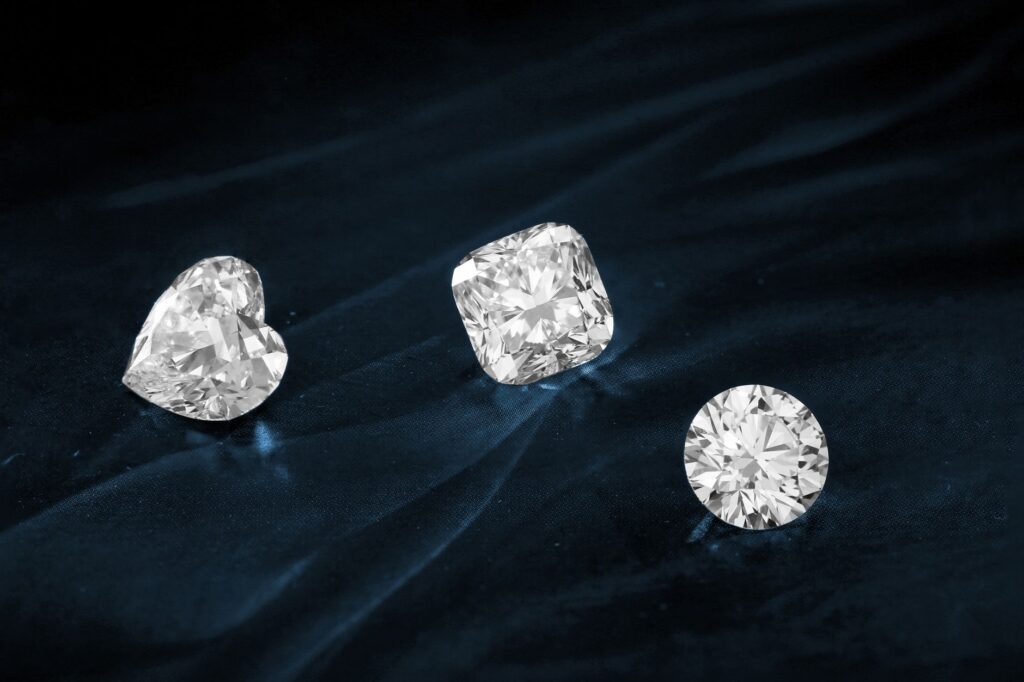
They do not. A 1 carat oval, pear, or marquise often looks larger than a 1 carat round because elongated shapes spread their weight over a larger visible surface area. A 1 carat princess or cushion may look a bit smaller face-up than a round, depending on cut style and proportions.
What It Actually Looks Like
The typical appearance of a 1 carat round diamond
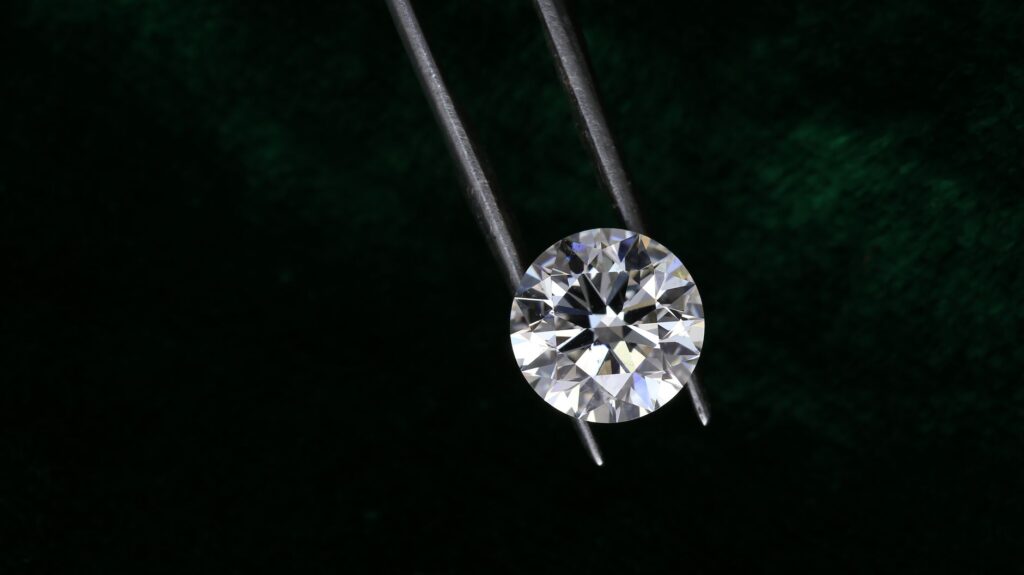
A round 1 carat diamond usually has a diameter of around 6.4 to 6.5 mm if it is well cut. On the hand, that generally creates a clear center presence that is easy to notice in normal daily wear.
It is large enough to stand out in a solitaire ring, but it still tends to look balanced rather than oversized. For buyers who want a traditional engagement ring look, 1 carat often lands in a very comfortable visual range.
How much finger coverage it gives
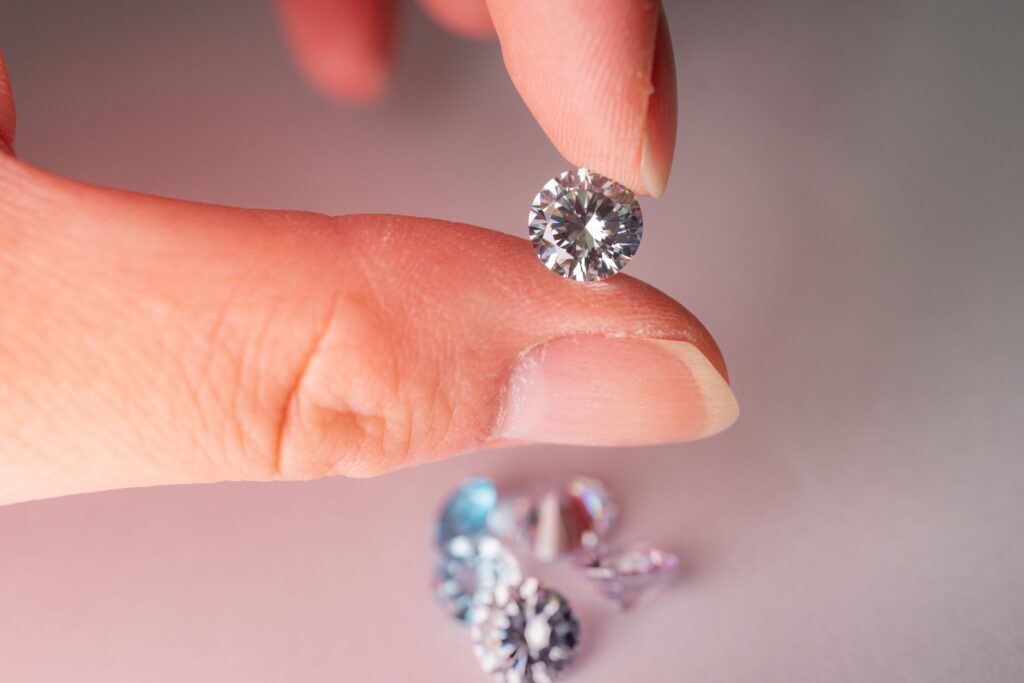
Finger coverage is the amount of space the diamond appears to occupy across the top of the finger. A 1 carat diamond can look quite different depending on finger size.
- On a smaller finger, it can look prominent and substantial.
- On an average finger, it often looks classic and well-proportioned.
- On a larger finger, it may appear more moderate and less dominant.
This is one of the biggest reasons there is no universal answer to whether 1 carat is “big enough.”
How it looks in everyday settings
In most practical ring settings, a 1 carat center stone is easily visible from conversational distance. People nearby will notice it, especially if the diamond is well cut and reflects light strongly.
However, it usually does not create the strong visual impact associated with much larger center stones. Buyers looking for a bold statement piece may feel 1 carat is modest. Buyers looking for an elegant, wearable, and classic size often find it ideal.
What most people perceive
Most non-experts do not estimate diamond carat weight accurately just by looking. They usually respond to overall appearance, sparkle, shape, and setting design more than the exact weight.
A beautiful 1 carat diamond with strong cut quality can look more impressive than a larger diamond with weaker brilliance. This is important because visual appeal is not just about spread. It is also about light performance.
Factors That Change Apparent Size
Shape
Shape has a major influence on how large a diamond appears face-up. Elongated shapes often look bigger than rounds at the same carat weight because they cover more visible area.
| Shape | Typical Face-Up Impression at 1 Carat | Notes |
|---|---|---|
| Round | Balanced, classic | Benchmark for comparison, strong sparkle when well cut |
| Oval | Often looks larger | Elongated shape can create more finger coverage |
| Marquise | Often looks quite large | Long shape can maximize spread |
| Pear | Often looks larger | Elongation can make size appear greater |
| Emerald | Can look elegant but not always larger | Step cut emphasizes clarity and shape more than sparkle |
| Cushion | May look slightly smaller | Rounded corners and deeper cuts can reduce spread |
| Princess | Can look slightly smaller than round | Weight may sit deeper in the stone |
Cut quality
Cut quality affects both sparkle and visible spread. In diamond buying, cut refers to how well the stone’s proportions and facet arrangement interact with light. It is one of the most important factors in appearance.
A poorly cut 1 carat diamond may carry too much depth, hiding weight where you cannot see it. The result can be a diamond that looks smaller and less lively. A well-cut stone often appears brighter, more open, and more attractive overall.
Depth and proportions
Depth is the height of the diamond from top to bottom. If a diamond is too deep, a larger percentage of its weight sits below the visible top surface. That can reduce face-up size.
Table size, crown height, pavilion angle, and girdle thickness also matter. Buyers do not need to become technical experts, but they should know that two 1 carat diamonds can look different because of proportion choices.
Setting design
The ring setting can make a center diamond appear larger or smaller. A thin band usually makes the center stone look more prominent. A thick band can make the same diamond seem comparatively smaller.
Halo settings, which surround the center with smaller diamonds, can make a 1 carat diamond look much larger overall. Solitaire settings show the center stone more honestly. Three-stone settings can also create a larger visual footprint across the finger.
Metal color
Metal choice has a subtler effect, but it still matters. White metals such as platinum or white gold can blend visually with the diamond and create a seamless look. Yellow or rose gold may add contrast, which can either emphasize the center stone or slightly change how large it seems depending on the setting design.
Finger size
This may be the single most overlooked factor. The same 1 carat diamond will appear larger on a size 4 finger than on a size 8 finger because it covers a greater percentage of the visible width.
That is why trying to judge “big enough” without considering hand proportions often leads to disappointment or unrealistic expectations.
Real-World Size Examples
1 carat on a size 4 finger
On a smaller finger, a 1 carat round diamond can look quite impressive. It may appear larger than expected because the stone occupies a meaningful portion of the finger’s width.
In a solitaire setting with a slim band, it often looks prominent and refined. Buyers with smaller hands frequently find that 1 carat gives plenty of visual impact without needing to go higher.
1 carat on a size 7 finger
On a size 7 finger, a 1 carat round diamond usually looks balanced and classic. It is still clearly visible, but it may not feel especially large if the buyer prefers a bold center stone.
This is often the range where personal taste starts to matter most. Some people love the proportion. Others decide they want 1.25 to 1.50 carats for more presence.
1 carat on a size 8 or larger finger
On a larger finger, a 1 carat diamond can look more modest. It still works beautifully for buyers who like understated jewelry, but it may not satisfy someone hoping for strong coverage across the top of the finger.
In those cases, elongated shapes or halo settings can help create a larger visual effect without always requiring a major jump in carat weight.
0.90 carat vs 1.00 carat
This is one of the most practical comparisons in diamond buying. A 0.90 carat round diamond may measure only slightly smaller than a 1.00 carat round. In real-world viewing, many people would not notice the difference without direct side-by-side comparison.
Yet the 1.00 carat stone may cost significantly more because it hits the popular 1 carat threshold. For value-focused buyers, this is an important area to evaluate carefully.
| Comparison | 0.90 Carat Round | 1.00 Carat Round |
|---|---|---|
| Typical Diameter | About 6.1 to 6.3 mm | About 6.4 to 6.5 mm |
| Visible Difference | Slightly smaller | Slightly larger |
| Price Perception | Often better value | Often carries a premium |
| Who It Suits | Value-focused buyer | Buyer who wants the full 1 carat mark |
1 carat round vs 1 carat oval
A 1 carat oval often looks larger than a 1 carat round because of its elongated outline. It can create more finger coverage and a longer silhouette. Buyers seeking a bigger visual effect often gravitate toward oval for this reason.
However, shape preference should still come first. It is not worth choosing an oval only for size if you truly prefer the symmetry and sparkle pattern of a round diamond.
1 carat round vs 1.25 carat round
The jump from 1.00 to 1.25 carats is noticeable, but not dramatic in the way first-time buyers sometimes expect. The diamond will look larger, but the increase in diameter is modest compared with the price increase.
This is a good example of how visual gains become more incremental as weight rises.
Price vs Visual Benefit
Why the 1 carat mark often costs more
One carat sits at a major pricing threshold. Crossing from 0.99 to 1.00 carat, or from 0.90-something into the full 1 carat category, often increases price disproportionately.
This premium is driven by demand, not just by the tiny increase in visible size. Buyers often value the psychological milestone as much as the appearance.
Diminishing returns in visible size
Diamond prices tend to rise faster than face-up size. That means each jump in carat weight can bring a smaller visual benefit relative to its cost.
For example, moving from 0.90 to 1.00 carat may involve a noticeable price increase for a small size gain. Moving from 1.00 to 1.20 or 1.25 carats increases visible size somewhat, but again the price increase may be stronger than the visual change suggests.
When paying for 1 carat makes sense
Paying the premium can make sense if the full 1 carat mark matters to you personally, such as for symbolism, gifting, or resale presentation. It can also make sense if the diamond has excellent cut quality and the budget comfortably supports it.
There is nothing inherently irrational about wanting a full 1 carat diamond. The key is knowing that part of the price reflects market psychology.
When it may not be worth it
If your main goal is visual value, a slightly under-1-carat diamond may be the smarter choice. A 0.90 to 0.95 carat well-cut diamond can look very close in size to 1 carat while leaving room in the budget for better cut, color, clarity, or setting quality.
Natural vs lab grown value considerations
This is where lab grown diamonds often change the size conversation. A buyer considering a natural 1 carat diamond may be able to afford a significantly larger lab grown diamond while staying within the same budget.
Visually, lab grown and natural diamonds look the same if they are comparable in quality. The main differences are price structure, supply dynamics, and resale expectations. Lab grown diamonds usually offer more size for the money, but they generally have weaker resale retention than natural diamonds.
| Factor | Natural 1 Carat Diamond | Lab Grown 1 Carat Diamond |
|---|---|---|
| Appearance | Same as comparable lab grown | Same as comparable natural |
| Price | Usually much higher | Usually much lower |
| Budget Flexibility | May limit size options | May allow larger carat weight |
| Resale Expectations | Typically stronger, though still limited retail-to-resale | Typically weaker |
| Best For | Buyers prioritizing natural origin | Buyers prioritizing size and budget efficiency |
Who Should Size Up
Buyers who want strong finger coverage
If you prefer a center stone that looks clearly prominent from a distance, 1 carat may feel too restrained. This is especially true on larger fingers or in settings with thicker bands.
Buyers with larger ring sizes
A larger finger spreads the visual impact of the stone. In these cases, moving above 1 carat can produce a more proportionate look if your goal is noticeable coverage.
Buyers drawn to bold or statement jewelry
Some people simply prefer larger center stones. There is nothing wrong with that. If your visual taste leans bold, you may be happier with 1.25 carats and above, or with an elongated shape that creates more apparent size.
Buyers using a budget-efficient lab grown option
For buyers open to lab grown diamonds, sizing up may be relatively easy within the same overall spending range. That can make a larger look more achievable without compromising cut quality.
Who Can Save Money
Buyers who prefer classic proportions
If your style is timeless rather than oversized, a 1 carat diamond is often enough. It has long been a standard size because it sits comfortably between subtle and substantial.
Buyers with smaller fingers
On smaller hands, a 1 carat diamond can already look quite impressive. In that situation, paying for more size may not deliver enough extra benefit to justify the cost.
Buyers willing to choose just under 1 carat
Choosing a 0.90 to 0.99 carat diamond can be one of the smartest ways to save money while keeping a similar visual effect. This is especially true if the stone is well cut and has strong measurements.
Buyers prioritizing cut over carat
If your budget is fixed, it often makes sense to protect cut quality first. A smaller diamond with excellent brilliance can look more attractive and lively than a heavier diamond with weak proportions.
Buyers choosing settings that enhance size appearance
A halo, delicate band, or elongated shape can help a diamond look larger. That means some buyers can stay at or under 1 carat and still achieve the look they want.
Common Buyer Mistakes
Chasing the carat number instead of the look
The most common mistake is focusing on the certificate number instead of the visual result. Carat is important, but it is not the same as visible size, sparkle, or beauty.
Ignoring millimeter measurements
Measurements tell you what the diamond actually looks like from above. A buyer who skips those numbers may overpay for hidden weight in a deep-cut stone.
Overpaying for magic sizes
Buying exactly 1.00 carat without comparing slightly smaller options can reduce value. The premium may be worthwhile, but it should be a conscious decision.
Assuming all shapes carry size the same way
Round, oval, cushion, and marquise all distribute weight differently. Comparing only carat weights across shapes can create misleading impressions.
Neglecting finger size
A size that looks ideal on one person can look completely different on another. This is why trying rings on, or at least visualizing dimensions against your ring size, is so helpful.
Choosing too deep a diamond
A deep stone may weigh 1 carat but face up like a smaller diamond. This can reduce both size appearance and light performance.
Sacrificing cut to reach a larger carat weight
It is usually a mistake to buy a dull 1 carat diamond instead of a brighter 0.90 carat stone. Sparkle strongly affects how impressive a diamond looks.
How to Decide Whether 1 Carat Is Big Enough for You
Start with your visual goal
Ask yourself what you actually want the ring to look like. Do you want understated, classic, noticeable, or bold? A 1 carat diamond often fits the classic and noticeable categories very well.
Consider your ring size
Your finger size changes the answer more than many buyers expect. Smaller fingers often make 1 carat feel generous. Larger fingers may make it feel moderate.
Look at millimeter spread, not just carat
For a round diamond, the 6.4 to 6.5 mm range is a practical benchmark for 1 carat. If you are considering fancy shapes, compare actual length and width measurements to understand how much space the stone will occupy.
Decide whether the 1 carat label matters to you
For some buyers, the full 1 carat mark carries emotional or symbolic importance. For others, visual value matters more. Knowing which camp you fall into makes the decision easier.
Be realistic about budget trade-offs
If choosing 1 carat forces you into weaker cut quality or compromises you do not like, it may not be the best move. If the budget supports a well-cut 1 carat comfortably, it is often an excellent choice.
Frequently Asked Questions
Does a 1 carat diamond look small?
Not usually. A 1 carat diamond is generally considered a noticeable and respectable size, especially in an engagement ring. Whether it feels small depends on your expectations, finger size, and preference for either a classic or bold look.
How big is a 1 carat round diamond in millimeters?
A well-cut 1 carat round diamond usually measures about 6.4 to 6.5 mm in diameter. Slight variations are normal depending on cut proportions.
Will a 1 carat diamond look big on a small finger?
Yes, often it will. On smaller ring sizes, a 1 carat diamond can provide strong finger coverage and a more prominent appearance than it would on a larger hand.
Is 1 carat enough for an engagement ring?
Yes. A 1 carat diamond is one of the most established and popular engagement ring sizes. It offers a balanced combination of presence, wearability, and classic style.
Should I buy a 0.90 carat diamond instead of 1 carat?
Possibly. If visual value matters more to you than hitting the exact 1 carat mark, a well-cut 0.90 carat diamond can be an excellent choice. The visible size difference may be small, while the price savings can be meaningful.
Does an oval 1 carat diamond look bigger than a round 1 carat diamond?
Often, yes. Oval diamonds usually have a more elongated face-up shape, which can create the impression of greater size and more finger coverage than a round diamond of the same weight.
Can a setting make a 1 carat diamond look bigger?
Yes. A halo setting, slim band, and certain elongated shapes can all increase the perceived size of the center stone. Setting design has a real effect on apparent size.
Is a lab grown 1 carat diamond a better value?
It can be, especially if your priority is maximizing size within a budget. Lab grown diamonds usually cost much less than comparable natural diamonds, allowing buyers to choose higher carat weights or stronger quality. The trade-off is that lab grown diamonds generally have weaker resale retention.
Conclusion
A 1 carat diamond is big enough for a large number of buyers, but not because the number itself is magical. It is big enough when it matches your expectations for finger coverage, style, and budget. In practical terms, a well-cut 1 carat diamond usually offers a classic, noticeable look that works especially well for engagement rings.
The most important thing to remember is that carat weight alone does not determine appearance. Face-up measurements, shape, cut quality, setting style, and finger size all affect how large the diamond will actually look. That is why two diamonds with the same weight can leave very different impressions.
For buyers seeking a balanced choice, 1 carat often sits in a very useful middle ground. It is substantial without necessarily becoming excessively expensive, especially if you compare it carefully against slightly lower weights or consider lab grown options. For buyers who want maximum visual impact, larger carat weights or elongated shapes may be the better fit.
The smartest approach is to judge a diamond by what you will actually see on the hand, not just by the carat number on the grading report. Once you focus on visible size, proportions, and value trade-offs, the answer to Is a 1 carat diamond big enough becomes much clearer.