When comparing Emerald vs Radiant Cut Diamonds, the most important thing to know is that these two shapes can look surprisingly different even when they have the same carat weight, color grade, and clarity grade. Emerald cuts are known for their clean, hall-of-mirrors appearance and elegant rectangular outline, while radiant cuts blend a rectangular shape with a brilliant-style facet pattern that produces more sparkle. For buyers, that difference affects everything from how the diamond reflects light to how easily inclusions are seen and how large the stone appears on the hand.
This comparison is especially relevant for engagement rings and other fine jewelry because both shapes are popular, versatile, and available in both natural and lab grown diamonds. The right choice depends on what you want the diamond to emphasize. Some buyers value the refined, architectural look of an emerald cut, while others prefer the brighter, more forgiving appearance of a radiant cut.
Quick Answer
If you want a diamond with crisp lines, a sophisticated step-cut look, and a more subtle kind of sparkle, an emerald cut is usually the better fit. If you want stronger brilliance, more visible sparkle, and a shape that tends to hide inclusions and color a bit better, a radiant cut is often the more practical choice.
In simple terms, emerald cuts are about clarity, elegance, and geometry. Radiant cuts are about brightness, liveliness, and versatility. Neither is inherently better, but they do appeal to different priorities.
What Makes Emerald and Radiant Cuts Different?
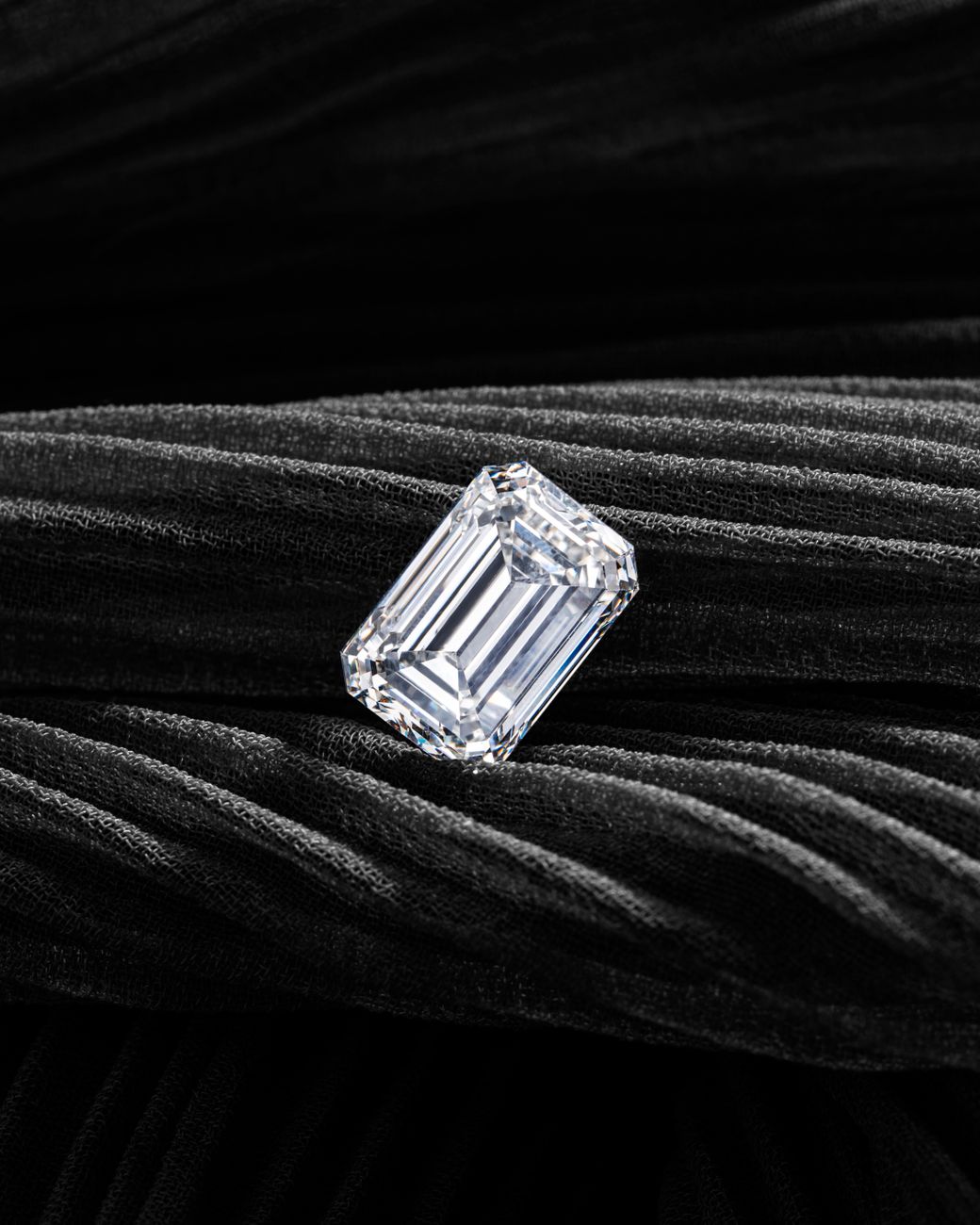
Although both shapes are typically rectangular or square-leaning, they are built very differently. The emerald cut uses a step-cut faceting style, which means the facets are arranged in parallel steps. This creates broad flashes of light rather than lots of tiny sparkles. The shape is also usually longer and more open, which means the interior of the stone is easier to see.
The radiant cut uses a brilliant-cut style, which means it has many facets designed to return more light to the eye. That makes the diamond look livelier and more sparkling. Radiants can be rectangular or square, and their corners are usually cut off for durability.
These structural differences matter because they influence appearance, sparkle, and how forgiving the diamond is of flaws. Buyers often notice the visual effect before they know the technical reason behind it.
Side-by-Side Comparison
| Feature | Emerald Cut | Radiant Cut |
|---|---|---|
| Faceting style | Step-cut | Brilliant-cut |
| Overall look | Elegant, open, architectural | Bright, lively, more sparkly |
| Sparkle type | Broad flashes, less glitter | Strong sparkle, lots of scintillation |
| Face-up appearance | Often looks large and sleek | Can also face up large, though usually with a more brilliant look |
| Clarity visibility | Higher, because of the open facet pattern | Lower, because facets help disguise inclusions |
| Color visibility | More visible, especially in larger stones | Less visible than emerald in many cases |
| Durability | Protective enough, but corners need care | Generally durable, with trimmed corners for added protection |
| Best for | Minimalist, classic, vintage-inspired styles | Buyers who want sparkle and flexibility |
| Typical impression | Refined and understated | More energetic and eye-catching |
Appearance: How Each Shape Looks in Real Life
Emerald Cut Appearance
Emerald cuts have a long, rectangular outline with cut corners. The elongated shape can make fingers look slimmer, especially in ring settings that follow the line of the hand. Because the facets are large and open, the diamond often shows broad flashes of light instead of the scattered sparkle people associate with round or princess cuts.
This is one reason emerald cuts have a reputation for a refined, understated look. They do not usually create a lot of glitter under every lighting condition. Instead, they reveal structure, symmetry, and clarity. That can be a strong advantage if you appreciate a cleaner, more elegant aesthetic.
Radiant Cut Appearance
Radiant cuts also have a rectangular outline, though some are closer to square. Their corners are clipped, which reduces the risk of chipping compared with sharper corners. The faceting pattern gives the stone a brighter overall look, and the diamond tends to flash more noticeably in motion.
Radiant cuts are often described as a hybrid shape because they combine the shape of an emerald cut with the sparkle style of a round brilliant. For many buyers, that combination makes the radiant feel more versatile. It can look modern, glamorous, or even slightly vintage depending on the setting.
Sparkle, Brilliance, and Fire
People often use the word sparkle loosely, but in diamond education it helps to separate three related effects: brilliance, fire, and scintillation. Brilliance is the white light returned by the diamond. Fire refers to flashes of color created when light is split. Scintillation is the pattern of light and dark flashes you see as the stone or your hand moves.
Why Emerald Cuts Sparkle Differently
Emerald cuts usually produce less overall sparkle than radiant cuts, but that does not mean they lack beauty. Their step-cut structure creates long, elegant flashes rather than many tiny points of light. In bright lighting, that can create a very polished and sophisticated effect.
Because the facets are large and open, you often see more of the diamond’s internal structure. That means inclusions, color, and even tiny proportion differences can be easier to notice. For some buyers, that transparency is part of the appeal.
Why Radiant Cuts Sparkle More
Radiant cuts are designed to maximize light return. Their many facets create a more active sparkle pattern, which often makes the diamond look lively from a range of angles. This can be especially noticeable in lower or mixed lighting, where the cut helps the stone retain brightness.
Radiant cuts also tend to show more scintillation, meaning the diamond seems to keep moving visually as the hand moves. Buyers who want noticeable sparkle often prefer this effect. It is one reason radiant cuts are popular in both engagement rings and fashion jewelry.
Face-Up Size and Finger Coverage
Face-up size is the amount of surface area a diamond appears to cover when viewed from above. It matters because two diamonds with the same carat weight can look different in size depending on how they are cut. Shape affects this visual footprint, not just the weight.
Emerald cuts often appear large for their carat weight because they have a broad, open top and an elongated outline. Radiant cuts can also look substantial, though their deeper pavilion and facet structure can make some stones face up slightly smaller than an emerald of the same weight. The exact result depends on proportions, not just the shape name.
If maximizing finger coverage matters to you, it is worth comparing actual measurements in millimeters rather than relying only on carat weight. This is especially important when shopping for diamond pricing and trying to understand value across different shapes.
Clarity Visibility: Why Emerald Cuts Are Less Forgiving
One of the biggest practical differences between these shapes is how they handle inclusions. Emerald cuts are less forgiving because their long, open facets act like windows into the stone. Small flaws that might be hidden in another shape can be easier to see here.
That does not mean every emerald cut needs a very high clarity grade, but buyers usually need to be more selective. In many cases, a higher clarity grade is worth considering, especially in larger stones or in lab grown diamonds where high clarity options are more widely available. A careful review of the stone is important, whether you are buying in person or evaluating a lab report and magnified photos.
Radiant cuts, by contrast, are better at disguising inclusions. Their brilliant-style faceting breaks up reflections and helps the eye focus on sparkle instead of internal details. This gives buyers a little more flexibility when balancing budget and quality.
Color Visibility: Which Shape Shows More Tint?
Color visibility is another key difference. Emerald cuts tend to show color more easily because the facet pattern is open and the stone is less visually busy. If a diamond has a noticeable body color, that tint may be easier to see in an emerald cut than in a radiant cut.
Radiant cuts can be more forgiving in this respect. The faceting pattern creates more visual activity, which can help mask subtle color. This is one reason some buyers choose a radiant cut when they want a bright look without having to pursue the highest color grades.
That said, the setting metal matters too. A white metal such as platinum or white gold can make lower color grades more noticeable, while yellow or rose gold can sometimes make a slightly warmer diamond look more intentional. For a more detailed breakdown, many shoppers also review diamond color grades before choosing a shape.
Durability and Daily Wear
Both emerald and radiant cuts can be suitable for everyday wear, including engagement rings, but they have different practical considerations. The corners are the main concern. Any pointed corner can be vulnerable if the ring receives hard knocks over time.
Emerald cuts have clipped corners, which improves durability compared with shapes that have sharp points. Still, the large table and open sides mean a setting should protect the stone well. Bezels, double prongs, or carefully designed halo settings can help, depending on the look you want.
Radiant cuts are also corner-trimmed and generally sturdy. Because the shape is more brilliant and the faceting is busier, small surface marks or minor inclusions may be less noticeable in everyday wear. For many buyers, that makes radiant cuts feel more practical for active lifestyles.
Advantages of Emerald Cut Diamonds
- Elegant, timeless appearance: Emerald cuts have a refined look that appeals to buyers who prefer clean lines over heavy sparkle.
- Large visual presence: They often face up beautifully and can look substantial on the finger.
- Finger-lengthening effect: The rectangular shape can create a flattering, elongated look.
- Distinctive style: The open facet pattern stands out from more common brilliant cuts.
- Works well in minimalist settings: Emerald cuts often look especially good in simple solitaire or three-stone designs.
Disadvantages of Emerald Cut Diamonds
- Clarity matters more: Inclusions are easier to see because the stone is less visually busy.
- Color can show more easily: Buyers may need to pay closer attention to color grade.
- Less sparkle overall: If you want a lot of glitter, the emerald cut may feel too restrained.
- Proportions matter a lot: A poorly cut emerald can look dull or uneven faster than some other shapes.
- More selective buying process: You often need to review the stone carefully instead of relying on broad grade ranges.
Advantages of Radiant Cut Diamonds
- Strong sparkle: Radiant cuts are designed for brightness and lively light performance.
- More forgiving of inclusions: The faceting pattern helps disguise small flaws.
- Better at masking color: Slight warmth is often less obvious than in an emerald cut.
- Versatile appearance: Radiants can feel modern, glamorous, or classic depending on the setting.
- Practical for many buyers: They offer a balance of shape and sparkle that works well in everyday jewelry.
Disadvantages of Radiant Cut Diamonds
- Less distinctive outline in some settings: The brilliance can make the shape feel less architectural than an emerald cut.
- Variable light performance: Not all radiant cuts are equal, and some can show a less desirable center area if poorly proportioned.
- Possible bow tie effect: Some elongated radiants show a darker band across the center in certain lighting.
- Can feel less formal: Buyers seeking a very sleek or sophisticated look may prefer an emerald cut.
How Proportions Affect the Look
With both of these shapes, proportions matter. Two diamonds with the same shape and carat weight can look quite different depending on length, width, depth, and facet arrangement. That is why shape guides are helpful, but they are never a substitute for reviewing the actual stone.
Length-to-Width Ratio
The length-to-width ratio helps determine whether a diamond looks more square or more elongated. For emerald cuts, many buyers prefer a ratio somewhere around 1.30 to 1.50, though preferences vary. A lower ratio looks broader and more compact, while a higher ratio looks longer and slimmer.
Radiant cuts also come in a wide range of ratios. Square radiants offer a more compact shape, while elongated radiants can create a softer, stretched outline similar to an emerald cut but with more sparkle. The ratio affects how the ring appears on the hand, so it is worth comparing side-by-side images or dimensions.
Depth and Face-Up Appearance
Depth affects how much of the carat weight is hidden below the surface. A diamond with too much depth can look smaller from above, while one that is too shallow may lose light performance. This is why a well-cut stone is more important than a single number on a grading report.
For buyers comparing diamond cut grades, it helps to understand that cut quality is not just about brilliance. It also shapes how large the diamond looks, how symmetrical it feels, and how well it performs under real lighting.
Popularity and Style Trends
Emerald cuts have a strong following among buyers who like clean design, vintage influence, and a more tailored aesthetic. They often appear in modern solitaire rings, Art Deco-inspired settings, and fashion-forward jewelry. Their appeal is not tied to flashiness, which makes them attractive to buyers who want sophistication without excess sparkle.
Radiant cuts tend to attract buyers who want a livelier look without moving to a round brilliant. They are common in contemporary engagement rings and in designs where sparkle is a priority. Their flexibility also helps them fit different styles, from sleek and minimal to bold and decorative.
In the lab grown diamond market, radiant cuts are particularly common because buyers often want a larger-looking stone with strong brightness at a lower price per carat than comparable natural stones. Emerald cuts are also popular in lab grown form, especially when buyers want a larger visual presence and are willing to prioritize clarity and geometry over sparkle.
Pricing Considerations
Pricing is influenced by shape, cut quality, color, clarity, carat weight, certification, and overall market demand. In general, both emerald and radiant cuts can offer better value than some more traditional shapes, but the reasons differ.
Emerald cuts often require higher clarity to look their best, which can raise the budget for a diamond that appears visually clean. Radiant cuts may allow a buyer to balance quality more flexibly because inclusions and slight color are often less noticeable. That does not always make radiant cuts cheaper overall, but it can create more room to adjust other characteristics.
Lab grown diamonds add another layer to the decision. Because they typically cost less than natural diamonds of similar size and quality, buyers may be able to choose a larger emerald cut or a higher-quality radiant cut for the same budget. Still, it is wise to compare actual stone quality and not assume every lab grown diamond offers equal value.
Choosing Between Emerald and Radiant Cuts by Buyer Type
If You Want a Clean, Elegant Look
An emerald cut is often the better match if you prefer a refined, understated appearance. It works well for buyers who like symmetry, open space, and a more architectural style. People who are drawn to vintage designs or minimal rings often gravitate to emerald cuts.
If You Want More Sparkle and Flexibility
A radiant cut is a stronger choice if sparkle is a top priority. It offers more visual activity and is usually easier to shop for because it is more forgiving of clarity and color differences. Buyers who want a bright, lively center stone often feel more comfortable with a radiant.
If You Are Shopping for a Lab Grown Diamond
Lab grown diamonds make both shapes more accessible in larger sizes and higher quality ranges. If you are interested in a substantial emerald cut, lab grown can be especially appealing because you may be able to prioritize face-up size and clarity without moving into the same price range as a comparable natural diamond.
For radiant cuts, lab grown diamonds can also be an efficient way to maximize sparkle and size. Many buyers in this category compare ring options alongside diamond carat, clarity, and shape proportions to make the best use of budget.
How Emerald and Radiant Cuts Compare to Other Shapes
These two shapes are often compared with each other, but it can help to think about where they sit in the broader shape family. Emerald cuts share some visual qualities with Asscher cuts and other step-cut shapes, though the emerald is typically rectangular and more elongated. Radiant cuts are closer to round brilliants, cushions, and princess cuts in how they handle light, even though their outline is rectangular or square.
If you like the emerald cut but want more sparkle, the radiant is usually the closest alternative. If you like the radiant cut but want a cleaner, more composed look, the emerald is often the natural comparison point. For buyers still exploring options, reviewing other diamond shapes can help narrow the field before focusing on a final setting.
Important Buying Considerations
1. Review the Actual Stone, Not Just the Grade
Shape alone does not determine quality. You should look at the stone’s proportions, symmetry, and how it performs in lighting. Photos, videos, and grading reports matter, especially for shapes where brilliance and structure can vary widely from one stone to another.
2. Pay Attention to Clarity in Emerald Cuts
Because emerald cuts are open and transparent, clarity deserves extra attention. A lower clarity grade can still be acceptable if the inclusions are small and positioned where they are not obvious, but you should verify this carefully. Buyers who want a cleaner look may prefer a higher clarity grade than they would choose in a radiant cut.
3. Balance Color with Setting Metal
Color visibility can be more noticeable in emerald cuts, especially in larger sizes. Choosing a setting metal that complements the diamond color can help the overall ring look balanced. This is particularly useful when comparing diamonds across different color grades and price points.
4. Check for Bow Tie in Elongated Radiants
Some elongated radiant cuts show a darker band through the center, often called a bow tie effect. This is not always severe, but it can affect the look in certain lighting. It is a good idea to inspect the diamond under multiple viewing conditions before buying.
5. Consider the Ring Setting
The setting changes how each shape looks and wears. Emerald cuts often look striking in solitaires, east-west settings, and elegant side-stone designs. Radiant cuts work well in many setting styles, including halos and three-stone rings, because their sparkle tends to complement more decorative designs.
6. Think About Daily Wear
If the ring will be worn every day, durability and maintenance matter as much as style. Both shapes can be practical, but setting choice, stone protection, and your lifestyle should influence the final decision. A buyer who works with their hands may value the forgiving nature of a radiant cut, while someone with a more formal style preference may still choose an emerald cut with the right mounting.
Common Mistakes Buyers Make
- Choosing by shape name alone: Proportions and cut quality matter just as much as the general shape.
- Ignoring clarity in emerald cuts: Open facets can reveal flaws that would be less visible in other shapes.
- Overlooking color differences: Especially in larger emerald cuts, slight color can become more noticeable.
- Not checking for bow tie in radiant cuts: Elongated radiants can vary in light performance.
- Focusing only on carat weight: Face-up size and proportions often matter more to the eye.
- Skipping certification review: A reliable grading report helps you compare diamonds accurately, especially in lab grown purchases.
Frequently Asked Questions
Which has more sparkle, emerald cut or radiant cut diamonds?
Radiant cut diamonds usually have more sparkle because they use a brilliant-style faceting pattern. Emerald cuts have broader flashes of light and a more subdued look. If sparkle is the priority, the radiant is usually the better match.
Which shape looks bigger on the finger?
That depends on the exact proportions, but emerald cuts often appear large because of their open, elongated outline. Radiant cuts can also look substantial, especially when well cut. Comparing millimeter measurements is more useful than looking at carat weight alone.
Are emerald cuts more expensive than radiant cuts?
Not always, but emerald cuts often require higher clarity to look clean, which can affect the total budget. Radiant cuts may offer more flexibility because they hide inclusions and slight color more effectively. Overall cost depends on size, quality, and whether the diamond is natural or lab grown.
Which shape is better for a lab grown diamond?
Both shapes can work very well in lab grown diamonds. Emerald cuts are popular when buyers want a larger, sleek look at a lower price than natural diamonds. Radiant cuts are popular when buyers want strong sparkle and a shape that is more forgiving of clarity and color differences.
Do emerald cuts look dull?
They can look less sparkly than brilliant cuts, but that does not mean they are dull. Their beauty comes from broad flashes, clean lines, and a more transparent view of the stone. Buyers who expect round-brilliant sparkle may need to adjust expectations.
Is the bow tie effect a problem in radiant cuts?
It can be, but not all radiant cuts show it in a noticeable way. A mild bow tie may be acceptable depending on the stone and your preferences. A strong dark band across the center can reduce the overall appeal, so it is worth checking before buying.
Which shape is better for everyday wear?
Both can be suitable for everyday wear if set properly. Radiant cuts are often a little more forgiving because they hide wear-related visual imperfections better. Emerald cuts can also be durable, but they benefit from careful setting design and routine maintenance.
Conclusion
When comparing emerald vs radiant cut diamonds, the main difference is not just shape. It is the entire visual experience. Emerald cuts emphasize elegance, structure, and a clean open look, while radiant cuts emphasize brightness, sparkle, and practical versatility.
For buyers who value understated sophistication and are willing to pay close attention to clarity and color, the emerald cut can be an excellent choice. For buyers who want more sparkle, easier shopping flexibility, and a diamond that hides small imperfections more effectively, the radiant cut often makes more sense.
The best decision comes from matching the shape to your priorities, your budget, and the way you plan to wear the diamond. If you compare actual stone proportions, review certification carefully, and think about how the diamond will look in real life, you will be in a much better position to choose a shape that feels right for you.