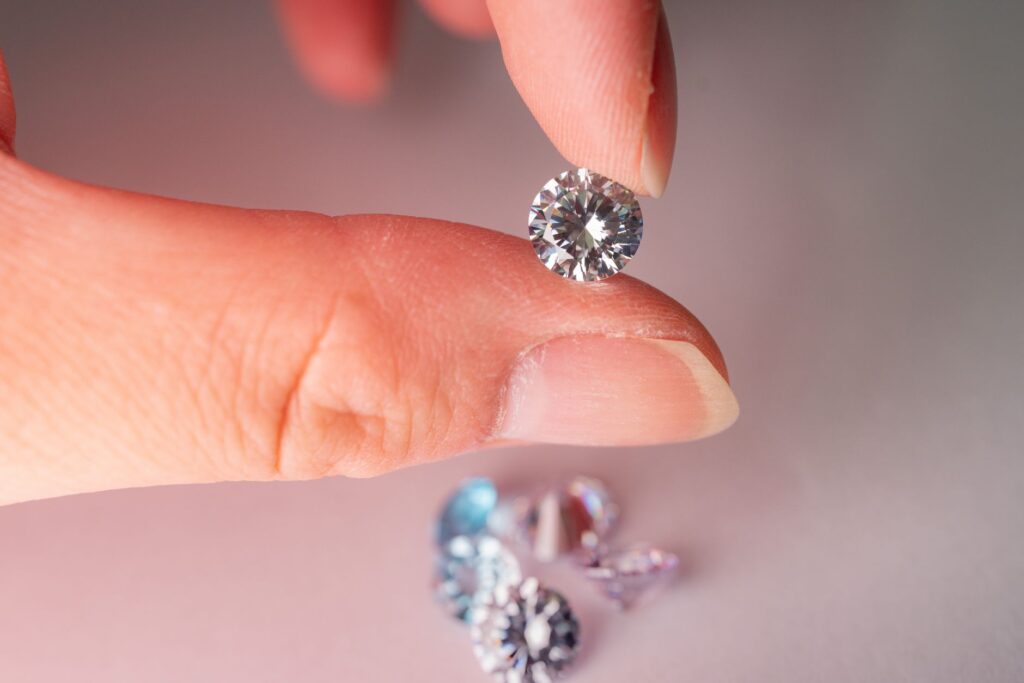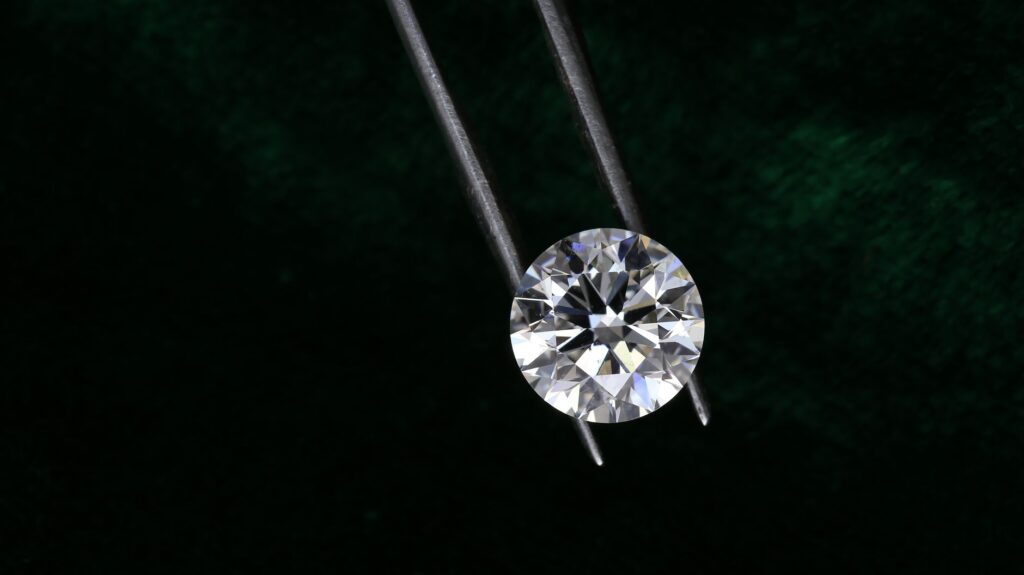
A diamond’s carat weight sounds precise, but it does not tell you exactly how large the stone will look once it is on a hand. Two diamonds can both weigh 1.00 carat and still face up differently. A 0.90 carat diamond can look surprisingly close to a 1.00 carat stone. In some cases, shape, cut quality, and finger size change the visual result more than the number on the grading report.
That is why the question How Much Carat Do You Really Need matters more than it first appears. Buyers are not purchasing weight in the abstract. They are trying to decide how much visible size, finger coverage, and presence they want for their budget. Understanding that difference can help you avoid overspending for a number that delivers only a small visual change.
This guide explains how carat weight works in real life, what different sizes actually look like, when it makes sense to size up, and when a smaller diamond may be the smarter choice.
Quick Answer
The amount of carat you really need depends on the look you want, your finger size, your diamond shape, and your budget priorities. For many buyers, the ideal choice is not the biggest carat weight they can afford. It is the size that gives satisfying visual presence without forcing major compromises in cut quality, color, clarity, or setting quality.
In practical terms:
- 0.70 to 0.90 carat often looks substantial in a round diamond, especially on smaller fingers.
- 1.00 to 1.50 carats is a popular range for buyers who want a clear, noticeable diamond presence.
- Shapes like oval, pear, and marquise can look larger than round diamonds of the same carat weight.
- Lab grown diamonds often allow buyers to choose a larger visible size for the same budget, though resale expectations are different from natural diamonds.
If your goal is value, the best answer is often to focus on face-up size and proportions rather than hitting a round-number carat milestone.
Understanding the Carat Concept
What diamond carat actually means
Carat is a measure of weight, not width, diameter, or visible spread. One carat equals 200 milligrams. That means a diamond grading report is telling you how much the stone weighs, but not directly how large it appears from the top.
This creates confusion because people naturally use carat as if it were a size label. In everyday conversation, someone may say they want a “2 carat diamond” when what they really mean is a diamond that looks large and noticeable. Those are related ideas, but they are not identical.
What face-up size means
Face-up size refers to how large the diamond looks when viewed from above, which is how it is seen most of the time in a ring. For a round diamond, this is mostly about diameter in millimeters. For fancy shapes such as oval or emerald, it is about length, width, and overall spread.
A well-cut diamond with good proportions often faces up larger than a poorly cut diamond of the same weight. If too much weight is hidden in the depth of the stone, the diamond can look smaller than expected.
Why millimeter measurements matter more than most buyers think
Carat weight is useful, but millimeter dimensions are often the better tool for understanding visual size. A difference of 0.10 carat may sound meaningful, yet the actual visible increase in width can be quite small.
For example, a well-cut round diamond around 0.90 carat may measure roughly 6.2 millimeters, while a 1.00 carat round may measure around 6.4 to 6.5 millimeters. That is a modest difference face up, especially once the stone is mounted.
What a “magic size” diamond is
A magic size is a carat weight that carries strong buyer attention, such as 0.50, 1.00, 1.50, 2.00, and 3.00 carats. These milestone weights often command noticeably higher prices because demand clusters around them.
That does not mean they are bad choices. It simply means buyers often pay a premium for reaching the number itself. If visual value matters more than the label, a diamond just under the milestone can sometimes offer a better balance of appearance and price.
What Buyers Usually Expect
Assuming carat always equals visible size
A common expectation is that more carat automatically means a diamond will look dramatically larger. In reality, visible size increases more slowly than many buyers expect. Diamond growth is not linear in appearance.
As carat weight rises, the stone does get larger, but each increase in visible diameter may feel smaller than the price jump suggests. This is especially true with round diamonds.
Comparing diamonds by carat alone
Buyers often compare two stones by their carat weights without checking measurements. That can lead to poor decisions. A 1.00 carat diamond with deep proportions may look closer in size to a well-cut 0.90 carat than to another ideally proportioned 1.00 carat.
Without dimensions, carat numbers can be misleading from a visual standpoint.
Expecting a milestone carat weight to look dramatically different
Crossing from 0.90 to 1.00 carat, or from 1.90 to 2.00 carats, sounds important because the number changes. The visual difference can be real, but often subtle. Seen side by side, some buyers will notice it. Seen alone on the hand, many people will not.
Ignoring finger size and hand proportions
The same diamond can look very different depending on the wearer’s finger size. A 1.00 carat round on a size 4 finger often appears more prominent than it does on a size 8 finger. This is not about the diamond changing. It is about relative coverage.
What It Actually Looks Like
Visible size is about spread, not just weight
What your eye notices first is the area the diamond covers from the top. That spread is shaped by millimeter dimensions, cut proportions, and shape outline. This is why two diamonds with the same weight can create different first impressions.
A round diamond concentrates its weight into a symmetrical shape, while an elongated shape can stretch that same weight over more visible length. The result is that certain shapes look bigger than their carat weight suggests.
Finger coverage changes the impression of size
Finger coverage is the amount of the finger’s width occupied by the diamond when viewed from above. A stone with greater finger coverage appears more substantial, even if the actual carat number is not very high.
For example:
- A 1.00 carat round may look balanced and prominent on a smaller hand.
- The same 1.00 carat may feel more modest on a wider finger.
- An oval of similar weight may appear larger because of its elongated outline.
Mounted diamonds can look different from loose diamonds
A loose diamond viewed under bright lighting often looks larger and more intense than it will in a finished ring. Once mounted, the setting can either emphasize or reduce apparent size. Thin bands, halos, and bright white metals often make the center stone look larger. Thick bands can make it look smaller by comparison.
Most people do not estimate carat accurately by sight
Outside of jewelry professionals and experienced buyers, most people are not good at judging carat weight visually. They notice whether a diamond looks small, balanced, or large on the hand. They usually do not know if it is 0.90 carat, 1.00 carat, or 1.10 carat.
This matters because paying a large premium for a milestone number may not create a meaningful difference in day-to-day appearance.
Factors That Change Apparent Size
Diamond shape
Shape has a major influence on apparent size. Some shapes spread their weight across a larger face-up area than others.
| Shape | Typical Apparent Size Effect | Practical Notes |
|---|---|---|
| Round | Baseline comparison | Classic, balanced sparkle, but usually looks smaller than elongated shapes of the same carat |
| Oval | Often looks larger | Elongated outline increases finger coverage |
| Pear | Often looks larger | Tapered shape can create strong visual length |
| Marquise | Often looks much larger | Long silhouette maximizes spread, but style is distinctive |
| Emerald | Can look large due to length and open table | Shows clarity and color more easily than brilliant cuts |
| Cushion | Varies, often smaller face-up than round or oval | Can carry weight in depth and rounded corners |
| Princess | Moderate spread | Square outline, often slightly smaller face-up than elongated shapes |
| Radiant | Varies by proportions | Elongated versions can look larger than square versions |
Cut quality
Cut quality affects both sparkle and apparent size. A diamond cut too deep can hide weight where it is not visible from above. A diamond cut too shallow may face up wide but lose brightness or look glassy. The goal is not simply the widest possible stone. It is a well-proportioned stone that balances spread and performance.
This is especially important in round diamonds, where cut quality strongly affects beauty. A poorly cut 1.00 carat that looks a little larger but sparkles less may be less satisfying than a well-cut 0.90 carat.
Depth and proportions
Depth percentage describes how tall the diamond is relative to its width. If a stone is overly deep, more of its weight sits underneath instead of contributing to visible size. Table size, crown angle, pavilion angle, and girdle thickness also affect how the diamond presents itself.
For buyers, the practical lesson is simple. Do not judge size from carat alone. Always look at measurements and cut quality together.
Setting design
The setting can change size perception significantly.
- Halo settings make the center look larger by surrounding it with smaller stones.
- Thin bands create contrast that emphasizes the center diamond.
- Thick bands can make the center stone appear smaller.
- Hidden halos and delicate prongs can add presence without changing the center diamond’s weight.
- Bezel settings can look sleek and protective, though they may slightly reduce visible edge contrast compared with prong settings.
Metal color
White metals like platinum and white gold usually blend with a colorless or near-colorless diamond, creating a seamless look. Yellow or rose gold can increase contrast, which sometimes changes how the diamond’s outline is perceived. This is usually a secondary effect, but it can contribute to the overall impression.
Finger size
Finger size is one of the most overlooked factors in diamond appearance. A stone that covers a large portion of the finger’s width reads as larger. This is why online photos without finger-size context can be misleading.
Real-World Size Examples
Approximate round diamond sizes by carat weight
The following measurements are approximate for well-cut round diamonds. Actual measurements vary depending on proportions.
| Carat Weight | Approximate Diameter | Visual Takeaway |
|---|---|---|
| 0.50 ct | About 5.1 mm | Noticeable but modest center stone |
| 0.70 ct | About 5.7 mm | Balanced everyday size |
| 0.90 ct | About 6.2 mm | Looks close to 1 carat to many eyes |
| 1.00 ct | About 6.4 to 6.5 mm | Classic benchmark size |
| 1.25 ct | About 6.9 to 7.0 mm | Clearly larger presence than 1 carat |
| 1.50 ct | About 7.3 to 7.4 mm | Strong visual impact on most hands |
| 2.00 ct | About 8.1 mm | Large and noticeable |
| 3.00 ct | About 9.3 mm | Very prominent center stone |
1 carat on a size 4 finger
On a size 4 finger, a well-cut 1.00 carat round often looks quite prominent. It can provide strong finger coverage and may appear larger than expected, especially in a delicate solitaire setting. For buyers with smaller hands, 1 carat is often enough to create a clear center-stone presence without looking oversized.
1 carat on a size 7 finger
On a size 7 finger, the same 1.00 carat round usually looks balanced and classic, but less dominant. It still reads as a meaningful diamond size, though buyers seeking a broader look across the finger may prefer 1.25 to 1.50 carats or an elongated shape.
0.90 carat vs 1.00 carat round
This is one of the best examples of why the question How Much Carat Do You Really Need should be answered visually, not emotionally. The size difference between a well-cut 0.90 carat round and a well-cut 1.00 carat round is often small in real life. The price difference can be more noticeable than the visual difference, particularly in natural diamonds.
For buyers focused on value, 0.90 carat can be a very smart range.
2 carat oval vs 2 carat round
A 2.00 carat oval often looks larger than a 2.00 carat round because the elongated shape stretches the visible outline across more of the finger. The oval may also create a slimming effect on the hand. A round, however, often delivers a more balanced and familiar pattern of brilliance.
Neither is universally better. The oval tends to maximize apparent size. The round tends to prioritize classic proportions and symmetrical sparkle.
1.50 carat vs 2.00 carat
A jump from 1.50 to 2.00 carats is visible. It usually creates a more substantial look, especially in round diamonds. But it also tends to come with a steep price increase, particularly for natural diamonds around high-demand milestone sizes.
This is the point where buyers should ask whether the larger look is essential, or whether the budget would be better used on cut quality, shape preference, or setting design.
Price vs Visual Benefit
Why prices rise faster than visible size
Diamond pricing does not increase in a straight line. Larger diamonds are rarer, and milestone weights carry stronger demand. As a result, a 2.00 carat diamond is not just twice the price of a 1.00 carat diamond. It can cost much more than double, depending on whether it is natural or lab grown, and depending on cut, color, clarity, and certification.
Yet the face-up diameter does not double. A 2.00 carat round at about 8.1 mm is larger than a 1.00 carat round at about 6.5 mm, but not twice as wide.
Diminishing returns in visual size
This is one of the most important carat-buying concepts. The bigger the diamond gets, the more you may pay for each additional bit of visible size. That does not mean larger diamonds are poor choices. It means buyers should understand that each step up can cost disproportionately more than it changes the look.
| Upgrade | Visual Difference | Typical Value Consideration |
|---|---|---|
| 0.90 to 1.00 ct | Small | May not justify premium if value is the priority |
| 1.00 to 1.25 ct | Noticeable | Often meaningful if you want more presence |
| 1.50 to 2.00 ct | Clearly noticeable | Can be expensive relative to size gain |
| 2.00 to 3.00 ct | Dramatic | Usually a major budget jump |
Natural vs lab grown price differences
Lab grown diamonds have changed the size discussion significantly. Buyers who once had to choose between 0.90 and 1.00 carat in natural diamonds may now be able to afford 1.50 or 2.00 carats in lab grown form, depending on quality preferences and market pricing.
Visually, a lab grown diamond can look the same as a natural diamond of the same shape and quality. The main differences are origin, market pricing, and resale expectations. For buyers whose primary goal is maximum visible size for the budget, lab grown diamonds often create more flexibility.
For buyers who prioritize natural origin or long-term market perception, the decision may be different. This is a personal value choice, not a visual one.
Who Should Size Up
Buyers with larger finger sizes seeking more coverage
If the wearer has a larger finger size and wants the diamond to look proportionally prominent, sizing up may make sense. A stone that looks bold on a size 4 finger may look much more understated on a size 8.
Buyers who strongly value visible presence
Some buyers simply care a lot about the diamond having a larger visual impact. There is nothing wrong with that. If size is a top priority, it can be reasonable to shift budget toward carat weight, especially if you can do so without falling into poor cut quality.
Buyers choosing shapes that support larger looks
Sizing up is not always about buying heavier. Sometimes it means choosing a shape that gives more visible spread. An oval, pear, marquise, or elongated radiant may achieve the desired look more efficiently than a heavier round.
Lab grown buyers maximizing budget efficiency
In lab grown diamonds, moving into a larger size may be much more realistic than in natural diamonds. Buyers who want a 2 carat look but do not want to compromise heavily elsewhere often find that lab grown options make that possible.
Who Can Save Money
Buyers who are flexible about milestone numbers
If you do not need the grading report to say 1.00 or 2.00 exactly, you may be able to save meaningfully with a slightly under-threshold stone. A 0.90 to 0.95 carat diamond, or a 1.80 to 1.90 carat diamond, can offer very similar visual results.
Buyers prioritizing cut quality
A smaller, better-cut diamond often looks more lively and attractive than a larger diamond with poor proportions. If your budget is limited, preserving cut quality is usually the better long-term decision.
Buyers with smaller fingers
On smaller hands, moderate carat weights can look larger than expected. There is often less need to chase bigger carat numbers for visual impact.
Buyers open to elongated shapes or smart settings
Choosing an oval, pear, or marquise, or selecting a halo or delicate-band setting, can increase apparent size without requiring as much carat weight. This can be one of the most practical ways to achieve a larger look efficiently.
Common Buyer Mistakes
Chasing carat numbers instead of appearance
The most frequent mistake is treating carat weight as the goal rather than the result. The right question is not “What is the biggest number I can buy?” It is “What size will look right on the hand, in the shape and setting I actually want?”
Ignoring millimeter measurements
Measurements tell you far more about visible size than the carat number alone. Skipping them can lead to disappointment, especially if a stone is cut deep and faces up small.
Overpaying for magic sizes
Milestone weights can create emotional pressure. Buyers may stretch their budget for 1.00 or 2.00 carats even when a slightly smaller diamond would look nearly the same. This is one of the easiest ways to lose value.
Choosing size at the expense of cut
A larger diamond with weak light performance often does not deliver the beauty buyers imagine. Sparkle, brightness, and balance matter. A well-cut stone can look more impressive than a larger but duller one.
Forgetting that shape changes everything
Comparing only round diamonds to fancy shapes by carat can create confusion. Shape differences are a major reason why diamonds of equal weight do not look equal in size.
Not accounting for the setting
A setting can make a meaningful difference in how large the center stone appears. Ignoring that factor may cause buyers to spend more on carat than they actually need to spend.
Misunderstanding lab grown value
Some buyers assume that because lab grown diamonds cost less, they should always choose the biggest size available. But a larger stone is still not automatically the best choice. Balance, wearability, and style still matter. At the same time, buyers of natural diamonds should not assume that the only way to achieve a larger look is to overspend. Lab grown options have changed that calculation.
How to Decide How Much Carat You Really Need
Start with the visual goal
Think about the final look before looking at weights. Do you want subtle, balanced, prominent, or bold? That is a more useful starting point than naming a carat number immediately.
Use finger size as context
Always consider the wearer’s ring size. The same dimensions will look different on different hands. A balanced size on one person may feel too small or too large on another.
Choose shape before finalizing carat
Shape changes visible spread so much that it should be decided early. Once you know whether you prefer round, oval, cushion, emerald, or another shape, you can estimate the carat range that will create your desired look.
Protect cut quality
Within your target size range, prioritize good proportions and strong light performance. It is usually better to buy a slightly smaller diamond that looks bright and lively than a larger one that looks dull.
Compare visual gain against price increase
Before moving up to the next milestone weight, ask whether the actual visible difference justifies the cost. This is especially important in natural diamonds, where jumps across magic sizes can be expensive.
Consider lab grown if size is the top priority
If your main goal is a larger diamond appearance for the budget, lab grown diamonds deserve serious consideration. They can provide substantial visual size without requiring the same financial jump as natural diamonds. The trade-off is that market resale behavior is different, so the choice should reflect your priorities.
Frequently Asked Questions
Is 1 carat enough for an engagement ring?
Yes, for many buyers 1 carat is enough. On smaller to medium finger sizes, a well-cut 1 carat diamond often looks balanced and clearly noticeable. Whether it feels “enough” depends on your preferred style, finger size, and shape choice.
Will people notice the difference between 0.90 and 1.00 carat?
Usually not unless the diamonds are compared side by side or the viewer is experienced with jewelry. The visible size difference is often small, especially once the stone is mounted.
What carat size looks biggest for the money?
There is no single answer, but buyers often find strong visual value in slightly under magic sizes, such as 0.90 to 0.95 carat or 1.80 to 1.90 carat. Elongated shapes like oval and marquise can also look larger for the same weight.
Do lab grown diamonds look bigger than natural diamonds?
Not at the same carat weight and shape. A 1.50 carat lab grown diamond and a 1.50 carat natural diamond should look the same if their measurements and proportions are similar. The difference is that lab grown diamonds often make larger sizes more affordable.
Should I buy just under a magic size?
Often, yes, if value matters more than the number itself. A slightly under-threshold diamond can offer nearly the same look at a lower price. This is especially common around 1.00 and 2.00 carat milestones.
Does a halo setting really make a diamond look bigger?
Yes. A halo surrounds the center stone with smaller diamonds, increasing the overall visual footprint. It does not change the center diamond’s carat weight, but it can create a much larger appearance.
Which diamond shape looks largest per carat?
Marquise, pear, and oval shapes often look larger per carat than round diamonds because their elongated outlines create more visible spread and finger coverage.
Is it better to go smaller and improve quality?
In many cases, yes. A slightly smaller diamond with strong cut quality usually offers better sparkle and overall beauty than a larger stone with weak proportions. Buyers are often happier with a stone that looks lively rather than simply heavier.
Conclusion
The real answer to How Much Carat Do You Really Need is not a universal number. It is the carat range that gives you the appearance you want without paying for weight that adds little visible benefit. Carat matters, but it should never be viewed alone.
Face-up size, shape, cut quality, finger size, and setting design all change how large a diamond actually looks. A well-cut 0.90 carat can look close to a 1.00 carat. An oval can appear larger than a round of the same weight. A halo or thin band can change the visual result more than a minor weight increase.
For practical buying decisions, focus on measurements, proportions, and overall appearance rather than milestone numbers. Buyers who want the best visual value often do well with slightly under-threshold sizes, elongated shapes, and strong cut quality. Buyers who want maximum size for the budget may find that lab grown diamonds open up larger options with fewer compromises.
The best carat weight is the one that looks right on the hand, suits your priorities, and makes sense for your budget. That approach leads to better decisions than chasing a number alone.