Diamond clarity is one of the most misunderstood parts of buying a diamond. Many shoppers assume a higher clarity grade automatically means a better-looking stone, but that is not always true in real-world viewing conditions. In practice, the importance of clarity depends on what you can actually see, how the inclusion affects the diamond’s appearance, and how much extra you are paying for a difference that may be invisible to the naked eye.
That is especially true when evaluating lab grown diamonds. Because lab grown diamonds are often sold at lower price points than natural diamonds of similar size and quality, buyers sometimes consider moving up in clarity more aggressively than they would with a natural stone. The result can be either a smart upgrade or an unnecessary premium, depending on the diamond and the buyer’s priorities.
Understanding How Diamond Clarity Affects Value helps you make a more informed choice. Instead of focusing only on the grading label, you can judge whether the diamond looks clean, whether the inclusion type matters, and whether the added cost is actually improving the stone in a meaningful way.
Quick Answer
Diamond clarity affects value by influencing how visible internal characteristics, called inclusions, are and how much buyers are willing to pay for a cleaner-looking stone. In many cases, the biggest price jumps happen in the higher clarity grades, even though the visual difference becomes very small once a diamond is already eye-clean.
For most buyers, a well-chosen VS2 or SI1 diamond can offer better value than paying a large premium for VVS or IF clarity. The key is whether the stone is eye-clean, how the inclusion is positioned, and whether the clarity issue is noticeable in everyday use.
Clarity matters, but it is usually not the first quality factor that determines beauty. Cut has a bigger impact on sparkle, and color often affects appearance more quickly than clarity does. A diamond with a modest clarity grade can still look excellent if the inclusions are not visible without magnification.
Understanding Diamond Clarity
What diamond clarity means
Diamond clarity is a grading term that describes how many inclusions or blemishes a diamond has, how large they are, where they are located, and how easy they are to see. Inclusions are internal features inside the diamond. Blemishes are surface features on the outside.
Clarity grades range from Flawless and Internally Flawless at the top, down through VVS, VS, SI, and Included grades such as I1, I2, and I3. The grading system is designed to describe what a trained gemologist sees under magnification, not necessarily what an everyday buyer sees with the naked eye.
That distinction is important. A diamond can have a lower clarity grade and still look clean and attractive in a ring. Another diamond can have a higher clarity grade but not look meaningfully different to most people once set and worn.
What eye-clean means
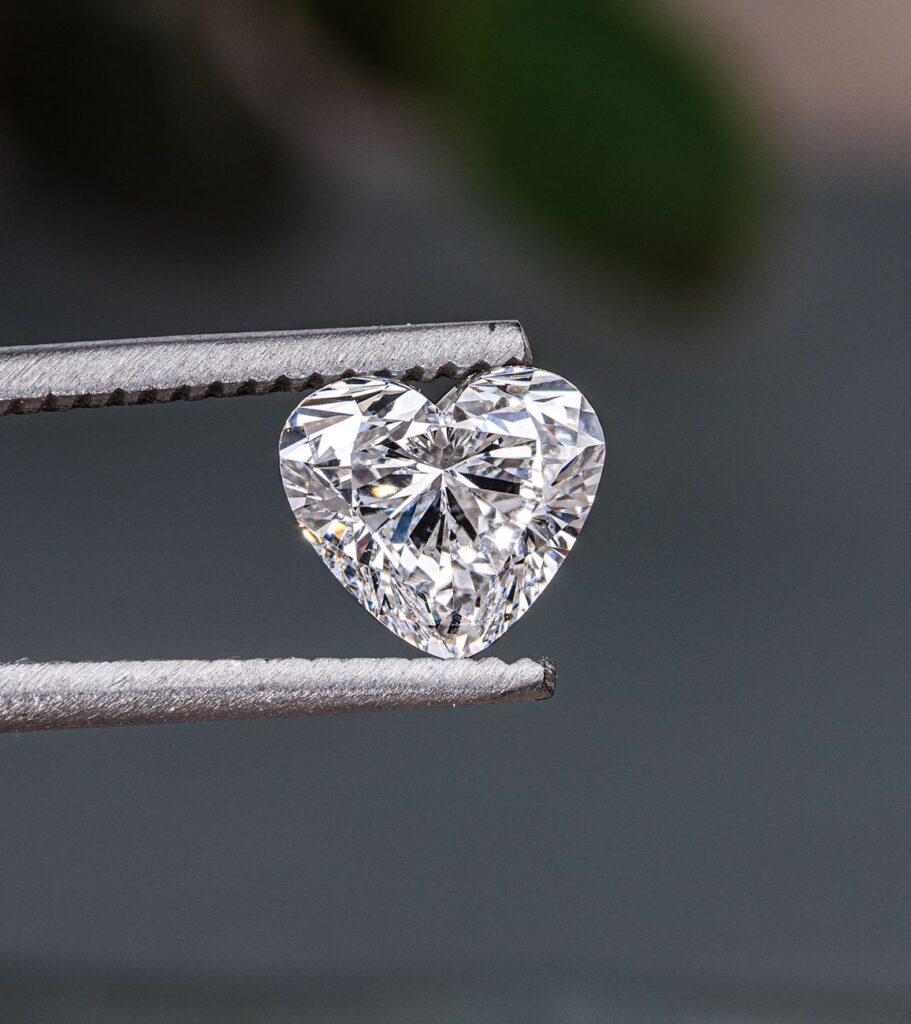
“Eye-clean” means that a diamond does not show obvious inclusions to the naked eye under normal viewing conditions. This is one of the most practical terms in diamond buying because it focuses on what matters most to the shopper: visible appearance.
Eye-clean does not mean flawless. It simply means the inclusions are not easy to see without magnification or very close inspection. For many buyers, an eye-clean diamond is the ideal balance of appearance and value.
It is worth noting that eye-clean is not a formal grading term with one universal definition. One person may consider a diamond eye-clean at 6 inches away, while another may only use that term if no flaws are visible from normal viewing distance. That is why it helps to ask how the diamond looks in real-life viewing conditions.
How clarity grades are evaluated
Clarity grading is based on a combination of factors. Gemologists look at the size, number, type, position, and visibility of inclusions, as well as any surface blemishes. A small inclusion near the edge may matter less than a tiny inclusion positioned right under the center of the table, where it is more likely to catch the eye.
This is why two diamonds with the same clarity grade can look different. The label alone does not tell the whole story. One SI1 may be clean to the eye, while another SI1 may have an obvious inclusion that is easy to spot.
For buyers, the practical takeaway is simple. A grading report is useful, but it should be read alongside an actual view of the diamond, preferably with magnified images or video from the seller and, ideally, an independent grading report from a respected laboratory.
Why Diamond Clarity Matters
Appearance
Clarity affects whether the diamond looks clean and transparent or whether your eye notices internal marks when you look closely. For many buyers, the main concern is not whether the diamond has any inclusions at all, but whether those inclusions distract from the stone’s overall beauty.
In a well-cut diamond, sparkle can hide minor inclusions surprisingly well. Strong brilliance and scintillation can make certain imperfections much less visible. In contrast, a diamond with poor cut may look less lively, making inclusions easier to notice even if the clarity grade is high.
Visibility
The visibility of an inclusion is what usually determines whether clarity affects your day-to-day experience. A tiny crystal near the edge may never be noticeable once the diamond is set, while a dark inclusion near the center may be easier to see every time light hits the stone a certain way.
Visibility also depends on lighting and distance. A diamond that looks clean in a jewelry store may reveal more under direct lighting or when viewed very closely. That is normal, and it is one reason why buyers should not rely only on a grading letter or a single studio photo.
Value
Clarity has a direct effect on price, but not always on visible beauty. As clarity grades improve, prices usually rise, sometimes sharply, especially as a diamond moves into VVS, IF, or Flawless territory. The premium often reflects rarity as much as appearance.
For buyers who care about value, the important question is whether the price increase brings a meaningful visual benefit. If a more expensive clarity grade looks the same to the eye, that extra money may be better spent on cut quality, a larger carat size, or a better color grade depending on the shopper’s priorities.
Buying confidence
Clarity can also affect how confident a buyer feels about the diamond. Some shoppers simply prefer a cleaner grading report, even if the visible difference is small. That is a valid preference, as long as the buyer understands what the upgrade does and does not change.
Other shoppers are more value-focused and are comfortable choosing an eye-clean stone with a lower clarity grade. Neither approach is wrong. The best choice depends on budget, tolerance for visible inclusions, and whether the diamond is for daily wear, an engagement ring, or another type of jewelry.
How Clarity Affects Appearance in Real Life
What buyers actually see
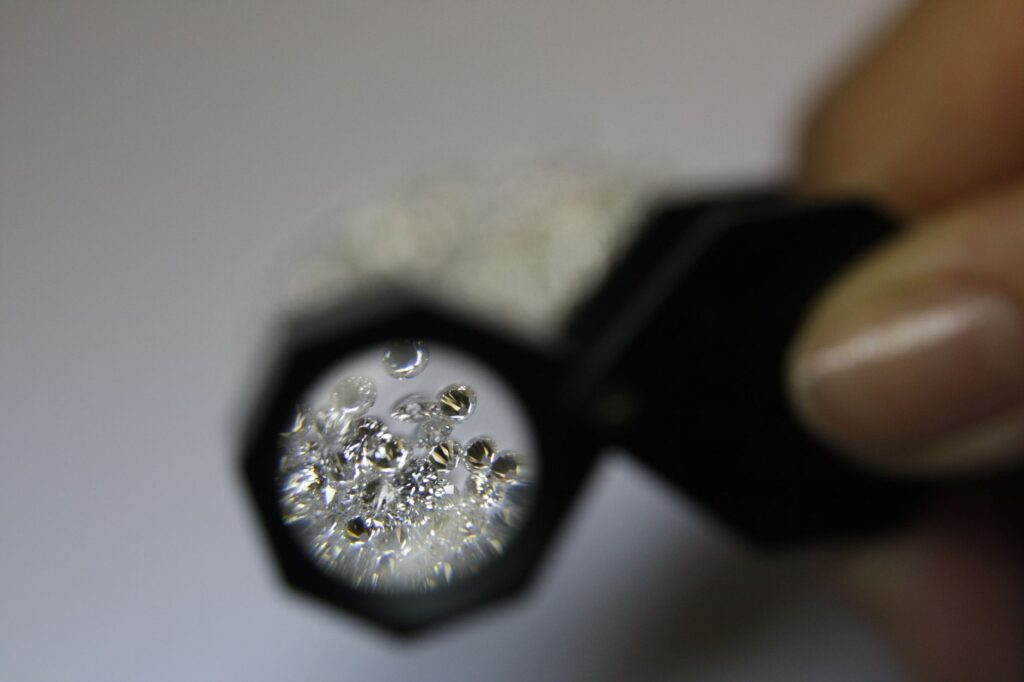
In everyday viewing, most people do not inspect a diamond under magnification. They look at it in motion, in different lighting, and from a few inches away at most. That means clarity only matters visually when the inclusion is large enough, dark enough, or centrally placed enough to catch the eye in normal conditions.
For many diamonds, especially well-cut ones, the face-up appearance is far more important than the microscopic details on a grading report. A diamond that looks bright and clean face-up will usually satisfy buyers more than one with a perfect clarity grade but weaker sparkle.
Lab grown diamonds often make this point even more relevant. Since buyers can sometimes afford a larger stone or better cut within the same budget, it is reasonable to prioritize visible beauty over chasing an unnecessary clarity upgrade.
How inclusions can hide or stand out
Not all inclusions behave the same way. Some are white or transparent and blend in easily. Others are dark or strongly reflective and may stand out more. Inclusions near the pavilion, the lower part of the diamond, may be less visible face-up than those directly beneath the center table.
Cut can also mask or expose inclusions. A diamond with excellent brilliance may make tiny inclusions harder to notice. Conversely, a stone with less light performance may not distract the eye as effectively, so inclusions seem more obvious.
Setting style matters too. Halo, pavé, and prong designs can sometimes cover edge inclusions, while a solitaire may reveal more of the diamond. The same stone can look different depending on the ring design.
Eye-clean versus technically flawless
A technically flawless diamond has no visible inclusions or blemishes under magnification. That is rare, and it commands a premium. But many buyers do not need that level of clarity for a ring that will be worn daily.
An eye-clean VS1, VS2, or even SI1 diamond may look nearly identical to a much more expensive high-clarity diamond in normal use. In other words, the clarity grade can be more impressive on paper than in a hand or on the finger.
This is one of the most important points in diamond buying. Buyers often pay for clarity they cannot see, especially when the diamond is already eye-clean.
How Diamond Clarity Affects Value
When higher clarity is worth paying for
Paying more for clarity can make sense when the inclusions are visible, centrally located, or likely to bother you. It can also make sense if you want peace of mind and prefer a cleaner report, even if the difference is subtle.
Collectors, high-end buyers, or people purchasing a diamond for very close viewing may also value higher clarity more. In those cases, the premium may be justified by the buyer’s standards rather than by a dramatic change in appearance.
For some buyers, particularly those shopping for investment-style pieces or heirloom jewelry, a higher clarity grade may add perceived prestige. That said, perception and resale are not the same thing, and clarity alone does not guarantee strong long-term value retention.
When clarity premiums lose efficiency
Clarity premiums often become less efficient once a diamond is already eye-clean. Moving from SI1 to VS2 can sometimes offer a noticeable gain in cleanliness, depending on the stone. Moving from VS1 to VVS2, however, may add cost without producing any visible improvement for most buyers.
That does not mean higher clarity grades are pointless. It means the improvement becomes increasingly small relative to the price increase. Many experienced buyers look for the point where the diamond is clean enough to satisfy visual standards and stop there.
In that sense, clarity is often a “good enough” category rather than a “the higher the better” category. Once the diamond meets the buyer’s visibility standard, extra money may be better used elsewhere.
Which clarity grades often offer strong value
For many shoppers, VS2 and SI1 can offer a strong balance of appearance and price, especially if the diamond is well cut and the inclusion is not in an obvious spot. Some SI1 diamonds are effectively eye-clean and can represent excellent value.
VS1 is often a comfortable middle ground for buyers who want more certainty without paying top-tier premiums. VVS1 and VVS2 may appeal to buyers who want cleaner reports, but they often carry a premium that is more about rarity than visible difference.
It is best to think in terms of real-world visibility, not just the letter grade. A well-chosen lower clarity diamond can be more practical than a higher clarity diamond that offers no visible advantage.
Common Clarity Grades and What They Mean for Buyers
| Clarity grade | What it means | What buyers usually see | Value perspective |
|---|---|---|---|
| Flawless (FL) | No inclusions or blemishes visible under magnification by a trained grader | Usually no visible imperfections, but the difference is mostly technical | Very expensive, often chosen for rarity rather than practical appearance |
| Internally Flawless (IF) | No internal inclusions visible under magnification, only tiny surface blemishes may exist | Looks extremely clean to the eye | Premium pricing with limited everyday visual benefit over top VVS grades |
| VVS1 / VVS2 | Very, very slight inclusions, difficult to see even under magnification | Usually eye-clean | Strong prestige, but often costly relative to visible benefit |
| VS1 / VS2 | Very slight inclusions, easier to see under magnification but usually not with the naked eye | Often eye-clean, especially in well-cut stones | Frequently a sweet spot for value and appearance |
| SI1 | Slight inclusions that may be visible under magnification and sometimes to the naked eye | Can be eye-clean or visibly included depending on the stone | Can offer excellent value if carefully selected |
| SI2 | Slight inclusions that are more likely to be visible | Often not eye-clean, though some exceptions exist | Requires careful evaluation; value varies widely |
| I1, I2, I3 | Included diamonds with more obvious internal characteristics | Inclusions are usually visible without magnification | Generally chosen only when budget is very limited or the buyer accepts visible flaws |
Practical Examples Buyers Often Encounter
VS2 versus SI1 in normal viewing conditions
A VS2 diamond is often slightly cleaner and more predictable than an SI1, but the difference may be difficult to notice once the diamond is set. If the SI1 is eye-clean and the inclusion is well placed, it may look nearly identical to the VS2 in normal use.
This is where value becomes important. If the SI1 costs noticeably less and still looks clean, it may be the smarter purchase. If the SI1 has a dark inclusion under the table, the VS2 may be worth the upgrade because the visible improvement is real.
Eye-clean SI1 versus non-eye-clean SI1
Not all SI1 diamonds are equal. One SI1 may be a hidden gem, clean to the eye and priced attractively. Another SI1 may have an obvious crystal or feather that is easy to spot without magnification.
This is why shoppers should never rely on the grade alone. The difference between a good SI1 and a problematic SI1 can be significant, even though the label is the same. Experienced buyers and jewelers usually inspect SI1 diamonds carefully instead of assuming they are all acceptable.
VVS clarity versus VS clarity for everyday wear
For an everyday ring, VVS clarity usually offers little visual advantage over VS if both diamonds are already eye-clean. The extra cost often buys rarity and peace of mind more than a visible improvement.
That said, some buyers simply like knowing their diamond ranks very highly on the report. If that preference is important, the premium may be acceptable. But from a purely practical standpoint, many people would not see enough difference to justify the added cost.
Lab grown diamonds and clarity trade-offs
Lab grown diamonds often allow buyers to choose a larger size or better cut at a lower price than natural diamonds. Because of that, some buyers focus heavily on clarity, hoping to maximize visible perfection. In many cases, that is not necessary.
Since the diamond is already more affordable, the best value may come from a balanced combination of cut, color, and clarity rather than pushing for the top clarity grades. A well-selected VS2 or SI1 lab grown diamond can often look excellent in everyday settings.
At the same time, lab grown diamonds can sometimes show growth-related features or strain patterns that are evaluated differently from natural diamond inclusions. A reputable grading report helps explain what is present and whether it affects the stone’s appearance.
Types of Inclusions and How Much They Matter
Feather
A feather is a small fracture or break inside the diamond that can resemble a white or translucent crack. Many feathers are harmless and only visible under magnification. Others may be more concerning if they reach the surface or are located in a vulnerable area.
Whether a feather matters depends on size, position, and whether it affects durability. A tiny feather near the edge may be covered by a setting and cause little concern. A larger feather close to a prong or girdle could deserve closer inspection.
Crystal
A crystal is a mineral inclusion trapped inside the diamond during formation. It may appear white, transparent, or dark depending on its composition and how light interacts with it.
Crystals are common and often not a major issue in higher clarity stones. However, a dark crystal near the center of the diamond can be more visible than a pale one near the edge. From a buyer’s perspective, the visual effect matters more than the technical label.
Cloud
A cloud is a group of tiny pinpoints that can create a hazy area inside the diamond. A small cloud may not affect appearance at all, but a dense cloud can make the diamond look slightly less crisp or less transparent.
Clouds are worth paying attention to because they can affect brilliance if they are significant enough. In many cases, a cloud listed on a report is minor, but buyers should look for any signs of haziness in the diamond itself.
Needle
A needle is a long, thin inclusion that resembles a tiny line. Needles are usually difficult to see individually unless they are grouped or located in a prominent area.
Most needles do not significantly affect durability. Their main relevance is visual, especially if several are clustered together and create a noticeable pattern under magnification.
Pinpoint
A pinpoint is a tiny inclusion that looks like a small dot. Individual pinpoints are usually too small to see without magnification.
One or two pinpoints typically do not worry buyers. A concentration of pinpoints, however, may contribute to a cloud or hazy appearance if there are enough of them in one area.
Twinning wisp
A twinning wisp is a line or ribbon-like internal feature often seen in diamonds, including some lab grown diamonds. It may consist of a mix of tiny pinpoints, crystals, and structural irregularities created during growth.
Many twinning wisps are harmless and only visible under magnification. If dense or centrally located, they can sometimes affect transparency or create a faint pattern, so they are worth reviewing on a case-by-case basis.
Knot
A knot is an included crystal that reaches the surface of the diamond. Because it breaks through the outer surface, it can be more noticeable and may sometimes be more relevant to durability or polishing quality.
Knot inclusions are less ideal than internal inclusions that remain fully enclosed. They are not always a dealbreaker, but they deserve attention if they are large or placed where wear could expose them further.
Cavity
A cavity is a small opening or indent in the surface of the diamond, often caused when an inclusion falls out during cutting or polishing. It is a surface feature rather than a purely internal one.
Because it is open to the surface, a cavity can be more concerning than a tiny internal pinpoint. Its importance depends on size and location. A small cavity hidden in a protected area may matter less than one near the top surface.
Chip
A chip is a small piece missing from the surface of the diamond. Chips are important because they may affect both appearance and durability, especially if they are located on the girdle or near a facet edge.
If a chip is present, buyers should evaluate whether it is repairable, visible, or likely to worsen with wear. Chips are not typical “minor clarity” issues. They are more of a practical concern because they can impact the stone’s condition.
How Inclusion Type Affects Durability
Not every inclusion is a durability risk. Many inclusions are simply cosmetic and do not affect how the diamond holds up over time. Others, especially feathers, cavities, knots, and chips, may deserve more attention if they are large or located in a vulnerable spot.
Durability concerns are not usually the main reason to avoid a diamond with lower clarity, but they should not be ignored. A small feather can be harmless, while a surface-reaching inclusion in a stressed area may increase the risk of future damage.
This is one reason grading reports and clear stone images are useful. Buyers can check whether the inclusion is only a visual characteristic or whether it could have practical implications for long-term wear.
Buying Considerations That Matter More Than the Grade Alone
Budget
Your budget sets the range of clarity grades that make sense. If you are working with a fixed budget, it is usually better to buy the cleanest-looking diamond you can afford without sacrificing cut quality. A modest clarity grade paired with strong cut often gives a better overall result than a high clarity grade paired with weak cut.
For many shoppers, the smartest move is to find the lowest clarity grade that still appears eye-clean. That approach keeps the diamond attractive while preserving budget for the qualities that are easier to see.
Inclusion placement
Where the inclusion sits matters almost as much as what it is. An inclusion near the center of the diamond is more likely to be noticed than one near the edge or pavilion. In some cases, a slightly lower clarity grade with a well-hidden inclusion is a better choice than a higher grade with a more visible one.
When reviewing a diamond, look for inclusions under the table and near the top of the stone. Those locations are often the most visible in normal viewing.
Diamond shape
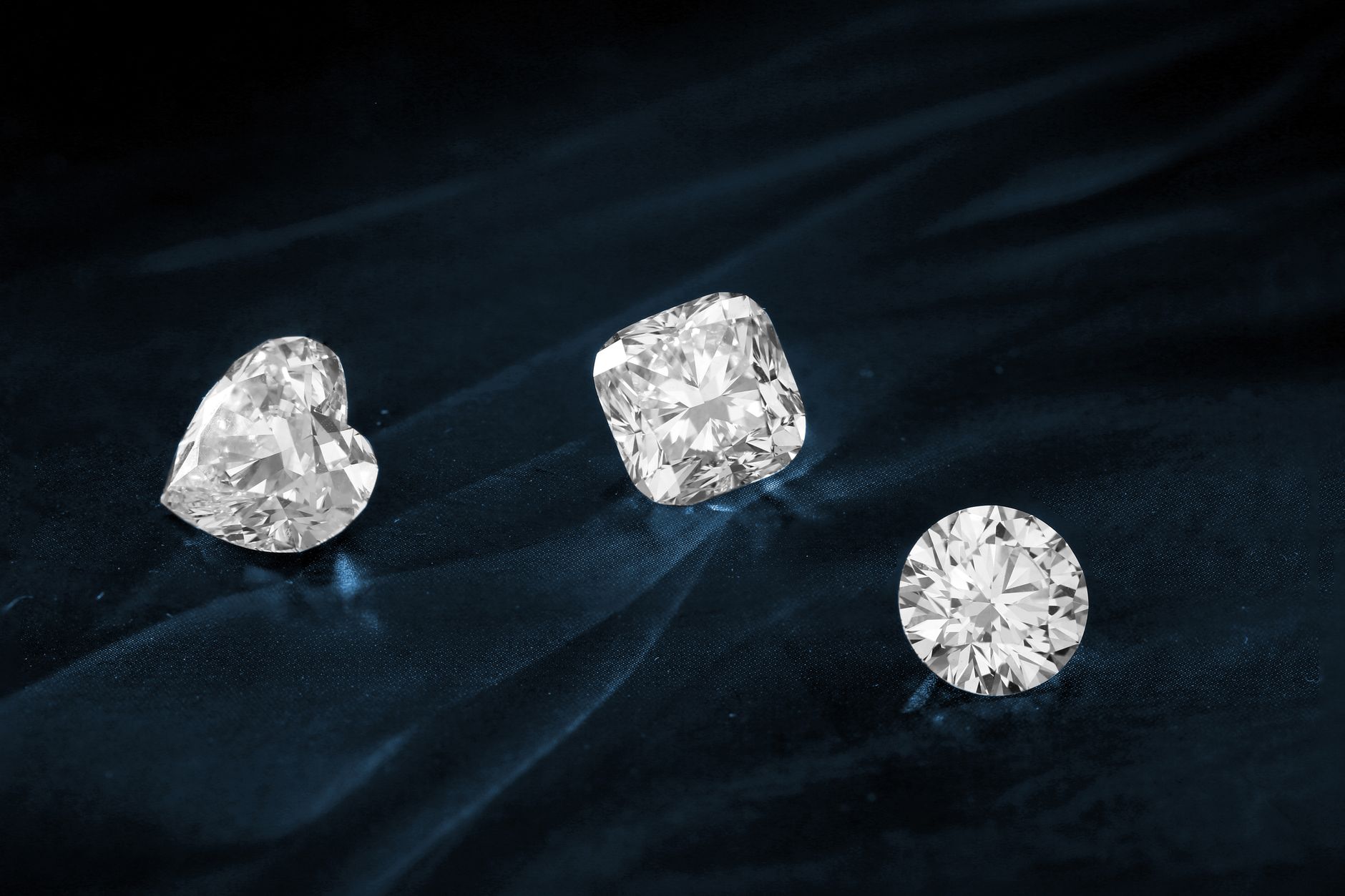
Shape affects how clarity appears. Round diamonds often hide inclusions well because of their brilliance. Step-cut shapes like emerald and Asscher tend to show more because they have large, open facets and less sparkle to mask internal features.
For that reason, buyers of emerald cut diamonds often pay more attention to clarity than buyers of round brilliant diamonds. The same clarity grade can have a different practical impact depending on the shape.
Lab grown diamond considerations
Lab grown diamonds often contain growth-related internal patterns that may be described differently from natural diamond inclusions. These features usually do not make the diamond less durable, but they can affect transparency or appearance if dense enough.
Because lab grown diamonds often offer a lower price per carat, some buyers feel pressure to choose the highest clarity available. In reality, that is not always the best use of budget. Eye-clean and well-cut should still be the main goals for most buyers.
Long-term satisfaction
Some buyers care less about technical value and more about how they will feel wearing the diamond every day. If knowing there is a visible inclusion will bother you, that is a valid reason to move up in clarity. The reverse is also true. If you know you would never notice the difference, a lower clarity grade may be a better financial decision.
Long-term satisfaction usually comes from matching the diamond to your expectations. It is better to buy a stone that fits your standards than to pay for a grade you do not actually need.
Common Buyer Mistakes
- Overpaying for invisible improvements. Many buyers move from VS to VVS or even IF without gaining any visible benefit.
- Ignoring inclusion location. A small inclusion in the wrong place can matter more than a larger one tucked away near the edge.
- Assuming all SI diamonds are the same. SI1 and SI2 diamonds vary widely. Some are eye-clean, and some are not.
- Focusing only on the report letter. The actual diamond can look different from what the grade suggests.
- Forgetting about cut. A better-cut diamond often looks cleaner and brighter, even when clarity is not top tier.
- Assuming higher clarity always means better value. Higher clarity can mean higher rarity, but not necessarily better visual value.
- Not checking the diamond in the chosen setting. A diamond can look different once mounted, so the ring design matters.
What Experienced Buyers and Jewelers Commonly Look For
Experienced buyers often start by asking whether the diamond is eye-clean, not whether it has the highest possible clarity grade. They know that the most visible difference is usually between clearly included stones and eye-clean stones, not between closely spaced higher grades.
Jewelers also pay attention to the stone’s appearance in standard viewing conditions. They may inspect the diamond face-up, from a few inches away, and under different lighting to see whether an inclusion draws the eye. If it does not, the stone may be a strong candidate even if the report is not top tier.
This practical approach is especially useful for lab grown diamonds, where buyers often have more flexibility in budget. Instead of paying extra for a grade that looks similar, many experienced shoppers choose the stone that looks cleanest and most balanced overall.
Frequently Asked Questions
Is a higher clarity diamond always better?
No. A higher clarity grade means fewer or less visible inclusions, but it does not always mean a better-looking diamond in everyday use. Once a diamond is eye-clean, additional clarity often brings diminishing returns.
What clarity grade is best for value?
There is no single best grade, but VS2 and eye-clean SI1 diamonds often offer strong value. They can look very clean without the premium attached to VVS or IF grades.
Can I see inclusions without a loupe?
Sometimes, yes. Larger, darker, or centrally located inclusions may be visible without magnification, especially in lower clarity grades. Many minor inclusions are not visible to the naked eye.
Does clarity affect sparkle?
Clarity can affect appearance, but cut is usually much more important for sparkle. A well-cut diamond with minor inclusions often looks brighter and more attractive than a poorly cut diamond with higher clarity.
Are lab grown diamonds better in clarity than natural diamonds?
Not inherently. Lab grown diamonds and natural diamonds can both have a wide range of clarity grades. Lab grown stones often offer better affordability, which can make higher clarity more accessible, but the same rules about eye-clean appearance still apply.
Should I avoid SI1 diamonds?
No. Many SI1 diamonds are excellent choices if the inclusion is not visible and the stone looks clean in normal viewing. The key is evaluating the actual diamond, not rejecting the grade automatically.
Do clarity inclusions get worse over time?
Most internal inclusions do not change over time. However, surface-reaching issues like chips, cavities, or some feathers can be more concerning if the diamond is exposed to impact during wear.
What matters more, clarity or cut?
For most buyers, cut matters more because it affects brilliance, sparkle, and how lively the diamond looks. Clarity matters when inclusions are visible or distracting, but cut usually has the bigger visual impact.
Conclusion
Diamond clarity affects value by influencing both what you see and what you pay. The highest clarity grades are rare and expensive, but they are not always necessary for a beautiful diamond. In many cases, the best value comes from choosing a diamond that is eye-clean rather than one that simply has a higher grade on paper.
When evaluating a diamond, focus on the practical questions. Can you actually see the inclusion? Does its location matter? Is the added cost producing a meaningful improvement? Those questions are usually more helpful than asking whether the diamond has the highest clarity possible.
For most buyers, especially in the lab grown diamond market, clarity should be balanced with cut, color, and overall appearance. A thoughtful choice is often a diamond that looks clean and attractive in everyday wear, not one that scores highest only under magnification.