Diamond symmetry is one of those grading details that can sound more important than it looks on paper. When you compare Excellent Symmetry vs Very Good Symmetry, you are really comparing how precisely the diamond was finished, not whether it will automatically look brilliant or dull.
For most buyers, the real question is practical: does that higher symmetry grade create a visible improvement, or is it mainly a technical distinction on the report? The answer depends on the diamond, the shape, the rest of the cut quality, and how closely you look at it. In many cases, the difference is subtle. In some cases, especially with round brilliant diamonds, it can contribute to a cleaner, more refined appearance.
If you are shopping for a lab grown diamond or a natural diamond, symmetry is worth understanding, but it should never be viewed in isolation. The most noticeable factors are still overall cut quality, proportions, and light performance. Symmetry is best treated as a supporting quality factor that can fine-tune the stone’s appearance.
Quick Answer: Excellent Symmetry vs Very Good Symmetry
Excellent symmetry means the diamond’s facets, outline, and facet relationships are aligned with greater precision than in a diamond graded Very Good symmetry. That usually suggests a higher level of finishing and more exact craftsmanship.
Very Good symmetry is still a strong grade. In real-world viewing, many Very Good symmetry diamonds look excellent to the naked eye, especially when the cut proportions and polish are also strong. The difference between the two grades is often easier to measure under magnification than it is to spot during normal wear.
If the price difference is small, Excellent symmetry can be a nice quality upgrade. If the premium is large, and the diamond already looks balanced and lively, Very Good symmetry may offer better overall value. The best choice depends on what you can actually see, not just on the grading line.
What Diamond Symmetry Means
Diamond symmetry refers to how accurately the facets match each other in shape, size, placement, and alignment. Facets are the flat surfaces that help control how a diamond returns light. When those facets are laid out neatly and evenly, the diamond has better symmetry.
This is different from polish. Polish describes how smooth the facet surfaces are. Symmetry describes how accurately those facets are arranged relative to one another. Both affect the finished appearance of a diamond, but they do so in different ways.
Symmetry is evaluated by gemological laboratories such as GIA or IGI. The lab examines the diamond under controlled conditions and assigns a grade based on the precision of its structure. That report is useful, but it does not replace seeing how the diamond looks in person or in video.
Why symmetry is a separate grading factor
Cutting a diamond involves balancing beauty, weight retention, and proportions. During that process, tiny differences in facet placement can occur. Symmetry grading helps buyers understand how carefully the stone was finished.
Good symmetry can contribute to a more orderly, balanced appearance. In a round brilliant diamond, that may affect the regularity of the facet pattern. In fancy shapes, it can influence the shape outline and the sense of visual balance.
What Excellent Symmetry Means
An Excellent symmetry grade indicates that the diamond’s facet arrangement is very precise and that the shape and structure are closely matched within the lab’s standards. It usually reflects a high level of craftsmanship.
In practical terms, Excellent symmetry can support a cleaner face-up look. In round brilliant diamonds, it may help produce a more regular pattern. In fancy shapes, it can help the outline appear more balanced and refined.
That said, Excellent symmetry is not a guarantee of a beautiful diamond by itself. A diamond can have Excellent symmetry and still underperform if its proportions are weak. For that reason, symmetry should be viewed as one piece of the overall quality picture.
What Very Good Symmetry Means
Very Good symmetry means the diamond is still well made, but the facet arrangement is slightly less precise than in an Excellent stone. The differences may involve minor misalignment, small shape variations, or subtle irregularities that are not usually obvious in daily wear.
For many buyers, Very Good symmetry is a practical middle ground. It can deliver strong beauty without the premium that sometimes comes with the highest symmetry grade. In many diamonds, especially those with strong cut proportions, the difference is not easy to notice without magnification or direct side-by-side comparison.
Still, not every Very Good symmetry diamond looks the same. Some are extremely close to Excellent, while others show a bit more inconsistency. That is why the grading report should always be considered with the diamond’s photos, video, and the rest of the cut information.
Why Symmetry Matters to Diamond Buyers
Buyers care about symmetry because it can affect how orderly and polished a diamond appears. Even if most people do not inspect facet alignment consciously, they often respond to the overall sense of balance and refinement.
For shoppers comparing lab grown diamonds, symmetry can be especially relevant because lab grown stones often provide strong value in higher sizes and higher clarity grades. That gives buyers more room to focus on craftsmanship and visual performance rather than rarity alone.
Still, symmetry is only one part of the story. In real-world viewing, the biggest difference usually comes from the diamond’s cut proportions and light return. Symmetry can enhance the look, but it rarely compensates for weak cut geometry.
How symmetry fits into cut quality
Cut quality is a broader concept than symmetry. It includes proportions, polish, symmetry, and the way the diamond handles light. A diamond can have Excellent symmetry and still look mediocre if its angles and proportions are not strong.
For that reason, experienced buyers often treat symmetry as a supporting factor. If the diamond already has excellent overall cut performance, symmetry can reinforce its beauty. If the cut is weaker, symmetry alone will not usually make the diamond look much better.
How Excellent Symmetry vs Very Good Symmetry Affects Appearance
The most important question is what the buyer will actually see. In everyday viewing, the difference between Excellent symmetry and Very Good symmetry is often subtle. Most people will not notice it unless the diamonds are compared side by side in controlled lighting.
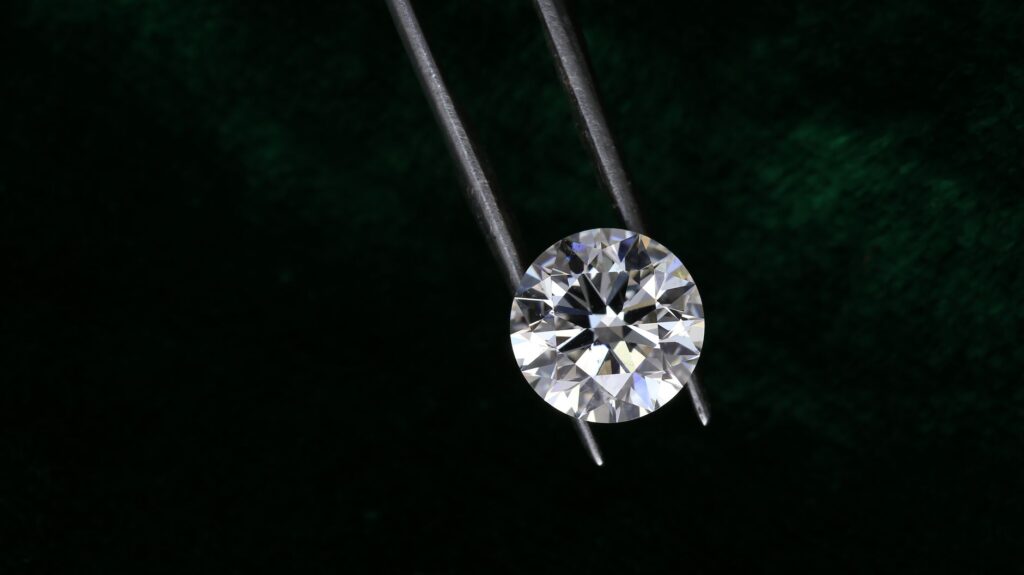
That does not mean the grade is meaningless. In round brilliant diamonds, Excellent symmetry can contribute to a more precise facet pattern and a cleaner overall visual structure. In Very Good stones, the pattern may still be attractive, just a little less exact.
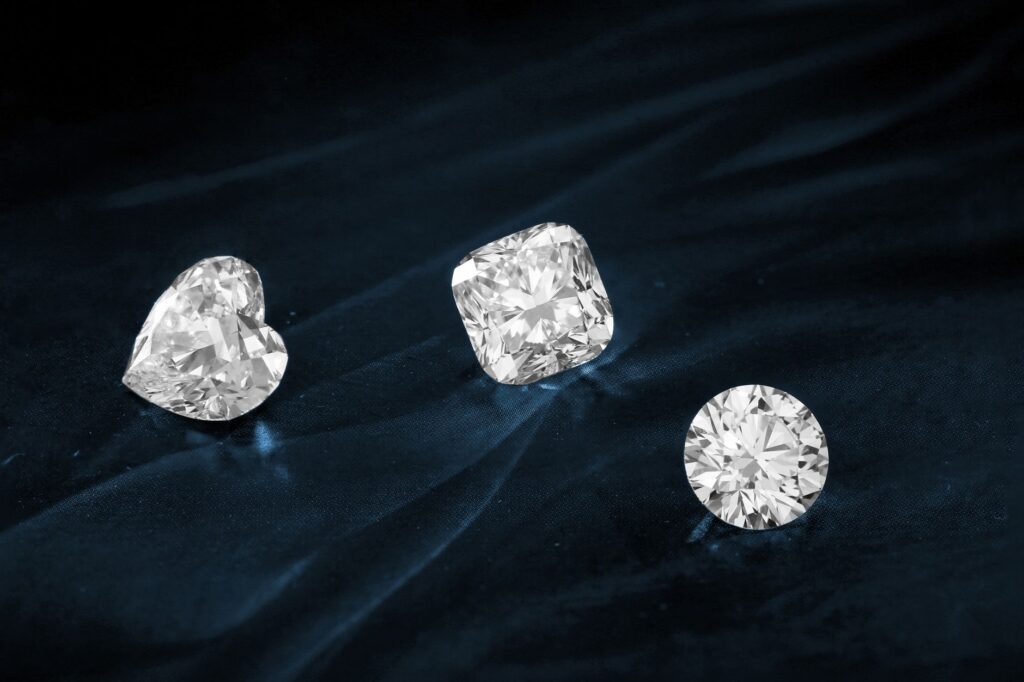
In fancy shapes such as oval, cushion, pear, and emerald cut diamonds, symmetry influences the outline and the evenness of the facet layout. A diamond with better symmetry may look more balanced from the top, while a slightly less symmetrical one may show small irregularities. Often these are minor, but detail-oriented buyers may still care about them.
Sparkle, brilliance, fire, and scintillation
Shoppers often use sparkle as a general term, but it helps to break it into separate parts:
- Brilliance, which is the white light reflected back to the eye
- Fire, which is the colored flashes of light
- Scintillation, which is the pattern of light and dark movement as the diamond moves
Symmetry can influence how organized those effects appear. Excellent symmetry may create a slightly cleaner pattern of flashes, especially in round brilliant diamonds. Very Good symmetry can still produce excellent sparkle, but the pattern may be a little less precise.
For most buyers, the difference is not a dramatic jump in sparkle. It is more often a difference in crispness, balance, and refinement. One diamond may appear more exact, while the other still looks very beautiful.
Light return and visual efficiency
Light return is the diamond’s ability to bring light back to the eye instead of letting it escape through the bottom or sides. This is influenced mainly by cut proportions and optical design, not symmetry alone. However, symmetry can still support a cleaner and more efficient-looking stone.
If two diamonds have similar proportions, the one with better symmetry may appear more orderly. But if one diamond has clearly superior proportions and better light performance, that will usually matter more than the symmetry grade.
Excellent Symmetry vs Very Good Symmetry in Different Diamond Shapes
The importance of symmetry varies by shape. Some shapes are more sensitive to facet alignment than others.
| Shape | How much symmetry matters | What buyers may notice |
|---|---|---|
| Round brilliant | High | Pattern precision, balance, and crisp structure |
| Princess | Moderate to high | Square outline, corner balance, facet alignment |
| Oval | Moderate | Outline balance and face-up harmony |
| Cushion | Moderate | Shape consistency and facet arrangement |
| Emerald | High for appearance | Even step patterns and clean geometry |
| Pear | Moderate to high | Outline balance and even tapering |
Round brilliant diamonds are where symmetry is most closely examined because their facet structure is standardized and highly intentional. Small misalignments can affect the pattern more noticeably than they might in other shapes.
In fancy shapes, symmetry still matters, but buyers often place more weight on whether the shape looks attractive face up. A well-proportioned oval with Very Good symmetry may still be more appealing than a technically better-graded stone with a less attractive outline.
The same principle applies to lab grown diamonds. The growth method does not change the way symmetry is evaluated after the stone has been cut. A lab grown diamond can have Excellent symmetry, Very Good symmetry, or a lower grade depending on the craftsmanship of the cutting process.
What Buyers Actually Notice in Real Life
Most people do not evaluate diamonds under laboratory conditions. They see them in store lighting, at home, outdoors, and in everyday movement. That means the real-world difference between Excellent symmetry and Very Good symmetry is usually smaller than the grading report might suggest.
In most cases, buyers notice these things first:
- Overall brightness
- How lively the diamond looks when it moves
- Whether the diamond appears balanced face up
- How consistent the sparkle pattern looks
If both diamonds are well cut, the visual difference may be subtle. A side-by-side comparison can show that the Excellent symmetry diamond looks a little cleaner or more precise, but that difference may be less obvious once the diamond is worn in a setting and viewed casually.
That is why some buyers prefer to spend more on overall cut quality, color, or carat weight instead of chasing the very highest symmetry grade. The better choice depends on what improvements are actually visible to the eye.
How Excellent Symmetry vs Very Good Symmetry Affects Value
Symmetry can affect price, but usually not as much as carat weight or major cut quality differences. The premium for Excellent symmetry may be modest or noticeable depending on the diamond’s size, shape, and overall quality. In some cases, it is worth paying for. In others, the visual return is too small to justify the cost.
Value is not about choosing the highest grade in every category. It is about paying for characteristics that improve the diamond in ways you can actually appreciate. If a Very Good symmetry diamond has stronger proportions, better light performance, or a more attractive overall appearance, it may be the better value.
On the other hand, if the diamonds are otherwise similar and the price difference is small, Excellent symmetry can be a reasonable upgrade. This is especially true for buyers who care about craftsmanship and want the most refined version of a stone.
When paying more for Excellent symmetry makes sense
Paying a premium for Excellent symmetry may make sense when:
- The diamond is a round brilliant and you want the cleanest possible patterning
- The price increase is small relative to your budget
- The diamond already has strong cut, color, and clarity, so finishing details matter more
- You prefer top-tier craftsmanship and want fewer compromises
When Very Good symmetry may be the smarter buy
Very Good symmetry can be the better choice when:
- The diamond looks excellent to the eye and the difference is hard to notice
- You want to spend more on cut proportions, size, or another quality factor
- The shape is one where tiny symmetry differences are less obvious in normal wear
- The photos or video show a balanced stone even though the grade is slightly lower
Excellent Symmetry vs Very Good Symmetry and Cut Grade
One of the most common mistakes is treating symmetry as if it were the same thing as cut. It is not. Cut grade is a broader assessment, while symmetry is only one part of the finished diamond.
A diamond with Excellent symmetry is not automatically a better-cut diamond than one with Very Good symmetry. For example, a round diamond with Very Good symmetry and superior proportions may look more lively than one with Excellent symmetry but weaker angles. Light performance depends heavily on how the diamond is designed, not just how neatly the facets line up.
This matters for both natural and lab grown diamonds. Lab grown stones often provide strong value, so understanding which quality factor actually affects appearance can help buyers avoid paying extra for details that do not make a meaningful visual difference.
How symmetry relates to polish
Polish and symmetry are often grouped together because both describe craftsmanship. Polish refers to how smooth the facet surfaces are. Symmetry refers to how precisely the facets are arranged.
Excellent polish can help a diamond look cleaner and more refined, even if symmetry is only Very Good. Likewise, excellent symmetry with weak polish may not look as crisp as expected. It is best to think of these as complementary qualities rather than interchangeable ones.
How Symmetry Is Graded
Gemological laboratories evaluate symmetry under controlled conditions. Graders inspect the diamond for issues such as facet alignment, outline consistency, point symmetry, and how accurately opposing facets match. The exact criteria can vary by lab, but the goal is to measure how precisely the stone was cut and finished.
Typical symmetry details that may be reviewed include:
- Facet misalignment
- Uneven facet shape or size
- Off-center table or culet placement
- Uneven girdle thickness in certain areas
- Facets that do not meet in a fully uniform way
Minor issues often lead to a Very Good grade rather than Excellent. More noticeable irregularities can lower the grade further. Since grading happens under lab conditions, it is still smart to pair the report with images or video to see how the diamond actually presents itself.
Why labs can differ slightly
Different laboratories use different standards and thresholds. Two diamonds that look similar may receive different symmetry grades depending on the lab. This is one reason buyers should read the report in context instead of focusing on a single grade line.
It is also helpful to consider the rest of the grading document, including cut, polish, proportions, and any comments that affect appearance. For buyers comparing certified diamonds, symmetry is only one piece of the puzzle.
Advantages of Excellent Symmetry
Excellent symmetry offers several practical advantages:
- It suggests careful craftsmanship
- It may support a cleaner and more balanced visual pattern
- It can appeal to buyers who value precision and refinement
- It may give more confidence in the quality of the cutting process
For some shoppers, especially those choosing a diamond for a major occasion, that extra sense of refinement matters. Even when the visual difference is small, knowing the diamond is finely finished can add reassurance.
Disadvantages of Chasing Excellent Symmetry Too Hard
The main drawback is that buyers can overpay for a difference that is hard to see. If the premium means giving up better proportions, a better shape, or a more suitable carat size, the overall diamond may be less satisfying.
Another limitation is that Excellent symmetry does not guarantee better sparkle. A diamond can be perfectly symmetrical and still have weak light return if the angles are off. Buyers who assume symmetry automatically means beauty may end up making the wrong trade-off.
It is also worth remembering that many Very Good symmetry diamonds are genuinely attractive. Dismissing them too quickly can limit your options and reduce value.
Advantages of Very Good Symmetry
Very Good symmetry has real strengths. It often provides a strong balance of beauty and value, especially when the difference from Excellent is tiny. Many diamonds with this grade look excellent once they are set and worn.
Because the grade is slightly lower, the price may be a little more accessible. That can free up budget for a better cut grade, a more favorable diamond shape, or a larger center stone.
For buyers who care more about how the diamond looks than about microscopic precision, Very Good symmetry is often more than enough.
Disadvantages of Very Good Symmetry
Very Good symmetry can come with a few trade-offs. In some round brilliants, the pattern may be a little less crisp than in an Excellent stone. Buyers who are especially detail-oriented may also prefer the reassurance of the higher grade.
Another issue is that not all Very Good symmetry diamonds are equal. Some are nearly indistinguishable from Excellent, while others show more visible irregularities. That is why photos, videos, and the overall grading report matter so much.
Practical Examples of the Difference
Example 1: Excellent symmetry versus Very Good symmetry in a round brilliant
Imagine two round brilliant diamonds with very similar carat weight, color, clarity, and cut quality. One is graded Excellent symmetry and the other Very Good symmetry. Under store lighting, both may look bright and lively.
When compared side by side, the Excellent symmetry diamond may show a slightly more precise pattern and a cleaner overall look. The Very Good stone may appear almost identical to most buyers, with only subtle differences visible to a trained eye. In many cases, the extra price for Excellent symmetry is not dramatic enough to change the buying decision.
Example 2: A well-cut 1.5-carat diamond versus a poorly cut 2-carat diamond
This is a useful reminder that cut quality matters more than a single finishing grade. A 1.5-carat diamond with strong proportions, good light return, and solid symmetry can easily look more attractive than a 2-carat diamond with poor proportions and weak performance.
The larger stone has more weight, but it may also look less lively. Many first-time buyers focus on size because it is easy to understand, but a smaller diamond with better cut quality often looks more impressive in daily wear.
Example 3: Higher clarity with weaker cut versus lower clarity with stronger cut
A diamond with higher clarity may sound better on paper, but if the cut is weak, the stone can still appear less beautiful. A lower clarity diamond with strong cut, excellent light return, and good symmetry may look cleaner and more brilliant to the eye.
This is because people usually notice brightness and sparkle before they notice tiny clarity differences. Buyers who understand that often make better use of their budget.
Buying Considerations for Lab Grown Diamonds
Lab grown diamonds make this comparison especially interesting because they often provide more size and quality for the money. That means buyers may be able to consider symmetry more carefully without immediately leaving their target budget range.
Even so, the same rule applies: choose the diamond that looks best for the money, not simply the one with the highest grade in every category. Lab grown diamonds should be judged by their appearance, certification, and overall cut quality. A Very Good symmetry lab grown diamond can look nearly identical to an Excellent one if the rest of the stone is well made.
Certification matters
Always review the grading report carefully. Reliable certification helps you understand whether the symmetry grade came from a respected lab and how it fits with the diamond’s overall quality. Cut, polish, symmetry, and proportions should all be considered together.
It is also smart to review the diamond through images or video when possible. A stone with Very Good symmetry may still face up beautifully, while one with Excellent symmetry may look less lively if the proportions are weaker.
Long-term satisfaction
Most buyers want a diamond they will still like years later. For some, choosing Excellent symmetry provides peace of mind. For others, Very Good symmetry is the better decision because it looks nearly the same and leaves room for other priorities.
Long-term satisfaction usually comes from balance. The best diamond is not necessarily the one with the highest grade in one category. It is the one that looks good, fits the budget, and feels sensible once you compare the full picture.
Common Buyer Mistakes
- Prioritizing carat weight over cut quality, which can lead to a larger but less lively diamond
- Assuming Excellent symmetry always means better sparkle, when light performance depends on more than symmetry
- Overpaying for tiny grading differences that are hard to see without magnification
- Ignoring proportions and optical performance because the symmetry grade looks impressive
- Thinking all Very Good symmetry diamonds are inferior, when many look outstanding in real life
- Buying without seeing photos or video, especially when shopping online
One of the most useful questions to ask is simple: what will I actually notice in normal wear? If the answer is “very little,” then the extra cost may not be worthwhile.
How to Decide Between Excellent Symmetry and Very Good Symmetry
The right choice depends on your goals. If you want the most refined craftsmanship and the premium is manageable, Excellent symmetry is a strong option. If you want the best balance of beauty and value, Very Good symmetry may be the smarter choice.
A practical way to rank your priorities is this:
- Overall cut and light performance
- Shape and face-up appearance
- Color and clarity appropriate for your budget
- Symmetry and polish
- Carat weight
This order is not fixed for every buyer, but it reflects how diamonds are usually experienced in real life. A stone that looks lively and balanced will often feel more satisfying than one that simply checks the most boxes on a report.
Frequently Asked Questions
Is Excellent symmetry worth paying more for?
Sometimes. If the price difference is modest and the rest of the diamond is strong, Excellent symmetry can be a worthwhile upgrade. If the premium is large and the visual gain is small, Very Good symmetry may offer better value.
Can you see the difference between Excellent and Very Good symmetry with the naked eye?
Usually not very easily. A side-by-side comparison may reveal a cleaner or more precise pattern in the Excellent stone, but most people will not notice a dramatic difference in everyday wear.
Does symmetry affect sparkle?
It can influence how orderly the sparkle pattern looks, but it is not the main driver of sparkle. Cut proportions and light return usually matter more. A diamond with Very Good symmetry can still sparkle beautifully if the rest of the cut is strong.
Is Very Good symmetry a bad grade?
No. Very Good symmetry is still a solid grade and often indicates a well-made diamond. It simply means the diamond is a little less precise than an Excellent stone.
Should I choose Excellent symmetry for a lab grown diamond?
Not automatically. Lab grown diamonds often provide strong value, so it may make more sense to choose the grade that gives the best visible result for your budget. In many cases, a Very Good symmetry lab grown diamond can look nearly identical to an Excellent one.
Does symmetry matter more in round diamonds?
Yes, usually. Round brilliant diamonds have a more structured facet pattern, so symmetry differences are easier to notice. In fancy shapes, buyers often focus more on the overall outline and face-up appeal.
What if the diamond has Excellent symmetry but weaker cut quality?
It may not look as impressive as you expect. Excellent symmetry does not fix poor proportions or weak light return. Overall cut quality should come first.
Should I rely on the grading report or the diamond’s video?
Use both. The report tells you the technical grades, while photos and video show how the diamond actually looks. That combination is more useful than either one alone.
Conclusion
When comparing Excellent Symmetry vs Very Good Symmetry, the right choice depends on how much you value precision and how much extra you are willing to pay for it. Excellent symmetry usually reflects finer craftsmanship, but Very Good symmetry can still deliver a beautiful diamond and may offer better overall value.
The most important lesson is to keep symmetry in context. Cut quality, proportions, polish, color, clarity, and actual light performance matter more to what you see every day. Symmetry can improve the overall finish, but it is not the main reason a diamond looks brilliant.
If you are shopping for a lab grown diamond or a natural diamond, focus first on how the stone performs visually, then use symmetry to refine your choice. That approach is more likely to lead to a diamond you will feel confident about over time.