When shoppers compare diamond clarity grades, the main question is usually not what the grade means on paper. It is whether the difference will actually matter once the diamond is set in a ring and worn every day. That is especially true for lab grown diamonds, where clarity can look excellent at many price points, but the grading system still influences how much you pay and what you can realistically see.
What Is SI1 Diamond Clarity is a common question because SI1 sits in a practical middle ground. It often offers a balance between visible beauty and value, but not every SI1 diamond looks the same. Some are eye-clean and hard to spot without magnification, while others have inclusions that are easier to notice, depending on size, type, and location.
For buyers researching engagement rings or other diamond jewelry, the real issue is not the label alone. The important question is whether an SI1 diamond looks clean to the eye in normal viewing conditions, and whether it offers better value than paying more for VS or VVS clarity. Understanding that difference can help you avoid overpaying for details you may never see.
Quick Answer
SI1 means Slightly Included 1, which is a clarity grade used for diamonds that have inclusions visible under magnification and sometimes, but not always, visible to the naked eye. In practical terms, many SI1 diamonds are eye-clean, especially when the inclusion is small, off to the side, or hidden well by the setting.
However, SI1 is not a guarantee of invisibility. One SI1 may look very clean, while another may show a noticeable crystal, feather, or group of inclusions when viewed closely. That is why buyers should look at the actual stone, not just the grade on a report.
For many shoppers, SI1 can be a smart value point because it often costs less than VS clarity while still looking excellent in everyday wear. The key is to evaluate the diamond’s appearance, inclusion type, and location, especially if you are buying a lab grown diamond where clarity can vary widely across stones.
What SI1 Diamond Clarity Means
Diamond clarity refers to the presence of internal characteristics called inclusions and external marks called blemishes. These are natural features in mined diamonds and growth-related features in lab grown diamonds. A clarity grade reflects how easy those features are to see under magnification and, in some cases, with the naked eye.
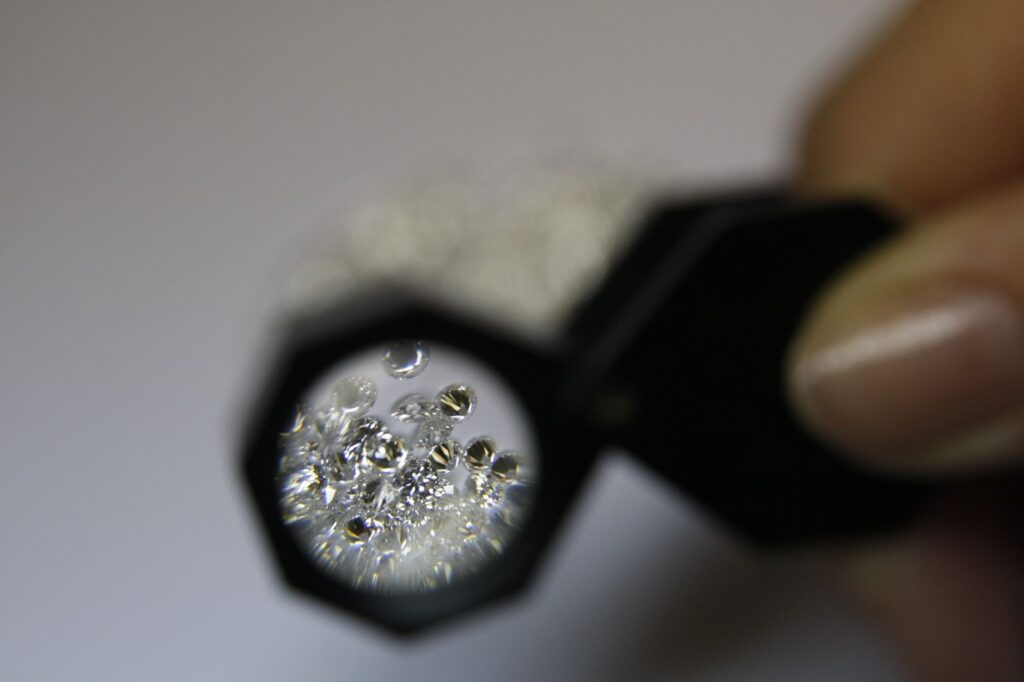
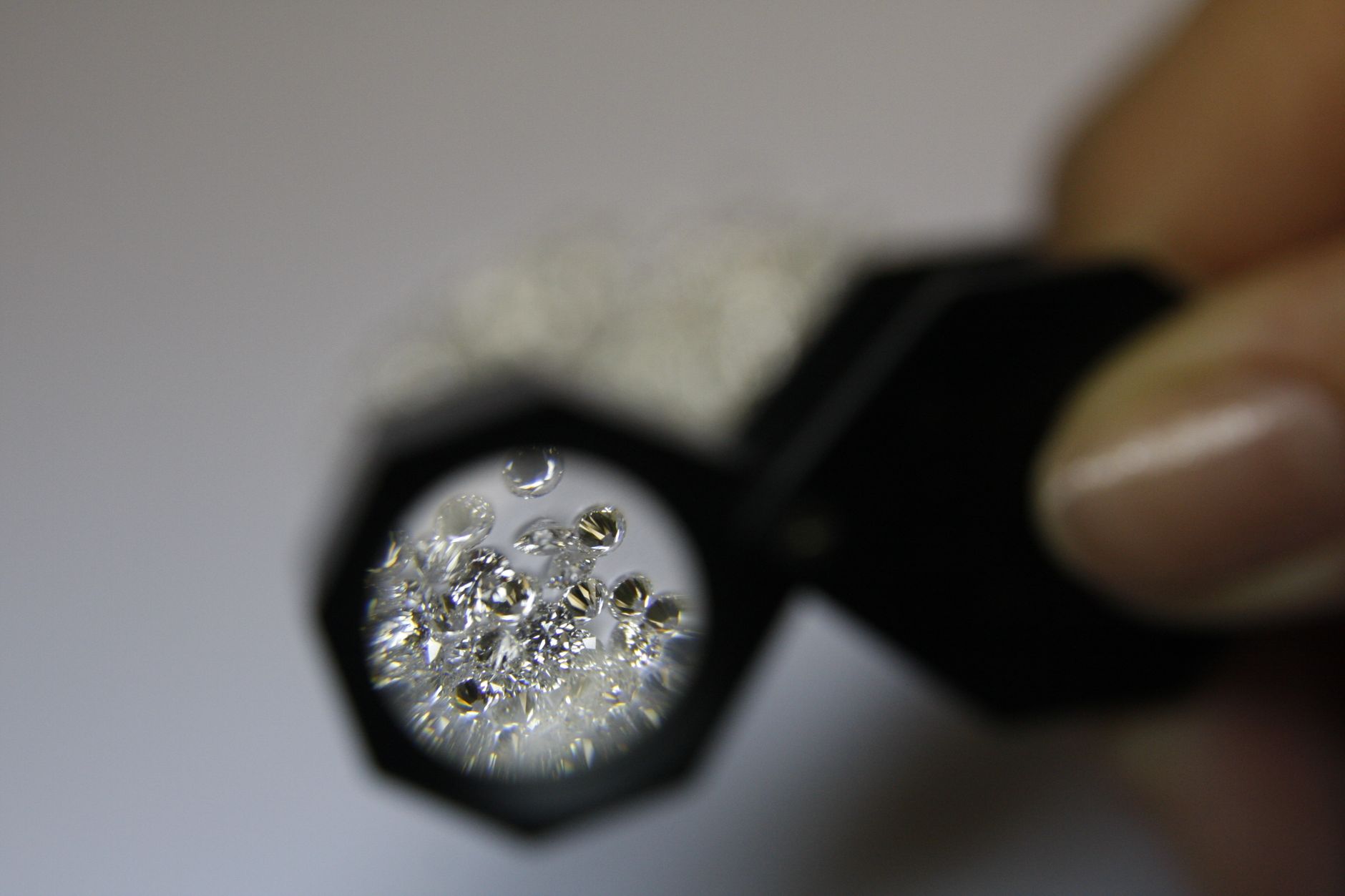
SI1 is one step above SI2 and below VS2 on the common clarity scale used in diamond grading. The full range typically goes from Flawless and Internally Flawless at the top, through VVS, VS, SI, and down to I clarity grades. SI1 stands in the “slightly included” category, which means the diamond has noticeable internal features under 10x magnification, but those features may still be difficult to see without a loupe.
In everyday buying terms, SI1 is often the grade where shoppers start asking whether the diamond is truly eye-clean. The answer depends on the individual stone. Some SI1 diamonds look much cleaner than some VS2 stones, while others are visibly included enough that a buyer would want to move up in clarity or choose a different stone.
How SI1 Fits Into the Clarity Scale
| Clarity Grade | General Meaning | Typical Buyer Experience |
|---|---|---|
| FL / IF | Very rare, no visible inclusions under magnification or internally flawless | Extremely clean, usually priced at a premium |
| VVS1 / VVS2 | Very, very slight inclusions | Inclusions are extremely hard to see, even under magnification |
| VS1 / VS2 | Very slight inclusions | Usually eye-clean, strong balance of appearance and value |
| SI1 | Slight inclusions | Can be eye-clean, but requires review of the actual stone |
| SI2 | Slightly more noticeable inclusions | More likely to show visible inclusions |
| I1 and below | Obvious inclusions | Visible flaws are common and may affect appearance or durability |
Why SI1 Matters to Diamond Buyers
Clarity matters because it affects both price and appearance. But the size of that effect depends on the grade and on how the stone is cut, shaped, and set. In many cases, the difference between an eye-clean SI1 and a VS2 diamond is small to the eye but meaningful in price.
That is why SI1 draws so much attention from buyers comparing diamonds online or in person. It often sits at the point where you can still get a beautiful-looking stone without paying for a higher clarity grade that may not create a visible improvement.
At the same time, SI1 is not a “safe” grade in the sense of guaranteed visual perfection. Buyers need to understand the inclusion pattern, not just the label. A single inclusion near the edge can be easier to hide than a cluster near the center, but the opposite can also be true depending on the shape and setting.
Why the Grade Alone Is Not Enough
Two SI1 diamonds can look very different. One may have a tiny feather off to the side that is nearly impossible to spot in normal viewing, while another may have a dark crystal in the center that draws the eye immediately. The report grade is useful, but it does not tell the whole story.
This is especially important in lab grown diamonds. Because lab grown stones can be produced with very high clarity, shoppers sometimes expect every SI1 to look pristine. In practice, the same clarity rules still apply, and the actual visual appearance depends on the specific stone.
How SI1 Affects Appearance
The most important question for most buyers is simple: can I see it? With SI1, the answer is sometimes yes and sometimes no. Many SI1 diamonds are eye-clean from a normal viewing distance, which is usually around 6 to 12 inches, especially once they are mounted in a ring.
What makes the difference is not only the size of the inclusion, but also its contrast, location, and type. A tiny white pinpoint near the edge is much less noticeable than a dark crystal in the center. A cluster of small inclusions can also be more visible than one isolated feature.
Lighting matters too. A diamond can look very clean in diffuse lighting, then show more detail under strong direct light or while being examined closely in a store. That does not necessarily mean the stone has a problem. It simply means clarity should be judged in real viewing conditions, not only under a microscope.
What Buyers Usually Notice First
- Center inclusions: Features near the middle of the diamond draw the eye more easily.
- Dark inclusions: Black or dark crystals tend to stand out more than light-colored ones.
- Large feathers or clouds: These may create a hazy look or visible line depending on size and placement.
- Step cuts: Emerald and Asscher cuts show clarity more easily because their open facets act like windows.
- Shape and setting: Certain settings can hide edge inclusions better than others.
For round brilliant diamonds, inclusions are often easier to hide because the faceting pattern helps break up the view. For emerald cuts, elongated cushions, and some ovals, SI1 inclusions may be more visible. That is why shape is an important part of clarity evaluation.
Eye-Clean Appearance Explained
“Eye clean” means you cannot see inclusions with normal unaided vision at a typical viewing distance. It does not mean the diamond is flawless. It means the inclusions are not distracting in everyday wear.
There is no universal industry standard for eye-clean, which is why one seller’s eye-clean SI1 may be another seller’s “borderline” diamond. Most experienced buyers focus on what they can see, not just the official grade. If a stone looks clean in the setting and viewing conditions you care about, it may be perfectly suitable even if it is technically SI1.
Common Inclusion Types Found in SI1 Diamonds
Not all inclusions affect appearance the same way. Some are hard to see unless they are large or centrally located, while others are more obvious because of contrast or shape. Understanding the common inclusion types helps you judge whether an SI1 diamond is likely to look clean.
Crystal
A crystal is another mineral trapped inside the diamond. It can appear white, gray, black, or colored. Crystals are one of the most common inclusions buyers notice because darker crystals can stand out against a bright diamond.
In SI1 diamonds, a small crystal off to the side may be invisible in normal wear. A larger dark crystal near the center is more likely to be seen. Crystals do not automatically make a diamond unattractive, but placement matters a great deal.
Feather
A feather is a small break or fracture inside the diamond that can resemble a delicate white line. Many feathers are harmless and purely cosmetic, especially when they are tiny and away from the edge. Some, however, may be worth extra attention if they reach the surface or are located in a vulnerable area.
For most SI1 diamonds, a small feather is not a durability concern. If a feather is large, near a corner, or on a thin edge, a jeweler should evaluate whether the setting will protect it properly.
Cloud
A cloud is a group of very small inclusions that can create a hazy area. Small clouds may be harmless and difficult to notice, but larger clouds can reduce transparency and make the diamond look less crisp.
Buyers should pay attention to clouds in SI1 stones because a cloud may not look dramatic in a report, yet still affect the visual brightness of the diamond if it is dense enough. This is one reason it helps to view the actual stone or at least clear images and videos.
Needle
A needle is a slender, elongated inclusion. Needles are often thin enough that they are not easy to see individually, but several together can become more noticeable. In many SI1 diamonds, needles are not a major concern unless they form a visible pattern or cluster.
Pinpoint
Pinpoints are tiny dots inside the diamond. A few pinpoints are usually harmless and often invisible without magnification. A dense grouping may contribute to a cloud-like appearance.
Pinpoints are one reason some SI1 diamonds look surprisingly clean. If the inclusions are very small and spread out, the diamond may appear nearly identical to a higher clarity grade in normal viewing.
Twinning Wisp
Twinning wisps are growth-related features often seen in lab grown diamonds. They can appear as faint, wispy lines or patterns caused by changes during crystal growth. These features may be difficult to notice or may create a subtle pattern under magnification.
In many cases, twinning wisps do not affect the look of the diamond in everyday wear. But if they are dense, they can contribute to a slightly hazy appearance, so it is worth reviewing the stone carefully.
Knot
A knot is a crystal inclusion that reaches the surface and is surrounded by the diamond crystal structure. Knots are less common and may be worth extra attention because they can sometimes create a visible bump or surface feature.
In SI1 diamonds, a knot is not always a problem, but it should be checked by a jeweler or gemologist because surface-reaching inclusions may have more practical significance than internal ones.
Cavity
A cavity is a small opening or indentation on the surface that may result from an included crystal breaking out. Cavities are usually more concerning than tiny internal features because they are visible and can collect dirt more easily.
Even if a cavity is small, it deserves attention. The buyer should know exactly where it is and whether the setting will protect it.
Chip
A chip is a small break on the surface of the diamond, often at the girdle or a corner. Chips are not typical “clarity” features in the same way as internal inclusions, but they still matter because they affect appearance and possibly durability.
If a diamond has a chip, especially on a delicate shape like a princess cut or marquise, the buyer should understand whether it is present already or whether it may need to be repaired or avoided.
How SI1 Affects Value
Clarity grades influence price, but not always in a straight line. The jump from VS2 to SI1 can create meaningful savings, while the jump from SI1 to VVS may increase price without a visible difference for most buyers. That is why SI1 is often viewed as a value-focused grade.
For many shoppers, the goal is not to buy the highest clarity possible. The goal is to buy the cleanest-looking diamond for the budget available. In that context, a well-chosen SI1 can be more practical than a more expensive higher-clarity diamond with little visible advantage.
That said, value depends on the specific stone. An SI1 with a noticeable inclusion in the center may not be as good a value as a clean VS2, especially if the price difference is small. The best value comes from balancing price, appearance, and peace of mind.
When Paying More Makes Sense
Upgrading from SI1 to VS clarity may make sense if:
- the SI1 stone has visible inclusions in the viewing position
- the diamond shape shows clarity more easily, such as emerald cut or oval
- you want maximum simplicity and do not want to evaluate individual stones
- the price difference is small enough that the upgrade feels reasonable
In those situations, paying a little more for a cleaner-looking stone can reduce uncertainty. Buyers who want a very easy decision often prefer a higher grade for that reason alone.
When SI1 Offers Strong Value
SI1 can be an attractive value when the diamond is eye-clean and the inclusions are minor, off-center, or well hidden by the cut. In those cases, the diamond may look very similar to a VS stone while costing noticeably less.
Many experienced buyers and jewelers pay close attention to this range because it is often where you can find the best balance of appearance and budget efficiency. This is especially true for round brilliant diamonds, where subtle inclusions are often harder to detect once the stone is set.
SI1 Versus Other Clarity Grades
Buying decisions get easier when you compare SI1 to the grades most shoppers encounter. The differences are not only about rarity. They are about what you can see, how much you pay, and whether the improvement is meaningful in real life.
SI1 Versus VS2
VS2 is usually a little cleaner on paper than SI1, but the real-world difference can be small. A high-quality SI1 may appear just as clean as a VS2, especially if the inclusion is tiny or hidden near the edge. Conversely, a weak VS2 may look less appealing than a strong SI1 if the inclusion placement is poor in the VS2 stone.
For many buyers, SI1 versus VS2 is one of the best examples of why viewing the actual diamond matters more than the label. If both stones are eye-clean, the lower-priced option may be the better value.
SI1 Versus VVS
VVS clarity is very high and usually extremely clean under magnification. But for most buyers, the difference between a VVS diamond and a clean SI1 is not visible in everyday wear. This is where clarity upgrades often show diminishing returns.
If the price premium for VVS is significant, many shoppers would be better served by investing in cut quality, size, or a better setting instead. Since cut has a major effect on sparkle, it often influences the overall appearance more than an ultra-high clarity grade.
SI1 Versus SI2
The gap between SI1 and SI2 can be meaningful. SI2 diamonds are more likely to have inclusions that are visible without magnification, especially in larger stones or certain shapes. That does not mean SI2 is always a poor choice, but it does mean the buyer should be more cautious.
If you want a diamond that looks clean in normal wear and you prefer not to scrutinize every detail, SI1 is often the safer option compared with SI2.
Practical Examples Buyers Can Relate To
Real-world buying decisions are easier to understand through examples. The following scenarios show how SI1 can look and perform in different situations.
VS2 Versus SI1 in Normal Viewing Conditions
Imagine two round diamonds of similar size and cut quality. One is VS2 with a tiny inclusion near the edge. The other is SI1 with a small crystal just under the table, the large flat center area of the diamond. Under magnification, the VS2 may be technically cleaner, but in the ring, the SI1 could be more noticeable because of placement.
This is why many experienced shoppers focus on the stone, not just the letter grade. An eye-clean SI1 can be a smart buy if the appearance is strong and the price is better.
Eye-Clean SI1 Versus Non-Eye-Clean SI1
Two SI1 diamonds can be completely different in appearance. One may look clean at normal viewing distance and only show inclusions under magnification. The other may show a visible dark spot that catches the eye whenever you look at the stone closely.
The first diamond may be a very good choice for everyday jewelry. The second may still be acceptable to some buyers, but only if the price reflects the lower visual quality or if the inclusion can be hidden by the setting.
VVS Versus SI1 for Daily Wear
For most everyday wear, a VVS diamond and an eye-clean SI1 diamond may look very similar. The difference is mostly in the lab report and in how difficult the inclusions are to see under magnification.
If the budget is limited, a buyer might prefer the SI1 and use the savings for a larger size, better cut, or stronger setting. If the buyer values peace of mind and wants the highest clarity without compromise, VVS may feel more comfortable even if the visible difference is minimal.
How Shape and Cut Influence SI1 Visibility
Clarity does not exist in isolation. The diamond’s shape and faceting style can make inclusions easier or harder to notice. This is why SI1 should always be evaluated in context.
Round Brilliant
Round brilliant diamonds are often the most forgiving when it comes to clarity. Their faceting pattern helps distract the eye and can mask small inclusions better than many other shapes. As a result, SI1 round diamonds are frequently eye-clean.
Oval, Cushion, and Pear
These shapes can also hide inclusions well, but not always as consistently as round brilliants. Their elongated or broad face-up areas may reveal inclusions more easily if the feature sits near the center. A careful look at the diamond video or photo is important.
Emerald and Asscher Cuts
Step cuts such as emerald and Asscher are more transparent in appearance. Their open facets act like windows, so inclusions are easier to see. In these shapes, SI1 may still be a good choice, but buyers often need to be more selective than they would be with a round cut.
For step cuts, many shoppers prefer a higher clarity grade because the visual style naturally emphasizes what is inside the stone.
Lab Grown Diamond Considerations for SI1
Lab grown diamonds deserve special mention because they are often available at higher clarity levels for a lower price than comparable natural diamonds. That can make shoppers wonder whether SI1 is even worth considering. The answer is yes, but with a few practical notes.
In lab grown diamonds, SI1 can still offer strong value if the stone is eye-clean and the report is from a reliable lab. Some lab grown diamonds have very clean appearances at SI1 because the growth process can produce fewer or smaller inclusions than many natural diamonds. Others may show growth-related features such as twinning wisps or clouds.
Because lab grown diamonds are often compared by price per carat, some buyers chase higher clarity grades without considering whether the visual gain is meaningful. In many cases, an eye-clean SI1 or VS2 lab grown diamond offers a better balance than paying a large premium for VVS clarity.
Why Lab Grown Buyers Should Still Check the Stone
It is a common mistake to assume that all lab grown SI1 diamonds are nearly perfect. Some are excellent, but others have clarity patterns that affect appearance. Even within the same report grade, visible differences can be significant.
Checking high-resolution images, magnified videos, and light performance information is especially helpful. If possible, review the diamond in the actual setting or at least in a comparable mounting style.
How Clarity Affects Durability
Most SI1 inclusions do not affect durability. A tiny internal crystal or pinpoint is usually just a cosmetic feature. That means buyers should not automatically worry that an SI1 diamond is fragile.
Durability concerns are more relevant when the inclusion reaches the surface, such as a feather near an edge, a cavity, a knot, or a chip. These features deserve attention because they can be more vulnerable to wear or impact. The risk depends on the size, location, and how the diamond will be set.
In practice, many SI1 diamonds are perfectly suitable for daily wear. A knowledgeable jeweler can often recommend a protective setting if there is a concern about edge integrity. The goal is to separate ordinary clarity features from truly structural issues.
Buying Considerations for SI1 Diamond Clarity
Buying a diamond is easier when you focus on the things that matter most in real life. SI1 can be a very sensible grade, but only if the stone is selected with care. A few practical factors should guide the decision.
Budget
If your budget is fixed, SI1 can help you stay within range while preserving strong appearance. That may allow room for better cut quality, a more attractive setting, or a slightly larger carat size. Since many buyers notice sparkle more than microscopic inclusions, this can be a smart trade-off.
Eye-Clean Priority
If you want a diamond that looks clean without needing close inspection, ask specifically whether the SI1 is eye-clean in the size and shape you are considering. Do not assume. Ask to see images or videos and, if possible, review the stone under normal lighting.
Inclusion Placement
Location can matter more than the type of inclusion. A tiny inclusion near the edge may be less important than a similar feature under the center. If you are comparing multiple SI1 diamonds, the one with the least noticeable placement is often the better choice, even if both have the same grade.
Setting Style
The setting can influence how much of the diamond is visible. Bezel and halo settings may hide some edge inclusions, while a simple prong setting may reveal more of the stone. If a diamond has a small inclusion near the edge, the setting can sometimes make the difference between visible and invisible.
Certification
Always check the grading report from a respected lab. Certification helps verify the grade and provides a map of the inclusions. For clarity-sensitive purchases, the report is a valuable starting point, but it should not replace seeing the actual stone.
If you are also learning about the broader grading system, it can help to review related topics such as diamond cut, diamond color, and diamond carat. Clarity is only one part of the overall picture.
Common Buyer Mistakes
Many clarity mistakes are avoidable. They happen when buyers rely too heavily on the grade label or focus only on the highest number on the report rather than the appearance of the stone.
- Overpaying for invisible improvements: Moving from a clean SI1 to VVS can raise the price without creating a visible difference.
- Ignoring inclusion location: A central inclusion can matter more than the grade itself.
- Assuming all SI1 diamonds look the same: They do not. Visual quality varies widely.
- Forgetting about shape: Some cuts show inclusions much more easily than others.
- Assuming lab grown diamonds are always cleaner: Many are, but not every stone will be eye-clean.
- Buying without images or videos: Especially online, this can lead to surprises.
What Experienced Buyers Often Look For
Experienced diamond shoppers often prioritize three things when evaluating SI1 clarity: whether the stone is eye-clean, whether the inclusion is in a forgiving location, and whether the price reflects the visual quality. They tend to care less about chasing top-tier clarity grades unless the buyer specifically values rarity or wants a very simple decision.
Another common observation is that cut quality can overshadow clarity. A well-cut SI1 diamond may appear livelier and more attractive than a higher-clarity stone with weaker sparkle. This is one reason many professionals advise balancing the four Cs instead of focusing on clarity alone.
Frequently Asked Questions
Is SI1 diamond clarity good?
Yes, SI1 can be a very good clarity grade if the diamond is eye-clean. It often provides a strong balance of appearance and price, especially when the inclusions are small or well placed.
Can you see SI1 inclusions with your eyes?
Sometimes. Some SI1 diamonds have inclusions that are not visible without magnification, while others may show a small flaw if you look closely. Visibility depends on the type, size, and location of the inclusion.
Is SI1 eye-clean?
It can be, but not always. Eye-clean is not guaranteed by the grade. You need to evaluate the actual diamond, especially if you are buying online or comparing similar stones.
Is SI1 better than VS2?
On paper, VS2 is a higher clarity grade, but in real-world viewing, an eye-clean SI1 can sometimes look just as good. The better choice depends on the individual stone and the price difference.
Is SI1 good for engagement rings?
Yes, SI1 can be a practical choice for engagement rings if the diamond looks clean to the eye and the setting supports the stone properly. Many buyers choose SI1 because it can offer good value without a visible compromise.
Do lab grown diamonds need higher clarity than natural diamonds?
Not necessarily. Lab grown diamonds often come with very high clarity, but that does not mean lower grades are unattractive. An eye-clean SI1 lab grown diamond can still look excellent in a ring.
Which inclusions are most concerning in SI1?
Dark crystals, central inclusions, large feathers near the edge, cavities, and chips generally deserve the most attention. Small pinpoints or tiny off-center features are often less important.
Should I choose SI1 or pay more for VVS?
That depends on your priorities. If you want the best visual value, an eye-clean SI1 is often a stronger practical choice. If you want the highest clarity and do not mind the premium, VVS may give you peace of mind, even if the visible difference is small.
Conclusion
SI1 diamond clarity is best understood as a practical middle-ground grade, not a fixed verdict on quality. Some SI1 diamonds are eye-clean and offer excellent value, while others have inclusions that are easy to notice. The label alone does not tell you which kind you are looking at.
For most buyers, the smartest approach is to evaluate the actual diamond, paying attention to inclusion type, location, shape, and setting. In many cases, an eye-clean SI1 can look very similar to a higher clarity diamond while costing less, especially in lab grown diamonds where value comparisons are especially important.
If you are deciding whether SI1 is right for you, focus on what you can actually see in normal wear. That is usually the most useful measure of clarity for real-world buying decisions.