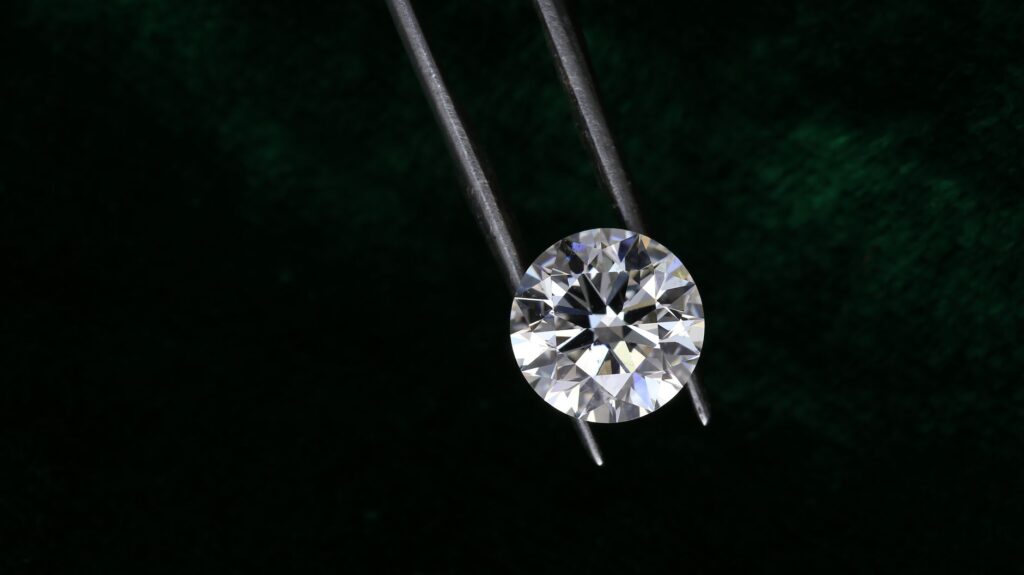
SI1 clarity sits in a strange middle ground. On paper, it sounds visibly included, but in real shopping conditions, many SI1 diamonds look clean enough that most buyers would never notice a flaw once the stone is set and worn.
That is why the question Can you see SI1 inclusions? matters so much. The answer is not a simple yes or no. It depends on the size, type, location, and number of inclusions, plus the diamond shape, cut quality, and how closely you inspect the stone.
For shoppers comparing lab grown diamonds and natural diamonds, SI1 can be a useful value point. But it is not a guaranteed visual standard. Some SI1 diamonds are eye-clean. Others show visible marks that are easy to spot once you know where to look.
Quick Answer
Yes, you can sometimes see SI1 inclusions, but many SI1 diamonds are still eye-clean. Eye-clean means the inclusions are not visible to the naked eye in normal viewing conditions.
The important point is that SI1 is a broad grade. One SI1 may look almost identical to a VS2. Another may show a crystal, feather, cloud, or dark spot that is noticeable from a normal viewing distance.
For many buyers, an eye-clean SI1 offers strong value because it often costs less than VS clarity while still looking attractive in everyday wear. The safest approach is to judge the actual diamond, not the grade alone.
What SI1 Clarity Means
SI1 stands for Slightly Included 1. It is a clarity grade used on diamond grading reports from laboratories such as GIA and IGI. The grade tells you the diamond has inclusions, but they are considered minor enough to fall within the slightly included range.
Clarity refers to internal features or surface characteristics that formed during the diamond’s growth or cutting process. Internal features are called inclusions. Surface features are called blemishes. SI1 sits below VS2 and above SI2 on the clarity scale.
What the grade does not tell you is exactly how the diamond looks. That is why two SI1 diamonds can appear very different from each other. One may be eye-clean. Another may show an inclusion that is easy to see in everyday viewing.
Why SI1 is such a common shopping point
Many buyers end up comparing SI1 because it often lands near the point where clarity stops being visually important. In a well-cut diamond, the sparkle may distract the eye from tiny inclusions. At that point, spending extra for VVS or IF may not produce a visible benefit.
That does not mean SI1 is always the best value. Some SI1 stones look great, while others do not. The real question is whether the individual diamond looks clean enough for your standards.
Can You See SI1 Inclusions?
Sometimes yes, sometimes no. In a well-cut SI1 diamond, inclusions may be too small to see without magnification. In normal use, especially once the diamond is mounted in a ring, a good SI1 can look clean to the naked eye.
But some SI1 inclusions are visible. A large, dark, centrally placed, or repeated inclusion is more likely to catch the eye. Certain diamond shapes also reveal clarity more easily than others.
The practical answer is that SI1 includes both eye-clean diamonds and diamonds with visible imperfections. That is why the individual stone matters more than the label.
What eye-clean really means
Eye-clean means you cannot see the inclusions without magnification under normal viewing conditions. It does not mean the diamond has no inclusions. It simply means the inclusions are not visible to the naked eye when the diamond is viewed the way most people actually wear jewelry.
This is a buying standard, not a laboratory standard. A diamond can be graded SI1 and still be eye-clean. Another SI1 can be visibly included. Both are possible, which is why buyers should not assume the grade tells the whole story.
How far away would SI1 inclusions be noticeable?
Many buyers only notice inclusions when the diamond is held very close to the face, examined under bright light, or zoomed in on a screen. A diamond that looks clean from about 6 to 12 inches away is often considered eye-clean for everyday wear.
Still, individual sensitivity matters. Some people inspect jewelry closely. Others rarely look at it that way. If you are very detail-oriented, a lower clarity inclusion may bother you more than it would bother the average buyer.
How Diamond Clarity Is Evaluated
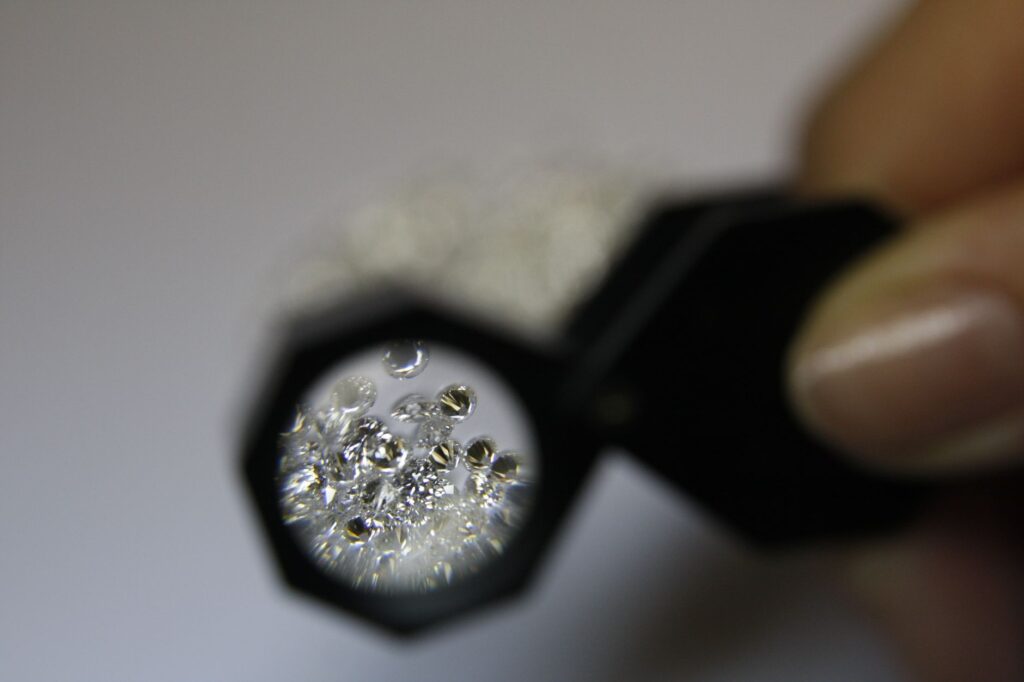
Clarity is assessed under magnification, usually at 10x, by trained graders. They look at the size, number, type, position, and relief of inclusions. Those characteristics combine to create the final clarity grade.
For buyers, the technical process matters less than the real-world result. The main question is whether the inclusion affects appearance, durability, or both.
A plot diagram on a report can help, but it does not tell the entire story. A tiny inclusion near the edge may be easy to hide. A similar inclusion under the table, which is the large top section of the diamond, may be much more noticeable.
The main factors that affect visibility
- Size: Larger inclusions are easier to notice.
- Color: Dark inclusions stand out more than white or transparent ones.
- Location: Central inclusions are usually more visible than edge inclusions.
- Number: Several small inclusions can be more noticeable than one isolated one.
- Type: Some inclusion types are easier to see or more important than others.
- Shape and cut: Brilliant cuts often hide inclusions better than step cuts.
Cut quality plays a major role. A well-cut diamond can hide minor inclusions more effectively because sparkle draws the eye. A weakly cut diamond may make the same inclusion easier to spot.
Common Inclusions Found in SI1 Diamonds
SI1 diamonds may contain several different inclusion types. Some are minor and hard to notice. Others deserve more attention because they may be visible, or in some cases, they may affect durability.
Crystal
A crystal is a small mineral crystal trapped inside the diamond. It may appear white, transparent, or dark depending on its composition and how light reflects from it.
Many crystals are only visible under magnification. Darker crystals are more likely to be seen by the naked eye if they are large enough or placed prominently. Most crystals do not affect durability unless they are associated with other structural issues.
Feather
A feather is a small internal fracture, or one that reaches the surface of the diamond. It may look like a wispy white line or a tiny break.
Many feathers are harmless and not visible in everyday wear. They deserve extra attention if they are large, near a point or edge, or located where the diamond may take impact. In those cases, durability becomes a practical concern.
Cloud
A cloud is a cluster of tiny pinpoints so dense that they can create a hazy area. In some diamonds, clouds are only visible under magnification. In others, they can reduce transparency or make the diamond look slightly dull.
Clouds matter most when they affect brightness. A cloud that does not disturb transparency is usually less concerning than one that makes the diamond look sleepy or milky.
Needle
A needle is a long, thin inclusion that looks like a tiny line. Needles are often difficult to see without magnification and are usually minor from a visual standpoint.
They typically do not create durability problems on their own. Their importance depends on size, grouping, and placement.
Pinpoint
A pinpoint is a very tiny dot-like inclusion. Pinpoints are among the most common and least concerning inclusion types.
One or a few pinpoints rarely affect appearance. A dense cluster can contribute to a cloud or haze, which matters more if transparency is affected.
Twinning wisp
A twinning wisp is a growth-related feature often seen in lab grown diamonds and some natural diamonds. It can appear as fine wispy lines or a subtle internal pattern.
These are often difficult to notice without magnification. In many stones they are visually harmless. In others, a dense pattern may slightly affect transparency or create a more noticeable internal texture.
Knot
A knot is an inclusion that reaches the surface and may appear as a small raised or embedded feature. It is less common than crystals or feathers.
Knots can sometimes affect polishing or surface appearance. They deserve attention if they are visible in images or located in a prominent part of the stone.
Cavity
A cavity is a small opening or indentation on the surface, often caused by a crystal falling out during cutting or wear.
Cavities are more of a surface issue than an internal one. They can be more noticeable than many other inclusion types and may deserve caution depending on size and position.
Chip
A chip is a small piece missing from the diamond’s surface. Chips usually happen because of damage rather than original formation.
Unlike many inclusions, chips can be a durability issue. Even a small chip may matter if it is located on a girdle, crown edge, or point. Buyers should treat any visible chip with care.
Why SI1 Matters to Buyers
Clarity affects both appearance and price. For many buyers, SI1 is where those two factors begin to separate. The diamond may still look clean in daily wear, but it can cost less than a cleaner grade.
That makes SI1 an important category for value-focused shoppers. If the diamond is eye-clean, the buyer may save money without giving up visible beauty. If the inclusions are easy to see, the lower price may not feel worthwhile.
SI1 also matters because it reminds buyers to evaluate the real stone, not just the report. A well-chosen SI1 can look better than a poorly chosen higher-clarity diamond if the cut is strong and the inclusions are not visible.
How SI1 Affects Appearance
The key appearance question is not whether the diamond has inclusions. It is whether those inclusions change the way the diamond looks when worn. In many SI1 diamonds, the answer is no. In others, the inclusion is visible enough to matter.
Three diamonds can all be SI1 and still look very different. One may be completely eye-clean. Another may show a tiny dark crystal in certain lighting. A third may have a cloud or cluster that softens brightness or creates a hazy look.
What buyers usually notice first
Most people do not inspect a ring with a loupe once it is worn. They notice sparkle, brightness, color, and overall shape first. If the inclusion is small and not centrally placed, it may never draw attention in normal wear.
Buyers are more likely to notice a dark spot, a line, or a hazy patch that interrupts the crisp look of the stone. In step-cut shapes, where the facets are broad and open, clarity features can be easier to see.
Shape influences visibility
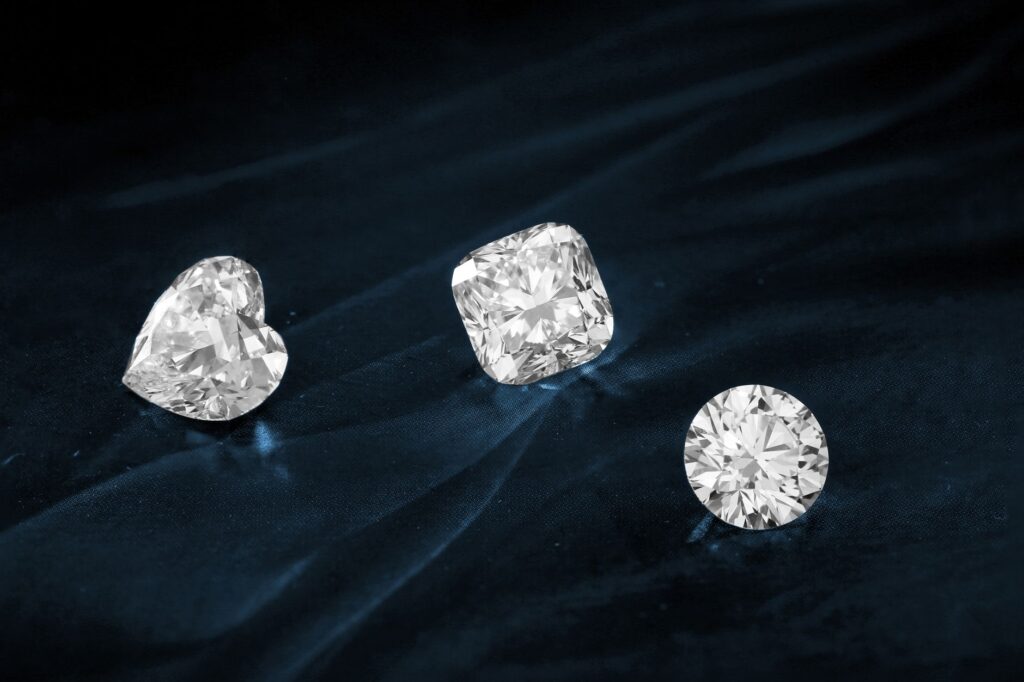
Round brilliant diamonds often hide inclusions well because the facet pattern creates strong sparkle and movement. Oval, cushion, radiant, and pear shapes can also disguise minor inclusions effectively, depending on the stone.
Emerald cut and Asscher cut diamonds are different. Their larger open facets can reveal clarity more easily, so an SI1 in a step-cut shape may need more careful review than an SI1 round brilliant.
How SI1 Affects Value
Value is about the relationship between price and visible benefit. Once a diamond is eye-clean, paying more for a higher clarity grade often produces little or no visible improvement. That is why many shoppers see strong value in a carefully selected SI1.
Higher clarity grades can still make sense in some situations. Buyers who want a cleaner report, are highly sensitive to imperfections, or are choosing a shape that shows clarity easily may appreciate the added assurance. But for many buyers, the premium does not create a visible difference large enough to justify the cost.
When paying more can make sense
- You want a step-cut diamond with open facets.
- You are especially sensitive to any visible imperfection.
- The SI1 has a centrally placed or dark inclusion.
- You want the lowest possible risk of seeing inclusions.
- The price difference is modest compared with your total budget.
When SI1 may be the better value
- The diamond is eye-clean in normal viewing conditions.
- The inclusion is near the edge and not distracting.
- You would rather spend more on cut or carat weight.
- You are buying a lab grown diamond and want better size value.
- You are comfortable with minor inclusions that are not visible without magnification.
In many comparisons, the jump from SI1 to VS or VVS can create a meaningful price increase without a meaningful visual gain. That is why buyers should examine the actual stone before paying for higher clarity.
Practical Examples Buyers Often Encounter
VS2 versus SI1 in normal viewing conditions
Many shoppers assume VS2 will always look cleaner than SI1. Sometimes that is true, but not always. A very good SI1 can look identical to a VS2 once it is set and viewed from a normal distance.
In practical terms, an eye-clean SI1 may give the same visible appearance as a VS2 while costing less. The main difference is often found under magnification or on the grading report, not in everyday wear.
Eye-clean SI1 versus non-eye-clean SI1
This is the most important comparison within the SI1 category. An eye-clean SI1 can be a smart value choice. A non-eye-clean SI1 may frustrate a buyer who expected a clean-looking stone because the grade seemed acceptable on its own.
Two SI1 diamonds can have the same report grade but very different buyer satisfaction. That is why it is risky to shop by clarity grade alone, especially online without video or images.
VVS clarity versus VS clarity for everyday wear
VVS diamonds have very, very slight inclusions that are extremely hard to see even under magnification. VS diamonds have slightly more noticeable inclusions under magnification, but they are still often eye-clean in normal viewing.
For most buyers, the visible difference between VVS and VS is minimal or nonexistent. The premium for VVS may be worth it only if you strongly prefer very high clarity grades or are shopping a shape that shows clarity more easily.
Lab Grown Diamonds and SI1 Clarity
SI1 clarity matters in lab grown diamonds too, but the buying context can be a little different. Lab grown diamonds often offer larger sizes or higher grades at lower prices than natural diamonds, so buyers may become more selective about clarity because the price spread can still matter.
Many lab grown diamonds in SI1 are eye-clean and attractive. At the same time, some lab grown stones may show growth-related features such as twinning wisps or clouds. These do not automatically make a diamond undesirable, but they do make visual inspection more important.
Because lab grown diamonds can be priced competitively, some buyers are tempted to chase higher clarity grades even when the visible difference is small. In many cases, a well-cut eye-clean SI1 lab grown diamond can be a practical choice if the buyer checks the stone carefully.
What to watch for in lab grown SI1 diamonds
- Clouds that affect transparency or create a hazy look.
- Clusters of tiny inclusions that are hard to notice individually but visible together.
- Growth patterns that may influence buyer comfort when viewed closely.
- Inclusion placement in step-cut shapes, where visibility is often greater.
The same rule applies here as with natural diamonds. The report grade is only the starting point. Visual review is essential.
How to Judge Whether an SI1 Is Eye-Clean
The best way to judge eye-cleanliness is to look at the diamond in more than one way. Images, videos, magnification, and inclusion placement all matter. A diamond that looks fine in a close-up photo may still show something at normal viewing distance, and the reverse can happen too.
Good questions to ask
- Where is the inclusion located?
- Is it dark, white, or transparent?
- Can it be seen without magnification?
- Does the shape hide or reveal inclusions easily?
- Is the inclusion likely to affect durability?
- Would most people notice it in a ring?
When shopping online, 360-degree videos are especially helpful. They can show whether an inclusion flashes into view as the diamond moves. If possible, review the diamond in lighting similar to how it will actually be worn, not just under intense studio light.
Why a grading report is not enough
A report confirms the clarity grade, but it cannot fully show how the diamond appears to the eye. A stone can have a technically acceptable SI1 grade and still look cleaner or less clean than another SI1 diamond.
That is why visual inspection matters so much. Experienced jewelers often say that clarity is one of the grades most easily misunderstood from paperwork alone. Buyers are purchasing the diamond, not the report.
Comparison Table: What Clarity Levels Usually Mean in Practice
| Clarity Grade | What It Means | What Buyers Usually See | Typical Value Outlook |
|---|---|---|---|
| FL / IF | No inclusions visible under magnification, or essentially flawless internally | Extremely clean appearance; visible difference from VS is rarely seen | Premium is often high relative to visible benefit |
| VVS1 / VVS2 | Very, very slight inclusions that are extremely difficult to see under magnification | Usually eye-clean | Strong prestige, but diminishing visible returns |
| VS1 / VS2 | Very slight inclusions, minor under magnification | Often eye-clean, especially in brilliant cuts | Often a balanced point for buyers seeking cleanliness |
| SI1 | Slightly included, with inclusions that may be visible under magnification and sometimes to the eye | Can be eye-clean or visibly included depending on the stone | Often strong value if selected carefully |
| SI2 | More noticeable inclusions | More likely to be visible without magnification | Can be value-driven, but requires careful inspection |
| I1 and below | Obvious inclusions | Usually visible and sometimes affect beauty | Lower price, higher risk to appearance and durability |
Advantages of SI1 Clarity
SI1 has several practical advantages when chosen well. It can deliver a diamond that looks clean to the eye while costing less than many higher clarity grades. For buyers who want to maximize size, color, or cut quality, that savings can be useful.
Another advantage is flexibility. Because SI1 stones are more affordable than VVS or IF options, buyers can often choose a better overall diamond in other areas. In many cases, cut quality has a bigger impact on beauty than the difference between an eye-clean SI1 and a higher clarity grade.
- Potential for strong value when eye-clean.
- Can allow more budget for cut, carat, or setting.
- Often visually attractive in everyday wear.
- Offers a wide range of stone options.
Disadvantages and Trade-Offs of SI1 Clarity
The main disadvantage of SI1 is inconsistency. One stone may look excellent, while another may have visible inclusions that are hard to ignore. Buyers who do not inspect the individual diamond carefully may end up with a stone that does not meet expectations.
There is also less certainty than with higher grades. If a buyer wants a near-guarantee that inclusions will not be seen, SI1 may feel too risky unless the diamond has already been reviewed visually and confirmed eye-clean.
- Not every SI1 is eye-clean.
- Some inclusions may be distracting in certain lighting.
- Step-cut shapes often reveal clarity more easily.
- Some inclusion types may raise durability questions.
Buying Considerations for SI1 Diamonds
Budget
If budget matters, SI1 can be a smart place to shop. Many buyers find that the price difference between SI1 and higher clarity grades is better spent elsewhere, especially if the stone is eye-clean.
Still, a lower price only helps if the diamond looks good to you. Saving money on a stone that later seems visibly included is not a good outcome.
Eye-clean priority
Decide in advance whether eye-clean is a must-have. If it is, ask specifically for a diamond that is eye-clean from a normal viewing distance. That is more useful than asking only for SI1, because the grade alone does not guarantee the appearance you want.
Inclusion placement
Location matters a great deal. A tiny inclusion under a prong may be less important than a similar inclusion in the middle of the table, which is the large top surface of the diamond. Central inclusions are more likely to be noticed because they sit in the visual path of the eye.
Shape choice
Some shapes are more forgiving than others. If you want maximum camouflage for minor inclusions, brilliant cuts often help. If you want a step-cut shape, clarity deserves more attention because the open facet pattern can make inclusions easier to spot.
Lab grown diamond considerations
In lab grown diamonds, clarity still matters, but the value equation can change. Many buyers can choose a visually clean SI1 or VS stone and use the savings to improve size or cut. Others prefer to spend a bit more for extra confidence that the diamond will remain visually clean in any setting.
Long-term satisfaction
Think about how you will feel after the purchase, not just on the day you buy it. If you know you will inspect the diamond closely and worry about visible marks, a cleaner grade may provide peace of mind. If you are comfortable with minor inclusions that do not show in normal wear, SI1 may be perfectly satisfying.
Common Buyer Mistakes
Overpaying for invisible improvements
One common mistake is paying a large premium for clarity that does not improve the diamond’s appearance. Many buyers assume higher clarity automatically means a prettier stone, but beyond eye-clean, the difference is often not visible.
Ignoring inclusion type and location
A buyer who focuses only on the SI1 label may miss important details. A dark crystal in the center is very different from a tiny transparent inclusion near the edge. The grade alone does not tell the whole story.
Assuming all SI1 diamonds look the same
This is a major misconception. SI1 is a range, not a single look. Some stones are excellent value candidates, while others are better avoided if appearance matters.
Using magnified images as the only guide
Magnified photos can make even tiny inclusions look alarming. At the same time, some lighting setups can hide imperfections. Buyers should use images and videos as tools, but always return to the practical question of what can be seen without magnification.
Forgetting about the setting
Ring settings can hide or reveal inclusions. Prongs, halos, and certain mountings can obscure an inclusion near the edge. But a setting cannot reliably hide a centrally located inclusion. It is better to choose a stone that already looks right before relying on the setting to solve the problem.
How Experienced Buyers Often Approach SI1
Experienced buyers usually do not ask, “Is SI1 good?” They ask, “Is this SI1 eye-clean, and is the price appropriate for what I can actually see?” That approach leads to better decisions because it connects grading to real-world appearance.
Jewelers and informed shoppers often prioritize cut first, then check color and clarity in relation to the stone’s shape and size. If an SI1 stone is eye-clean and well-cut, it may be an excellent practical choice. If it is not eye-clean, the buyer can often find better value elsewhere in the same budget.
Frequently Asked Questions
Can you see SI1 inclusions without a loupe?
Sometimes yes, sometimes no. Many SI1 diamonds are eye-clean and do not show inclusions without magnification. Others have visible marks that can be seen with the naked eye, especially if the inclusion is dark, large, or centrally placed.
Is SI1 good enough for an engagement ring?
Yes, SI1 can be good enough for an engagement ring if the diamond is eye-clean and the inclusion type does not raise concern. Many engagement ring buyers choose SI1 because it can offer a strong balance of price and appearance. The key is inspecting the individual stone carefully.
Is SI1 better than SI2?
Generally yes, SI1 is usually cleaner than SI2, but the difference is not absolute. A carefully chosen SI2 can sometimes look better than a poorly chosen SI1. The actual diamond matters more than the letter grade alone.
Does SI1 affect durability?
Usually not, but it can in some cases. Most SI1 inclusions are minor and do not cause durability problems. However, feathers, chips, cavities, or other features near edges or points may deserve extra caution, especially if they are large or exposed.
Is SI1 eye-clean in all diamond shapes?
No. Eye-cleanliness depends on shape, cut, and inclusion placement. Brilliant cuts often hide inclusions better than step cuts. Emerald cut and Asscher cut diamonds usually require more attention to clarity.
Should I pay more for VS2 instead of SI1?
Sometimes, but not always. If the SI1 is eye-clean, paying more for VS2 may not create a visible improvement. If the SI1 has a noticeable inclusion, the VS2 upgrade may be worth it for visual peace of mind.
Are SI1 inclusions more visible in lab grown diamonds?
Not necessarily. SI1 is SI1 whether the diamond is lab grown or natural. What matters is the type and placement of the inclusion, along with the shape and cut. Some lab grown diamonds also have growth-related patterns that deserve close inspection.
What is the safest clarity grade if I want no visible inclusions?
There is no absolute guarantee, but VS1, VS2, and above often provide a comfortable starting point for buyers who want a lower risk of visible inclusions. Even then, individual inspection is still important because not every diamond within a grade looks identical.
Conclusion
So, can you see SI1 inclusions? Sometimes yes, but often no. The grade alone does not determine visibility. The type of inclusion, its location, the diamond’s shape, and the quality of the cut all play major roles in what you will actually notice with your eyes.
For many buyers, an eye-clean SI1 can be one of the best value points in diamond shopping. It can deliver a clean-looking stone at a lower price than many higher clarity grades. But because SI1 diamonds vary widely, the safest approach is to evaluate the actual diamond rather than relying on the label alone.
If clarity matters to you, focus on real-world visibility, not just the report. That usually leads to better decisions, more confidence, and a diamond that fits both your budget and your expectations.