When people ask Can Lab Grown Diamonds Be Flawless, they are usually trying to understand whether lab grown stones can reach the highest clarity levels and whether those top grades matter in everyday buying decisions. The short answer is yes, lab grown diamonds can be graded flawless, but that does not mean flawless is common, necessary, or the best value for most buyers.
Clarity is one of the most misunderstood parts of diamond shopping because the grading terms sound more important than the visual differences often are. In real-world viewing, many diamonds with slightly lower clarity grades still look clean and beautiful to the naked eye, especially once they are set in a ring and seen at normal distance.
This is especially relevant for lab grown diamonds because their pricing structure often makes clarity upgrades feel more accessible than they do in natural diamonds. That can lead buyers to wonder whether it is worth paying for an extremely high clarity grade, or whether a well-chosen VS or SI diamond already offers the same visible result.
Quick Answer
Yes, lab grown diamonds can be flawless. A flawless diamond has no internal inclusions or external blemishes visible under 10x magnification when graded by a laboratory.
That said, flawless is a very high clarity grade, and most buyers do not need it to get a diamond that looks clean in everyday wear. In many cases, an eye-clean VS1, VS2, or even SI1 lab grown diamond can offer a nearly identical appearance at a lower price.
If your main goal is appearance, it is usually more practical to focus on whether the diamond is eye clean rather than chasing the highest clarity grade on the report. If you want the prestige of an exceptional clarity grade, flawless can be appealing, but the visual difference is often minimal once the stone is set.
What Diamond Clarity Actually Means
Diamond clarity refers to how many internal characteristics and surface marks a diamond has, and how visible they are. Internal features are called inclusions, while surface features are called blemishes.
These characteristics form naturally as the diamond grows or during cutting and polishing. They are not necessarily flaws you can see without magnification, and many have no effect on how a diamond performs in normal use.
Clarity grades are assigned by trained graders using a standardized method. The most common scale includes:
- Flawless (FL)
- Internally Flawless (IF)
- Very, Very Slightly Included (VVS1 and VVS2)
- Very Slightly Included (VS1 and VS2)
- Slightly Included (SI1 and SI2)
- Included (I1, I2, and I3)
The higher the grade, the fewer or less visible the inclusions and blemishes. But the grading report does not automatically tell you what the diamond will look like to your eye in a ring.
Flawless vs Internally Flawless
Many shoppers use these terms interchangeably, but they are not the same. A flawless diamond has no internal or external imperfections visible at 10x magnification. An internally flawless diamond has no internal inclusions visible at 10x, but may have tiny surface blemishes.
For most buyers, the visual difference between FL and IF is essentially nonexistent. The difference is more about grading precision and rarity than about everyday appearance.
What “Eye Clean” Means
Eye clean means that a diamond does not show inclusions to the naked eye under normal viewing conditions. This is one of the most useful buying terms because it reflects real-world appearance instead of a laboratory definition.
An eye-clean diamond can be VS2, SI1, or sometimes even SI2 depending on the size, shape, and location of the inclusions. A diamond that is not eye clean may still be valuable or beautiful, but buyers should know what they are getting.
Can Lab Grown Diamonds Be Flawless?
Yes. Lab grown diamonds can absolutely receive a flawless clarity grade if the stone is free of detectable internal inclusions and surface blemishes under magnification. Since the grading standards are the same as for natural diamonds, a lab grown diamond is evaluated by the same clarity criteria.
That said, flawless lab grown diamonds are still rare relative to the total supply, especially as carat size increases. Larger stones are more likely to contain growth patterns, crystals, or other clarity features simply because there is more material for those features to appear in.
It is also important to understand that “flawless” does not mean the stone is more durable or dramatically more beautiful in ordinary viewing. It means the stone is exceptionally clean under magnification.
Why Lab Grown Diamonds Sometimes Reach High Clarity Grades More Often
Lab grown diamonds are created in controlled environments, which can reduce some of the random impurities and structural irregularities found in mined diamonds. As a result, lab grown stones often appear in higher clarity ranges more frequently than natural diamonds of similar size and quality.
However, that does not mean all lab grown diamonds are flawless or that high clarity is automatic. The growth method, cutting quality, and post-growth treatment all affect clarity outcomes.
Why Flawless Lab Grown Diamonds Still Cost More
Even though lab grown diamonds are generally less expensive than natural diamonds, flawless or near-flawless examples still command a premium within the lab grown category. That premium reflects rarity, not necessarily a visible benefit for the average shopper.
In other words, you are paying for a top-tier grading result, not for a dramatic change in how the diamond looks once it is set.
Why Clarity Matters to Buyers
Clarity matters because it can affect how clean a diamond looks, how confident you feel about the purchase, and how much you pay. But it is easy to overestimate its importance compared with cut quality, which has a much bigger influence on sparkle and overall beauty.
For many buyers, clarity becomes most relevant in three situations. The first is when the diamond is large enough that inclusions are easier to see. The second is when inclusions sit near the center of the stone and draw the eye. The third is when a buyer wants the reassurance of a top clarity grade for personal preference or collector value.
For everyone else, the practical question is usually whether the diamond looks clean in normal use. That is why eye-clean assessment matters more than chasing the highest clarity number on the grading report.
How Clarity Affects Appearance
Clarity can affect appearance, but the effect depends heavily on the type, size, location, and number of inclusions. Two diamonds with the same clarity grade can look noticeably different if one has a center inclusion and the other has tiny features hidden near the edge.
In a well-cut diamond, inclusions are often harder to see because brilliance and sparkle help distract the eye. In a poorly cut stone, even a higher clarity grade may look less attractive if the cut is weak.
What Buyers Actually Notice
Most buyers are not examining a diamond under magnification every day. They usually notice:
- whether the stone looks clean from a normal viewing distance
- whether something dark or obvious appears in the center
- whether the diamond looks transparent and bright
- whether the stone seems “busy” or visually distracting
For that reason, the visible impact of clarity is often less about the official grade and more about how the stone presents in real life.
Visible vs Invisible Inclusions
Some inclusions are easy to hide because they are tiny, light-colored, or located near the edge of the stone. Others are more likely to be noticed because they are dark, large, or positioned under the table, which is the flat top facet of the diamond.
A clarity report can tell you what is present, but not always how noticeable it will be without seeing the stone in person or reviewing a high-quality video.
How Shape Affects Clarity Visibility
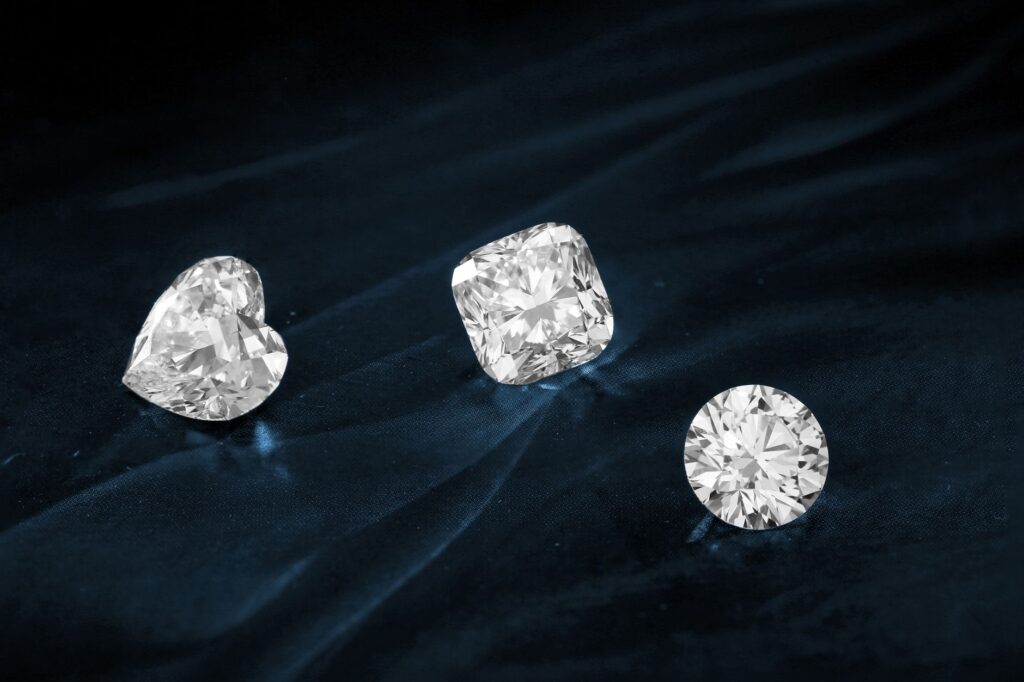
Diamond shape matters a lot. Brilliant cuts such as round, oval, cushion, and pear tend to hide inclusions better than step cuts such as emerald and Asscher, which have larger, open facets and more transparency.
That means a VS2 round lab grown diamond may appear cleaner than a VS2 emerald cut diamond of similar size. This is one reason clarity needs to be evaluated in context, not by grade alone.
How Clarity Affects Value
Clarity influences price, but not always in a way that produces meaningful visual benefit. Once a diamond is eye clean, additional clarity upgrades often deliver diminishing returns.
In practical terms, the jump from an SI1 to a VS2 may be worth it if the SI1 is not eye clean. But the jump from a VS1 to a VVS1 may offer very little visible improvement for a much higher price.
When Paying More Makes Sense
Paying more for higher clarity can make sense when:
- the inclusion is visible without magnification
- the diamond is a shape that shows clarity more easily, such as emerald cut
- you want maximum peace of mind and do not want to analyze the stone closely
- you prefer a top-tier grading report for personal reasons
In these cases, the extra cost may buy confidence, not just rarity.
When the Premium Is Harder to Justify
The premium is harder to justify when the diamond is already eye clean and the extra money only moves you to a grade that looks the same to the naked eye. This is especially true in lab grown diamonds, where the overall price advantage can make it tempting to overspend on clarity simply because the upgrade seems affordable.
That money is often better directed toward cut quality, a better shape, or a larger carat size if your goal is stronger visual impact.
Best Value Clarity Range for Many Buyers
There is no single best clarity grade for every buyer, but many shoppers find the best balance in the VS2 to SI1 range, depending on the stone. In lab grown diamonds, this range often offers an excellent mix of value and appearance if the stone is eye clean.
That does not mean VVS or flawless stones are bad choices. It means the visual gains become smaller as you move higher on the clarity scale.
Common Clarity Grades in Lab Grown Diamonds
Understanding the main clarity grades helps buyers make better comparisons. The chart below explains what each grade generally means, what buyers usually see, and whether the premium is often worth it.
| Clarity Grade | What It Means | What Buyers Usually See | Value Consideration |
|---|---|---|---|
| Flawless (FL) | No inclusions or blemishes visible at 10x | Looks identical to other high-clarity stones to the naked eye | Premium is mostly about rarity and prestige |
| Internally Flawless (IF) | No internal inclusions visible at 10x | Usually indistinguishable from FL in daily wear | Excellent grade, but often limited practical difference from FL |
| VVS1 / VVS2 | Very tiny inclusions that are extremely hard to see | Typically eye clean | High clarity, but often more than most buyers need |
| VS1 / VS2 | Slightly larger or more noticeable inclusions, still small | Often eye clean, especially in brilliant cuts | Strong value range for many buyers |
| SI1 | Noticeable under magnification, may or may not be eye clean | Varies widely by stone | Can be excellent value if evaluated carefully |
| SI2 | More obvious inclusions | Sometimes visible without magnification | Needs careful review before buying |
| I1 and below | Included enough to be easily seen under magnification and often by eye | Usually not the first choice for a clean appearance | Only suitable when the buyer understands the trade-offs |
Practical Examples Buyers Can Relate To
Real shopping decisions are easier to understand through examples. The same clarity grade can mean different things depending on shape, size, and inclusion type, which is why two stones with the same label can feel very different in person.
VS2 Versus SI1 in Normal Viewing Conditions
A VS2 lab grown diamond and an SI1 lab grown diamond may look nearly identical if both are eye clean. In many cases, the SI1 offers better value because the visible result is the same and the price is lower.
But SI1 is not automatically safe. Some SI1 diamonds are eye clean, while others have inclusions that are easy to spot, especially in the center of the stone or in step-cut shapes.
Eye-Clean SI1 Versus Non-Eye-Clean SI1
This is one of the most important distinctions in clarity shopping. An eye-clean SI1 can be a strong value, while a non-eye-clean SI1 may look noticeably less appealing even if the report still seems acceptable on paper.
The key lesson is that the grade alone does not tell the full story. Two SI1 diamonds can differ significantly in beauty and buyer satisfaction.
VVS Versus VS for Everyday Wear
For most buyers, the difference between VVS and VS is minimal in daily wear. Both are often eye clean, and most people cannot tell them apart once the diamond is set.
If your budget is limited, it is often more practical to prioritize cut quality or size instead of paying for a VVS label. If you strongly prefer a top clarity grade, that is a personal preference, but it is not usually required for visual performance.
Flawless Versus Internally Flawless
FL and IF are both elite grades, and both are exceptionally clean. In a ring worn at arm’s length, most people would not notice a difference between them.
The choice between FL and IF usually comes down to personal preference, pricing, and availability rather than visible appearance.
Types of Inclusions and What They Mean
Not all inclusions are equally important. Some are so tiny that they do not affect the appearance of the diamond in any practical way, while others can be more noticeable or raise durability questions.
Feather
A feather is a small internal fracture that can look like a tiny crack or wispy line under magnification. Many feathers are harmless and completely stable, especially when they are small and located away from the edge.
Buyers should pay more attention if a feather reaches the surface, is large, or sits near a vulnerable point of the stone. In most cases, a small feather is not a major concern, but it should be reviewed in context.
Crystal
A crystal is a tiny mineral or diamond crystal trapped inside the stone during growth. Crystals can appear white, transparent, gray, or dark depending on their composition and how light interacts with them.
Some crystals are not noticeable at all, while darker ones may be easier to see. Their importance depends on size, color, and placement.
Cloud
A cloud is a group of very tiny inclusions grouped closely together. Alone, these tiny features may be hard to see, but together they can create a hazy appearance if dense enough.
Most clouds are not a problem, but a dense cloud can reduce transparency. This matters more when the diamond begins to look slightly milky or less lively.
Needle
A needle is a very thin, elongated inclusion. Needles are usually difficult to see without magnification and often have little practical effect on appearance.
In many cases, needles are more of a grading detail than a buying concern.
Pinpoint
A pinpoint is a tiny dot-like inclusion, often invisible to the naked eye. Most pinpoints are common and low concern unless they appear in large clusters or contribute to a cloudy look.
For most shoppers, isolated pinpoints are not a reason to avoid a diamond.
Twinning Wisp
A twinning wisp is a growth-related feature sometimes seen in lab grown diamonds, especially those made through the HPHT process. It can look like a delicate, wispy internal pattern.
These features are often harmless and may not be visible without magnification. However, if a twinning wisp is dense or located in a way that affects transparency, it deserves closer review.
Knot
A knot is a crystal inclusion that reaches the surface after cutting. It is less common and can sometimes create a slightly raised or visible area on the diamond.
Knots are usually more relevant when considering durability or polish quality, especially if the inclusion is exposed near the surface.
Cavity
A cavity is a small opening or indentation that reaches into the stone. Unlike many tiny internal inclusions, a cavity is a surface-reaching feature and may be more visible.
Buyers should evaluate cavities carefully, especially if they are located near edges or points where damage risk is higher.
Chip
A chip is a small piece missing from the surface, usually caused after the diamond was cut or damaged later. Chips are important because they can affect both appearance and durability.
If a chip is present, it should be fully disclosed and assessed carefully. Even a small chip may matter more than a minor internal inclusion because it can catch light and weaken a vulnerable point.
Do Clarity Inclusions Affect Durability?
Most clarity features do not affect durability in a major way. Tiny internal inclusions such as pinpoints, small crystals, or isolated needles usually have little practical impact.
Durability concerns become more relevant when the inclusion is surface-reaching or near a vulnerable area of the diamond. Examples include feathers that break the surface, cavities near the edge, or chips at points and corners.
For everyday wear, cut quality, setting style, and ring maintenance often matter more for durability than a high clarity grade alone. A well-set diamond with a modest clarity grade can still be very secure.
How Lab Grown Diamond Clarity Reports Help and Where They Fall Short
A grading report is useful because it provides an independent assessment of clarity, cut, color, and carat weight. It helps buyers compare stones on a consistent basis and understand what is being sold.
However, a report does not tell you everything you need to know. It does not fully show whether the stone is eye clean, how the inclusions affect transparency, or how the diamond will look in natural light once mounted.
Reading the Inclusion Plot
Most reports include a plot, or map, showing where inclusions are located. This can be helpful for understanding whether flaws sit under the table, near the edge, or in less noticeable areas.
A center inclusion is more likely to catch the eye than one hidden near a prong. Still, the plot should be used as a guide, not a substitute for viewing the stone.
Why Some Lab Grown Reports Need Extra Care
Because lab grown diamonds can be produced in different growth environments and then treated or cut in different ways, two stones with the same reported grade may not look identical. This makes visual review especially important.
Experienced buyers often look beyond the grade and check magnified photos or videos to confirm whether a diamond is truly clean to the eye.
Common Buyer Mistakes
Clarity is one of the easiest diamond qualities to overpay for or misread. A few common mistakes show up again and again in real buying decisions.
Overpaying for Invisible Improvement
One of the biggest mistakes is assuming that a higher clarity grade always means a better-looking diamond. In reality, many clarity upgrades are invisible once the stone is set.
If you cannot see a difference with your own eyes, the extra cost may not be delivering meaningful value.
Ignoring Inclusion Location
Buyers sometimes focus only on the grade and ignore where the inclusion sits. A small inclusion in the corner may be less important than a similar inclusion under the center of the stone.
Location affects visibility, and visibility affects whether the diamond feels clean in daily wear.
Assuming All SI1 Diamonds Look the Same
SI1 is a broad category. Some SI1 diamonds are eye clean and excellent buys, while others are noticeably included.
Never assume that the label alone tells the full story.
Choosing Clarity Before Cut
Many shoppers prioritize clarity before cut, but cut usually has the bigger impact on sparkle and overall beauty. A well-cut lower-clarity diamond can look better than a poorly cut higher-clarity one.
For most buyers, cut should remain a top priority, especially in lab grown diamonds where pricing may allow room to balance multiple quality factors.
Assuming Flawless Means Better in Every Way
Flawless is an excellent grade, but it does not automatically mean a diamond is the right choice. A flawless stone can still have a mediocre cut or a shape that is less appealing to the buyer.
In practical shopping, clarity is only one part of the overall quality picture.
How to Decide What Clarity Level You Really Need
The best clarity choice depends on how you plan to wear the diamond, how much you want to spend, and how much microscopic perfection matters to you personally. There is no universal rule that every buyer should chase flawless or VVS clarity.
If You Want the Best Everyday Value
Look closely at VS2 and eye-clean SI1 diamonds first. These often provide the best balance between appearance and cost, especially in round brilliant and other brilliant-cut shapes.
If the diamond is eye clean and the cut is strong, you may not need to pay more for a higher clarity grade.
If You Want a High Clarity Grade for Peace of Mind
Consider VVS, IF, or FL if you prefer the reassurance of a very high grade and do not want to spend time reviewing inclusions. These grades can simplify the buying process because they reduce the chance of visible imperfections.
Just keep in mind that the premium may be more about psychological comfort than visible improvement.
If You Are Buying a Step Cut
For emerald cut, Asscher, and similar shapes, clarity deserves extra attention. These cuts have larger open facets that tend to reveal inclusions more easily.
In these shapes, many buyers prefer to stay in the higher clarity ranges or review the stone carefully before deciding.
If You Are Buying a Larger Stone
As carat size increases, inclusions can become easier to notice. A clarity grade that looks excellent in a smaller stone may not look the same in a larger one.
That is why clarity should always be considered alongside diamond carat, shape, and cut style.
If You Want the Stone to Look Clean Without Overspending
Focus on eye-clean performance rather than the label alone. Ask whether the diamond shows anything noticeable from a normal viewing distance and in ordinary lighting.
This is often the most practical way to shop for lab grown diamonds.
How Experienced Buyers and Jewelers Often Think About Clarity
Experienced diamond shoppers usually do not treat clarity as an isolated prestige metric. They look at the stone as a whole and ask whether any inclusions affect the beauty, brightness, or durability of the diamond in real use.
Many jewelers will tell buyers that a well-chosen VS2 or SI1 can be a smarter purchase than a much more expensive VVS stone, especially if the diamond is eye clean. This is not because high clarity grades are unimportant, but because the visible payoff often becomes smaller as the grade rises.
That said, experienced buyers also know that some SI diamonds are worth avoiding and some high-clarity stones are worth paying for. The right answer depends on the specific diamond, not just the grading tier.
Frequently Asked Questions
Are lab grown diamonds ever truly flawless?
Yes. Lab grown diamonds can be graded flawless if they have no internal inclusions or external blemishes visible under 10x magnification. This is possible, though it is a top-tier result and not the typical standard.
Can you see the difference between flawless and VVS with the naked eye?
Usually no. In normal viewing, most people cannot tell the difference between flawless, IF, and VVS grades. The distinction is mainly important under magnification and on the grading report.
Is an eye-clean SI1 a good choice?
Often yes. An eye-clean SI1 can be a very good value because it may look just as clean as a higher-graded stone at a lower price. The important part is confirming that the specific diamond is truly eye clean.
Should I avoid a lab grown diamond with inclusions?
Not necessarily. Many inclusions are small and do not affect appearance or durability in a meaningful way. The key is understanding the type of inclusion, its location, and whether it is visible to your eye.
Do inclusions make lab grown diamonds less durable?
Usually not, unless the inclusion reaches the surface or is located in a vulnerable area. Most minor internal inclusions are more of a clarity and appearance issue than a durability issue.
Which clarity grade is best for value?
There is no single best grade, but VS2 and carefully selected SI1 diamonds often offer strong value. These grades can provide an eye-clean appearance without the premium attached to very high clarity grades.
Do lab grown diamonds have better clarity than natural diamonds?
On average, lab grown diamonds often appear in higher clarity grades more frequently than natural diamonds. That does not mean every lab grown diamond is high clarity, but it does mean buyers may find more clean-looking stones in the market.
Does flawless clarity mean the diamond will sparkle more?
Not directly. Sparkle is driven mainly by cut quality, not clarity. A flawless diamond can still sparkle poorly if the cut is weak, while a lower-clarity diamond can sparkle beautifully if it is well cut.
Conclusion
Yes, lab grown diamonds can be flawless, but flawless clarity is a rarity and not a requirement for a beautiful ring. For most buyers, the more important question is whether the diamond looks clean to the eye in real-world conditions.
That is why clarity should be evaluated alongside shape, cut, carat size, and inclusion location. A well-chosen VS2 or eye-clean SI1 lab grown diamond may offer better value than paying significantly more for a grade that looks the same once worn.
If you are comparing stones, focus on what you can actually see, not just what the grading report says. That approach usually leads to a more practical, more confident buying decision.