When shoppers compare diamond shapes, one of the most common questions is whether a cushion cut diamond sparkles more than an emerald cut. The short answer is yes, in most cases a cushion cut appears to sparkle more, while an emerald cut usually looks calmer, more mirror-like, and less flashy. That difference comes from how each shape is cut, not just from the shape itself.
For buyers, this is more than a stylistic preference. Sparkle affects how lively a diamond looks in different lighting, how noticeable inclusions may be, how the stone presents in an engagement ring, and even how much color is visible. If you are comparing diamond shapes for a ring, understanding these differences can help you choose a diamond that fits your eye, your budget, and your daily wear needs.
Quick Answer: Do Cushion Cut Diamonds Sparkle More Than Emerald Cuts?
Yes, cushion cut diamonds usually sparkle more than emerald cuts because they are typically cut with brilliant-style faceting. Brilliant facets are designed to return more light to the eye in the form of bright flashes and sparkle. Emerald cuts, by contrast, are step cuts, which create long, open facets and a more understated, reflective look.
That does not mean emerald cuts are dull. They are simply different. An emerald cut emphasizes clarity, symmetry, and a sleek hall-of-mirrors effect, while a cushion cut usually produces more visible scintillation, which is the pattern of bright and dark flashes you see when a diamond moves.
If your main priority is maximum sparkle, a well-cut cushion is usually the stronger choice. If you prefer elegance, clean lines, and a more architectural look, an emerald cut may suit you better.
What Creates Sparkle in a Diamond?
Before comparing these two shapes, it helps to define what people mean by sparkle. In everyday buying language, sparkle is often used to describe several different visual effects at once.
Brilliance, fire, and scintillation
Brilliance is the white light a diamond reflects back to your eye. This is the bright, lively look people often notice first.
Fire is the colored flash of light a diamond can produce when it splits light into spectral colors. Fire is usually more visible in brilliant-style cuts than in step cuts.
Scintillation refers to the flashes of light and dark you see when a diamond moves. It contributes to a diamond’s lively appearance.
Cushion cuts usually show more brilliance and scintillation than emerald cuts. Emerald cuts can still show attractive light return, but their broader facets and step-cut structure are designed for a different visual effect.
Understanding Cushion Cut Diamonds
Cushion cuts have a soft square or rectangular outline with rounded corners, which is where the name comes from. They are sometimes described as looking like a pillow, especially in older-style versions with larger facets and a softer outline.
Modern cushion cuts can vary quite a bit. Some are cut for stronger sparkle, while others are cut to emphasize larger flashes of light or a more antique appearance. This makes cushion cuts flexible, but it also means two cushion diamonds can look noticeably different from one another even if they have similar grading reports.
Why cushion cuts tend to sparkle more
Cushion cuts are usually brilliant cuts or modified brilliant cuts. This means they use many smaller facets arranged to increase light performance. More facets can create more sparkle because the stone is returning light in a greater number of small flashes.
In practical terms, a cushion cut often looks more lively in motion, especially under spot lighting, retail display lighting, and indoor settings. For many buyers, this creates the impression of a diamond that “turns on” more easily in everyday environments.
Common cushion cut variations
There are several cushion styles, and the cut style affects sparkle:
- Cushion brilliant: Usually designed for more sparkle and more overall brightness.
- Cushion modified brilliant: May have extra facets or slightly different facet arrangements. This can increase scintillation but sometimes creates a more segmented pattern.
- Antique cushion: Often has a softer, vintage appearance with larger facets and a romantic feel.
Because of these variations, buying a cushion cut is not just about the shape. It is also about the specific faceting style and how the diamond handles light.
Understanding Emerald Cut Diamonds
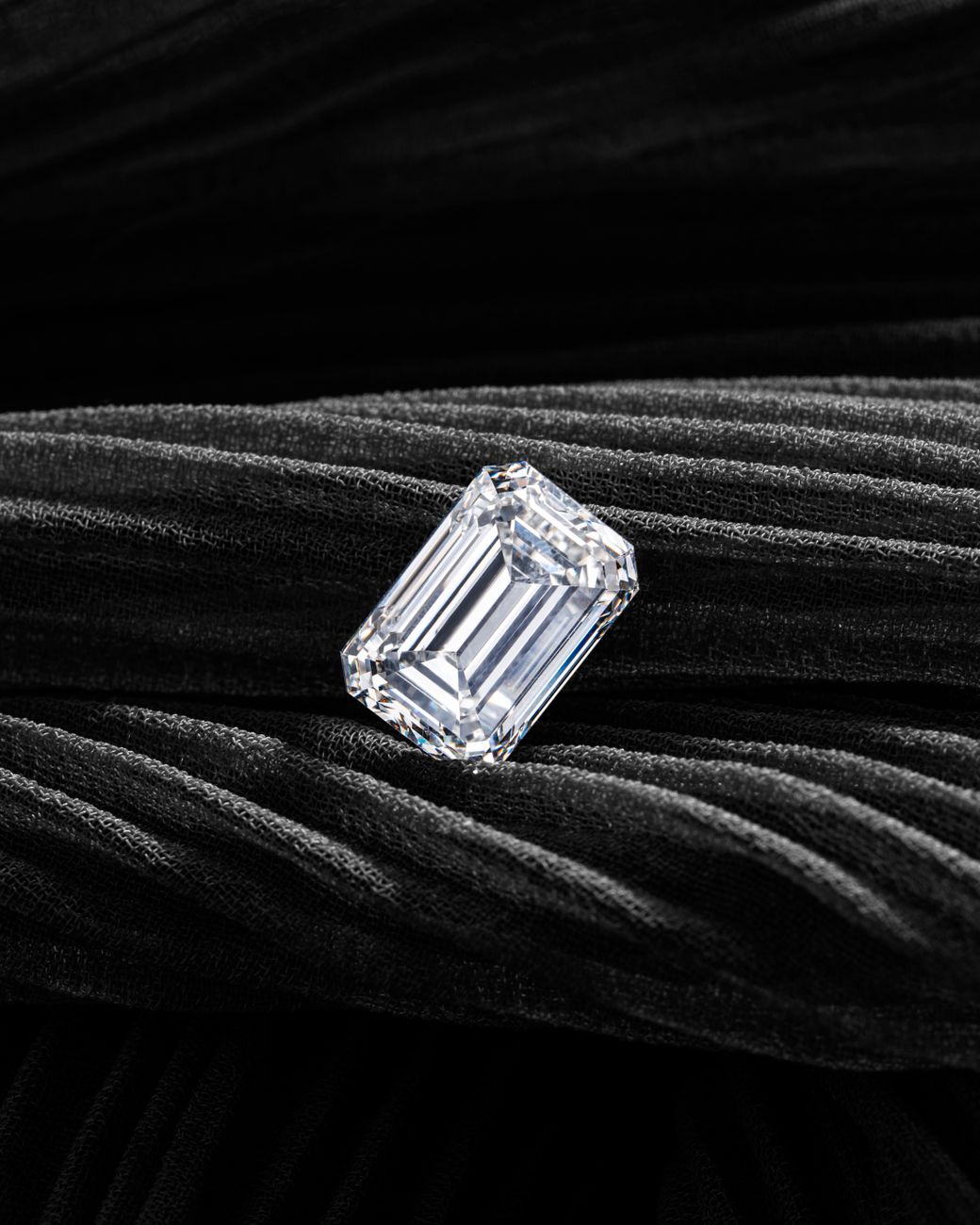
Emerald cuts are rectangular step-cut diamonds with cropped corners. They are known for a long, elegant outline and a distinctive appearance that emphasizes clarity and symmetry rather than intense sparkle.
Instead of many small facets, emerald cuts use long, narrow facets arranged in steps. This creates broad flashes of light and a reflective effect often compared to looking through a hall of mirrors.
Why emerald cuts sparkle differently
Because emerald cuts have fewer, larger facets, they tend to show less scintillation than cushion cuts. Their sparkle is more restrained and less “busy.” Rather than tiny flashes across the whole surface, you will often see larger areas of light and shadow that move across the stone.
This gives emerald cuts a refined look, but it also means they are less forgiving in some areas. If the diamond has lower clarity or color, those features may be easier to see because the cut does not disguise them as much as a brilliant-style diamond.
The role of the step-cut design
The step-cut structure is the defining feature of an emerald cut. Step cuts reflect light in broad planes, which creates clean geometry and visual depth. The effect is elegant and often described as sophisticated or minimalist.
For buyers who want a diamond that looks crisp and architectural, emerald cuts are appealing. For buyers who want more visual activity and sparkle, they are often less satisfying than cushion cuts.
Side-by-Side Comparison: Cushion Cut vs Emerald Cut
The easiest way to understand the difference is to compare how each shape performs in key buying categories. The table below focuses on what matters most to shoppers.
| Category | Cushion Cut | Emerald Cut |
|---|---|---|
| Overall sparkle | Typically higher, with more bright flashes | Lower, but with elegant reflective flashes |
| Brilliance | Strong | Moderate |
| Fire | Often more noticeable | Usually more subtle |
| Scintillation | More frequent and lively | Less frequent, more controlled |
| Face-up appearance | Soft and rounded, often romantic | Long, clean, and elegant |
| Inclusion visibility | Often more forgiving | More revealing |
| Color visibility | Usually more forgiving than emerald cut | Color can be easier to notice |
| Durability | Rounded corners help reduce chipping risk | Cropped corners are stronger than pointed corners, but still need care |
| Style | Classic, soft, versatile | Refined, elegant, understated |
Why Cushion Cuts Usually Look More Sparkly
The difference in sparkle comes down to facet design. Cushion cuts generally use a brilliant-style facet pattern, which breaks up light into many smaller reflections. This creates the lively, glittering look that many buyers associate with sparkle.
Emerald cuts, by contrast, use step-cut facets. These are larger and more linear, so they reflect light in broad bands rather than many small flashes. As a result, the diamond appears calmer and more open.
Think of it this way. A cushion cut is more like a moving display of twinkling light. An emerald cut is more like looking at polished glass with strong reflections and depth. Both can be beautiful, but they communicate different styles.
How lighting changes the result
Lighting matters a lot when comparing these shapes. In bright jewelry store lighting, cushion cuts often appear especially lively because their facets catch and return light in many directions. Emerald cuts can also look impressive, but the effect is more about broad reflections than rapid sparkle.
In softer indoor lighting or daylight, the difference may be less dramatic, but cushion cuts will still usually show more movement and flash. Emerald cuts can look very sophisticated in these conditions, especially when the stone has excellent proportions and a high-quality polish.
Appearance and Visual Style Differences
Beyond sparkle, the two shapes communicate very different visual styles. This is often the real reason shoppers choose one over the other.
Cushion cut appearance
Cushion cuts have a softer outline and a more romantic, approachable feel. Their rounded corners make them visually gentle, and their brilliant faceting gives them a lot of life.
They can look vintage-inspired or modern depending on the cut style. Some buyers like that they combine a classic shape with strong sparkle.
Emerald cut appearance
Emerald cuts look more formal and architectural. Their long lines and open table give them a distinct presence on the hand, especially in larger sizes.
They are often chosen by buyers who want a diamond that looks elegant rather than flashy. The look is more about structure, symmetry, and clean geometry.
Finger coverage and face-up size
Emerald cuts often appear larger than cushion cuts of the same carat weight because they usually spread weight more efficiently across the surface. This is especially noticeable in elongated emerald cuts.
Cushion cuts can face up slightly smaller because their corners are rounded and their depth can vary. That said, the difference is not automatic. Two diamonds with the same carat weight can look very different depending on depth, ratio, and cut quality.
Advantages of Cushion Cut Diamonds
Cushion cuts have several buyer-friendly advantages, especially for people who prioritize sparkle and versatility.
- More sparkle than emerald cuts in most cases.
- Forgiving appearance, which can help hide minor clarity imperfections better than step cuts.
- Rounded corners that reduce the chance of snagging compared with sharp corners.
- Versatile style, since they can look modern or vintage depending on the setting.
- Wide range of looks, from softly romantic to more dramatic brilliant-style cuts.
For buyers who want a diamond that feels lively in daily wear, cushion cuts are often a strong practical choice. They can provide a lot of visual impact without requiring the strict clarity standards that emerald cuts often demand.
Disadvantages of Cushion Cut Diamonds
Cushion cuts are not perfect for everyone. Their strengths can also create trade-offs.
- Less uniform than emerald cuts, since different cushion styles can look quite different from one another.
- Can appear smaller than some other shapes at the same carat weight if the cut is deep.
- Some versions show a bow tie or dark center area, depending on proportions and faceting.
- Harder to compare by certificate alone, because visual performance varies a lot from stone to stone.
This is why shoppers comparing cushion cuts should not rely only on the grading report. Photos, videos, and ideally an in-person viewing or trusted vendor imaging matter a great deal.
Advantages of Emerald Cut Diamonds
Emerald cuts offer a different set of strengths that make them appealing to a particular kind of buyer.
- Elegant and timeless appearance with a refined look.
- Often look larger face-up than many other shapes at the same carat weight.
- Strong sense of clarity and structure, especially when well cut.
- Beautiful for buyers who prefer understated sophistication over high sparkle.
- Can complement elongated finger appearance in many ring styles.
Emerald cuts are especially appealing to buyers who appreciate a cleaner, more deliberate design. They are not meant to compete with cushion cuts on sparkle. Instead, they offer a different kind of beauty.
Disadvantages of Emerald Cut Diamonds
Emerald cuts also come with clear trade-offs that buyers should understand before deciding.
- Less sparkle than cushion cuts and most brilliant cuts.
- More revealing of inclusions, because the open facets do not hide imperfections as well.
- More revealing of color, especially in lower color grades.
- Requires careful cut quality to avoid looking flat or lifeless.
- Not ideal for buyers who want a lively, flashy diamond.
If you are comparing diamond clarity grades, emerald cuts often need a more thoughtful approach than cushion cuts. A diamond that looks perfectly acceptable in a cushion may show flaws more easily in an emerald cut.
How Clarity and Color Matter in Each Shape
The shape you choose can change how strict you need to be about the other 4Cs. That is one reason why the answer to “which sparkles more” is only part of the buying story.
Clarity visibility
Emerald cuts are less forgiving when it comes to clarity. Their larger, open facets can make inclusions easier to see, so many buyers prefer higher clarity grades in this shape.
Cushion cuts are generally better at masking small imperfections because their facets create more light movement. That said, heavily included diamonds should still be avoided.
Color visibility
Emerald cuts can also show color more readily, especially in larger stones or lower color grades. Buyers often choose a higher color grade in emerald cuts if they want a clean, icy look.
Cushion cuts can be a little more forgiving with color because the sparkle pattern draws attention away from subtle warmth. For buyers comparing lab grown diamonds, this can sometimes create room to prioritize size or cut quality within budget.
If you want a better grasp of how these grades work, it helps to review diamond color grades and diamond cut grades before choosing a shape.
Face-Up Size, Ratio, and Shape Proportions
“Face-up size” means how large a diamond looks from above when it is set in a ring. This matters because two diamonds with the same carat weight can look different in size depending on shape and proportions.
Emerald cut proportions
Emerald cuts are often chosen for their long, elegant outline. A length-to-width ratio around 1.30 to 1.50 is common for buyers who want a classic rectangular look, though some prefer a squarer shape.
Because emerald cuts often spread more visibly across the finger, they can create a strong presence. This is one reason they are attractive to buyers who want maximum visual size with clean lines.
Cushion cut proportions
Cushion cuts vary widely. Some are nearly square, while others are more rectangular. A cushion’s ratio affects how it looks on the hand, but the stone’s depth also matters a lot.
Deeper cushions may hide weight in the pavilion, which can reduce face-up size. Buyers who care about visual spread should compare actual measurements, not just carat weight.
Durability and Daily Wear Considerations
Both shapes are suitable for engagement rings and daily wear, but their structures create different practical considerations.
Cushion cut durability
Cushion cuts have rounded corners, which can make them a practical choice for everyday use. Rounded corners are less vulnerable to chipping than pointed corners.
This does not mean cushions are indestructible. Any diamond can be damaged by a hard impact, but the softer outline can be a plus for buyers who want a ring that feels less delicate.
Emerald cut durability
Emerald cuts have cropped corners rather than pointed corners, which improves durability compared with shapes that have sharp points. Still, their long edges and open corners should be protected by a setting designed for daily wear.
If you are considering an emerald cut for an engagement ring, the setting matters. Protective prongs or a bezel-style setting can reduce the chance of damage around the corners.
Popularity and Style Trends
Cushion cuts and emerald cuts are both established shapes, but they appeal to different tastes and buying motivations.
Why buyers choose cushion cuts
Cushion cuts are popular with buyers who want sparkle, softness, and versatility. They often appeal to people who like a romantic look without going overly trendy.
In the lab grown market, cushions are also attractive because buyers can often choose a larger stone or a higher cut quality within the same budget compared with some natural diamond options. If you are learning more about lab grown diamonds, cushion cuts are one of the shapes where that value difference can be especially noticeable.
Why buyers choose emerald cuts
Emerald cuts appeal to buyers who prefer a more tailored and refined style. They are often associated with vintage glamour, Art Deco inspiration, and minimalist sophistication.
The shape is popular with shoppers who like clear lines and a less sparkly, more architectural look. It is not usually chosen for maximum brilliance. It is chosen for presence and style.
How Cushion Cuts and Emerald Cuts Compare in Different Lighting
Lighting has a major impact on how each shape looks, and this can be easy to overlook when shopping online.
Bright store lighting
Under strong direct light, cushion cuts usually display more movement and lively flashes. Emerald cuts show their reflections beautifully, but the look is calmer and more controlled.
Soft indoor lighting
In softer lighting, cushion cuts tend to hold onto more visible sparkle. Emerald cuts may still look elegant, but their visual drama comes more from contrast and structure than brightness.
Daylight
In natural light, both shapes can look excellent. Cushion cuts often appear vivid and bright, while emerald cuts can show a crisp, glassy beauty that some buyers find very appealing.
This is why comparison videos can be useful, but they should be viewed carefully. Lighting differences can make one diamond seem much more sparkly than another even when the underlying performance gap is smaller.
Which Shape Hides Imperfections Better?
If you are deciding between cushion and emerald, this is an important practical question. The answer is cushion cuts usually hide imperfections more effectively.
That is because their brilliant-style faceting creates more visual activity, which can reduce the visibility of small inclusions or slight color tints. Emerald cuts have a more open structure, so they tend to reveal what is inside the stone more easily.
For buyers on a tighter budget, this can matter a lot. A cushion cut may allow more flexibility in clarity and color while still looking attractive. An emerald cut often requires a more careful balance of grades to maintain a clean appearance.
How Lab Grown Diamonds Fit Into the Comparison
Lab grown diamonds make this comparison especially relevant because many buyers use the category to get more visual size or higher quality for the budget. That can change how the choice between cushion and emerald feels.
For example, a buyer might choose a larger cushion cut with strong sparkle in a lab grown diamond rather than moving into a smaller natural diamond with a different shape. Another buyer may use the budget flexibility of lab grown to select a higher clarity emerald cut, which can be helpful because emerald cuts show clarity more easily.
The important point is that lab grown diamonds do not change the visual rules of the shapes. A lab grown cushion still sparkles more than an emerald cut in most cases. The difference is that buyers may have more room to optimize for the features that matter most to them.
Important Buying Considerations
If you are deciding between cushion and emerald, these are the factors that matter most in real-world shopping.
1. Look at the actual stone, not just the grading report
Diamond shape is not enough. Two cushion cuts with the same grade can look very different depending on facet pattern, depth, and proportions. The same is true for emerald cuts, where cut precision strongly affects the stone’s presence.
2. Pay attention to length-to-width ratio
Ratio changes the personality of both shapes. A squarer cushion feels softer and more classic, while a rectangular cushion can look more elongated. Emerald cuts show this even more clearly, because their clean geometry makes proportions highly visible.
3. Consider your tolerance for inclusions
If you want a stone that disguises small imperfections, cushion cuts often make shopping easier. If you love the look of an emerald cut, be prepared to examine clarity more closely and possibly pay more for a cleaner stone.
4. Decide whether sparkle or elegance matters more
This is the biggest decision point. If you want a diamond that throws off more flashes and catches the eye from across the room, cushion cuts usually fit better. If you want something restrained, elegant, and architectural, emerald cuts are the more natural choice.
5. Match the setting to the shape
A good setting can protect the stone and improve the overall look. Emerald cuts often benefit from protective settings that secure the corners. Cushion cuts are versatile and work well in many settings, including solitaire, halo, and three-stone designs.
Choosing the right ring style is part of the larger engagement ring decision, not just the diamond shape itself.
Common Mistakes Buyers Make
Many shoppers focus only on shape and overlook how the stone is actually cut and how it will wear. These are some of the most common mistakes.
- Assuming all cushions sparkle the same. Faceting styles vary a lot.
- Choosing an emerald cut without checking clarity carefully. Inclusions may be more visible.
- Ignoring actual measurements and focusing only on carat weight.
- Overlooking ratio, which can dramatically affect appearance.
- Comparing diamonds under different lighting and drawing conclusions too quickly.
- Buying based on shape trend alone instead of long-term personal style.
If you are learning how to evaluate diamonds in detail, it is worth reviewing topics like diamond carat, certification standards, and the difference between shape appearance and cut quality.
Who Is Better Suited to a Cushion Cut?
Cushion cuts are a strong match for buyers who want more sparkle and a softer overall look. They are especially appealing to people who like a romantic, classic feel but still want noticeable brilliance.
They can also be a practical choice for buyers who want some flexibility in clarity and color. Because they are more forgiving than emerald cuts, they can be easier to shop for if you are balancing appearance and budget.
Cushion cuts may suit you if you:
- Want a diamond with more sparkle and movement
- Prefer rounded edges and a softer outline
- Like vintage-inspired or romantic ring styles
- Want a shape that is generally more forgiving of minor inclusions
Who Is Better Suited to an Emerald Cut?
Emerald cuts are a good fit for buyers who value elegance, clean lines, and understated sophistication. They are less about brilliance and more about structure and presence.
They may be ideal if you appreciate a refined look that does not compete with the rest of the ring. But they usually require more care in selection, especially if you want a bright, transparent appearance.
Emerald cuts may suit you if you:
- Prefer a calm, elegant look over intense sparkle
- Like rectangular shapes with strong geometry
- Want a diamond that can appear larger face-up
- Are comfortable prioritizing clarity and cut precision
Frequently Asked Questions
Do cushion cut diamonds always sparkle more than emerald cuts?
Usually, yes. Most cushion cuts are brilliant-style cuts, which are designed to produce more sparkle, brilliance, and scintillation than emerald cuts. Emerald cuts have a step-cut structure that creates a more reflective and understated look.
Which shape looks bigger, cushion or emerald?
Emerald cuts often look bigger face-up at the same carat weight because they tend to spread across the finger more efficiently. Cushion cuts can sometimes appear smaller if they are cut deeply, though this depends on the specific diamond.
Are emerald cuts worse than cushion cuts because they sparkle less?
No. They are simply different. Emerald cuts are chosen for elegance, clarity, and clean lines, not for maximum sparkle. Whether one is better than the other depends on your personal style and what you want the ring to communicate.
Which shape is better for hiding inclusions?
Cushion cuts are usually better at hiding small inclusions because their sparkle pattern creates more visual distraction. Emerald cuts are more open and can reveal imperfections more easily, which is why clarity matters more in that shape.
Is a lab grown cushion cut a good value?
For many buyers, yes. Lab grown cushion cuts can offer strong sparkle and a larger look for the price, making them an appealing option for engagement rings. The value still depends on cut quality, color, clarity, and the setting.
Do emerald cuts need higher color grades?
Often, yes. Because emerald cuts are open and less sparkly, color is easier to notice than in many brilliant cuts. Buyers who want a bright, icy appearance often choose higher color grades for emerald cuts.
Which shape is more timeless?
Both have long-term appeal, but in different ways. Cushion cuts have a classic, versatile feel, while emerald cuts carry a refined and enduring elegance. Timelessness often depends more on the wearer’s style than on the shape alone.
Conclusion
So, do cushion cut diamonds sparkle more than emerald cuts? In most cases, yes. Cushion cuts usually deliver more brilliance, fire, and scintillation because of their brilliant-style faceting, while emerald cuts offer a calmer, more elegant, step-cut appearance.
If you want a lively diamond that catches light easily and hides minor imperfections well, a cushion cut is often the better fit. If you prefer a sophisticated, architectural look and are comfortable being more selective about clarity and color, an emerald cut may be the right choice.
The best decision comes down to how you want the diamond to look on the hand, how much sparkle matters to you, and how much flexibility you want in the rest of your buying criteria. Comparing actual stones, not just shape names, is the most reliable way to choose well.