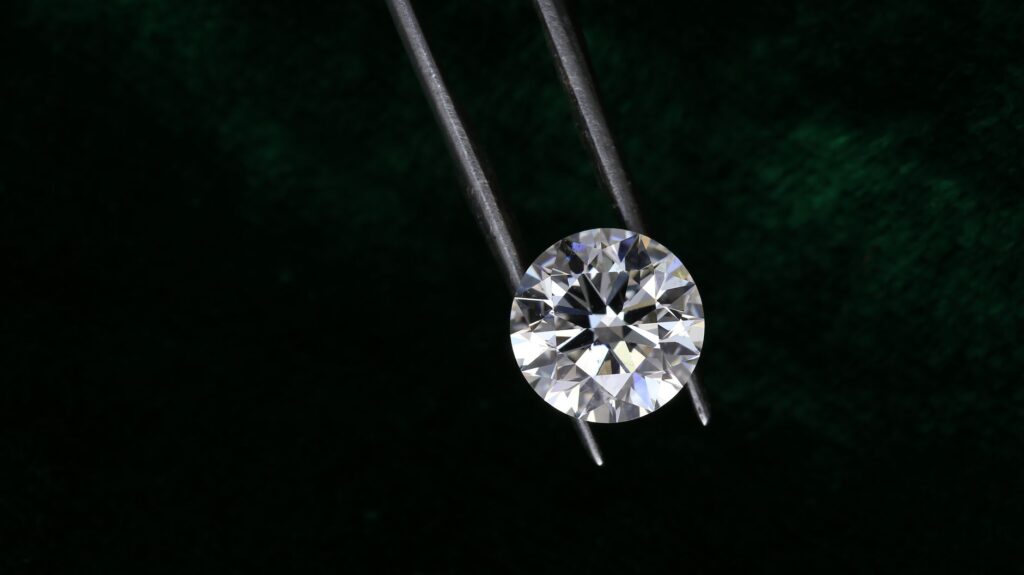
A lab grown diamond can make a larger carat weight feel much more attainable. The price gap between a 1 carat and a 2 carat lab grown diamond is often far smaller than the same jump in a natural diamond, which leads to an understandable question: should you buy a bigger lab grown diamond simply because you can?
The answer is not always yes. Bigger can absolutely be the right decision, especially if visible size is your priority and your budget allows room for good cut quality, a suitable setting, and the overall ring design you want. But a larger diamond is not automatically the better value if the extra size comes with trade-offs in cut, proportions, color visibility, clarity visibility, or long-term satisfaction with how the ring looks and feels in daily wear.
Size expectations matter because carat weight and visual appearance are related, but they are not identical. Two diamonds with the same carat weight can look noticeably different face-up, and a diamond that sounds large on paper may not look as large as you expect once it is set on a finger. Lab grown diamonds give buyers more flexibility, but that flexibility is most useful when it is paired with a clear understanding of what you are actually getting.
Quick Answer
Should you buy a bigger lab grown diamond? Buy a bigger lab grown diamond if visible size is one of your top priorities, the diamond still has strong cut quality, and the larger stone fits your lifestyle, setting preference, and budget without forcing compromises that matter to you.
Choosing a bigger lab grown diamond often makes sense because lab grown pricing allows buyers to move up in carat weight more easily than with natural diamonds. In many cases, that extra size will be visible and meaningful. However, it is not the best decision for every buyer.
You may be better off staying slightly smaller if:
- The larger diamond has weaker cut quality or overly deep proportions
- You are paying mainly for a milestone number rather than visible difference
- You prefer a more balanced or understated look
- Your finger size, setting style, or daily wear needs make the larger stone less practical
- You would rather invest part of the budget in the setting, wedding band, or overall quality
In short, a bigger lab grown diamond is worth considering, but only when the visual gain is real and the trade-offs are acceptable.
Understanding the Carat Concept
What diamond carat actually means
Carat is a unit of weight, not a direct measurement of how wide a diamond looks. One carat equals 0.2 grams. That means a 2 carat diamond weighs twice as much as a 1 carat diamond, but it does not look twice as large face-up.
This is one of the most important ideas for diamond buying. Buyers often assume that carat weight translates neatly into visible size, but the eye sees dimensions, shape, and light return, not weight alone.
What face-up size means
Face-up size refers to how large the diamond appears when viewed from the top, which is how a ring is normally seen. For a round diamond, the key face-up measurement is diameter. For shapes like oval, cushion, emerald, and pear, the visible length and width matter most.
A diamond with a large face-up spread looks bigger across the finger. A diamond with more of its weight hidden in depth can weigh the same but appear smaller from above.
Why lab grown diamonds change the conversation
Lab grown diamonds have the same basic physical and optical properties as natural diamonds. They can have the same hardness, brilliance, and durability. The main difference for this discussion is pricing.
Because lab grown diamonds generally cost less than natural diamonds of similar specifications, buyers can often afford a larger size. That makes the question less about whether a bigger diamond is possible and more about whether it is the smartest use of the budget.
What a “magic size” means
In diamond buying, certain carat weights carry extra psychological appeal. Common examples include 1.00 carat, 1.50 carats, 2.00 carats, and 3.00 carats. These are often called magic sizes because buyers strongly recognize them, and pricing can jump at those thresholds.
With lab grown diamonds, the premium for crossing one of these numbers may be less dramatic than with natural diamonds, but it can still exist. In practical terms, a 0.90 carat or 1.80 carat diamond may look very close in size to a 1.00 or 2.00 carat diamond while costing less.
What Buyers Usually Expect
Expecting the carat number to tell the whole story
A common assumption is that a larger carat number guarantees a visibly larger diamond. In reality, measurements matter more than the label. A well-cut 1.90 carat diamond with generous face-up dimensions can look more impressive than a poorly proportioned 2.00 carat diamond.
Assuming “bigger” always looks better
Visible size is important, but it is only one part of beauty. A larger diamond that looks dark in the center, appears too deep, or overwhelms the hand may not be more attractive than a slightly smaller stone with stronger brilliance and better balance.
The best-looking ring is often the one where size, shape, cut, and setting work together.
Thinking people will notice every size increase
Some upgrades are visually meaningful. Others are subtle. Moving from 1.00 to 1.10 carats, for example, may be much less noticeable than buyers expect, especially once the diamond is mounted. Moving from 1.00 to 1.50 carats usually creates a clearer visible difference.
This matters because it helps separate upgrades that feel satisfying in real life from upgrades that mostly feel meaningful on a grading report.
Comparing only carat weights and not dimensions
Two oval diamonds can both weigh 2.00 carats and still look different in size because their length-to-width ratios and depth percentages differ. The same is true for rounds, cushions, and other shapes.
Shoppers who compare only carat weights often miss where the visible value really is.
What It Actually Looks Like
Visible size is about measurements and finger coverage
What you actually see on the hand is the diamond’s face-up area and how much of the finger it covers. Finger coverage describes how much visual space the stone occupies across and along the finger. A diamond can sound large by carat weight but still look modest if the finger is larger or the stone is cut deep.
On a smaller finger, the same diamond looks more prominent. On a larger finger, it can look more restrained.
A larger lab grown diamond can look dramatically bigger, but not always proportionally bigger
As carat weight increases, size increases too, but the visual growth is not linear in the way buyers often imagine. A 2 carat round diamond looks clearly larger than a 1 carat round, yet it does not look like double the diameter. Diameter grows more gradually than weight because carat measures mass, not surface spread.
This is why some size upgrades feel dramatic and others feel smaller than expected.
Sparkle affects size perception
Diamonds that return light well often appear brighter and more lively. That brightness can make a diamond feel more noticeable on the hand. By contrast, a larger diamond with poor cut quality may look less lively and can even seem smaller because it does not attract the eye as effectively.
In practical terms, a bigger lab grown diamond should still be a well-cut diamond. Size without brightness is usually a disappointing trade.
Settings can either emphasize or mute size
A solitaire setting puts the center diamond in full focus. A halo can increase apparent size by surrounding the center with small diamonds. A thick bezel can make the center feel more contained. Delicate bands often make the center stone look larger, while wider bands can make it look slightly smaller by comparison.
That means your diamond size decision should never be made in isolation from the ring design.
Factors That Change Apparent Size
Shape
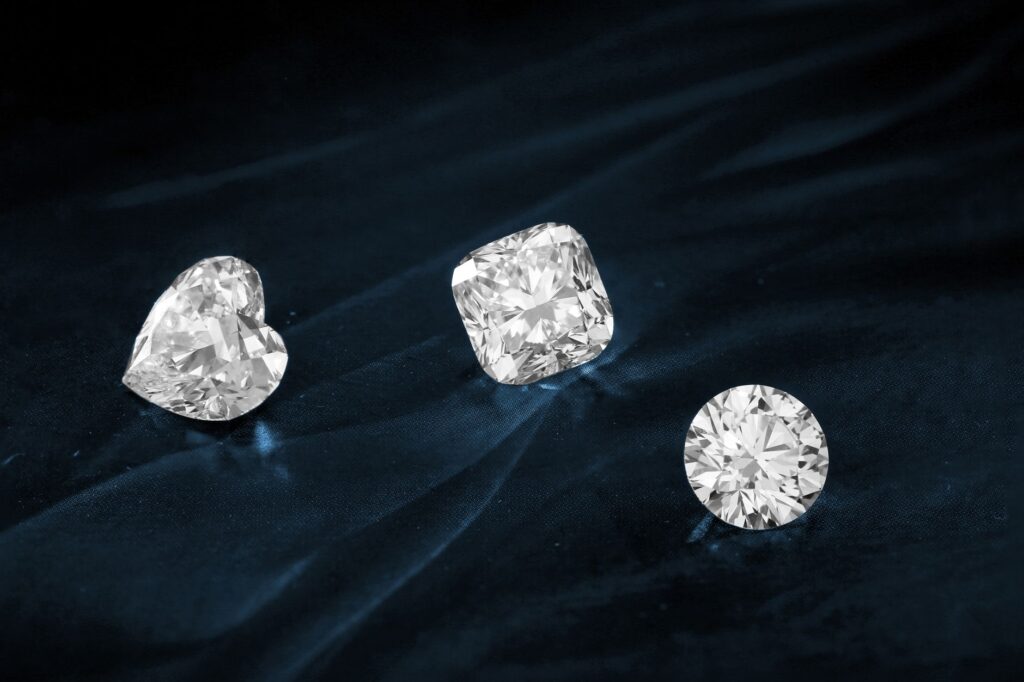
Shape has a major effect on how large a diamond looks. Elongated shapes usually create more finger coverage than round diamonds of the same carat weight. Oval, marquise, and pear shapes often look larger because they spread weight over a longer outline.
Round diamonds tend to carry more weight in a compact outline, which can make them look slightly smaller per carat than some elongated shapes. Cushions can vary significantly depending on their proportions. Emerald cuts and radiant cuts can also look different from one another at the same weight because their outlines and faceting styles differ.
| Shape | Typical Face-Up Impression at Same Carat Weight | Practical Note |
|---|---|---|
| Round | Balanced, but often smaller-looking than elongated shapes | Popular for brilliance and classic look |
| Oval | Often looks larger | Good finger coverage, especially lengthwise |
| Pear | Can look larger and longer | Elongated appearance can flatter the finger |
| Marquise | Often looks very large for its weight | Maximum length and spread for many buyers |
| Emerald | Can look elegant and sizable | Large open facets show clarity more easily |
| Cushion | Varies widely | Some face up smaller due to deeper builds |
| Radiant | Moderate to large-looking | Blends brilliance with a more rectangular outline |
Cut quality
Cut quality refers to how well the diamond’s proportions and facet arrangement handle light. It affects brilliance, fire, scintillation, and often face-up spread. A poorly cut diamond may carry excess weight in the bottom, which makes it face up smaller. A well-cut diamond is usually more visually efficient.
For rounds, cut quality is especially important because there is well-established guidance on proportion ranges and light performance. For fancy shapes, there is more variation, so visual evaluation becomes even more important.
Depth and proportions
Depth percentage describes how tall the diamond is relative to its width. A very deep diamond can hide weight where you cannot see it. This means you may pay for carat weight that does not translate into visible size.
A diamond with better spread uses its weight more effectively in the face-up view. However, “shallow” is not automatically good either. A stone that is too shallow may lose beauty and light return. The goal is balanced proportions, not maximum width at any cost.
Color visibility
As diamonds get larger, color can become slightly easier to notice because there is simply more material to look through. In lab grown diamonds, buyers often have room in the budget to choose a larger size and still stay in a higher color range if they want a bright white appearance.
That said, color sensitivity is personal. Some buyers are perfectly happy with a near-colorless look, especially in yellow or rose gold settings.
Clarity visibility
Larger diamonds can reveal inclusions more readily because the stone is bigger and often viewed more closely. This is especially relevant in step cuts such as emerald and Asscher, where broad open facets make internal features easier to see.
A bigger lab grown diamond should still be eye-clean if visible clarity matters to you. Eye-clean means inclusions are not noticeable to the naked eye under normal viewing conditions.
Setting style and band width
A thin band can make a center diamond stand out more. A thicker band can create a bolder overall look, but may reduce the relative visual dominance of the stone. Halo settings can add perceived size without requiring as much additional center-stone carat weight. Three-stone settings can increase presence across the finger even if the center is not very large.
These design effects can sometimes deliver the look of a “bigger” ring more efficiently than simply buying a heavier center diamond.
Real-World Size Examples
1 carat on a size 4 finger vs a size 7 finger
A 1 carat round diamond typically measures around 6.4 to 6.5 mm in diameter when well cut. On a size 4 finger, that can look prominent and substantial. On a size 7 finger, it usually looks more moderate and balanced.
The diamond has not changed, but the visual context has. This is why finger size matters so much in size planning.
| Diamond | Approximate Measurement | Appearance on Smaller Finger | Appearance on Larger Finger |
|---|---|---|---|
| 1.00 ct Round | About 6.4 to 6.5 mm | Often looks prominent | Usually looks balanced to moderate |
| 1.50 ct Round | About 7.3 to 7.4 mm | Can look quite substantial | Often looks strong and noticeable |
| 2.00 ct Round | About 8.1 to 8.2 mm | Very prominent | Still clearly large and impressive |
2 carat oval vs 2 carat round
A 2 carat oval often appears larger than a 2 carat round because it stretches lengthwise and covers more finger area visually. Buyers who want maximum visible size often prefer oval, pear, or marquise for this reason.
That does not make oval automatically better. Round diamonds often offer a different type of visual appeal, with stronger symmetrical brilliance and a classic look. This is a style choice as much as a size choice.
0.90 carat vs 1.00 carat
This is one of the most useful comparisons in diamond buying. The visible difference between a well-cut 0.90 carat and a well-cut 1.00 carat is often small, especially once set. The price difference may or may not feel justified depending on the specific stone and whether the buyer values the 1 carat milestone.
With lab grown diamonds, that premium may be modest compared with natural diamonds, which can make the jump easier to justify. But visually, the difference is still usually subtle.
1.80 carat vs 2.00 carat
This is another common lab grown diamond decision point. A 2.00 carat mark has strong appeal, but a 1.80 or 1.90 carat diamond may look extremely similar in real-world wear, especially in shapes that already face up generously.
If your main goal is visible size rather than a round-number milestone, staying just below 2 carats can be a smart value move.
Large emerald cut vs large round
A 2.5 carat emerald cut can look elegant and expansive because of its broad table and elongated outline. But it also reveals clarity and color more openly than a round brilliant. A buyer considering a bigger lab grown diamond in an emerald cut may need to pay closer attention to eye-cleanliness and color appearance than they would with a round.
This is a good example of why “bigger” cannot be judged on carat alone. Different shapes show their size differently and reveal quality differently.
Price vs Visual Benefit
Why lab grown makes larger sizes more accessible
The strongest argument for buying a bigger lab grown diamond is simple: you can often achieve substantially more visible size without the extreme price escalation associated with natural diamonds. For buyers whose top priority is face-up presence, lab grown diamonds can deliver very strong budget efficiency.
That efficiency is real, but it still needs to be evaluated carefully. Even within lab grown pricing, larger diamonds cost more, and quality differences still matter.
Diminishing returns in visible size
As carat weight goes up, each additional jump in size tends to deliver less dramatic visual impact than many buyers expect. The difference between 0.50 and 1.00 carat is usually very obvious. The difference between 2.00 and 2.20 carats may be far less striking.
This is the core idea behind diminishing returns. You pay more, but the visual improvement becomes smaller and smaller.
| Upgrade | Typical Visual Difference | Value Consideration |
|---|---|---|
| 0.50 to 1.00 ct | Major | Usually easy to notice |
| 1.00 to 1.50 ct | Clearly noticeable | Often worthwhile if size matters |
| 1.50 to 2.00 ct | Noticeable | Can be a satisfying jump in lab grown |
| 2.00 to 2.20 ct | Modest | May matter more on paper than visually |
| 2.50 to 3.00 ct | Noticeable, but less dramatic per added weight | Check whether the extra cost fits your priorities |
When the upgrade is visually worth it
A bigger lab grown diamond is often worth it when the size increase is clearly visible, the shape supports strong spread, and the diamond remains well cut and eye-clean. For example, moving from a 1.00 to a 1.50 carat lab grown diamond may produce enough visible change to feel meaningful every day.
When the upgrade is less compelling
The upgrade may be less compelling when you are paying for a benchmark number like 2.00 carats instead of meaningful visual difference. It may also be less compelling when the larger diamond sacrifices cut quality or creates a ring that feels too large for the wearer’s taste or routine.
Who Should Size Up
Buyers who strongly value finger coverage
If your main goal is visible presence on the hand, a bigger lab grown diamond may be an excellent use of budget. This is especially true for buyers who know they would regret choosing too small.
Buyers choosing simple settings
In a solitaire or similarly minimal setting, the center diamond carries most of the visual impact. If you want the ring to look substantial without a halo or side stones, moving up in carat weight can make sense.
Buyers with larger finger sizes
A larger finger often changes how a diamond looks. A size that appears quite bold on a small hand may look more moderate on a larger one. Buyers with larger ring sizes may reasonably choose a bigger stone to achieve the same visual effect.
Buyers who want a specific overall style
Some ring styles are built around a larger center. For example, elongated solitaires, wide cathedral settings, or certain three-stone designs may look most balanced with more center-stone presence.
Buyers whose budget comfortably supports the upgrade
If moving up in size does not force undesirable compromises in color, clarity, cut, or setting quality, the larger lab grown diamond may be a practical and satisfying decision.
Who Can Save Money
Buyers who care more about sparkle than maximum size
If brilliance and overall beauty matter more to you than headline carat weight, staying slightly smaller can be smart. A well-cut diamond with excellent light performance often outperforms a bigger but weaker stone in real-world appearance.
Buyers open to smart “under the threshold” sizes
Choosing 0.90 instead of 1.00 carat, or 1.80 instead of 2.00 carats, can often preserve most of the visible look while reducing cost. This strategy is especially useful for value-focused buyers.
Buyers choosing elongated shapes
If you like oval, pear, marquise, or certain radiant cuts, you may not need to buy as much carat weight to achieve strong finger coverage. Shape can do part of the work for you.
Buyers using halo or three-stone settings
These settings increase visual presence without requiring the center diamond to carry all of the size impact. In some cases, that allows buyers to choose a smaller center and still achieve a substantial look.
Buyers prioritizing comfort and everyday practicality
Larger diamonds can sit higher, catch more attention, and sometimes feel less convenient in active daily wear. Buyers who prefer low-maintenance practicality may be happier with a size that feels easier to live with.
Common Buyer Mistakes
Chasing carat numbers instead of appearance
It is easy to focus on 1.00, 2.00, or 3.00 carats because those numbers are familiar and satisfying. But what matters visually is how the diamond actually looks. A slightly smaller diamond with better spread can be the better choice.
Ignoring measurements
Always check millimeter dimensions. This is one of the simplest ways to understand real visible size. Carat weight alone cannot tell you how large the diamond will look face-up.
Accepting poor cut to get more size
One of the biggest mistakes in lab grown diamond shopping is assuming the lower price means you should maximize carat weight at all costs. If the extra size comes with poor light performance, the result may be less attractive than a smaller, better-cut diamond.
Forgetting that shape changes everything
A buyer may compare a 2 carat round to a 2 carat oval as if they should look similar in size. They usually do not. Shape changes spread, finger coverage, and even how large the stone feels at a glance.
Ignoring finger size and hand proportions
A size that looks balanced on one person may look dramatically different on another. Try to think about the ring on the actual hand it will be worn on, not in isolation.
Overpaying for “magic sizes” without visible gain
The jump from 0.95 to 1.00 carat or 1.90 to 2.00 carats may feel significant psychologically. Visually, it may be much less significant. It is worth checking whether the larger milestone truly changes the look.
Not considering the setting early enough
Buyers sometimes pick the center stone first and only later realize the desired setting changes the visual balance. A larger stone may look perfect in one setting and excessive or awkward in another.
How to Decide Whether a Bigger Lab Grown Diamond Is Right for You
Start with your real priority
Ask yourself what matters most: maximum visible size, balanced beauty, classic proportions, budget efficiency, or durability in everyday wear. There is no universal correct answer. The right choice depends on what you will value once the excitement of the carat number fades.
Compare measurements, not just carat labels
Look at millimeter dimensions side by side. For fancy shapes, compare length, width, and ratio. This tells you far more about apparent size than weight alone.
Protect cut quality
For round diamonds especially, do not sacrifice cut quality just to gain size. For fancy shapes, avoid stones that look overly deep, dark, or poorly balanced. The larger the diamond, the more disappointing weak performance can be.
Think about lifestyle
A very large diamond can be beautiful, but practicality matters. Consider work, hobbies, comfort, and how often the ring will be worn. A size that feels exciting in theory should also feel livable in practice.
Decide whether the milestone matters to you
There is nothing wrong with wanting a 2 carat diamond because 2 carats is meaningful to you. Personal satisfaction matters. But it helps to be honest about whether you are paying for visible size, symbolic size, or both.
Frequently Asked Questions
Is it worth buying a bigger lab grown diamond?
It can be worth it if size is a major priority and the larger diamond still has good cut quality, suitable proportions, and an appearance you love. It is less worth it when the bigger stone is chosen only for the carat number and does not provide a meaningful visual improvement.
Will a bigger lab grown diamond look fake?
No, size alone does not make a lab grown diamond look fake. A lab grown diamond is a real diamond. However, very large diamonds can attract more attention simply because they are more noticeable. Whether the look feels natural or bold depends on personal style, setting design, and local norms.
Should I choose a bigger lab grown diamond or better quality?
In most cases, it is better to protect cut quality first, then balance size with color and clarity based on what you can actually see. A slightly smaller, well-cut diamond often looks better than a larger diamond with weak performance.
Do larger lab grown diamonds show more color or inclusions?
They can. Larger diamonds may make body color and inclusions easier to notice, especially in shapes with open facets such as emerald cut. That does not mean you need perfect grades, but it does mean visible quality should still be evaluated carefully.
Is a 2 carat lab grown diamond too big for an engagement ring?
Not necessarily. On some hands and in some settings, 2 carats looks balanced and elegant. On others, it may feel very bold. Finger size, shape, setting style, and personal taste all affect whether it feels appropriate.
Can I save money by choosing just under a magic size?
Yes. Sizes like 0.90, 0.95, 1.80, or 1.90 carats can sometimes offer nearly the same visual appearance as the next major threshold for less money. This is often a strong value strategy.
Do elongated shapes look bigger than round lab grown diamonds?
Often, yes. Oval, pear, and marquise shapes frequently provide more finger coverage than round diamonds of the same weight. That makes them attractive options for buyers who want a larger face-up look.
Does resale value matter when deciding on a bigger lab grown diamond?
It can matter, but lab grown diamonds are generally not purchased for strong resale performance. If your main goal is long-term financial retention, size alone is unlikely to solve that issue. For most buyers, the more practical question is whether the larger diamond gives enough everyday enjoyment and visual benefit to justify the cost.
Conclusion
The best answer to “Should You Buy a Bigger Lab Grown Diamond” is that you should buy bigger only when the extra size creates a real visual benefit without causing trade-offs you will notice and regret. Lab grown diamonds make larger carat weights much more accessible, which is a genuine advantage for buyers who want more finger coverage and presence.
At the same time, bigger is not automatically better. Face-up size depends on measurements, shape, cut quality, proportions, setting style, and the finger it will be worn on. A larger diamond that faces up small, lacks brilliance, or feels out of balance is not necessarily the smarter purchase.
For many buyers, the sweet spot is not the biggest diamond the budget allows. It is the diamond that looks large enough, performs well, suits the setting, and feels right in daily wear. Sometimes that means going bigger. Sometimes it means stopping just below a milestone weight or choosing a shape that gives more spread per carat.
A thoughtful decision comes down to what you will actually see on the hand, not just what appears on the grading report. When you evaluate visible size, proportions, quality, and lifestyle together, it becomes much easier to tell whether sizing up in a lab grown diamond is truly worth it.