When shoppers ask, Do Lab Grown Diamonds Have Inclusions, the short answer is yes. Lab grown diamonds can have inclusions just like natural diamonds, and those inclusions can affect clarity, appearance, and sometimes durability depending on what they are and where they are located.
For most buyers, the more important question is not whether a lab grown diamond has inclusions, but whether those inclusions are visible to the naked eye, whether they affect the stone’s beauty, and whether paying more for a higher clarity grade actually improves what you will see in real life. In many cases, a well-chosen lab grown diamond with a lower clarity grade can still look clean and attractive to everyday observers.
Understanding inclusions helps you compare diamonds more intelligently. It also helps you avoid overpaying for a clarity grade that does not change the way the diamond looks once it is set in a ring.
Quick Answer
Yes, lab grown diamonds do have inclusions. These are internal features or tiny surface-related characteristics that can form during the growth process, cutting, or handling. They are common in both lab grown and natural diamonds.
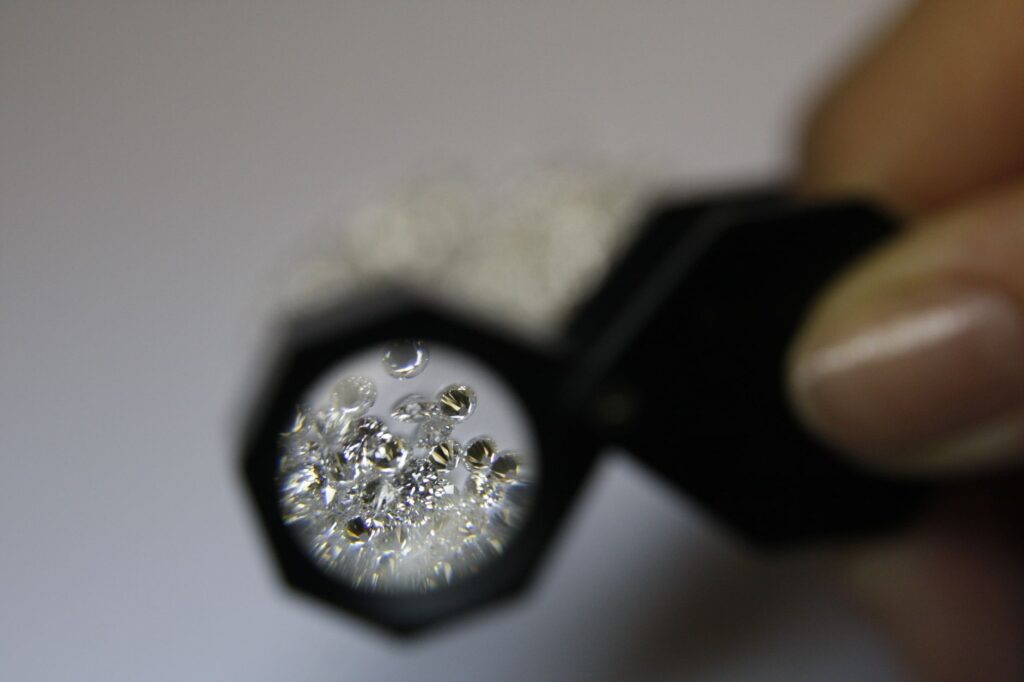
Some inclusions are so small that they are not visible without magnification. Others may be noticeable under close inspection, especially in larger stones or stones with lower clarity grades. The key buying question is whether the inclusion is visible in normal viewing conditions and whether it affects durability or overall appearance.
In practical terms, many lab grown diamonds in the VS and even SI range can still appear eye clean, especially if the inclusions are small and placed away from the center of the stone. For most shoppers, that is often the most useful balance of appearance and value.
What Inclusions Are in Lab Grown Diamonds
Inclusions are natural or growth-related features inside a diamond. In lab grown diamonds, they are created during the manufacturing process rather than over millions of years underground, but they still count as clarity characteristics. Gemologists use these features to assess clarity and assign a grade on a diamond grading report.
Common inclusion types include crystals, feathers, clouds, pinpoints, needles, twinning wisps, cavities, and chips. Some are harmless and only affect the clarity grade. Others may matter more if they are large, located near the edge, or connected to durability concerns.
How lab grown inclusions form
Lab grown diamonds are made using one of two main methods, HPHT or CVD. HPHT stands for high pressure high temperature. CVD stands for chemical vapor deposition. Both methods can create diamonds with excellent optical qualities, but both can also produce internal growth features.
During growth, tiny mineral particles, stress lines, or structural irregularities can become trapped in the crystal. After the diamond is cut and polished, those features may remain as inclusions. This is normal and does not mean the diamond is fake or low quality. It simply means the stone has clarity characteristics, just like many natural diamonds do.
Why inclusions matter to buyers
Inclusions matter because they influence three practical things: how clean the diamond looks, how much the diamond costs, and whether there are any durability concerns. Some buyers want the highest possible clarity, while others care more about getting a visually clean stone at a better price.
For many consumers, the best value is found not at the top of the clarity scale, but in the range where inclusions are difficult or impossible to see without magnification. That is especially true for lab grown diamonds, where pricing often rises noticeably as clarity improves, even when the visual difference is small.
For a deeper overview, Do lab grown diamonds have inclusions? explains the clarity factors buyers should watch.
What Clarity Means in Simple Terms
Diamond clarity is the measure of how free a diamond is from internal inclusions and external blemishes. A grading lab evaluates the stone under magnification and assigns a clarity grade based on the number, size, position, nature, and visibility of those features.
Clarity grades for diamonds typically include FL, IF, VVS1, VVS2, VS1, VS2, SI1, SI2, and sometimes I1. These grades do not tell you whether a diamond is beautiful on their own. They tell you how many clarity features were found and how easily they can be seen under magnification or with the naked eye.
For everyday shoppers, the important distinction is between a diamond that looks clean to the eye and one that shows noticeable flaws without magnification. That difference can matter far more than the grading label alone.
Clarity grades and what buyers usually see
| Clarity Grade | What It Means | What Most Buyers See | Typical Buyer Consideration |
|---|---|---|---|
| FL | No inclusions or blemishes visible under 10x magnification | Looks flawless to the eye | Usually expensive and often more than most buyers need |
| IF | No internal inclusions, only tiny surface blemishes | Looks flawless to the eye | Very high-end grade, often a premium for perfection |
| VVS1 | Very, very slight inclusions, extremely difficult to see under magnification | Looks eye clean in almost all cases | High clarity, but often a premium with little visible benefit |
| VVS2 | Very, very slight inclusions, still very hard to see under magnification | Looks eye clean in almost all cases | Often excellent clarity, though not always necessary |
| VS1 | Very slight inclusions, easy to see under magnification but not usually with the eye | Usually eye clean | Strong balance of clarity and value |
| VS2 | Very slight inclusions, somewhat easier to find under magnification | Often eye clean, but not always | Frequently a sweet spot for value if the stone is well chosen |
| SI1 | Slight inclusions, often visible under magnification and sometimes with the eye | Can be eye clean or visibly included | Needs careful inspection, but can offer excellent value |
| SI2 | Slight inclusions that are more easily seen | Often visibly included | May be fine for some buyers, but requires close review |
| I1 | Included, with inclusions usually noticeable | Often visibly included | Usually not ideal if you want a clean-looking center stone |
This table is a general guide, not a guarantee. Two diamonds with the same grade can look different depending on inclusion type, location, and the quality of the cut.
Why Inclusions Matter in Lab Grown Diamonds
Inclusions matter in lab grown diamonds for the same basic reasons they matter in natural diamonds: they affect clarity, beauty, and value. However, because lab grown diamonds are often priced differently from natural diamonds, clarity upgrades may have a different buying logic.
In many cases, lab grown diamonds offer a large size advantage for the budget. That can make buyers more comfortable choosing a diamond with a clarity grade below the top tier, provided it still looks clean in everyday use. As a result, clarity often becomes a value decision rather than a status decision.
For a buyer comparing two lab grown diamonds of similar cut, the more expensive stone is not automatically the better choice. If the lower-priced diamond is eye clean and has no durability concerns, it may be the smarter purchase.
Appearance is usually the first concern
Most buyers care most about what the diamond looks like once it is in a ring. If an inclusion cannot be seen without a loupe or microscope, it may have little practical impact on day-to-day appearance. That is especially true for diamonds with strong cut quality, because sparkle can help mask tiny imperfections.
On the other hand, if an inclusion sits near the center of the diamond and is dark or large enough to catch the eye, it can affect the visual impression. This is why inclusion type and placement matter just as much as the grade itself.
Value is the second major concern
As clarity improves, the price can increase, sometimes more sharply than the visual improvement would suggest. This is particularly important in lab grown diamonds, where buyers often compare several stones that look very similar in person but are priced differently based on clarity grades.
For many shoppers, paying a meaningful premium for VVS clarity may not be necessary if a VS1, VS2, or carefully chosen SI1 already looks clean in normal viewing conditions. The best value often comes from paying for what you can actually see, not for a grade label alone.
How to Judge Whether a Lab Grown Diamond Looks Eye Clean
Eye clean means the inclusions are not visible to the naked eye in normal viewing conditions. This is one of the most useful practical terms for buyers because it describes appearance rather than just grading. An eye-clean diamond can still have inclusions under magnification, and that is perfectly normal.
To judge eye-clean appearance, look at the diamond from a normal viewing distance, usually around 6 to 10 inches, under good lighting. Then check whether any inclusions draw attention or break up the visual look of the stone. If you need magnification to find them, the diamond is likely eye clean.
What affects eye-clean appearance
Several factors influence whether an inclusion can be seen:
- Size of the inclusion, because larger features are easier to notice.
- Color of the inclusion, because dark inclusions tend to stand out more than white or transparent ones.
- Location, because inclusions near the center are more visible than those near the edge.
- Cut quality, because better sparkle can help hide small features.
- Diamond shape, because some shapes reveal more in the center, especially step cuts like emerald and Asscher.
Even two diamonds with the same clarity grade can look quite different in person. That is why grading report numbers should be used as a starting point, not the final word.
Center stone and side stone expectations are different
Buyers often expect a center stone to be cleaner than small side stones, and that is a reasonable standard. A visible inclusion in a main center diamond is more likely to be noticed than a tiny feature in a pavé accent stone.
That said, side stones and melee diamonds are usually not graded with the same level of individual scrutiny as center stones. So if you are comparing a lab grown center diamond, clarity deserves more attention than it would for small accent diamonds in the setting.
Common Inclusions Found in Lab Grown Diamonds
Different inclusions have different practical meanings. Some are mostly a clarity-grade issue, while others can matter for durability or visual appearance. Understanding the type of inclusion helps you judge whether it is a real concern or just a report detail.
Crystal
A crystal is a tiny mineral inclusion trapped inside the diamond. It may appear as a small white, black, or colored speck under magnification. Crystals are common and do not always affect appearance.
Whether a crystal matters depends on size and location. A tiny crystal near the edge may never be noticed, while a darker crystal near the center could be visible. In general, most buyers do not need to avoid small crystals if the stone is eye clean.
Feather
A feather is a fracture-like internal feature that often looks like a faint white line or crack under magnification. Despite the name, it is not a literal feather. In many diamonds, feathers are stable and harmless.
Feathers deserve more attention when they reach the surface or sit near the girdle, which is the outer edge of the diamond. In those cases, they can slightly increase the risk of chipping, especially in a ring that may get bumped during wear.
Cloud
A cloud is a group of very tiny pinpoints or inclusions that may create a hazy area. Small clouds are usually not a concern, but larger clouds can reduce transparency and make a diamond look less crisp.
Buyers should pay attention if a cloud is noted as affecting brilliance or transparency. A cloud that is only visible under magnification is usually less concerning than one that makes the stone look hazy in normal light.
Needle
A needle is a very thin, elongated inclusion that resembles a tiny line. Needles are often only visible under magnification and can be harmless if they are small and isolated.
Because needles are slender, they may not be very noticeable to the eye. However, a cluster of needles can sometimes contribute to a cloudy or speckled look in certain stones.
Pinpoint
A pinpoint is one of the tiniest clarity characteristics, often just a microscopic dot. Pinpoints by themselves usually have little practical impact, especially when they are sparse.
When many pinpoints are grouped together, they can contribute to a cloud or hazy appearance. So the quantity and pattern matter more than the word itself.
Twinning wisp
A twinning wisp is a growth-related feature often seen in lab grown diamonds, especially CVD stones. It can appear as a faint, wispy internal pattern made up of small inclusions or growth lines.
Twinning wisps may be completely harmless or may create areas of reduced transparency if they are dense. In many lab grown diamonds, twinning wisps are one of the common features noted on grading reports, so it is worth reviewing whether they affect the appearance of the stone.
Knot
A knot is an included crystal that reaches the polished surface of the diamond. It may create a tiny raised or visible spot. Knots are less common in well-cut diamonds, but they can matter because they involve the surface.
Most buyers should pay attention to knots if they are large or positioned where they might be visible. Small knots may not be an issue, but they are worth reviewing closely on the report and in magnified images.
Cavity
A cavity is a small opening or indentation in the diamond’s surface, often caused by the removal of an inclusion during cutting. Cavities can be more concerning than many internal features because they affect the outer surface.
If a cavity is shallow and small, it may not be a major issue. If it is deeper or located in a vulnerable area, it can create a durability concern and should be evaluated carefully.
Chip
A chip is a small missing piece from the surface of the diamond. Chips are usually caused after cutting, during setting, or from wear. They are different from internal inclusions because they directly affect the polished surface.
Chips can impact both appearance and durability. If a diamond has a chip, especially near the girdle or table, most buyers should treat it as a serious blemish unless it is being sold at a discount with full disclosure.
How Inclusions Affect Diamond Appearance
The visual impact of inclusions depends on how easy they are to see, how they interact with the cut, and how the diamond is viewed in real life. A clarity grade alone does not tell the whole story.
Strong cut quality can make a diamond look brighter and more lively, which often helps disguise small inclusions. In contrast, a poorly cut diamond may show more of its internal features because it lacks the sparkle that normally draws the eye away from them.
What buyers usually notice first
Most people notice brightness, sparkle, and shape before they notice a tiny inclusion. That is why a well-cut diamond with minor inclusions often looks more attractive than a higher-clarity diamond with weak cut quality.
Buyers tend to notice inclusions most when they are dark, centrally located, or large enough to break the visual symmetry of the stone. This is especially true in larger center stones, where there is simply more area for the eye to examine.
Transparency and haze
Some inclusions do not stand out as obvious spots but instead affect the diamond’s transparency. A stone may look slightly cloudy, milky, or less crisp than expected. This is often more of a concern than a tiny crystal that is visible only under magnification.
Lab grown diamonds can sometimes show clouds, graining, or growth-related patterns that affect transparency. That does not mean the diamond is poor quality, but it does mean the stone should be viewed carefully, especially if the report mentions clarity characteristics that may impact brilliance.
Shape matters
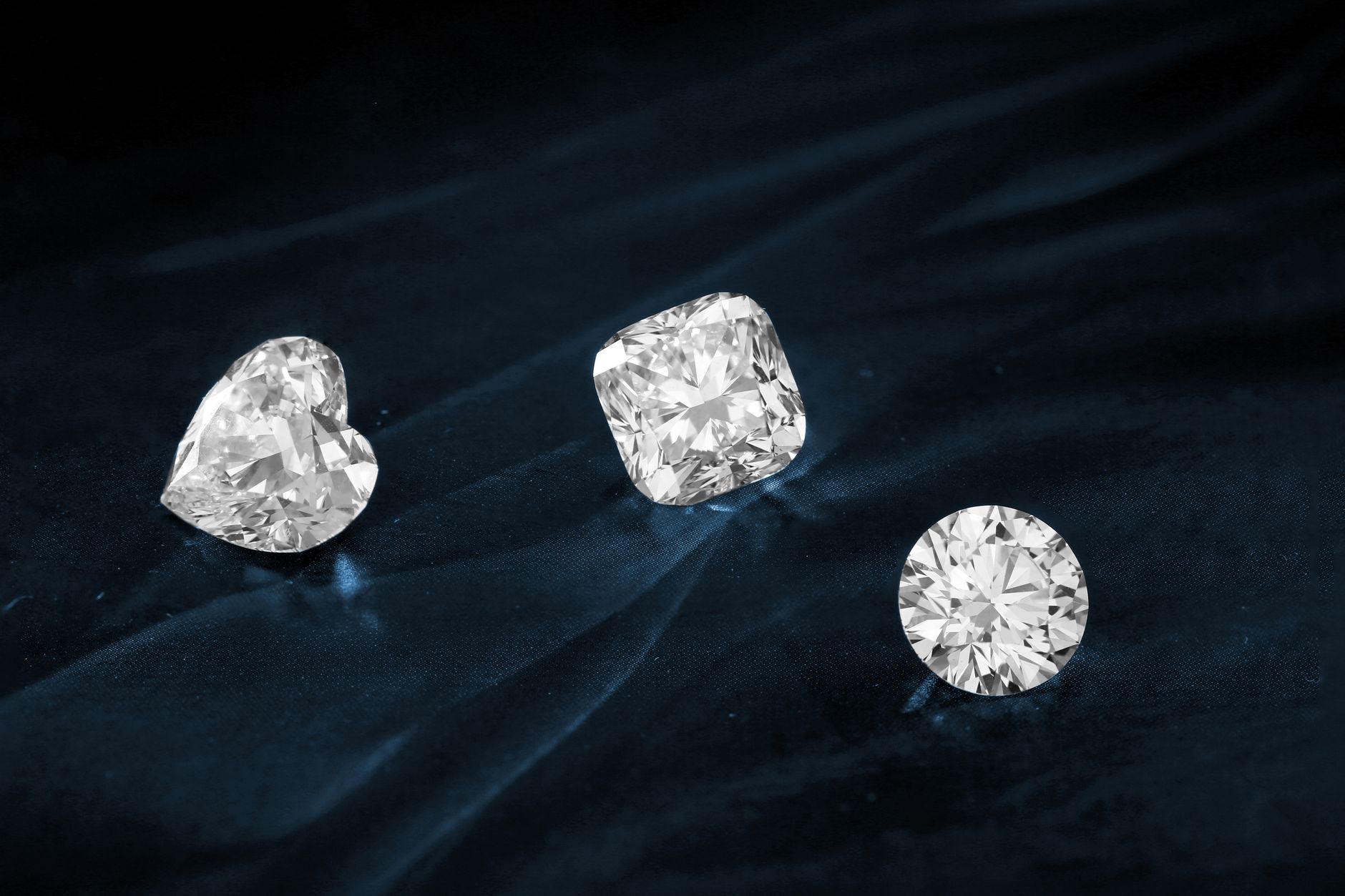
Different diamond shapes reveal inclusions differently. Round brilliant diamonds often hide small inclusions better because their facet pattern creates a lot of sparkle. Step cuts such as emerald and Asscher tend to show more of the stone’s interior because they have open, mirror-like facets.
That means an SI1 that looks eye clean in a round diamond might be easier to spot in an emerald cut. Buyers comparing shapes should adjust clarity expectations accordingly.
How Inclusions Affect Value
Clarity impacts price, but not always in a way that matches the visual difference. This is one of the main reasons clarity education matters. A tiny improvement on paper can lead to a noticeable jump in cost.
In lab grown diamonds, clarity often becomes part of a broader value discussion. Buyers want to know whether they are paying for something they can see or simply for a better report grade.
When paying more makes sense
Paying more for clarity makes sense when the higher grade produces a clear visual benefit, when the inclusion in the lower-grade diamond is visible, or when the lower-grade stone has a durability concern. It can also make sense if you are buying a shape that shows inclusions more readily, like an emerald cut.
Some buyers also prefer higher clarity for peace of mind. If knowing the diamond is near-flawless adds confidence, that preference is valid, even if the visible difference is small.
When the premium may not be worth it
If two diamonds look the same to the naked eye and one costs significantly more because it is VVS rather than VS, the premium may not deliver enough practical benefit for many buyers. This is a common point where experienced shoppers decide to spend more on cut, size, or setting instead.
In many cases, an eye-clean VS2 or SI1 can be a stronger value than a higher-clarity stone with no visible improvement in everyday viewing. That is especially true for lab grown diamonds, where budget efficiency often matters more than collecting a top clarity grade.
Which clarity grades often offer good value
There is no universal best clarity grade, but many buyers find strong value in VS2 and SI1, provided the stone is eye clean and free of concerning inclusions. VS1 can also be a comfortable middle ground for buyers who want a little extra assurance.
VVS grades are excellent from a technical perspective, but they may be more than most everyday buyers need. If your priority is visual beauty rather than top-tier grading, you may get better value by focusing on cut and eye-clean appearance.
Practical Examples Buyers Often Face
VS2 versus SI1 in normal viewing conditions
A VS2 and an SI1 can look very similar in person if both are eye clean. The real difference may only show under magnification, where the VS2 tends to have smaller or less obvious inclusions. In a ring worn daily, many buyers would not notice a visual difference at all.
If the SI1 has a well-placed, small inclusion and the VS2 is noticeably more expensive, the SI1 may be the better value. If the SI1 has a dark inclusion in the center, the VS2 may be worth the upgrade. The grade alone is not enough to decide.
Eye-clean SI1 versus non-eye-clean SI1
Not all SI1 diamonds are the same. Some are clean-looking in normal viewing, while others have inclusions that are easy to see. This is one of the biggest misconceptions among first-time buyers.
An eye-clean SI1 can be a smart value choice. A non-eye-clean SI1 may still be acceptable in some cases, but only if the price reflects the inclusion and the buyer is comfortable seeing the feature in the stone.
VVS clarity versus VS clarity for everyday wear
For everyday wear, VVS clarity usually offers little visible advantage over a good VS diamond. Under magnification, the difference exists. In the real world, most people will not be able to tell them apart without tools.
If the VVS stone is substantially more expensive, the extra cost may not be justified unless the buyer wants a near-perfect report grade or is shopping for a highly specialized preference. For most engagement ring shoppers, VS clarity is often more practical.
Step-cut versus brilliant-cut examples
A VS2 emerald cut can sometimes reveal more than a VS2 round brilliant because emerald cuts are more open. Meanwhile, a round brilliant may hide tiny inclusions more easily because its sparkle is more dynamic.
This is why clarity should always be considered alongside diamond shape. The same grade can deliver a different real-world result depending on facet pattern and face-up appearance.
Do Lab Grown Diamonds Have Different Inclusions Than Natural Diamonds
Yes, the inclusion patterns can differ. Natural diamonds may show crystals, feathers, graining, and other features formed over geological time. Lab grown diamonds can show similar features, but they may also show growth-related characteristics linked to the production method.
For example, CVD diamonds may show twinning wisps or strain-related patterns, while HPHT diamonds may show metallic inclusions or other growth indicators. These are useful for gemologists and labs, but buyers usually only need to know whether the inclusions affect appearance or durability.
In practical terms, a lab grown diamond with inclusions is still a real diamond. The presence of inclusions does not make it less genuine. It simply means the stone should be evaluated like any other diamond, with attention to what can actually be seen and what matters during wear.
Advantages of Lab Grown Diamonds with Inclusions
There are some advantages to understanding and accepting inclusions in lab grown diamonds rather than chasing the highest clarity grade available.
- Better value, because you may spend less for a stone that looks just as clean to the eye.
- More size for the budget, since savings on clarity can sometimes be redirected toward carat weight or a better cut.
- Flexible buying options, because many lab grown diamonds with modest clarity grades still look attractive.
- Realistic expectations, which help buyers focus on the features they will actually notice every day.
For a lot of shoppers, that combination is more useful than paying for a grade that looks no different once the diamond is set.
Disadvantages and Trade-Offs
Inclusions also come with limitations, and buyers should understand them before making a decision.
- Visible flaws, if the inclusions are large, dark, or centrally placed.
- Possible durability concerns, especially with feathers, chips, cavities, or surface-reaching features.
- Greater need for inspection, since lower clarity grades can vary more from stone to stone.
- Less margin for error, because some diamonds with the same grade can look much better than others.
This is why buying by report grade alone is risky. A lower clarity grade is not automatically bad, but it should be reviewed more carefully.
Buying Considerations for Lab Grown Diamonds
Budget and priorities
If your budget is fixed, it often makes sense to prioritize the factors most visible in everyday wear. For many buyers, that means cut first, then eye-clean appearance, then carat size, and then the rest of the quality balance.
Clarity matters, but not always more than cut. A diamond with excellent cut and slightly lower clarity may look better than a higher-clarity stone with weak sparkle.
Inclusion location
Where an inclusion sits can matter as much as what it is. Inclusions near the center of the table are easier to notice than those close to the edge, especially in round and oval shapes.
If you are comparing two diamonds with the same clarity grade, always look at inclusion plots and magnified images if available. The report diagram can reveal whether the stone’s clarity features are likely to be visible face up.
Lab grown diamond considerations
Lab grown diamonds often give buyers the ability to choose a larger or higher quality-looking stone for the budget. That can make clarity trade-offs more flexible. Many shoppers are willing to accept a slightly lower clarity grade if it keeps the stone eye clean and lets them size up.
Still, not all lab grown diamonds are equal in appearance. Some may have growth-related clouds, strain, or other characteristics that affect visual quality even when the clarity grade sounds acceptable. It is smart to review images or videos whenever possible.
Certification and report review
A diamond grading report from a respected lab helps you understand the stone’s clarity, but it does not replace visual inspection. The report will list the grade and usually include a diagram of inclusions, which can be very helpful when comparing stones.
Look at the report in combination with magnified photos or videos. If a seller says the stone is eye clean, try to understand what that means in actual viewing terms. A trustworthy seller should be able to explain why the stone is considered clean to the eye.
Setting can help or hurt visibility
The setting can affect how much you notice an inclusion. A bezel or halo may hide portions of the diamond’s edges, while a prong setting leaves more of the stone visible. The shape and metal color can also influence the overall impression.
That said, do not rely on the setting to solve a clarity problem. If an inclusion is obvious in the loose stone, it is usually better to choose a cleaner diamond rather than hope the setting hides it.
Common Buyer Mistakes
Overpaying for invisible improvements
One of the most common mistakes is paying for a higher clarity grade even when the lower-grade diamond already looks clean to the eye. If the difference cannot be seen in normal wear, the extra cost may not be practical.
Many experienced buyers prefer to compare stones side by side and ask what they can actually see. That approach often leads to better value decisions.
Ignoring inclusion type
Another mistake is focusing only on the grade label and ignoring what kind of inclusions are present. A single feather may be more important than several tiny pinpoints if it affects durability. Likewise, a cloud can matter more than a crystal if it creates haze.
The inclusion type tells you whether the concern is mostly cosmetic or potentially structural. That distinction matters.
Assuming all SI diamonds look the same
SI diamonds vary widely. Some are eye clean and excellent value. Others have obvious inclusions. The grade tells you the stone is included, but not whether the inclusions are immediately visible.
That is why SI diamonds should be examined individually whenever possible. A good SI1 may be a smart purchase. A poor SI1 may not be.
Buying by grade label alone
Clarity grade is useful, but it is only one part of the picture. A visually clean VS2 can be better than a cloudy VVS2 if one stone looks brighter and cleaner in person. The report does not capture everything about how the diamond performs visually.
Experienced diamond shoppers tend to care about actual appearance more than prestige grade. That is often the more practical approach.
How Jewelers and Experienced Buyers Often Evaluate Clarity
Experienced jewelers typically look at three things first: whether the stone is eye clean, whether the inclusions are stable, and whether the clarity features affect brilliance or transparency. That approach is more practical than simply chasing the highest grade possible.
They also understand that a diamond’s visual performance depends on the whole stone, not just one line on a report. If the cut is strong and the inclusions are minor, the stone may be perfectly suitable even if it is not VVS or IF.
For many consumers, this perspective can be helpful. It shifts the question from “What is the highest clarity?” to “What clarity do I need for the way I plan to wear and view the diamond?”
Frequently Asked Questions
Do lab grown diamonds have less inclusions than natural diamonds?
Not always. Lab grown diamonds can have fewer visible inclusions in some cases, but they can also have their own growth-related features. What matters most is the individual diamond, not just whether it is lab grown or natural.
Can you see inclusions in a lab grown diamond without magnification?
Sometimes yes, sometimes no. Many lab grown diamonds in the VS range and some in the SI range are eye clean, meaning their inclusions are not visible without magnification. Lower clarity grades are more likely to show visible features.
What clarity grade is best for lab grown diamonds?
There is no single best grade for everyone. Many buyers find good value in VS2 or eye-clean SI1, while others prefer VS1 or higher for peace of mind. The right choice depends on budget, shape, and how visible the inclusions are.
Are inclusions in lab grown diamonds bad?
Not necessarily. Most diamonds have some type of inclusion. The important question is whether the inclusion affects appearance, transparency, or durability in a way that matters to you.
Can inclusions affect durability?
Yes, some can. Feathers, cavities, chips, and surface-reaching inclusions may create durability concerns depending on size and position. Many internal inclusions, such as small crystals or pinpoints, are not a structural problem.
Should I avoid SI clarity in lab grown diamonds?
No, not automatically. Some SI diamonds are excellent value and look eye clean. The key is to inspect the diamond carefully and make sure the inclusions are not obvious or damaging.
Is VVS clarity worth it in a lab grown diamond?
Sometimes, but often not from a visual standpoint. VVS clarity is excellent, yet the visible difference from a good VS diamond may be negligible for everyday wear. Whether it is worth the premium depends on personal preference and budget.
Does clarity matter more in certain diamond shapes?
Yes. Step cuts like emerald and Asscher usually show inclusions more easily than brilliant cuts like round or oval. That means clarity should be considered more carefully in open-facet shapes.
Conclusion
Lab grown diamonds do have inclusions, and that is completely normal. The practical question is not whether inclusions exist, but whether they are visible, whether they affect durability, and whether the price reflects the actual appearance of the stone.
For many buyers, the best approach is to focus on eye-clean appearance, inclusion type, and cut quality rather than chasing the highest clarity grade on paper. An eye-clean VS2 or SI1 can often deliver strong value, while VVS or IF clarity may offer little visible advantage for everyday wear.
When comparing lab grown diamonds, look at the report, the inclusion map, and any available photos or videos. That combination gives a far clearer picture than the grade alone and helps you choose a diamond that makes sense in real-world use.