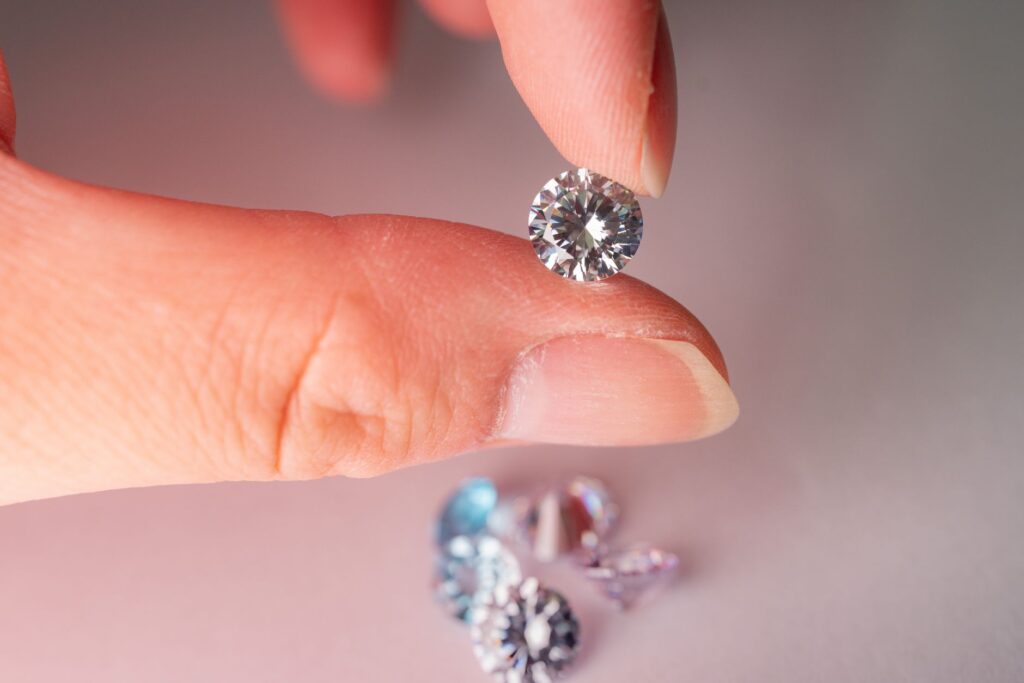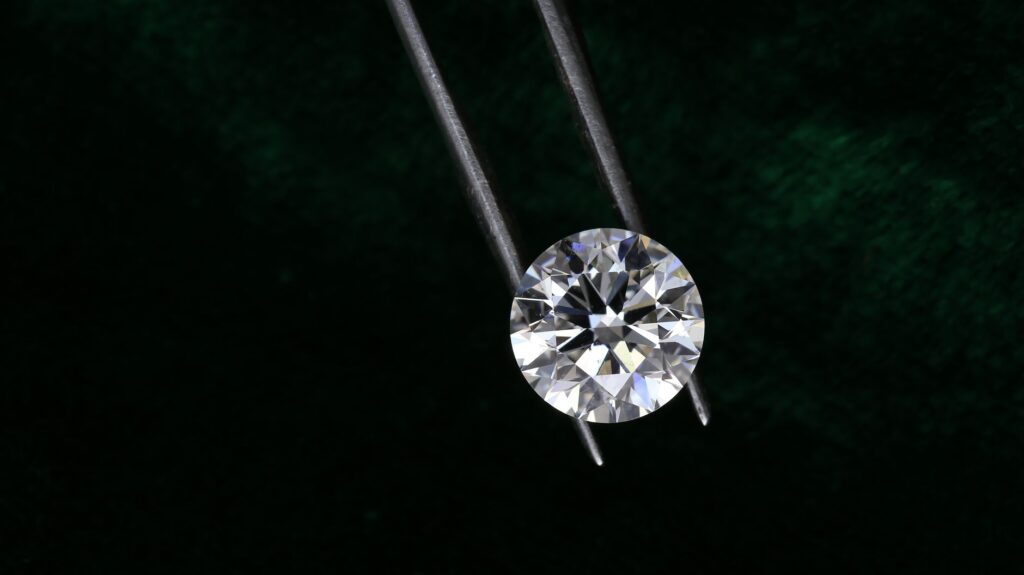
A hearts and arrows diamond is a round brilliant diamond that shows a very specific internal pattern when viewed with the right tools. The pattern is made up of eight hearts seen from the pavilion side and eight arrows seen from the face-up side. It is usually associated with precise cutting, strong symmetry, and highly consistent light performance.
For many buyers, the term sounds more technical than practical at first. In everyday terms, a hearts and arrows diamond is often one of the best examples of a well-cut round diamond, but the pattern itself is not the only thing that matters. What buyers usually care about is how the diamond looks in real life, including brightness, sparkle, and balance across the stone.
If you are comparing diamonds, understanding hearts and arrows can help you tell the difference between a stone that was simply cut to acceptable proportions and one that was cut with unusually careful alignment. That matters most in round diamonds, especially in engagement rings where cut quality has a major impact on appearance.
Quick Answer: What Is a Hearts and Arrows Diamond?
A hearts and arrows diamond is a round brilliant diamond with highly precise optical symmetry. When examined under magnification and specialized viewing conditions, it shows eight evenly shaped hearts from the pavilion view and eight evenly shaped arrows from the crown view.
This pattern is not a separate diamond shape or a marketing label for sparkle alone. It is a sign that the facets are aligned with unusual accuracy, which often contributes to excellent light return, attractive contrast, and a very crisp appearance.
That said, not every diamond with a hearts and arrows pattern is automatically superior to every other diamond, and not every buyer needs to pay extra for it. The value depends on the whole stone, the grading report, the price difference, and how much importance you place on top-tier visual precision.
What a Hearts and Arrows Pattern Actually Means
To understand hearts and arrows, it helps to know that a round brilliant diamond has a very specific facet arrangement. Those facets must be placed and angled carefully to control how light enters the diamond, bounces inside it, and returns to the viewer’s eye.
When the cutting is especially accurate, the diamond can display a symmetrical hearts pattern from one viewing angle and an arrows pattern from another. This is why the term is often used as a shorthand for precision cutting, even though the pattern itself is not the same thing as a grading category like cut grade, clarity, or color.
Why the Pattern Is Visible Only in Special Conditions
You cannot usually see hearts and arrows in a normal retail viewing without the right equipment. Jewelers typically use a hearts and arrows scope or an ideal scope to inspect the pattern. The image you see is partly a result of the diamond’s facet structure and partly a result of the viewing tool.
That means the pattern is useful as a diagnostic sign, but it is not something most buyers will inspect every day. What buyers usually notice more directly is the diamond’s overall sparkle, brightness, and balance.
Hearts and Arrows Is Mostly Relevant to Round Brilliant Diamonds
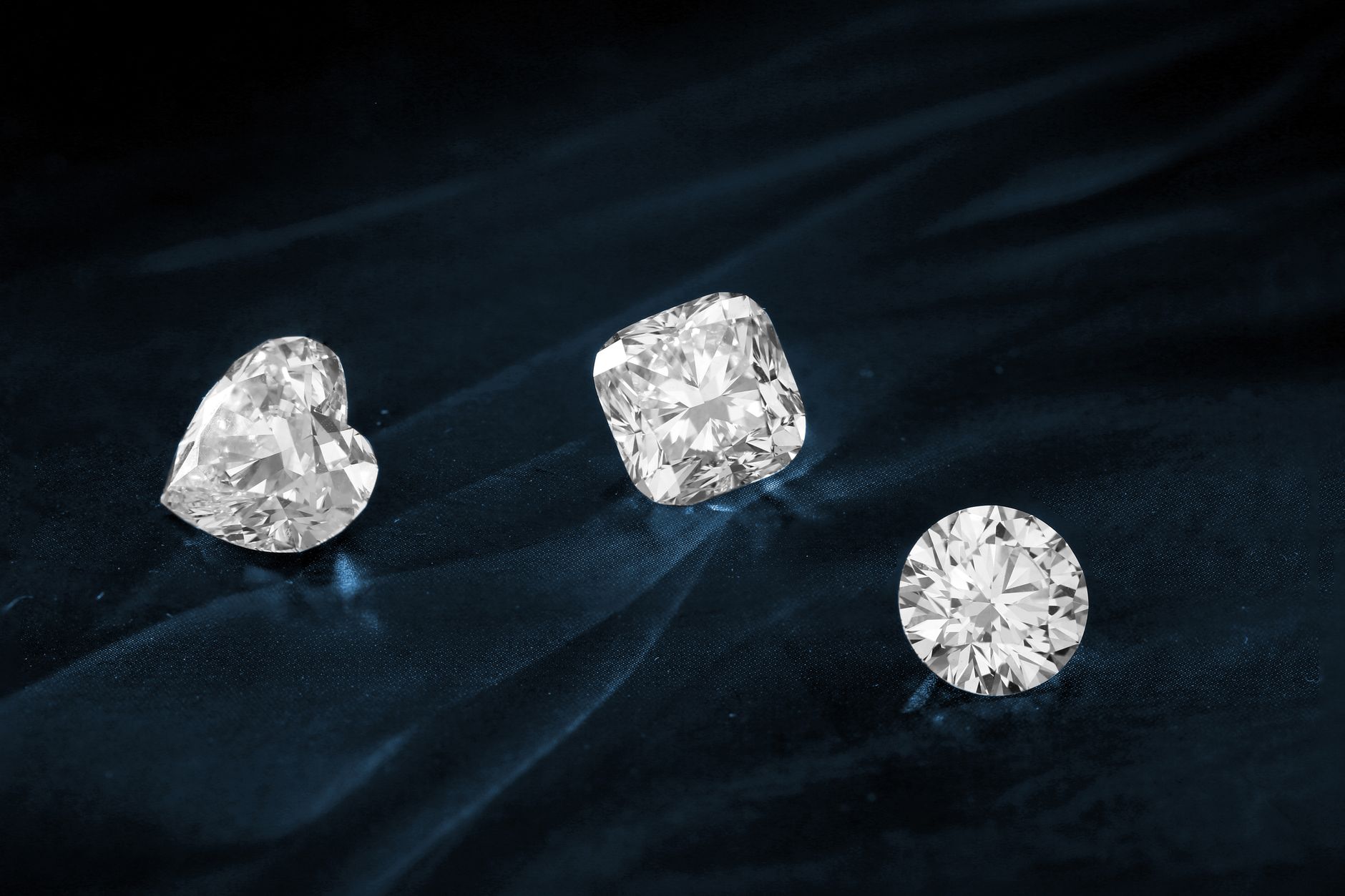
The pattern is most strongly associated with round brilliant diamonds because that shape has the facet architecture needed to produce it. Other shapes, such as princess, oval, emerald, cushion, and radiant, can have excellent symmetry and light performance, but they are not usually described as hearts and arrows diamonds in the same way.
If you are shopping for a different diamond shape, it is better to focus on the specific cut-quality factors that shape uses, rather than expecting a hearts and arrows pattern.
Why Hearts and Arrows Matters to Diamond Buyers
Hearts and arrows matters because it often signals careful craftsmanship. In a round brilliant diamond, precise facet alignment can improve the way the diamond handles light. That can translate into stronger brilliance, cleaner sparkle patterning, and a more balanced look across the stone.
For buyers, the practical question is not whether the pattern sounds impressive. The real question is whether the visible improvement justifies a higher price compared with a diamond that may still be excellent, but not as precisely cut.
Appearance Is the Main Benefit
The most important benefit is visual. A well-executed hearts and arrows diamond often looks very lively and symmetrical. Many people describe these diamonds as having a disciplined, even sparkle pattern, especially in round brilliant cuts.
That can matter if you want the most refined appearance possible and are comparing diamonds side by side. It matters less if you are simply looking for a beautiful diamond within a specific budget and are not focused on precision patterns.
It Can Reflect Strong Cut Quality, But It Is Not the Whole Story
Hearts and arrows is often associated with excellent cut quality, but it is not a complete quality system by itself. A diamond can show a recognizable pattern and still differ in color, clarity, size, brightness, or overall visual balance from another hearts and arrows stone.
In other words, hearts and arrows is one clue, not the final answer. Buyers should still review the grading report, cut grade, and actual appearance of the diamond.
How Hearts and Arrows Diamonds Are Evaluated
There are two different ideas at work here. One is the visible optical pattern, and the other is the underlying cutting precision that creates it. A diamond can only show hearts and arrows if its facets are arranged with high accuracy, but the pattern also depends on how the stone is observed.
Experts often look at symmetry, proportions, polish, and optical performance together. These factors help determine whether a diamond is merely well cut or truly exceptional in its alignment.
Symmetry
Symmetry refers to how precisely the diamond’s facets line up with one another. In a round brilliant diamond, symmetry affects the evenness of the sparkle pattern and the overall balance of the face-up view.
Why it matters: stronger symmetry usually improves the diamond’s visual harmony. Poor symmetry can create uneven reflections or make the stone appear less crisp.
What buyers see: a well-symmetrical diamond often looks cleaner and more structured, especially under direct lighting.
Polish
Polish refers to the smoothness of the diamond’s facet surfaces after cutting and finishing. A polished facet surface helps light travel efficiently through the stone.
Why it matters: polished facets can enhance brightness and reduce visual dullness. This contributes to the diamond’s overall liveliness.
What buyers see: usually not individual polish marks unless the diamond has a problem, but rather a cleaner, more polished visual effect overall.
Proportions
Proportions describe the relationship between key measurements such as table percentage, depth percentage, crown angle, and pavilion angle. These measurements affect how light moves through the diamond.
Why it matters: even a diamond with good symmetry can underperform if the proportions are off. Light can leak out the bottom or sides instead of returning to the viewer.
What buyers see: a diamond may look dark, watery, or less lively if proportions are not balanced well.
The Relationship Between Hearts and Arrows and Light Performance
Light performance is one of the most important reasons buyers care about cut quality. It refers to how well a diamond handles light in terms of brightness, sparkle, and contrast. Hearts and arrows diamonds often perform very well because their facets are aligned with unusual precision.
Still, it is important to separate the pattern from the result. The hearts and arrows image is a sign of precision, but the diamond’s real-world appearance is what ultimately matters.
Brilliance
Brilliance is the white light a diamond reflects back to the eye. In a well-cut hearts and arrows diamond, brilliance often appears strong and even across the face of the stone.
Buyers tend to notice brilliance first because it affects how bright the diamond appears in normal light. A diamond that returns light efficiently will often look more lively than a larger stone with weaker cut quality.
Fire
Fire is the colored flash you see when light splits inside the diamond. It is usually most visible in direct lighting, such as sunlight or spotlights.
Hearts and arrows diamonds can show attractive fire, but fire is not exclusive to them. Many well-cut diamonds can show plenty of fire, and the amount depends on proportions as much as on the hearts and arrows pattern itself.
Scintillation
Scintillation is the pattern of sparkle and contrast that appears as the diamond moves. This is what gives a diamond its lively “on and off” sparkle effect.
In a hearts and arrows diamond, scintillation is often very orderly and crisp. The facet pattern tends to create a refined sparkle pattern rather than a random one.
Light Return
Light return means how much light that enters the diamond is reflected back to the viewer. Strong light return is one of the hallmarks of a well-cut stone.
When light return is strong, the diamond appears brighter and more alive. When it is weak, the diamond may look dull or have dead zones where light is leaking out.
What Buyers Actually See in Everyday Lighting
Most buyers do not inspect diamonds under laboratory conditions. They see them in jewelry store lighting, office lighting, home lighting, and outdoor daylight. That makes it important to translate technical cut terms into practical appearance.
A hearts and arrows diamond often looks very crisp and balanced in these settings. The sparkle may appear more organized than in a diamond with less precise cutting. However, many buyers would not identify the hearts and arrows pattern itself unless they were told to look for it.
In Bright Store Lighting
Under strong lighting, a well-cut hearts and arrows diamond can show intense sparkle and sharp flashes. This is where the precise facet pattern can be especially noticeable.
At the same time, store lighting can make many diamonds look impressive, even those with mediocre cut quality. That is why a controlled comparison with similar lighting is more reliable than first impressions alone.
In Daylight
In daylight, buyers often see more of the diamond’s overall balance. A hearts and arrows diamond may look bright without appearing overly busy or washed out.
This is also where strong cut quality often becomes more obvious. Diamonds with poor proportions can lose brightness or show dark areas more easily in natural light.
In Everyday Indoor Lighting
In office or home lighting, a well-cut diamond may not look dramatically different at every moment, but it usually maintains its liveliness better. A poorly cut diamond can start to appear less sparkly as lighting conditions become less favorable.
For practical buyers, this consistency is valuable. It means the stone should look attractive in more places, not just under ideal showroom lighting.
Hearts and Arrows Versus Regular Excellent Cut Diamonds
Many buyers assume that hearts and arrows and excellent cut are the same thing. They are related, but not identical. Excellent cut is a grading category, while hearts and arrows describes a specific pattern and precision level.
Some excellent cut diamonds show strong hearts and arrows patterning. Others are excellent in terms of overall cut grade but do not show such a crisp pattern. The visible difference can be subtle or noticeable depending on the specific stones being compared.
| Feature | Hearts and Arrows Diamond | Typical Excellent Cut Diamond |
|---|---|---|
| Facet alignment | Very precise and highly symmetrical | Can be excellent, but less consistently precise |
| Pattern visibility | Shows defined hearts and arrows under special viewing | May not show the pattern clearly |
| Light performance | Often very strong | Often strong, but varies more |
| Real-world sparkle | Refined, crisp, balanced | Can also be excellent, depending on proportions |
| Price premium | Often higher | May be lower for similar size and grading |
For most buyers, the key takeaway is that a good excellent cut diamond can still look beautiful. The hearts and arrows pattern may add refinement, but it is not the only route to a visually pleasing diamond.
How Hearts and Arrows Affects Value
Value depends on what you are comparing. If a hearts and arrows diamond costs significantly more than a visually similar excellent cut diamond, the premium may or may not make sense depending on your priorities.
Some buyers are willing to pay more for precise craftsmanship and the confidence that comes with a highly controlled round brilliant. Other buyers prefer to allocate more of their budget toward size, color, or clarity, especially if the practical difference is small in everyday viewing.
When Paying More Can Make Sense
Paying a premium may be reasonable if you want the most refined round diamond appearance, especially in a center stone where cut quality is your top priority. It can also make sense if you value consistency and precision more than maximizing carat weight.
Hearts and arrows can be especially attractive to buyers who compare stones closely and care about exactness in face-up patterning. In those cases, the extra cost can feel justified by the visual and craftsmanship difference.
When the Premium May Be Less Justified
If the price jump is large, the value equation changes quickly. A buyer might gain only a subtle improvement while giving up more noticeable benefits such as larger size, better color, or a more favorable overall budget.
This is especially true when the diamond is being viewed in casual settings. Many people will notice a well-cut diamond’s beauty, but not necessarily the presence or absence of a hearts and arrows pattern.
Diminishing Returns Are Common
Cut quality often follows a diminishing returns curve. The jump from poor to good cut can be dramatic, while the jump from good to excellent, or from excellent to hearts and arrows precision, may be smaller and harder to notice without side-by-side comparison.
That does not mean the premium is never worthwhile. It means the buyer should understand what improvement is likely to be visible and what improvement is mainly technical.
Practical Examples Buyers Can Relate To
Real-life comparisons help explain why cut quality matters more than many first-time buyers expect. Below are a few examples that reflect common shopping situations.
A 1.5-Carat Well-Cut Diamond Versus a 2-Carat Poorly Cut Diamond
A larger diamond can sound like the better choice, but cut quality strongly affects how large it actually looks. A 1.5-carat diamond with excellent light return may face up brightly and appear lively, while a 2-carat diamond with poor proportions might look darker or less attractive.
In practice, many buyers remember the sparkle and overall appearance more than the carat number. The well-cut smaller stone can sometimes look more impressive because it performs better in real lighting.
Excellent Cut Versus Very Good Cut
The difference between excellent and very good cut can range from subtle to noticeable. In some diamonds, very good cut may still look highly attractive. In others, the reduction in light return or contrast can be easier to see.
For buyers comparing stones in person, a well-chosen very good cut can be a strong value. But if you are aiming for the most consistent top-tier appearance, excellent cut or a hearts and arrows diamond may be the safer choice.
Higher Clarity With Weak Cut Versus Lower Clarity With Strong Cut
Many buyers overfocus on clarity grades while underestimating cut. A slightly lower clarity diamond with excellent cut can often look more beautiful than a higher clarity diamond that returns less light.
This is because most inclusions are less noticeable than poor brightness or dullness, especially to untrained eyes. A diamond’s visual performance is usually driven more by cut than by small differences in clarity once the diamond is eye-clean.
Advantages of a Hearts and Arrows Diamond
- Strong symmetry: The facet alignment is typically very precise.
- Excellent light performance: These diamonds often return light efficiently.
- Refined sparkle pattern: The sparkle can look crisp and orderly.
- Consistent face-up appearance: The stone often looks balanced from the top.
- Helpful for comparison shoppers: It can be easier to identify a precision-cut round diamond.
Disadvantages and Trade-Offs
- Higher price: Precision cutting often costs more.
- Not always visibly dramatic: The improvement may be subtle without comparison.
- Special viewing needed: The hearts and arrows pattern is not normally visible to the naked eye.
- Not the only quality marker: Color, clarity, and overall cut still matter.
- Mostly relevant to round diamonds: It does not apply the same way to all shapes.
Lab Grown Diamond Considerations
Hearts and arrows is especially relevant in the lab grown diamond market because lab diamonds often offer strong value in higher cut categories. Since lab grown diamonds are typically less expensive than natural diamonds of similar size and appearance, buyers may be able to prioritize precision cutting more easily within budget.
That said, the same principles apply. A lab grown diamond still needs good cut, good proportions, and reliable certification. The fact that it is lab grown does not automatically mean it will show hearts and arrows, and it does not remove the need to evaluate the stone carefully.
Why It Can Be Easier to Choose Precision in Lab Grown Diamonds
Because lab grown diamonds often cost less than natural diamonds, buyers sometimes have more room to focus on cut quality without sacrificing as much carat weight. This can make a precision-cut round brilliant an attractive option for shoppers who want strong visual performance at a lower price point.
However, a lower price does not eliminate quality differences. Not all lab grown diamonds are cut equally well, and some still have proportions or symmetry that affect appearance.
Certification Still Matters
When buying a lab grown diamond, use the grading report as your foundation. A trusted report can confirm the basic characteristics of the diamond and help you compare stones fairly.
Hearts and arrows patterning may be discussed by the seller, but it should ideally be supported by measurable cut information and, when possible, light-performance images or symmetry assessments. If you are learning more about this category, it also helps to understand diamond certifications and how they describe cut quality.
Common Buyer Mistakes With Hearts and Arrows Diamonds
Prioritizing Carat Over Cut
One of the most common mistakes is choosing size first and cut second. A larger diamond with weaker cut quality can look less attractive than a smaller diamond with excellent light performance.
This is especially important in round brilliant diamonds, where cut has a major effect on how large and lively the stone appears.
Assuming All Sparkle Is the Same
Not all sparkle is equal. Some diamonds produce broad flashes, some produce smaller pinfire sparkle, and some simply look less lively because light is leaking out.
A hearts and arrows diamond often has a more structured sparkle pattern, but buyers should still judge the overall beauty rather than assuming every sparkly diamond is performing well.
Ignoring the Grading Report
A pattern alone should not replace documentation. The grading report helps verify important details such as cut-related proportions, color, clarity, and carat weight.
Without a report, it is harder to know whether the diamond’s appearance is supported by reliable quality information.
Overpaying for a Feature You Cannot See
Some buyers pay a premium for hearts and arrows because the term sounds premium, even if they do not actually care about precise pattern symmetry. That can be a poor use of budget if the price difference is significant and the visual improvement will be hard to notice in normal viewing.
If you will never inspect the pattern and mostly care about how the ring looks on the hand, a non-H&A diamond with excellent performance may be the smarter choice.
How to Shop for a Hearts and Arrows Diamond
If you are considering a hearts and arrows diamond, focus on the total package rather than the label alone. A strong grading report, excellent light performance, and an appealing size and color balance matter as much as the pattern.
Look at the Right Information
Helpful information includes the grading report, cut grade, table percentage, depth percentage, and any available optical images. These details help you understand whether the diamond is truly well cut or simply marketed that way.
When available, hearts and arrows imagery, idealscope, or ASET images can help show how the diamond handles light. These tools are useful because they reveal performance that may not be obvious from a listing photo.
Compare Diamonds Side by Side
The easiest way to understand hearts and arrows is to compare it with a well-cut diamond that does not show the same level of pattern precision. Side-by-side viewing often reveals whether the difference is obvious to you or only meaningful on paper.
Some shoppers notice the crispness immediately. Others see little difference and prefer to spend elsewhere in the budget.
Think About the Whole Ring
The center stone is only part of the final look. Setting style, metal color, finger size, and ring design all influence how the diamond appears.
If the setting is busy or the ring will be viewed from a distance most of the time, the subtle advantages of a hearts and arrows diamond may matter less than they would in a minimal solitaire setting.
What Experienced Jewelers Often Notice
Experienced jewelers often look at how the diamond’s pattern holds together under magnification and how evenly it returns light across the face. They may also notice whether the contrast pattern feels balanced, whether the stone has any dead areas, and how the facets behave in motion.
In practical terms, they are asking whether the diamond looks disciplined and alive, not just bright. That distinction matters because some stones create lots of flash but still have uneven performance.
Many experienced buyers learn to look for the same qualities. They may not need to understand every technical measurement, but they do learn to ask whether the diamond looks crisp, evenly lit, and attractive in everyday conditions.
Frequently Asked Questions
Is a hearts and arrows diamond always the best diamond?
Not always. It is often an excellent round diamond, but the best diamond for a buyer depends on budget, size preference, color preference, and overall visual priorities. Some buyers will value the pattern highly, while others may not.
Can you see hearts and arrows with the naked eye?
Usually no. The pattern is typically visible only with magnification and a special viewer. What you can see more easily is the diamond’s sparkle, brightness, and symmetry.
Does hearts and arrows mean the diamond is more sparkly?
Often it means the diamond has very precise cutting, which can improve sparkle and light return. But sparkle also depends on proportions and lighting, so the pattern alone does not guarantee the most dramatic appearance in every situation.
Are all excellent cut diamonds hearts and arrows diamonds?
No. Some excellent cut diamonds do show hearts and arrows patterning, but many do not. Excellent cut describes a grading level, while hearts and arrows describes a more specific optical pattern.
Is a hearts and arrows diamond worth the extra money?
It can be, if you value precision cutting and the price difference is reasonable. If the premium is large, you should compare the stone against other well-cut options to see whether the improvement is actually visible to you.
Does hearts and arrows matter in lab grown diamonds?
Yes, especially because lab grown diamonds can offer strong value at higher cut standards. The same principles apply, though. You still want to evaluate cut, symmetry, proportions, and certification.
Is hearts and arrows only for round diamonds?
It is most commonly associated with round brilliant diamonds. Other shapes can have excellent cut quality, but the hearts and arrows pattern is not usually used in the same way for them.
Should I choose hearts and arrows over a larger diamond?
If your priority is beauty and light performance, a smaller hearts and arrows diamond may be more impressive than a larger diamond with weaker cut. If size matters more to you than precision, a larger diamond may be the better fit. The right answer depends on your personal priorities.
Conclusion
A hearts and arrows diamond is a round brilliant diamond with highly precise facet alignment that creates a distinct hearts pattern from one view and an arrows pattern from another. For buyers, the main significance is not the pattern itself, but what it often says about the diamond’s cut quality and light performance.
In real-world viewing, a good hearts and arrows diamond often looks bright, crisp, and balanced. Still, the visual difference can be subtle compared with other factors such as carat weight, color, and price. That is why it is best treated as one part of the buying decision, not the only one.
If you are shopping for a diamond, focus on how the stone looks in actual lighting, how it is graded, and whether the premium makes sense for your budget. A well-cut diamond that fits your priorities will usually be a better choice than a technically impressive diamond that stretches the budget without offering visible benefit.