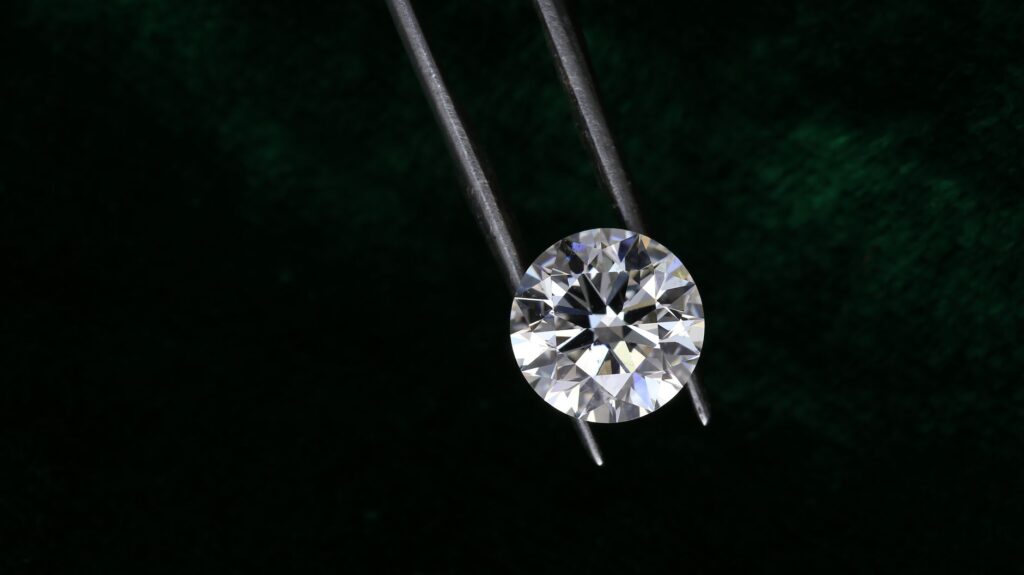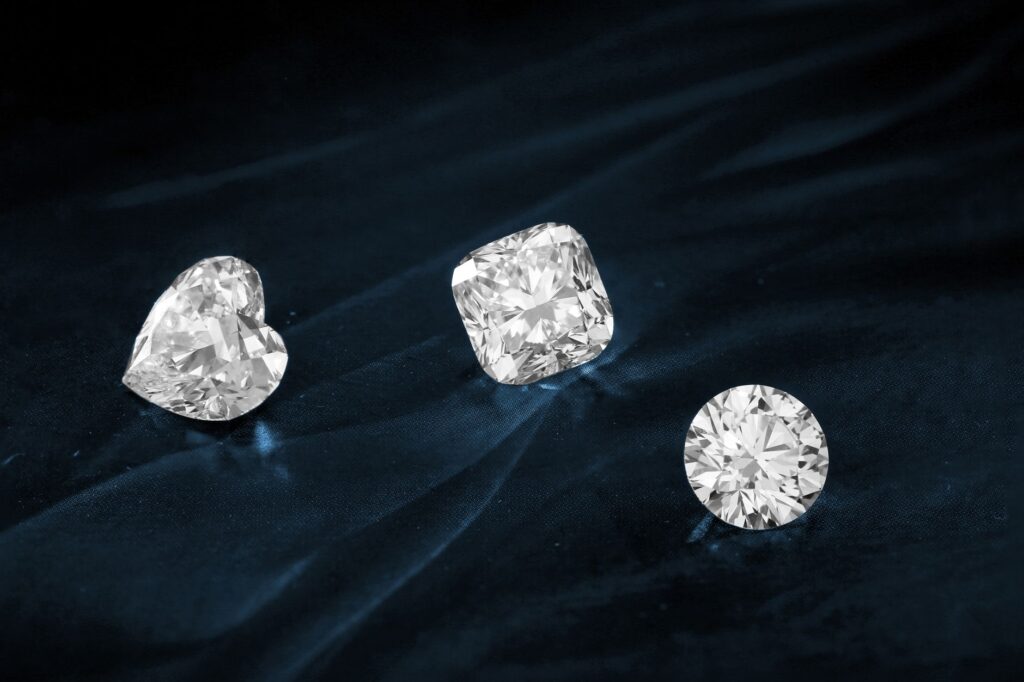
When buyers compare Hearts and Arrows vs Excellent Cut Diamonds, the real question is usually whether the label changes how the diamond looks in everyday wear. In most cases, both can be beautiful. The difference is that Hearts and Arrows refers to a very specific pattern of optical symmetry in round brilliant diamonds, while Excellent cut is a broader grading category used by major labs such as GIA.
That distinction matters because cut has the greatest impact on a diamond’s sparkle, brightness, and overall face-up appeal. A diamond with outstanding cut can look lively and balanced even if its carat weight is modest. A diamond with weaker cut can look less impressive even when the paper specs seem stronger.
For shoppers, the practical question is not which term sounds more premium. It is whether the stone’s actual proportions, symmetry, polish, and light performance justify any price difference. This is especially relevant for lab grown diamonds, where buyers often have more room in the budget to choose between size and finer cut precision.
Quick Answer
Hearts and Arrows diamonds are usually a specialized subset of round brilliant diamonds with highly precise optical symmetry. Many of them also fall within an Excellent cut grade, but not every Excellent cut diamond is Hearts and Arrows. Put simply, Hearts and Arrows is a more specific pattern standard, while Excellent cut is a broader quality category.
For most buyers, both can look excellent in real-world viewing. The difference is often subtle unless the stones are compared side by side or viewed with tools that reveal the pattern. If you value precision and are comfortable paying more for it, Hearts and Arrows can be appealing. If you want strong beauty and better value, a carefully chosen Excellent cut diamond is often the smarter buy.
In practice, the best choice depends on your budget, your sensitivity to pattern precision, and how much you care about squeezing the last bit of refinement out of the cut. For many shoppers, the most important step is still the same: confirm the diamond has strong cut quality before worrying about the Hearts and Arrows label.
What Hearts and Arrows Means
Hearts and Arrows, often abbreviated as H&A, refers to a pattern seen in some round brilliant diamonds when viewed through a special scope. From one angle, the stone shows arrow-like reflections. From another, it shows heart-like shapes. These patterns indicate very precise facet alignment and optical symmetry.
That does not mean the diamond automatically sparkles more in every situation. The pattern is a sign of cutting precision, not a guarantee of superior beauty all by itself. A Hearts and Arrows diamond can still vary in appearance depending on its proportions, color, clarity, and how well the overall cut design handles light.
It is also important to know that Hearts and Arrows is not a universal grading term used by every lab. It is more of a descriptive optical standard, and different sellers may use it differently. That is why buyers should ask how the pattern was verified and whether the seller has reliable imagery or documentation to support the claim.
Why Hearts and Arrows Matters
The appeal of Hearts and Arrows is precision. When the faceting is aligned very accurately, the diamond can show a crisp, orderly visual pattern that many experienced buyers find attractive. It often suggests careful craftsmanship and a high level of consistency in the cutting process.
Still, the pattern is only one part of the buying decision. A diamond can show Hearts and Arrows and still be less desirable if its color, clarity, or proportions are not well balanced. Likewise, a diamond without the H&A pattern can still be a beautiful, high-performing stone if the cut is strong.
What Excellent Cut Means
Excellent cut is a top grading category used by major laboratories to describe diamonds that fall within a very high-performing range of proportions, polish, and symmetry. In plain English, it means the diamond is cut very well according to the lab’s standards. For round brilliant diamonds, this is one of the most important indicators of visual quality.
Excellent cut does not mean every diamond in the category looks identical. Two Excellent cut diamonds can differ in table size, depth, crown angle, pavilion angle, and facet precision. One may perform closer to top-tier light performance, while another may simply meet the Excellent threshold without looking quite as refined.
That is why buyers should not assume the grade alone tells the full story. The label is useful, but it is broad. A carefully chosen Excellent cut diamond can be outstanding, while another Excellent cut stone may look less lively face-up.
What Buyers Actually See
In everyday viewing, a strong Excellent cut diamond should look bright, lively, and balanced. It should return light efficiently and avoid obvious dull zones or washed-out areas. Most buyers can tell when a diamond looks well cut, even if they cannot explain the gemological reason.
What many buyers cannot easily detect is the difference between a top-performing Excellent cut diamond and a Hearts and Arrows diamond unless they compare them directly. That is why the supporting details matter more than the marketing term.
Hearts and Arrows vs Excellent Cut Diamonds: The Core Difference
The simplest way to think about this comparison is: Excellent cut is a broad quality grade, while Hearts and Arrows is a more specialized optical pattern that usually reflects very precise facet symmetry. Some Hearts and Arrows diamonds are also Excellent cut. Some Excellent cut diamonds are not Hearts and Arrows.
It is a little like comparing a high-quality car trim level with a more specific engineering package. Both can be excellent, but one meets a tighter and more specialized benchmark. In diamonds, that tighter benchmark may create a more organized pattern and a slightly more refined visual impression.
The practical question is whether that added precision creates a visible improvement worth the price. Sometimes it does. Sometimes the premium is better spent on a slightly larger diamond, a better color grade, or cleaner clarity, depending on the buyer’s priorities.
How Hearts and Arrows Relate to Diamond Cut
Diamond cut is the quality factor that most strongly influences sparkle in a round brilliant diamond. It affects how efficiently the stone handles light, which in turn influences brilliance, fire, scintillation, and overall face-up appearance.
Hearts and Arrows is closely related to cut because it reflects how precisely the facets are aligned. When the cutting is exceptionally consistent, the reflected pattern tends to look cleaner and more organized. However, a diamond can still show an H&A pattern and yet not have the ideal proportions for the best possible light return.
That is why experienced shoppers do not rely on Hearts and Arrows alone. They also look at cut grade, proportions, optical performance, and the credibility of the grading report.
What Is Optical Symmetry?
Optical symmetry describes how precisely the diamond’s facets line up in its internal reflected pattern. It is different from basic face-up symmetry, which is more about how even the stone looks when viewed from the top. Optical symmetry is about the pattern created by the facets and how neatly those reflections are arranged.
For buyers, optical symmetry matters because it can influence how crisp and orderly the diamond appears. In a Hearts and Arrows diamond, that precision is often very visible under the right conditions. In a non-H&A Excellent cut diamond, the stone can still be beautiful, but the pattern may be less exact.
What Is Light Performance?
Light performance is the diamond’s ability to return light to the eye. It includes brightness, contrast, and the balance between white light and colored flashes. A diamond with strong light performance tends to look lively and attractive in different lighting environments.
This concept matters because a diamond can look impressive on a grading report while still underperforming visually. Buyers should think about how the stone looks in normal conditions, not just under ideal showroom lighting.
How They Compare in Real Life
In a jewelry store, both a high-quality Hearts and Arrows diamond and a strong Excellent cut diamond can look impressive. The difference is usually not dramatic. The H&A stone may show a more organized pattern and a slightly more refined sense of balance, while the Excellent cut diamond can still offer strong brilliance and fire.
In everyday lighting, such as natural daylight, office lighting, and indoor home lighting, most buyers are more likely to notice overall liveliness than precise pattern symmetry. A diamond with good cut can appear brighter, cleaner, and more attractive than a larger diamond with weaker cut, even if the larger stone has more carat weight.
This is one reason many jewelers emphasize cut first. Once a diamond has strong cut quality, the remaining differences are often subtle refinements rather than major visual changes.
Side-by-Side Comparison
| Factor | Hearts and Arrows | Excellent Cut |
|---|---|---|
| Definition | A specialized optical symmetry pattern seen in certain round brilliant diamonds | A broad top-tier cut grade from a major laboratory |
| Sparkle | Often very strong and highly organized | Can also be excellent, but quality varies more within the category |
| Brilliance | Usually high when proportions are strong | Usually high when proportions are strong |
| Fire | Can be excellent if the cut design is well balanced | Can be excellent if the cut design is well balanced |
| Pattern precision | Typically tighter and more consistent | May be very good, but not always pattern-perfect |
| Visibility of difference | Usually subtle unless compared directly or viewed with tools | Usually subtle unless compared directly or viewed with tools |
| Value | Often carries a premium | Often offers better value for money |
| Best fit | Buyers who value precision and are willing to pay extra | Buyers who want strong beauty with more budget flexibility |
What Actually Creates Sparkle, Brilliance, and Fire
Shoppers often use sparkle as a catch-all word, but diamond professionals break it into separate components. Brilliance is the return of white light. Fire is the colored flash created when white light disperses into spectral colors. Scintillation is the pattern of flashes and contrast you see when the diamond moves.
Cut quality affects all three. A well-cut diamond returns light more efficiently, which makes it appear brighter and more lively. It also creates the right balance of bright and dark areas so the stone looks crisp rather than flat.
Hearts and Arrows diamonds often have especially neat scintillation because the facet pattern is so precise. Excellent cut diamonds can also have very strong sparkle, especially when proportions are well balanced. In real life, the difference is usually refinement, not a night-and-day change.
Brightness Versus Sparkle
Brightness is not the same thing as sparkle. A diamond can look bright in a white room but still lack dynamic flashes. Another diamond may show more contrast and movement, which makes it feel more lively even if it does not appear uniformly bright from every angle.
This is why buyers should be careful about judging cut only under intense store spotlights. Those lights can make many diamonds look impressive. The better test is how the diamond looks as you move it in normal light, because that is where cut quality becomes more obvious.
Face-Up Appearance
Face-up appearance means how the diamond looks when viewed from the top in its normal wearing position. That matters because this is how most people see an engagement ring or pendant most of the time. A diamond with strong face-up appearance can seem larger, cleaner, and more balanced than a stone with the same carat weight but weaker cut.
Hearts and Arrows patterning can support a polished face-up look. Excellent cut can too. The deciding factor is usually whether the diamond has strong proportions and minimal light leakage.
What Is Light Leakage?
Light leakage happens when light passes through the diamond instead of being returned to the viewer’s eye. In practical terms, this can make a stone look less bright or create dull-looking areas. Leakage is more likely when proportions are off or when the cut is not optimized for light return.
Buyers do not usually see the term itself. They see the result. The diamond may look less lively, less crisp, or slightly washed out in some areas. This is one reason a smaller well-cut diamond can look more appealing than a larger poorly cut stone.
Hearts and Arrows diamonds often have excellent symmetry, which can help reduce unevenness in the pattern. But the H&A label by itself does not guarantee ideal light performance. The actual proportions still matter.
Why Hearts and Arrows Often Costs More
Hearts and Arrows diamonds often carry a premium because they usually require tighter cutting tolerances, more consistency, and sometimes more loss of rough material during cutting. Achieving that level of precision can take extra planning and labor, which increases cost.
There is also a market premium. Some buyers actively search for H&A diamonds, and sellers may price accordingly. In some cases, the premium reflects genuinely superior craftsmanship. In others, it may be influenced more by branding and scarcity than by a clearly visible improvement.
For shoppers, the important question is whether the premium produces a meaningful visual benefit. If the difference is difficult to see without special tools, some buyers may prefer to direct that money toward size, color, or clarity instead.
When Paying More Makes Sense
Paying extra for Hearts and Arrows can make sense if you care deeply about precision and want a diamond with highly refined optical symmetry. Some buyers simply enjoy knowing that their diamond meets a more exacting standard. That preference is reasonable, especially for a center stone that will be seen often.
The premium can also be justified if the price difference is modest. If a Hearts and Arrows diamond costs only slightly more than a comparable Excellent cut diamond, the extra precision may be worth it for buyers who want top-tier patterning.
Another situation where H&A can make sense is when you are comparing several diamonds with similar size, color, and clarity. In that case, cut precision may become the deciding factor.
When the Premium May Not Be Worth It
If the price increase is large, the value case becomes weaker. Many buyers will not notice a dramatic difference in daily wear. In that situation, it may be smarter to choose a very strong Excellent cut diamond and use the savings on a better size, color, or clarity balance.
For example, a buyer may prefer a slightly larger Excellent cut diamond over a smaller Hearts and Arrows diamond with a significant premium. That trade-off is especially common for shoppers who care most about how large the diamond looks on the hand.
Practical Buyer Scenarios
A Well-Cut 1.5-Carat Diamond Versus a Poorly Cut 2-Carat Diamond
This is one of the clearest examples of why cut matters. A well-cut 1.5-carat diamond can look brighter, livelier, and more attractive than a poorly cut 2-carat diamond. Even though the larger stone has more weight, weak cut can make it appear duller or less balanced.
Many first-time buyers assume carat weight is the most important factor. In reality, visible beauty often depends more on cut than on size alone. Once a diamond begins to leak light or lose symmetry, the visual advantage of extra carat weight can shrink quickly.
Excellent Cut Versus Very Good Cut in Everyday Lighting
The difference between Excellent and Very Good can be subtle or noticeable depending on the specific stone. Some Very Good cut diamonds are close to Excellent and may still look great. Others may show a more obvious drop in brilliance, contrast, or face-up balance.
In casual viewing, many people can see the difference if the stones are compared side by side. If they are viewed separately, the gap may be harder to identify. That is why the cut grade should be treated as a starting point, not the final answer.
Higher Clarity with Poor Cut Versus Lower Clarity with Excellent Cut
This is another common trade-off. A high-clarity diamond with poor cut may still look less attractive than a slightly lower-clarity diamond with excellent cut, especially if the clarity difference is not visible to the naked eye. Sparkle and light return usually have a stronger effect on overall beauty than tiny clarity distinctions most buyers cannot see.
For many shoppers, a diamond with Excellent cut and eye-clean clarity is the better everyday choice. That is particularly true for engagement rings, where the stone is usually viewed from a normal distance rather than under magnification.
How Lab Grown Diamonds Fit Into the Comparison
Lab grown diamonds can be cut to the same standards as natural diamonds. That means you can find both Hearts and Arrows and Excellent cut lab grown diamonds. Because lab grown rough can sometimes be more predictable, manufacturers may have more opportunity to produce highly precise cuts, although the final result still depends on the cutter’s choices.
For buyers comparing lab grown diamonds, cut quality is just as important as it is with natural diamonds. Since lab grown stones often cost less at a given size, some shoppers use the savings to prioritize better cut precision. That can be a practical way to improve overall appearance.
The same caution still applies. A lab grown diamond with an H&A label is not automatically better than an Excellent cut stone without the pattern. Buyers should still review the grading report, proportions, and visual evidence before making a decision.
Certification Matters
Always review the grading report. For round brilliants, respected labs provide useful information on cut, polish, symmetry, and proportions. In some cases, Hearts and Arrows claims come from the seller rather than the lab, so documentation should be checked carefully.
This matters even more with lab grown diamonds, where pricing can vary widely. If two diamonds look similar on paper, the one with better verified optical performance may be the better value.
Common Buyer Mistakes
- Prioritizing carat over cut. Bigger does not always look better if the diamond is poorly proportioned.
- Assuming all Excellent cut diamonds are equal. The grade is broad, so visual performance can still vary.
- Overpaying for Hearts and Arrows without checking the rest of the specs. Pattern precision alone does not guarantee the best value.
- Ignoring light performance. A diamond should look attractive in normal lighting, not just under a spotlight.
- Confusing symmetry with sparkle. Symmetry supports beauty, but it is not the same as overall brilliance.
- Skipping the report details. Table percentage, depth percentage, crown angle, and pavilion angle all influence appearance.
- Assuming the most impressive-sounding label is the best choice. The stone that looks best is not always the one with the flashiest terminology.
Cut Details Buyers Should Know
Table Percentage
The table is the large top facet of a diamond, and table percentage measures its size relative to the stone’s width. It influences how light moves through and returns from the diamond. A very large table can sometimes reduce fire, while a very small table can change the stone’s overall look and style.
Buyers do not need to memorize ideal percentages, but it helps to understand that table size is one reason two Excellent cut diamonds can look different. The number on the report is only meaningful when considered with the other proportions.
Depth Percentage
Depth percentage measures how deep the diamond is relative to its width. If a diamond is too deep, some of its weight sits below the top, which can make it look smaller for its carat weight. If it is too shallow, the stone may leak light or appear less lively.
This is one of the clearest examples of how cut affects value. A diamond that faces up well can look more impressive than a heavier stone that uses its weight inefficiently.
Symmetry and Polish
Symmetry refers to how even and aligned the facets are. Polish refers to how smooth and clean the facet surfaces are after cutting. Both matter because they influence how cleanly light enters, reflects, and exits the diamond.
For most buyers, the difference between Very Good and Excellent polish or symmetry is subtle, but it can contribute to the overall quality of the stone. In Hearts and Arrows diamonds, symmetry is often the reason the pattern looks so crisp and balanced.
Advantages of Hearts and Arrows Diamonds
- Usually show very precise optical symmetry
- Can have highly organized face-up patterning
- Often appeal to buyers who appreciate technical precision
- May reflect careful craftsmanship in round brilliant cuts
- Can be satisfying for shoppers who want a top-tier cut experience
Limitations of Hearts and Arrows Diamonds
- Usually cost more than comparable Excellent cut diamonds
- The visible difference may be subtle for many buyers
- Do not automatically guarantee the best overall diamond
- Apply mainly to round brilliant diamonds
- Some sellers use the term loosely, so verification is important
Advantages of Excellent Cut Diamonds
- Often deliver strong brilliance, fire, and scintillation
- Offer more price flexibility than a specialized H&A stone
- Can look beautiful in everyday conditions
- Allow more budget room for size, color, or clarity choices
- Are widely available across many inventory levels
Limitations of Excellent Cut Diamonds
- Not every stone in the grade looks equally good
- Some are technically Excellent but less visually refined
- The broad category can make comparison shopping more difficult
- Not every Excellent cut diamond shows Hearts and Arrows patterning
What Experienced Jewelers Often Look For
Experienced jewelers and diamond consultants usually look beyond the lab grade. They check how the diamond performs in motion, whether the face-up appearance is balanced, and whether there are obvious dark zones or washed-out areas. They also pay attention to whether the diamond seems to face up larger or smaller than expected for its carat weight.
When imaging is available, they may use it to evaluate light return and symmetry more clearly. In the case of Hearts and Arrows, they will often verify whether the pattern is actually clean and consistent rather than accepting a sales description at face value.
This practical approach helps buyers because it shifts the focus from labels to appearance. A diamond is worn on the hand, not in a report.
How to Shop Smartly
When comparing Hearts and Arrows vs Excellent cut diamonds, start with the essentials. Confirm that the diamond has a credible grading report. Review the cut grade, proportions, symmetry, and polish. If you have access to magnified imagery or optical performance information, use it as a supporting tool rather than a replacement for your own visual judgment.
For round brilliant diamonds, cut quality should usually be your first priority. After that, decide whether the Hearts and Arrows premium is worthwhile based on your budget and how much you value precision. If the premium is not justified, a very strong Excellent cut diamond may offer the better overall value.
Also keep the full ring in mind. Setting style, metal color, and diamond size all affect the final look. A diamond with excellent cut can still be underappreciated if the design does not suit the wearer’s preferences.
A Simple Buying Framework
- First: choose a respected certification and strong cut quality
- Second: compare visual performance, not only the grade label
- Third: decide whether Hearts and Arrows precision is worth the premium
- Fourth: balance cut with color, clarity, carat, and budget
Frequently Asked Questions
Is Hearts and Arrows better than Excellent cut?
Not automatically. Hearts and Arrows usually means more precise optical symmetry, but Excellent cut is already a high-quality grade. The visible difference is often subtle. Whether H&A is better depends on the specific diamond and the premium you are paying.
Can an Excellent cut diamond be Hearts and Arrows?
Yes. Many Hearts and Arrows diamonds also receive Excellent cut grades from major labs. The reverse is not always true, because Excellent cut is broader and does not require the same pattern precision.
Will I see the difference without special tools?
Sometimes, but not always. In side-by-side comparisons, a Hearts and Arrows diamond may look a little more refined. Viewed separately, many buyers simply notice that both stones look beautiful, especially if both are well cut.
Does Hearts and Arrows mean more sparkle?
It can support strong sparkle, but it does not guarantee more sparkle in every case. Sparkle depends on the full cut design, proportions, and how the diamond handles light. The pattern is a sign of precision, not the sparkle itself.
Is a Hearts and Arrows diamond worth the extra cost?
It can be, if you value symmetry, craftsmanship, and precision enough to justify the premium. If the price increase is significant, many buyers will get better overall value from an Excellent cut diamond with strong proportions.
Do these terms apply to all diamond shapes?
No. Hearts and Arrows is primarily associated with round brilliant diamonds. Other shapes are judged using different cut considerations and do not usually use the same pattern standard.
Should I choose cut over carat?
In most cases, yes. A well-cut diamond usually looks more attractive than a larger but poorly cut one. Cut has a strong effect on how big, bright, and lively the diamond appears.
Does this matter for lab grown diamonds too?
Absolutely. Lab grown diamonds follow the same optical principles as natural diamonds. Cut quality affects beauty the same way, so the comparison between Hearts and Arrows and Excellent cut is still relevant.
Conclusion
Hearts and Arrows vs Excellent Cut Diamonds is not a simple matter of good versus better. It is a comparison between a highly precise optical pattern standard and a broader top-tier cut grade. Both can produce beautiful diamonds, but they serve slightly different buyer priorities.
If you want the most exact symmetry and enjoy knowing your diamond has a highly refined optical pattern, Hearts and Arrows may be worth the premium. If you want strong beauty and more flexibility on price, a carefully chosen Excellent cut diamond often delivers excellent value.
The most important takeaway is to focus on what you can actually see. Prioritize cut quality, evaluate light performance, and make sure the diamond looks lively in real-world conditions. When you do that, you are much more likely to choose a stone that looks impressive every day, not just on paper.