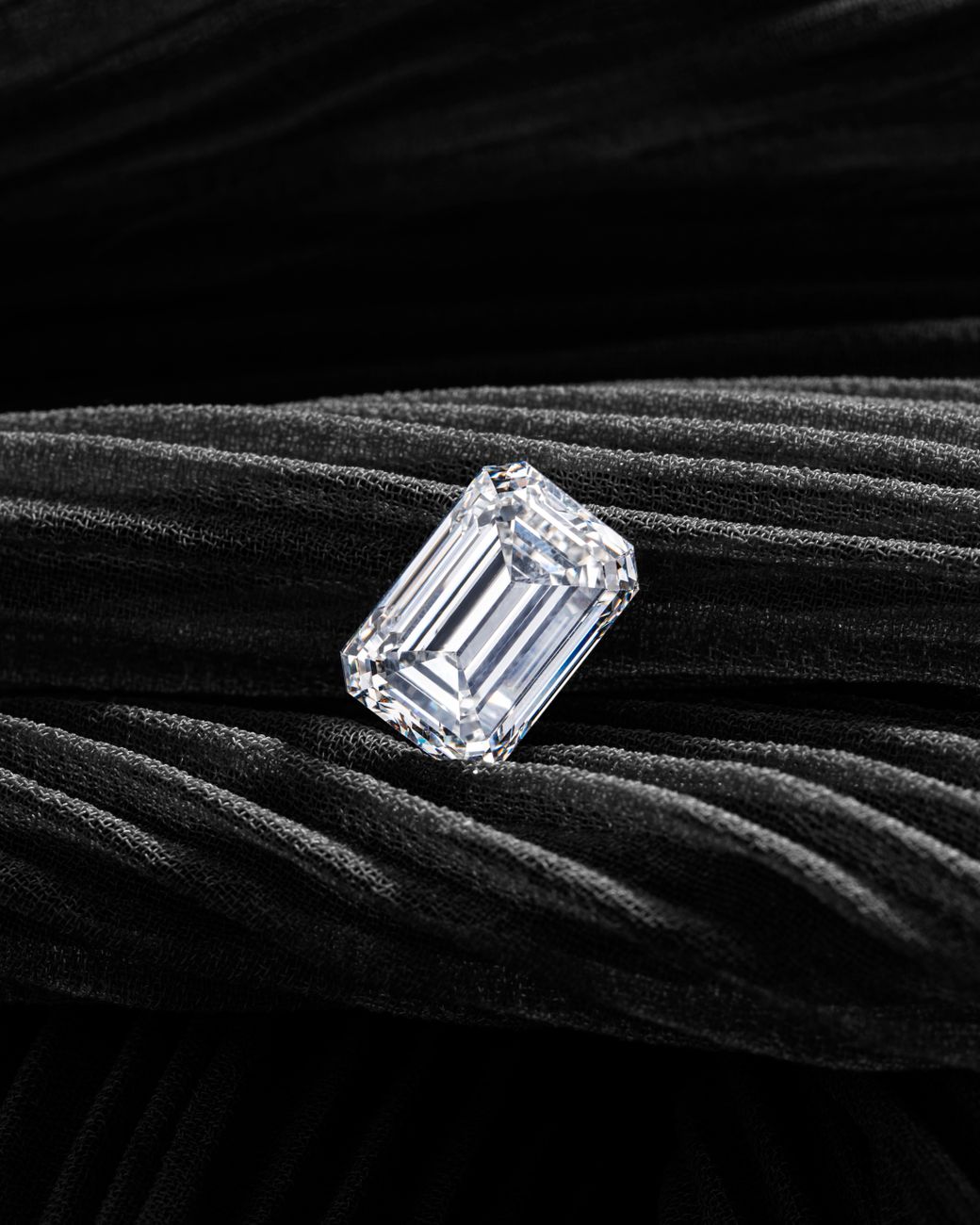
An emerald cut lab grown diamond is a rectangular, step-cut diamond created in a laboratory using modern growth methods. It has long, parallel facets and a large, open table that emphasizes clarity and clean reflections rather than the brilliant, all‑around sparkle associated with round brilliant cuts. Lab grown emerald cuts offer the same optical characteristics and durability as natural emerald cut diamonds, while often delivering more size or higher quality for the same budget.
Quick answer
An emerald cut lab grown diamond is a lab-created diamond cut in the emerald style, featuring a rectangular outline, step facets, and a large table that highlights clarity and broad flashes of light. If you want a sophisticated, understated look that emphasizes clarity and length, an emerald cut lab grown diamond is an excellent option. For buyers who prioritize brilliance and sparkle, a brilliant-cut shape may be a better fit.
Understanding the emerald cut
The emerald cut is a step-cut shape originally developed for emerald gemstones and later adapted for diamonds. Step cuts use parallel, rectangular facets arranged in tiers or “steps.” The emerald’s long facets create a hall-of-mirrors effect with broad flashes and dramatic light-and-dark planes instead of the small, scintillating sparkle typical of brilliant cuts.
Emerald cuts are commonly rectangular with clipped corners. A closely related style is the Asscher cut, which is square with deeply trimmed corners and a distinctive vintage look. The emerald cut, in contrast, tends to be more elongated and modern in appearance.
Why “lab grown” matters
Lab grown diamonds are chemically, physically, and optically the same as natural diamonds. They are produced in controlled environments using techniques like chemical vapor deposition (CVD) or high-pressure high-temperature (HPHT). The “lab grown” label tells you the diamond’s origin and usually appears on its grading report.
Choosing a lab grown emerald cut carries the same shape-specific trade-offs as choosing a natural emerald cut. The main differences buyers notice are price, availability at larger sizes, and sustainability preferences. Lab grown diamonds can make it easier to afford a larger or higher-clarity emerald cut without changing the look you want.
For detailed information on grading, value, and buying strategy consult the Lab Grown Diamonds.
Key characteristics of emerald cut lab grown diamonds
- Step-cut facets: Parallel facets produce wide flashes rather than tiny sparkles.
- Large table: The flat top surface is bigger than in brilliant cuts, revealing more of the diamond’s interior.
- Rectangular outline: Typical length-to-width ratios range from 1.30 to 1.50, allowing both squarer and elongated looks.
- Clarity-sensitive: The open table shows inclusions more easily, so clarity is more important.
- Color visibility: Color is more noticeable because facets do not conceal body color as well as brilliant cuts do.
- Durability: Clipped or beveled corners reduce the risk of chipping compared with pointed corners, but care is still needed when worn daily.
Appearance and visual performance
Emerald cuts present a different visual experience compared with brilliant cuts. Instead of the lively, multi-directional sparkle of a round or princess cut, you get clean, broad flashes and a linear, architectural look. The diamond’s internal features, including inclusions and color, are more visible because of the large table and step facets.
Key visual effects to expect:
- Hall-of-mirrors reflections: Long facet planes create bold, mirror-like flashes that shift as the stone moves.
- Less scintillation: The small sparkling points that catch the eye from many angles are reduced.
- Subtle fire: Dispersion is present but less obvious than in brilliant cuts because light exits in larger, calmer flashes.
- Length emphasis: The shape can make fingers look longer and slimmer, especially when worn in a solitaire or cathedral setting.
How proportions change the look
Proportions matter more for appearance with emerald cuts than for many other shapes. Three proportion areas to pay attention to are length-to-width ratio, table size, and depth percentage.
- Length-to-width ratio: 1.30 to 1.40 gives a balanced rectangular look. 1.40 to 1.50 looks more elongated and elegant. Personal taste determines the ideal ratio.
- Table percentage: Emerald cuts have larger tables. A commonly recommended table range is 61 to 69 percent. A very large table can make the stone appear flatter, while a very small table can reduce the signature step-cut look.
- Depth percentage: Aim for roughly 60 to 66 percent for good light return without appearing too shallow or too deep.
Advantages of emerald cut lab grown diamonds
- Elegant, refined look: Clean lines and a low-key sparkle appeal to buyers seeking vintage or minimalist styles.
- Emphasizes clarity and color: For buyers who prefer a gem that looks crisp and transparent, emerald cuts highlight high clarity and color grades.
- Face-up size: Because of their shallow depth and large table, emerald cuts can appear larger face-up than some brilliant-cut diamonds at the same carat weight.
- Price efficiency with lab grown options: Lab grown emerald cuts usually cost significantly less than comparable natural emerald cuts, making higher clarity or larger carat weights more affordable.
- Timeless and versatile: Works well in solitaire, halo, three-stone, and vintage settings.
Disadvantages
- Less sparkle: If maximum brilliance and scintillation are your priority, an emerald cut will not provide the same “wow” effect as a round or princess cut.
- Clarity and color demands: Imperfections and body color are more visible, increasing the need to choose higher clarity and color grades.
- Visible inclusions: Lower clarity grades (SI or I) may show inclusions through the large table and step facets.
- Limited ability to hide poor cutting: Poor proportions are easy to spot. Well-cut emeralds are important for balanced light performance.
Who an emerald cut lab grown diamond is best for
Consider an emerald cut lab grown diamond if any of the following describe you:
- You prefer a sophisticated, understated aesthetic instead of overt sparkle.
- You value clean lines and an architectural look for engagement rings or dress jewelry.
- You want to emphasize clarity and color quality in your stone.
- You want a larger face-up appearance for a given carat budget, and are comfortable with less scintillation.
- You prefer vintage or Art Deco-inspired styles where the emerald cut complements the overall design.
An emerald cut is less suited for someone who wants constant sparkle, or who plans to wear the ring during activities that raise the risk of knocks and bumps without protective settings.
How emerald cuts compare to other popular diamond shapes
The table below summarizes practical differences between emerald cuts and other common shapes for engagement rings and center stones. This comparison highlights why emerald cuts look and behave differently and what trade-offs buyers face.
| Characteristic | Emerald Cut | Round Brilliant | Princess Cut | Cushion Cut | Oval | Asscher |
|---|---|---|---|---|---|---|
| Primary visual effect | Broad, linear flashes; hall-of-mirrors | Maximum brilliance and sparkle | High sparkle with square outline | Soft brilliance, romantic look | Elongated brilliance similar to round | Similar to emerald but square and vintage |
| Sparkle / scintillation | Low to moderate | Very high | High | Moderate | High | Low to moderate |
| Fire (dispersion) | Subtle | Pronounced | Pronounced | Pronounced | Pronounced | Subtle |
| Face-up size (per carat) | Generally good; appears larger face-up | Standard | Generally smaller face-up than emerald | Good face-up for weight | Good elongated face-up | Smaller face-up compared with emerald because square |
| Clarity requirement | High; VS or better recommended | Moderate; SI can work | Moderate to high | Moderate | Moderate | High; similar to emerald |
| Color visibility | High; color shows more | Lower; color hidden by facets | Moderate | Moderate | Moderate | High |
| Durability | Good; clipped corners help | Very good | Good; corners can chip if not protected | Good | Good; pointed ends require care for marquise or pear | Good; stepped facets make it durable |
| Popularity | Classic but niche | Most popular | Popular modern choice | Popular for vintage looks | Increasingly popular | Preferred by vintage-style buyers |
| Price vs natural diamond | Lab grown cheaper; good value for size/clarity | Lab grown cheaper generally | Lab grown cheaper generally | Lab grown cheaper generally | Lab grown cheaper generally | Lab grown cheaper generally |
Why these differences exist
Brilliant cuts use many small, angled facets that return light as dispersed sparkle across the stone. Step cuts use larger, flat facets that reflect light in broader planes. That structural difference explains why emerald cuts show clarity and color more readily, and why they produce a calmer, more geometric light pattern.
Important buying considerations for emerald cut lab grown diamonds
Buying an emerald cut lab grown diamond requires attention to different factors than buying a round brilliant. Below are practical considerations to help you choose a stone that looks great in person and lasts with daily wear.
1. Clarity grade
Because inclusions are more visible, aim for clarity grades where imperfections are not noticeable to the unaided eye. A common practical recommendation is VS2 or higher, though a clean SI1 can work if the inclusion is small and positioned away from the table. Ask for loupe or microscope images and, ideally, a video to inspect the stone yourself.
2. Color grade
Emerald cuts show body color more easily. For white metal settings such as platinum or white gold, aim for G or better to avoid a hint of warmth. If you choose yellow or rose gold, you can comfortably go to H or I depending on how warm you want the overall look to be.
3. Length-to-width ratio
Decide whether you prefer a squarer look or an elongated profile. Ratios near 1.30 to 1.40 are traditional. If you want a sleeker, longer look, choose ratios from 1.40 to 1.50. Try visual samples or online visualizers to confirm your preference.
4. Proportions (table and depth)
A balanced table and depth help the emerald cut show the desired hall-of-mirrors effect. A commonly recommended table range is 61 to 69 percent with a depth between 60 and 66 percent. Avoid stones that look too shallow or too deep on images or video.
5. Cut quality
Emerald cuts do not have a standardized “cut grade” like round brilliants on some reports. Instead, evaluate proportions, symmetry, and polish. Ask the seller for measurements and good imagery. A well-cut emerald will present balanced reflections and an appealing pattern of light and dark facets.
6. Setting choice
Choose settings that protect the stone’s corners, such as bezel or prong settings that cradle the clipped corners. Solitaire or halo settings are commonly used. A halo of small brilliant diamonds can increase perceived size and add sparkle but will not change the emerald cut’s characteristic look.
7. Certification and origin
Obtain a grading report from a reputable lab that explicitly identifies the diamond as lab grown. Standard labs include GIA, IGI, GCAL, and AGS. GIA began grading lab grown diamonds in recent years, and their reports clearly state origin. Make sure the report includes measurements, proportions, clarity plot, and a note on polish and symmetry.
8. Visual inspection: images and videos
Request high-resolution images and a video of the diamond in different lighting. Because step cuts can show dark areas that look like “windows” depending on the setting and angles, video helps you evaluate how the stone behaves in real life.
9. Price and market trends
Lab grown diamonds typically cost less than natural diamonds of the same grade and shape. The price gap has varied over time, and market conditions affect relative value. Compare multiple options and focus on getting the combination of carat, color, clarity, and cut that matters most to you.
How to choose clarity and color for an emerald cut lab grown diamond
Because an emerald cut makes inclusions and color more visible, clarity and color deserve careful attention. Here are practical target ranges based on common buyer preferences and settings.
- Color recommendations: For platinum or white gold settings, F to G yields near-colorless white. H to I can be acceptable if budget is a factor and you are comfortable with a slight warm tint. For yellow or rose gold, H to J often looks fine because the warm metal tone masks color.
- Clarity recommendations: VS1 to VS2 is a safe range for most buyers who want visible cleanliness under the table. SI1 can work with careful selection if the inclusion is off-center or near the edge. Avoid I grades unless inclusions are not visible in photos and videos.
Common mistakes buyers make with emerald cuts
- Choosing too low a clarity grade: Because inclusions show, an SI or I clarity can disappoint unless the specific diamond hides the inclusion well.
- Ignoring color in white settings: Emerald cuts reveal warmth. Buyers sometimes choose lower color grades intending to save money and later find the stone looks yellowish in white metal.
- Relying only on static photos: Step cuts can look dramatically different in motion. Not viewing video or in‑hand shots can lead to surprises.
- Overlooking proportions: Not checking length-to-width, table, and depth can result in an unbalanced appearance or poor light performance.
- Underestimating setting protection: Pointed corners are not a feature here, but corners can still chip without proper prongs or a bezel.
Practical examples (real buyer scenarios)
Example 1: Budget-conscious buyer who wants size and clarity
A buyer wants a 2.0 carat look but has a limited budget. Choosing a lab grown emerald cut allows them to prioritize a higher clarity grade within budget, perhaps selecting a 1.7 to 2.0 carat lab grown emerald cut with VS2 clarity and G color, set in white gold. This provides a clean, elegant stone with good face-up size for the money.
Example 2: Vintage style, warm metal preference
A buyer prefers a vintage Art Deco appearance and wants the stone to blend with rose gold. Choosing an emerald cut with a length-to-width ratio around 1.35 and selecting an H to I color grade can make the diamond pair nicely with the warm metal, while an SI1 clarity may be acceptable if inclusions are not on the table.
Example 3: Maximum brilliance is important
A buyer loves sparkly stones and is drawn to emerald shapes for their lines but wants more sparkle. They may choose an emerald cut for an engagement ring center and set it within a halo of small brilliant diamonds. The halo adds perimeter brilliance while preserving the emerald’s distinct look.
Certification and testing for lab grown emerald cuts
Always request a grading report from a respected laboratory. The report should state the diamond is lab grown and provide details on measurements, weight, cut (when applicable), clarity, color, polish, symmetry, and any fluorescence. GIA, IGI, GCAL, and AGS are widely recognized. For lab grown stones, confirm the report specifically identifies the growth origin and the method if available.
Some sellers will also laser-inscribe the girdle with a report number and “lab grown” inscription. That helps match the physical stone to its report and provides a chain of provenance.
Resale and long-term considerations
Resale value for lab grown diamonds is different than for natural diamonds. Historically, lab grown diamonds have sold for less on the secondary market compared with the original purchase price, and resale dynamics depend on market demand and timing. Because emerald cuts emphasize clarity and color, those attributes retain aesthetic relevance over time, but potential resale value should not be the only reason to choose a lab grown stone.
If resale is a priority, focus on well-established grading, excellent clarity and color, and documented origin. Keep receipts, grading reports, and supporting documentation for future buyers.
Settings that suit emerald cut lab grown diamonds
Emerald cuts are versatile. Common settings include:
- Solitaire: Highlights the clean lines and lets the cut stand on its own.
- Halo: Surrounds the emerald cut with small brilliants to add sparkle and perceived size.
- Three-stone: Flanking trapezoids or smaller emerald cuts complement the center stone.
- Bezel: Encases the diamond and protects the corners, adding a modern feel.
- Vintage settings: Milgrain details and geometric accents amplify the emerald cut’s Art Deco roots.
Choose a setting that protects the diamond’s corners and complements the look you want. Discuss practical daily wear with your jeweler to ensure the chosen setting suits your lifestyle.
Comparing lab grown emerald cut with natural emerald cut
Visually and physically, a lab grown emerald cut diamond is identical to a natural emerald cut diamond. The main differences are origin, price, and sometimes availability at higher clarity or larger carat weights.
- Appearance: No visible difference to the naked eye when cut and polished the same way.
- Price: Lab grown emerald cuts are typically less expensive than natural emerald cuts of the same specs, making higher clarity or larger stones more accessible.
- Availability: Lab growth methods can produce larger, high-quality rough more predictably, making certain sizes and clarities easier to source.
- Certifications: Ensure the grading report clearly identifies the diamond as lab grown and lists proportion details.
Common FAQs
1. What Is an Emerald Cut Lab Grown Diamond versus a natural emerald cut?
They are the same in physical and optical properties. The difference is origin. Lab grown diamonds are created in labs, while natural diamonds formed in the Earth. Both can be cut into the emerald shape and graded with the same criteria for cut, color, and clarity, though lab grown reports will state the stone’s origin.
2. Are emerald cuts better in certain metals or settings?
Emerald cuts look particularly striking in both white and yellow metals, but the choice affects color perception. White metals accentuate a cool, crisp look, so aim for higher color grades. Yellow and rose gold can mask warmer tones and allow slightly lower color grades. Choose settings with prongs protecting the corners or a bezel for added security.
3. What clarity grade should I choose for an emerald cut lab grown diamond?
Because the emerald cut shows inclusions easily, VS2 or higher is a safe choice for a clear appearance. SI1 can be acceptable if the inclusion is out of the sightline and minimal. Ask for close-up images and video to confirm the stone looks clean in real life.
4. Will a lab grown emerald cut be less sparkly than other shapes?
Yes, emerald cuts inherently offer less scintillation and small-point sparkle than brilliant cuts. They favor broad flashes and a more subtle shimmer. If a high level of fire and sparkle is essential, consider a brilliant-cut shape or add a halo to the emerald for extra sparkle.
5. How does length-to-width ratio affect the look?
The length-to-width ratio determines whether the emerald appears squarer or more elongated. Ratios around 1.30 to 1.40 are classic. Ratios above 1.40 create a more elongated, slimming appearance on the finger. Personal preference and ring design influence the best choice.
6. Do lab grown emerald cuts hold value?
Lab grown diamonds usually resell for less than purchase price, and resale markets vary. Their aesthetic value remains, but if preserving resale value is a primary concern, factor that into your decision and documentation keeping. Choose high-quality certificates and keep proof of origin and grading to support future resale.
7. Can I get a certification for a lab grown emerald cut diamond?
Yes. Reputable laboratories provide full grading reports for lab grown diamonds and explicitly note their origin. GIA, IGI, GCAL, and AGS provide widely respected reports. Ensure the report includes the stone’s measurements, clarity plot, and a note of origin.
8. Is an emerald cut a good choice for an engagement ring?
Yes, for buyers who prefer a refined, understated look and who value clarity and color. Emerald cuts are popular in engagement rings for a sophisticated and timeless appearance, often chosen by people who want an elegant alternative to the traditional round brilliant.
Checklist for buying an emerald cut lab grown diamond
- Obtain a reputable grading report that declares lab grown origin.
- Target VS2 clarity or better, unless images/videos show an SI1 that is eye-clean.
- Choose a color grade suitable for the setting: G or better for platinum/white gold, H or I for yellow/rose gold.
- Decide on a length-to-width ratio (1.30 to 1.50) based on your visual preference.
- Check table and depth percentages. Aim for balanced proportions (roughly 61–69% table, 60–66% depth as a starting guideline).
- Request high-resolution photos and video to evaluate light performance and inclusion visibility.
- Pick a setting that protects the corners and complements the emerald’s style.
- Compare prices across sellers and confirm return policies and warranties.
Conclusion
An emerald cut lab grown diamond is a refined, elegant choice that highlights a stone’s clarity and color while offering an architectural, vintage-inspired look. It provides an excellent option for buyers who want a more understated aesthetic and a larger face-up appearance at a lower price point than natural diamonds. The shape requires thoughtful selection of clarity, color, proportions, and setting to ensure the stone performs well and meets expectations in daily wear.
When choosing an emerald cut lab grown diamond, focus on clarity and color appropriate to your setting, confirm proportions and length-to-width ratio, obtain a reputable grading report that lists the diamond as lab grown, and view the stone in video to evaluate real-world performance. These steps will help you find an emerald cut lab grown diamond that looks beautiful on the finger, fits your style, and aligns with your budget and priorities.