Some diamond flaws matter on paper but are almost impossible to notice in real life. Others can affect how the stone looks, how it performs, or how safely it can be worn over time. That difference is why the question Which Diamond Inclusions Should You Avoid? is more practical than academic.
This is especially important when comparing lab grown diamonds and natural diamonds. Both can have inclusions, and both can range from nearly flawless-looking to obviously included. The grading report tells you what was found. What matters to most buyers is whether the inclusion is visible, whether it affects durability, and whether the price makes sense.
If you understand which inclusions are worth caution and which ones are usually harmless, clarity becomes much easier to evaluate. In many cases, the smartest choice is not the highest clarity grade. It is the stone that looks clean, wears well, and does not cost more than the visible difference justifies.
Quick Answer
The diamond inclusions buyers should be most careful about are the ones that are visible to the naked eye, affect transparency, or create a durability concern. The main ones to watch closely are large feathers near the edge, chips, cavities, open knots, dense clouds, and dark crystals in highly visible areas.
Smaller inclusions such as pinpoints, tiny crystals, and short needles are often not a problem if the diamond still looks eye-clean. In fact, many VS2 and SI1 diamonds can look excellent in normal viewing conditions, including many lab grown diamonds. The inclusion itself is not the only question. The real issue is whether it changes the way the diamond looks or wears.
A simple rule helps: be more cautious when the inclusion is obvious without magnification, located near a vulnerable edge, or dense enough to make the diamond look hazy. For many shoppers, an eye-clean VS2 or carefully chosen SI1 offers better value than paying a large premium for VVS clarity.
What Diamond Inclusions Actually Are
Diamond inclusions are internal features or surface-reaching characteristics that formed when the diamond was created. They are part of how gemologists judge clarity, along with external blemishes such as tiny scratches or abrasions on the surface. Common inclusions include crystals, feathers, clouds, pinpoints, needles, cavities, and knots.
Not all inclusions are equally important. Some are microscopic and have no practical effect on appearance or durability. Others can affect the diamond’s brilliance, create a visible dark spot, or weaken a point where the stone may chip or crack.
This is why clarity grades alone do not tell the whole story. Two diamonds with the same grade can look very different depending on the size, number, type, and position of their inclusions. That is especially important if you are buying online and relying on a grading report, photos, and videos rather than seeing the diamond in person.
Why Inclusion Type Matters More Than the Grade Label
A clarity grade such as VS2 or SI1 is a summary, not a full visual description. It tells you the overall range of inclusions, but not whether those inclusions are easy to see or whether they sit in a place that draws the eye. A small crystal off to the side may be far less noticeable than a cloud under the center of the stone.
Experienced buyers and jewelers tend to look past the grade and focus on the actual effect. Is the stone eye-clean? Is the inclusion near the table? Does it affect transparency? That approach usually leads to better buying decisions than chasing the cleanest possible report.
Which Diamond Inclusions Should You Avoid?
There is no universal list of inclusions that are always bad. The concern depends on how visible they are, where they sit, and whether they affect the diamond’s structure or appearance. Still, some types deserve more caution than others.
Feathers Near the Edge
A feather is a fracture-like feature inside a diamond. Many feathers are small and harmless, especially when they are fully internal and not close to the surface. The concern rises when a feather reaches the edge, sits near the girdle, or appears large enough to affect the way the stone wears.
Feathers near the edge are worth reviewing carefully because they can make the diamond more vulnerable to chipping during setting or everyday wear. This matters most for rings, which experience more impact than earrings or pendants. A feather is not automatically a reason to reject the stone, but a feather in a stressed location deserves caution.
Chips
A chip is a piece missing from the diamond’s surface. Unlike a hidden internal inclusion, a chip is directly on the surface and is usually easier to notice. It can also affect the finish and symmetry of the stone.
Buyers should generally avoid chips unless the issue is very minor and the price clearly reflects it. Chips can affect both appearance and durability, and they may complicate setting or require repair. In most cases, there is little reason to accept a chip when better options are available.
Cavities
A cavity is a small open hole or indentation, often created when a surface-reaching inclusion breaks away. Cavities are more visible than many internal flaws and can collect dirt over time, which makes them more noticeable in everyday wear.
Because cavities reach the surface, they usually deserve more caution than enclosed inclusions. A tiny cavity may not be a serious issue, but a larger or deeper one can interrupt the look of the stone and may create a point of weakness. Most buyers are better off avoiding obvious cavities unless they are fully aware of the trade-off and the price is adjusted accordingly.
Surface-Reaching Knots
A knot is a crystal inclusion that reaches the surface of the diamond. It can appear as a small bump or point on the surface, depending on its size and location. Surface-reaching knots can be more noticeable than enclosed crystals and may also make cutting or setting more complicated.
If a knot is large, dark, or placed in a visible area, it is worth extra attention. A tiny knot off to the side may not matter much, but a more obvious one can be distracting. The question is not just what the report calls it, but whether it interferes with appearance or wear.
Dense Clouds
A cloud is a cluster of very small inclusions. Light, scattered clouds may have almost no impact on appearance. Dense clouds are different. They can reduce transparency and make a diamond look hazy, sleepy, or less lively than expected.
Dense clouds are one of the main inclusion types buyers should avoid if they affect brightness. A diamond with a cloud that dulls the face-up look can be less attractive than a diamond with a more visible but localized crystal. In real-world shopping, transparency often matters more than isolated tiny marks.
Dark Crystals in the Center
Crystals are solid mineral inclusions trapped inside the diamond. Some are white or transparent and blend in fairly well. Others are dark and create more contrast, which makes them easier to notice.
Dark crystals under the table, or in the center area where the eye naturally focuses, are worth paying attention to. A small dark crystal can be easy to ignore in one diamond and very obvious in another, depending on size, contrast, and positioning. Center placement usually matters more than the inclusion name alone.
Large Needles or Needle Clusters
Needles are thin, elongated inclusions. A few tiny needles are often harmless and may not be visible without magnification. But clusters of needles can sometimes create a busy look or contribute to reduced transparency, especially if they are concentrated in one area.
Needles are usually not a top-level concern unless they are numerous or associated with cloudiness. Most buyers do not need to avoid every diamond with needles on the report. The practical question is whether the stone still looks bright and clean in face-up view.
Dense Pinpoint Groups
Pinpoints are tiny dot-like inclusions that are usually too small to matter on their own. A single pinpoint is rarely a concern. A dense group of pinpoints, however, can contribute to a speckled or slightly hazy area if it is located in the wrong place.
On their own, pinpoints are usually low concern. They become more important when they are grouped so tightly that they affect transparency or create a visible distraction. In everyday buying, pinpoints are far less concerning than chips, cavities, or large feathers.
Inclusion Types at a Glance
| Inclusion Type | What It Is | Visibility Risk | Durability Risk | Buyer Concern Level |
|---|---|---|---|---|
| Feather | Internal fracture-like feature | Low to high depending on size and position | Moderate if near the edge or surface-reaching | Moderate to high |
| Chip | Small piece missing from the surface | Usually visible | Moderate to high | High |
| Cavity | Open indentation or hole | Often visible | Moderate | High |
| Knot | Crystal that reaches the surface | Variable | Moderate | Moderate |
| Cloud | Group of tiny inclusions | Low to high depending on density | Usually low | Moderate to high if hazy |
| Crystal | Another mineral trapped in the diamond | Variable | Usually low | Low to moderate |
| Needle | Thin elongated inclusion | Usually low | Usually low | Low to moderate |
| Pinpoint | Tiny dot-like inclusion | Usually very low | Usually low | Low |
Why These Inclusions Matter to Buyers
Buyers usually care about inclusions for three reasons: appearance, durability, and value. The best clarity decision balances all three. A diamond is not automatically better just because it has fewer reported inclusions. It is better if it looks appealing, wears safely, and is priced fairly for what you actually see.
The first concern is usually eye-clean appearance. That means the stone does not show obvious inclusions when viewed without magnification in normal conditions. If an inclusion is invisible in everyday wear, it may not be worth paying a large premium to remove it from the report.
Durability is the second concern. Surface-reaching flaws, especially feathers, cavities, and chips, deserve more attention than internal crystals because they may affect how the diamond handles daily wear. This matters more in rings than in pendants or earrings because rings get bumped more often.
Value is the third concern. Clarity upgrades can become expensive quickly, especially once you move into VVS and higher grades. In many cases, buyers get better value by prioritizing cut quality first and then choosing the lowest clarity grade that still looks clean to the eye.
How Inclusions Affect Appearance
Inclusions affect appearance in different ways. Some are hidden by sparkle. Some are visible only from the side. Others create a cloudy, sleepy, or uneven look that can reduce the diamond’s liveliness even if the flaw itself is small.
Eye-clean appearance is the standard most buyers care about. A diamond can have inclusions on the report and still look excellent if those inclusions are small, off-center, or white enough to blend into the overall look of the stone. That is why many people find well-selected VS2 and SI1 diamonds very appealing.
What Eye-Clean Really Means
Eye-clean means no obvious inclusions are visible to the unaided eye in normal viewing conditions. That usually means looking at the diamond from a normal distance, not using a loupe or microscope. It does not mean the diamond is flawless. It means the flaws are not distracting in day-to-day wear.
Eye-clean is not a formal grading category. It is a practical buying standard. One SI1 may be eye-clean and another may not be. The difference can come down to where the inclusion sits, how dark it is, and whether it is hidden by facet pattern or sparkle.
Why Placement Matters So Much
An inclusion in the center of the diamond is more likely to be noticed than one near the edge. The center is where the eye naturally goes first. Even a small flaw can stand out if it creates contrast in a bright, open area.
Edge inclusions can be easier to live with visually, but they may be more important from a durability standpoint if they are close to the girdle. That is why a grading report should be read with both beauty and wear in mind.
Transparency Issues Often Matter More Than Small Internal Marks
It is easy to focus on isolated inclusions and miss the bigger visual picture. A tiny crystal may matter less than a cloud that makes the diamond look less lively. A stone with slightly more visible inclusions can still look better overall if it remains bright and transparent.
If a diamond seems dull, sleepy, or less crisp than expected, transparency may be the reason. In that case, the inclusion type matters less than the overall effect. Reviewing high-quality videos or seeing the stone in person can help reveal this issue.
How Inclusions Affect Value
Clarity affects price, but not always in proportion to what you can actually see. The jump from SI to VS can be moderate or significant depending on shape, size, and market conditions. The jump from VS to VVS, or from VVS to IF, is often much larger than the visible improvement justifies.
That is why many experienced buyers do not automatically chase the top of the clarity scale. They look for the point at which the diamond becomes eye-clean and stop there. Beyond that point, the premium often buys a better grade on paper, not a visibly better stone.
When Paying More for Clarity Makes Sense
Paying more for clarity can make sense if you want a diamond that looks exceptionally clean under close inspection, if the stone is large, or if the shape tends to reveal inclusions easily. Emerald cuts, Asscher cuts, and other step cuts show the interior more openly because their facet structure is less forgiving than a round brilliant.
Higher clarity may also make sense if you simply prefer the peace of mind that comes with a very clean report. That is a personal preference. It is not the same as saying the higher grade is necessary for a beautiful everyday stone.
When It Usually Does Not Make Sense
Higher clarity often does not make sense when the visible difference is tiny. Many VS2 and SI1 diamonds look just as attractive as more expensive stones once you view them in normal lighting. If the inclusion is not visible and does not affect transparency, the extra money may be better spent on cut quality, carat size, or a setting you like.
This point is especially relevant for lab grown diamonds, where larger sizes are often more affordable. It can be tempting to pay for a cleaner grade simply because the budget allows it. But if the diamond already looks eye-clean, the practical benefit of a higher clarity grade may be minimal.
Practical Examples Buyers Commonly Encounter
VS2 Versus SI1 in Normal Viewing Conditions
A VS2 diamond and an SI1 diamond can look very similar if the inclusions are well placed and not strongly contrasting. In some cases, the SI1 may look just as clean as the VS2, especially if the inclusion is small and off to the side.
The real difference often comes down to the specific stone. A well-cut SI1 with a tiny side inclusion can look better than a poorly positioned VS2 with a visible cloud or dark crystal near the center. This is one reason the report alone is not enough.
Eye-Clean SI1 Versus Non-Eye-Clean SI1
Not all SI1 diamonds are alike. An eye-clean SI1 can be an excellent value because it offers a clean appearance at a lower price than higher grades. A non-eye-clean SI1 may show obvious marks from the top view and may not be the right choice for someone who wants a visually clean ring.
This is one of the most important clarity lessons. The grade tells you the category. The diamond itself tells you the experience. Two SI1 diamonds can be completely different in real life.
VVS Versus VS for Everyday Wear
VVS means very, very slightly included. In most cases, the difference between VVS and VS is not noticeable without magnification. For many buyers, the visible gain from moving up to VVS is small compared with the price increase.
If the goal is a beautiful everyday ring, a good VS stone is often enough. VVS can appeal to buyers who want a finer grading label, but it is not automatically the better value for daily wear.
Cloudy SI1 Versus Bright SI1
A cloudy SI1 can be less attractive than a brighter SI2 that still faces up cleanly. A cloud that affects transparency can dull the entire diamond, while a slightly lower-grade stone with strong brightness can look better overall.
This is why clarity should always be considered alongside cut. Good cut helps a diamond return more light and can make small inclusions less noticeable. A weak cut, on the other hand, can make even a cleaner diamond look less impressive.
Lab Grown Diamond Considerations
Lab grown diamonds deserve special attention because buyers often compare larger stones at lower price points. Since the price per carat can be lower, some shoppers feel more comfortable aiming for higher clarity. That can be reasonable, but it is not always necessary.
Lab grown diamonds can have the same kinds of inclusions as natural diamonds, including crystals, pinpoints, clouds, needles, feathers, and other clarity characteristics. The same practical rules apply. You still want to know whether the inclusion is visible, whether it affects transparency, and whether it creates a durability concern.
One common mistake with lab grown diamonds is assuming a higher clarity grade always means a better-looking stone. Sometimes the best value is a well-cut diamond with a lower clarity grade that still appears eye-clean. Because larger lab grown diamonds are often accessible, it is wise to stay focused on what is visible rather than paying extra for a perfect report.
When Inclusions Affect Durability
Not every inclusion weakens a diamond. In fact, many inclusions are harmless from a wear perspective. The ones most likely to create durability concerns are those that reach the surface, sit near a vulnerable edge, or create a point where the stone may chip or split.
Feathers, cavities, chips, and knots are the main types that deserve closer review. Their risk depends on size, position, and how close they are to the edge of the stone. A tiny feather deep inside the diamond may be insignificant, while a long feather at the girdle can be worth avoiding.
Durability matters most in rings worn daily. Engagement rings and wedding rings take more impact than pendants or earrings. If a diamond is going into a ring, it is worth asking whether any inclusion could create a setting challenge or a future break point.
When a Feather Is Not a Problem
Many feathers are too small to matter. If a feather is internal, not near a vulnerable edge, and does not create a visible surface issue, it is often not a concern at all. Plenty of diamonds contain feathers that buyers never notice and that never cause problems in wear.
The issue is not the word feather by itself. The issue is whether the feather is large, near the surface, or positioned in a way that weakens the stone. That nuance is important when reading a grading report.
When a Feather Deserves Extra Care
A feather near the girdle, under the table, or in a place where the stone may be stressed during setting deserves attention. If it looks large or open, it is worth asking for a close video or a jeweler’s opinion. In some cases, the diamond may still be fine. In others, the risk is not worth it.
For buyers who want a lower-maintenance stone, it is usually wise to avoid inclusions that create structural uncertainty. That does not mean rejecting every feather. It means choosing carefully and understanding the location.
Common Buyer Mistakes
Many clarity mistakes come from focusing too much on the grade and not enough on the actual diamond. The grade is useful, but it is only one part of the decision. A careful shopper looks at both the report and the stone itself.
- Overpaying for invisible clarity upgrades when the diamond is already eye-clean.
- Ignoring inclusion location and assuming all flaws matter equally.
- Assuming all SI diamonds look the same when some are eye-clean and others are not.
- Choosing a higher clarity grade without checking transparency or overall brightness.
- Focusing only on the report instead of real-world viewing in normal lighting.
- Overlooking durability concerns with feathers, chips, cavities, or knots near the edge.
Another common mistake is using clarity as a substitute for cut quality. A well-cut diamond can often hide minor inclusions more effectively than a poorly cut one. If the cut is weak, even a higher-clarity diamond may not look as impressive as expected.
How To Judge Whether an Inclusion Should Be Avoided
A simple checklist can help you decide whether an inclusion is worth worrying about. Start with visibility. Can you see it without magnification? If the answer is no, the inclusion may not matter much unless it affects transparency or durability.
Next, consider location. Is the inclusion in the middle of the diamond or near the edge? Center inclusions are more likely to catch the eye. Edge inclusions may be less noticeable visually, but they can matter more for setting and durability.
Then look at the type of inclusion. Is it a harmless pinpoint, or is it a feather, chip, cavity, or cloud? Some types are much more likely to affect the stone’s appearance or strength. Finally, think about price. If a clarity upgrade is expensive but offers little visible improvement, it may not be worth it.
A Practical Buyer Framework
- Visible from the top? Be more cautious.
- Near the edge? Check durability and setting safety.
- Creates haze or dullness? Avoid if transparency is affected.
- Only visible under magnification? Often less important.
- Large price jump for a tiny improvement? Usually weak value.
How Cut, Color, and Shape Change Clarity Visibility
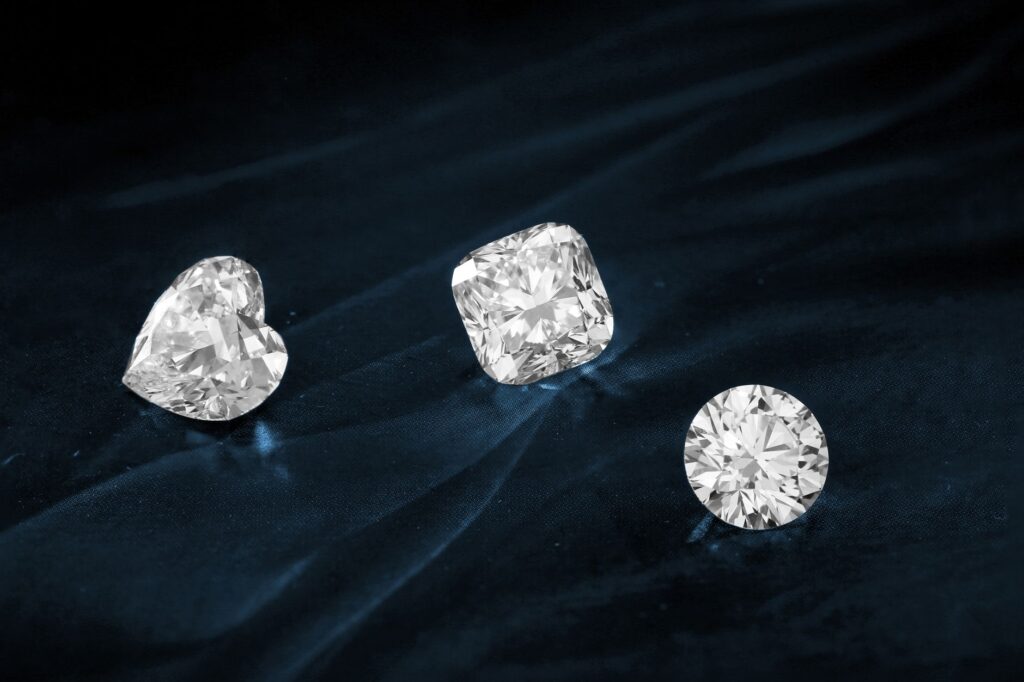
Clarity does not exist on its own. Cut, color, and shape all influence how easy it is to see inclusions. Brilliant cuts such as round brilliant usually hide minor imperfections better because their sparkle is intense and their facet pattern is more forgiving.
Step cuts, such as emerald and Asscher shapes, are less forgiving. Their broad, open facets can make inclusions easier to see. If you are shopping one of these shapes, clarity may matter more than it would in a round brilliant or cushion cut.
Color can also affect how inclusions appear. Dark crystals may stand out more in a colorless diamond, while lighter inclusions blend more easily. In lab grown diamonds, especially larger stones, buyers often notice that cut quality strongly affects how clean the diamond looks at first glance.
What Experienced Buyers Often Choose
Many experienced buyers aim for the sweet spot rather than the top of the clarity scale. For a round brilliant, that often means VS2 or a carefully selected SI1 if the stone is eye-clean. For step cuts, many buyers lean more conservatively toward VS1, VS2, or better depending on the specific diamond.
The logic is straightforward. Once the diamond looks clean to the eye, additional clarity often brings diminishing returns. The extra money may be better spent on cut, carat, or a setting that suits the stone.
That said, preference matters. Some buyers want higher clarity for peace of mind or because they enjoy the idea of owning a very clean stone. That is a valid choice as long as they understand they may be paying for a difference that is mostly microscopic.
Common Inclusions and What Buyers Should Know About Them
Feather
A feather is a crack-like internal feature. It may be harmless if small and fully internal, but it becomes more concerning if it reaches the edge or sits in a place that could weaken the diamond.
What buyers see: Often nothing, unless it is large or in a high-contrast area.
Durability concern: Moderate if near the girdle or surface-reaching.
Buyer takeaway: Usually fine when small and well placed. More caution is needed when it is large or near the edge.
Crystal
A crystal is another mineral trapped inside the diamond. It may be white, transparent, or dark. Dark crystals are more likely to stand out because they create contrast.
What buyers see: Sometimes visible, especially if dark and centered.
Durability concern: Usually low.
Buyer takeaway: Often acceptable if small and off to the side. More caution if it creates a noticeable dark spot.
Cloud
A cloud is a cluster of tiny inclusions. Light clouds may be harmless, but dense clouds can make the diamond look milky or sleepy.
What buyers see: Possibly haze, dullness, or reduced sparkle.
Durability concern: Usually low.
Buyer takeaway: Small clouds are often fine. Dense clouds that reduce transparency are worth avoiding.
Needle
A needle is a thin, elongated inclusion. It is usually hard to see on its own.
What buyers see: Usually little to nothing unless there are many of them.
Durability concern: Usually low.
Buyer takeaway: Not a major concern unless part of a larger cluster or cloudiness issue.
Pinpoint
A pinpoint is a tiny dot-like inclusion. Single pinpoints are common and usually harmless.
What buyers see: Usually nothing without magnification.
Durability concern: Usually low.
Buyer takeaway: Rarely a reason to avoid a diamond on its own.
Knot
A knot is a crystal that reaches the surface. Depending on size and position, it may be visible or create a tiny bump.
What buyers see: Variable, from nothing to a visible point.
Durability concern: Moderate if surface-reaching or prominent.
Buyer takeaway: Fine when small, but review carefully if it is visible or in a stressed area.
Cavity
A cavity is an open indentation or hole in the diamond’s surface. It can be more obvious than many internal inclusions and may trap dirt.
What buyers see: Often visible.
Durability concern: Moderate.
Buyer takeaway: Usually worth avoiding unless the stone is priced accordingly and the issue is minor.
Chip
A chip is a missing piece on the surface of the diamond. It is a direct surface defect rather than a hidden internal feature.
What buyers see: Usually yes.
Durability concern: Moderate to high.
Buyer takeaway: One of the clearest inclusions to avoid unless the diamond is otherwise exceptional and the price reflects the flaw.
What to Ask For When Reviewing a Diamond
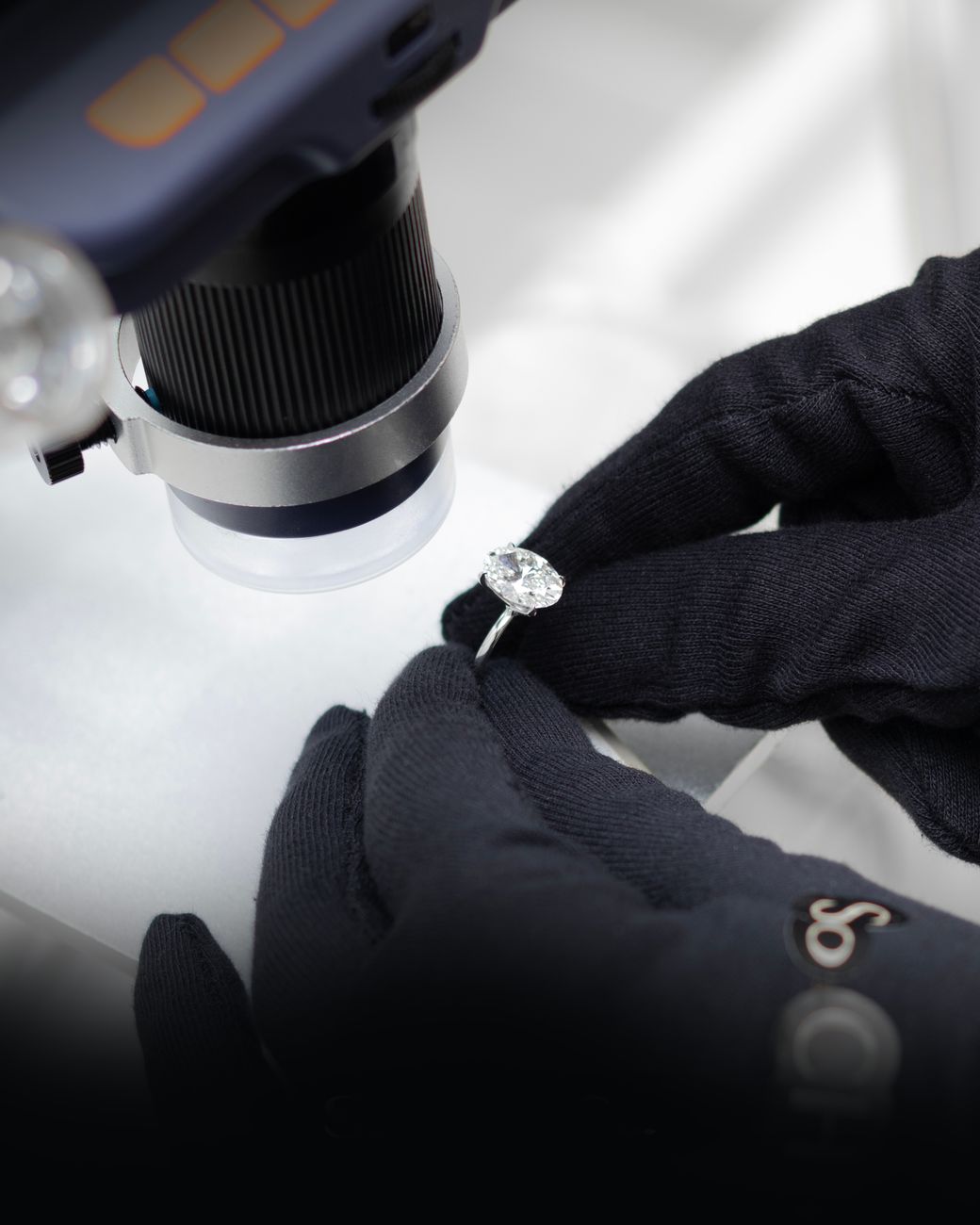
If you are evaluating a diamond, the grading report is only the beginning. Ask for magnified images, a video, or a clear explanation of where the inclusion sits. A diamond can have a lower clarity grade and still be a strong choice if the inclusion is hard to see and not structurally risky.
Useful questions include:
- Is the diamond eye-clean from a normal viewing distance?
- Where is the inclusion located?
- Does it affect transparency or brightness?
- Is it near the edge or a vulnerable point?
- Would it create any setting or durability concern?
These questions are often more useful than simply asking for the highest clarity grade available. In many cases, the best answer is a stone with slightly lower clarity but better overall appearance and value.
Frequently Asked Questions
Are feather inclusions always bad?
No. Many feathers are tiny and harmless. They become more concerning when they are large, surface-reaching, or located near the girdle where they could affect durability.
Is a cloud inclusion always a problem?
No. Small clouds may have little or no visible effect. Dense clouds that make the diamond look hazy or dull are the ones buyers should be more cautious about.
Should I avoid SI1 diamonds?
Not automatically. Some SI1 diamonds are eye-clean and offer strong value. Others show obvious inclusions and are less appealing in person. The specific stone matters more than the label.
Which inclusions are most likely to affect durability?
Feathers near the edge, chips, cavities, and surface-reaching knots are the main ones to review carefully. Internal pinpoints or small crystals usually do not create the same concern.
Are lab grown diamonds more likely to have problematic inclusions?
No. Lab grown diamonds can have inclusions just like natural diamonds. The type, placement, and visibility vary from stone to stone, and the same clarity principles apply.
Does a higher clarity grade guarantee a prettier diamond?
No. A higher grade means fewer or smaller inclusions were observed, but it does not guarantee a better-looking stone. Cut quality and transparency are equally important.
What clarity range works best for most buyers?
For many buyers, a well-chosen VS2 or eye-clean SI1 offers a practical balance of appearance and value. The best option depends on shape, size, and how closely the stone will be inspected.
Can inclusions be seen in everyday life?
Sometimes, yes. Larger or darker inclusions, or ones in the center of the diamond, can be visible without magnification. Many smaller inclusions are invisible in normal wear, especially in well-cut stones.
Conclusion
The inclusions buyers should avoid are the ones that are visible, reduce transparency, or create durability concerns. That usually includes chips, cavities, large or poorly placed feathers, dense clouds, and surface-reaching flaws in vulnerable areas. Smaller inclusions such as pinpoints, tiny crystals, and light needles are often much less important if the diamond still looks clean to the eye.
The most practical way to judge clarity is to ask three questions. Can I see it? Does it affect brightness or transparency? Could it cause a wear issue over time? If the answer is no, the inclusion may not deserve much concern.
For many buyers, especially those comparing lab grown diamonds, the best value often comes from an eye-clean VS2 or SI1 rather than paying a large premium for VVS clarity. The right diamond is not the one with the most perfect report. It is the one that looks beautiful in real life, fits the budget, and gives confidence in everyday wear.