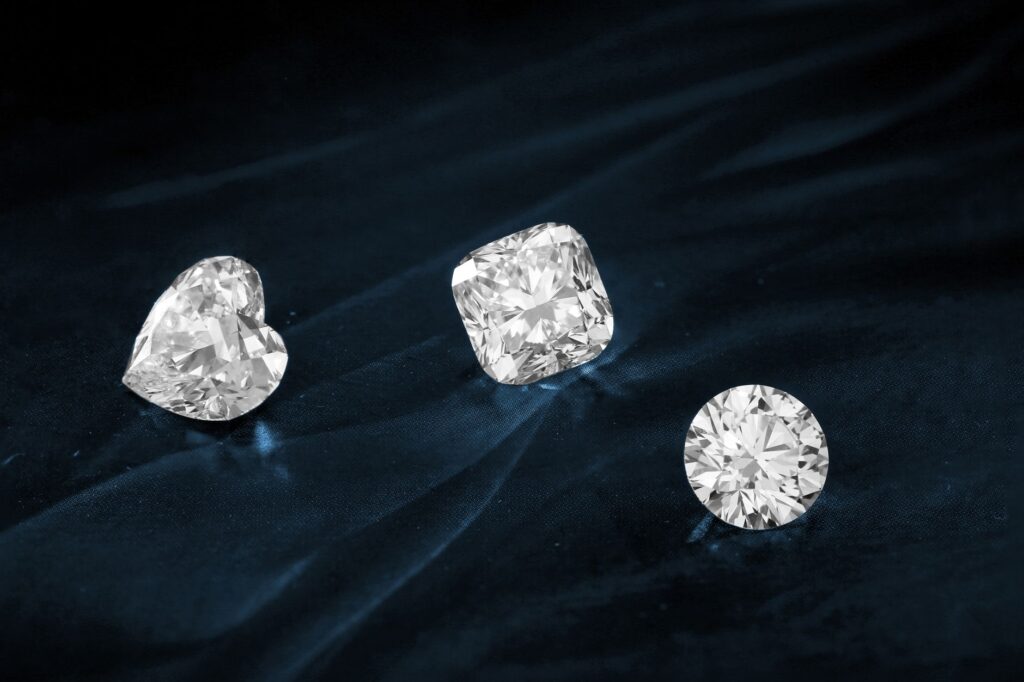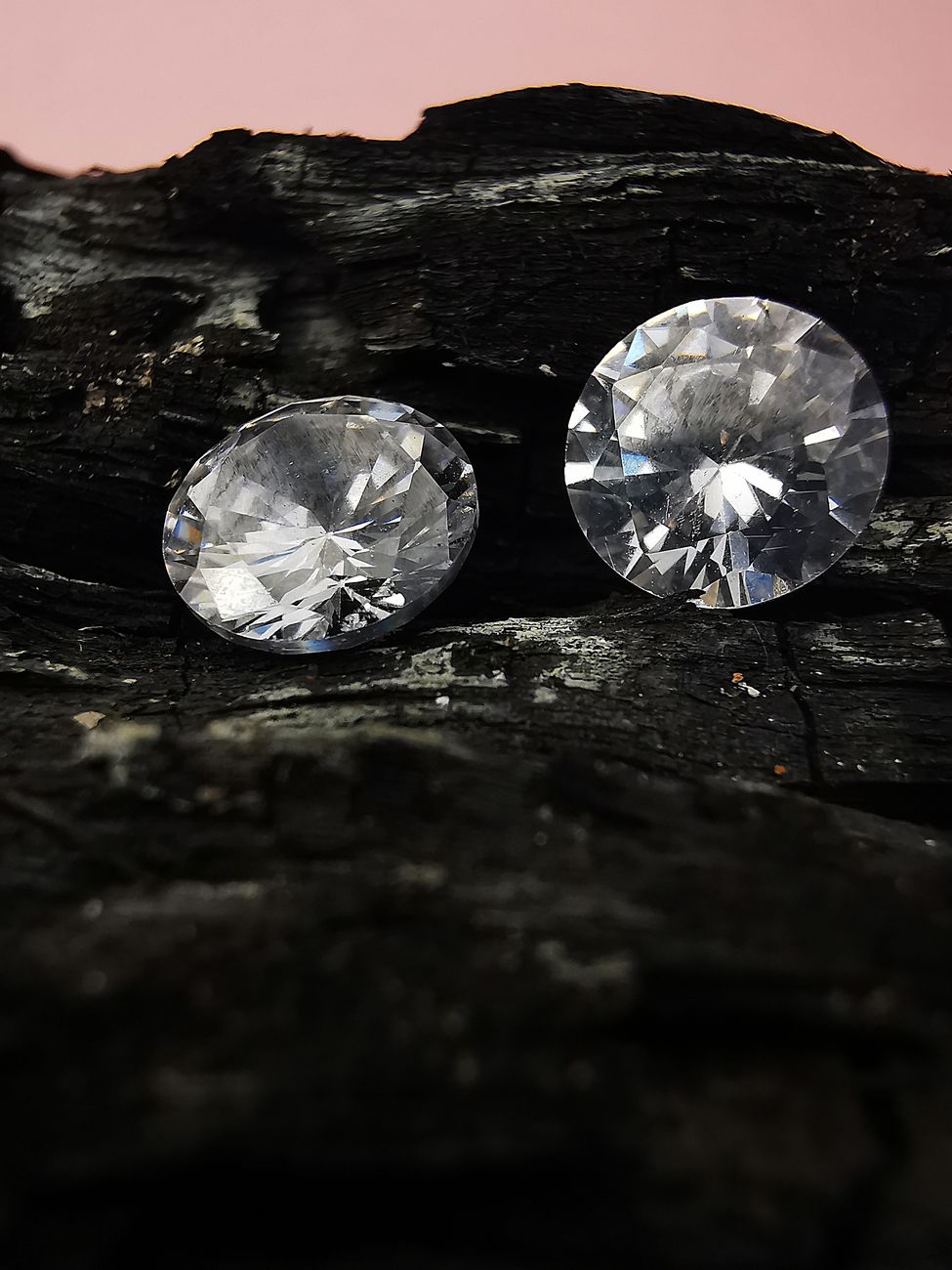
A 2.90 vs 3 carat diamond comparison sounds dramatic on paper, but in real life the visual difference is usually very small. The number looks important because 3.00 carats is a major milestone weight, yet the actual face-up size change from 2.90 carats is often measured in fractions of a millimeter. That means buyers can end up paying significantly more for a round number without seeing a proportionally larger diamond.
Size expectations matter more at higher carat weights because prices rise quickly. A tiny weight increase near a popular threshold can create a noticeable jump in cost, especially in well-cut diamonds and especially in natural diamonds. Understanding how 2.90 vs 3 carat diamond options compare in visible size, finger coverage, and value can help you decide whether the prestige of a full 3 carats is worth the premium.
Quick Answer
In most cases, a 2.90 vs 3 carat diamond will look almost identical once set in jewelry. The visible size difference is usually minimal, often around a few tenths of a millimeter or less depending on shape and cut quality. Most people will not notice the difference without side-by-side comparison.
The bigger difference is usually price, not appearance. A 3.00 carat diamond often costs more because it hits a popular benchmark weight, sometimes called a magic size. Buyers focused on value often find that a well-cut 2.90 carat diamond delivers nearly the same look for less money.
Understanding the Carat Concept
What diamond carat actually means
Carat is a unit of weight, not a direct measurement of how wide a diamond looks from the top. One carat equals 200 milligrams. So a 3 carat diamond weighs slightly more than a 2.90 carat diamond, but that does not mean it will look dramatically bigger.
This distinction matters because people naturally think in visual terms. They want to know how large the diamond will appear on the hand, not just how much it weighs on a grading report.
What face-up size means
Face-up size refers to the visible dimensions of the diamond when viewed from the top. In practical terms, this is what your eye notices in a ring. For round diamonds, face-up size is usually discussed in millimeters across the diameter. For fancy shapes like oval, cushion, or emerald, it is often discussed in length and width.
Two diamonds can have different carat weights but similar face-up size if one is cut deeper and carries more of its weight below the surface. That is why millimeter measurements matter so much in a 2.90 vs 3 carat diamond comparison.
What a magic size diamond is
A magic size is a popular milestone weight such as 1.00, 1.50, 2.00, or 3.00 carats. These round-number sizes often command price premiums because demand is stronger. Buyers like the simplicity and status of saying they own a 3 carat diamond.
That popularity can push prices higher than the actual visual gain justifies. A 2.90 carat diamond sits just under that threshold and can sometimes offer better value.
What Buyers Usually Expect
Expecting a full visual jump
It is common to assume that 3.00 carats will look meaningfully bigger than 2.90 carats because the number feels like a major step up. In reality, a 0.10 carat increase at this size is relatively small. The extra weight is only about 3.4 percent.
That does not automatically translate into a 3.4 percent increase in visible diameter. Since diamonds are three-dimensional objects, the spread across the top usually changes less dramatically than the weight number suggests.
Confusing carat with diameter
Buyers often compare carat figures without checking measurements. A 2.90 carat round diamond with a strong cut may face up very close in size to a 3.00 carat round. In some cases, a well-proportioned 2.90 may even look larger than a poorly cut 3.00 if the heavier diamond hides more weight in depth.
This is why the grading report dimensions are more useful than the carat number alone when judging visible size.
Assuming benchmark weights always offer better presence
Crossing the 3 carat mark has emotional appeal, but buyers sometimes assume that benchmark also guarantees stronger presence on the hand. Presence depends on more than weight. Shape, cut, finger size, setting style, and even contrast from metal color all affect what the eye sees first.
2.90 vs 3 Carat Diamond Comparison at a Glance
| Factor | 2.90 Carat Diamond | 3.00 Carat Diamond |
|---|---|---|
| Carat weight | 2.90 ct | 3.00 ct |
| Weight difference | 0.10 ct, about 3.4% | |
| Typical visual difference | Very close to 3 ct | Slightly larger on paper |
| Likely noticeability | Most people will not notice a difference | Most people will not notice a difference |
| Price position | Often better value | Often carries a premium |
| Psychological appeal | Just under a milestone | Hits the 3 carat benchmark |
| Best for | Value-focused buyers | Buyers who specifically want a 3 carat label |
What It Actually Looks Like
Face-up size in round diamonds
For a well-cut round diamond, the visible diameter of a 2.90 carat stone may be only slightly smaller than that of a 3.00 carat stone. Exact dimensions vary, but you might see something like a difference of around 0.1 to 0.2 millimeters depending on proportions.
That is an extremely small visual gap. Once the diamond is mounted in a ring and viewed under normal conditions, the difference becomes hard to detect unless the stones are compared side by side.
Finger coverage
Finger coverage refers to how much of the finger width the diamond appears to occupy. This is what many buyers really mean when they ask how big a diamond looks. In a 2.90 vs 3 carat diamond comparison, the finger coverage difference is minimal.
On an average ring size, both diamonds will create a large, substantial look. The 3.00 carat version may offer a slightly broader outline, but not enough for most casual observers to identify it as a different weight.
What other people will notice
Most people do not estimate diamond weight accurately by sight. They respond to overall impression, which includes sparkle, shape, setting, and how proportionate the ring looks on the hand. A bright, well-cut 2.90 carat diamond often makes a stronger impression than a duller or overly deep 3.00 carat diamond.
That is why cut quality can matter more than the difference between these two weights.
Side-by-side vs worn normally
The visual difference becomes easier to spot when diamonds are loose and placed directly next to each other under controlled lighting. Once one diamond is worn alone, especially in a ring setting, the comparison advantage largely disappears.
In day-to-day wear, a 2.90 carat and a 3.00 carat diamond usually read as the same general size category.
Typical Measurements and Visual Difference
The measurements below are general examples, not fixed rules. Actual size depends on cut proportions, shape, and how the weight is distributed.
| Diamond Type | Typical 2.90 ct Dimensions | Typical 3.00 ct Dimensions | Likely Visual Difference |
|---|---|---|---|
| Round brilliant | About 9.1 to 9.3 mm | About 9.2 to 9.4 mm | Very small |
| Oval | Varies by ratio, often around 11.5 x 8.5 mm | Varies by ratio, often around 11.7 x 8.7 mm | Very small |
| Cushion | Varies by depth and outline | Varies by depth and outline | Often subtle |
| Emerald | Varies by ratio, often spread-dependent | Varies by ratio, often spread-dependent | Very small to subtle |
These examples show why measurements deserve more attention than weight alone. A slightly larger millimeter spread can matter more visually than a 0.10 carat label difference.
Factors That Change Apparent Size
Shape
Shape can change size perception more than a 0.10 carat weight difference. Elongated shapes such as oval, marquise, and pear often appear larger than round diamonds of the same carat weight because they stretch across more of the finger.
So if visible size is the main goal, changing shape may create a more noticeable result than moving from 2.90 to 3.00 carats.
Cut quality
Cut quality affects sparkle, brightness, and sometimes visible spread. In a round brilliant, excellent cut proportions can help the diamond face up attractively while maximizing light performance. A poorly cut diamond may carry excess weight in the wrong places and look smaller or less lively.
Between a 2.90 and a 3.00 carat stone, the better cut is often the smarter choice, even if it is technically lighter.
Depth
Depth is the measurement from the table, which is the top flat facet, down to the culet at the bottom. A diamond that is too deep may hide weight underneath instead of showing it across the top. This can make a heavier diamond look smaller than expected.
That is why a deep 3.00 carat diamond may not offer a visible advantage over a well-spread 2.90 carat diamond.
Table and proportions
The table size and overall facet arrangement influence how the diamond returns light and how large it looks. There is no single perfect proportion for every shape, but balanced proportions tend to create the best mix of size and beauty.
Proportions matter because buyers sometimes chase the bigger carat number and overlook how the stone is actually built.
Setting style
The ring setting can make a diamond appear larger or smaller. A thin band, hidden halo, or delicate prongs can emphasize center stone size. A thick band or bulky setting can reduce the visual impact of the center diamond by comparison.
If you are deciding between 2.90 vs 3 carat diamond options, setting design may influence perceived size more than the extra 0.10 carat.
Finger size
Finger size changes how much coverage a diamond provides. On a smaller finger, both 2.90 and 3.00 carat stones can look very large. On a larger finger, they still look substantial, but the same stone may seem a bit more proportional and less oversized.
This is why size impressions vary so much from one person to another.
Real-World Size Examples
On a size 4 finger
On a size 4 finger, both a 2.90 and a 3.00 carat diamond will usually have strong presence. The stone may cover a large portion of the finger width, especially in round, oval, or cushion shapes. The visual gap between the two weights will be tiny.
At this finger size, the difference is unlikely to justify a large premium unless the buyer specifically wants to own a full 3 carat stone.
On a size 6 finger
A size 6 finger is close to a common reference point in jewelry sizing. Here, both stones still look large and impressive. The visible increase from 2.90 to 3.00 carats is usually not obvious in everyday wear.
What will stand out more is shape, cut, and how the setting frames the stone.
On a size 8 finger
On a size 8 finger, the diamond still appears large, but proportionally it may not dominate the hand quite as much as it would on a smaller finger. Even here, the difference between 2.90 and 3.00 carats remains subtle.
Buyers wanting more finger coverage may see more benefit from an elongated shape or a different setting style than from this small jump in weight.
Round vs oval at this carat range
A 2.90 carat oval can often look larger than a 3.00 carat round because of its elongated outline. It stretches visually across more finger length and can create a larger face-up impression. This does not mean oval is better, only that shape influences perceived size strongly.
Round diamonds are popular for balanced brilliance and classic symmetry, but they usually carry weight differently than elongated shapes.
Well-cut 2.90 vs deep-cut 3.00
This is one of the most useful comparisons for real shopping. A well-cut 2.90 carat diamond can look brighter, sharper, and nearly the same size as a deep 3.00 carat diamond. In some viewing conditions, it may even appear more impressive because strong light return catches the eye first.
That is a practical reminder that beauty and spread matter more than the milestone number alone.
Price vs Visual Benefit
Why the price jump can be significant
Diamond pricing does not rise in a straight line. Price per carat often increases at benchmark sizes, and 3.00 carats is one of the biggest thresholds. That means the jump from 2.90 to 3.00 can cost more than buyers expect, especially in high color, high clarity, or top cut grades.
This effect is common in both natural and lab grown diamonds, though the absolute dollar difference is often much larger in natural diamonds.
Why the visual benefit is small
The visual increase is limited because 0.10 carat is a small change relative to the total size of the diamond. At nearly 3 carats, both stones already occupy a similar visual category. You are not moving from medium to large. You are moving from very large to very slightly larger.
That is why the value equation deserves careful attention.
Diminishing returns at milestone sizes
Diminishing returns means each extra dollar buys less visible improvement. The 2.90 vs 3 carat diamond comparison is a classic example. The cost may jump meaningfully, but the look changes only a little.
For practical buyers, this often makes 2.90 carats more attractive, especially if the money saved can improve cut quality, color, clarity, or setting design.
Natural diamonds vs lab grown diamonds
In natural diamonds, the price premium for hitting 3.00 carats can be substantial because rarity plays a major role. In lab grown diamonds, the same benchmark effect can still exist, but the overall pricing is lower and the premium may be easier to absorb depending on the seller and quality combination.
Lab grown diamonds can make the 3 carat category more accessible for buyers who care about visual size but have budget limits. Even so, the same principle applies. A 2.90 lab grown diamond often looks almost the same as a 3.00 lab grown diamond and may still represent better value.
Who Should Size Up to 3 Carats
Buyers who care deeply about the milestone
For some buyers, owning a full 3 carat diamond matters emotionally or symbolically. They may have a personal goal, a gift milestone, or a strong preference for the round number. In that case, paying extra for 3.00 carats can be reasonable because the benefit is psychological rather than purely visual.
The key is recognizing that you are paying for the milestone, not a major visual leap.
Buyers with flexible budgets
If the premium does not affect your overall budget or require quality compromises, moving to 3.00 carats may be perfectly fine. At that point the decision is less about efficiency and more about preference.
This makes the most sense when the 3.00 carat stone also has strong cut proportions and attractive overall quality.
Buyers comparing within the same quality band
Sometimes a 3.00 carat diamond becomes appealing because the compared stones are otherwise nearly identical in cut, color, clarity, and dimensions. If the price difference is modest and the buyer values the benchmark size, upgrading may feel worthwhile.
Still, it is smart to compare the actual millimeter measurements before deciding.
Who Can Save Money with 2.90 Carats
Value-focused buyers
Anyone trying to maximize visible size per dollar should look carefully at 2.90 carats. This weight often avoids part of the magic-size premium while still delivering a full, large appearance.
That makes it one of the most practical choices for buyers who care more about how the diamond looks than what the certificate says.
Buyers prioritizing cut quality
It is often better to buy the better-cut 2.90 than the weaker 3.00. Cut influences sparkle, life, and perceived beauty every day. The 0.10 carat difference does not.
If stepping up to 3.00 forces compromises in cut, the smaller stone is usually the stronger overall choice.
Buyers open to shape advantages
A 2.90 carat oval, pear, or marquise can create a larger-looking impression than some 3.00 carat rounds. Buyers focused on size appearance rather than traditional round shape may get more visual impact without crossing the 3 carat line.
Buyers balancing the full ring budget
Money saved on the center stone can go toward a better setting, a wedding band, or a higher-quality combination of color and clarity. This may improve the overall ring more than using the entire budget just to reach 3.00 carats.
Common Buyer Mistakes
Chasing the number on the grading report
The biggest mistake in a 2.90 vs 3 carat diamond decision is focusing on carat alone. Carat weight is important, but it is only one part of appearance and value. The report number can be emotionally powerful, yet it does not guarantee a better-looking diamond.
Ignoring millimeter measurements
Always check dimensions. Two stones with close weights can have surprisingly similar spread, and occasionally the lighter stone faces up better. Measurements tell you what the eye is more likely to notice.
Overpaying for magic sizes
Benchmark weights often carry premiums that are larger than the visual benefit. Paying extra for 3.00 carats is not automatically a mistake, but it becomes one when the buyer assumes the look will be dramatically different.
Compromising too much on cut
Some buyers stretch to reach 3 carats and end up choosing a poorly cut diamond. That can reduce sparkle and sometimes even face-up size. A lively 2.90 carat diamond is often the better real-world result.
Forgetting about shape and setting
Shape and setting have major influence on how large a diamond appears. A slender band, refined prongs, and an elongated shape can create more visual size than a small carat jump.
Not considering finger size
A large stone on a small finger can look dramatically different from the same stone on a larger finger. Buyers who only look at online size images without considering their own hand proportions can misjudge what the diamond will actually feel like in person.
How an Experienced Buyer Would Evaluate the Choice
An experienced buyer would usually compare dimensions first, then cut quality, then price difference, and only after that decide whether the milestone matters. This approach keeps the focus on visual outcome rather than marketing psychology.
They would ask questions like these:
- How many millimeters wider is the 3.00 carat diamond?
- Are both stones equally well cut?
- Does the 3.00 carat option carry a large premium?
- Would the money be better spent on cut, color, clarity, or setting design?
- Is the goal visual impact, or is owning a 3 carat diamond itself important?
That is often the clearest way to separate emotional preference from practical value.
Practical Buying Framework
Choose 2.90 carats if your priority is value
If your main goal is getting a diamond that looks large without paying extra for a benchmark number, 2.90 carats is usually the stronger value. In many cases it offers nearly the same face-up look as 3.00 carats.
Choose 3.00 carats if the milestone matters to you
If you know you will always wish you had crossed the 3 carat line, that feeling has real value too. A purchase like this is personal. As long as you understand the visual difference is small, choosing the milestone can still be a rational decision.
Compare spread before deciding
Look at the millimeter measurements on the grading report and compare them directly. If the 3.00 carat stone is only marginally wider, the visual advantage may be too small to justify the premium.
Do not trade away beauty for the number
A diamond is seen, not weighed. If the 2.90 carat option is brighter, better proportioned, or simply more attractive, that will matter more in daily wear than the missing 0.10 carat.
Frequently Asked Questions
Is there a noticeable size difference between 2.90 and 3 carat diamonds?
Usually not. The difference is very small and often hard to notice without direct side-by-side comparison. In normal wear, most people will see both as essentially the same size category.
How much bigger does a 3 carat diamond look than a 2.90 carat diamond?
Only slightly bigger. In many cases the face-up diameter difference is about a fraction of a millimeter. That is enough to measure, but not enough to create a dramatic visual change.
Is a 3 carat diamond worth the extra money over 2.90 carats?
It depends on your priorities. If you specifically want the 3 carat benchmark, it may be worth it to you. If you care mainly about visible size and value, 2.90 carats is often the better buy.
Can a 2.90 carat diamond look bigger than a 3 carat diamond?
Yes, it can happen. If the 2.90 carat diamond has better spread or stronger proportions and the 3.00 carat diamond is cut too deep, the lighter stone may appear just as large or occasionally larger from the top.
Does this comparison apply to lab grown diamonds too?
Yes. The visual relationship is the same because carat weight and size physics do not change. The main difference is pricing. Lab grown diamonds often make both sizes more affordable, but the 3 carat benchmark can still carry a premium.
What matters more than the difference between 2.90 and 3.00 carats?
Cut quality, measurements, shape, and setting style usually matter more for visible appearance. These factors affect what people actually see when the diamond is worn.
Should I buy just under 3 carats on purpose?
Often, yes, if your goal is value. Buying just under a benchmark size is a common strategy because it can reduce cost while preserving nearly the same appearance. It is especially effective when the stone has excellent cut and strong face-up spread.
Will jewelers or other people be able to tell the difference?
A trained jeweler may identify the difference from the grading report or through direct comparison. Most other people will not be able to tell by sight alone.
Conclusion
The most important thing to know about a 2.90 vs 3 carat diamond is that the visual difference is usually very small, while the price difference can be much more meaningful. In everyday wear, both sizes generally look large and impressive. The 3.00 carat label carries milestone appeal, but it does not usually deliver a dramatic jump in face-up appearance.
For buyers who care about practical value, a well-cut 2.90 carat diamond is often the smarter choice. It can provide nearly the same size impression, strong finger coverage, and better budget efficiency. For buyers who specifically want to own a 3 carat diamond, the upgrade can still make sense, as long as the decision is based on preference rather than the expectation of a major visual leap.
The best approach is simple. Compare the actual measurements, prioritize cut quality, consider shape and setting, and decide whether the milestone itself matters to you. That is the clearest path to choosing the diamond that looks right, feels right, and fits your budget intelligently.