Diamond cut is one of the most important factors in how a diamond looks in real life, but it is also one of the most misunderstood. Many buyers focus first on carat weight, color, or clarity, then assume cut is a secondary detail. In practice, cut often has the biggest effect on whether a diamond looks bright, lively, and attractive once it is set in a ring.
If you are asking Can Diamond Cut Hide Inclusions, the short answer is yes, sometimes. A well-cut diamond can make certain inclusions less visible by improving brightness, sparkle, and contrast, while a poorly cut diamond may make flaws easier to notice. That said, cut does not erase inclusions, and it cannot hide every type of clarity characteristic.
For buyers comparing lab grown diamonds and natural diamonds, this question matters because clarity and cut interact in real-world viewing conditions. A diamond with excellent light performance may appear cleaner to the eye than another stone with the same clarity grade but weaker cut. Understanding that difference can help you spend money where it actually affects appearance.
Quick Answer: Can Diamond Cut Hide Inclusions?
Yes, diamond cut can help hide inclusions, but only to a point. The way a diamond is cut affects how light travels through the stone, how much sparkle it produces, and how noticeable internal features appear to the eye. In many cases, a well-cut diamond can make minor inclusions harder to spot because the stone looks brighter and more dynamic.
This does not mean cut can make a visibly included diamond look flawless. Large dark inclusions, feathers near the edge, or inclusions located directly under the table are often still visible, especially under magnification or in certain lighting. Cut can reduce their visibility, but it cannot fully eliminate them.
For most buyers, the practical takeaway is simple: cut can help mask some inclusions, but it should not be used as a replacement for choosing an appropriate clarity grade. The best results usually come from balancing cut and clarity rather than overpaying for one while neglecting the other.
What Diamond Cut Really Means
When people talk about diamond cut, they are often referring to several related ideas at once. In everyday conversation, cut can mean the shape of the diamond, such as round, oval, or princess. In grading terms, cut refers to how well the diamond’s proportions, symmetry, and polish work together to return light to the eye.
This matters because diamonds are not valued only for size. Their beauty depends on how efficiently they handle light. A diamond with strong cut quality usually looks brighter, more lively, and more balanced than one with weaker proportions, even if both have the same carat weight.
Cut, symmetry, and polish
Symmetry describes how precisely the facets are arranged. If the facets line up well, the diamond often reflects light more evenly. Polish refers to the smoothness of the facet surfaces. Better polish allows light to pass through and reflect more cleanly.
Neither symmetry nor polish is the same thing as overall cut quality, but both contribute to it. A diamond can have a strong overall cut grade while still showing small differences in symmetry or polish, and those differences may be subtle to the naked eye.
Cut grade versus shape
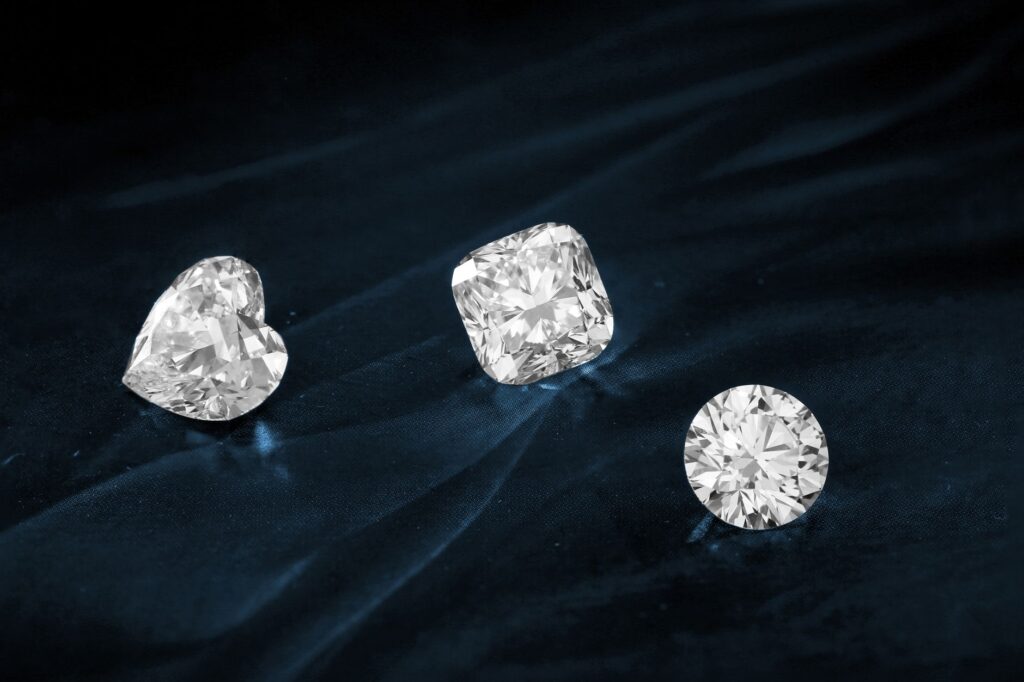
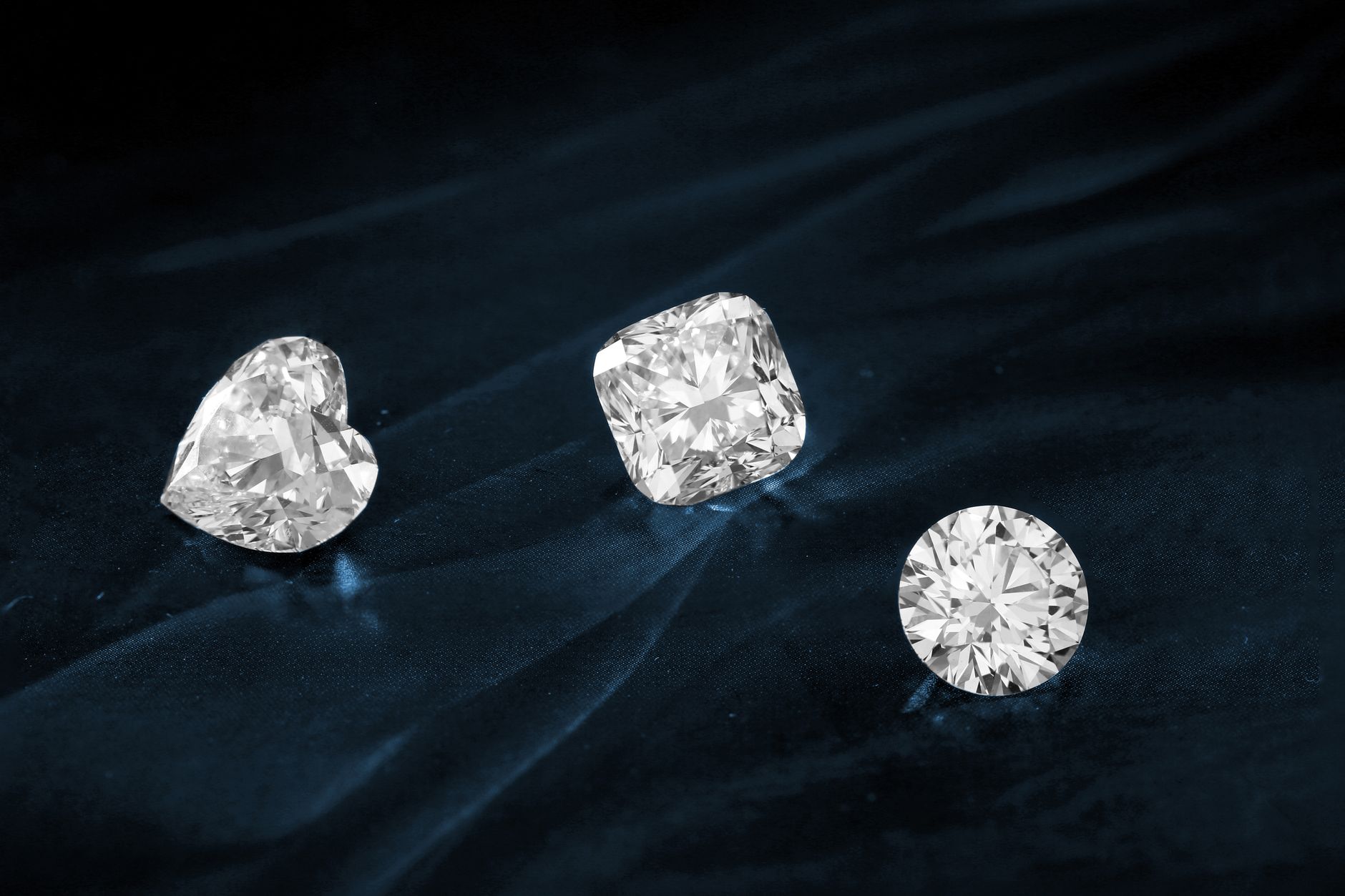
Cut grade is not the same as diamond shape. A round brilliant is the shape most often graded for cut by major labs such as GIA and AGS. Fancy shapes like oval, pear, emerald, and cushion usually do not receive the same cut grade system, so buyers must evaluate them by appearance, proportions, and light performance rather than by a single cut label.
This is especially important for lab grown diamonds, where buyers may see very attractive prices and larger sizes. A large stone with poor proportions may still look less impressive than a slightly smaller diamond with better cut.
How Cut Can Hide Inclusions
Cut can hide inclusions by changing the way your eye sees a diamond. When light is returning strongly from the stone, your attention is drawn to brightness, sparkle, and movement rather than to internal details. In a well-cut diamond, the lively pattern of light and contrast can make small inclusions less obvious at arm’s length.
By contrast, a diamond with weak cut may appear duller or glassier. When that happens, the eye has fewer bright distractions, so inclusions may stand out more. In some cases, poor cut can even make the diamond look more transparent, which allows dark crystals or clouds to be easier to detect.
The key point is that cut does not literally remove inclusions. It changes visibility. The practical result may be that one stone looks cleaner than another in everyday wear, even if both have a similar grading report.
Which inclusions are easier to hide
Not all inclusions behave the same way. Some are much easier to conceal than others.
- Small crystal inclusions can often be harder to notice in a bright, lively diamond.
- Needles and tiny pinpoints may blend into the overall appearance, especially in smaller sizes.
- Clouds can sometimes reduce transparency if they are dense, but light performance may still influence how noticeable they are.
- Inclusions near the girdle are often easier to hide once the diamond is set.
- Dark inclusions near the center are usually the most noticeable, especially in larger stones.
Some inclusions are much harder to hide, even with excellent cut. Feathers close to the edge, large black crystals, or inclusions directly under the table can remain visible because they sit in highly noticeable areas of the diamond.
Why location matters as much as size
A small inclusion under the table may be more noticeable than a slightly larger inclusion near the edge. That is because the center of the diamond is where the eye naturally looks first. If an inclusion sits in a prominent position, cut may help, but it cannot completely disguise it.
This is one reason experienced jewelers do not rely on clarity grade alone. They look at the type, position, and contrast of inclusions, then consider how cut will influence what the buyer actually sees.
What Buyers Actually See in Real Life
Most diamond shopping does not happen under a microscope. Buyers see diamonds under store lighting, home lighting, outdoor light, and occasionally in less flattering conditions such as office fluorescent light. What matters is not only whether a diamond is technically included, but whether those inclusions are visible in normal use.
A strong cut can make a diamond look more brilliant and “busy” in a good way. That visual activity tends to draw attention to the sparkle pattern instead of to the interior of the stone. For many buyers, that difference matters more than the clarity grade printed on the certificate.
Still, visibility is not universal. Someone holding a diamond close to their face in bright light may see more than another person viewing it from a normal social distance. In practice, cut can help hide inclusions from casual viewing, but not necessarily from close inspection.
Distance and setting matter
A diamond that looks clean at arm’s length may reveal more when viewed up close. Once the stone is set, prongs, bezels, and halo designs can also cover or distract from certain inclusions. This means the setting and viewing distance can be just as important as cut quality.
For example, an inclusion near the outer edge may disappear visually once it is covered by a prong. On the other hand, an inclusion under the center table usually remains in a more exposed position.
Lighting changes what you notice
Under strong lighting, a well-cut diamond often produces more flashes of brightness, which can make small inclusions less easy to focus on. In softer light, the same diamond may still look attractive, but internal features may become a little more noticeable if the stone has lower brilliance.
This is why diamonds should be evaluated in multiple lighting conditions whenever possible. A stone that looks clean in a jewelry case may not look the same in natural daylight, and vice versa.
Why Cut Matters So Much for Sparkle and Appearance
Cut affects the three main ways buyers describe diamond beauty: brilliance, fire, and scintillation. These are related but not identical. They all influence whether the diamond looks lively enough to draw the eye away from inclusions.
Brilliance
Brilliance is the white light reflected back to the eye. It is often the first thing people notice when they say a diamond looks bright. A diamond with strong brilliance can seem more open, luminous, and clean-faced than one with weak brilliance.
For inclusion visibility, brilliance matters because bright reflections can make the stone look more visually active. That activity can reduce the attention given to internal features.
Fire
Fire is the colored flash you see when light disperses into spectral colors. It is usually most noticeable when a diamond moves. While fire does not hide inclusions directly, it contributes to overall liveliness, which can reduce the eye’s focus on flaws.
Scintillation
Scintillation is the pattern of sparkle and contrast as the diamond moves. A diamond with excellent scintillation creates sharp flashes and dark-light contrast that many people find attractive. That contrast can make inclusions less obvious because the eye is drawn to movement and sparkle instead of still details.
Light return
Light return describes how effectively a diamond sends light back to the viewer. Better light return usually means a brighter stone, and brightness often works in favor of hiding minor inclusions. Poor light return can create dead areas where inclusions are easier to see.
Can Cut Hide Inclusions Better in Lab Grown Diamonds?
Lab grown diamonds and natural diamonds follow the same basic optical rules. Cut influences appearance in both, and a well-cut lab grown diamond can absolutely make inclusions less noticeable. The physics of light performance does not change just because the diamond was grown in a lab.
There is, however, a practical difference in the market. Lab grown diamonds are often available in higher clarity grades at lower prices, so buyers sometimes have more flexibility to choose both better cut and better clarity within a budget. That can make it easier to find a stone that looks very clean face-up.
At the same time, larger lab grown diamonds are common, and larger diamonds can make inclusions more visible simply because there is more area to inspect. In a bigger stone, cut can help, but a clearly visible inclusion may still be noticeable if the clarity grade is too low or the inclusion is in a prominent position.
Why lab grown shoppers should pay attention to cut
Many lab grown diamonds look impressive on paper because they offer strong size and attractive pricing. But if cut quality is weak, the stone may not deliver the sparkle buyers expect. Since lab grown diamonds are often bought for their visual appeal and value, cut becomes especially important.
If you are comparing lab grown diamonds, a better cut may provide more visible improvement than moving up slightly in carat weight. That is particularly true when the diamonds are being viewed side by side.
When Paying More for Better Cut Makes Sense
Paying more for better cut often makes sense when the goal is visual beauty. If a diamond is meant to be worn daily, you usually see it from normal distances under mixed lighting, not just in controlled grading conditions. In that environment, a diamond with better cut can look meaningfully more attractive.
Better cut is often worth the premium when you want the diamond to appear brighter, more balanced, and more lively. It may also be worthwhile if the stone has a clarity grade with minor inclusions that you would prefer not to notice easily.
However, the premium has limits. Once a diamond reaches a strong cut quality, additional spending may produce smaller visual gains. The point is not to chase perfection at any price, but to get a cut quality level that performs well in everyday use.
Where diminishing returns begin
The visual jump from poor cut to very good cut is usually easier to notice than the jump from very good cut to excellent cut. Buyers often feel the difference immediately when comparing a dull stone with a lively one. Beyond that, improvements become more subtle.
That does not mean excellent cut is not valuable. It means the buyer should understand which improvements are obvious and which are refined. For many people, the most noticeable gains come from moving out of the lower cut range, not from chasing tiny technical differences at the top end.
When Cut Cannot Hide Inclusions
There are situations where cut helps only a little. Large inclusions, high-contrast dark crystals, and inclusions in the center of the diamond may remain visible even in an excellent cut stone. This is especially true in larger carat weights, where the eye has more surface area to inspect.
Also, if an inclusion affects transparency, no amount of good cut can fully solve the problem. Transparency issues can make a diamond look hazy or watery, and that is a separate concern from sparkle. A bright cut may improve the appearance somewhat, but it cannot reverse the underlying effect.
Another limitation is magnification. Under a jeweler’s loupe or microscope, inclusions are supposed to be visible. Cut is not meant to defeat magnification. It is meant to improve face-up beauty in normal viewing conditions.
Practical Examples of Cut Versus Clarity
Real buying decisions are easier to understand through comparison. The examples below show how cut and clarity often trade off in practice.
Example 1: A well-cut 1.5-carat diamond versus a poorly cut 2-carat diamond
A 2-carat diamond has more size, but if the cut is poor, it may look less bright and less lively than a 1.5-carat diamond with excellent cut. In some cases, the smaller stone can look more attractive because it returns light better and draws the eye away from minor inclusions.
For many buyers, the larger diamond only feels like the better choice if size is the top priority. If beauty and sparkle matter more, the well-cut smaller diamond may be the smarter purchase.
Example 2: Excellent cut versus Very Good cut in everyday lighting
In many real-world settings, the difference between Excellent and Very Good cut in a round diamond can be subtle rather than dramatic. Some buyers will notice the stronger brightness and crispness of the Excellent stone, while others may not. The difference is often more visible when the stones are compared side by side than when a single stone is worn alone.
If the Very Good cut diamond is priced better and the overall appearance is strong, it can still be a sensible choice. But if the diamond also has borderline clarity, upgrading cut may help the stone look cleaner and more appealing.
Example 3: Higher clarity with poor cut versus lower clarity with excellent cut
A higher clarity diamond with weak cut may still show inclusions because the stone does not return light well enough to disguise them. A lower clarity diamond with excellent cut can sometimes look cleaner from normal viewing distance because the sparkle masks minor imperfections.
This does not mean clarity is unimportant. It means the best-looking diamond is often the one with the best balance, not simply the highest clarity grade.
How Cut Interacts With Clarity Grades
Clarity grades describe how many inclusions or blemishes a diamond has and how visible they are under magnification. Cut influences how those imperfections appear to the eye. In practical terms, a diamond with the same clarity grade can look cleaner or less clean depending on cut quality.
For buyers, that means clarity should not be judged in isolation. Two SI1 diamonds can look very different depending on where the inclusions are located and how well the stone is cut. One may appear eye-clean, while the other may show a noticeable dark spot.
This is especially important because many shoppers assume a higher clarity grade always looks better. In reality, a well-cut VS2 can sometimes look less impressive than a superbly cut SI1 if the SI1 has small, well-placed inclusions and stronger light return.
Eye-clean versus technically clean
An eye-clean diamond is one that does not show obvious inclusions to the naked eye from a normal viewing distance. That is often more useful to a buyer than a number on a grading report. Cut can play a major role in whether a diamond is eye-clean in practice.
However, eye-clean does not mean flawless, and it does not mean every person will see the same thing. Vision, lighting, and viewing distance all matter.
How Cut Interacts With Color
Cut can also influence how color is perceived. A diamond with excellent light return may appear brighter and more lively, which can make slight body color less noticeable. That is one reason some buyers feel comfortable choosing a slightly lower color grade when the cut is strong.
By contrast, a poorly cut diamond may appear more open and less reflective, which can make yellow or brown tint easier to see. This effect is not always dramatic, but it is common enough to matter during buying.
For round diamonds in particular, a strong cut often helps the stone appear whiter face-up than its color grade alone might suggest. For fancy shapes, the effect can vary more widely depending on shape and facet style.
What Experienced Jewelers Look For
Experienced jewelers rarely judge a diamond by one factor alone. They look at how the stone performs as a whole. That means they inspect cut, clarity, color, and proportions together, then compare the stone under different lighting conditions.
When they are trying to understand whether a diamond hides inclusions well, they often focus on the following:
- Where the inclusion sits in the stone
- Whether the inclusion has dark contrast
- How bright and lively the diamond appears face-up
- Whether the stone leaks light in visible areas
- How the diamond looks at normal viewing distance
These are practical observations, not just grading terms. A buyer may not need to become a gemologist, but it helps to think the way a jeweler does: what will the diamond look like when worn?
Understanding Light Leakage
Light leakage occurs when light passes through parts of the diamond instead of reflecting back to the eye. Those areas can look darker or less vibrant. In some diamonds, light leakage makes inclusions more noticeable because the stone lacks enough brightness to distract from them.
Not all leakage is equally visible, and some fancy shapes are more prone to it than others. But in general, a diamond that handles light well is better at disguising minor internal features than one that lets light escape inefficiently.
This is one reason buyers often prefer diamonds with strong cut performance over simply larger stones. A diamond with less leakage usually looks more attractive and can make inclusions less obvious in everyday wear.
Hearts and Arrows and Optical Precision
Hearts and Arrows is a pattern seen in some round brilliant diamonds with highly precise facet alignment. It is often associated with optical symmetry, which can create especially crisp and balanced light performance. While not every excellent diamond shows a perfect Hearts and Arrows pattern, the concept is useful because it points to precision.
Does Hearts and Arrows hide inclusions? Not directly. But in a stone with precise optical symmetry, the strong, even pattern of sparkle can make the diamond look especially clean and organized. That can reduce the visual prominence of minor inclusions.
Buyers should not treat Hearts and Arrows as a guarantee of clarity appearance. It is one sign of precision, not a substitute for clarity evaluation.
Comparison Table: How Cut Quality Can Affect Inclusions
| Cut Quality | What Buyers Usually See | Effect on Inclusions | Best For |
|---|---|---|---|
| Excellent | Bright, lively, strong sparkle and contrast | Minor inclusions are often less noticeable | Buyers who want the most attractive face-up appearance |
| Very Good | Strong appearance, usually bright and appealing | Can still hide small inclusions well, but results vary | Buyers seeking good value with solid visual performance |
| Good | Adequate sparkle, but may appear less lively | Some inclusions may stand out more than in higher cut grades | Budget-conscious buyers who can inspect the diamond carefully |
| Fair or lower | Less brightness, weaker light return, possible dull areas | Inclusions may be easier to see | Usually less ideal for buyers prioritizing beauty |
Comparison Table: Cut, Clarity, and What Matters Most
| Factor | What It Describes | What Buyers Notice | Impact on Hiding Inclusions |
|---|---|---|---|
| Cut | How well the diamond handles light | Sparkle, brightness, balance, liveliness | High, because strong light performance can mask minor inclusions |
| Clarity | How many inclusions or blemishes exist | Whether flaws are visible, especially up close | Direct, because fewer or smaller inclusions are easier to conceal |
| Color | How white or tinted the diamond appears | Whiteness face-up, especially in larger stones | Indirect, since bright cut can make slight tint less noticeable |
| Carat | Diamond weight and size | Visual size | Mixed, because larger stones can reveal inclusions more easily |
Advantages of Strong Cut Quality
There are several real benefits to choosing a well-cut diamond, especially if you care about how the stone looks in normal wear.
- Better sparkle, which draws attention away from minor inclusions
- Stronger brightness, which improves face-up appearance
- More balanced look, which can make the stone feel cleaner and more refined
- Often better value per dollar than paying only for carat weight
- Greater everyday satisfaction, since the stone tends to look attractive in more lighting conditions
For many buyers, these advantages matter more than theoretical differences on a grading report. A diamond is usually worn in motion, not studied under a microscope. Strong cut helps the stone perform where it counts.
Disadvantages and Trade-Offs
Strong cut is valuable, but it is not the only factor that matters. There are practical trade-offs to keep in mind.
- Higher cut quality can cost more, which may reduce budget available for size or clarity
- Some differences are subtle, especially between top cut grades
- Cut cannot fix everything, especially visible or high-contrast inclusions
- Fancy shapes can be harder to judge, because there is often no universal cut grade
In other words, paying more for cut is often sensible, but not automatically the best use of every dollar. The goal is balance.
Common Buyer Mistakes
Many first-time diamond buyers run into the same avoidable problems. Understanding them can save money and frustration.
Prioritizing carat over cut
A larger diamond with poor cut may look less impressive than a smaller stone with excellent cut. Buyers sometimes regret choosing size first because sparkle and brightness are what they notice every day.
Overpaying for clarity that is not visually needed
Some buyers spend heavily for higher clarity grades when a lower grade would have looked just as clean to the eye. If cut is strong, a well-placed inclusion may be visually negligible in a lower clarity stone.
Ignoring light performance
Not all diamonds that have the same shape and clarity will look equally beautiful. If you do not assess light return, you may end up with a diamond that looks flat or less lively than expected.
Assuming all diamonds sparkle the same
Sparkle depends heavily on cut. Two diamonds can have similar carat and color grades but very different visual appeal. This is one of the biggest misconceptions in diamond shopping.
Relying only on the certificate
A grading report is important, but it does not tell the whole story. Especially for fancy shapes and lab grown diamonds, visual inspection matters. The certificate should guide you, not replace your eyes.
How to Use Cut to Your Advantage When Buying
If your goal is to minimize the visibility of inclusions, start by thinking about the overall face-up look rather than chasing a single number. A strong cut grade, or at least strong visual performance, is often the best foundation for a clean-looking diamond.
Then look at clarity with the inclusion map in mind. Ask where the inclusions are, what type they are, and whether they are likely to be noticeable. Small, light-colored inclusions near the edge are often less concerning than dark inclusions in the center.
If you are shopping for a lab grown diamond, this same approach applies. Cut quality still matters, and because lab grown diamonds often offer more size for the budget, it is easy to get distracted by carat weight. Do not let size crowd out cut quality if beauty is your priority.
A practical buying order
- Choose a cut quality or light performance level that looks strong
- Check whether the diamond is eye-clean for your standards
- Balance color based on shape, size, and setting metal
- Decide how much size matters relative to beauty
- Use the certificate as a verification tool, not the only decision tool
Frequently Asked Questions
Does excellent cut always hide inclusions better?
Not always. Excellent cut often helps conceal minor inclusions by improving brightness and sparkle, but the type and position of the inclusion still matter. A dark inclusion under the table may remain visible even in an excellent diamond.
Can a diamond look flawless if the cut is great?
No. Cut can improve the appearance of clarity, but it cannot truly make an included diamond flawless. It can only make some imperfections harder to see in normal viewing conditions.
Is cut more important than clarity?
For many buyers, cut is more important to visual beauty than clarity once the diamond is eye-clean. A well-cut diamond often looks more attractive than a higher-clarity stone with weak light performance.
Do lab grown diamonds need better cut because they are cheaper?
Not because they are lab grown, but because the value equation changes. Since lab grown diamonds can offer larger sizes at lower prices, buyers often have room to prioritize cut without giving up as much carat weight.
What clarity grade is usually eye-clean?
That depends on shape, size, and inclusion type. Many diamonds in the VS and SI range can be eye-clean, but some are not. You should always evaluate the specific stone rather than rely on grade alone.
Can settings hide inclusions too?
Yes, sometimes. Prong placement, bezel settings, and halo designs can cover or distract from edge inclusions. Settings cannot hide central inclusions as effectively, but they can help in some cases.
Should I choose a smaller diamond with better cut?
If visual beauty matters more than size, often yes. A smaller diamond with strong cut may look brighter, cleaner, and more impressive than a larger diamond with weak proportions.
Is there a point where better cut is not worth the extra cost?
Yes. Once a diamond already has strong light performance, the gains from spending more may become subtle. At that stage, it may make more sense to use the budget for size, setting quality, or a slightly better clarity grade.
Conclusion
Can diamond cut hide inclusions? Yes, to a degree. A well-cut diamond can make minor inclusions less noticeable by improving brightness, sparkle, and overall visual balance. In everyday wear, that can make a real difference in how clean and attractive the stone appears.
But cut is not a cure for poor clarity. Large, dark, or poorly placed inclusions can still be visible, especially in larger diamonds or under close inspection. The most practical approach is to balance cut and clarity so the diamond looks beautiful in real-world conditions, not just on paper.
For buyers of lab grown diamonds and natural diamonds alike, the main lesson is the same. If you want a diamond that looks clean and lively, pay close attention to cut, then choose clarity based on what you can actually see. That is usually the most reliable path to a satisfying purchase.