When shoppers ask which diamond shape looks largest, they are usually trying to get the most visible size for their budget. That is a practical question, especially in engagement ring shopping, where carat weight does not always translate into the biggest-looking stone. Two diamonds can weigh the same and still look noticeably different in face-up size because shape, cut proportions, and depth all affect how large a diamond appears from above.
The short answer is that elongated shapes, especially oval, marquise, pear, and emerald cut diamonds, often look largest for their carat weight. Round brilliant diamonds can also look substantial, but they usually face more of their weight in a deeper pavilion, so they may appear smaller than elongated shapes of the same carat weight. Square shapes like princess cuts can look larger than rounds in some cases, but they are less efficient at spreading carat weight across the top surface than the longest-looking shapes.
That said, “largest” is not the same as “best.” Some shapes look bigger, some sparkle more, and some are easier to wear every day. The right choice depends on budget, finger shape, style preference, and how important visual size is compared with brilliance, durability, and overall appearance.
Quick Answer: Which Diamond Shape Looks Largest?
If your goal is maximum face-up size, the shapes that usually look largest per carat are:
- Marquise
- Oval
- Pear
- Emerald cut
These shapes tend to spread weight across the top surface more efficiently than a round diamond. In practical terms, that means you may get a diamond that covers more finger space for the same carat weight.
Among these, marquise often looks the largest because of its elongated shape and pointed ends. However, many buyers prefer oval or pear because they offer a similar size advantage with a softer, more widely worn look. For shoppers comparing engagement ring options, it helps to think in terms of face-up spread, not just carat weight.
Why Some Diamond Shapes Look Bigger Than Others
A diamond’s carat weight measures mass, not visible surface area. A shape that holds more of its weight in depth can look smaller from the top, while a shape that spreads weight out across the surface can look larger. This is why carat alone is not a reliable size guide.
Shape influences visible size in two main ways. First, the overall outline matters. Elongated shapes naturally cover more finger length, which creates the impression of a larger stone. Second, cutting style matters because it affects how much weight sits below the girdle, the diamond’s widest edge.
Cut quality also plays a role. A diamond cut too deep can hide weight below the surface and look smaller. A diamond cut too shallow may look wider but can sacrifice brilliance or durability. This is why shape and cut should be considered together, especially when comparing diamond cut quality and proportions.
How Face-Up Size Works
“Face-up size” means how large the diamond appears when viewed from above. It is one of the most useful ways to compare shapes because it reflects what people actually see in a ring. Face-up size is influenced by the diamond’s length, width, and depth.
Two diamonds with the same carat weight can have different face-up dimensions. A shallow oval may appear larger than a deep round because more of its weight is spread across the top. A deep round may carry extra weight underneath, making it face up smaller even though it weighs the same.
For buyers, the main takeaway is simple. If visible size matters more than shape symmetry or classic appearance, elongated cuts often deliver more apparent spread for the money.
Shape Comparison: Which Diamond Looks Largest by Shape?
Here is a practical overview of how popular shapes usually compare in visible size.
| Shape | How Large It Usually Looks | Why | Important Trade-Offs |
|---|---|---|---|
| Marquise | Very large | Longest face-up spread, pointed ends add visual length | Points can be more vulnerable to chipping |
| Oval | Very large | Elongated outline spreads weight efficiently | Can show a bow tie effect if proportions are off |
| Pear | Very large | Elongated shape creates strong visual length | One pointed end can be vulnerable in daily wear |
| Emerald cut | Large | Large table and open shape create broad surface presence | Shows inclusions more easily than brilliant cuts |
| Radiant | Large | Often has good spread and a rectangular outline | Depth varies, so size efficiency depends on the cut |
| Princess | Moderately large | Square outline can appear substantial | Usually not as size-efficient as elongated shapes |
| Round brilliant | Moderate | Excellent sparkle, but more weight may sit below the top | Usually appears smaller than elongated shapes of equal weight |
| Cushion | Moderate | Soft corners and varied cutting styles affect spread | Some cushions face up smaller depending on depth |
| Asscher | Smaller-looking for weight | Deep step-cut style concentrates weight below the surface | Prioritizes hall-of-mirrors style over maximum size |
1. Marquise
The marquise shape often looks the largest of all because it has the longest outline relative to its carat weight. Its narrow center and pointed ends create dramatic length, which can make the diamond appear much bigger on the finger than a round diamond of the same weight.
This shape is especially useful when the goal is finger coverage. It can make a stone feel more impressive without requiring a major jump in carat weight. For buyers focused on visible spread, marquise is one of the strongest options.
The trade-off is durability. The two pointed ends are more exposed and should be protected by the setting. A well-designed setting matters here more than it does with many other shapes.
2. Oval
Oval diamonds are one of the most popular choices for buyers who want a larger-looking stone without moving into a much higher carat weight. The elongated outline gives a broad face-up appearance, and the shape often flatters the finger by making it look longer and slimmer.
Oval diamonds can also offer a good balance between sparkle and size. Since they are brilliant-cut diamonds, they tend to have strong light return, which helps them appear lively rather than flat. This makes oval one of the best answers to the question of which diamond shape looks largest while still offering broad appeal.
The main issue to watch is the bow tie effect, a dark area across the center that can appear in some oval diamonds. Not every oval has a noticeable bow tie, but it is important to inspect the stone in person or through high-quality images or video.
3. Pear
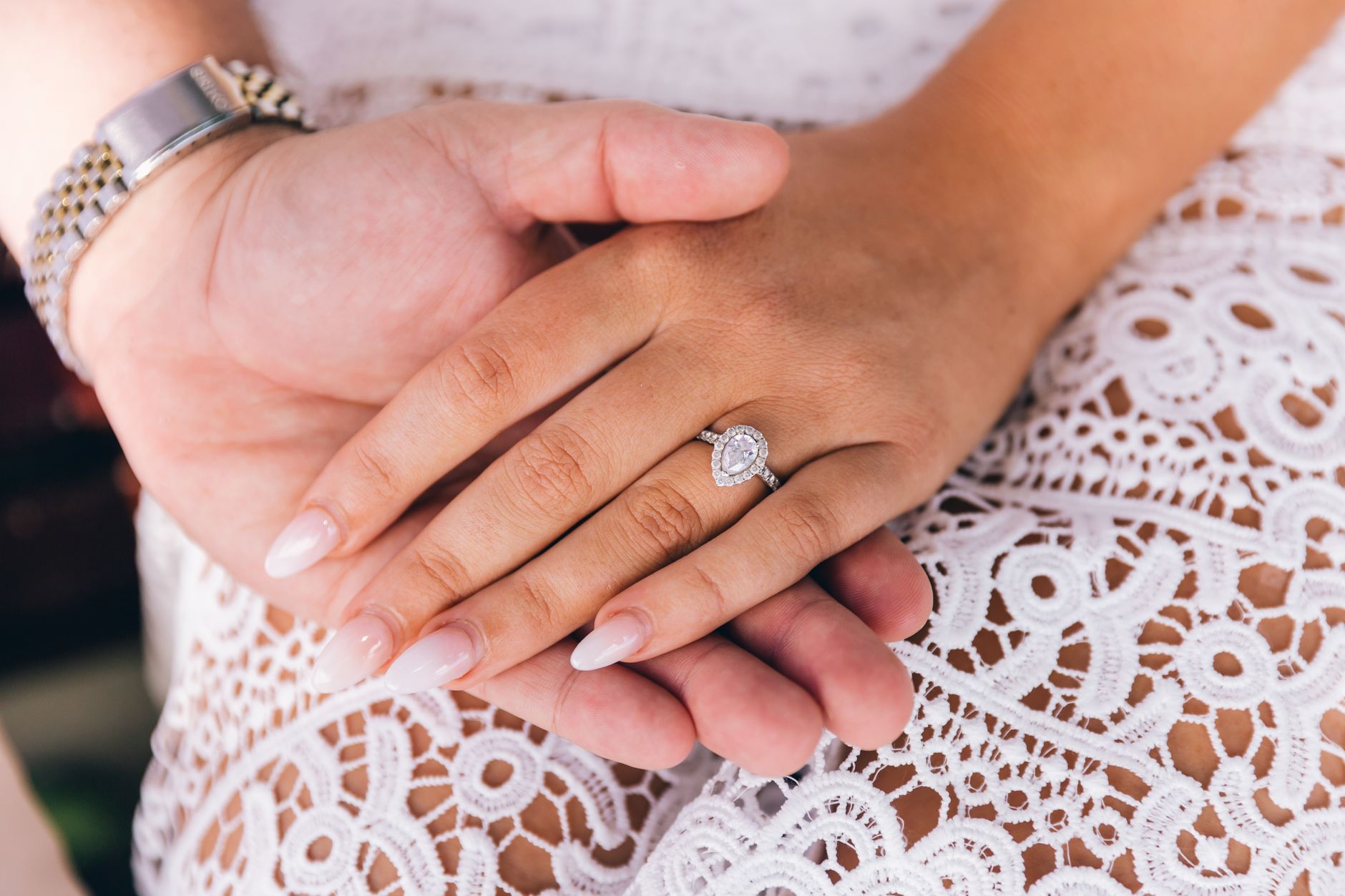
Pear-shaped diamonds combine the width of a round with the length of a marquise. That combination gives them a large visual footprint for their carat weight. They can appear especially substantial in rings because the pointed end creates directional length.
Pear shapes are a practical choice for buyers who want something distinct but still elegant. They often look larger than a round diamond of the same weight, especially when the length-to-width ratio is balanced well.
Like marquise, the pointed tip needs protection. A setting with a secure prong or V-tip is usually important for everyday wear.
4. Emerald Cut
Emerald cut diamonds look broad and elegant rather than fiery and brilliant. They can appear large because of their open table and rectangular outline, which creates a strong presence on the hand. The visible top surface is often impressive even when the carat weight is moderate.
However, emerald cuts spread light differently than brilliant cuts. Instead of a lot of sparkle, they show long flashes and a mirror-like appearance. That means their size advantage is visual, but their personality is different from a round or oval.
Emerald cuts also tend to show clarity characteristics more easily because of their open design. Buyers usually need to pay more attention to diamond clarity than they would with many brilliant shapes.
5. Princess Cut
Princess cuts can look substantial and modern, especially in square engagement rings. They often offer a strong face-up presence, but they do not usually spread as efficiently as the longest shapes.
For buyers who prefer a square or slightly rectangular outline, princess can still be a good value. It often gives a solid size appearance without the higher price associated with some elongated shapes. The sharp corners, however, should be protected in the setting.
6. Round Brilliant
Round brilliant diamonds are the classic choice for sparkle, and they remain the most popular diamond shape overall. But if the only question is which diamond shape looks largest, round usually is not the winner. A round diamond often carries more of its weight below the surface, which can make it appear smaller than an oval or marquise of equal carat weight.
That does not mean round looks small. It often looks balanced and bright, and many buyers value its timeless appearance more than maximum spread. For those comparing size and sparkle, round remains one of the strongest all-around choices, even if it is not the most face-up efficient.
7. Cushion Cut
Cushion cuts vary widely in appearance because the term covers several cutting styles. Some cushions look relatively large, while others face up smaller because of deeper proportions. In general, they are not the most size-efficient shape, but they can still look impressive depending on the exact stone.
The soft corners and rounded outline make cushion diamonds a favorite for buyers who want a softer vintage feel. If size is the priority, the buyer should compare actual measurements, not just carat weight.
What Is the Best Length-to-Width Ratio for a Large-Looking Diamond?
For elongated shapes, the length-to-width ratio matters a lot. This ratio compares the diamond’s length to its width and helps determine how stretched or compact it appears. A higher ratio usually means a longer look, which can create the impression of a larger stone.
There is no single perfect ratio for every shape, but these ranges are common starting points:
- Oval: about 1.30 to 1.50 for a balanced elongated look
- Pear: about 1.45 to 1.70 for a classic teardrop shape
- Marquise: about 1.75 to 2.25 depending on style preference
- Emerald cut: often around 1.30 to 1.50, though preferences vary
A more elongated ratio often looks larger, but too much length can make the shape look narrow or less balanced. The best ratio depends on the style the buyer wants, not just the goal of maximum size.
How Sparkle Affects the Perception of Size
Many shoppers assume the biggest-looking diamond is always the one with the largest spread. In reality, sparkle affects size perception too. A bright, lively diamond can appear more substantial because the eye is drawn to the movement of light across the surface.
Round brilliant, oval, pear, and radiant cuts often appear lively because they are designed to return a lot of light. Step cuts like emerald and Asscher do not sparkle the same way, but their broad flashes and clean lines can create a different kind of visual presence. That can make them feel elegant and spacious rather than busy.
When comparing shapes, it helps to think about size and sparkle separately. A diamond may look large but understated, or slightly smaller but more brilliant. Neither is inherently better.
Appearance, Brilliance, and Face-Up Presence by Shape
Here is a more detailed comparison of how the most common shapes typically perform visually.
| Shape | Appearance | Brilliance | Face-Up Presence | Notes |
|---|---|---|---|---|
| Round | Classic and symmetrical | Very high | Moderate | Timeless but not the most size-efficient |
| Oval | Elegant and elongated | High | Very high | Often one of the best size-to-carat choices |
| Marquise | Dramatic and elongated | High | Very high | Can look the largest but is less common |
| Pear | Soft and distinctive | High | Very high | Good balance of spread and style |
| Emerald | Clean and sophisticated | Moderate | High | Looks broad rather than sparkly |
| Princess | Modern and square | High | Moderate to high | Can look sizable, but not as spread-efficient as oval |
Advantages of Shapes That Look Largest
Choosing a shape that looks larger has several practical benefits. The most obvious is that it can help a buyer maximize visual impact without increasing budget as much as a larger carat round might require. This is one reason elongated shapes are so common in lab grown diamond shopping, where buyers often prioritize visible size and value together.
Other advantages include:
- More finger coverage: elongated shapes cover more of the finger and can appear substantial from a distance.
- Better perceived value: you may get more visible spread for the same money.
- Strong style presence: shapes like oval, marquise, and pear can make a ring feel distinctive without being overly ornate.
- Flexible ring design: larger-looking shapes can pair well with simple solitaires or side stones.
For some buyers, these benefits matter more than owning the heaviest diamond. This is especially true for first-time shoppers who are comparing different diamond shapes and trying to understand what gives the best overall appearance.
Disadvantages and Trade-Offs
The shape that looks largest is not always the easiest shape to live with. Elongated cuts may offer more face-up size, but they can have trade-offs in durability, symmetry, or light performance. A buyer should understand these before choosing based on size alone.
Common drawbacks include:
- More visible shape variation: small proportion differences can change how the stone looks.
- Greater vulnerability at points: marquise and pear shapes need protective settings.
- Possible bow tie effect: ovals and some marquise or pear diamonds can show dark areas if proportions are not ideal.
- Clarity visibility: step cuts like emerald show inclusions more easily.
- Less classic appearance for some buyers: not everyone prefers elongated or unconventional shapes.
These trade-offs do not make any shape bad. They simply show why the “largest-looking” option should be chosen with the full picture in mind, including how the ring will be worn every day.
Who Each Large-Looking Shape Is Best For
Marquise
Marquise is best for buyers who want the most dramatic finger coverage and a distinctive look. It can create the strongest impression of size, especially in slim hands or long ring settings.
Oval
Oval suits buyers who want a balance of size, brilliance, and broad popularity. It is a practical choice for those who like a large-looking diamond that still feels familiar and versatile.
Pear
Pear is a good fit for shoppers who want something elegant and slightly different from the standard round shape. It offers excellent spread and can feel romantic without being overly trendy.
Emerald Cut
Emerald cut is best for buyers who value visual presence, clean lines, and a refined look. It is less about sparkle and more about elegance and structure.
Princess Cut
Princess is a solid option for buyers who want a modern square shape with good size appearance and strong sparkle. It is often chosen by people who like a more geometric style.
Round Brilliant
Round works well for buyers who prioritize sparkle, timeless appeal, and easy matching with many ring styles. It may not look the largest for the carat weight, but it remains a dependable all-around choice.
How Lab Grown Diamonds Affect the “Looks Largest” Question
Lab grown diamonds matter in this conversation because they often allow buyers to choose a larger face-up size within a given budget. Since lab grown diamonds generally cost less than natural diamonds of comparable appearance and grading, many buyers can move into a shape with stronger spread, such as oval, pear, or marquise, without paying as much for carat weight.
That does not mean lab grown diamonds always make a ring look larger. Shape still matters, and cut quality still matters. But if the goal is maximizing visible size while staying within budget, lab grown diamonds can open up more options, especially for larger carat weights or higher color and clarity grades.
Buyers should still review the same fundamentals: cut proportions, certification, clarity, and color. A larger-looking lab grown diamond that is poorly cut can still appear dull or uneven. For a more complete overview, it helps to study lab grown diamonds alongside the shape and cut.
Important Buying Considerations Beyond Shape
If you are trying to find the diamond that looks largest, shape is only one part of the decision. The following factors can change the appearance of size just as much as shape can.
1. Cut quality
Cut quality influences how efficiently a diamond uses its weight. A well-cut diamond can appear brighter and more spread out than a poorly cut one of the same carat weight. This is why cut is one of the most important parts of any diamond purchase.
2. Depth percentage
Depth percentage tells you how much of the diamond’s weight is held vertically. A deeper diamond can look smaller from the top because more weight is hidden below the surface. This is a common reason why two same-carat diamonds can look different in size.
3. Table size
The table is the large flat top facet. It influences how open or broad the diamond appears. A very large table may create a bigger visual surface, but it does not always mean better performance. Balance matters.
4. Setting style
A setting can make a diamond appear larger or smaller. A thin band, halo, or low-profile setting may emphasize size, while a thick band can make the center stone look smaller by comparison. For buyers who want the largest visual impact, setting choice should be considered alongside shape.
5. Finger size
The same diamond can look bigger or smaller depending on the hand it is worn on. Smaller ring sizes often make diamonds appear larger, while wider fingers may make the same diamond seem more modest. This is why finger coverage is such a personal part of diamond shopping.
6. Color and clarity choices
For some shapes, buyers can trade a little color or clarity for a larger carat size without a dramatic visible loss. For example, brilliant shapes often hide inclusions better than emerald cuts. Understanding diamond color and diamond clarity helps buyers make smart compromises when size is the priority.
Common Mistakes Buyers Make When Choosing the Largest-Looking Shape
Many buyers focus on carat weight alone and ignore the measurements. That is one of the most common mistakes, because weight does not guarantee visible size. A deeper stone can weigh more and still look smaller than a shallower one.
Another mistake is choosing the longest shape without checking proportions. A very elongated oval or marquise may not suit every hand, and if the ratio is too extreme, the diamond can look narrow or awkward rather than large and elegant.
Buyers also sometimes overlook setting safety. Pointed shapes look dramatic, but they need protection. In daily wear, a weak setting can lead to damage over time, especially if the ring is worn constantly.
Finally, some shoppers assume a shape that looks largest will also be the best value in every case. The best value depends on the buyer’s priorities. A round diamond may be the better choice for sparkle lovers, while an oval may be better for size-conscious buyers.
How to Compare Diamond Sizes Correctly
If you want to compare which diamond shape looks largest, use measurements, not only carat weight. Look at the length and width in millimeters. Those numbers give a much clearer picture of actual face-up size.
Here is a practical approach:
- Compare the millimeter dimensions of each diamond.
- Check the depth percentage to see how much weight is hidden.
- Review photos or videos for shape symmetry and visual spread.
- Look for any bow tie effect in elongated brilliant cuts.
- Consider the setting, because it changes how large the diamond appears on the finger.
This method is especially useful when shopping online. It helps buyers avoid assuming that a higher carat number automatically means a bigger-looking diamond.
How Trends Influence Perceived Size
Shape trends can influence how large a diamond feels simply because people are more used to seeing certain outlines. Oval diamonds, for example, have remained popular because they balance size, sparkle, and a softer style. Their popularity has also made them feel familiar and modern at the same time.
Marquise and pear shapes may look especially large, but they are less common. That can make them feel more distinctive, which some buyers appreciate. Emerald cuts, meanwhile, offer a more architectural look that can seem larger because of their broad, open face-up structure.
Trends should not replace personal preference. A shape that looks largest on paper may not suit someone who wants a classic or understated look. Long-term appeal often matters more than passing trend cycles, especially in engagement rings.
Practical Examples Buyers Can Relate To
Consider two diamonds with the same carat weight. One is a round brilliant, and the other is an oval. The round may sparkle more intensely, but the oval usually covers more finger length and may appear larger overall. If the buyer wants presence on the hand, the oval often wins.
Now compare a marquise and a cushion cut of equal weight. The marquise will usually have stronger length and a larger visual footprint. The cushion may feel softer and more traditional, but it may not spread the same way across the finger.
Or compare an emerald cut and a round. The emerald cut can look broad and elegant with a large-looking top surface, but it will not give the same glittering sparkle as the round. The round may appear more lively, while the emerald cut may appear more architectural and spacious.
Frequently Asked Questions
Does a larger carat diamond always look bigger?
No. Carat measures weight, not visible size. A diamond with a deeper cut can weigh more and still look smaller from the top than a more spread-out shape.
Which diamond shape looks largest on the finger?
Marquise usually looks the largest, followed closely by oval and pear shapes. These elongated shapes create the most face-up spread for their carat weight.
Which shape looks biggest without losing too much sparkle?
Oval is one of the best compromises. It usually looks large while still offering strong brilliance because it is a brilliant-cut shape.
Do lab grown diamonds look bigger than natural diamonds?
Not by nature alone. A lab grown diamond and a natural diamond of the same shape, cut, and dimensions will look similar in size. The advantage of lab grown diamonds is often budget, which can let buyers choose a larger carat weight or a more size-efficient shape.
Is a marquise diamond too risky for everyday wear?
Not necessarily, but it does require a secure setting. The pointed ends are more vulnerable than rounded shapes, so protection matters more than it does with a round or oval.
Why do oval diamonds sometimes look smaller than expected?
Some oval diamonds are cut too deep, which hides weight below the surface. Others may have proportions that reduce visual spread or create a noticeable bow tie effect.
Which shape gives the best value if I want the biggest look?
Oval, pear, and marquise often provide strong visual size for the carat weight. The best value, however, also depends on cut quality, proportions, and the buyer’s style preference.
Should I choose size or sparkle first?
That depends on your priorities. If visible presence matters most, elongated shapes can be a smart choice. If sparkle and timeless appeal matter more, a round brilliant may be worth the trade-off in face-up size.
Conclusion
If you are asking which diamond shape looks largest, the most practical answer is that elongated shapes usually give the biggest face-up appearance. Marquise often looks the largest, while oval and pear are close behind and offer a more widely worn balance of size and sparkle. Emerald cut can also look large, but in a more elegant, open style rather than a high-sparkle one.
The best choice depends on what “largest” means to you. If you want maximum finger coverage, look closely at marquise, oval, and pear shapes. If you want a broad, refined look, emerald cut may be a better fit. If you want classic brilliance and timeless appeal, round still remains a strong option even if it is not the most size-efficient shape.
For the most accurate comparison, study millimeter measurements, cut quality, and proportions, not just carat weight. That approach gives you a clearer picture of how large a diamond will actually look and helps you choose a shape that fits both your budget and your style.