A 2 carat diamond sits in a part of the market where size becomes very noticeable, but so does price. That is exactly why lab grown diamonds have changed the conversation. A size that once felt out of reach for many engagement ring budgets is now realistic for a far wider group of buyers. The key question is not just whether a 2 carat lab grown diamond costs less. It is whether that lower cost makes 2 carats genuinely affordable in a practical, responsible, and worthwhile way.
The answer depends on what affordable means to you. For some buyers, affordable means staying under a specific budget. For others, it means getting strong visual impact without compromising too much on cut, color, clarity, or setting quality. A 2 carat lab grown diamond can absolutely make this size category more accessible, but affordability still depends on shape, quality grades, certification, ring style, and your expectations about long-term value.
Quick Answer
Yes, lab grown diamonds can make 2 carats affordable for many buyers who would not consider a 2 carat natural diamond realistic. In most cases, a lab grown 2 carat diamond costs dramatically less than a natural diamond of similar visible quality. That lower entry point often allows buyers to reach a larger size while still choosing a well-cut stone and a solid setting.
However, affordable does not mean universally cheap. A 2 carat lab grown diamond can still represent a meaningful purchase, especially if you want top cut quality, higher color grades, strong clarity, or a more complex ring design. It also comes with trade-offs, especially in resale expectations. The practical takeaway is that lab grown diamonds often make 2 carats budget-possible, but smart buying still matters.
Understanding the Carat Concept
What 2 carats actually means
Carat is a measure of weight, not visual size. One carat equals 0.2 grams, so a 2 carat diamond weighs 0.4 grams. That sounds straightforward, but it can be misleading because people often use carat as if it tells them exactly how large the diamond will look from the top.
It does not. Two diamonds can both weigh 2 carats and still look slightly different in face-up size. That happens because shape, cut, and depth all affect how much of the diamond’s weight is spread across the visible top surface.
What face-up size means
Face-up size refers to how large the diamond looks when viewed from above, which is how it is usually seen in a ring. This is the size your eye notices first. A well-proportioned round 2 carat diamond often measures around 8.0 to 8.2 millimeters in diameter, while an oval, pear, or marquise may appear longer and sometimes larger because of its shape.
This distinction matters because buyers shopping for size are really shopping for visual spread, not just weight on a grading report.
Why 2 carats is considered a major size jump
Moving from 1 carat to 2 carats is not a simple doubling in visual size, but it is still a major visual increase. A 2 carat diamond usually has much stronger finger presence than a 1 carat stone. It is large enough that cut quality, shape choice, and setting style become even more important, because poor decisions are easier to see at this size.
That is part of what makes the phrase Can Lab Grown Diamonds Make 2 Carats Affordable so relevant. Buyers are not just trying to save money. They are often trying to reach a more dramatic visual category without crossing into an unrealistic price range.
What Buyers Usually Expect From a 2 Carat Diamond
Expecting carat weight to translate directly into visible size
A common assumption is that 2 carats will look twice as big as 1 carat. In reality, the visible surface area increase is significant, but not a perfect 2x effect to the eye. A 2 carat round diamond looks noticeably larger than a 1 carat round, yet the difference may feel smaller than expected if someone is focused only on the carat number.
This matters because buyers sometimes overspend for a milestone size without understanding what the upgrade actually looks like in daily wear.
Expecting all 2 carat diamonds to look equally large
They do not. A deep-cut 2 carat round can hide weight where it is less visible, which makes it face up smaller. A well-cut 2 carat oval may appear larger than a 2 carat round because its elongated shape covers more finger length. A marquise or pear can also create the impression of greater size.
That means affordability is not only about reaching 2 carats. It is also about making sure the diamond actually looks like the size you are paying for.
Expecting lab grown to look different from natural
Visually, a lab grown diamond is still a diamond. It has the same basic chemical composition and crystal structure as a natural diamond. If two diamonds have comparable cut, color, and clarity, one lab grown and one natural, they can look the same to the naked eye.
The main difference for most buyers is not appearance. It is price, market positioning, and resale behavior.
What a 2 Carat Diamond Actually Looks Like
Face-up presence
A 2 carat diamond usually looks substantial. In a round shape, it tends to have clear visual presence even from a conversational distance. On many hands, it moves from looking like a modest center stone to looking like a statement center stone.
That said, “large” is always relative. On a size 4 finger, a 2 carat diamond can appear very prominent. On a size 8 finger, it may still look large, but less dramatic in proportion.
Finger coverage
Finger coverage refers to how much of the width of the finger the diamond seems to occupy. This strongly affects whether a stone looks delicate, balanced, or bold. A 2 carat round often gives broad, obvious coverage on smaller finger sizes, while elongated shapes such as oval, emerald, or marquise can create even more visual spread along the finger.
For buyers who want a ring to feel substantial in everyday wear, 2 carats is often the point where that impression becomes very clear.
How shape changes the visual impression
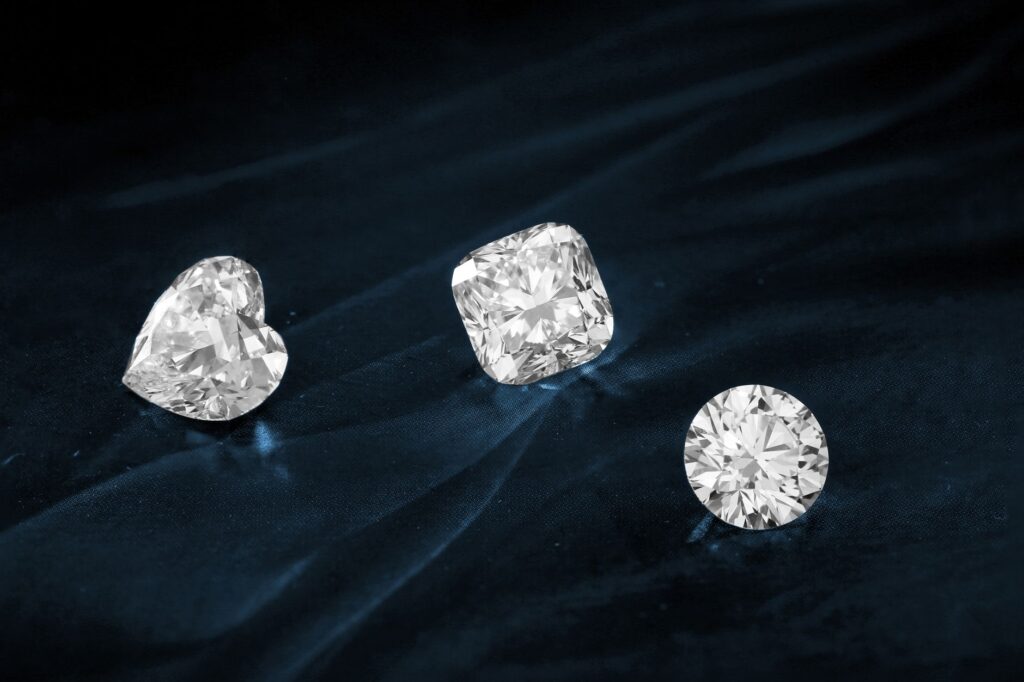
Shape has a major impact on whether 2 carats feels impressive, elegant, or oversized. Round diamonds generally offer balanced brilliance and classic proportions. Oval and pear shapes often appear larger than rounds of the same weight because they stretch lengthwise. Emerald cuts can look elegant and broad, but their step-cut facets show clarity more easily and create a different kind of sparkle.
This means a buyer asking whether lab grown diamonds make 2 carats affordable should also ask which shape makes 2 carats most visually efficient for their budget.
How Lab Grown Diamonds Change the Budget Equation
Why lab grown 2 carat diamonds cost less
Lab grown diamonds are created using advanced technology rather than mined from the earth. They still require expertise, equipment, time, and grading, but the market pricing structure is very different from natural diamonds. As a result, a 2 carat lab grown diamond usually costs far less than a natural diamond with similar grades.
This lower pricing is the main reason so many buyers can realistically consider 2 carats in the lab grown category. Instead of stretching a budget to buy a smaller natural stone, some choose a larger lab grown diamond with stronger visual impact.
What “affordable” really means here
Affordable is not a fixed number. One buyer may consider a few thousand dollars affordable for an engagement ring, while another may not. In practical terms, lab grown diamonds often move 2 carats from a luxury-only bracket into a broader mid-range jewelry budget category.
That does not mean every 2 carat lab grown diamond is inexpensive. Better cut quality, premium color, high clarity, popular shapes, branded settings, and designer mountings can raise the total price quickly.
How this affects real buying decisions
Because the center stone costs less, buyers often gain flexibility. That flexibility can be used in several ways:
- Choose a larger diamond while staying near the original budget
- Keep the size at 2 carats but improve cut, color, or clarity
- Invest more in the setting, metal quality, or accent stones
- Stay well under budget and still achieve the desired look
This is where lab grown diamonds offer their strongest practical advantage. They give buyers more room to balance size and quality rather than forcing an either-or decision.
Natural vs Lab Grown 2 Carat Diamonds
| Factor | 2 Carat Lab Grown Diamond | 2 Carat Natural Diamond |
|---|---|---|
| Visual appearance | Can look the same as natural if quality is comparable | Can look the same as lab grown if quality is comparable |
| Typical purchase price | Usually much lower | Usually much higher |
| Budget access to 2 carats | Far more attainable for many buyers | Often a major budget stretch |
| Resale expectations | Generally weaker resale market | Also resells below retail, but usually has stronger market recognition |
| Opportunity to prioritize cut and setting | Often easier within the same budget | May require more compromise |
| Emotional or origin preference | Appeals to buyers focused on price efficiency or modern production | Appeals to buyers who prefer mined origin or rarity |
This comparison shows why the answer to Can Lab Grown Diamonds Make 2 Carats Affordable is usually yes. The strongest difference is not in visible beauty. It is in price accessibility.
Factors That Change How Large 2 Carats Appears
Shape
Shape is one of the biggest size perception factors. A 2 carat oval, marquise, pear, or elongated radiant can often look larger than a 2 carat round because more of its weight is distributed in visible length and width. A round brilliant may still be the best choice for sparkle preference, but it is not always the largest-looking option.
Cut quality
Cut quality affects both beauty and visible size. A diamond cut too deep can carry hidden weight below the girdle, which is the outer edge of the stone. That means you pay for 2 carats but do not necessarily see the full benefit from the top. A well-cut diamond usually offers a better balance of brightness, sparkle, and face-up spread.
For round diamonds, cut quality is especially important because the market is very standardized and poor proportions are easier to compare against stronger examples.
Depth and table proportions
Depth is the measurement from the top of the diamond to the bottom, expressed as a percentage. A stone with excessive depth may look smaller face-up because too much weight is hidden vertically. The table is the large flat facet on top. Together, these proportions influence light performance and visible spread.
Buyers focused on size should not choose based on carat alone. Measurements in millimeters tell a more complete story.
Setting style
The ring setting can make a diamond look larger or smaller. A thin band often makes the center stone appear bigger. A halo setting, which surrounds the center with smaller diamonds, can create significantly more visual presence. A bezel setting can look sleek and protective, but depending on design it may slightly reduce the apparent edge-to-edge size compared with prong settings.
Even prong style matters. Delicate prongs can make the diamond feel more open and prominent, while heavy metalwork may reduce that impression.
Finger size
A 2 carat diamond does not look the same on every hand. On smaller fingers it covers more space and can look very large. On larger fingers it may still be beautiful and substantial, but its impact is more balanced than dramatic. This is why online photos can be misleading if they do not mention finger size.
Real-World Size Examples
2 carat round on a size 4 finger
On a size 4 finger, a well-cut 2 carat round often looks bold and highly noticeable. It may take up a substantial portion of the finger width and create strong center-stone presence even in a simple solitaire. For some buyers, this feels ideal. For others, it may feel larger than expected for daily wear.
2 carat round on a size 7 finger
On a size 7 finger, the same diamond still looks large, but more balanced. It usually reads as a substantial engagement ring center stone rather than an oversized one. This is a good example of why context matters so much when judging diamond size.
2 carat oval vs 2 carat round
A 2 carat oval often appears larger than a 2 carat round because it covers more visible length and can create a slender finger effect. Buyers who want the impression of maximum size often prefer oval, marquise, or pear shapes for this reason. The trade-off is that each shape has different bow-tie patterns, facet behavior, and style preferences.
1.75 carat vs 2 carat
This is one of the most important real-world comparisons. The visual difference between 1.75 and 2.00 carats may be noticeable, but it is often smaller than buyers expect, especially once the ring is worn rather than compared side by side. If the price jump is large, some buyers may get better value by staying under the 2 carat mark and prioritizing cut quality.
1.90 carat vs 2.00 carat
The difference here can be minimal to the naked eye, especially in shapes where measurements overlap. Buyers sometimes pay a premium for crossing the 2 carat threshold simply because it is a round number or psychological milestone. Lab grown pricing can soften this premium compared with natural diamonds, but the principle still matters.
Price vs Visual Benefit
Why prices rise faster than visible size
Diamond prices do not increase in a straight line with carat weight. As diamonds get larger, prices often rise faster than the increase in visible size. This is especially true in natural diamonds, where rarity drives major price jumps at higher carat weights. Lab grown diamonds reduce this effect, but they do not eliminate it entirely.
A 2 carat lab grown diamond can still cost meaningfully more than a 1.5 carat lab grown diamond, even though the visual difference may seem moderate in everyday wear.
Diminishing visual returns
There is a point where each additional fraction of a carat gives less visual payoff than buyers imagine. Going from 0.50 to 1.00 carat creates a major visible change. Going from 1.80 to 2.00 carats can be much less dramatic unless you compare them side by side.
This is why smart buyers often ask not “Can I afford 2 carats?” but “Is 2 carats the best use of my budget?” That is a better question.
When the upgrade is worth it
The upgrade to 2 carats can make sense when:
- You clearly prefer a stronger visual presence
- Your finger size supports a larger center stone well
- You are choosing a simple setting and want the diamond to carry the look
- Lab grown pricing allows the upgrade without sacrificing cut quality
- You would otherwise regret staying too small
When the upgrade may not be worth it
It may not be worth pushing to 2 carats when:
- You would need to accept a weak cut
- You are paying extra for a magic number rather than clear visual difference
- You prefer a lower-profile or more understated ring
- You could get a better-looking 1.7 to 1.9 carat diamond for less
- Your total budget would suffer in setting quality or overall craftsmanship
Who Should Consider Sizing Up to 2 Carats
Buyers focused on visible presence
If your top priority is a ring that looks clearly substantial, 2 carats is often where that goal becomes easy to achieve. Lab grown diamonds can make this size much more approachable without forcing you into obvious compromises on other quality factors.
Buyers comparing against natural diamonds
Some buyers initially shop for natural diamonds and discover that the size they want is beyond their comfort level in price. In that situation, lab grown can be the practical path to reaching the same visual category. The ring can still look beautiful and impressive, but the budget impact is often far lower.
Buyers choosing elongated shapes for maximum spread
A 2 carat oval, marquise, or pear lab grown diamond can deliver especially strong visual size relative to cost. For someone who cares more about face-up appearance than tradition, this can be one of the most efficient ways to maximize the budget.
Who Can Save Money Without Sacrificing Much Visual Impact
Buyers open to slightly under 2 carats
Stones in the 1.80 to 1.95 carat range can offer excellent value. They may look extremely similar to a full 2 carat diamond once mounted, especially if they are well cut and have favorable measurements. This is often a smart category for buyers who want the look of 2 carats without paying for the exact number.
Buyers prioritizing sparkle over sheer size
If brilliance matters more than size, a slightly smaller but better-cut diamond may be more satisfying than a larger stone with weaker performance. Sparkle affects beauty every time the ring moves. A poorly chosen larger diamond can look dull, dark, or smaller than it should.
Buyers using halo or other size-enhancing settings
A halo can make a center stone look much larger overall. Someone who wants the impact of a larger ring may be able to choose a slightly smaller center diamond and still get strong visual presence. This approach can stretch the budget effectively, though it creates a different style than a plain solitaire.
Common Buyer Mistakes
Chasing the number instead of the measurements
A 2.00 carat label can be psychologically powerful, but it should not override millimeter measurements. A diamond that weighs slightly less but faces up similarly can be a better buy.
Ignoring cut quality in favor of size
At 2 carats, poor cut choices become easier to notice. A larger diamond that leaks light, appears dark, or faces up small can be less impressive than a smaller, better-cut stone.
Assuming all shapes perform the same way
Shapes differ not just in outline but in how they handle light and how large they appear. A buyer who wants maximum visual size should compare actual dimensions and shape characteristics, not just carat weight.
Forgetting the setting budget
Some shoppers spend so much attention on the center diamond that they leave too little room for a durable, well-made setting. A 2 carat stone is not small. It needs an appropriate mounting that supports both security and overall appearance.
Overlooking certification
A grading report from a respected lab helps verify what you are buying. This is especially important when comparing prices and quality across multiple stones. At 2 carats, even small differences in grades or proportions can have noticeable visual and financial consequences.
Not thinking about long-term value expectations
Lab grown diamonds can be excellent for size and budget efficiency, but buyers should be realistic about resale. They are usually purchased for wear and enjoyment, not for investment performance. That does not make them a poor choice, but it does mean the decision should be based on present value and personal priorities.
Practical Buying Guidelines for a 2 Carat Lab Grown Diamond
Prioritize cut first
If you want a diamond to look bright, lively, and appropriately large, cut should stay near the top of your list. A well-cut diamond often looks better and sometimes even larger than a poorly cut stone of the same weight.
Use millimeter measurements, not just carat weight
Look at the actual dimensions on the grading report. This helps you understand whether the diamond has good spread for its weight.
Be flexible on exact carat number
Consider options just below 2 carats. In many cases, the visual difference is small while the price difference can still be meaningful.
Choose shape intentionally
Round is classic and brilliant, but not always the largest-looking option. Oval, pear, marquise, and elongated radiant cuts can deliver more visible spread per carat for buyers who want size emphasis.
Match size to lifestyle
A 2 carat diamond can be practical for everyday wear, but the right setting and profile matter. People with active lifestyles may prefer lower-set designs or shapes less prone to catching on clothing.
Frequently Asked Questions
Do lab grown 2 carat diamonds look fake because they are larger for the price?
No. A lab grown diamond is still a real diamond. If it has good cut, color, and clarity, it does not look fake simply because it was more affordable than a natural diamond of the same size.
Is 2 carats too big for an engagement ring?
Not necessarily. It depends on finger size, setting style, lifestyle, and personal taste. On some hands it looks bold and dramatic. On others it looks balanced and elegant. There is no universal “too big.”
Will most people notice the difference between 1.8 and 2 carats?
Usually not in everyday wear unless the stones are compared directly. Most casual observers respond to the overall ring look, not the exact carat number.
Can a 2 carat lab grown diamond still be expensive?
Yes. Although lab grown diamonds are generally much less expensive than natural diamonds, a 2 carat stone with strong cut quality, high color and clarity grades, and a quality setting can still represent a substantial purchase.
Is it better to buy a 2 carat lab grown diamond or a smaller natural diamond?
That depends on your priorities. If visual size and budget efficiency matter most, lab grown often makes more sense. If mined origin and market tradition matter more to you, a smaller natural diamond may feel like the better choice.
Does a halo setting make a 2 carat diamond unnecessary?
Not unnecessary, but it changes the equation. A halo can increase the ring’s overall visual size, which may allow some buyers to choose a smaller center stone and still get a larger-looking result.
Should I sacrifice color or clarity to reach 2 carats?
Sometimes modest flexibility can be reasonable, but large compromises are not always wise. In many cases, a slightly lower clarity grade that is eye-clean is fine. Color should be evaluated in relation to shape and setting. Cut quality should usually remain a priority.
Are lab grown diamonds a good choice if resale matters to me?
They are generally less attractive if resale is a major priority. Lab grown diamonds are usually strongest as a purchase for personal enjoyment and visual value rather than future financial return.
Conclusion
Lab grown diamonds have made 2 carats far more attainable than it used to be. For buyers who want a larger center stone, that shift is significant. In practical terms, the answer to Can Lab Grown Diamonds Make 2 Carats Affordable is yes for a large portion of today’s market. They often allow buyers to reach a substantial, noticeable size without the steep budget jump associated with natural diamonds.
Still, affordability should be judged carefully. A smart 2 carat purchase depends on more than the lab grown label. Shape, cut, face-up measurements, finger size, setting style, and your expectations about long-term value all play an important role. In many cases, the best decision is not simply to buy the biggest diamond possible. It is to choose the combination of size, beauty, and cost that gives you the strongest real-world value.
For some buyers, that will be a full 2 carat lab grown diamond. For others, it may be a slightly smaller stone with excellent proportions that looks nearly as large once set. The most useful mindset is to focus on what the diamond will actually look like and how comfortably it fits your budget, rather than treating the carat number alone as the goal.