If you are trying to understand how to evaluate heart shape diamond cut, the main thing to know is that this shape relies heavily on proportion, symmetry, and visual balance. A heart shape diamond can look elegant at one size and awkward at another if the cut is off, even when the color and clarity grades are strong.
Unlike round diamonds, heart shapes do not have a simple universal cut grade that tells you everything you need to know. The cleft, the rounded lobes, the point, and the overall length-to-width relationship all influence how attractive the diamond looks in real life. Buyers often focus on carat weight first, but with heart shape diamonds, cut quality is usually what determines whether the shape reads clearly and sparkles well.
This guide explains what to look for, what grading reports do and do not tell you, and how to judge a heart shape diamond in a practical way. It is written for buyers who want real-world guidance, whether they are shopping for a lab grown diamond, a natural diamond, or comparing both.
Quick Answer: How to Evaluate Heart Shape Diamond Cut
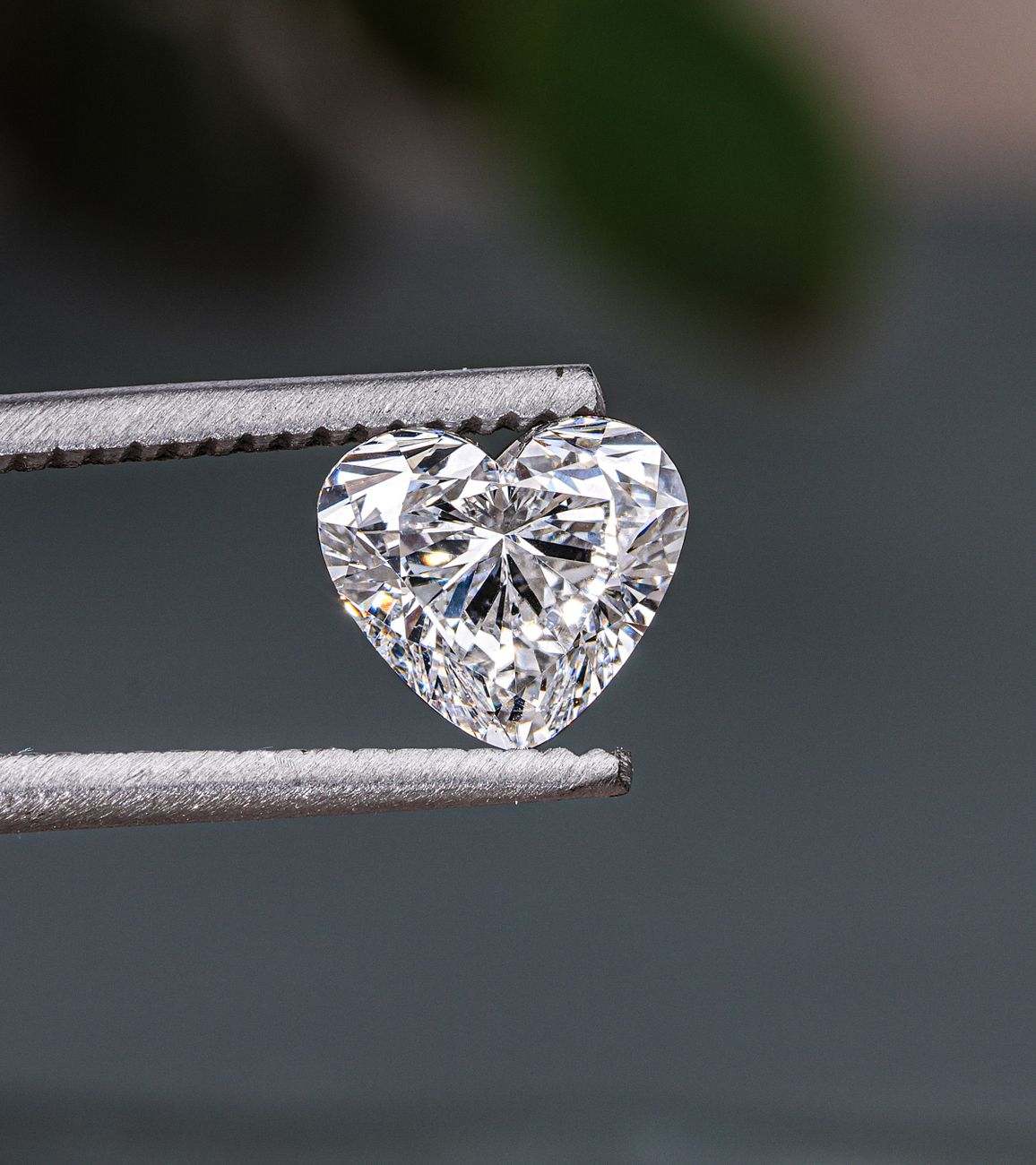
To evaluate a heart shape diamond cut, look first at the shape itself, then at the way the diamond handles light. A well-cut heart shape should have even lobes, a distinct cleft, a clean point, and a balanced outline that looks intentional rather than lopsided. It should also show strong brightness and sparkle without large dead areas.
For most buyers, the best approach is to review the diamond in photos or video, check the grading report for symmetry and proportions, and pay close attention to how the stone looks face-up. If the heart shape looks uneven, too narrow, too flat, or too bulky, the cut may not be ideal even if the diamond falls within normal grading ranges.
In practical terms, a slightly smaller heart shape with excellent cut can look more attractive than a larger heart shape with weak symmetry or poor light return. That is especially true in lab grown diamonds, where pricing often makes it easier to prioritize cut quality without sacrificing as much size.
What Makes Heart Shape Diamond Cut Different?
Heart shape diamonds are a type of fancy shape, which means they are cut to create a specific outline rather than the round form used for round brilliant diamonds. Because of that, there is no single universal cut grade like the one used for round diamonds by some labs. Instead, buyers have to evaluate the shape visually and through proportions.
The heart shape has several distinct features that all need to work together. The two rounded lobes at the top should appear balanced, the cleft should be clear but not overly deep, the wings should be even, and the point should come to a clean finish without looking fragile or blunted.
Cut quality matters for more than shape alone. It influences how light travels through the diamond, which affects brightness, sparkle, and the contrast pattern you see when the stone moves. A heart shape diamond can have the right outline but still look dull if the internal faceting does not return light well.
The Main Visual Parts of a Heart Shape Diamond
When evaluating the cut, it helps to break the heart shape into its visible parts. Buyers do not need to memorize gemological terminology, but understanding the structure makes comparison much easier.
- Rounded lobes: The two top curves of the heart. They should look even and similar in size.
- Cleft: The indentation at the top center. It should be defined enough to read as a heart, but not so deep that it creates a weak or awkward top.
- Wings: The outer curves that connect the lobes to the point. These should flow smoothly.
- Point: The bottom tip of the heart. A good point is clean and centered, not dull or off to one side.
- Outline: The full perimeter shape. This is one of the biggest indicators of quality in heart shape diamonds.
What Is Cut Quality in a Heart Shape Diamond?
In simple terms, cut quality describes how well the diamond has been shaped and faceted to show beauty. For heart shape diamonds, that means two things matter at once. The outline must look appealing, and the faceting must support brightness and sparkle.
Cut quality is not the same as carat weight, which measures size, or clarity, which measures internal features. A large heart shape diamond can still look unattractive if the cut is weak. A smaller one can look sharper, brighter, and more pleasing if the cut is excellent.
In fancy shapes, cut evaluation is more subjective than in round diamonds. This is because there is less standardized grading and more variation in how hearts are fashioned. That is why buyers should rely on a combination of proportions, symmetry, and visual inspection rather than a single number.
Why Heart Shape Cut Is Harder to Judge Than Round Cut
Round brilliant diamonds have well-established cut grading systems from major laboratories, and those grades are easier to compare. Heart shape diamonds do not have an equivalent universal cut grade. As a result, two stones with the same carat weight and the same color and clarity grades can look very different.
That means the buyer has to become more visually aware. Instead of asking only, “What is the grade?” it is better to ask, “Does this heart look balanced, and does it return light well?” That shift in focus can prevent expensive mistakes.
How to Judge the Shape of a Heart Shape Diamond
The shape is the first thing most people notice, even before sparkle. A heart shape diamond should look like a heart at a glance. If the shape takes effort to recognize, or if it appears more like a pear or a rounded triangle, the cut may be weak.
Shape quality is especially important when the diamond is set in a ring. Once mounted, you may not be able to examine the stone from every angle, so the face-up outline becomes even more important.
Look for Symmetry in the Lobes
The top lobes should be similar in size, curve, and fullness. If one lobe is larger or puffier than the other, the heart can look uneven. This is one of the easiest flaws for a buyer to notice, even without gemological training.
Perfect symmetry is rare, but the closer the lobes match, the more polished and intentional the diamond looks. Minor differences may not bother every buyer, but obvious imbalance usually lowers the overall visual appeal.
Check the Cleft
The cleft should be visible enough to define the heart shape. If it is too shallow, the stone can look like a rounded oval or a modified pear. If it is too deep, the top of the diamond may appear pinched or split too dramatically.
A good cleft feels proportionate. It should support the heart outline without creating visual weakness. Buyers often find that a heart shape looks more elegant when the cleft is clear but not exaggerated.
Evaluate the Point
The point should come together cleanly and sit on the center line of the diamond. If the point is blunt, misshapen, or off-center, the shape may appear less refined. This detail matters a lot because the bottom tip is one of the defining features of the heart shape.
A fragile-looking point is also a practical concern. While diamond is durable, a sharp point can be more vulnerable in certain settings. Jewelers often consider this when recommending protective prong placement.
Observe the Overall Outline
The outline should feel smooth and balanced from top to bottom. Ideally, the heart should be broader at the lobes, gently narrow through the sides, and come to a graceful point. If the outline looks too squat or too stretched, the visual harmony may suffer.
Length-to-width ratio plays a major role here. Many buyers prefer a heart shape that looks neither too wide nor too elongated. There is no single perfect ratio, but a balanced ratio usually looks more recognizable and flattering.
Understanding Proportions in Heart Shape Diamond Cut
Proportions refer to the measurable relationships among the diamond’s dimensions. In a heart shape diamond, the most useful proportions include length, width, depth, and table size. These numbers help explain how the diamond was cut, but they do not tell the whole story.
For buyers, proportions matter because they influence appearance. A heart shape with unusual proportions may face up too small, look too deep, or appear stretched in a way that weakens the shape. This is why a grading report should be used as a guide, not as the final decision-maker.
Length-to-Width Ratio
The length-to-width ratio compares the diamond’s height to its width. In heart shape diamonds, this ratio affects whether the stone looks compact, balanced, or elongated. A slight change in this ratio can noticeably change how the heart appears on the finger.
Many buyers prefer a ratio that gives the heart a classic, recognizable look. If the diamond is too wide, it can appear stubby. If it is too long, it may lose some of the soft heart character and start to feel narrow.
Depth Percentage
Depth percentage shows how tall the diamond is relative to its width. A very deep diamond can hide weight in the pavilion, which means you pay for carat weight that is less visible from above. A shallow diamond may spread wider but risk losing brightness or showing light leakage.
For buyers, the practical question is whether the diamond faces up attractively. A deeper heart shape might look smaller than expected for its carat weight, while a shallower one might look larger but less lively. Neither extreme is ideal.
Table Percentage
The table is the large flat top facet of the diamond. Its size affects how light enters and exits the stone. In heart shape diamonds, an extremely large or small table can change the balance of brilliance and fire, which is the colored flash of light you see when the diamond moves.
Table percentage is useful, but it should not be used in isolation. Two diamonds with similar table sizes can perform very differently depending on the rest of the faceting.
What Is Light Performance and Why Does It Matter?
Light performance describes how well a diamond interacts with light. This includes brightness, sparkle, fire, and contrast. In simple terms, it tells you whether the diamond looks lively or flat.
Heart shape diamonds with strong light performance look more attractive in everyday settings, especially under indoor lighting, office lighting, and mixed light conditions. That matters because most buyers do not view diamonds only under ideal spotlight conditions.
Brilliance
Brilliance is the white light returned by the diamond. A well-cut heart shape should appear bright across the face of the stone rather than dark in the center or dull at the edges. Good brilliance makes the diamond look clean and energetic.
If brilliance is weak, the diamond can appear sleepy or glassy. This is often more noticeable in larger stones, where poor light return becomes easier to see across the face of the diamond.
Fire
Fire is the colored flash created when white light is split into spectral colors. It is easier to notice in bright lighting and when the diamond moves. In heart shape diamonds, balanced faceting helps create pleasing fire without making the stone look too busy.
Fire is not the same as brilliance. A diamond can be bright but not especially fiery, or fiery but not as white-bright. The best stones usually offer a healthy balance.
Scintillation
Scintillation is the pattern of sparkle and contrast you see as the diamond moves. It includes the flashes of light and dark that make the diamond feel dynamic. A heart shape with good scintillation looks lively instead of flat.
Too much contrast can make a diamond seem patchy. Too little contrast can make it look washed out. The goal is a pattern that looks crisp and engaging from normal viewing distances.
Light Leakage
Light leakage happens when light passes through the diamond without returning to the eye. In practical terms, this creates dull or see-through areas. Buyers usually notice it as a lack of brightness in certain parts of the stone.
In heart shape diamonds, light leakage can occur near the cleft, along the wings, or through the center if the proportions are not well balanced. A diamond with obvious leakage may still be attractive in photos, but under normal lighting it often looks less vibrant.
How Cut Quality Affects Real-World Appearance
Most buyers want to know what cut differences they will actually see. The answer is that shape balance and light return are usually visible, while many smaller technical differences are only noticeable to trained eyes. This is especially true when comparing fancy shapes in everyday settings.
A well-cut heart shape diamond tends to look crisp, bright, and clearly shaped from a normal viewing distance. It also tends to hold its visual appeal in a wider range of lighting conditions. A weaker cut may still sparkle, but the stone can look uneven, flat, or less refined.
What Buyers Usually Notice First
In person, most buyers notice the following before anything else:
- Whether the heart shape is easy to recognize
- Whether the two lobes look even
- Whether the diamond has bright sparkle or looks dull
- Whether the stone appears too narrow, too wide, or too deep
- Whether the point looks neat and centered
These are practical visual cues, not laboratory measurements. If one of these elements looks wrong, the diamond may feel less satisfying even if the paperwork looks fine.
What Buyers Usually Do Not Notice Immediately
Most shoppers do not notice tiny differences in facet angles or minor grading variations unless they compare diamonds side by side. Small improvements in cut can matter, but they often become subtle once the diamond is set and viewed casually.
This is why paying more should be tied to visible benefit. If an upgrade costs more but produces only a slight and hard-to-see improvement, some buyers will prefer to put that money toward a larger carat weight or a better setting. Others may prioritize the sharper visual performance.
How Heart Shape Diamond Cut Compares with Other Diamond Shapes
Heart shape diamonds require more shape judgment than many other fancy cuts. In round diamonds, the most important cut indicators are often better standardized. In hearts, the visual outline itself is part of the beauty, so even small asymmetries stand out more easily.
Compared with oval or pear diamonds, heart shapes are also more specialized. A buyer who loves the romantic look of a heart shape is often accepting a narrower range of acceptable proportions. That makes cut evaluation more important, not less.
| Aspect | Heart Shape Diamond | Round Brilliant Diamond |
|---|---|---|
| Shape sensitivity | Very high. Outline symmetry is critical. | High, but cut grading is more standardized. |
| Ease of judging cut | Moderate to difficult. Visual inspection matters a lot. | Easier. Lab cut grades are widely used. |
| Light performance consistency | Varies more from stone to stone. | Usually more predictable at higher cut grades. |
| Risk of visible imbalance | High. Uneven lobes or a weak point are noticeable. | Lower. The shape is simpler and more uniform. |
| Buyer focus | Shape plus sparkle plus proportions. | Cut grade plus sparkle. |
Grading Reports and What They Can Tell You
A grading report is helpful, but it is not enough by itself for a heart shape diamond. Reports from laboratories such as GIA or IGI can provide important details about carat, color, clarity, and measurements. However, they usually do not give a simple, universal cut grade for heart shape diamonds in the way buyers may expect.
That means the report should be treated as one tool among several. It helps confirm the diamond’s identity and its basic measurements, but it cannot fully tell you how attractive the shape will look in person.
What to Check on the Report
When reviewing the report, look for:
- Measurements: Helpful for understanding spread and proportion.
- Depth percentage: Useful for spotting hidden weight or shallow cutting.
- Table percentage: Helps indicate how the top of the stone is fashioned.
- Symmetry grade: Important, though not a full substitute for visual review.
- Polish grade: Tells you how smooth the facet surfaces are.
These details support your evaluation, but they do not replace seeing the diamond. A top report on paper can still hide a poorly balanced heart outline or unattractive light return.
Symmetry and Polish
Symmetry refers to how well the diamond’s facets and shape line up with each other. In a heart shape diamond, symmetry is especially important because the outline is so distinctive. Poor symmetry can make the lobes uneven or the point look off-center.
Polish describes how smooth and finished the facet surfaces are. Better polish can improve the way light reflects off the diamond, although the effect is usually more subtle than basic shape or proportion issues. For most buyers, symmetry is the more visible concern.
Lab Grown Diamond Considerations
Lab grown heart shape diamonds deserve special attention because they often provide more carat weight for the price. That can be helpful, but it also means buyers should not get distracted by size alone. A larger lab grown heart shape diamond with poor cut may still look less appealing than a smaller diamond with strong proportions.
Lab grown diamonds can be an excellent option for buyers who want better value in carat weight, color, or clarity. But the same visual rules apply. If the shape is awkward or the light performance is weak, the lower price does not solve the problem.
Why Cut Still Matters in Lab Grown Diamonds
Because lab grown diamonds are often priced more accessibly than natural diamonds, buyers sometimes have room to prioritize cut quality. That can be a smart use of budget. The visible gains from better cut are usually more meaningful than paying extra for a larger stone with a less attractive outline.
Still, lab grown diamonds can vary just as much as natural diamonds in how they are cut. The source of the diamond does not guarantee a better heart shape. You still need to inspect the stone carefully.
How to Compare Two Heart Shape Diamonds
Comparing heart shape diamonds is easiest when you evaluate them side by side using the same lighting and viewing distance. A comparison should not focus only on carat weight or price. It should also assess shape, brightness, and balance.
When possible, look at high-resolution images or video rather than relying on static photos alone. Motion often reveals how well a heart shape returns light. A diamond that looks acceptable in a single photo may show obvious dark areas when rotated.
| Feature | Stronger Heart Shape Cut | Weaker Heart Shape Cut |
|---|---|---|
| Outline | Balanced, clearly heart-shaped, clean point | Uneven, too wide, too narrow, or unclear heart form |
| Lobes | Even and proportional | Asymmetrical or bulky on one side |
| Brightness | Bright across most of the face | Patchy, dark, or dull in areas |
| Sparkle | Consistent and lively | Uneven or limited sparkle |
| Face-up size | Looks proportional for its carat weight | May hide weight or appear smaller than expected |
When Paying More for Better Cut Makes Sense
Paying more for a better cut makes sense when the visual improvement is obvious and important to you. In heart shape diamonds, that often means better symmetry, a more pleasing outline, and stronger light return. These features are easy to appreciate in everyday use.
Higher cut quality is especially worth considering if the diamond will be viewed often, worn in a prominent setting, or chosen as a sentimental piece where appearance matters more than maximizing size. It can also be worthwhile if you want a diamond that holds up better in mixed lighting.
On the other hand, paying extra for minor technical improvements may not be worthwhile if the visible difference is tiny. The right choice depends on whether the improvement is something you and others will actually notice.
Where Diminishing Returns Begin
Once a heart shape diamond has strong symmetry, a pleasing outline, and good light return, further improvements may become subtle. At that point, you may be paying for refinement that only an experienced grader would recognize. Some buyers are happy with that, but many are not.
This is why the best value is often found in the range where the diamond already looks excellent to the eye. There is little benefit in overpaying for measurements that do not materially improve how the stone appears face-up.
Practical Buyer Scenarios
Real comparisons help more than theory. Here are some realistic examples of how cut quality changes the look and value of heart shape diamonds.
A Well-Cut 1.5-Carat Diamond Versus a Poorly Cut 2-Carat Diamond
This is one of the most common trade-off situations. The 2-carat diamond may sound more impressive on paper, but if its cut is weak, it may look dull, uneven, or awkward in shape. The 1.5-carat stone with better cut can appear more brilliant and more attractive from normal viewing distances.
Many experienced buyers and jewelers would choose the better-cut diamond if visual beauty is the priority. Size matters, but it does not compensate for poor shape execution in a heart cut.
Excellent Cut Versus Very Good Cut in Everyday Lighting
The difference between excellent and very good can be noticeable, but not always dramatic. In a heart shape diamond, the more important question is whether the stone maintains a good outline and light return in the real world. A very good stone may still be a smart purchase if the price is right and the visual difference is minimal.
If the excellent stone has cleaner symmetry and better sparkle, that premium may be justified. If both look very similar in casual viewing, the less expensive option may be the better value.
Higher Clarity with Poor Cut Versus Lower Clarity with Excellent Cut
This comparison often surprises buyers. A diamond with higher clarity but weak cut can look less appealing than a lower-clarity stone with outstanding cut. That is because cut controls how much of the diamond’s beauty is visible at a glance.
For many heart shape diamonds, slightly lower clarity is acceptable if the diamond is eye-clean and the cut is strong. Buyers often care more about visible sparkle than about a clarity grade they cannot see without magnification.
Advantages of Choosing a Well-Cut Heart Shape Diamond
A well-cut heart shape diamond offers several practical benefits. These benefits are visible, not just technical, which is why cut should be taken seriously when comparing stones.
- Better shape recognition: The heart outline is easier to see immediately.
- More attractive balance: Symmetry makes the diamond look polished and intentional.
- Stronger sparkle: Good light return creates more lively brilliance and scintillation.
- Better perceived value: The diamond often looks more impressive than a poorly cut stone of similar size.
- Longer-term satisfaction: Buyers are less likely to regret the purchase after seeing the stone in different lighting.
Limitations and Trade-Offs to Keep in Mind
Even a very good heart shape diamond has trade-offs. Fancy shapes often vary more than round diamonds, so perfection is harder to find. Buyers may need to accept slight differences in balance or proportion.
There is also less standardized cut grading for heart shapes, which means evaluation depends more on judgment. That can make shopping slower and more dependent on vendor images, expert help, or in-person inspection.
Another trade-off is that maximizing the heart shape look may not always maximize spread or face-up size. A diamond cut for the best visual heart shape can sometimes appear a little smaller than a more aggressively spread stone of the same carat weight.
Common Buyer Mistakes When Evaluating Heart Shape Diamond Cut
Many disappointments come from the same set of mistakes. Avoiding these can save money and frustration.
- Prioritizing carat over cut: A larger heart with a weak outline often looks less appealing than a smaller well-cut one.
- Assuming all sparkle is equal: Diamonds can sparkle differently depending on cut quality and lighting.
- Ignoring symmetry: Uneven lobes or an off-center point are easy to notice once you know to look.
- Trusting a report alone: The grading report cannot fully show shape quality or face-up beauty.
- Overpaying for clarity: Higher clarity does not improve the look as much as better cut does.
- Buying from one photo only: Still images can hide dark areas or shape issues that show in motion.
- Not checking the setting: A poor setting can hide the point or make the diamond look less balanced.
How to Shop More Confidently
If you want to evaluate a heart shape diamond carefully, use a step-by-step approach. Start with the outline, then move to proportions, then light performance, and finally the grading report. This order helps you focus on what is most visible.
Ask yourself a few practical questions: Does it immediately read as a heart? Do both lobes look even? Is the point centered? Does the diamond look bright and lively from a normal distance? If the answer to any of these is no, keep comparing.
It also helps to compare stones in similar lighting rather than relying on ideal showroom conditions. A good heart shape diamond should still look attractive in office light, natural daylight, and mixed indoor light. That is a much better test than a single dramatic sparkle photo.
Useful Questions to Ask a Seller
When reviewing a heart shape diamond, these questions can help you get more useful information:
- Can I see the diamond face-up and in motion?
- Are the lobes and point symmetrical in the actual stone?
- How does the diamond look in different lighting conditions?
- Does the report show any proportion concerns?
- Can you provide dimensions and a clear video?
Frequently Asked Questions
Is there a cut grade for heart shape diamonds?
Usually there is not a standardized cut grade for heart shape diamonds in the same way there is for some round diamonds. That is why buyers need to evaluate the stone visually and review proportions, symmetry, and light performance together.
What is the most important part of a heart shape diamond cut?
The most important part is the overall balance of the shape. The lobes, cleft, wings, and point should all work together. If the outline is off, even a bright diamond may not look like a strong heart shape.
Should I choose a smaller heart shape diamond with better cut?
Often, yes. A smaller diamond with better cut can look more attractive and more polished than a larger diamond with weak shape and poor light return. The right choice depends on your priorities, but visual beauty should not be sacrificed too quickly for size.
How can I tell if a heart shape diamond sparkles well?
Look for bright flashes across the face of the diamond when it moves. The sparkle should feel even and lively, not concentrated in just one area. Video is usually more useful than a still image for judging this.
Does symmetry matter more in heart shape diamonds than in round diamonds?
In many ways, yes. Symmetry is highly visible in heart shape diamonds because the outline itself is the main feature. Small asymmetries that might be less obvious in some other shapes can stand out quickly in a heart.
Are lab grown heart shape diamonds easier to buy?
They can be easier in terms of budget because lab grown diamonds often offer more size for the price. But the cut evaluation process is the same. You still need to look closely at shape, symmetry, and light performance.
What lighting is best for judging cut?
No single lighting setup tells the whole story. Natural daylight, diffused indoor light, and mixed lighting each reveal different aspects of performance. A diamond that looks good in all three conditions is usually a safer choice.
Can a heart shape diamond look good in a ring setting?
Yes, but the setting matters. Prongs should not obscure the cleft or point too much, and the mount should support the shape without distorting it. A well-cut heart shape diamond usually looks best when the setting complements its outline.
Conclusion
Learning how to evaluate heart shape diamond cut comes down to one basic principle: do not judge the stone by carat weight alone. In a heart shape diamond, the outline, symmetry, and light performance are what determine whether the diamond looks elegant, balanced, and bright in real life.
For most buyers, the best heart shape diamond is one that clearly reads as a heart, shows even lobes and a centered point, and returns light well across the face-up surface. Grading reports are useful, but they should support your judgment, not replace it.
If you are comparing options, focus on what you can actually see. A well-cut heart shape diamond often offers more everyday beauty and better long-term satisfaction than a larger stone with weaker proportions. That is the practical standard most buyers should use when making a decision.