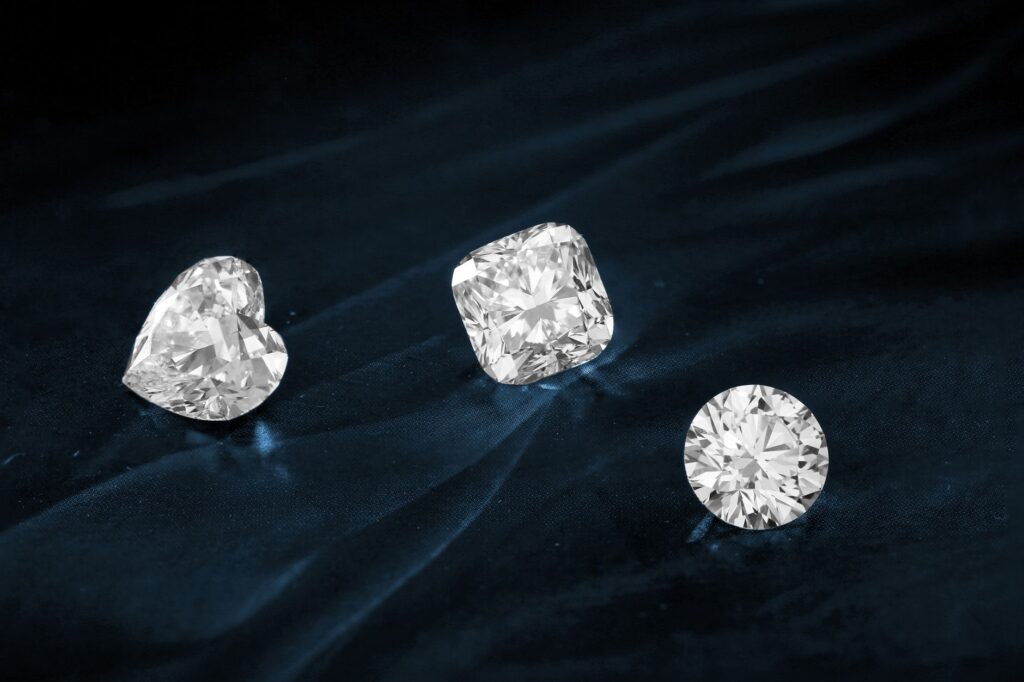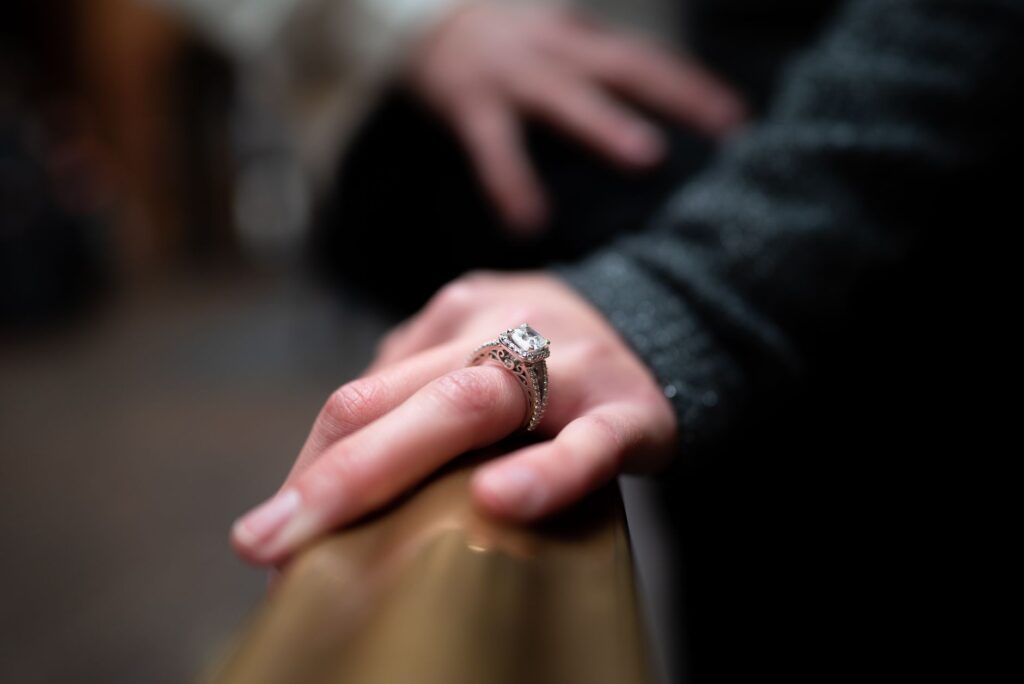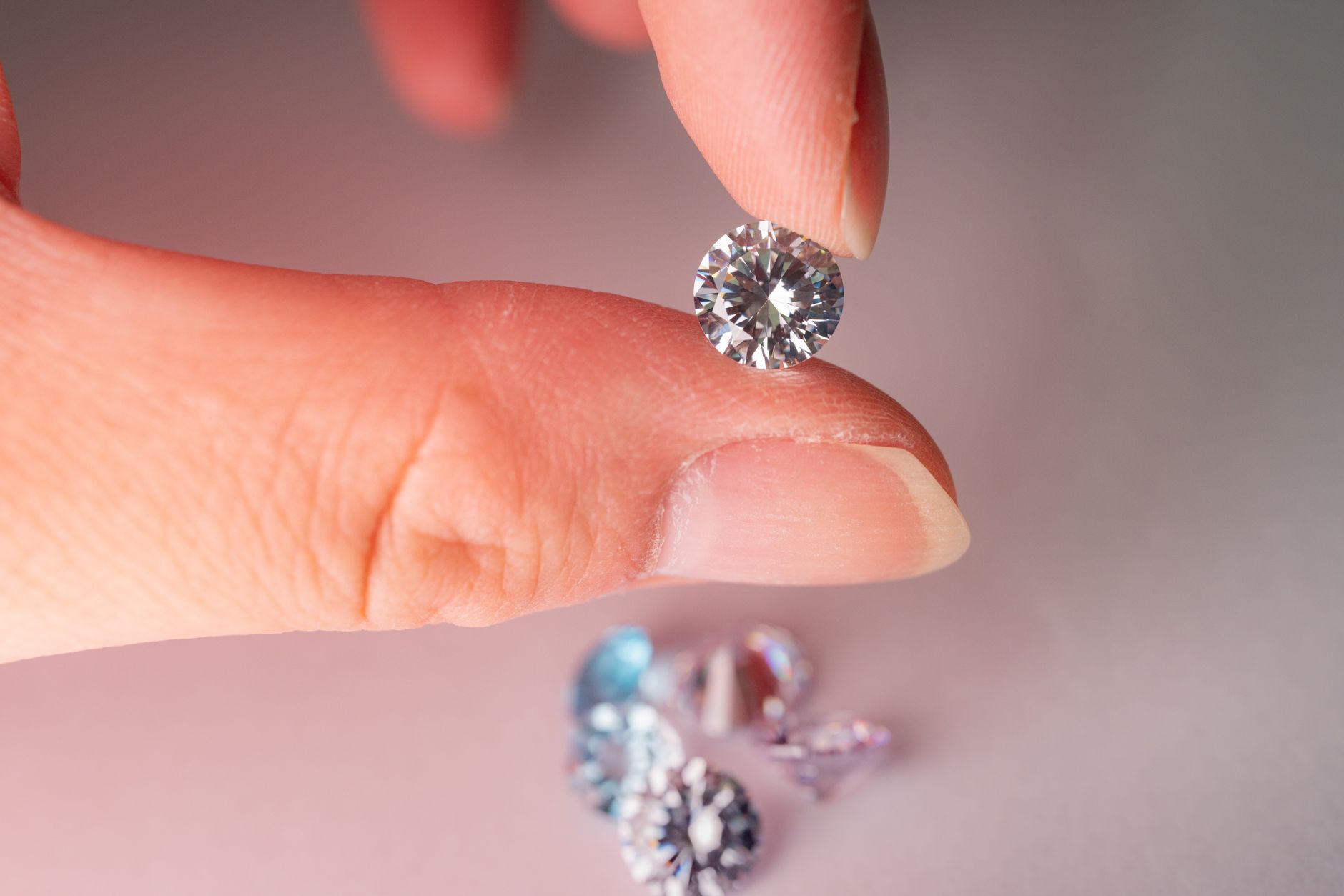
When shoppers ask Is VVS Worth It, they are usually trying to answer a more practical question: will paying extra for a very high clarity grade actually improve how the diamond looks in daily wear? In many cases, the answer is no, not in a way most buyers can see without magnification. VVS diamonds are extremely clean, but for many engagement rings and everyday pieces, that level of clarity is more about rarity than visible beauty.
Clarity matters because it affects whether a diamond looks perfectly clean, whether tiny marks are visible, and how much you may pay for a stone that is rare on paper. But clarity is only one part of the overall quality picture. Cut, color, shape, and carat weight often have a bigger impact on what you actually notice when the diamond is on the hand.
For many buyers, a well-chosen VS2 or even an eye-clean SI1 can look just as attractive as a VVS diamond in real-world conditions. The key is understanding what you are paying for, what you can actually see, and whether the added cost of VVS clarity matches your priorities.
Quick Answer
VVS is usually not worth paying extra for most buyers if your main goal is visible beauty. VVS stands for “Very Very Slightly Included,” which means the diamond has tiny inclusions that are difficult for a trained grader to find under 10x magnification. In normal viewing, most people will not see a difference between a VVS diamond and a well-selected VS diamond, especially once the stone is set in jewelry.
That does not mean VVS has no value. It can matter to buyers who want a higher rarity tier, prefer a stronger margin of safety when choosing an inclusion-free-looking stone, or simply feel more comfortable knowing the diamond is near the top of the clarity scale. But from a practical standpoint, the price premium often delivers diminishing returns.
If you are shopping with a limited budget, clarity is often one of the easiest areas to optimize. Choosing a diamond that is eye-clean rather than chasing a VVS grade can free up money for better cut quality, more carat weight, or improved color. Those trade-offs are usually more noticeable than the difference between VVS and VS in everyday wear.
What VVS Clarity Actually Means
Diamond clarity describes how many internal features, called inclusions, or external features, called blemishes, are present in the stone. These natural characteristics form during the diamond’s growth or after cutting and polishing. Clarity grades are assigned by trained graders using magnification, not by the naked eye.
VVS is one of the higher clarity ranges on the diamond clarity scale. It is split into VVS1 and VVS2. Both grades mean the diamond has very tiny inclusions that are difficult to detect even under magnification. In other words, VVS diamonds are usually extremely clean, but they are not necessarily visually different from lower grades that are also eye-clean.
Here is a simple way to think about it:
- FL/IF: Exceptionally clean, even under magnification
- VVS1/VVS2: Very, very difficult to see inclusions under magnification
- VS1/VS2: Minor inclusions, often still eye-clean
- SI1/SI2: Inclusions are easier to find under magnification, and some may be visible without magnification
For most shoppers, the most important question is not whether a diamond is VVS. It is whether the inclusions can actually be seen in normal viewing conditions. If they cannot, then the visual difference is likely minimal.
Why Clarity Matters to Buyers
Clarity matters because it affects both appearance and price. A diamond with visible inclusions may look less crisp or less transparent, especially if the inclusions are dark, centrally located, or numerous. On the other hand, a diamond with tiny inclusions that are hidden near the edge may look clean to the naked eye and still offer good value.
Buyers also care about clarity because it affects how much they should spend. As clarity increases, rarity increases, and so does price. The problem is that the visible improvement does not always rise at the same pace as the price premium.
That is why many experienced buyers focus on eye-clean rather than chasing the highest possible clarity grade. Eye-clean means the diamond looks free of noticeable inclusions when viewed face-up at a normal distance. That practical standard often matters more than the grade label alone.
How VVS Looks in Real Life
In real-world viewing, most VVS diamonds appear clean and bright. Their tiny inclusions are usually only visible under magnification and often only to a trained eye. Once the diamond is mounted in a ring, pendant, or earrings, those inclusions can become even harder to detect.
However, “clean” does not automatically mean “worth the premium.” A VS diamond can also look clean in everyday use. Many SI diamonds can too, depending on where the inclusions are and what type they are. The real question is whether you would notice any difference without a loupe or microscope.
For an average buyer looking at a VVS diamond in normal lighting, the stone may appear indistinguishable from a VS diamond of similar cut, color, and carat weight. In many cases, the sparkle, brilliance, and overall face-up appearance are driven far more by cut quality than by the jump from VS to VVS.
Clarity Grades Compared in Practical Terms
Understanding where VVS sits in the broader clarity scale helps put its value into perspective. The table below summarizes what buyers usually notice in everyday settings.
| Clarity Grade | What It Means | What Buyers Usually See | Typical Value Consideration |
|---|---|---|---|
| FL / IF | Flawless or internally flawless under magnification | No visible inclusions, even under a loupe in many cases | High premium for rarity |
| VVS1 / VVS2 | Very very slight inclusions, extremely hard to see under magnification | Usually no visible inclusions to the naked eye | Strong rarity, but limited visual gain over VS |
| VS1 / VS2 | Very slight inclusions, small and difficult to find | Often eye-clean, especially in better cuts | Often the sweet spot for value |
| SI1 / SI2 | Slight inclusions, more noticeable under magnification | Can be eye-clean or visible depending on inclusion type and location | Potentially excellent value if carefully selected |
For many shoppers, the practical gap between VVS and VS is small. The gap between VVS and SI can be larger, but even then some SI diamonds are excellent choices if the inclusions are minor and not visible face-up.
What Eye-Clean Really Means
Eye-clean is one of the most useful terms in diamond shopping, but it is not a formal grading category. It means the diamond looks free of obvious inclusions to the naked eye, usually when viewed face-up from a normal distance. That distance may be around 6 to 10 inches, though perceptions vary.
Eye-clean is important because it reflects real-world appearance better than the clarity grade alone. A diamond can be SI1 and eye-clean, or it can be VVS and visually similar to another stone that costs less. If you are trying to balance beauty and budget, eye-clean is often a better buying standard than a high clarity label.
Some buyers prefer the reassurance of a higher grade because it reduces the chance of seeing an inclusion later. That is a reasonable concern. But if the diamond has already been checked carefully and is eye-clean, the extra cost of VVS may not produce a meaningful visual payoff.
Types of Inclusions and What They Mean for Buyers
Not all inclusions are equally important. Their effect depends on size, type, location, and how many are present. A tiny crystal near the edge may be less concerning than a dark inclusion right under the center of the table, even if both stones share the same grade.
Crystal
A crystal is a mineral inclusion trapped inside the diamond. It may appear white, transparent, or dark depending on the material. Crystals are very common and are often harmless from a durability standpoint.
Whether a crystal is visible depends on its size and position. A small crystal off to the side is often easy to ignore. A darker crystal near the center can be more noticeable and may affect appearance more strongly.
Feather
A feather is a small internal fracture that looks like a feather-shaped line or crack. Many feathers are harmless, especially if they are tiny and not near vulnerable areas of the stone.
Buyers should pay closer attention if a feather reaches the surface or is located near the girdle, the outer edge of the diamond. In rare cases, a feather can affect durability if it is large or positioned in a way that makes the stone more vulnerable to chipping.
Cloud
A cloud is a group of tiny inclusions that can create a hazy area. Small clouds are often not an issue, but larger or denser clouds can reduce transparency and make a diamond look slightly dull.
Clouds deserve attention because they can influence both appearance and brightness. If a cloud is thick enough, it may reduce sparkle or make the diamond look less crisp, even if the official clarity grade sounds respectable.
Needle
A needle is a long, thin inclusion that looks like a tiny line. Needles are often difficult to see without magnification and are usually not a major concern if they are small and isolated.
Most needles do not affect durability. Their main relevance is visibility. Multiple needles clustered together can sometimes become more noticeable than a single tiny needle.
Pinpoint
A pinpoint is one of the smallest types of inclusion. These are tiny dots that are usually only visible under magnification. In many diamonds, pinpoints are so small that they have little or no effect on the face-up appearance.
Pinpoints are often one reason a diamond can have a lower clarity grade while still appearing clean to the eye. For buyers, that is useful to know because a lower grade is not always a visual problem.
Twinning Wisp
A twinning wisp is a line or cluster of tiny inclusions that formed as the crystal structure changed during growth. This is a common inclusion type in lab grown diamonds, especially because the growth process can create patterns that do not behave exactly like those in mined diamonds.
Twinning wisps are not automatically a concern. Many are invisible without magnification. But if they cluster in the center or form a hazy area, they can affect clarity appearance more than the grade label suggests.
Knot
A knot is a crystal inclusion that reaches the surface of the diamond. This can be more significant because surface-reaching inclusions may be more visible and can sometimes complicate polishing or durability.
Knots are not common in most well-cut diamonds, but if present, they deserve careful review. The practical concern is less about the word itself and more about whether the inclusion is visible or weakens the stone.
Cavity
A cavity is a small opening or indentation on the diamond’s surface, often where an inclusion broke out during cutting or wear. Cavities can be more visible than internal inclusions because they interact with light at the surface.
Buyers should take cavities seriously if they are large or exposed in a vulnerable spot. Small cavities may not be a major issue, but they are worth examining closely before purchase.
Chip
A chip is a small piece missing from the surface. Chips are usually caused by impact or can occur during cutting and handling. Unlike tiny internal inclusions, chips can affect both appearance and durability.
Any chip deserves attention. Even a minor one can be visually distracting if it is near the table or edge. Because of their surface location, chips are generally more concerning than many internal inclusions.
Why VVS Can Be Expensive
VVS diamonds cost more because they are rarer and harder to find at the grading level. The market often prices rarity as much as visual impact. That means the cost increase is not always tied to a dramatic difference in what you can see.
In other words, you may be paying for a diamond that is statistically cleaner, not necessarily one that looks better in everyday use. For some buyers, that distinction is acceptable. For others, it makes VVS a less efficient use of budget.
This is especially important if you are shopping for an engagement ring or another piece where the diamond will be worn at arm’s length most of the time. In that context, the visual distinction between VVS and a good VS diamond is often minimal.
When VVS Is Worth It
VVS can be worth it for buyers who prioritize rarity and want the confidence of a very high clarity grade. Some people simply prefer the idea of owning a diamond that is exceptionally clean on paper. That preference is valid if it aligns with their budget and values.
It can also make sense in certain design contexts. For example, if you want a very large center stone, a fancy shape with broad facets, or a setting that leaves the diamond especially exposed, a higher clarity grade may provide peace of mind. Even if lower grades are eye-clean, some buyers are more comfortable starting at VVS.
Collectors and buyers who value top-tier specifications may also choose VVS because they are trying to maximize overall quality across the grading scale. In that situation, the clarity premium is part of a broader preference for high specifications, not just visual necessity.
When VVS Is Not Worth the Premium
VVS is often not worth the extra cost when your main goal is appearance per dollar. If the stone is already eye-clean, spending more for VVS may not produce a visible benefit. That is particularly true if the same money could improve cut quality or carat weight.
Many buyers are surprised to learn that the difference between a good VS diamond and a VVS diamond is usually not obvious in everyday wear. Once a diamond is cut well and set properly, the average person is unlikely to notice a clarity improvement beyond eye-clean.
This is why many experienced shoppers treat VVS as a “nice to have” rather than a must-have. It can be satisfying, but it is not usually the best place to spend when working within a budget.
Practical Examples Buyers Commonly Face
VS2 versus VVS2 in normal viewing conditions
A VS2 diamond and a VVS2 diamond may look nearly identical without magnification if both are eye-clean. The VVS2 will generally have smaller or harder-to-find inclusions under a loupe, but that rarely changes how the stone looks on the hand.
If the VS2 is well selected and has a strong cut, many buyers would be happier putting the savings toward a better cut grade or a slightly larger carat size. The visual payoff is often greater than moving up to VVS2.
Eye-clean SI1 versus VVS1
An eye-clean SI1 can be an excellent value if the inclusions are off to the side or hidden by the setting. In direct comparison, a VVS1 may be cleaner under magnification, but the difference may be meaningless once both stones are viewed without tools.
For buyers who care most about appearance and budget, this is one of the most important comparisons. If the SI1 is truly eye-clean, the price gap to VVS1 may not be justified by what you can actually see.
Non-eye-clean SI1 versus VVS
Not all SI1 diamonds are eye-clean. Some have a dark crystal, a cluster of inclusions, or a centrally located inclusion that is easy to spot. In those cases, the jump to VVS can absolutely matter because it may eliminate a visible distraction.
This is a good reminder that clarity grade alone is not enough. The inclusion type and location matter. A carefully chosen SI1 can be a smart buy, but a poorly chosen one can look much less attractive than a lower-risk VVS stone.
VVS clarity in round brilliant versus fancy shapes
Round brilliant diamonds often mask small inclusions better because their faceting pattern is designed to maximize sparkle. Fancy shapes like oval, emerald, pear, and marquise can show inclusions more easily in certain areas because their facet patterns are different.
That does not mean fancy shapes require VVS. It means buyers should be more attentive to where the inclusions sit and how the shape handles brightness. A VVS fancy shape may offer peace of mind, but an eye-clean VS stone can still be the better value.
How Lab Grown Diamonds Affect the Clarity Question
Lab grown diamonds make clarity shopping a little different because the market often offers very high clarity levels at lower prices than comparable natural diamonds. That can make VVS or even higher grades more accessible to shoppers who might not have considered them in a natural diamond.
Still, the same practical question applies: do you need that level of clarity to enjoy the diamond? In many lab grown diamonds, the answer is no. Because pricing is generally lower across the board, some buyers choose a higher clarity grade simply because the premium is more manageable. Others still prefer to optimize for value and choose eye-clean VS or SI grades.
Lab grown diamonds can also show certain inclusion patterns, such as twinning wisps or metallic traces from growth, depending on the growth method and grading results. That does not automatically make them inferior. It just means buyers should rely on the actual clarity plot, not only the grade label.
How Clarity Affects Value
Clarity affects value because higher grades are rarer, but that does not always mean they are the most efficient purchase. The highest clarity grades often have the steepest premiums for the smallest visible gains. This is where many buyers overspend without realizing it.
If your budget is fixed, moving from VVS to VS can sometimes unlock a better cut, slightly larger size, or more favorable color. Those differences can be easier to notice than the clarity upgrade itself. In other words, the most expensive diamond is not always the best-looking diamond for the money.
From a value perspective, many buyers find the best balance in the VS range or in carefully screened SI1 stones that are eye-clean. That range often provides the strongest mix of beauty, practicality, and cost control.
| Choice | Visual Impact | Price Impact | Value Takeaway |
|---|---|---|---|
| VVS | Very clean, but often not visibly cleaner than VS | Higher premium | Best for buyers who value rarity and top clarity |
| VS | Often eye-clean and visually strong | More moderate pricing | Often the best balance for many shoppers |
| SI1 | Can be excellent if eye-clean, or distracting if not | Often better pricing | Good value when carefully selected |
How to Judge Whether a Diamond Is Actually Clean Enough
The best approach is to look beyond the grade and ask practical questions. Can you see the inclusion without magnification? Is it in the center of the stone or hidden near the edge? Does it affect transparency or brightness?
Experienced jewelers often examine a diamond face-up first, then from the side, then under magnification. That order matters because a diamond can look different depending on the viewing angle. What appears obvious under a loupe may be invisible in daily wear.
For buyers, this means the most useful standard is not “How high is the clarity grade?” but “Will this diamond look clean when worn?” If the answer is yes, then a lower clarity grade may be perfectly appropriate.
Common Buyer Mistakes
One common mistake is overpaying for clarity improvements that cannot be seen without magnification. Buyers sometimes focus so heavily on VVS or higher that they neglect cut quality, which has a much bigger impact on brilliance and sparkle.
Another mistake is assuming all SI diamonds look bad. That is not true. Some SI diamonds are eye-clean and offer excellent value. Others are not. The range is wide, so each stone needs individual review.
A third mistake is ignoring inclusion placement. A small inclusion in the center can be more noticeable than a slightly larger one near the edge, especially in certain shapes. Location matters as much as size.
Some buyers also assume a higher grade automatically means better durability. That is not always true. Most inclusions are not structural concerns, and many have little effect on strength. Durability depends on the inclusion type and where it sits.
Finally, some shoppers buy based only on the report without seeing the stone in person or reviewing detailed images. A clarity grade is useful, but it is only part of the story. The stone itself tells you much more.
Advantages of Choosing VVS
VVS has several real advantages. It gives you a very high level of clarity, it reduces the likelihood of seeing inclusions, and it may be appealing if you want a premium specification. Some buyers also appreciate the added confidence that comes with choosing a near-top clarity grade.
Another advantage is flexibility. If you are buying a larger stone or a shape that tends to reveal inclusions more easily, VVS can serve as a comfortable safety margin. Even if a VS or SI stone might have worked, VVS leaves less room for concern.
For buyers who see clarity as part of overall craftsmanship and rarity, VVS may feel more satisfying. The value is partly emotional and partly practical, depending on the buyer’s priorities.
Disadvantages of Choosing VVS
The main drawback is cost relative to visible benefit. In many cases, VVS is more expensive without looking meaningfully different from a good VS diamond. That makes it a weaker value choice for buyers focused on appearance per dollar.
Another limitation is opportunity cost. Money spent on VVS may reduce your ability to improve cut, size, or other features that are easier to notice. If you are buying an engagement ring, that trade-off deserves careful thought.
VVS can also create unrealistic expectations. Some buyers think they need VVS to get a clean-looking diamond, when in reality a well-selected VS or SI1 can already look very clean. That misunderstanding often leads to overspending.
Buying Considerations That Matter More Than the Grade Label
When deciding whether VVS is worth it, start with budget. If choosing VVS means compromising on cut quality or pushing the total cost beyond comfort, it may not be the right move. A balanced diamond is usually more satisfying than one with a single standout specification.
Next, think about eye-clean priorities. If you want a diamond that appears clean in normal wear, ask for images, videos, and clear confirmation of whether the stone is eye-clean. That practical check often matters more than the clarity grade itself.
Inclusion placement is another important factor. A centrally located inclusion, especially if dark, deserves more attention than a tiny edge inclusion that will likely be hidden by the setting. This is especially relevant for common engagement ring settings that cover part of the girdle area.
Lab grown diamonds add another layer of consideration. Since they can offer higher clarity at lower price points, it may be tempting to upgrade simply because it is affordable. But affordability alone does not mean the upgrade is necessary.
Finally, think about long-term satisfaction. Some buyers are happiest knowing they chose a very high clarity stone, even if the visual difference is small. Others prefer to maximize visible beauty and get more value from their budget. Both approaches are valid, as long as the choice is intentional.
What Experienced Buyers Often Prioritize Instead
Experienced diamond buyers often treat clarity as a filtering tool rather than the main event. They want a diamond that looks clean, but they usually place more emphasis on cut quality, overall sparkle, and whether the size and shape suit the wearer.
Many also know that clarity grades can be deceptive without context. A VVS stone with mediocre cut may look less impressive than a VS stone with excellent cut. That is because light performance drives the visual impression more strongly than tiny internal features do.
This is why many seasoned shoppers aim for “clean enough” rather than “highest possible.” They understand that clarity is important, but not always the best place to overspend.
Frequently Asked Questions
Is VVS better than VS?
Yes, VVS is technically a higher clarity grade than VS. But “better” depends on what you mean. VVS has smaller or harder-to-find inclusions under magnification, while VS diamonds are often still eye-clean and may look just as good in everyday wear.
Can you see the difference between VVS and SI1?
Sometimes yes, sometimes no. It depends on the specific SI1 stone, the type of inclusion, and whether the diamond is eye-clean. A well-chosen SI1 can look very similar to VVS face-up, while a poorly chosen SI1 may have visible inclusions.
Do lab grown diamonds need higher clarity because of the way they are made?
Not necessarily. Lab grown diamonds can have very high clarity, but that does not mean higher clarity is required for a beautiful appearance. Many lab grown diamonds in VS or even some SI grades are still eye-clean and offer strong value.
Does VVS mean flawless?
No. VVS does not mean flawless. Flawless diamonds have no inclusions or blemishes visible under magnification, while VVS diamonds do have tiny inclusions, they are just very difficult to find.
Is VVS worth it for an engagement ring?
It can be, but it is not necessary for most buyers. If the diamond is already eye-clean, many shoppers would get more practical value by choosing a better cut or a slightly larger size instead of paying for VVS.
What clarity grade do most people choose?
Many buyers choose between VS and SI1 when they are trying to balance appearance and price. That range often offers the best value because it can still look clean without the premium associated with the highest clarity grades.
Will a VVS diamond hold value better?
Higher clarity can contribute to rarity, but resale value is influenced by many factors, including cut, shape, size, color, market demand, and whether the diamond is natural or lab grown. VVS alone does not guarantee strong resale performance.
Should I choose VVS if I am buying online?
Not automatically. Online buyers should focus on actual images, videos, measurements, and whether the diamond is eye-clean. A well-documented VS or SI1 can be a smarter buy than a VVS stone chosen only by grade.
Conclusion
For most buyers, VVS is not necessary to get a beautiful diamond. It is an excellent clarity grade, but the jump from VS to VVS often delivers little visible improvement in everyday wear. That is why the question Is VVS Worth It usually comes down to budget, personal preference, and how much value you place on rarity versus visible performance.
If your priority is how the diamond looks on the hand, an eye-clean VS2 or SI1 can often provide better value than paying significantly more for VVS. If you want top-tier clarity for peace of mind or preference, VVS can still be a sensible choice. The best decision is the one that matches both your standards and your budget without sacrificing the qualities you will notice most.
In practical terms, clarity should be evaluated alongside cut, color, and carat weight, not in isolation. When you understand what you can actually see, you are much better equipped to choose a diamond that feels right in real life, not just on a grading report.