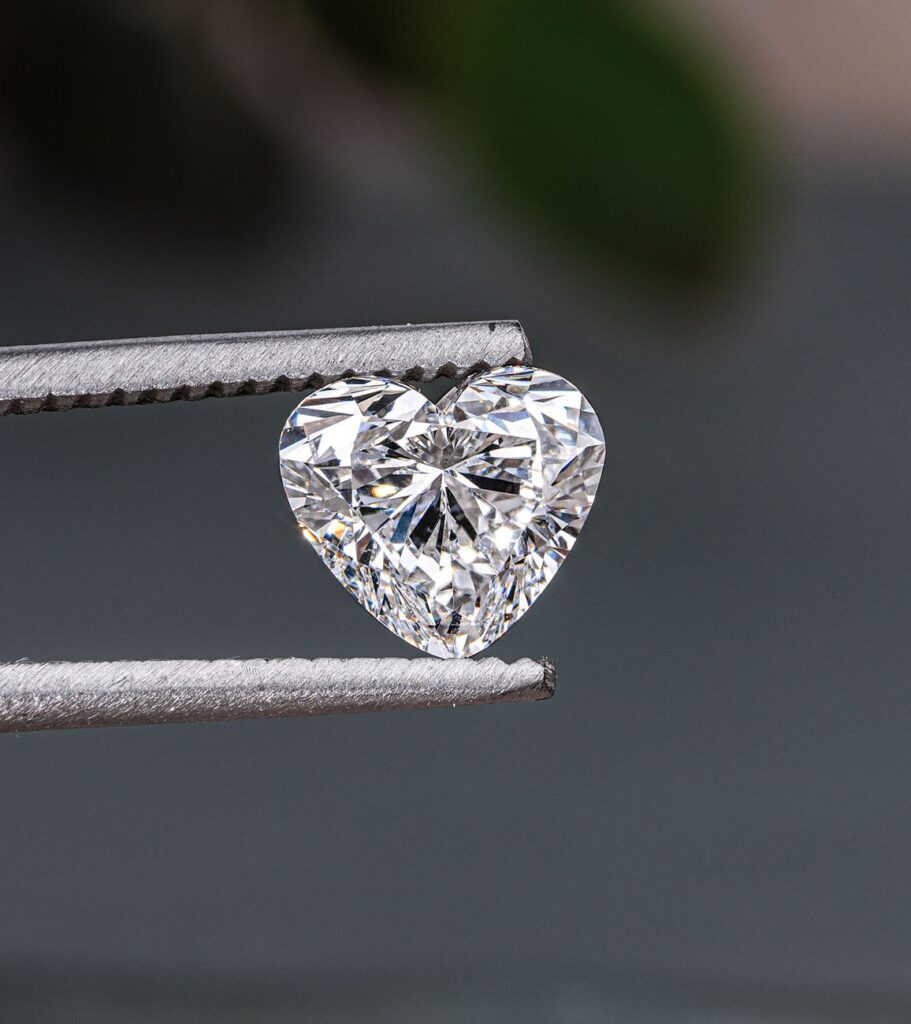
A diamond can look bright, lively, and clean without looking any larger at all. That is the key point behind the question, does diamond clarity affect perceived size. Clarity can influence how crisp or transparent a diamond appears, but it usually does not make a meaningful difference in its visible spread, which is the face-up size you actually notice on the hand.
Size expectations matter because buyers often compare diamonds by carat weight, clarity grade, and price without separating what affects beauty from what affects visible size. A higher clarity grade can raise the cost significantly, yet the diamond may look no bigger than a lower clarity stone with the same measurements. Understanding that difference can help you spend your budget more effectively.
Quick Answer
In most cases, diamond clarity does not significantly affect perceived size. A diamond’s apparent size is driven much more by its millimeter measurements, shape, cut quality, depth, and setting style than by its clarity grade.
Clarity matters for how clean the diamond looks. It can also affect transparency if inclusions are severe. But in normal buying ranges, especially from VS2 to SI1 and often even well-chosen SI2 diamonds, clarity has little to no impact on whether the diamond looks larger face-up.
If your goal is a bigger-looking diamond, focus first on:
- Face-up dimensions in millimeters
- Shape selection
- Cut proportions
- Depth percentage
- Setting design
Clarity becomes more important when inclusions are visible to the eye, interfere with brilliance, or create dark spots that draw attention. Even then, the issue is usually visual cleanliness, not actual perceived size.
Understanding the Carat Concept
Carat Is Weight, Not Visible Size
Carat is a measure of weight. One carat equals 0.2 grams. That number tells you how much the diamond weighs, but it does not directly tell you how large it will look from the top.
Two diamonds can both weigh 1.00 carat and still appear slightly different in size. That happens because some of the weight may be hidden in the depth of the stone instead of spread across the top surface.
Face-Up Size Is What You Actually See
The term face-up size refers to the diamond’s visible dimensions when viewed from above. For a round diamond, that means its diameter. For fancy shapes such as oval, cushion, emerald, or pear, that means length and width.
Face-up size is what creates the impression of size on the finger. A diamond with a larger diameter or larger length-by-width profile usually looks bigger, even when carat weight is the same.
Clarity Is a Different Quality Category
Clarity measures the presence of internal characteristics called inclusions and external characteristics called blemishes. Diamonds are graded on a scale that typically includes:
- FL and IF
- VVS1 and VVS2
- VS1 and VS2
- SI1 and SI2
- I1, I2, and I3
A higher clarity grade means fewer or less noticeable inclusions. That can improve the diamond’s purity and sometimes its visual crispness, but it does not change the stone’s actual dimensions.
Why Buyers Mix Up Clarity and Size
It is easy to assume that a cleaner diamond will somehow look larger because it looks brighter or more refined. In a loose sense, a dull or heavily included diamond may look less lively, which can reduce visual appeal. But that is not the same as looking bigger.
Think of clarity as a factor in cleanliness and transparency, not a primary factor in spread and finger coverage.
What Buyers Usually Expect
The Assumption That Better Quality Means Bigger Appearance
Buyers often expect every premium quality upgrade to improve every part of a diamond’s appearance. That is not how diamonds work. Cut, color, clarity, carat, shape, and setting each affect different things.
A clarity upgrade from SI1 to VVS2 may make the stone cleaner under magnification, but it usually will not make it look larger once set in a ring.
Confusing Sparkle With Size
A well-cut diamond can look more lively and more noticeable than a poorly cut one. That increased brightness sometimes creates the impression of a more impressive stone overall. Even so, sparkle is not the same as visible size.
This is where clarity can get misunderstood. If a diamond has enough inclusions to reduce transparency or brilliance, it may look less attractive. A cleaner stone can therefore seem more beautiful. But the outline, spread, and surface area remain what determine perceived size.
Assuming Higher Clarity Means Better Value for Appearance
One of the most common budget mistakes is paying a premium for a clarity grade that offers little visible benefit. Buyers may choose VVS clarity thinking it will create a more impressive diamond, even when the same budget could have produced a larger face-up size by increasing carat slightly or selecting a shape with a larger visual spread.
Comparing Certificates Instead of Looking at Millimeters
Certification is important, especially from respected labs. But shoppers sometimes focus too heavily on the listed clarity grade while overlooking the measurements section on the grading report. The millimeter dimensions often tell you more about how big the diamond will look than the clarity line does.
What It Actually Looks Like
How Clarity Affects Appearance in Real Life
In normal viewing conditions, most people do not inspect a diamond from a few inches away under strong lighting. They see it on the hand, across a table, in daylight, indoors, and in motion. In those conditions, clarity differences are often much less visible than buyers expect.
For example, a well-cut 1.00 carat VS2 round and a well-cut 1.00 carat SI1 round with similar measurements will usually look the same size. If the SI1 is eye-clean, meaning no inclusions are visible without magnification, most observers will not notice a difference in clarity either.
When Clarity Can Slightly Affect Visual Presence
Clarity may influence perceived size only in indirect ways. These situations include:
- Large dark inclusions visible through the table
- Clouds or graining that reduce transparency
- Severe inclusions that make the center look busy or dark
- Lower clarity stones that lose some brightness
In those cases, the diamond can look less crisp and less brilliant. A less lively diamond may feel less visually impressive, but again, that is different from looking physically larger.
Why Eye-Clean Matters More Than High Clarity
For practical buying, the important clarity threshold is often whether the diamond appears clean to the naked eye. Once a stone is eye-clean, paying for much higher clarity generally has diminishing visual returns.
That is especially true in shapes and sizes where inclusions are difficult to detect without magnification. For many buyers, an eye-clean VS2 or SI1 offers a better balance than a much more expensive VVS stone of the same size.
Shape Can Matter Far More Than Clarity
A 1.50 carat oval often looks larger than a 1.50 carat round because the oval’s length and surface spread create more finger coverage. That difference is obvious to the eye. By comparison, the difference between a VS1 and VVS1 clarity grade at the same measurements is usually not obvious at all.
This is why shape decisions often have a stronger impact on size perception than clarity decisions.
Factors That Change Apparent Size
Shape
Diamond shape is one of the biggest drivers of perceived size. Elongated shapes tend to look larger per carat than rounds because they cover more visible area.
Shapes that often look larger face-up include:
- Oval
- Pear
- Marquise
- Emerald
- Radiant, depending on cut
Shapes that often look more compact include:
- Round
- Cushion, especially deeper cushions
- Asscher
This variation has nothing to do with clarity. A lower-clarity oval may still look larger than a higher-clarity round of the same weight.
Cut Quality
Cut quality affects brilliance, fire, scintillation, and sometimes spread. A poorly proportioned diamond may hide weight in the pavilion, which is the lower part of the stone, making it look smaller from the top. A well-cut diamond often balances light performance and face-up spread more effectively.
Cut is especially important in round diamonds, where top cut grades are easier to compare. Fancy shapes require closer review of measurements and overall appearance because cut grading is less standardized.
Depth Percentage
Depth percentage tells you how tall the diamond is relative to its width. A diamond that is too deep can carry excess weight where you do not see it. This can lead to a smaller-looking face-up size for the same carat weight.
That is one reason a 1.00 carat diamond does not always look like another 1.00 carat diamond. The dimensions matter more than the carat number alone.
Table Size and Overall Proportions
The table is the large flat facet on top of the diamond. Table size and overall proportion balance affect how the stone returns light and how broad it appears. This is a cut issue, not a clarity issue, but it can strongly affect visual impression.
Setting Design
A setting can make a diamond look larger or smaller. Designs that often increase apparent size include:
- Halo settings
- Thin bands
- Hidden halos that add edge presence
- Elongated center stone orientations
- Minimal prong coverage
Designs that may make the center look slightly smaller include:
- Very thick bands
- Heavy bezels
- Bulky side design elements that compete visually
A setting can create a much larger visible effect than a clarity upgrade.
Finger Size
The same diamond can look very different depending on finger size. A 1.00 carat round on a size 4 finger can have strong finger coverage. On a size 8 finger, it may look more modest.
Finger coverage changes perceived size dramatically, while clarity usually does not.
Color and Transparency
Although this article focuses on clarity, color can slightly affect visual presence too. Brighter, whiter-looking diamonds may seem crisper, especially in white metal settings. Likewise, severe clarity issues that reduce transparency can make a diamond look less lively. But neither factor changes the actual spread.
Real-World Size Examples
1 Carat Round on a Size 4 Finger
A well-cut 1.00 carat round diamond often measures around 6.4 to 6.5 mm in diameter. On a size 4 finger, that can look substantial and balanced. It usually reads clearly as a noticeable center stone.
In this scenario, a clarity move from SI1 to VVS1 will not make the diamond look larger. If both are eye-clean, the visible size will be the same.
1 Carat Round on a Size 7 Finger
The same 6.4 to 6.5 mm diamond on a size 7 finger looks more moderate. It is still classic and attractive, but finger coverage is reduced compared with a smaller finger size.
Again, clarity has little to do with that impression. Finger size is what changes the visual scale.
0.90 Carat vs 1.00 Carat Round
A 0.90 carat round might measure roughly 6.1 to 6.3 mm, depending on cut. A 1.00 carat round might measure around 6.4 to 6.5 mm. The visible difference is real but often modest.
In many cases, choosing the well-cut 0.90 carat with eye-clean clarity can be a better value than paying a premium for a 1.00 carat stone with a similar look. If the budget difference is large, the money may be better spent on cut quality or setting design.
2 Carat Oval vs 2 Carat Round
A 2.00 carat oval usually looks larger than a 2.00 carat round because of its elongated shape and greater finger coverage. That visual difference is often more obvious than any clarity difference between the two.
A VS2 oval and a VVS2 round will not be perceived based on clarity first. Most people will notice shape and spread before anything else.
SI1 vs VVS2 in the Same Carat Weight
Suppose two 1.50 carat diamonds have identical dimensions and similar cut quality. One is SI1 and eye-clean. The other is VVS2. In normal wear, they will generally look the same size.
The VVS2 may command a noticeably higher price, but that premium is paying for rarity and grading quality, not for extra size.
Heavily Included Diamond vs Eye-Clean Diamond
Now consider a lower clarity diamond with visible black inclusions under the table, compared with an eye-clean diamond of the same dimensions. The included stone may look less attractive and may seem less bright. Some people may interpret that as less impressive overall.
Still, the issue is visual disruption, not smaller measurements. The diamond does not truly look smaller in outline. It just looks less clean and less lively.
Comparison Table: What Affects Perceived Size Most?
| Factor | Impact on Perceived Size | Why It Matters |
|---|---|---|
| Millimeter dimensions | Very high | Directly determines face-up spread |
| Shape | Very high | Elongated shapes often cover more finger area |
| Cut and depth | High | Can hide weight or improve visible spread |
| Setting design | High | Halo, band width, and prong style affect presentation |
| Finger size | High | Changes how much coverage the diamond appears to have |
| Color | Low to moderate | Can affect crispness, but not dimensions |
| Clarity | Usually low | Affects cleanliness and transparency more than size |
Price vs Visual Benefit
Why Clarity Premiums Can Be Expensive
Higher clarity grades are rarer, so prices rise quickly as you move into VVS and IF categories. The issue for many buyers is that the visible benefit often shrinks faster than the price premium grows.
A jump from eye-clean SI1 to VS1 may offer subtle peace of mind. A jump from VS1 to VVS1 may be meaningful on paper and under magnification, but not necessarily in day-to-day appearance.
What the Same Budget Could Do Instead
If your goal is visible impact, the money spent on ultra-high clarity might be used more effectively in other ways, such as:
- Choosing a slightly larger carat weight
- Selecting a shape with more spread
- Prioritizing stronger cut quality
- Using a setting that enhances finger coverage
For example, the budget difference between a 1.20 carat VVS1 and a 1.30 carat VS2 could produce a more noticeable visual improvement through size, while still keeping the stone eye-clean.
Diminishing Returns in Clarity
Once you reach eye-clean territory, each clarity upgrade usually delivers less visible benefit than the last. This is one of the clearest cases of diminishing returns in diamond buying.
That does not mean higher clarity is never worth it. Some buyers value rarity, collectability, or peace of mind. But those reasons should be separate from expectations about perceived size.
Lab Grown Context
Lab grown diamonds have changed this conversation for many buyers because larger carat weights are often available at lower prices than comparable natural diamonds. That means some shoppers can afford both a larger size and a solid clarity grade without stretching the budget as much.
Even in lab grown diamonds, though, the same principle applies. A VVS lab diamond does not look larger than a VS lab diamond with the same dimensions. Budget efficiency still comes from balancing eye-clean clarity with strong size and cut choices.
Who Should Size Up
Buyers Focused Primarily on Finger Coverage
If your top priority is how large the diamond looks on the hand, a size increase may be more rewarding than a clarity upgrade. This is especially true when comparing eye-clean diamonds.
Those Choosing Compact Shapes
Rounds, cushions, and Asschers can look smaller per carat than elongated shapes. Buyers who prefer these shapes but want a stronger presence may benefit from going up slightly in carat weight.
Larger Finger Sizes
On larger fingers, a modest carat weight can look smaller than expected. In those cases, increasing millimeter spread may make more visual sense than paying for a premium clarity grade.
Natural Diamond Buyers Working Within Appearance Priorities
For natural diamonds, budgets can force trade-offs. If the choice is between a smaller VVS stone and a slightly larger eye-clean VS or SI stone, the latter often delivers more obvious visual impact.
Lab Grown Buyers Wanting Maximum Visual Size
With lab grown diamonds, some buyers choose larger sizes while keeping clarity in practical ranges such as VS1, VS2, or eye-clean SI1. That approach often maximizes visible size without sacrificing overall beauty.
Who Can Save Money
Buyers Comfortable With Eye-Clean Clarity
If you do not need microscopic purity, you can often save money by choosing an eye-clean VS2 or SI1 instead of VVS grades. That savings may allow a better cut, slightly larger spread, or a more favorable setting.
People Who Will Not View the Diamond Under Magnification
Most real-world appreciation happens at normal viewing distance. If the diamond looks clean without magnification, paying a large premium for a higher grade may not improve daily enjoyment in a noticeable way.
Shoppers Prioritizing Size Over Paper Prestige
Some buyers simply want the diamond to look as large and attractive as possible within budget. In that case, clarity is often best treated as a threshold category. Once the diamond is eye-clean and not transparency-compromised, additional spending may be better directed elsewhere.
Those Buying Certain Shapes Carefully
Step-cut shapes like emerald and Asscher can show inclusions more easily because of their large open facets. These shapes may need a somewhat higher clarity range than brilliant-cut shapes. But even there, the goal is usually eye-clean performance, not ultra-high clarity for size.
Common Buyer Mistakes
Chasing Clarity Grades That Do Not Change What You See
A buyer may pay a substantial premium for IF or VVS clarity without gaining visible size or a major visual improvement. The certificate looks impressive, but the ring may not look meaningfully different in daily wear.
Ignoring Measurements
The grading report’s measurements section often gets less attention than the carat and clarity lines. That is a mistake. Millimeter dimensions are essential for understanding how large the diamond will actually appear.
Overlooking Cut Because Clarity Sounds More Important
Clarity is easy to compare because the grades look straightforward. Cut is more complex, but it often matters much more for beauty and apparent presence. A better-cut diamond can look brighter and more balanced, while a poor cut can hide weight and reduce visual impact.
Choosing a Deep Diamond With High Clarity
A diamond may have an excellent clarity grade but still face up smaller than expected because it is cut too deep. In that case, the buyer has paid for purity while sacrificing visible spread.
Assuming All SI Diamonds Look Included
SI diamonds vary widely. Some are eye-clean and excellent values. Others have visible inclusions or transparency issues. Judging by grade alone can lead to missed opportunities or poor selections.
Ignoring Shape Effects
A buyer deciding between round and oval may spend time debating clarity grades while overlooking the much larger size difference created by shape. That can lead to a less satisfying outcome if visible presence is the real goal.
Paying for Magic Size Thresholds and Premium Clarity Together
Magic sizes such as 1.00, 1.50, and 2.00 carats often carry price premiums. Pairing that premium with an unnecessary clarity upgrade can push the budget far beyond what is needed for the desired look.
In some cases, a 0.90, 1.40, or 1.90 carat diamond with eye-clean clarity and strong measurements offers nearly the same appearance for much better value.
Practical Buying Strategy
Start With Face-Up Measurements
Before comparing clarity grades, check the diamond’s dimensions. Ask how wide it is in millimeters or, for elongated shapes, how long and wide it is. This gives a direct sense of visible size.
Set a Clarity Goal, Not a Maximum Grade
A practical goal is often to find a diamond that is eye-clean in normal viewing. That does not always require the highest clarity grade. The exact range depends on shape, size, and inclusion type.
Prioritize Cut and Shape for Appearance
If visible impact matters, cut quality and shape usually deliver more noticeable results than a high clarity jump. This is true for both natural and lab grown diamonds.
Use Budget Where It Shows
Budget is finite. Spend more on aspects you will notice regularly. For most buyers, that means face-up size, cut performance, and overall visual balance rather than microscopic clarity improvements.
Be More Selective With Certain Inclusion Types
Not all inclusions behave the same way. A small feather near the edge may be less noticeable than a dark crystal under the table. Clouds that affect transparency can also matter more than the grade alone suggests.
That is why the right question is not simply, “What clarity grade is it?” but also, “Is it eye-clean, and does it look bright and transparent?”
Clarity Grades and Their Likely Effect on Perceived Size
| Clarity Range | Likely Naked-Eye Appearance | Effect on Perceived Size | Buying Note |
|---|---|---|---|
| FL / IF | Extremely clean | None in terms of size | Premium for rarity, not larger appearance |
| VVS1 / VVS2 | Usually indistinguishable from IF to the eye | None in terms of size | Very high clarity, often more than needed visually |
| VS1 / VS2 | Typically eye-clean | None in terms of size | Strong practical balance for many buyers |
| SI1 | Can be eye-clean depending on stone | Usually none if eye-clean | Often good value when carefully selected |
| SI2 | Mixed, some eye-clean, some visibly included | Usually none if eye-clean, slight indirect effect if not | Requires careful vetting |
| I1 and lower | Often visible inclusions | Can reduce overall visual appeal, but not true spread | May affect transparency and durability in some cases |
Frequently Asked Questions
Can a higher clarity diamond sparkle more and therefore seem bigger?
Only indirectly, and usually not by much. If a lower clarity diamond has inclusions that reduce transparency or brilliance, a cleaner stone may look brighter and more attractive. But that does not usually translate into a meaningfully larger appearance. Cut quality has a much stronger effect on sparkle.
Does SI1 clarity make a diamond look smaller?
Not if the diamond is eye-clean and transparent. An eye-clean SI1 typically looks the same size as a VS or VVS diamond with the same measurements. The key is whether inclusions are visible or interfere with light performance.
Do visible inclusions reduce perceived size?
Visible inclusions can reduce visual appeal and draw the eye inward, especially if they are dark and near the center. This may make the diamond look less impressive overall. Still, the diamond does not actually look smaller in face-up spread unless the stone also has poor proportions.
Is it better to choose a larger diamond with lower clarity?
Often yes, if the lower clarity diamond is still eye-clean and has good transparency. A slightly larger diamond with practical clarity can provide more visible impact than a smaller diamond with very high clarity. The balance depends on shape, cut, and the type of inclusions.
Does clarity matter more in some diamond shapes?
Yes. Step-cut shapes such as emerald and Asscher tend to show inclusions more easily because they have large open facets and less facet sparkle to hide internal features. Brilliant cuts such as round, oval, and cushion usually disguise inclusions better.
Should I pay for VVS clarity in a lab grown diamond?
It depends on your priorities. Lab grown diamonds often make high clarity more affordable, but that does not mean VVS clarity improves size appearance. If your goal is visible impact, a larger well-cut VS stone may be a better use of budget than a smaller VVS stone.
What matters more for size, clarity or carat?
Neither on its own tells the full story. Carat is weight, and clarity is purity. For visible size, the most important factor is face-up measurements in millimeters, followed by shape, cut proportions, setting style, and finger size.
Can a poorly cut high-clarity diamond look smaller than a well-cut lower-clarity diamond?
Yes. A poorly cut diamond can hide weight in depth and face up smaller than expected. A well-cut lower-clarity diamond with better spread may look larger, brighter, and more attractive, even if its clarity grade is lower.
Conclusion
The clearest answer to does diamond clarity affect perceived size is that clarity usually has little to no direct effect on how large a diamond looks. Visible size comes mainly from the diamond’s measurements, shape, cut, depth, setting, and how much finger coverage it creates.
Clarity still matters. It affects whether the diamond looks clean, transparent, and free of distracting inclusions. In lower ranges, it can influence overall beauty and light performance. But once a diamond is eye-clean and well cut, paying for much higher clarity usually does not make it look bigger.
For practical buying, focus first on face-up dimensions and cut quality. Then choose a clarity level that keeps the diamond visually clean without overspending on grades you are unlikely to notice in everyday wear. That approach usually produces the best balance of appearance, value, and confidence.