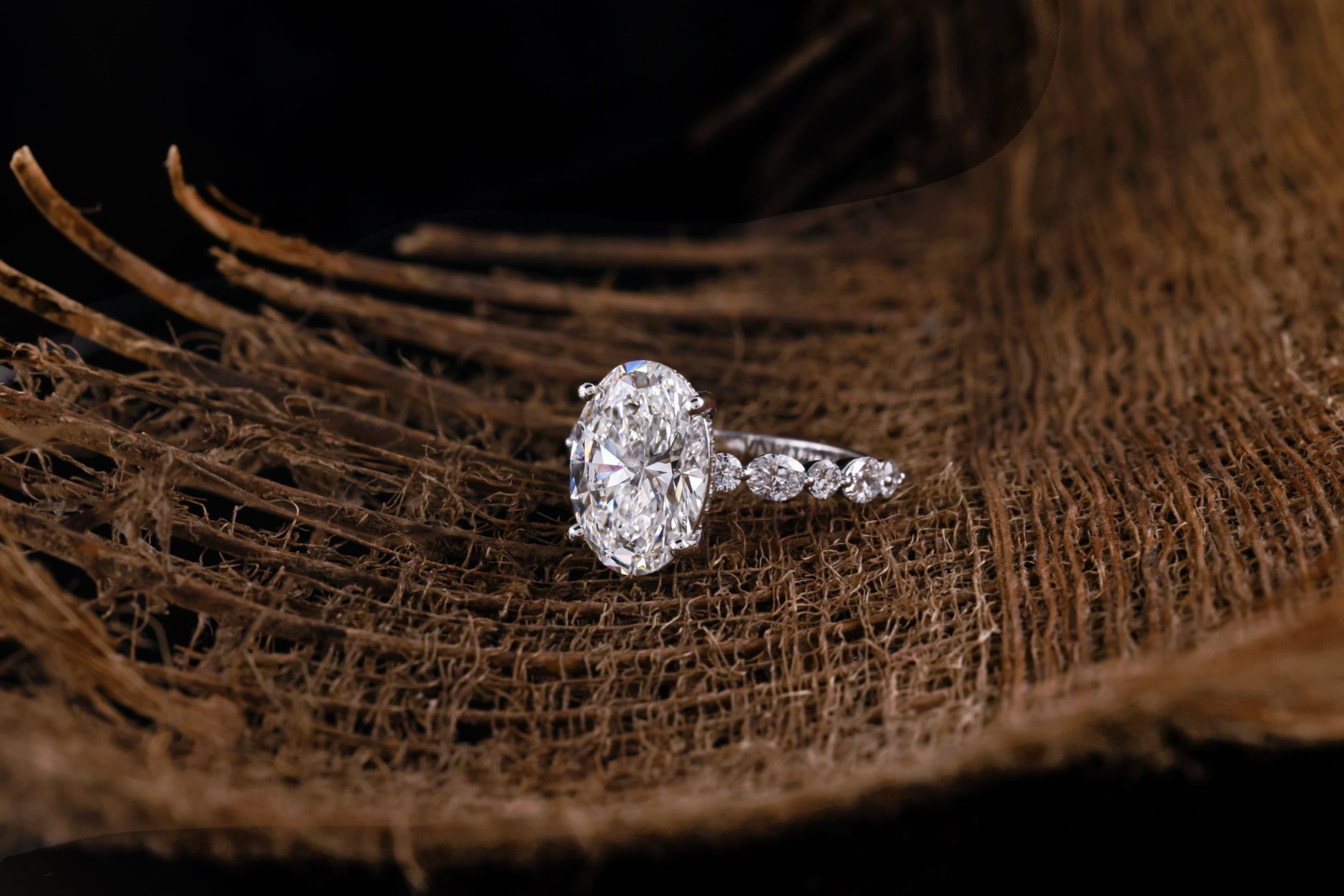
When shoppers ask what is the best cut grade for oval lab diamonds, they are usually trying to answer a more practical question: how do you choose an oval diamond that looks bright, balanced, and attractive on the finger? The answer is not as simple as picking the highest grade on a report. For oval lab grown diamonds, the best cut is the one that gives you strong light performance, pleasing proportions, minimal distraction from the bow tie effect, and a shape that suits your ring style.
That said, cut matters enormously. Of all the 4Cs, cut has the biggest impact on how an oval diamond looks in real life. A well-cut oval can appear lively and elegant, while a poorly proportioned one can look dark in the center, overly long, too shallow, or awkwardly narrow. Since oval diamonds are not graded for cut by GIA in the same straightforward way round brilliants are, buyers need to rely more on proportions, imagery, and trusted grading details when evaluating lab grown stones.
Quick Answer
The best cut grade for oval lab diamonds is usually the highest cut quality available from the grading laboratory, but with ovals, the cut grade on the report is only part of the story. For many buyers, the best practical choice is an oval lab diamond with:
- Excellent or Ideal cut quality if the laboratory provides a cut designation
- Balanced proportions, especially a length-to-width ratio that fits your style
- Strong light return with no noticeable dead zones
- Minimal bow tie effect
- Good symmetry and polish
If a grading report does not offer a specific oval cut grade, the best choice is usually an oval with strong visual performance rather than one chosen only by carat weight or price. In other words, for oval lab diamonds, cut quality should be judged visually and proportionally, not by a single number alone.
Why Cut Matters So Much in Oval Lab Diamonds
Cut is the factor that determines how efficiently a diamond handles light. It affects brilliance, sparkle, and the diamond’s overall life and fire. In a lab grown diamond, the fact that the stone was created in a controlled environment does not change this. The rough crystal still has to be cut well to look attractive.
Oval diamonds are especially sensitive to cutting style because their shape stretches the traditional round brilliant formula. The elongated outline can be beautiful on the hand, but it also introduces common visual issues such as a bow tie effect or uneven brightness from end to end. A well-cut oval reduces those issues and gives you a more even, lively appearance.
For buyers comparing diamond cut across different shapes, this is one of the biggest differences to understand. A round diamond can be easier to judge by laboratory cut grade alone. An oval requires a more hands-on evaluation.
How Oval Diamond Cut Is Different from Round Diamond Cut
Round brilliant diamonds have the most standardized cut system. Labs can assign a clear cut grade because the shape follows a predictable structure designed to maximize light return. Oval diamonds are more variable. Two ovals with the same carat weight and the same color grade can look very different depending on how they were proportioned and faceted.
That variability is not a flaw in the shape. It is simply how oval diamonds work. Buyers need to look beyond the lab report and consider the actual appearance of the stone. This is especially true in the lab grown market, where larger sizes are often more accessible and shoppers may compare several stones that look similar on paper but perform differently in person or in high-quality images.
What makes oval cut assessment more subjective?
Three oval diamonds can all have excellent polish and symmetry, but still differ in visual performance because of:
- the exact outline shape
- the depth and table proportions
- the placement of facets
- the balance between length and width
- how the center of the diamond handles light
This is why the best cut grade for oval lab diamonds is often less about a single label and more about how the diamond actually looks.
Key Characteristics of a Well-Cut Oval Lab Diamond
When evaluating oval lab diamonds, there are several traits that usually point to a better cut. These are the details that affect appearance in daily wear, especially in engagement rings.
1. Bright, even brilliance
Brilliance refers to the white light a diamond reflects. In an oval diamond, strong brilliance should be spread evenly across the face of the stone. A good oval does not have a dark center, overly pale ends, or patchy zones that draw the eye away from the overall shape.
2. Controlled fire
Fire is the colored sparkle you see when the diamond moves under light. Ovals can show attractive fire, although the amount depends on the facet pattern and proportions. Buyers should not expect fire to be the dominant visual effect in the way it sometimes can be in a well-cut cushion or radiant. For most oval lab diamonds, balanced brilliance is more important than extreme fire.
3. Pleasant scintillation
Scintillation is the pattern of sparkle and contrast that appears as the stone moves. A well-cut oval should produce crisp flashes of light rather than a dull, watery look. The pattern should feel lively without becoming too busy or inconsistent.
4. Minimal bow tie effect
The bow tie effect is the dark area that can appear across the center of many oval diamonds, shaped somewhat like a bow tie. Nearly all ovals have some degree of this effect, but in a well-cut diamond it should be subtle and not distracting. A heavy bow tie can make the stone look darker in the middle and reduce visual appeal.
5. Attractive outline and symmetry
The oval should look balanced from end to end. The tips should not feel pinched, overly rounded, or oddly narrow. Good symmetry also helps the diamond look polished and refined, which matters a great deal once the stone is set in an engagement ring.
What Is the Best Cut Grade for Oval Lab Diamonds in Practice?
If a grading laboratory offers a cut grade for an oval lab diamond, the best cut grade is usually the highest available designation. However, that does not mean every stone with that label will look identical. Cut grade systems can be helpful, but they are not a complete substitute for visual inspection.
For many buyers, the practical answer is this: choose the best-performing oval, not just the highest-rated one. If two diamonds both have strong grades, the better one is the stone with better brightness, less bow tie, and proportions that suit your ring design.
In the lab grown diamond market, you will often see more generous pricing on larger sizes, which can make it tempting to prioritize carat weight first. But with ovals, cut quality has a major influence on whether that extra size actually looks beautiful. A 2-carat oval with poor proportions can look less appealing than a smaller stone with excellent light return.
Common Oval Proportion Ranges Buyers Should Understand
There is no single perfect proportion set for every oval diamond. Preferences vary depending on style, finger shape, and setting. Even so, some ranges tend to produce more visually balanced results than others.
| Feature | Common Buyer Preference | Why It Matters |
|---|---|---|
| Length-to-width ratio | About 1.30 to 1.50 | Creates an oval look that is elongated but not overly skinny |
| Table size | Often moderate to moderately large | Affects brightness, fire, and overall facet behavior |
| Depth | Balanced rather than extreme | Helps the stone avoid looking too shallow or too deep |
| Symmetry | Excellent or very good | Improves outline quality and face-up appearance |
These ranges are not strict rules. Two ovals with different ratios can both look great. A buyer who wants a more elongated, elegant appearance may prefer a higher length-to-width ratio. Someone who wants a fuller, softer outline may prefer a slightly lower ratio.
Length-to-width ratio explained
The length-to-width ratio compares how long the oval is versus how wide it is. A ratio of 1.30 looks less elongated, while a ratio of 1.50 looks noticeably longer and slimmer. This ratio affects finger appearance and style more than it affects value.
Many buyers of oval lab diamonds like ratios in the middle range because they tend to look classic and versatile. But the right ratio depends on personal taste and the ring setting. A halo or east-west setting, for example, can change the visual impression significantly.
Appearance and Visual Performance
Cut affects the visual experience of an oval diamond more than almost any other feature. When people say a diamond looks “alive,” they are usually responding to strong light return, attractive contrast, and sparkles that move naturally across the stone.
How a well-cut oval should look face-up
Face-up, a strong oval lab diamond should look bright from top to bottom. The center should not appear overly dark unless the viewing angle naturally creates temporary contrast. The ends should also feel balanced, not washed out or too dense.
The best-cut stones usually have a pleasing mix of brightness and sparkle. They do not look flat or glassy. They also avoid excessive distraction from the bow tie effect.
Brilliance versus fire in ovals
Ovals are usually appreciated more for brilliance than for intense fire. Brilliance is the white sparkle that makes the stone look bright, while fire is the colorful flash. In an oval, the pattern of facets can create nice flashes of both, but a buyer should not judge the stone only by the amount of rainbow sparkle.
If you want a diamond that throws bold fire in every lighting condition, an oval may not be the strongest option. If you want a bright, elegant shape with a soft and flattering outline, an oval can be an excellent choice.
The bow tie effect and why it matters
The bow tie effect is one of the most discussed issues in oval diamonds because it can strongly influence appearance. It occurs because light and shadow interact differently across the elongated shape. A small amount of bow tie is common and often acceptable. A very dark or wide bow tie can make the stone look less lively.
Buyers should understand that bow tie visibility depends on the diamond’s proportions, facet arrangement, and the viewing angle. A diamond may look fine in one photo and more distracting in another. That is why videos and face-up images are so useful when shopping for lab grown diamonds online.
Advantages of Choosing an Oval Lab Diamond
Oval diamonds have several practical strengths that explain their popularity. These advantages are part of the reason so many shoppers compare them with round, radiant, and pear shapes during engagement ring selection.
- Flattering appearance on the hand, since the elongated shape can make fingers look longer
- Strong face-up size, because ovals often look larger than round diamonds of the same carat weight
- Classic but slightly distinctive look, offering a softer alternative to a round brilliant
- Good versatility in settings, from solitaire to halo to three-stone styles
- Often strong value in lab grown form, especially for buyers seeking a larger visual presence within budget
These benefits are especially relevant in the lab grown market. Since lab diamonds are generally less expensive than comparable natural diamonds, buyers may be able to choose a more balanced oval with better cut quality, higher color, or better clarity without exceeding budget.
Disadvantages and Trade-Offs
No diamond shape is perfect, and ovals have a few common trade-offs. Understanding these drawbacks can help buyers avoid disappointment later.
- Bow tie effect may be visible, especially in less well-cut stones
- Cut evaluation is less standardized than for round brilliants
- Facet pattern can make clarity inclusions more noticeable in some stones
- Shape preference is personal, so what looks elegant to one buyer may seem too long or too narrow to another
- Long tips can be slightly more vulnerable to setting damage if not protected properly
These are not reasons to avoid ovals. They are reasons to shop thoughtfully. The better the proportions and setting, the less likely these issues are to interfere with daily wear.
How Oval Lab Diamonds Compare to Other Shapes
Cut quality is always shape-specific, so it helps to compare oval diamonds with other popular options. Buyers often narrow their decision after seeing how the shape looks on the finger and how much visual size they get for the budget.
| Shape | Cut Evaluation | Visual Size | Sparkle Style | Common Buyer Impression |
|---|---|---|---|---|
| Oval | More subjective, depends heavily on proportions | Often looks large for carat weight | Bright with possible bow tie | Elegant, flattering, versatile |
| Round | Most standardized cut grading | Average for carat weight | Strong brilliance and sparkle | Classic, balanced, timeless |
| Radiant | Can vary, but often lively and forgiving | Can face up large | Intense sparkle, often more “crushed ice” or mixed | Modern, bright, more energetic |
| Pear | Also subjective, with bow tie concerns | Looks elongated and sizable | Balanced sparkle, pointed end needs protection | Distinctive, graceful, less symmetrical |
| Emerald | Step-cut performance, not sparkle-heavy | Often appears large and elegant | Mirror-like flashes rather than glitter | Refined, understated, clarity-sensitive |
If you are comparing shapes, it helps to remember that oval diamonds are a brilliant-cut style. That means their visual appeal depends on light performance and sparkle more than on clean geometric lines. This is very different from step cuts like emerald shapes, which emphasize clarity and broad flashes over glitter.
Oval versus round
Round diamonds are easier to shop because cut grading is more consistent. If a buyer wants the safest route in terms of predictable sparkle, round is often simpler. Ovals, however, can offer a larger face-up look and a more elongated profile, which many buyers prefer in engagement rings.
Oval versus radiant
Radiants can show very strong sparkle and often hide inclusions well, but their facet pattern is more fragmented. Ovals usually appear softer and more graceful. Some shoppers like the livelier appearance of radiants, while others prefer the smoother outline of an oval.
Oval versus pear
Both shapes can feel elongated and elegant, but pears have a pointed tip that creates a different style and setting requirement. Ovals often feel more symmetrical and easier to pair with many ring styles. Pears can also show a bow tie effect, so the same visual caution applies.
Important Buying Considerations for Oval Lab Diamonds
When shopping for an oval lab diamond, buyers should look beyond the grading report and evaluate the full combination of cut, size, and appearance. The following considerations matter most.
1. Use images and videos, not just the report
Because oval cut quality is not fully standardized, the stone’s actual look matters more than the certificate alone. High-resolution images, 360-degree videos, or in-person viewing can reveal whether the stone has a dark center, uneven brightness, or a distracting bow tie.
If a seller offers magnified images, do not rely on magnification alone. A diamond can look fine under microscope-style enlargement but still have poor face-up balance. Real-world appearance is more important.
2. Pay attention to the bow tie effect
Some bow tie is normal. The issue is degree. A subtle shadow across the middle can be part of the shape’s charm, but a large, dark bow tie can reduce the diamond’s liveliness. When reviewing videos, look at the stone from several angles and under moving light.
3. Choose color and clarity with the shape in mind
Cut influences how color and clarity are perceived. A well-cut oval can look brighter and more forgiving, while a weaker cut may make body color or inclusions seem more noticeable. In lab grown diamonds, this can affect how much you need to spend on higher color or clarity grades.
For many buyers, a near-colorless grade works well in oval lab diamonds, especially in white metal settings. Clarity needs vary, but because ovals can show inclusions differently depending on facet placement, it is wise to inspect the actual stone instead of trusting the grade alone. For more background, readers often find it helpful to review diamond color grades and diamond clarity grades.
4. Match the ratio to your style
A higher length-to-width ratio creates a slimmer, more elongated look. A lower ratio creates a fuller outline. Neither is automatically better. The best ratio is the one that suits the wearer’s hand shape and the overall ring design.
5. Think about setting protection
Oval diamonds have rounded edges, which generally helps durability compared with pointed shapes. Even so, the tips can still be vulnerable if the setting does not secure them well. A good setting should hold the stone safely without overpowering the shape.
6. Review the lab certification
Independent certification matters because it confirms that the diamond’s weight, dimensions, and quality factors were assessed by a recognized lab. For lab grown diamonds, certification is especially useful when comparing stones online or evaluating how one oval compares with another. Buyers researching diamond certifications should look for consistency, transparency, and a reputable grading source.
What Cut Features Matter Most for Different Buyers?
Not all buyers want the same thing from an oval lab diamond. Some care most about sparkle, while others care more about shape, price, or finger coverage.
If you want maximum sparkle
Look for an oval with strong light return, minimal center darkness, and a clean, lively facet pattern. A pleasing balance of brilliance and scintillation matters more than chasing the largest carat size. If sparkle is your top priority, compare the stone in motion rather than only in still photos.
If you want the largest look for your budget
Ovals often provide excellent face-up size. In the lab grown market, this advantage can be especially noticeable because buyers may be able to choose a larger stone without sacrificing overall quality. Just make sure the proportions still look balanced. A larger stone with poor cut performance can feel less satisfying than a slightly smaller one with better optics.
If you want a refined, elegant shape
Choose a ratio and outline that feels graceful rather than stretched. A slightly softer, fuller oval can read as classic and timeless. A more elongated oval can look sleek and modern.
If you are especially concerned about clarity or color
Prioritize visual inspection. Ovals can be somewhat forgiving in the right cut, but they can also make certain inclusions more visible depending on where they sit in the stone. Color is usually less of a concern than cut, but lower color grades may appear more noticeable in larger stones or certain settings.
Common Mistakes Buyers Make with Oval Lab Diamonds
Many of the most common buying mistakes are easy to avoid once you know what to watch for. These mistakes often happen when shoppers focus too much on carat weight or price and not enough on actual appearance.
- Choosing the biggest stone instead of the best-cut stone
- Ignoring the bow tie effect because the diamond looks good in one photo
- Relying on a report without checking visual evidence
- Picking a ratio that looks too narrow or too short for personal taste
- Overlooking how the setting will affect the look of the oval
- Assuming all “excellent” cut labels look the same
Another common mistake is assuming lab grown diamonds do not require the same careful evaluation as natural diamonds. In reality, the shape, cut, and light behavior still matter just as much. The main difference is that lab grown buyers may have more room in the budget to prioritize quality if they shop carefully.
How Lab Grown Pricing Affects Cut Choices
Lab grown diamonds often make it easier to prioritize cut quality because the price per carat is usually lower than for natural diamonds of similar apparent quality. That can be helpful when shopping for oval shapes, where visual performance matters so much.
For example, a buyer may be able to move up in cut quality, color, or clarity without increasing the budget dramatically. That does not mean every larger lab diamond is a better purchase. It means the shopper can more realistically compare strong stones and choose the one that looks best rather than settling for a weaker cut due to price pressure.
This is one reason many buyers exploring lab grown diamonds focus on shape selection as much as price. A well-cut oval can offer an excellent balance of size, style, and value, but only if the diamond is chosen thoughtfully.
Are There “Ideal” Proportions for Oval Lab Diamonds?
There is no single ideal formula that works for every buyer, but there are proportion patterns that often produce pleasing results. What matters is how the oval looks, not whether every measurement falls into a narrow range.
Here is a practical way to think about it:
- Shorter ovals can feel soft, rounded, and substantial
- Mid-length ovals tend to look balanced and versatile
- Longer ovals can feel elegant, slender, and more fashion-forward
When in doubt, think about the finger coverage you want and the style you prefer. If you can compare multiple stones side by side, you will usually notice your own preference quickly.
What Role Does Clarity Play in Oval Cut Quality?
Clarity is not the same as cut, but it interacts with cut in practical ways. A well-cut oval can make inclusions less obvious because the viewer’s eye is drawn to brightness and sparkle. A poor cut, on the other hand, can create areas of contrast that make inclusions easier to notice.
Inclusions near the center of an oval may be more visible than those near the ends, depending on the facet arrangement. This does not mean you need the highest clarity grade available. It means the diamond should be inspected visually, especially if you are trying to maximize value within a lab grown budget.
For many buyers, the smartest approach is to understand how clarity grades work, then focus on stones that look clean to the naked eye. That is usually more practical than chasing a grade without considering the stone itself.
Do Color Grades Matter More in Oval Lab Diamonds?
Color can matter, but cut still comes first. A well-cut oval often looks brighter and whiter than a weaker stone of the same color grade. This is because brightness helps mask slight body color.
In larger lab grown ovals, subtle color differences may become easier to see, especially in platinum or white gold settings. Many buyers choose a near-colorless range for a crisp look, but others are comfortable saving money with a slightly lower grade if the diamond still appears bright face-up.
The best approach is to balance color with cut and setting metal. A yellow gold or rose gold setting can make some warmer tones less noticeable, while a white metal setting may show color a little more clearly.
Frequently Asked Questions
Do oval lab diamonds have cut grades like round diamonds?
Not in the same standardized way as round brilliants. Some grading systems provide cut-related information, but oval diamonds require more visual evaluation. Buyers should review proportions, images, and videos rather than relying only on a single cut label.
Is an Excellent cut always the best choice for an oval lab diamond?
It is usually the highest cut quality designation you want to target, but it is not enough by itself. Two diamonds with the same grade can still look different. The best oval is the one with strong brightness, good symmetry, and minimal bow tie, not just the highest label.
What length-to-width ratio looks best in an oval diamond?
Many buyers like ratios around 1.30 to 1.50 because they tend to look balanced and elegant. That said, personal taste matters. A slightly shorter oval can feel fuller, while a longer oval can feel more slender and dramatic.
How bad is the bow tie effect in oval diamonds?
It depends on the stone. A light bow tie is common and often acceptable. A dark or broad bow tie can be distracting and reduce the diamond’s liveliness. Viewing the diamond in motion is the best way to judge this.
Are oval lab diamonds a good choice for engagement rings?
Yes, for many buyers they are. Ovals offer a flattering outline, strong face-up size, and a softer look than a round diamond. They work well in many ring styles, although the cut must be chosen carefully because oval performance varies more than round performance.
Do oval diamonds show inclusions easily?
They can, depending on where the inclusion is located and how the stone is cut. Some facet patterns hide inclusions well, while others can make them more visible. This is why visual inspection is important, especially when comparing lab grown diamonds online.
Should I prioritize carat weight or cut in an oval lab diamond?
Cut should usually come first. A larger oval with weak proportions can look less attractive than a slightly smaller oval with better light performance. In the lab grown market, it is often possible to find a strong balance of both.
Conclusion
The best cut grade for oval lab diamonds is not just the highest label on a report. It is the oval that delivers the best real-world appearance, with strong brightness, balanced proportions, and minimal distracting bow tie. Because oval diamonds are less standardized than round diamonds, buyers need to evaluate the stone itself as carefully as the certificate.
If you want the most practical answer, focus on three things: how the diamond looks face-up, how the proportions suit your style, and how the cut affects brightness and sparkle. A well-cut oval lab diamond can be an excellent choice for someone who wants elegant shape, strong finger coverage, and good value. The best purchase is the one that balances appearance, quality, and budget in a way that makes sense for everyday wear.