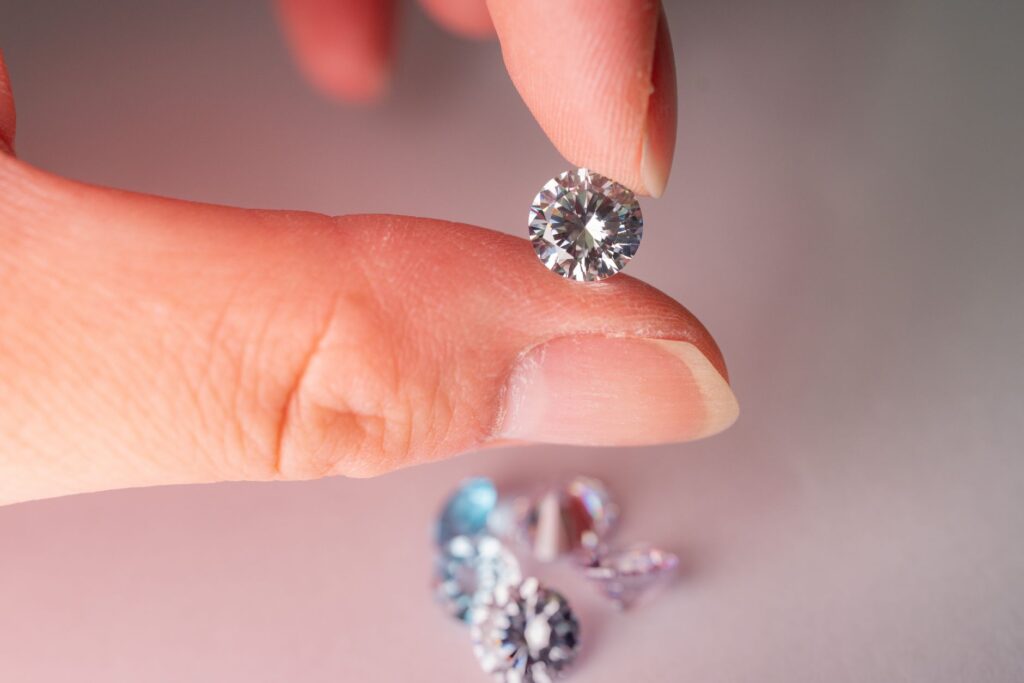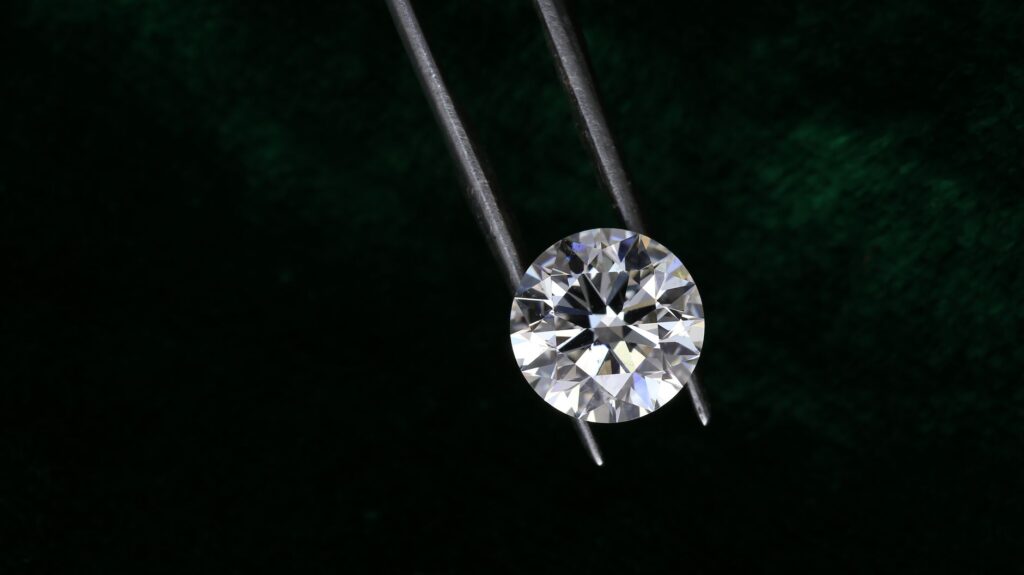
When people ask Can You See Diamond Inclusions, they are usually asking a practical question, not a gemology question. They want to know whether a diamond will look clean to the eye, whether flaws will be visible in everyday wear, and whether paying more for a higher clarity grade is actually worth it.
The short answer is that sometimes you can see them, but often you cannot. It depends on the size of the inclusion, where it sits, what type it is, the diamond’s shape, the viewing distance, and whether the stone is being examined under bright lighting or viewed casually on a hand. In lab grown diamonds and natural diamonds alike, many inclusions are too small to notice without magnification, while others can be seen by the unaided eye if they are large enough or placed in a visible area.
For most buyers, the real goal is not to buy the highest clarity grade. It is to choose a diamond that looks clean in normal wear, fits the budget, and avoids paying extra for detail that no one will ever see. Understanding eye-clean appearance, clarity grades, and inclusion types can help you make a better decision than relying on the grade letter alone.
Quick Answer
Yes, you can sometimes see diamond inclusions, but many are not visible without magnification. A diamond can have a lower clarity grade and still look completely clean face-up, especially if the inclusion is tiny or hidden near the edge.
For everyday buyers, the important question is not whether a diamond has inclusions at all. Almost every diamond has some. The better question is whether those inclusions are visible to the eye in normal viewing conditions.
In many cases, an eye-clean VS2 or SI1 diamond offers better value than paying significantly more for VVS clarity. The visible difference is often small or nonexistent, while the price difference can be meaningful.
Understanding Diamond Inclusions
What Is a Diamond Inclusion?
An inclusion is a natural internal feature inside a diamond. It can also refer to a surface-reaching feature, depending on the context. These features form during the diamond’s growth or later during cutting and handling.
Common inclusion types include crystals, feathers, clouds, needles, pinpoints, knots, cavities, chips, and twinning wisps. Some are easy to describe but hard to see. Others may be visible if they are larger, darker, or placed near the center of the stone.
Inclusions are different from blemishes, which are external marks on the surface. A small scratch or chip is not the same thing as an internal crystal or feather, although both can affect clarity grading.
What Does Clarity Mean?
Diamond clarity is the measure of how free a diamond is from inclusions and blemishes. Grading labs such as GIA evaluate the size, number, position, nature, and visibility of these features.
The main clarity scale ranges from Flawless to Included. In practical terms, the scale helps predict how likely inclusions are to be seen with the naked eye, but it does not tell the whole story.
| Clarity Grade | General Meaning | Typical Buyer Takeaway |
|---|---|---|
| FL | No inclusions or blemishes visible under magnification | Extremely rare, usually not necessary for most buyers |
| IF | Internally flawless, with tiny surface blemishes only | Very high grade with a premium that may not add visible benefit |
| VVS1 / VVS2 | Very, very slight inclusions, extremely difficult to see under magnification | Often looks identical to VS in normal viewing |
| VS1 / VS2 | Very slight inclusions, difficult to see without magnification | Common sweet spot for eye-clean value |
| SI1 / SI2 | Slight inclusions, may or may not be visible to the eye | Can offer strong value if eye-clean |
| I1 to I3 | Inclusions are usually visible and may affect transparency or durability | Usually not preferred for buyers seeking a clean look |
What Does Eye-Clean Mean?
Eye-clean means that a diamond does not show noticeable inclusions to the unaided eye in normal viewing conditions. This is a practical term, not an official grading category.
A diamond can be eye-clean from the top view but still show something from the side. That is still acceptable for many buyers because most people look at a diamond face-up, not from the side with magnification.
Eye-clean is important because it focuses on what you actually see, not just what the grading report says.
Why Inclusions Matter
Inclusions matter because they can affect how a diamond looks, how much it costs, and in a few cases how durable it is. Most buyers care about appearance first, then price, then long-term satisfaction.
A stone with visible inclusions may distract the eye, especially if the inclusion is dark, centered, or large relative to the size of the diamond. On the other hand, a stone with lower clarity can still look bright and beautiful if the inclusion is tiny or hidden under a prong.
From a buying perspective, clarity is one of the easiest quality factors to overspend on. Many shoppers pay a premium for a clarity grade they cannot distinguish in real life.
How Inclusions Affect Appearance
What Buyers Actually See
Most buyers view a diamond at arm’s length, in mixed lighting, and face-up. In that setting, many inclusions are not visible unless they are pronounced or poorly placed.
A clean-looking diamond can still have inclusions under 10x magnification. In fact, that is normal. Magnification reveals details that are not part of everyday viewing.
Visible inclusions are more likely to be noticed when the diamond is large, the inclusion is dark, or the inclusion sits near the center of the stone. They can also be easier to spot in step cuts such as emerald cut diamonds, which have broad open facets and less visual “busy-ness” than brilliant cuts.
Inclusion Placement Matters More Than Many Buyers Realize
Where an inclusion sits can matter as much as what it is. A tiny crystal near the edge may be easy to hide under a prong, while a similar crystal in the center may be more noticeable.
This is why two diamonds with the same clarity grade can look very different. Clarity grades are helpful, but they are not a perfect substitute for visual inspection or careful review of the plotting diagram on a grading report.
Experienced diamond buyers often care more about the combination of grade, placement, and shape than about the grade alone.
Shape Influences Visibility
Different diamond shapes hide or reveal inclusions in different ways. Round brilliant diamonds often disguise small inclusions better because their facet pattern creates more sparkle and visual movement. Step cuts such as emerald cuts, Asschers, and some oval or pear shapes may reveal more because they have larger open areas.
| Shape | General Clarity Visibility | Buyer Note |
|---|---|---|
| Round brilliant | Often hides small inclusions well | VS2 and many SI1 stones can be eye-clean |
| Princess | Good sparkle can mask minor features | Check corners for durability and inclusion placement |
| Oval, pear, marquise | Can show bow-tie and occasionally make inclusions more noticeable | Look closely at the center and pointed ends |
| Emerald cut | Often shows inclusions more easily | Higher clarity may be more important |
| Asscher | Broad facets can reveal internal features | Careful clarity selection is useful |
| Cushion | Varies by facet style | Some cuts hide inclusions better than others |
How Inclusions Affect Value
When Paying More Makes Sense
Paying more for clarity can make sense if the lower-clarity diamond shows visible inclusions, if the shape is known to reveal more, or if the stone is a larger size where details are easier to notice. Buyers who want a very clean look in a step-cut shape may also benefit from higher clarity.
Some people also value rarity. Higher clarity grades are rarer, and in some cases that matters to collectors or buyers who simply want the reassurance of a higher grade on paper.
When the Premium Is Hard to Justify
Clarity upgrades often give diminishing returns. The difference between an eye-clean VS2 and a VVS2 diamond may be technically real, but visually insignificant in daily wear.
That is why many buyers prefer to put budget toward better cut quality, a larger carat size, or a slightly warmer or cooler color grade depending on their priorities. Cut often has a bigger impact on sparkle than a jump from VS to VVS.
In lab grown diamonds, this trade-off is especially relevant. Because lab grown diamonds often cost less than natural diamonds of similar size and appearance, some buyers expect to move up in clarity. But the same value principle still applies. If the diamond already looks clean, paying more for invisible clarity improvements may not be the best use of the budget.
Best-Value Clarity Ranges
There is no single best clarity grade for everyone, but certain ranges are often practical buying points.
- VS1 to VS2 often provides a very safe eye-clean target for many buyers.
- SI1 can be excellent value if the stone is eye-clean and the inclusion is not in an obvious location.
- VVS can be appealing for buyers who want a high paper grade, but the added visual benefit is often minimal.
The right choice depends on shape, size, and how closely you plan to inspect the stone. For many shoppers, the smartest move is to evaluate the actual diamond rather than assuming a grade number tells the full story.
Practical Examples of What You Might See
VS2 Versus SI1 in Normal Viewing Conditions
A VS2 diamond often appears clean to most people in everyday viewing. Many SI1 diamonds also look eye-clean, especially if the inclusion is white, small, and positioned away from the center.
The real difference is that some SI1 stones are clean and some are not. That is why SI1 is not a uniform category from a buyer’s perspective. One SI1 can be a smart buy, while another may have a visible crystal or feather that catches your eye immediately.
If you are comparing a VS2 to an SI1, ask not only for the grade but for images, a magnified video, and ideally a face-up view at normal size. That gives a much better sense of what will actually be visible.
Eye-Clean SI1 Versus Non-Eye-Clean SI1
This comparison matters more than many shoppers expect. An eye-clean SI1 can look almost identical to a much higher grade when viewed normally. A non-eye-clean SI1, however, may show a dark mark or obvious feature that changes the appearance of the stone.
The difference is usually not the label itself. It is the type and position of the inclusion. This is why buyers should not buy clarity based on the grade alone, especially when shopping online.
VVS Versus VS for Everyday Wear
In many everyday settings, VVS and VS diamonds look very similar. The practical difference is often invisible without magnification.
For most consumers, VVS is more about rarity than visible appearance. That does not make it a poor choice, but it does mean the premium may not create a noticeable visual improvement for a regular buyer.
If your goal is a beautiful stone for daily wear, a well-cut VS diamond often delivers more practical value than moving up to VVS.
Common Inclusion Types and What They Mean
Feather
A feather is a small fracture inside the diamond. It can look like a tiny white, wispy, or reflective line under magnification.
Most feathers are not visible in daily wear, but they should be reviewed carefully if they are large, near the surface, or located at a vulnerable point such as a corner. In some cases, a feather may affect durability if it reaches the surface in a stress-prone area.
Buyers should not automatically avoid all feathers. Many are harmless and only influence clarity grading. The key question is whether the feather threatens the stone’s structural integrity or visibility.
Crystal
A crystal is a small mineral crystal trapped inside the diamond during formation. It may appear white, transparent, black, or colored under magnification.
Crystals are very common. A tiny crystal may never be noticed, while a darker or larger crystal can be visible, especially if it sits near the center of the stone.
By themselves, crystals usually do not create durability problems. Their main concern is appearance.
Cloud
A cloud is a cluster of many tiny pinpoints that can sometimes give the diamond a hazy look if it is dense enough. A small cloud by itself is usually not a problem.
Buyers should pay attention if the grading report mentions a cloud that affects transparency. In that case, the diamond may look less crisp or less lively than expected.
Most clouds are not visible as a distinct shape. The concern is more about haze than spotting the cloud itself.
Needle
A needle is a long, thin inclusion that looks like a tiny thread under magnification. Needles are often hard to see without magnification unless they are grouped together or especially prominent.
They are usually an appearance issue rather than a durability issue. However, like any inclusion, their visibility depends on size, position, and contrast.
Pinpoint
A pinpoint is a very tiny dot-like inclusion. Pinpoints are among the most common and least concerning features in diamonds.
Individually, they are usually not visible. A cluster of pinpoints can sometimes contribute to a cloud or slight haziness, but most isolated pinpoints are not a buyer concern.
Twinning Wisp
A twinning wisp is a group of internal growth features that often appears in lab grown diamonds and some natural diamonds as well. It can look like a wispy line or patch of mixed features under magnification.
Many twinning wisps are not visible to the eye. Still, if they create a clouded or patchy area, they can affect appearance. This is one reason video inspection is helpful when buying lab grown diamonds.
Knot
A knot is a crystal that reaches the surface of the diamond. It can appear as a tiny bump or protrusion.
Knot inclusions deserve attention because they can affect both appearance and polish. They are not always a major issue, but they are more relevant than many buyers realize since they interact with the surface of the stone.
Cavity
A cavity is a small opening or indentation in the diamond, sometimes left where a crystal was removed during cutting or polishing.
Cavities are generally more concerning than internal features because they reach the surface. They may collect dirt and can sometimes affect durability depending on location and size.
Chip
A chip is a small piece missing from the diamond’s surface. Chips are usually the result of wear or handling, though in some cases they may be present from cutting.
Chips are noticeable enough to matter, especially if they are on a visible edge or facet. They can also create durability concerns, so they deserve prompt professional inspection if found in a diamond being considered for purchase.
Advantages of Lower Clarity Diamonds
Lower clarity does not automatically mean lower beauty. In fact, some lower-clarity diamonds look excellent to the eye and offer better overall value than their higher-clarity counterparts.
- They can be more affordable, leaving room for a better cut, larger size, or better setting.
- They may look identical to higher clarity diamonds in normal wear if they are eye-clean.
- They can provide strong value in lab grown diamonds, where the visual payoff of extreme clarity may be minimal.
- They give buyers more flexibility to prioritize what they actually notice, such as sparkle and proportion.
For many shoppers, that combination is more practical than chasing a paper grade that produces no visible improvement.
Disadvantages of Lower Clarity Diamonds
Lower clarity is not always the best choice. The main drawback is that inclusions may be visible, especially in larger stones or in shapes that reveal more detail.
- Visible inclusions can distract from the beauty of the diamond.
- Some inclusion types may create durability concerns if they reach the surface.
- Buying sight unseen is riskier at lower clarity levels because not all SI1 or SI2 diamonds look the same.
- Very low clarity grades may reduce transparency or create a cloudy appearance.
In other words, lower clarity can save money, but the savings are only worthwhile if the diamond still meets your visual expectations.
Lab Grown Diamond Considerations
Clarity matters in lab grown diamonds for the same basic reason it matters in natural diamonds: buyers want a diamond that looks attractive in real life. The difference is that lab grown diamonds often offer more size for the money, which changes how some shoppers think about clarity.
Because lab grown diamonds are usually priced lower than comparable natural diamonds, buyers sometimes expect to maximize every quality grade. In practice, that is not always necessary. An eye-clean VS2 or SI1 lab grown diamond can look excellent and still provide strong value.
At the same time, lab grown diamonds can have their own clarity patterns and growth features, including twinning wisps or clouds. This does not make them inferior. It simply means the buyer should pay attention to the report and the actual appearance, not just the headline grade.
For lab grown diamonds, image review is especially helpful. If possible, look for a clean face-up video in normal lighting, because that is closer to real-world viewing than magnified still photos alone.
How to Judge Whether Inclusions Are Visible
Look at the Diamond Face-Up
Face-up viewing is the best way to judge whether an inclusion matters. That means looking at the diamond from the top, the way it will usually be worn.
If an inclusion is only visible from the side under magnification, it may not matter much to everyday wear. If it is visible from the top at arm’s length, it deserves more attention.
Check Different Lighting Conditions
A diamond may hide inclusions better in bright sparkle-filled lighting than in diffuse daylight or office lighting. That is why it is useful to see how the stone behaves in more than one setting.
Some inclusions become more obvious when the diamond stops “dancing” with sparkle. A clean-looking stone in a showroom may look slightly different in softer light, which is one reason videos and independent images matter.
Pay Attention to Contrast
Dark inclusions are easier to notice than white or transparent ones. An inclusion that creates strong contrast against the body of the diamond is more likely to catch the eye.
This is especially true in higher color diamonds or in stones with larger open facets. If a feature stands out sharply, it is more likely to affect your visual impression than a pale, blended feature of the same size.
Use Magnification as a Guide, Not the Final Test
Magnified images are useful, but they can make even tiny inclusions look dramatic. A 20x or 40x photo can exaggerate what matters in real life.
That is why a buyer should ask two questions: what does the inclusion look like under magnification, and what will I actually see with my own eyes? The second question is usually the more important one.
Buyer Considerations That Matter Most
Budget
Your budget should guide how much clarity you really need. If spending more on clarity means sacrificing cut quality or size, the diamond may be less impressive overall.
Many shoppers are happier with an eye-clean diamond that has excellent cut than with a higher-clarity stone that is smaller or less lively.
Eye-Clean Priority
If your main goal is a diamond that looks clean without magnification, focus on that standard rather than a specific grade. A strong eye-clean result can come from multiple clarity grades.
This is one of the biggest reasons buyers compare actual stones, not just labels. Eye-clean is about appearance, not about prestige.
Inclusion Placement
Always consider where the inclusion sits. A small inclusion near the edge may be far less noticeable than the same inclusion in the center.
For a ring intended for daily wear, placement can also matter for setting style. Prongs may hide certain features, while open settings may leave them more exposed.
Durability
Most inclusions do not make a diamond fragile. However, surface-reaching features such as feathers, cavities, knots, and chips deserve closer review than tiny internal pinpoints or crystals.
If a durability-related inclusion is present, ask whether it is in a stress-prone area. That detail can matter more than the clarity grade itself.
Long-Term Satisfaction
Think about how you will feel about the diamond after the purchase. Some buyers are comfortable knowing there are minor inclusions they cannot see. Others prefer a cleaner paper grade for peace of mind.
Both approaches are reasonable. The best choice is the one that matches your comfort level and budget without overpaying for differences you will not notice.
Common Buyer Mistakes
- Overpaying for invisible clarity improvements. Moving from an eye-clean VS2 to a VVS diamond often adds cost without adding visible benefit.
- Assuming all SI diamonds look the same. SI1 and SI2 diamonds vary widely, so one stone can be excellent while another is clearly included.
- Ignoring inclusion location. A grade alone does not tell you whether the inclusion is centered, hidden, or near a corner.
- Confusing magnified visibility with real-world visibility. What looks dramatic under 20x magnification may be invisible in daily wear.
- Focusing only on clarity instead of cut. A diamond with better cut often looks more impressive than a slightly higher clarity stone with weaker proportions.
- Not checking the grading report carefully. The plot and comments can reveal issues that the grade letter does not explain.
How Experienced Buyers Often Approach Clarity
Experienced buyers usually start with cut, then color, then clarity, while keeping budget and shape in mind. They often aim for a diamond that is eye-clean rather than one with the highest possible clarity grade.
In practical terms, that may mean choosing a VS2 or carefully selected SI1 and using the savings to improve other visible qualities. For many diamonds, that creates a better overall result than stretching for VVS clarity.
Another common approach is to be stricter with certain shapes. Buyers may accept lower clarity more easily in round brilliants than in emerald cuts or other open-facet shapes.
Frequently Asked Questions
Can you see diamond inclusions without a loupe?
Sometimes yes, sometimes no. Many inclusions are too small to see without magnification, but larger, darker, or poorly placed inclusions can be visible to the naked eye.
Is an eye-clean SI1 a good choice?
Often yes. An eye-clean SI1 can offer excellent value, especially if the inclusion is small, light in color, and placed where it is not easy to see.
Are VVS diamonds worth the extra cost?
They can be worth it for buyers who want a higher rarity grade or stronger peace of mind. For many everyday shoppers, however, the visible improvement over VS is minimal.
Which clarity grade is best for most buyers?
There is no single best grade, but VS2 and eye-clean SI1 are often practical choices. They frequently balance appearance and value well.
Do inclusions affect sparkle?
Usually not in a dramatic way unless they are large enough to affect transparency or are concentrated in a way that creates haze. Sparkle is more strongly influenced by cut quality.
Can lab grown diamonds have visible inclusions?
Yes. Lab grown diamonds can have visible inclusions just like natural diamonds. The type and visibility depend on the individual stone, not just on whether it was grown in a lab.
Should I avoid feathers in a diamond?
Not necessarily. Many feathers are harmless and only visible under magnification. They matter more if they are large, surface-reaching, or located in a vulnerable area.
Is clarity more important in larger diamonds?
Often yes. As diamond size increases, inclusions can become easier to notice, especially if they are near the center or create contrast.
Conclusion
So, Can You See Diamond Inclusions? Sometimes yes, but often no. The real answer depends on the inclusion type, the diamond’s shape, its size, and how close you are looking. Many diamonds with lower clarity grades still look clean and beautiful in normal wear.
For most buyers, the best approach is to focus on eye-clean appearance rather than the highest clarity grade. A well-chosen VS2 or SI1 can be a better value than paying more for clarity you cannot see. In lab grown diamonds especially, it makes sense to balance clarity with cut, size, and overall visual performance.
If you are comparing stones, ask what the inclusion is, where it is located, and whether it is actually visible face-up. Those practical questions matter far more than the grade label alone when you are trying to choose a diamond you will be happy wearing every day.