Color is one of the easiest diamond qualities to misunderstand because the grading scale sounds more dramatic than it usually looks in real life. A diamond graded G or H can appear very white once it is set, while a higher-color stone may only look noticeably different under close comparison. That is especially true with lab grown diamonds, where buyers often find themselves deciding whether paying extra for a near-colorless or colorless grade actually changes the appearance enough to matter.
Quick answer: do lab grown diamonds have better color? In many cases, yes, lab grown diamonds are more likely to be offered in higher color grades than natural diamonds at similar sizes and budgets. That does not mean every lab grown diamond looks whiter than every natural diamond, but it does mean shoppers can often afford a more colorless appearance when buying lab grown. The practical question is not whether the grading is better on paper, but whether the difference is visible in normal wear and worth the extra cost.
What Diamond Color Really Means
Diamond color refers to how much body color a diamond has, usually a subtle yellow or brown tint in white diamonds. Gemological labs grade most white diamonds on a scale from D to Z, with D being the most colorless and Z showing stronger visible color. In plain English, a higher color grade usually means the diamond looks whiter, but the difference can be very small from one grade to the next.
This matters because most buyers do not view diamonds face-up in a lab environment. They see them in a ring, at arm’s length, under different lighting conditions, and often next to a metal setting that can make the stone appear whiter or warmer. That is why the same color grade can look different depending on the diamond’s shape, size, cut quality, and setting.
The color scale in simple terms
The traditional diamond color scale is broken into broad groups:
- D-F: Colorless
- G-J: Near-colorless
- K-M: Faint color
- N-R: Very light color
- S-Z: Light color
For most engagement ring shoppers, the conversation usually centers on the colorless and near-colorless range. That is because diamonds below J start showing more warmth, especially in larger sizes or in settings that do not hide color well. Even then, some buyers prefer a warmer stone for price or style reasons.
Why Lab Grown Diamonds Often Appear to Have Better Color
Lab grown diamonds are created in controlled environments, which allows manufacturers to produce stones with fewer body color issues than many natural diamonds. In practice, that means the supply of higher color grades is often stronger in lab grown diamonds, and shoppers may see a larger selection of D, E, and F grades than they would expect in natural diamonds at the same price point.
This does not mean the growth process automatically creates a perfectly colorless diamond every time. Lab grown diamonds can still show tint, and some can have hues related to growth conditions or post-growth treatment. Still, in today’s market, it is common to find lab grown diamonds with excellent color grades at a much lower price than natural diamonds of similar appearance.
The important point is that lab grown diamonds often give buyers access to a higher graded color without paying the steep premium that is common in natural diamonds. That makes the conversation less about whether the diamond can be colorless and more about whether paying extra for a top color grade creates a visible benefit.
What a Lab Grown Diamond Color Grade Actually Looks Like
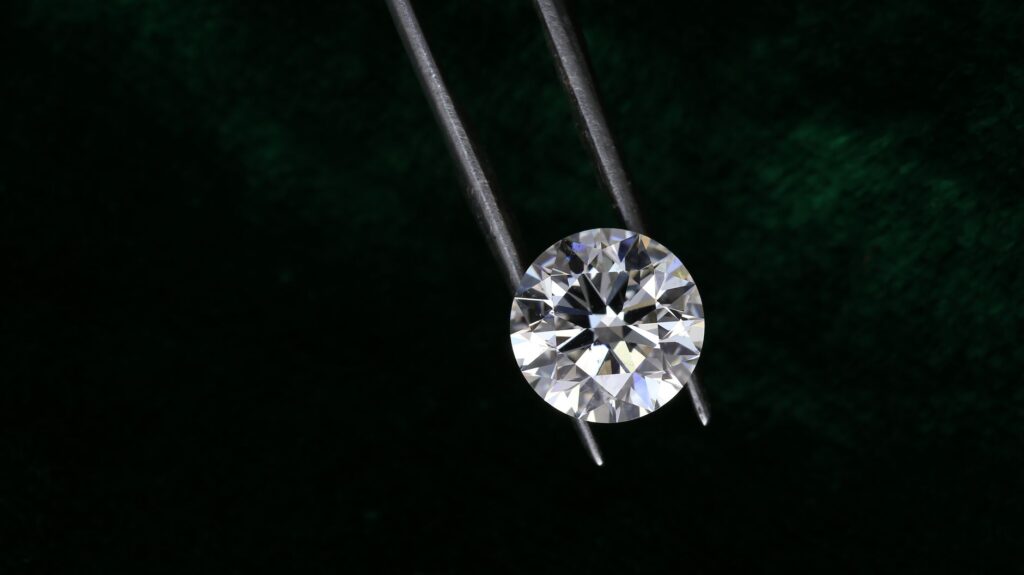
On paper, a D-color diamond is the highest color grade. In real life, most people describe D, E, and F diamonds as icy white, bright, or colorless when viewed face-up. G and H diamonds usually still look white to most buyers, especially when set in a ring and not compared directly to a higher grade.
Once you move lower on the scale, subtle warmth can become more noticeable. I and J color diamonds can still look attractive and bright, but the faint yellow tint may be visible in certain lighting or when placed next to a colorless diamond. In larger sizes, color tends to show more easily because there is more surface area for your eye to read.
With lab grown diamonds, the main difference is not that color behaves differently, but that higher-color options are more accessible. A shopper might be able to choose a D or E lab grown diamond at a budget that would only allow a G or H natural diamond. That can change the buying strategy, especially for buyers who prioritize a whiter-looking center stone.
What buyers usually see face-up
Face-up viewing is the most relevant way to judge color because that is how the diamond is worn. Under normal face-up viewing, many near-colorless diamonds still look white, especially if the cut is strong and the setting does not introduce extra warmth. This is why color grading should always be considered alongside cut quality rather than in isolation.
A well-cut diamond can return a lot of brightness and sparkle, which often makes minor color differences less noticeable. A poorly cut diamond, even with a top color grade, may look less lively and less attractive overall. In other words, brightness and sparkle can sometimes do more for perceived whiteness than a one-grade color upgrade.
Can Most People See the Difference?
For many buyers, the short answer is no, not under normal viewing conditions. The difference between adjacent color grades is often subtle, and once a diamond is mounted, the average person usually will not identify the exact grade by eye. Even trained professionals often need comparison stones, controlled lighting, and close inspection to distinguish some grades reliably.
That said, the visibility of color depends on several real-world factors. The answer is not the same for a 0.75-carat round brilliant in platinum as it is for a 2.50-carat oval in yellow gold. Shape, size, and setting all influence how much tint you may notice.
Side-by-side comparison is different from everyday wear
Side-by-side comparisons can exaggerate differences that are hard to see in a single mounted stone. If you place a D-color diamond next to an H-color diamond under a jeweler’s spotlight, you may notice a difference much more easily than you would in day-to-day wear. That does not mean the difference is always visible to others once the diamonds are separated and worn normally.
Everyday viewing tells a more practical story. At arm’s length, in mixed lighting, most people will not notice a modest color difference unless the diamond is larger, the shape is more color-sensitive, or the lower-grade stone sits in a setting that emphasizes warmth.
Professional eyes versus consumer eyes
Professional graders and experienced jewelers are trained to detect subtle color differences. They look under standardized lighting and compare diamonds against master stones. Most consumers do not examine diamonds this way, so they are much less likely to notice distinctions that matter on a grading report.
This is why color upgrades can be emotionally reassuring without always being visually necessary. Some buyers simply prefer the security of a colorless grade, and that preference is valid. Others may be paying for a distinction they will never see in normal wear.
Viewing distance matters
At close inspection, small differences become easier to spot. At typical social distance, which is usually a few feet away, color differences shrink dramatically. This matters because diamonds are generally viewed from farther away than buyers expect when they are studying them in a store.
If you need to bring a diamond very close to your face to see the color difference, it may not be a meaningful difference for real-world wear. For many shoppers, that is the deciding point between choosing a more expensive color grade and saving money for better cut, size, or setting quality.
How Color Looks in Different Shapes
Diamond shape has a major effect on color visibility. Some shapes hide color well, while others tend to reveal it more easily. This is one reason why a color grade that looks excellent in a round brilliant may appear warmer in a pear or emerald cut.
Shapes that hide color well
Round brilliants are usually the most forgiving when it comes to body color. Their faceting pattern reflects a lot of light back to the eye, which helps mask mild warmth. Princess cuts also tend to hide color relatively well because of their facet structure and sparkle pattern.
For buyers who want to maximize value, these shapes often allow slightly lower color grades without a major visual penalty. That is part of why G through I color can be a smart range in many round and princess settings.
Shapes that show color more easily
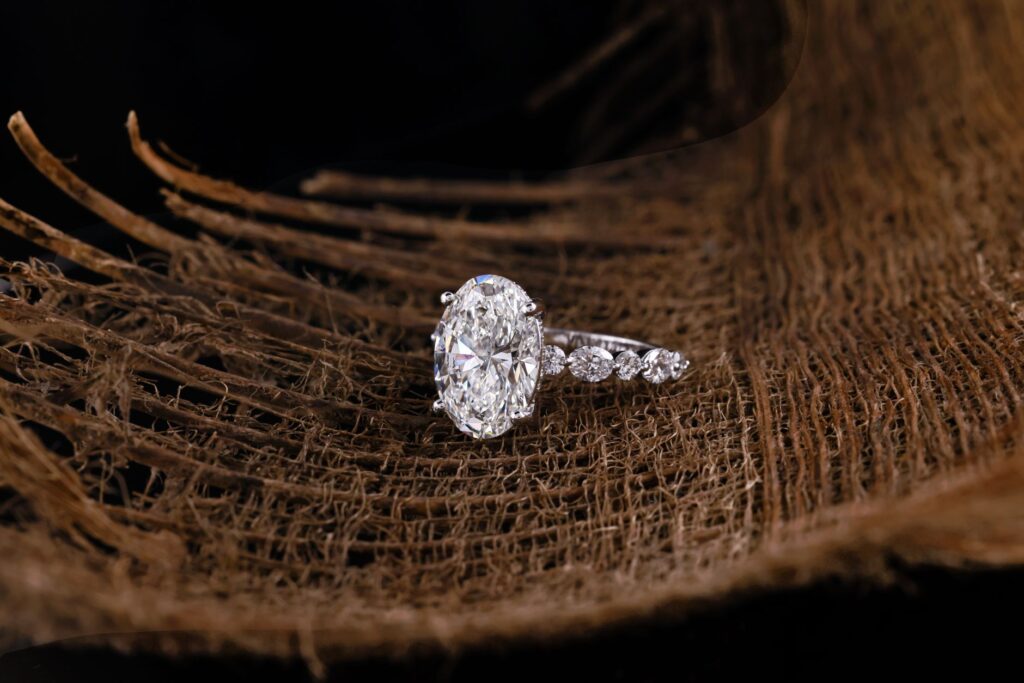
Emerald cuts, Asscher cuts, oval cuts, pear cuts, and marquise cuts often reveal color more readily. Emerald and Asscher cuts have broader open facets, which act like windows into the body color of the diamond. Ovals, pears, and marquises can also show warmth near the pointed ends or along the edges.
For these shapes, buyers often prefer a higher color grade if they want the stone to appear very white. Lab grown diamonds can be especially appealing here because the price gap between a high color grade and a lower one may still be manageable compared with natural diamonds.
Shape and cut quality work together
Cut quality influences how much light a diamond returns to the eye. Better light return can make a diamond appear brighter and whiter, even if the color grade is not top tier. A poorly cut diamond may allow body color to be more obvious because it does not mask the tint with brilliance.
This is why color should never be judged alone. A slightly lower color grade with strong cut quality can often look better than a higher color grade with weak performance.
How Color Looks in Different Metals
Metal choice affects how you perceive diamond color. Some settings make a diamond look whiter, while others make any warmth more noticeable. This is one of the most practical parts of buying a diamond, yet it is often overlooked.
White gold and platinum
White gold and platinum are popular choices for buyers who want a bright, cool look. These metals tend to support the appearance of a whiter diamond, which is why they are often paired with D through H color stones. In these settings, many buyers are satisfied with near-colorless diamonds because the metal itself helps the diamond look crisp and clean.
That said, a very high color grade can still matter if you want the stone to look as icy white as possible. This is especially true for larger diamonds and more open shapes, where a subtle tint can show more easily against a white metal background.
Yellow gold
Yellow gold can make lower color grades look better by blending with the diamond’s natural warmth. In many cases, a G, H, I, or even J color diamond can look quite attractive in yellow gold because the metal does not fight the stone’s slight warmth. Some buyers actually prefer this softer look.
If the goal is a perfectly white appearance, however, yellow gold can complicate the decision. It can make a diamond appear warmer, even if the diamond itself is not especially tinted. For that reason, buyers who care deeply about colorlessness often lean toward white metals.
Rose gold
Rose gold has a similar effect to yellow gold, although the look is different. Its pinkish tone tends to complement warmer diamonds and can soften the visual impact of a near-colorless stone. For some buyers, this creates a cohesive and flattering look.
Rose gold can be a smart option for budget-conscious shoppers because it gives more flexibility with color grades. If the setting is warm in tone, a slight diamond tint may be much less noticeable.
How Lighting Changes the Appearance of Color
Diamond color does not look identical in every environment. Lighting influences how much warmth your eye detects, which means the same diamond can appear whiter in one setting and slightly warmer in another. This is one reason buyers should avoid judging color only in a jewelry store case.
Daylight
Natural daylight can reveal subtle color well, especially in diffused outdoor light. In this setting, you may notice more of the diamond’s true body color than you would under spotlighting. This is useful when comparing diamonds because daylight tends to be less flattering and more honest.
If a diamond still looks white in daylight, that is a reassuring sign for everyday wear. If it looks too warm for your taste outdoors, it will likely do the same in some indoor settings.
Jewelry store lighting
Jewelry store lighting is designed to make diamonds sparkle. It often uses bright, focused light that can minimize the appearance of body color while enhancing brilliance. As a result, even lower color grades may look surprisingly white in the store.
That is not deceptive, but it is incomplete. A diamond that looks icy under intense spotlights may show more warmth in calmer lighting at home. Buyers should keep that in mind before assuming a stone is whiter than it really is.
Warm indoor lighting
Warm household lighting, such as many living room lamps or softer dining room lights, can make a diamond look slightly warmer. This is where lower color grades are more likely to reveal themselves. Diamonds in the G to J range may still look lovely, but the warmth can become more visible depending on the setting and shape.
For buyers who spend a lot of time in warm indoor environments, it may be worth seeing the diamond in that type of light before deciding. Some people are sensitive to color in exactly those situations.
Cool lighting
Cool lighting can make a diamond seem crisper and more colorless. Office lighting, some LED fixtures, and daylight-balanced environments often favor the appearance of higher color grades. This can be helpful for buyers who want a fresh, bright look.
Still, a diamond should not be chosen solely based on how it performs under a single lighting type. The best buying decision usually balances multiple viewing conditions.
Price Premium Versus Visual Benefit
Color grade often has a real effect on price, but the visual return does not always increase at the same rate. In other words, the jump in price from one color grade to the next can be larger than the jump in visible beauty. This is especially important in lab grown diamonds, where higher color grades are often more attainable, but not always necessary.
Price sensitivity becomes more pronounced as diamonds get larger. In a smaller stone, a color upgrade may be difficult to notice. In a larger stone, the same upgrade may offer more visible benefit, although it can still be modest compared with the cost increase.
Diminishing returns
There is usually a point where you pay significantly more for only a subtle improvement. That point varies by shape, size, setting, and personal preference, but it exists in almost every diamond purchase. Buyers often overvalue the difference between adjacent high grades because the grade sounds important, even when the eye cannot easily tell them apart.
This is where lab grown diamonds can create a different pricing dynamic. Since the price gap between grades may be smaller in absolute dollar terms than in natural diamonds, some buyers decide a higher color grade is worth it. Others still prefer to redirect that budget to cut quality or carat size.
When the premium may be justified
Paying more for a higher color grade can make sense if:
- You want the whitest possible appearance in a white metal setting
- You are choosing an emerald, Asscher, oval, pear, or marquise shape
- You are buying a larger diamond where color is easier to see
- You are very sensitive to warmth and know you will notice it
- You prefer the peace of mind of a top color grade
When the premium may not be worthwhile
Spending more on color may not be the best use of budget if:
- You are buying a round brilliant with excellent cut quality
- The diamond is small enough that color is unlikely to stand out
- You are setting the stone in yellow gold or rose gold
- You would rather increase size or improve cut
- The diamond will be worn casually and not examined closely
Do Lab Grown Diamonds Have Better Color Than Natural Diamonds?
This question is often really about supply and accessibility, not some inherent visual rule. Lab grown diamonds are frequently available in better color grades because the manufacturing process allows more control over the stone’s development. That means shoppers often see more colorless lab grown diamonds in the marketplace than natural diamonds at the same budget level.
However, a lab grown diamond is not automatically whiter than a natural diamond of the same grade. A G-color lab grown diamond and a G-color natural diamond should both fall into the same general color category, even if one was produced in a lab and the other formed underground. The grade, not the origin, is what tells you how colorless the stone is meant to appear.
In practical buying terms, the advantage of lab grown diamonds is access. You may be able to buy a D, E, or F color lab grown stone without stretching the budget as far as you would for the same grade in natural diamond. That can be helpful if you are highly focused on a colorless look.
Typical color ranges in lab grown diamonds
Lab grown diamonds are commonly sold across a wide color range, but the market tends to skew toward the higher end. D through F stones are common in many inventories, and G through I can also offer strong value. Lower color grades exist too, especially in larger or lower-priced stones, but they are not always the center of the lab grown market.
Because of this, buyers sometimes assume that lab grown diamonds are simply “better” in color. The more accurate statement is that the category often gives buyers easier access to higher grades.
Does color behave differently in lab grown diamonds?
In terms of appearance to the naked eye, color behaves the same way. A diamond with a slight tint will still look slightly tinted, regardless of how it was created. The factors that affect visibility, such as shape, size, cut, metal, and lighting, are the same.
The difference is more about production and pricing than visual physics. Lab grown diamonds make top color grades more attainable, but they do not change how the human eye perceives color.
Which Color Grades Usually Offer the Best Value?
The best value is not always the highest grade. In many cases, the strongest value sits in the range where the diamond still looks white to most people but avoids the steepest price premium. For many buyers, that range is G through H, and sometimes I, depending on shape and setting.
This does not mean every buyer should choose those grades. If someone is especially color-sensitive or wants the whitest possible appearance in an open setting, a higher grade can be worth the extra cost. The key is to match the grade to the actual visual goal.
High-color buyers
Buyers who are likely to prefer D through F include those who:
- Want the brightest, coolest white appearance
- Are choosing a large center stone
- Prefer platinum or white gold and want a very crisp look
- Are drawn to emerald or Asscher cuts
Value-focused buyers
Buyers who may get excellent value from G through I include those who:
- Want a diamond that still looks white in most settings
- Care about balancing color with cut, size, and budget
- Are using yellow gold or rose gold
- Want a practical engagement ring that looks bright without overpaying for invisible differences
Common Buyer Mistakes
Color grading creates a lot of confusion because the report can make tiny differences sound larger than they are. A few common mistakes show up repeatedly when buyers compare diamonds.
Overpaying for invisible upgrades
One of the most common mistakes is paying a premium for a higher color grade that is difficult to see once the diamond is set. This happens most often when buyers focus too much on the grading scale and not enough on what the diamond looks like from a normal viewing distance. A top grade can be nice to have, but it is not always a visible improvement.
Ignoring the metal color
Another mistake is choosing a diamond without considering the setting. A lower color grade in yellow gold may look great, while the same grade in platinum may appear warmer than expected. The ring design can either support or fight the stone’s natural appearance.
Assuming all shapes hide color equally
Color visibility varies a lot by shape. A buyer who is happy with a G-color round brilliant may be disappointed by a G-color emerald cut if the goal is a very white look. Shape should always be part of the decision.
Buying from the report alone
Certificates are essential, but they are not the whole story. Two diamonds with the same color grade can still look different because of cut quality, fluorescence, size, and setting. The best buying decisions combine the report with visual judgment.
Colorless Versus Near-Colorless in Lab Grown Diamonds
For lab grown diamonds, the decision between colorless and near-colorless often comes down to personal sensitivity and budget efficiency. Colorless grades can look especially clean in white metal settings, but near-colorless grades are frequently white enough for most people to enjoy without feeling compromised. The question is not whether near-colorless is bad, but whether the subtle difference is worth the added cost to you.
In many cases, a near-colorless lab grown diamond offers the best balance of appearance and price. It can look bright and white in everyday wear while freeing up budget for a better cut, larger size, or a setting you prefer. For buyers who notice warmth easily, though, stepping into colorless grades may still be the right choice.
Simple comparison table
| Color Range | General Appearance | Visibility of Tint | Typical Value | Best For |
|---|---|---|---|---|
| D-F | Colorless, very white | Usually minimal to none | Highest price premium | Buyers who want the whitest look |
| G-H | Near-colorless, still looks white in most settings | Usually subtle | Strong balance of beauty and value | Most engagement ring shoppers |
| I-J | Slight warmth may be visible | More noticeable in some lighting and shapes | Lower price, good budget flexibility | Value-focused buyers, warmer metals |
How to Decide What Color Grade Is Worth Paying For
A useful way to think about diamond color is to separate what is visible from what is desirable on paper. If two diamonds look nearly identical in the setting you plan to wear, the more expensive one may not be the better value for you. If you are sensitive to color or buying a shape that shows tint easily, the higher grade may be worth it.
The right decision often depends on three questions. First, what shape are you buying? Second, what metal will the diamond be set in? Third, how important is a perfectly white appearance to you personally?
A practical buying framework
- Choose higher color if you want the cleanest possible appearance and do not mind the premium.
- Choose mid-range near-colorless if you want the best balance of whiteness and value.
- Choose lower near-colorless or faint color if metal choice and budget make warmth less important to you.
For lab grown diamonds, this framework is especially useful because the category already reduces the financial barrier to higher color. You do not need to assume that top color is the only sensible option, but you may find that upgrading color costs less than expected. That can make the decision feel easier than it does in natural diamond shopping.
Frequently Asked Questions
Do lab grown diamonds look whiter than natural diamonds?
Not automatically. A lab grown diamond and a natural diamond with the same color grade should generally appear similar in color. The advantage of lab grown diamonds is that higher color grades are often more affordable and more available.
Is D color worth it in a lab grown diamond?
It can be worth it if you want the whitest possible look, especially in an open shape or white metal setting. For many buyers, though, the visual difference between D and a good near-colorless stone is small. Whether it is worth the extra cost depends on how sensitive you are to subtle warmth.
What color grade looks white to most people?
Many buyers find G and H color diamonds to look white in normal wear, especially when the cut is strong and the setting is in white gold or platinum. Some I color diamonds also look white in certain settings. The exact answer depends on shape, size, and lighting.
Does a better cut make a diamond look whiter?
Yes, often it does. Strong cut quality improves brightness and sparkle, which can help a diamond appear cleaner and whiter to the eye. A well-cut near-colorless diamond may look better than a poorly cut higher-color stone.
What color is best for an oval lab grown diamond?
Ovals can show color more easily than rounds, so many buyers prefer higher color grades in oval lab grown diamonds. That does not mean lower grades are unacceptable, but color is more visible in that shape. If you want a bright white look, a higher color grade may be worth considering.
Should I choose higher color if I am using yellow gold?
Not always. Yellow gold can make slightly warmer diamonds look appealing and cohesive, so a near-colorless diamond may be perfectly suitable. If you want the stone to look distinctly white against yellow gold, then a higher color grade may be more important to you.
Is color more important than clarity?
They affect appearance in different ways, so neither is automatically more important. For many buyers, color is easier to see than small clarity differences, especially once a diamond is mounted. That said, cut quality often has the biggest impact on overall beauty.
Can I save money by choosing a lower color lab grown diamond?
Yes, and in many cases the savings are meaningful. If the diamond still looks white to you in the intended setting, moving down one or two color grades can free up budget for other priorities. The key is to make sure the stone still meets your visual expectations.
Conclusion
Lab grown diamonds often give shoppers better access to high color grades, but the real buying question is whether those grades create a visible improvement in everyday wear. In many cases, the answer is only a subtle one. A well-cut near-colorless lab grown diamond can still look very white, especially in a white metal setting and under normal lighting.
If you want the whitest possible appearance, D through F color can be a sensible choice, particularly for larger stones or shapes that show color more easily. If you want the best balance of appearance and value, G through H often offers a strong middle ground, and sometimes I can still be a smart option depending on the setting and shape. The most practical decision is the one that matches what you can actually see, not just what the grading scale suggests.
For buyers evaluating Do Lab Grown Diamonds Have Better Color, the simplest takeaway is this: lab grown diamonds often make higher color grades easier to afford, but the best value still depends on visible performance, not just the report. Focus on how the stone looks in the shape, metal, and lighting you will actually wear, and you are more likely to choose a diamond that feels right in real life.