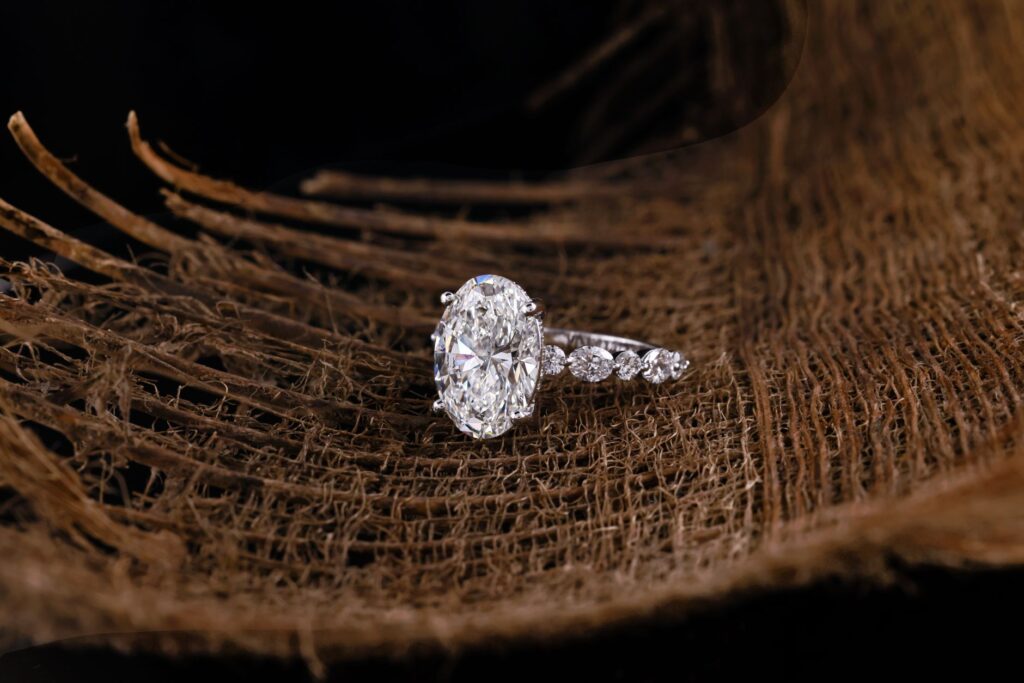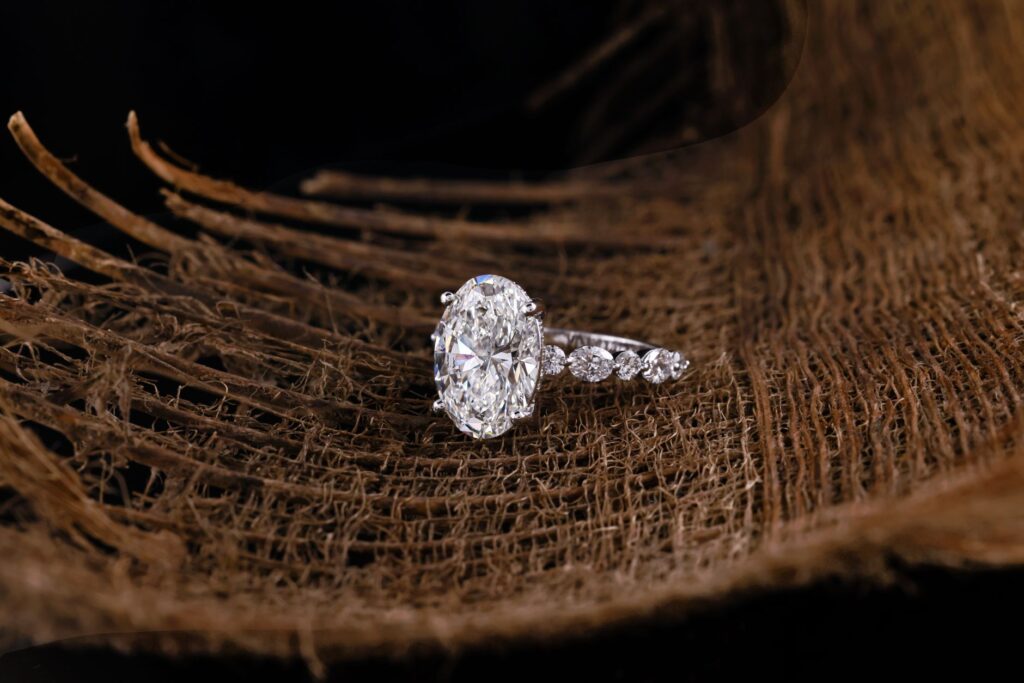
J vs K color diamonds sit in a part of the grading scale where the difference between paper value and real-world appearance matters a lot. On a grading report, K is lower than J, but in a finished ring the visible gap is often much smaller than buyers expect, especially once the stone is set and viewed from normal distance.
That makes this comparison less about which grade is “better” and more about whether the extra cost for J is actually visible in your setting, metal choice, and lighting. For many shoppers, the answer depends on how sensitive they are to warmth, what shape they are buying, and whether the diamond will be placed in white metal or yellow gold.
Quick Answer: Is J Better Than K?
J color is one step higher than K color on the diamond grading scale, so it is generally a little whiter and usually has slightly less visible warmth. In practice, the difference is subtle in many finished diamonds, especially once they are mounted in a ring and viewed without comparison to another stone.
If you want the short buying answer, J vs K color diamonds is usually a value decision, not a dramatic appearance decision. J may be worth paying for if you want a slightly whiter look in white gold or platinum. K can be a smart choice if you want to save money and are comfortable with a faint warm tone, especially in yellow gold or in shapes that hide color well.
What J and K Color Actually Mean
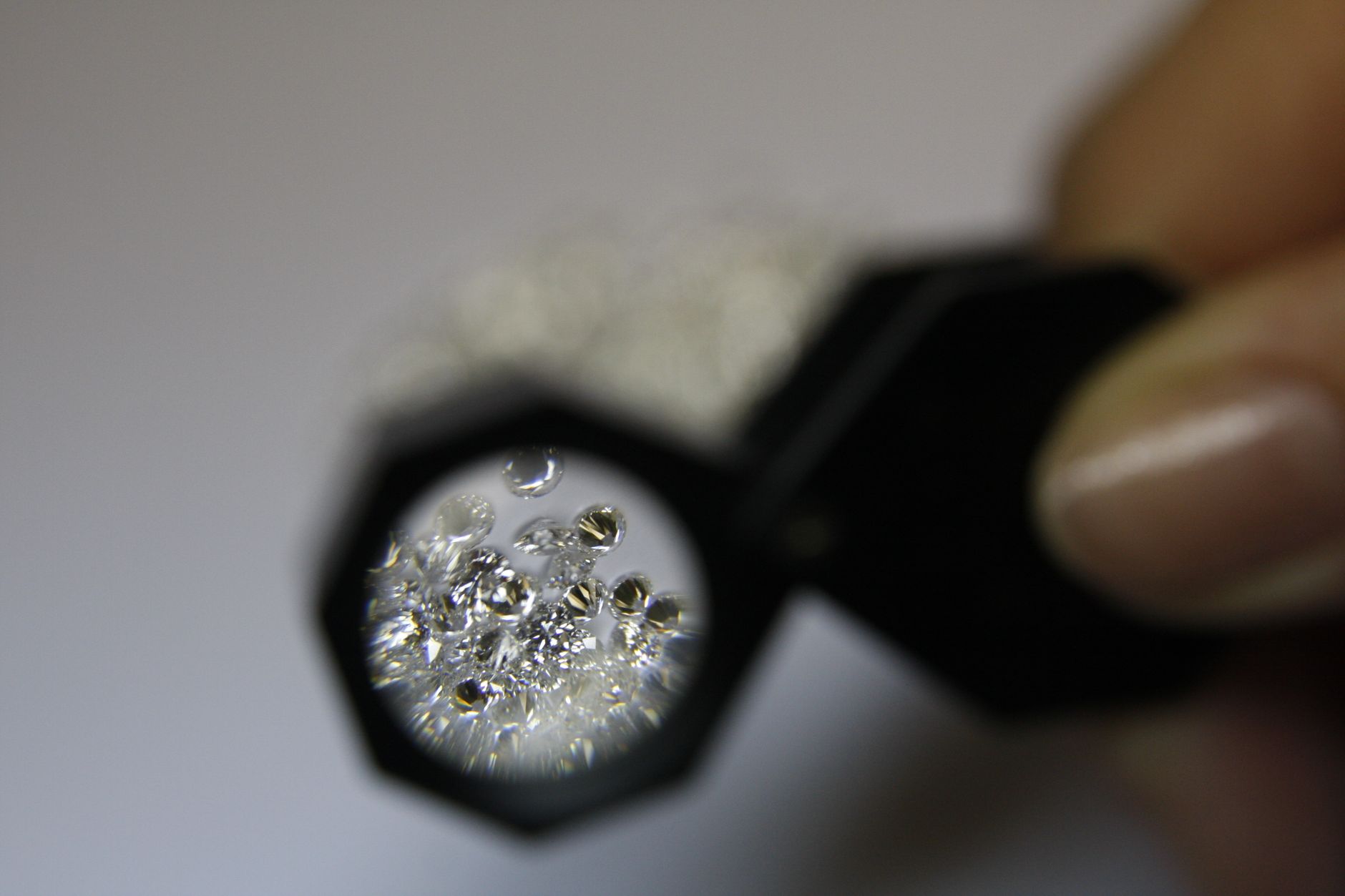
Diamond color grading measures how much body color a diamond shows when compared against a master set under controlled lighting. The GIA color scale runs from D, which is colorless, down through Z, where noticeable yellow or brown tint becomes more obvious.
J and K both sit in the near-colorless to lower near-colorless range, depending on the grading context and how strict the viewer is. J is above K, which means it generally carries a little less tint. That said, both grades can still look quite attractive, especially when cut quality is strong.
Why color grades do not tell the whole story
A grading letter does not show you how a diamond will look once it is set in jewelry. Shape, cut quality, carat size, metal color, and lighting all affect how much color you notice.
Two diamonds with the same J grade can look different if one has a better cut, a round shape, and a smaller face-up size, while the other is a larger emerald cut in bright white metal. The report gives a starting point, but appearance is more nuanced.
What J vs K Color Diamonds Actually Look Like
In everyday viewing, J and K color diamonds are usually described as having a faint warmth rather than a strong yellow appearance. The warmth can be very subtle in some stones and more noticeable in others, especially when the diamond is loose and viewed next to a whiter stone.
J typically looks a touch whiter than K. K may show a slightly softer, warmer tone, which some buyers do not mind at all, especially if they prefer a less icy look or are setting the diamond in yellow gold.
How the difference usually appears
- J color: Often appears near-colorless to most observers, with a faint hint of warmth in some lighting.
- K color: Still can look attractive, but warmth is more likely to be noticeable, especially in larger stones or in white metal settings.
The key question is not whether K is “bad.” It is whether the warmth is visible enough for your personal taste and your chosen ring design. For some buyers, that warmth is part of the value. For others, especially those aiming for a crisp white look, J may feel like a safer middle ground.
Can Most People See the Difference Between J and K?
In many cases, the difference is subtle rather than obvious. Most people do not study diamonds under controlled gemological lighting, and they are usually not comparing one J stone directly against one K stone side by side.
That said, the difference can become easier to notice in certain situations. The larger the diamond, the more visible any body color tends to be. Cut style and setting also matter, and these factors can make K look a little warmer than J under the same conditions.
Side-by-side comparison is different from daily wear
When a J and K diamond are placed next to each other, many buyers can see that J is slightly whiter. Without a direct comparison, the difference is often much harder to identify.
This is why shoppers sometimes overestimate the importance of one color grade. A grading difference that looks meaningful on paper can become very modest in a finished ring.
Professional eyes versus consumer eyes
Experienced jewelers and gemologists are trained to see subtle color differences. Most consumers are not looking for these distinctions, and many will focus more on sparkle, shape, and overall beauty.
If you are shopping for a ring that will be seen casually in normal social settings, the practical difference between J and K is often less dramatic than the report suggests.
How J and K Look in Different Metals
Metal color has a major influence on how diamond color is perceived. A diamond that looks slightly warm in platinum may look more comfortable and blended in yellow gold.
This is one of the most important parts of deciding between J vs K color diamonds, because the setting can either emphasize warmth or help it disappear.
White gold and platinum
White metals tend to highlight any warmth in a diamond more than yellow metals do. In these settings, J color is often a safer choice if you want the diamond to look reasonably white without needing to go into a higher color grade.
K can still work in white gold or platinum, but the warmth may be more noticeable, especially in larger stones or step cuts like emerald and Asscher cuts. If you prefer a bright, crisp look, J is usually the better of the two.
Yellow gold
Yellow gold is often very forgiving of lower color grades. In this metal, J and K both can blend in more naturally because the setting itself has warmth.
For many buyers, K color is especially attractive in yellow gold because the slight warmth in the diamond complements the metal rather than competing with it. In this case, paying more for J may bring little visual benefit.
Rose gold
Rose gold also softens the appearance of warmer diamonds. J and K can both look harmonious here, and many buyers do not feel a need to pay a premium for a higher color grade in this setting.
That said, rose gold can make a diamond look a little different depending on the stone’s cut and lighting. If you are sensitive to color, it is still wise to view a representative diamond in person or ask for clear images and videos.
How J and K Look in Different Shapes
Diamond shape strongly affects how much color is visible. Some shapes hide body color well, while others show it more easily.
If you are comparing J vs K color diamonds, the shape may matter as much as the grade itself. In some cases, a K round brilliant can look very similar to a J, while a K emerald cut may show warmth more clearly.
Shapes that tend to hide color better
- Round brilliant
- Princess
- Radiant
- Oval to a moderate extent, depending on cut quality
These shapes often show more sparkle, and that sparkle can mask slight color differences. In a well-cut round brilliant, J and K may look surprisingly close in many viewing conditions.
Shapes that tend to show color more easily
- Emerald
- Asscher
- Cushion in some cuts
- Marquise, pear, and heart in certain lighting
Step cuts such as emerald and Asscher show broad open facets, which do not hide color as well as brilliant cuts. If you are considering one of these shapes, J may offer a better balance between price and appearance than K, especially in white metal settings.
How Lighting Changes the Appearance of J and K Diamonds
Lighting can make a diamond look whiter, warmer, brighter, or duller depending on the environment. This matters because most buyers do not wear diamonds only in one type of light.
A diamond that looks nearly the same in one room may separate more clearly in another. That is why judging color only by a jewelry store case can be misleading.
Daylight
Natural daylight is often the most useful environment for seeing true color. In daylight, J may appear mostly near-colorless, while K may show a bit more warmth, especially if the stone is larger or the cut is less brilliant.
Even so, the difference is often modest. If you are not comparing stones directly, many people will simply see a pleasant diamond with a slight warmth level that depends on the setting and shape.
Indoor lighting
Common indoor lighting can either soften or highlight color. Standard home lighting often makes the difference between J and K less dramatic than shoppers expect.
In lower light, sparkle may be reduced, and body color can become a little more visible in some diamonds. This is one reason why cut quality is so important. A lively, well-cut diamond tends to look more attractive regardless of whether it is J or K.
Jewelry store lighting
Jewelry store lighting is designed to flatter diamonds. Bright spotlights and reflective displays can make both J and K look whiter and more brilliant than they may appear at home.
This can lead buyers to overestimate how little difference there is between grades. A diamond that looks almost colorless in a store might reveal a bit more warmth in daily wear.
Warm and cool lighting
Warm light can soften the appearance of color and make K diamonds seem less different from J. Cool light can do the opposite, making body color slightly more apparent.
This is why a diamond should ideally be evaluated in a few lighting environments, not just one. The goal is not to find a “perfect” diamond in every light, which does not exist. The goal is to choose a stone that looks good in the environments where it will actually be worn.
Price Premium vs Visual Benefit
J is usually more expensive than K, but the premium is often relatively modest compared with larger jumps between other grades. The question is whether that extra cost produces a meaningful visual improvement for your specific diamond.
For some buyers, the answer is yes. For others, K offers a better balance of value and appearance, especially if budget savings can be put toward better cut, better size, or a more suitable setting.
When the premium may be worth it
Paying more for J can make sense if:
- the diamond is going into white gold or platinum
- you want a cleaner-looking stone in a larger size
- you are choosing a shape that shows color more easily
- you are personally sensitive to warmth
- you want a safer choice if you plan to compare the diamond to whiter stones later
When K may be the smarter value
K can be the stronger value if:
- the diamond will be set in yellow gold or rose gold
- you prefer warmth over a stark icy appearance
- you want to allocate more budget to cut quality, size, or setting design
- you are buying a shape that masks color well
- you are comfortable with a faint warm tone that may be visible in some light
In practical terms, the best value is not always the higher grade. It is the grade that gives you the appearance you want without paying for a difference you will not notice day to day.
Which Has Better Appearance: J or K?
If appearance means “which one looks whiter,” J usually wins. If appearance means “which one looks best for the money,” the answer is not always so simple.
A well-cut K diamond can look more appealing than a poorly cut J diamond because sparkle influences how viewers perceive color. Strong cut quality can distract the eye from a small amount of warmth, while a dull or poorly proportioned diamond may make color seem more obvious.
Cut quality can change the outcome
Cut quality affects brightness, fire, and sparkle. A diamond with better cut proportions often reflects more light back to the eye, which can reduce the visual impact of body color.
That is why the color grade should never be considered alone. A buyer focused only on moving from K to J may ignore a larger improvement available through better cut, which often has a greater effect on beauty.
How J vs K Color Diamonds Compare in Lab Grown Diamonds
Lab grown diamonds often come in higher color grades more frequently than natural diamonds in a given budget range. This means J and K can be less common choices in lab grown shopping than in natural diamond shopping, depending on size and price point.
Still, the same visual principles apply. A lab grown diamond does not show color in a fundamentally different way just because it was created in a lab. Color is color, and the viewing experience still depends on shape, cut, size, and setting.
Why lab grown buyers still consider J and K
Some buyers choose J or K in lab grown diamonds to save money while increasing carat size or improving cut quality. Others choose these grades because they are comfortable with a faint warmth and want better overall value.
For lab grown diamonds, the trade-off can be especially practical. Since many shoppers already benefit from lower prices compared with natural diamonds, some prefer to use the savings to buy a larger stone rather than pay extra for a grade difference that may be hard to see.
Are color upgrades more or less important in lab grown diamonds?
They are neither inherently more nor less important. The same rule applies: upgrade color if the visible improvement matters to you, not because the grading letter sounds better.
Some lab grown diamonds with J or K color can look very appealing, especially in yellow gold or when paired with a brilliant cut. Others may show enough warmth that a higher color grade feels justified. The individual diamond matters more than the category alone.
Common Buyer Mistakes With J vs K Color Diamonds
Color grades are easy to overthink and easy to oversimplify. Both mistakes can lead to poor value decisions.
Overpaying for an invisible difference
Some buyers automatically assume J is much better than K because it sits higher on the chart. In reality, the visual difference can be small enough that the premium is hard to justify, especially in a warm metal setting.
This is a common place where shoppers spend extra without gaining much visible improvement.
Ignoring the setting metal
A K diamond in yellow gold can be a perfectly sensible choice, but the same K diamond in a white metal setting may look warmer than the buyer expected. Metal color has a bigger effect on appearance than many first-time shoppers realize.
Choosing color grade without considering the setting is one of the easiest ways to misjudge how the finished piece will look.
Assuming all color is obvious
Not every lower grade looks visibly yellow. In fact, many J and K diamonds still look bright and attractive when cut well and set appropriately.
Buying with the expectation that K will look strongly tinted is usually just as inaccurate as assuming it will look identical to D or E. Reality is more moderate than either extreme.
Buying from the grading report alone
The report is important, but it is not the whole story. Two diamonds with the same letter grade can differ in how warm they look because of differences in cut, fluorescence, and shape.
Whenever possible, buyers should think in terms of the finished look, not just the paper grade. That is especially true when comparing J vs K color diamonds, where the actual appearance gap may be narrower than the scale suggests.
Who Should Choose J?
J is often a good fit for buyers who want a balance between value and a relatively white appearance. It can be a smart middle-ground option when a small premium buys some peace of mind.
J may be especially suitable if you:
- want a diamond for white gold or platinum
- prefer a slightly whiter look without paying for higher grades
- are buying a larger diamond where color is easier to notice
- want a safer choice for step cuts or other color-showing shapes
- are unsure whether K will look warm enough to bother you
J is often the grade buyers select when they want a bit of flexibility. It is not the brightest possible choice, but it often avoids the warmth that some people notice in K.
Who Should Choose K?
K can be a very practical choice for buyers who want to maximize value and are comfortable with a slight warm tone. It can be especially appealing when the setting supports the color rather than fights it.
K may be a good fit if you:
- are setting the diamond in yellow gold or rose gold
- prefer spending less on color and more on size or cut
- like a warmer, softer appearance
- are buying a shape that hides color well
- do not expect the diamond to look icy white at all times
For value-conscious buyers, K can be one of those grades that delivers a very usable appearance without the premium attached to higher color grades. The key is to buy it with realistic expectations.
Comparison Table: J vs K Color Diamonds
| Factor | J Color | K Color |
|---|---|---|
| Relative whiteness | Whiter than K | Slightly warmer than J |
| Visible difference | Usually subtle | Usually subtle, but more warmth may show |
| White metal appearance | Often a safer choice | May show more warmth |
| Yellow gold appearance | Blends well | Also blends well, often very practical |
| Best for larger stones | Better if you want less warmth | Can show warmth more easily |
| Best for value | Good balance | Often stronger value |
| Color sensitivity | Good choice for moderate sensitivity | Better if you are comfortable with warmth |
Frequently Asked Questions About J vs K Color Diamonds
Does K color look yellow?
Not necessarily. K color usually shows a faint warmth rather than a strong yellow tint, especially in a well-cut stone. Whether that warmth is noticeable depends on the diamond’s shape, size, and setting.
Is J color considered good?
Yes. J is commonly considered a practical near-colorless grade that can look attractive in many settings. It is often chosen by buyers who want a balance of appearance and value.
Is the difference between J and K visible to the naked eye?
Sometimes, but not always. In side-by-side comparison, the difference is often visible. In normal wear, especially from a casual viewing distance, it is frequently subtle.
Which is better for a lab grown diamond, J or K?
Neither is automatically better. Lab grown diamonds often offer strong value at higher color grades, but J or K can make sense if you want to prioritize size, cut, or setting. The best choice depends on whether you prefer a whiter appearance or better overall value.
Which looks better in platinum, J or K?
J is usually the safer choice in platinum because the white metal can make warmth easier to notice. K can still work, but it is more likely to show a slightly warmer appearance.
Which looks better in yellow gold, J or K?
Both can look good, but K is often the more value-friendly choice in yellow gold because the metal color helps blend the diamond’s warmth.
Should I choose J instead of K if I want a “white” diamond?
If a brighter white look is important to you, J is generally the better choice of the two. But if your budget is limited, K may still look bright enough in the right setting and shape.
Is it worth paying more for J over K?
Sometimes. If you are sensitive to color, buying a larger diamond, or using white metal, the premium may be worthwhile. If you are setting the diamond in yellow gold and want the best value, K may be the better decision.
Practical Buying Guidance
When comparing J vs K color diamonds, the best decision usually comes from combining color with the rest of the diamond’s quality profile. A slightly lower color grade paired with excellent cut often looks better than a higher color grade paired with weak proportions.
If you want a simple decision framework, consider this:
- Choose J if you want a safer white look, especially in white gold or platinum.
- Choose K if you want better value and are comfortable with a faint warm tone.
- Pay attention to shape because some cuts hide color much better than others.
- Match the metal to the diamond color so the setting supports the look you want.
- Do not ignore cut quality because sparkle can reduce how much color you notice.
For many shoppers, the best answer is not to chase the highest color grade they can afford. It is to choose the lowest color grade that still looks white enough for their eyes, their setting, and their budget.
Conclusion
J vs K color diamonds are separated by one grading step, but the visible difference is usually modest in real-world wear. J is a little whiter and often the safer choice for white gold, platinum, larger stones, or shapes that reveal more color. K can still be a very appealing option, especially in yellow gold or rose gold, where warmth is less of a concern.
The most important takeaway is that color should be judged in context. A well-cut K diamond may look better than a poorly cut J diamond, and a thoughtfully matched setting can make either grade look balanced and attractive. For buyers focused on value, K often offers more savings with only a small visual trade-off, while J provides a bit more confidence for those who prefer a whiter look.
If you understand how shape, metal, lighting, and cut affect visibility, you can make a better decision than the color letter alone would suggest. That is the most practical way to compare J vs K color diamonds and choose the grade that fits your priorities.