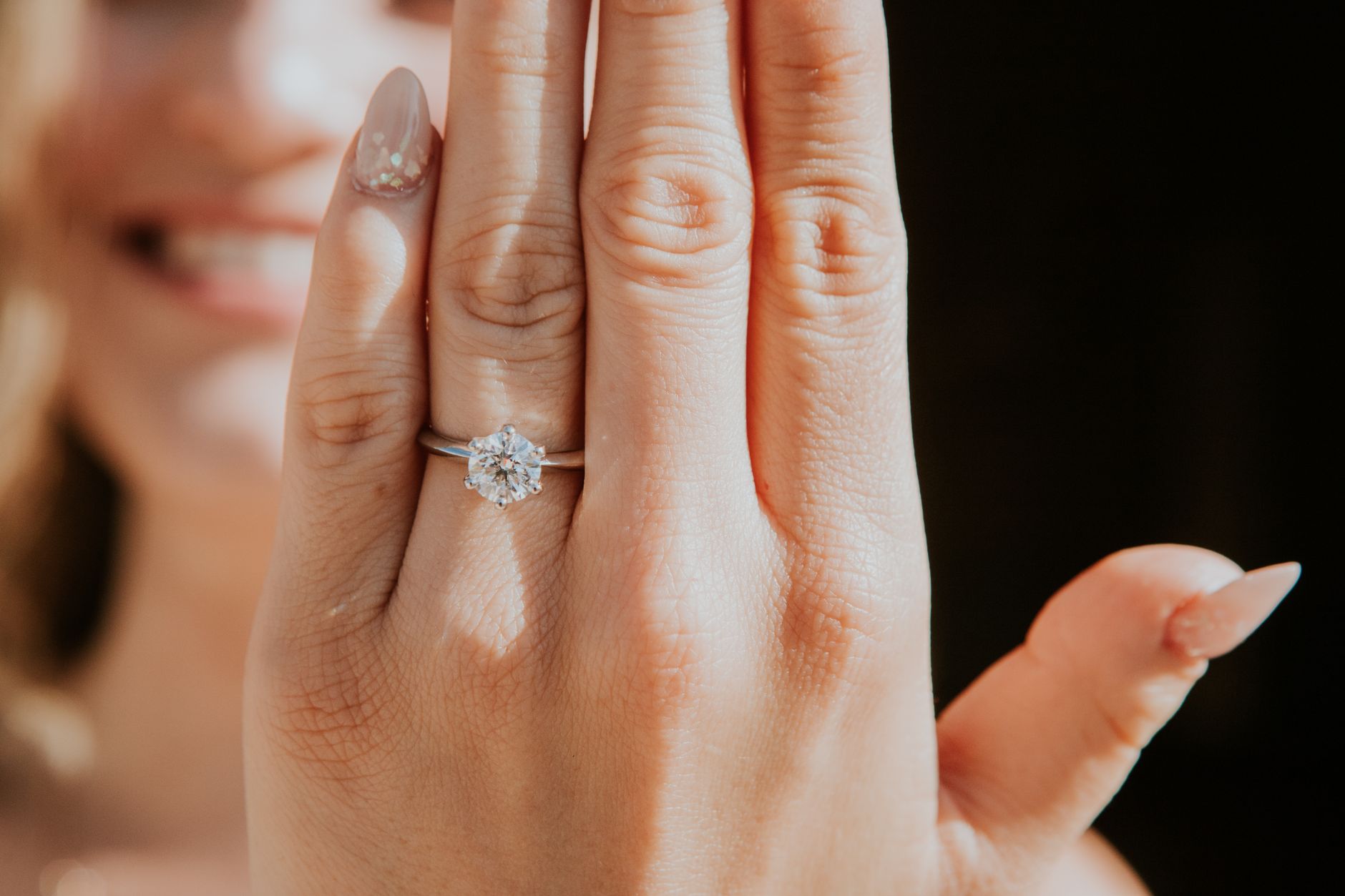
Diamond size looks different once it is actually on a hand. A stone that seems large in a showroom tray or in an online product image can look more modest on a wider finger, while the same carat weight may appear much more prominent on a smaller hand. That is why the best diamond size for large fingers is not a single universal number. It depends on finger width, diamond shape, setting style, and how much finger coverage you want.
For buyers with larger ring sizes, the biggest surprise is usually this: carat weight does not automatically translate into the visual presence they expected. Two diamonds can weigh the same and still look different face-up, and a diamond that sounds substantial on paper may not provide enough spread across the finger. Understanding visible size, not just carat, helps avoid disappointment and overspending.
This guide explains how to choose the best diamond size for large fingers in a practical way. It covers what size tends to look balanced, how different shapes change finger coverage, when it makes sense to size up, and where buyers can often save money without losing much visual impact.
Quick Answer
The best diamond size for large fingers is usually the size that gives enough face-up spread to look balanced on the hand, rather than simply hitting a carat milestone. For many buyers with ring sizes around 8 and above, diamonds in the 1.5 to 3 carat range often provide a more proportionate look than smaller stones, especially in elongated shapes such as oval, emerald, pear, or elongated cushion.
That said, there is no rule that a large finger requires a very large diamond. A well-cut 1.0 to 1.5 carat diamond can still look elegant, especially in a halo, three-stone, or elongated shape setting. Buyers who want stronger finger coverage often get better visual results by focusing on measurements in millimeters, shape, and setting design rather than carat weight alone.
- For subtle, balanced appearance: around 1.0 to 1.5 carats
- For stronger center-stone presence: around 1.5 to 2.5 carats
- For bold finger coverage: 2.5 carats and above, often depending on shape and budget
Elongated diamond shapes usually look larger on larger fingers than round diamonds of the same carat weight. Lab grown diamonds can also make larger face-up sizes more attainable within budget.
Understanding the Carat Concept
What diamond carat actually means
Diamond carat is a measure of weight, not visible size. One carat equals 0.2 grams. That number tells you how much the diamond weighs, but it does not tell you exactly how large it will look once set in a ring.
This is one of the most important ideas for any buyer to understand. A diamond can carry more weight in its depth, which means some of its mass is hidden below the setting rather than visible from the top. Another diamond of the same carat weight may be cut to spread more across the finger and therefore look larger.
What face-up size means
Face-up size refers to how large the diamond appears when viewed from above. This is the view people see most often when the ring is being worn. Face-up size is usually described by the stone’s length and width measurements in millimeters.
For example, a round diamond may be listed as 7.3 mm, while an oval might be 9.0 x 6.5 mm. Those measurements often tell you more about visual size than carat weight alone.
Why millimeters matter for large fingers
On larger fingers, spread becomes more important because there is more surface area to cover. A 1 carat round diamond may look nicely sized on a size 4 finger but can appear much smaller on a size 9 finger. The difference is not because the diamond changes. The hand around it changes the visual context.
That is why buyers with larger fingers should pay close attention to:
- Length and width in millimeters
- Shape outline
- How much of the finger the ring visually covers
- Whether the setting adds or reduces perceived size
What Buyers Usually Expect
Expecting carat numbers to tell the whole story
It is common to assume that a larger carat number guarantees a proportionately larger look. In reality, the visual increase from one carat milestone to the next is often less dramatic than expected. Buyers often imagine a 2 carat diamond will look twice as large as a 1 carat diamond. It does not. It weighs twice as much, but its visible diameter is much less than double.
This misunderstanding matters even more for large fingers because smaller visual differences can get lost on a wider hand.
Expecting online photos to match real life
Product photography can distort expectations. Close-up images make almost every diamond look large because the stone is magnified relative to the hand. A 1.25 carat diamond may appear substantial in a zoomed image, then look much more delicate when worn on a size 8.5 or 9 finger.
That does not mean the diamond is too small. It simply means the viewer should judge size in relation to the finger, not in isolation.
Assuming a traditional “ideal” size fits every hand
Some buyers hear general advice like “1 carat is the perfect engagement ring size.” That can be true for some tastes and budgets, but it is not universally helpful. The best diamond size for large fingers usually needs a more individualized approach because hand proportions differ significantly.
A buyer who wants a delicate look may be happy with a 1 carat stone on a larger finger. Another buyer may feel that 1.5 or 2 carats finally gives the presence they expected. Neither is wrong. The key is to match visual goals with realistic expectations.
What It Actually Looks Like
Finger coverage matters more than abstract size labels
When buyers say they want a diamond that “looks big enough,” they are usually talking about finger coverage. This means how much of the top of the finger the diamond appears to occupy. On larger fingers, a stone with limited spread can look more understated because more metal and more finger are visible around it.
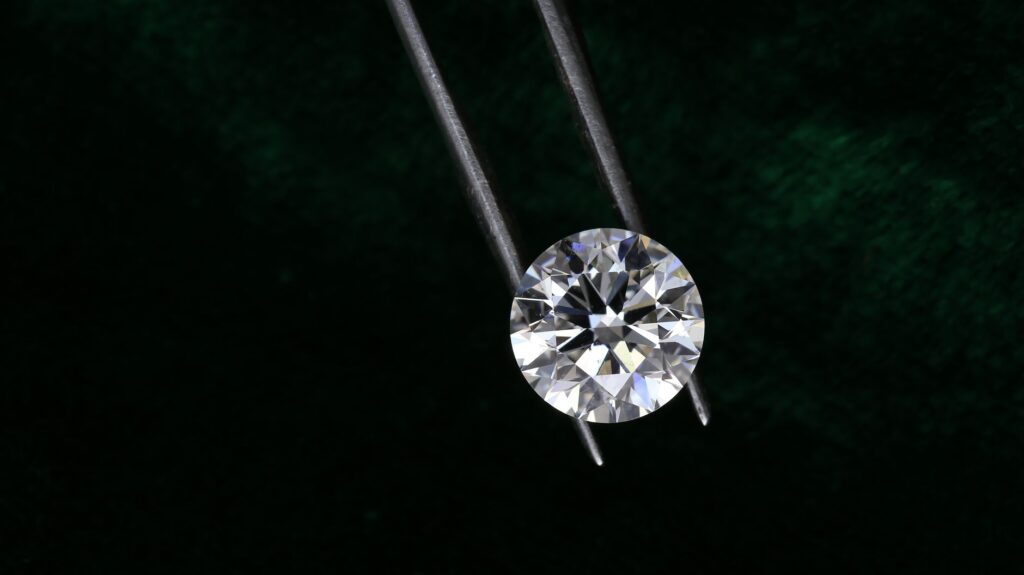
A round diamond is typically the most compact shape for its weight. It is brilliant and classic, but it does not cover as much finger length as elongated shapes. On larger fingers, this can make rounds feel smaller than buyers expect unless they move up in carat weight.
Small, medium, and bold looks on larger fingers
While personal preference varies, the following general impressions can help frame expectations for ring sizes around 8 to 10 and above:
| Visual Look | Typical Center Stone Range | General Impression on Large Fingers |
|---|---|---|
| Delicate | 0.75 to 1.0 carat | Refined and subtle, but may feel smaller than expected |
| Balanced | 1.0 to 1.75 carats | Often proportionate, especially in elongated shapes or supportive settings |
| Noticeable | 1.75 to 2.5 carats | Stronger presence and better finger coverage |
| Bold | 2.5 carats and up | High visibility, especially with elongated outlines or halos |
These ranges are not rules. They are practical reference points. A buyer choosing a round solitaire may need more carat weight to get the same visual impact as a buyer choosing an oval or pear.
Why elongated shapes often look better proportioned
For larger fingers, elongated shapes often create a more flattering visual effect because they stretch across the finger lengthwise. This can make the center stone feel more substantial without requiring as much extra weight.
Shapes that often look larger face-up include:
- Oval
- Pear
- Marquise
- Emerald
- Radiant with elongated proportions
- Elongated cushion
These shapes do not just look bigger. They also tend to create more elegant length on the finger, which some buyers prefer over the more compact look of a round or square shape.
Factors That Change Apparent Size
Shape
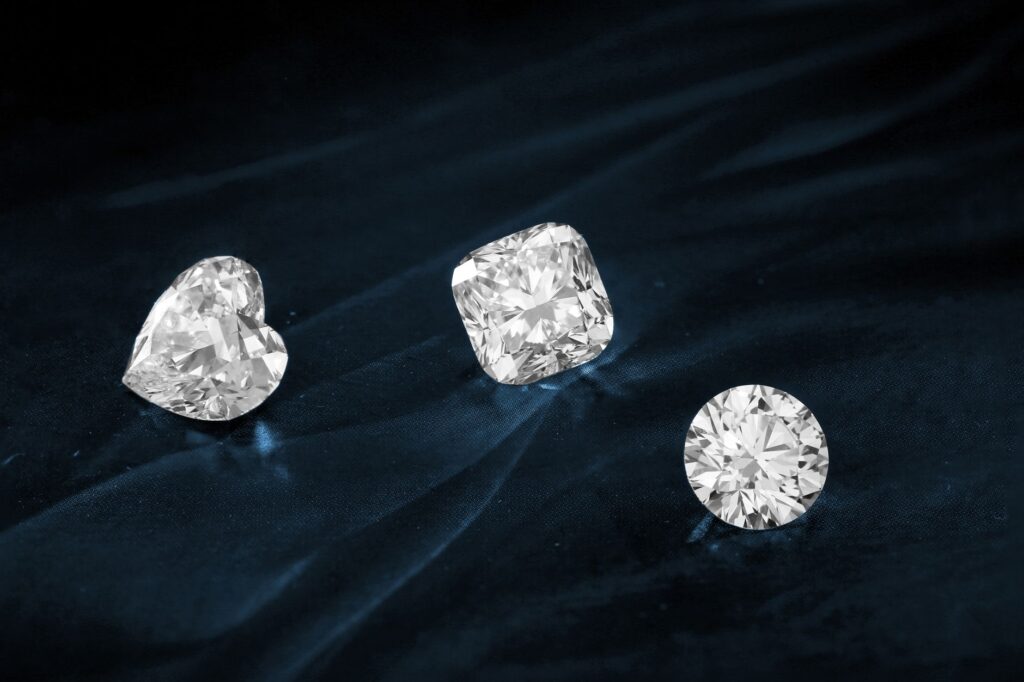
Shape is one of the strongest drivers of apparent size. A 2 carat oval usually appears larger than a 2 carat round because more of its surface area is distributed across length and width that you can see from above.
Here is a general comparison of face-up appearance by shape:
| Shape | Apparent Size Tendency | Notes for Large Fingers |
|---|---|---|
| Round | Moderate | Classic and bright, but often needs more carat weight for strong coverage |
| Oval | Large | Popular choice for maximizing visible size |
| Pear | Large | Lengthens the finger and offers good spread |
| Marquise | Very large | Excellent finger coverage, but shape preference is very personal |
| Emerald | Large | Elegant spread, but less sparkle than brilliant cuts |
| Princess | Smaller | Square outline can look compact on wider fingers |
| Cushion | Varies | Can face up smaller, especially deep or square cushions |
Cut quality
Cut quality affects both brilliance and visual spread. In diamond buying, cut refers to how well the stone’s proportions and facet arrangement handle light. A well-cut diamond usually looks brighter and more lively. It may also appear slightly larger because edge-to-edge brightness makes the outline easier to see.
A poorly cut diamond can look smaller or duller, even at the same carat weight. This is especially disappointing if the buyer spent extra for size but did not get the visual payoff.
Depth and proportions
A diamond with excessive depth carries weight in the lower part of the stone. This hidden weight does not improve face-up size. For large fingers, that can be a poor trade-off because you are paying for carat weight that contributes little to visible spread.
Shallow stones can face up larger, but if they are too shallow, performance may suffer. The goal is not simply the widest stone. It is a diamond with balanced proportions that gives both attractive spread and strong light return.
Setting design
The setting can dramatically affect how large the center stone appears. This is one of the most overlooked parts of choosing the best diamond size for large fingers.
Settings that can increase apparent size include:
- Halo settings, which surround the center with smaller diamonds
- Three-stone settings, which add visual width across the finger
- Thin bands, which make the center look larger by contrast
- Split shanks, which frame the center and add presence
Settings that can make the center look smaller include:
- Very thick bands that overpower the stone
- Heavy bezels that visually reduce the exposed surface
- Designs with too much metal around a modest center
Finger size and hand proportions
Finger width is only part of the picture. Hand size, finger length, and knuckle prominence also affect perception. A larger finger with long proportions may suit an elongated center stone especially well. A wider finger with shorter proportions may benefit from a shape and setting that create length without becoming too narrow.
This is why trying to assign one best carat weight for every large finger is not very precise. Two people with the same ring size can still prefer very different diamond dimensions.
Real-World Size Examples
1 carat round on a size 4 finger vs size 8 finger
A well-cut 1 carat round diamond is usually around 6.4 to 6.5 mm in diameter. On a size 4 finger, this often looks prominent and centered. On a size 8 finger, it tends to look more modest and refined.
The diamond is still attractive on the larger finger, but it usually does not create the same coverage. Buyers who want a stronger visual statement on a size 8 finger often start considering 1.5 carats or elongated shapes.
1.5 carat oval on a size 9 finger
A 1.5 carat oval may measure roughly 9 x 6.5 mm, though exact dimensions vary. On a size 9 finger, this often looks balanced and elegant. It gives more length than a round, which helps it feel larger than the carat number alone might suggest.
For someone seeking the best diamond size for large fingers without going to a very high budget, this can be a strong middle-ground choice.
2 carat round on a size 10 finger
A well-cut 2 carat round is often around 8.1 mm. On a size 10 finger, it usually has noticeable presence, but it may still read as classic rather than oversized. Buyers who specifically want dramatic finger coverage sometimes expect more from a 2 carat round than it actually delivers on a larger hand.
This is a good example of why shape matters. A 2 carat oval or marquise can provide a bigger visual impression without necessarily increasing weight.
2 carat oval vs 2 carat round
At the same weight, the oval usually appears larger because it has more visible length and often more face-up surface area. On larger fingers, that difference becomes even more useful because the elongated outline covers more of the hand visually.
| Diamond | Typical Measurements | Visual Impression on Large Fingers |
|---|---|---|
| 2 ct Round | About 8.1 mm | Bright, balanced, classic, but more compact |
| 2 ct Oval | About 10 x 7.5 mm | Longer, more finger coverage, often appears larger |
0.90 carat vs 1.00 carat on a large finger
This is one of the most useful value comparisons in diamond buying. A 0.90 carat diamond often looks very similar to a 1.00 carat diamond, especially once set. The visible size difference is small. On a larger finger, neither stone may look dramatically large, so paying a premium just to cross the 1 carat mark may not offer much real-world benefit.
For budget-conscious buyers, it can be smarter to choose a well-cut 0.90 or 0.95 carat diamond with strong spread, or redirect that money toward an elongated shape or setting that creates better overall presence.
Price vs Visual Benefit
Price rises faster than visible size
Diamond prices do not increase in a simple straight line. As carat weight rises, prices often jump sharply, especially at popular milestone sizes such as 1.0, 1.5, 2.0, and 3.0 carats. The visual increase, however, is much more gradual.
This means buyers with large fingers can end up paying a lot more for a size increase that looks modest in real life. That is why it is important to ask not just “Can I afford the next size up?” but also “Will I actually see enough difference to justify the cost?”
Diminishing returns are real
The larger the diamond becomes, the more expensive each additional fraction of a carat tends to be. But the visible spread does not increase at the same rate. Going from 1 to 2 carats produces a noticeable difference. Going from 2 to 2.2 carats may be much less obvious, especially to anyone other than the wearer.
On large fingers, a strategic change in shape or setting can sometimes create a stronger visual impact than a small carat upgrade.
Magic sizes can be expensive
“Magic sizes” are popular carat thresholds that attract strong demand, such as 1.00, 1.50, 2.00, and 3.00 carats. Diamonds that hit these exact numbers often cost significantly more than stones just below them.
For example:
- 0.90 to 0.99 carat may offer better value than 1.00 carat
- 1.40 to 1.49 carat may offer better value than 1.50 carat
- 1.80 to 1.99 carat may offer better value than 2.00 carat
For buyers with larger fingers, this matters because it may be better to prioritize dimensions, shape, and setting rather than chase a round-number carat label.
How lab grown diamonds change the size conversation
Lab grown diamonds have made larger diamond sizes far more accessible for many buyers. They are real diamonds with the same basic physical and optical properties as natural diamonds, but they usually cost much less at comparable size and quality levels.
This can be especially relevant for large fingers because it allows buyers to choose a more proportionate face-up size without stretching the budget as far. A buyer who might only be considering a 1 carat natural diamond may be able to consider a significantly larger lab grown option.
There are trade-offs to understand. Lab grown diamonds typically have lower resale value expectations than natural diamonds, and pricing has continued to evolve in recent years. But in terms of visible size per dollar, lab grown diamonds can be very efficient.
Who Should Size Up
Buyers who want strong finger coverage
If your goal is a ring that looks clearly prominent on a larger hand, sizing up often makes sense. This is particularly true for buyers choosing round, princess, or square cushion shapes, since these usually cover less finger area than elongated shapes at the same weight.
Buyers choosing simple solitaire settings
A solitaire puts full visual focus on the center stone. That can be beautiful and timeless, but it also means there are no side stones or halo elements helping the ring look larger. On large fingers, a simple solitaire may need more center-stone size to achieve the desired balance.
Buyers with wide ring sizes and wide bands
If you wear a larger ring size and prefer a wider band, the center stone may need more spread to avoid looking visually overshadowed. A wide shank can make a modest diamond seem smaller by comparison.
Buyers who know they prefer a bolder look
Some people simply prefer more visual presence. If that is your style, choosing a larger diamond can be the right decision as long as the budget, durability, and setting proportions remain sensible.
In those cases, focus on:
- Strong millimeter dimensions
- Shapes with larger face-up appearance
- Cut quality that preserves sparkle
- A setting that supports rather than minimizes the stone
Who Can Save Money
Buyers open to elongated shapes
This is one of the easiest ways to increase apparent size without paying for a much heavier diamond. Oval, pear, marquise, and elongated radiant cuts often provide more visual spread than round diamonds of the same carat weight.
Buyers willing to go just under milestone weights
Choosing a diamond just under a magic size can offer meaningful savings with little visible difference. On a larger finger, that saved budget may be better used on a setting that improves overall finger coverage.
Buyers who like halos or three-stone designs
A halo can make a center diamond look significantly larger. A three-stone ring can also create a broader look across the finger. These designs can be especially practical for large fingers because they improve presence without requiring the center diamond alone to carry all the visual weight.
Buyers who prioritize overall balance over center size alone
A ring can look substantial even if the center stone is not huge. Band width, side stones, shape, and overall design all influence perception. A thoughtfully designed 1.25 carat ring can look more balanced on a large finger than a poorly proportioned 1.5 carat ring.
Common Buyer Mistakes
Chasing carat numbers without checking measurements
This is the most common mistake. Buyers see a carat label and assume they know how large the diamond will look. Always review the length and width measurements in millimeters.
Ignoring shape effects
A 1.5 carat round, a 1.5 carat oval, and a 1.5 carat emerald cut can create very different visual impressions. Shape strongly affects apparent size and finger coverage.
Overpaying for magic sizes
Paying a premium for exactly 2.00 carats instead of 1.90 carats may offer little visible reward. On large fingers, that price difference may be better allocated elsewhere.
Choosing a band that overwhelms the diamond
A very wide or heavy setting can make the center stone look smaller. Buyers with larger fingers sometimes choose wider bands for comfort or style, which is understandable, but the center should still remain visually proportionate.
Buying too deep a diamond
A deeply cut diamond may hide weight where you cannot see it. That can reduce the face-up size you get for the money.
Assuming larger fingers require extremely large diamonds
Large fingers do not automatically require a 2 carat or 3 carat stone. The best diamond size for large fingers depends on style preference. Some buyers want subtle elegance. Others want bold coverage. A well-chosen 1.25 carat oval can look far more satisfying than an average-cut 2 carat diamond in the wrong shape or setting.
How to Choose the Best Diamond Size for Large Fingers
Start with the look you want
Before deciding on carat weight, decide how you want the ring to feel visually:
- Delicate and understated
- Balanced and classic
- Bold and prominent
This helps prevent buying a stone based only on numerical milestones.
Use millimeter spread as a primary filter
When comparing diamonds, look closely at:
- Round diamonds by diameter
- Fancy shapes by length x width
- Length-to-width ratio for elongated shapes
These measurements are often more useful than carat weight for understanding how much presence the ring will have on a larger hand.
Match the setting to the finger
For large fingers, a ring often looks most balanced when the setting has enough visual substance to suit the hand without swallowing the center stone. Medium-width bands, tapered shoulders, halos, and side stones can all help create proportion.
Consider lab grown if size is the main priority
If visible size is your top goal and your budget is limited, lab grown diamonds deserve consideration. They can allow a buyer to choose a larger, better-proportioned stone while still maintaining solid cut and overall quality.
Do not neglect cut, color, and clarity
Size matters, but so does overall appearance. A larger diamond that looks dull or visibly included may be less satisfying than a slightly smaller one with better cut and cleaner appearance. For most buyers, cut quality should remain a high priority because sparkle helps the stone look alive and noticeable.
Practical Size Guidance by Finger Size
The chart below is not a strict rule, but it gives a useful starting point for center-stone expectations on larger fingers.
| Ring Size | Subtle Look | Balanced Look | Bolder Look |
|---|---|---|---|
| 7.5 to 8 | 0.90 to 1.25 ct | 1.25 to 1.75 ct | 1.75 to 2.5 ct+ |
| 8.5 to 9 | 1.0 to 1.3 ct | 1.5 to 2.0 ct | 2.0 to 3.0 ct+ |
| 9.5 to 10+ | 1.0 to 1.5 ct | 1.75 to 2.5 ct | 2.5 to 3.5 ct+ |
These ranges tend to work best when combined with shape considerations. For example, a 1.5 carat oval may deliver a similar visual presence to a larger round, while a square cushion may need more weight to achieve the same coverage.
Frequently Asked Questions
What is the best diamond shape for large fingers?
Elongated shapes are often the most flattering and efficient for large fingers because they create more visible length and finger coverage. Oval, pear, marquise, emerald, and elongated radiant cuts are popular choices. Round diamonds are still beautiful, but they often need more carat weight to create the same visual presence.
Is 1 carat too small for large fingers?
No, not necessarily. A 1 carat diamond can look elegant on large fingers, especially if you prefer a subtle style or choose an elongated shape or halo setting. However, if your goal is strong visual presence, 1 carat may look smaller than expected on ring sizes 8 and above.
How many carats look good on a size 9 finger?
That depends on the desired look. Around 1.0 to 1.5 carats can look refined and balanced, especially in elongated shapes. Around 1.5 to 2.5 carats often gives a stronger center-stone presence. Buyers wanting a bold look may go higher, depending on shape and budget.
Do larger fingers need larger diamonds?
Not in an absolute sense. They do not need larger diamonds, but larger stones or more spread-out shapes often look more proportionate if the buyer wants noticeable finger coverage. The right size is ultimately about visual preference, not a rule.
How can I make a diamond look bigger on a large finger?
Focus on shapes with larger face-up size, choose a thin or well-balanced band, consider a halo or three-stone setting, and avoid overly deep diamonds that hide weight. Lab grown diamonds can also make larger visible sizes more affordable.
Is an oval better than a round for large fingers?
For apparent size and finger coverage, an oval often performs better. It usually looks larger than a round of the same carat weight and can create a more elongated effect on the hand. A round may still be the better choice if you prefer a classic outline and maximum traditional brilliance.
Should I buy just under a milestone carat weight?
Often, yes. Diamonds just below popular thresholds can offer better value with very little visual difference. This strategy is especially useful if you are trying to maximize size on a larger finger without overpaying for a carat label.
Are lab grown diamonds a good choice for larger diamond sizes?
They can be. Lab grown diamonds often allow buyers to choose a larger stone within the same budget, which is helpful if proportional appearance on a large finger is a high priority. The main consideration is that resale expectations differ from natural diamonds, so the decision should be based on your priorities rather than assumptions about future value.
Conclusion
The best diamond size for large fingers is the size that looks balanced on the hand and aligns with your style, budget, and expectations. For some buyers, that may be a well-cut 1 carat stone in an elongated shape. For others, it may be 2 carats or more, especially in a solitaire or round shape where more finger coverage is needed.
The most useful way to judge size is not by carat alone. Focus on face-up measurements, shape, cut quality, and setting design. These factors determine how large the diamond will actually look once worn.
In practical terms, buyers with larger fingers often benefit from elongated shapes, strong millimeter spread, and thoughtful setting design. They can also avoid overspending by considering stones just under milestone carat weights or by exploring lab grown diamonds for better size efficiency.
A well-chosen diamond does not need to be the biggest possible option. It needs to look intentional, proportionate, and visually satisfying on the hand that will wear it.