A diamond’s carat weight tells you how much it weighs, but it does not tell you exactly how large it will look once it is set and viewed on a hand. That gap between weight and appearance is where a lot of buying confusion starts. Two diamonds can have the same carat weight and still look noticeably different in width, finger coverage, and overall presence.
Understanding How Diamond Carat Affects Appearance is important because most buyers are not really purchasing a number on a grading report. They are trying to judge visible size. They want to know whether a diamond will look balanced, whether it will feel substantial in everyday wear, and whether paying more for a higher carat weight will produce a difference that is actually easy to see.
This article explains what carat does and does not tell you, how face-up size changes visual impact, why shape and cut matter so much, and how to make better size decisions whether you are considering a natural diamond or a lab grown diamond.
Quick Answer
Carat affects appearance because larger carat weights usually produce a larger visible diamond, but the relationship is not perfectly straightforward. A diamond’s face-up size, meaning how large it looks from the top, depends not only on carat weight but also on shape, cut proportions, depth, and setting style.
In practical terms:
- Higher carat usually means a bigger look, but not always by as much as buyers expect.
- Two diamonds with the same carat weight can look different in size.
- Shape matters. Ovals, pears, marquises, and elongated radiant cuts often look larger than rounds of the same weight.
- Cut quality matters. A deeply cut diamond may hide weight where you cannot see it.
- Price rises faster than visual size, especially at popular milestone weights like 1.00, 1.50, 2.00, and 3.00 carats.
The most useful buying approach is to compare millimeter measurements, not just the carat number.
Understanding the Carat Concept
What Diamond Carat Actually Means
Carat is a unit of weight. One carat equals 0.2 grams. That is all it measures. It does not directly measure width, height, sparkle, or how much of the finger the diamond will cover. If you’d like a deeper explanation of why weight and visible size are not the same, our guide to Carat Weight vs. Diamond Size explores the relationship in more detail.
This matters because buyers often treat carat as a shortcut for size. That shortcut only works loosely. In reality, visible size comes from dimensions, especially the top view of the diamond.
What Face-Up Size Means
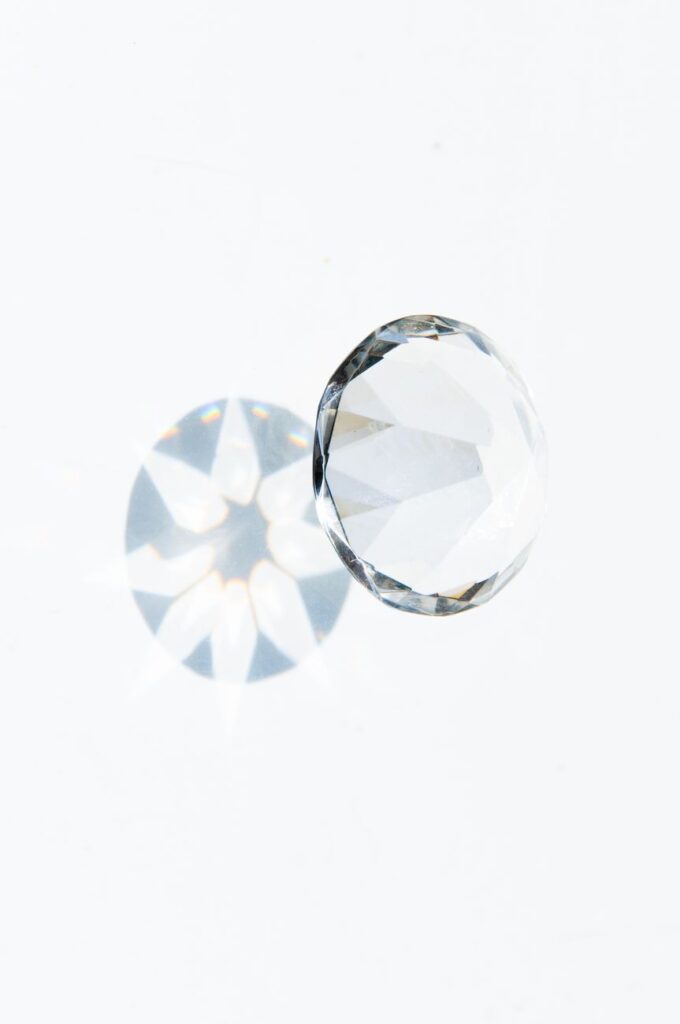
Face-up size refers to how large a diamond appears when you look down at it from above. This is the view people notice most in real life. It is also the view that usually matters most in an engagement ring or other jewelry worn regularly.
For a round diamond, face-up size is usually discussed in millimeters across its diameter. For example, a well-cut 1 carat round diamond is often around 6.4 to 6.5 mm in diameter. That number gives you a more direct idea of visual spread than the carat weight alone.
Why Carat and Visible Size Are Not the Same
A diamond can carry extra weight in depth rather than width. In simple terms, some diamonds hide weight below the surface. They may weigh more without looking proportionally larger from the top.
This is why a poorly proportioned 1.00 carat diamond might face up more like a well-cut 0.90 carat diamond. The buyer pays for the weight, but the eye responds to the visible outline.
What a Magic Size Diamond Is
A magic size is a carat threshold that has strong consumer appeal, such as 0.50, 1.00, 1.50, 2.00, or 3.00 carats. Prices often jump at these marks because demand is high.
The visual difference between a diamond just below and just above one of these thresholds may be small. For example, a 0.90 carat and a 1.00 carat round can look very similar, while the price difference may be meaningful.
What Buyers Usually Expect
Expecting Carat to Translate Directly Into Size
A common assumption is that a 2 carat diamond looks exactly twice as large as a 1 carat diamond. It does not. Carat measures weight, not surface area, and visual spread does not increase in a simple one-to-one way.
For rounds, the diameter increase is noticeable, but not dramatic in the way the carat number suggests. A 2 carat round is larger than a 1 carat round, but it is not two times wider across.
Comparing Carat Numbers Without Looking at Measurements
It is easy to compare listings by carat first because the number is prominent and simple. The problem is that millimeter dimensions often tell the more useful story. A buyer comparing 1.00 carat diamonds without checking diameter may miss that one has better spread than another.
Dimensions also become especially important when comparing different shapes. A 1.50 carat oval and a 1.50 carat round do not present the same visual footprint.
Assuming All Shapes Look Equally Large at the Same Weight
They do not. Round diamonds typically retain more weight in their overall structure, while elongated shapes may spread weight across a longer visible outline. That means two diamonds with identical carat weights can create very different first impressions.
This is one reason some buyers choose oval, pear, marquise, or elongated cushion shapes when they want a larger-looking center stone without moving to the next carat bracket.
Underestimating the Role of Finger Size
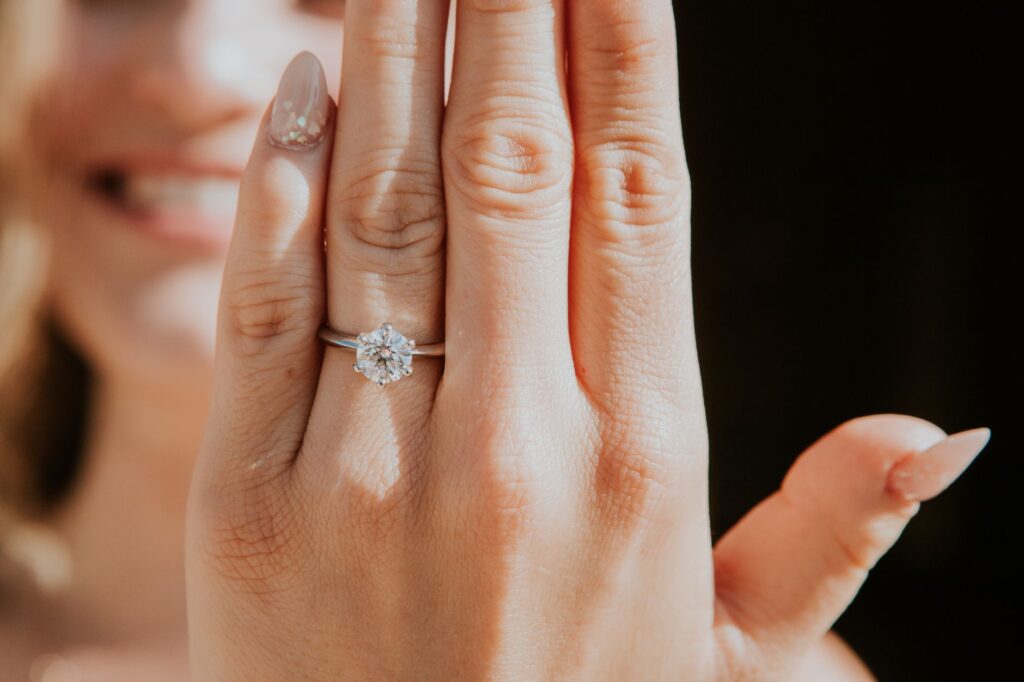
A diamond does not appear in isolation. It appears on a hand. A 1 carat diamond can look quite substantial on a size 4 finger and more modest on a size 8 finger. Neither look is wrong. The point is that visual impact depends partly on scale.
This is why online size charts and generic carat photos can be misleading if they do not account for hand proportions.
What It Actually Looks Like
How Face-Up Measurements Shape What You See
When someone sees a diamond in a ring, they are mostly responding to width, outline, and brightness. Face-up measurements matter because they determine how much visible space the diamond occupies. For rounds, the diameter is the key number. For fancy shapes, the length and width together shape the look.
A small change in diameter may sound minor on paper, but it can still create a visible difference. At the same time, buyers often overestimate how dramatic those changes will appear in daily wear.
Approximate Face-Up Size of Popular Round Carat Weights
| Round Diamond Weight | Typical Diameter Range | Visual Impression |
|---|---|---|
| 0.50 carat | About 5.0 to 5.2 mm | Delicate, refined, often modest on larger fingers |
| 0.70 carat | About 5.6 to 5.8 mm | Balanced, clearly visible, practical everyday size |
| 0.90 carat | About 6.1 to 6.3 mm | Close to the classic 1 carat look |
| 1.00 carat | About 6.4 to 6.5 mm | Classic benchmark size |
| 1.50 carat | About 7.3 to 7.4 mm | Noticeably larger, stronger finger coverage |
| 2.00 carat | About 8.0 to 8.2 mm | Bold, substantial visual presence |
| 3.00 carat | About 9.2 to 9.4 mm | Very prominent, high visual impact |
These ranges are approximate. Actual measurements vary with cut quality and proportions.
Finger Coverage Matters More Than Buyers Expect
A diamond often looks “big” or “small” because of the amount of finger it visually covers. A 7 mm stone may seem large on a narrower finger because it occupies more visible width from one side to the other.
Elongated shapes can create this effect in another way. They may cover more finger length and appear more substantial even if the total carat weight is the same as a round diamond.
Brightness and Sparkle Can Change Size Perception
A well-cut diamond often appears more lively and more noticeable than a poorly cut diamond of greater weight. This does not literally change millimeter size, but it can change perceived presence. Brightness draws attention. Strong light return can make the center stone feel more impressive overall.
That is why cut quality should not be sacrificed too heavily for carat. A larger but duller diamond may disappoint if the goal is a striking look.
Factors That Change Apparent Size
Shape
Shape is one of the biggest influences on apparent size. Rounds are the benchmark, but many fancy shapes look larger per carat.
| Shape | How It Usually Compares Visually | Why |
|---|---|---|
| Round | Standard reference point | Balanced proportions, familiar outline |
| Oval | Often looks larger than round | Elongated shape increases visible spread |
| Pear | Often looks larger than round | Length adds finger coverage |
| Marquise | Often looks especially large | Long outline creates strong spread |
| Emerald | Can look large face-up | Large table and open shape emphasize outline |
| Cushion | Varies widely | Different length-to-width ratios and depths affect spread |
| Princess | May look slightly smaller than expected | Depth and corner structure can reduce spread |
| Radiant | Varies, elongated versions may look larger | Shape and proportions matter significantly |
Cut Proportions
Cut quality influences both sparkle and size appearance. In basic terms, proportions describe how the diamond is shaped, including depth, table size, and angles.
A diamond that is too deep may carry unnecessary weight in the bottom. It weighs more, but the top view may be smaller than expected. A diamond that is too shallow may look wider, but it can lose brightness and look watery or less lively.
The best-looking diamonds usually balance strong face-up spread with light performance. A larger outline alone is not enough if the diamond looks flat or dull.
Depth Percentage
Depth percentage compares a diamond’s depth to its width. This number helps indicate whether a diamond is hiding weight. Excessive depth can make a diamond face up small for its carat weight.
This is especially useful when comparing diamonds with the same shape and similar grading. If one diamond has noticeably smaller measurements and a deeper cut, the extra weight may not be helping appearance.
Length-to-Width Ratio
For fancy shapes, the length-to-width ratio affects whether a diamond looks long, broad, narrow, or balanced. In ovals, pears, marquises, and emerald cuts, the ratio has a major effect on visual spread and style.
A longer oval may look larger because it covers more finger length, while a shorter oval may look fuller and broader. Neither is automatically better. It depends on the look the buyer prefers.
Setting Design
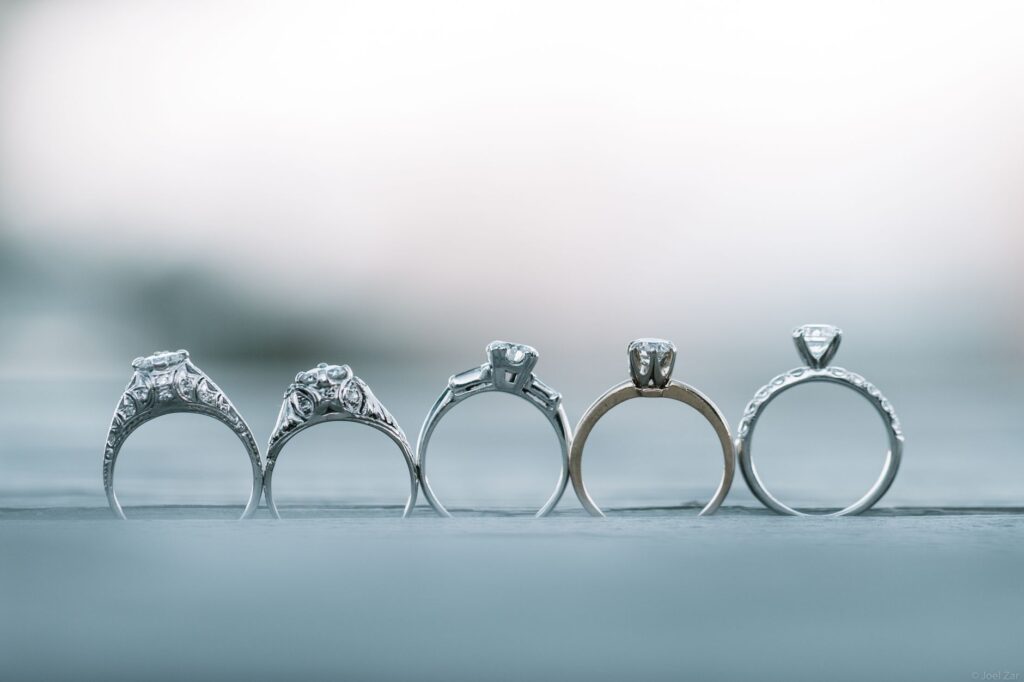
The ring setting can change perceived size significantly. A slim solitaire can make the center diamond stand out. A halo can create a larger overall appearance by surrounding the center stone with smaller diamonds. Thin prongs can expose more of the outline, while heavy metalwork can make the center appear slightly smaller.
Other design choices that influence appearance include:
- Band width
- Halo or no halo
- Cathedral shoulders
- Bezel vs prong setting
- Tapered side stones
A thin band often makes the center stone appear larger. A very wide band can have the opposite effect.
Real-World Size Examples
1 Carat on a Size 4 Finger
On a size 4 finger, a well-cut 1 carat round often looks quite noticeable. The diamond may cover a meaningful portion of the finger’s width and give a classic engagement ring presence. For some buyers, it can even look larger than expected because the finger is narrow.
In this situation, careful setting design can amplify the effect further. A delicate band may make the stone feel even more prominent.
1 Carat on a Size 7 Finger
On a size 7 finger, the same 1 carat round usually looks balanced and traditional, but less dominant. It will still be clearly visible and attractive, yet it may not create the same finger coverage as it would on a smaller hand.
This is one reason finger size should be part of carat planning. Buyers with larger fingers sometimes prefer elongated shapes or slightly higher carat weights to achieve similar visual coverage.
0.90 Carat vs 1.00 Carat Round
This is one of the most important comparisons for value-focused buyers. A well-cut 0.90 carat round may measure only slightly smaller than a 1.00 carat round. In daily wear, many people would not notice the difference without side-by-side comparison.
Yet the price difference can be substantial, especially if color, clarity, and cut quality are also high. Buyers who care about visual value often consider the just-under threshold option.
| Comparison | 0.90 Carat Round | 1.00 Carat Round |
|---|---|---|
| Typical diameter | About 6.1 to 6.3 mm | About 6.4 to 6.5 mm |
| Visual difference | Usually small | Slightly larger |
| Price category | Often better value | Often premium due to magic size |
| Best for | Buyers prioritizing value | Buyers who strongly want the 1 carat mark |
2 Carat Oval vs 2 Carat Round
A 2 carat oval often looks larger than a 2 carat round because the oval’s elongated shape creates more visual spread and finger coverage. The round may still appear brighter or more balanced depending on cut, but the oval often wins on apparent size.
This comparison is especially relevant for buyers who want a larger look without moving to a heavier weight. Shape choice can sometimes create more visual impact than a modest carat increase.
1.50 Carat Round vs 2.00 Carat Round
The jump from 1.50 to 2.00 carats is visible. A 2.00 carat round generally offers stronger presence and noticeably broader spread. However, the price increase is usually much steeper than the size increase.
For buyers considering this upgrade, the key question is whether the larger look matters enough to justify the cost. In some budgets, that money could instead be used for a better cut, a more favorable setting, or a larger lab grown diamond.
Lab Grown Diamond Example
Lab grown diamonds can change size decisions because they often provide access to larger carat weights for the same budget compared with natural diamonds. A buyer choosing between a natural 1 carat and a lab grown 1.75 carat may be comparing two very different visual outcomes.
The appearance of a lab grown diamond is not inherently different from a natural diamond simply because of origin. What matters visually is the same set of factors: shape, cut, proportions, dimensions, and setting. The real difference is often budget efficiency, not face-up appearance itself.
Price vs Visual Benefit
Price Usually Rises Faster Than Visible Size
This is one of the most important realities in diamond buying. As carat weight rises, price tends to increase disproportionately. The visible size increase is real, but it becomes more expensive per millimeter gained.
That does not mean larger diamonds are poor choices. It means buyers should understand the trade-off clearly. The higher the carat weight, the more they are often paying for rarity and category demand, not just visible spread.
Diminishing Visual Returns
The concept of diminishing returns means each additional increase in carat may deliver less dramatic visual impact relative to the added cost. Going from 0.50 to 1.00 carat is usually very noticeable. Going from 2.50 to 3.00 carats is also noticeable, but the price jump may be much harder to justify purely on appearance.
This becomes especially relevant when buyers are stretching a budget to hit a milestone size.
Why Magic Sizes Cost More
Popular threshold weights attract stronger demand. A 1.00 carat diamond is not just heavier than a 0.97 carat diamond. It also benefits from the psychological appeal of reaching that benchmark. The same pattern applies at 1.50, 2.00, and above.
Because of that, the smartest value is often found just below the benchmark, particularly when the measurements remain strong.
Natural vs Lab Grown Value Considerations
With natural diamonds, moving up in carat often creates very steep price increases. With lab grown diamonds, the buyer may be able to size up more easily without leaving the budget range. That can make larger carat weights more realistic for buyers who care strongly about visual size.
Still, the same value logic applies. It is still worth comparing dimensions, shape, cut, and magic-size pricing. A lab grown diamond can offer more size for the money, but an inefficiently cut lab grown diamond can still hide weight and underperform visually.
Who Should Size Up
Buyers Who Care Most About Finger Coverage
If the main goal is a stronger visible presence on the hand, sizing up may be worth it. This is especially true for buyers who know they will focus on how substantial the ring looks in daily wear.
Buyers With Larger Finger Sizes
Those with larger finger sizes sometimes find that common benchmark weights look more modest than expected. Increasing carat weight or choosing an elongated shape can create better balance and proportion.
Buyers Choosing Simple Solitaire Settings
A plain solitaire places full attention on the center stone. Without halo diamonds or strong side accents, the center diamond carries the entire visual impact. In that setting style, size can matter more to the overall look.
Buyers Using Lab Grown Diamonds to Expand Size Options
For buyers open to lab grown diamonds, sizing up may make practical sense if the budget allows a significantly larger stone without sacrificing cut quality. This can be a reasonable approach when visible size is a top priority and resale considerations are not the primary concern.
Who Can Save Money
Buyers Comfortable Staying Below Magic Sizes
A 0.90 instead of 1.00 carat, 1.40 instead of 1.50 carat, or 1.80 instead of 2.00 carat can often preserve much of the look while reducing cost. This is one of the most effective ways to improve value.
Buyers Prioritizing Cut Over Weight
Strong cut quality can make a diamond look brighter and more attractive overall. A slightly smaller but better-cut diamond often creates a better real-world impression than a heavier stone with weak proportions.
Buyers Open to Fancy Shapes
Fancy shapes, particularly elongated ones, may deliver more apparent size per carat. An oval, pear, marquise, or elongated radiant can be a practical option for buyers who want a larger look without paying for a heavier round.
Buyers Choosing Halo Settings
A halo can create a larger overall ring appearance without requiring a large center stone. For some buyers, this is a better use of budget than pushing into the next carat bracket. If maximizing visual size within your budget is the goal, our guide to the Best Value Lab Grown Diamonds compares options that offer an excellent balance of size, quality, and price.
Buyers Whose Diamond Will Be Seen Mostly at Normal Distance
At normal social distance, small differences in diameter are often hard to detect. If a buyer is not concerned with crossing a benchmark number, paying a premium for a slight size increase may not offer much practical benefit.
Common Buyer Mistakes
Chasing the Carat Number
Carat is important, but it should not be the only target. Buying strictly by weight can lead to disappointing choices, especially if cut quality or dimensions are ignored.
Ignoring Millimeter Measurements
Measurements tell you how large the diamond will actually face up. A buyer who skips this step may overpay for hidden weight.
Assuming All 1 Carat Diamonds Look the Same
They do not. Shape, cut, depth, and length-to-width ratio can all change appearance. Even within the same shape, proportions matter.
Overpaying for Magic Sizes Without Real Visual Gain
Crossing a benchmark can feel satisfying, but it may not provide a meaningful visible difference. A just-under option often deserves serious consideration.
Sacrificing Too Much Cut Quality for Weight
A larger diamond is not automatically more impressive if it lacks brightness or appears smaller than expected due to poor proportions. Visual performance matters.
Ignoring Finger Size and Setting Context
A diamond’s appearance depends on the hand and the ring design. What looks substantial in one setting or on one finger may look different in another context.
Expecting Carat Increases to Look Proportionally Huge
The carat number can create exaggerated expectations. Real visual changes are often more subtle than buyers imagine, especially when moving between nearby weights.
How to Judge Size More Accurately Before Buying
Use Millimeter Measurements First
For rounds, focus on diameter. For fancy shapes, focus on length and width. This is the clearest way to compare visible size.
Compare Diamonds Side by Side When Possible
Seeing two stones together can reveal how small or large the difference really is. This is particularly useful for deciding whether a magic-size premium is worthwhile.
Think About Hand Proportion
Ask how much finger coverage you actually want. A buyer seeking subtle elegance may be happy with a smaller size than a buyer seeking strong visual presence.
Consider Shape as a Size Tool
Moving from round to oval or pear can change appearance more efficiently than a small jump in carat weight. This is often overlooked.
Do Not Evaluate Size Without Evaluating Cut
The largest-looking diamond on paper is not always the most appealing in person. Strong light return, balance, and overall beauty matter alongside spread.
Frequently Asked Questions
Does a higher carat diamond always look bigger?
Usually, yes, but not always by as much as expected. The visible difference depends on the diamond’s dimensions, shape, and cut proportions. A deeper stone can weigh more while looking only slightly larger, or sometimes not larger at all than a better-cut diamond with lower weight.
Can two diamonds with the same carat weight look different in size?
Yes. This is very common. Shape differences, depth, and overall proportions can make one diamond face up larger than another even when both have the same carat weight.
Is 0.90 carat a good alternative to 1 carat?
In many cases, yes. A well-cut 0.90 carat diamond can look very close to a 1 carat diamond while often costing less. It is one of the most practical value options for buyers who care more about appearance than hitting the exact milestone number.
Which diamond shapes look largest for their carat weight?
Marquise, pear, and oval shapes often look larger than rounds of the same weight because their elongated outlines create more visible spread and finger coverage. Emerald cuts can also look large face-up, though their visual style is different from brilliant-cut shapes.
Does a halo setting make a diamond look bigger?
Yes. A halo surrounds the center stone with smaller diamonds, increasing the overall visual footprint of the ring. It does not increase the actual size of the center diamond, but it can create a noticeably larger appearance.
Should I choose carat weight or cut quality?
For most buyers, cut quality should not be compromised too heavily for carat weight. A well-cut diamond usually looks brighter, more lively, and often more impressive overall than a larger diamond with weak proportions.
Do lab grown diamonds look bigger than natural diamonds?
Not at the same carat weight and shape. A 1 carat lab grown diamond does not inherently look bigger than a 1 carat natural diamond. The advantage of lab grown is usually that buyers may afford a larger carat weight within the same budget.
Will most people notice a small carat upgrade?
Often not, unless the stones are compared side by side. Small differences such as 0.90 to 1.00 carat or 1.40 to 1.50 carat can be subtle in everyday viewing. The buyer may care about the milestone, but the visual change alone is often modest.
Conclusion
Understanding How Diamond Carat Affects Appearance starts with one simple idea. Carat weight matters, but visible size depends on more than carat alone. Face-up dimensions, shape, cut proportions, finger size, and setting design all influence how large a diamond actually looks.
The best buying decisions usually come from comparing millimeter measurements and overall visual effect rather than focusing only on weight thresholds. In many cases, a slightly smaller diamond with better spread, stronger cut, or a more size-friendly shape will offer better real-world appearance and better value.
For buyers considering natural diamonds, this can help avoid overpaying for a magic size with minimal visual gain. For buyers considering lab grown diamonds, it can help identify when a larger carat weight truly improves appearance and when shape or setting might accomplish the goal more efficiently.
The most useful question is not simply “How many carats?” It is “How large will this diamond actually look on the hand, and is that visual difference worth the cost?” Once that becomes the focus, carat weight becomes a more practical and much more understandable part of the decision.