Emerald cut diamonds stand out immediately because they do not try to look like every other diamond. Instead of relying on intense sparkle, they show long, clean flashes of light and a clear, elegant structure that feels very different from brilliant-style diamonds. That visual difference is the reason many buyers fall in love with them, but it is also why emerald cuts need to be understood before you buy one.
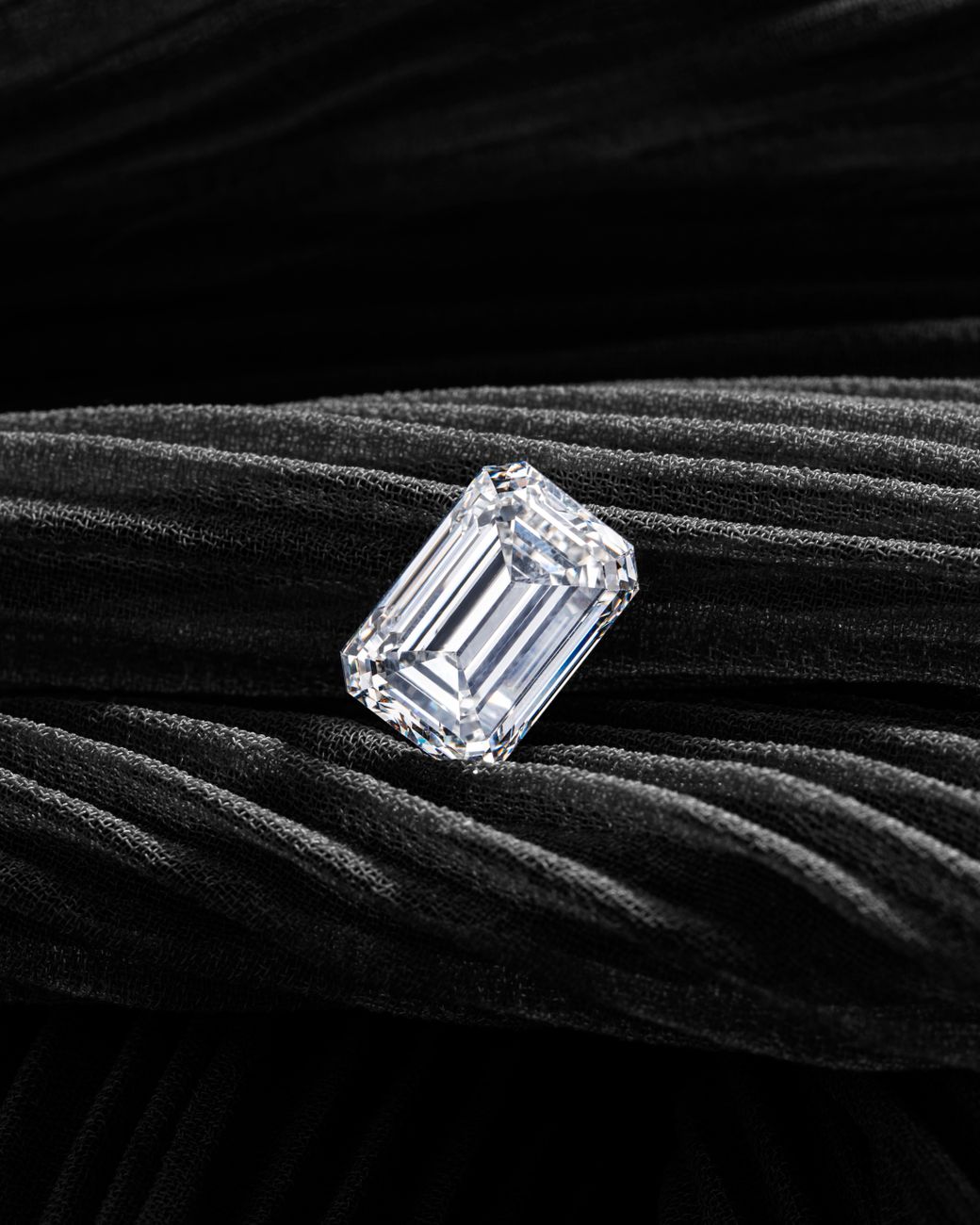
If you are comparing diamond shapes, it helps to know that why emerald cut diamonds look different comes down to their cut style, facet arrangement, and proportions. They are step-cut diamonds, which means they use long, parallel facets rather than the many small, angled facets found in round brilliants or oval brilliants. The result is a more open, glassy look that highlights clarity, shape, and proportion in a way that can feel refined and modern.
For buyers looking at engagement rings, emerald cuts often raise practical questions. Will it look less sparkly? Does it show flaws more easily? Is it a good value? Those are fair questions, and the answers depend on what you expect from a diamond. Emerald cuts are not better or worse than other shapes in a general sense. They simply create a different visual experience, and that difference matters a lot when choosing a stone.
Quick Answer
Emerald cut diamonds look different because they are cut as step-cut diamonds, which creates long, mirror-like flashes instead of the pinfire sparkle seen in round or oval diamonds. Their large open table, rectangular outline, cropped corners, and fewer facets make them appear elegant, clean, and structured. They also tend to show clarity and color more easily than many brilliant-cut shapes, which is why buyers often need to pay closer attention to quality.
What Makes Emerald Cut Diamonds Different
To understand emerald cuts, it helps to compare them with the more familiar brilliant-cut styles. Brilliant cuts, such as round brilliant, oval, pear, and cushion brilliant, are designed to maximize sparkle. They use many small facets that reflect light in a lively, twinkling way.
Emerald cuts follow a different design philosophy. They are intended to show broad flashes of light, emphasize shape, and create a refined look rather than maximum sparkle. This means the diamond’s appearance depends more on its proportions and transparency than on intense facet activity.
Step-cut versus brilliant-cut
Emerald cuts are a classic example of a step cut. In a step cut, facets are arranged in rows that resemble steps. Light travels across the diamond in wider planes, which creates a hall-of-mirrors effect. This is very different from a brilliant cut, where the light appears more scattered and lively.
The visual result is easy to notice. A round brilliant often looks fiery and busy in motion, while an emerald cut looks calmer, more geometric, and more architectural. Some buyers see that as understated elegance. Others see it as not sparkly enough. Both reactions are normal because the style is genuinely different.
Facet pattern and its impact
The facet pattern is one of the main reasons why emerald cut diamonds look different. Because the facets are larger and fewer in number, each one acts like a larger mirror. That creates broad flashes of light rather than tiny points of sparkle.
This structure also means inclusions and body color are easier to notice. There are fewer internal reflections to mask imperfections, so the quality of the rough diamond and the precision of the cut matter a great deal. For buyers, this has real consequences when shopping for natural or lab grown diamonds.
Key Characteristics of Emerald Cut Diamonds
Several visual traits define an emerald cut diamond. These characteristics work together, which is why the shape has such a distinct personality compared with other diamond shapes.
Rectangular outline
Most emerald cuts have a rectangular outline with cropped corners. Some are slightly more square, while others are longer and leaner. This shape creates a sleek, elongated look on the hand and often flatters the finger by making it appear longer.
The rectangular outline also gives the diamond a formal, polished feel. It is one reason emerald cuts are frequently associated with vintage-inspired and minimalist ring designs.
Large open table
The table is the flat top surface of the diamond. Emerald cuts typically have a large table, which makes the center of the stone look open and transparent. This openness is part of the appeal, but it also means there is less visual hiding space for imperfections.
For that reason, buyers often need to be more selective about clarity than they would be with a round brilliant or cushion brilliant. A diamond that looks clean in a magnified certificate photo may not look as clean in person if the inclusion sits near the center.
Cropped corners
The corners of an emerald cut are cut off rather than pointed. These clipped corners are not just a design detail. They help reduce the risk of chipping, which is important for daily wear in rings.
The corners also contribute to the shape’s refined geometry. The silhouette feels balanced and more durable than some other rectangular shapes with pointed ends.
Hall-of-mirrors effect
One of the most recognizable features of emerald cuts is the hall-of-mirrors effect. Instead of scattered sparkle, the stone reflects light in long, mirrored flashes. As the diamond moves, the reflections seem to open and close in broad planes.
This is why emerald cuts can look especially elegant in controlled lighting. In very bright spotlighting, they may still flash beautifully, but the pattern is more restrained than a brilliant cut. Buyers who want constant sparkle often need to adjust expectations.
Appearance and Visual Performance
Emerald cut diamonds perform differently from most other diamond shapes under the eye. Their beauty comes from geometry, clarity, and elegant contrast rather than maximum brilliance. That makes them one of the most distinctive choices in diamond jewelry.
Sparkle, brilliance, and fire
It is useful to separate three terms that are often confused:
- Brilliance is the return of white light.
- Fire is the dispersion of light into colored flashes.
- Sparkle is the overall visual effect created by movement, light return, and contrast.
Emerald cuts usually show less sparkle than brilliant cuts because they have fewer facet interactions. They also tend to produce less fire, especially when compared with round brilliant diamonds. What they do show is broader brilliance, meaning larger flashes of white light that seem to glide across the stone.
That does not mean emerald cuts are dull. It means their light performance is more subtle and less busy. For some buyers, that calmness is exactly the appeal.
Why they can look “glassy”
Many people describe emerald cuts as looking glassy or icy. That description comes from the open structure of the stone and the broad, flat-looking reflections between facets. Because the facets are large, the eye can sometimes see more of the diamond’s depth and transparency.
This effect can be beautiful, but it also means the cut needs to be well executed. If the proportions are poor, the stone may look watery, dark, or lifeless rather than sleek and clear.
How lighting changes the look
Emerald cuts are especially sensitive to lighting. In bright, even light, they often show crisp flashes and a clean geometric pattern. In dim lighting, they may look more subdued than brilliant cuts because there are fewer tiny facets catching low light.
This is one reason buyers should always view an emerald cut in multiple lighting environments if possible. A stone that looks elegant in a showroom may appear very different in office lighting, outdoors, or at home.
How movement affects appearance
When a diamond moves, brilliant cuts appear to shimmer because many small facets turn on and off quickly. Emerald cuts move differently. Their flashes are slower and broader, almost like panels of light opening and closing.
This slower motion is part of the shape’s charm. It feels deliberate and architectural rather than energetic. Buyers who appreciate that style often find emerald cuts more sophisticated than flashier shapes.
Why Emerald Cuts Show Clarity and Color More Easily
One of the most important buying considerations is that emerald cuts are less forgiving than many other shapes. Their open facet structure does not hide imperfections as well. This is not a flaw in the shape. It is simply how the shape works.
Clarity visibility
Because the facets are large and the center of the diamond is open, inclusions can be easier to see in an emerald cut. A small feather, crystal, or cloud that might disappear in a round brilliant may be noticeable in an emerald cut, especially if it sits near the middle.
That is why many buyers of emerald cuts place extra weight on clarity grades. In practical terms, a higher clarity grade may be more important in this shape than in some others. This is especially true for large stones and for lab grown diamonds, where visible internal characteristics can sometimes be easier to find under magnification.
Color visibility
Emerald cuts can also show body color more readily. Since there is less facet activity to break up the view, a warm tint may be easier to notice face-up. This does not mean every emerald cut must be colorless, but it does mean color choice matters.
Some buyers prefer a warmer appearance and are comfortable with a lower color grade. Others want a crisp white look and may choose a higher color grade, especially in white metal settings such as platinum or white gold.
Transparency matters more than brilliance alone
In an emerald cut, a diamond can have strong cut symmetry and still look disappointing if transparency is poor. The shape rewards clean material and careful craftsmanship. In other words, you are not just buying sparkle. You are buying the quality of the view through the stone.
That is one reason certification and detailed stone images matter so much. For buyers comparing diamond certifications, the certificate tells part of the story, but the actual optical performance must also be evaluated carefully.
Advantages of Emerald Cut Diamonds
Emerald cuts offer several real advantages, especially for buyers who value refinement and long-term style over maximum sparkle.
Elegant, timeless appearance
Emerald cuts have a classic look that has remained popular for decades. Their appeal does not depend heavily on fashion trends. While the setting style may change over time, the shape itself has a long history and still feels current.
This is useful for buyers who want an engagement ring that looks intentional and polished without being flashy.
Strong finger coverage
Because emerald cuts are often elongated, they can cover more of the finger face-up than some other shapes of the same carat weight. That visual spread can make the diamond appear larger than its weight might suggest, depending on the proportions.
For buyers comparing options, this can be an important value point. A well-proportioned emerald cut may give a substantial appearance without necessarily requiring the highest carat weight. If you are researching diamond carat, it is worth remembering that face-up size matters as much as weight.
Clean, architectural style
Emerald cuts suit buyers who prefer lines, symmetry, and a more refined aesthetic. They can look especially beautiful in solitaires, three-stone rings, and designs with tapered baguettes or side stones that echo the shape’s geometry.
Their structure also makes them a strong choice for people who like vintage-inspired jewelry or modern minimalist settings.
Longer, flatter sparkle pattern can be distinctive
Although emerald cuts are not known for intense sparkle, their mirrored flashes are visually distinctive. Many buyers find that this type of light performance feels more sophisticated than a busy glitter effect.
That difference can be especially appealing if you want a diamond that stands apart from the more common brilliant shapes.
Disadvantages of Emerald Cut Diamonds
Like every diamond shape, emerald cuts have trade-offs. Buyers should understand these before making a decision.
Less sparkle than brilliant shapes
If you want maximum sparkle, an emerald cut may not satisfy that preference. It simply does not produce the same number of light flashes as a round brilliant, oval, or cushion brilliant. The shape is more elegant than fiery.
Some buyers are surprised by this when they first see an emerald cut in person. They may expect the diamond to “perform” like the more familiar sparkly shapes. It usually does not.
More exposure to inclusions
Because the shape is open, inclusions are more likely to be visible. This can narrow your options and sometimes raise the price for higher clarity stones. The same issue applies to chips or wear on the corners if the ring is not worn carefully.
Color can be more noticeable
Warm color grades may show more clearly in an emerald cut than in a brilliant shape. This is not necessarily a problem, but it does mean color selection should be deliberate. Buyers seeking a bright white look often prefer to stay in a higher color range.
Cut quality is harder to judge casually
There is no universally useful cut grade for emerald cuts the way there is for round brilliants. That means buyers often have to rely more heavily on proportions, images, videos, and expert evaluation.
For first-time buyers, that can feel more complicated than choosing a shape with simpler grading guidance.
Who Emerald Cut Diamonds Are Best For
Emerald cuts are not for every buyer, and that is part of their appeal. They suit a particular taste and a particular way of looking at diamonds.
Good fit for buyers who prefer elegance over sparkle
If you like a calm, architectural, sophisticated look, emerald cuts are worth serious consideration. They are ideal for someone who values clean lines and subtle light performance more than constant scintillation.
Good fit for people who want a classic but less common shape
Round diamonds remain the most common choice, and ovals have become very popular. Emerald cuts offer a distinct alternative that still feels classic. They are recognizable without being overly trendy.
Good fit for buyers with a refined, minimalist style
Emerald cuts work especially well for people who prefer tailored clothing, simple jewelry, and structured design. The shape has a quiet confidence that pairs naturally with those aesthetics.
Less ideal for buyers who want the most sparkle possible
If your top priority is fiery sparkle in all kinds of lighting, a round brilliant or another brilliant-cut shape will usually be a better fit. That does not make emerald cuts inferior. It just means the visual goal is different.
How Emerald Cuts Compare to Other Popular Shapes
Comparing emerald cuts to other shapes helps show why they stand apart. The differences are not just aesthetic. They affect price, durability, light performance, and how the diamond looks on the hand.
| Shape | Overall Look | Sparkle Style | Clarity Sensitivity | Color Sensitivity | Face-Up Size | Style Impression |
|---|---|---|---|---|---|---|
| Emerald cut | Geometric, elegant, open | Broad flashes, less sparkle | High | Moderate to high | Often strong | Refined, classic, architectural |
| Round brilliant | Balanced, traditional | Maximum sparkle and fire | Moderate | Moderate | Efficient but round outline | Timeless, versatile |
| Oval | Soft, elongated, graceful | Bright and lively | Moderate | Moderate | Strong spread | Modern, flattering, popular |
| Radiant | Rectangular with lively sparkle | High sparkle, mixed facet pattern | Moderate | Moderate | Good spread | Brilliant and energetic |
| Asscher | Square step-cut, vintage | Similar to emerald, more square | High | Moderate to high | Moderate | Art Deco, structured |
| Cushion | Soft corners, romantic | Varies, often very sparkly | Moderate | Moderate | Moderate | Soft, romantic, vintage-inspired |
Emerald cut versus round brilliant
This is the clearest comparison because the two shapes are so different. A round brilliant is engineered for maximum light return, so it looks bright and lively from many angles. An emerald cut trades some of that sparkle for a more architectural appearance.
If sparkle is your priority, the round brilliant usually wins. If elegance, shape, and clarity are more important, the emerald cut may be more satisfying.
Emerald cut versus oval
Ovals are also elongated, but they are brilliant cuts, so they tend to sparkle more intensely. They often appear softer and more romantic, while emerald cuts feel sharper and more structured.
Ovals can also show the bow tie effect, a dark area across the center that appears in many elongated shapes. Emerald cuts do not have a bow tie in the same way, although their reflection pattern can still vary based on proportions.
Emerald cut versus radiant
Radiant cuts combine a rectangular outline with brilliant-style sparkle. If you like the elongated shape of an emerald but want more fire and scintillation, a radiant may be a better fit.
The trade-off is that a radiant does not have the same open, glassy, mirror-like look. It is more energetic and less restrained.
Emerald cut versus Asscher
Asscher cuts are also step cuts, but they are usually square rather than rectangular. They share the same clarity sensitivity and elegant hall-of-mirrors look, but the Asscher has a more compact, vintage feel.
Buyers choosing between these two often come down to shape preference more than performance alone.
Important Buying Considerations for Emerald Cut Diamonds
Because emerald cuts reveal more of the diamond, buying one requires a closer look at details that may be less important in other shapes. A few factors matter especially much.
Choose proportions carefully
Proportions affect how elegant or awkward an emerald cut looks. A very short stone may feel heavy and square, while an overly long one may look thin. Most buyers prefer a balanced rectangular shape, but the right ratio depends on personal taste.
A common length-to-width range is often around 1.30 to 1.50, though preferences vary. A ratio closer to 1.30 looks more compact, while 1.45 or higher appears longer and leaner.
Pay close attention to clarity
Emerald cuts often benefit from stronger clarity grades than some other shapes. Many buyers start their search around VS2 or better, though the right grade depends on the specific stone and where any inclusions are located.
What matters most is whether the diamond looks clean to the eye, not just on paper. Some SI grades may still look clean, while some higher grades may have visible features depending on placement and type of inclusion.
Consider color in the setting you plan to use
White metal settings can make color differences easier to notice, especially in step-cut diamonds. If you want a bright, icy look, you may prefer a higher color grade. If your setting is yellow or rose gold, a slightly warmer stone may still look attractive.
This is where personal preference and budget intersect. If you are comparing options, diamond color grades matter more in emerald cuts than many buyers expect.
Review photos and videos, not just certificates
Certificates are important, but they do not show everything. For emerald cuts, images and videos are especially helpful because they reveal how the stone handles light, whether the center looks dark, and how visible any inclusions may be.
If you are shopping online, ask to see the diamond under multiple lighting conditions whenever possible. This can help you avoid surprises when the ring arrives.
Understand the setting’s role
The setting can influence how the diamond looks. Thin, delicate settings emphasize elegance, while heavier settings can make the stone appear more substantial. Side stones also affect the overall look and can either complement or distract from the center diamond.
For emerald cuts, many buyers prefer simple settings that let the diamond’s structure speak for itself. Halo settings can increase apparent size, but they also change the visual character of the ring.
Lab grown emerald cuts can offer more size for the budget
For buyers considering a larger emerald cut, lab grown diamonds can be a practical option because they often provide more carat weight for the same budget compared with natural diamonds. That can matter a lot in a shape where overall visual spread is part of the appeal.
Even so, the same quality standards still apply. A larger lab grown emerald cut still needs good proportions, careful clarity selection, and a transparent grading report from a respected laboratory.
Common Mistakes Buyers Make
Emerald cuts are easy to admire but easier to shop poorly if you do not know what to look for. These are some of the most common missteps.
Assuming all emerald cuts are equally elegant
Two emerald cuts with the same carat weight can look very different. One may have strong symmetry, attractive depth, and a clean, lively face-up appearance. Another may look dark, shallow, or oddly proportioned.
Shape alone does not guarantee beauty. The quality of the specific stone matters a great deal.
Focusing too much on carat weight
Because emerald cuts often have strong spread, buyers sometimes focus only on carat weight and ignore proportions. A well-proportioned 2.0 carat emerald may look more attractive than a poorly cut 2.2 carat stone. Visual size and visual quality are not the same thing.
Choosing too low a clarity grade without checking the stone
Step cuts expose inclusions more than brilliant cuts. A lower clarity grade may be acceptable in some stones, but it should be chosen carefully. Always check whether the inclusion is visible face-up and whether it affects the stone’s overall appearance.
Ignoring color differences
Some buyers select an emerald cut assuming the same color grade that works in a round brilliant will look equally white. That is not always true. Warmth can be easier to notice in this shape, especially once it is mounted.
Buying without seeing actual images
For emerald cuts, certificate data is not enough on its own. Images and videos are essential. They help you judge facet reflections, transparency, and overall visual balance.
Choosing a setting that fights the shape
Overly ornate settings can overwhelm an emerald cut’s quiet geometry. The shape often looks best when the setting supports rather than competes with its clean lines.
How Emerald Cuts Fit Current Market Trends
Emerald cut diamonds have remained steady in popularity because they balance vintage appeal with modern simplicity. They are not as dominant as round or oval cuts, but they have a loyal following among buyers who want something distinctive.
In recent years, more buyers have become interested in shapes with strong presence and visible size. That has helped emerald cuts stay relevant, especially in the lab grown diamond market where larger sizes are more accessible.
At the same time, their appeal is not driven by short-term trend cycles alone. That gives them a degree of long-term staying power that many trend-heavy shapes do not have.
Daily Wear and Durability
Emerald cuts are generally durable enough for everyday wear, but the cropped corners deserve respect. Those corners help reduce vulnerability compared with pointed corners, yet any ring can still chip if it is struck hard enough.
Buyers planning daily wear should also think about setting style. A protective setting can help shield the corners, especially if the ring will be worn often and used during active routines.
Because emerald cuts have large flat surfaces and open facets, regular cleaning also matters. Oils, lotions, and dust can dull the mirror-like effect more noticeably than they would in a more sparkly brilliant cut.
Frequently Asked Questions
Do emerald cut diamonds sparkle less than other shapes?
Yes, in the usual sense of sparkle. Emerald cuts produce broader flashes of light rather than the rapid twinkling seen in brilliant cuts. They are designed for elegance and clarity of shape, not maximum sparkle.
Are emerald cut diamonds more expensive?
Not necessarily by shape alone. Pricing depends on carat weight, color, clarity, cut quality, and market demand. However, because emerald cuts can require higher clarity and color grades to look their best, the final stone can become more expensive if you are aiming for a very clean, bright appearance.
Do emerald cut diamonds look bigger than round diamonds of the same carat weight?
They often can, especially because of their elongated shape and strong face-up spread. But size perception depends on the length-to-width ratio and overall proportions. A well-cut emerald may appear larger than expected, while a poorly proportioned one may not.
What clarity grade is best for an emerald cut?
There is no universal best grade, but many buyers prefer to stay at VS2 or higher for the center stone. The most important point is whether inclusions are visible to the naked eye. A grading report alone does not tell the whole story.
Are emerald cut lab grown diamonds a good choice?
They can be a very practical choice for buyers who want a larger, high-quality center stone within a set budget. Lab grown emerald cuts still need careful evaluation for clarity, color, and proportions, but they often make it easier to achieve a substantial look.
Why do emerald cuts sometimes look dark in the center?
This usually comes from the way light reflects through the step-cut facets and from the stone’s proportions. If the cut is too deep or poorly balanced, the center can lose brightness. That is why videos and proportion checks are so important.
Is an emerald cut a good engagement ring shape?
Yes, for buyers who like a refined, less sparkly, more structured look. It is a strong engagement ring choice if the wearer appreciates elegance, symmetry, and a shape that feels classic rather than flashy.
Conclusion
Emerald cut diamonds look different because their step-cut facet pattern creates broad flashes of light, an open view through the stone, and a clean geometric outline. That visual style sets them apart from brilliant cuts, which are built for more intense sparkle and fire. For many buyers, that difference is the entire appeal.
The most important thing to remember is that emerald cuts reward careful buying. Clarity, color, proportions, and actual appearance matter more here than they do in many other shapes. A well-chosen emerald cut can look elegant, sophisticated, and timeless, while a poorly chosen one can appear dull or uneven.
If you are considering this shape, focus on the real-life view of the diamond rather than carat weight alone. Compare images, study the proportions, and think about whether you want subtle mirror-like flashes or maximum sparkle. That approach will help you decide whether an emerald cut matches your style, budget, and daily wear expectations.