A diamond’s carat weight tells you how much it weighs, not how large it will look from the top. That distinction matters because two diamonds with the same carat weight can appear noticeably different once they are set in a ring, viewed on a finger, or compared side by side. For buyers focused on visible size, face-up appearance often matters more than the carat number alone.
Understanding Carat Weight vs Diamond Size helps prevent one of the most common diamond buying disappointments. A stone can sound large on paper but look smaller than expected in person. The opposite can also happen. A well-chosen diamond just under a popular weight threshold can look almost identical to a heavier stone while costing significantly less.
This guide explains how carat weight, measurements, shape, cut, finger size, and setting design all affect visual size. The goal is practical clarity. By the end, you should have a much better sense of how big a diamond will actually look and which trade-offs make sense for your budget.
Quick Answer
Carat weight is not the same as visible size. Carat measures weight, while diamond size usually refers to how large the stone looks face-up. A diamond’s apparent size depends on its millimeter measurements, shape, cut proportions, depth, setting style, and the size of the wearer’s finger.
In practical terms:
- A shallow or wide diamond may look larger than another diamond of the same carat weight.
- An oval, marquise, or pear often appears larger than a round of the same carat weight.
- A well-cut round may look slightly smaller than a poorly cut round if more weight is hidden in depth, but it often looks brighter and more attractive overall.
- A 0.90 carat diamond can look very close in size to a 1.00 carat diamond.
- Lab grown diamonds often allow buyers to choose a larger visible size within the same budget.
If your priority is how big the diamond looks, focus on millimeter spread, shape, and cut quality, not just the carat number on the grading report.
Understanding the Carat Concept
What Diamond Carat Actually Means
Diamond carat is a unit of weight. One carat equals 0.2 grams. It does not directly measure width, diameter, or visible surface area.
This is where confusion starts. In everyday conversation, people often use “carat” as if it means size. In jewelry sales language, that shorthand is common. But gemologically, carat tells you weight only.
What Face-Up Size Means
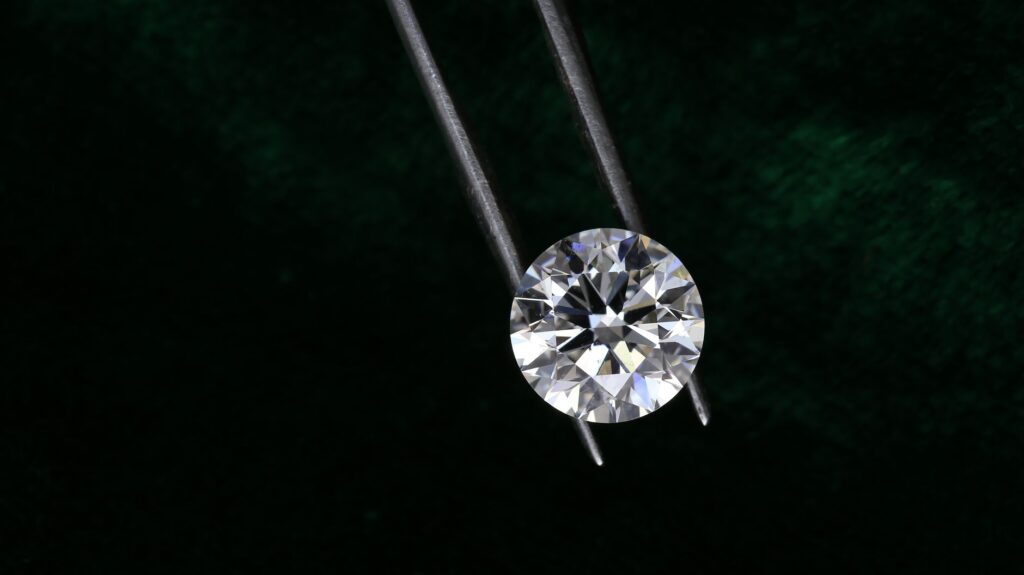
Face-up size refers to how large a diamond appears when viewed from the top. This is the angle people usually see in a ring. Face-up size is typically described by millimeter measurements, such as diameter for a round diamond or length and width for fancy shapes like oval or cushion.
For example, a round diamond that measures 6.4 mm across may look larger face-up than another round diamond of similar weight that measures 6.2 mm, even though their carat weights are close.
Why Weight and Size Do Not Always Match Perfectly
Diamonds are three-dimensional. Some of their weight is distributed in visible width, and some is hidden in depth. If a stone is cut deeper, more weight sits below the visible surface. That can make it look smaller from the top.
This is one reason diamond cut matters so much. A diamond with overly deep proportions may carry its carat weight inefficiently. You are paying for weight that does not contribute as much to visible size.
What a “Magic Size” Diamond Is
A magic size diamond is a stone that hits a popular round-number carat weight, such as 0.50, 1.00, 1.50, 2.00, or 3.00 carats. These thresholds often carry price premiums because they are in high demand and easier to market.
From a visual standpoint, a 0.90 carat or 0.95 carat diamond may look very similar to a 1.00 carat diamond, especially once set. The same pattern often applies at 1.90 versus 2.00 carats. Buyers who understand this can sometimes get better visual value.
What Buyers Usually Expect
Assuming Higher Carat Automatically Means Much Larger Appearance
It is natural to expect a 2 carat diamond to look twice as large as a 1 carat diamond. In reality, carat weight and visible surface area do not scale in a simple, intuitive way.
A 2 carat diamond is twice the weight of a 1 carat diamond, but because the increase happens in three dimensions, the face-up diameter increase is much smaller than many people expect. A round 1 carat diamond is often around 6.4 to 6.5 mm, while a round 2 carat diamond is often around 8.1 to 8.2 mm. That difference is noticeable, but not “double” in visible width.
Using Carat Numbers Without Looking at Measurements
Two diamonds can both be listed as 1.00 carat and still differ in visible size. Buyers who compare carat numbers only may miss important details in the grading report.
Millimeter measurements tell you much more about face-up spread. For a round diamond, the diameter is especially important. For oval, pear, emerald, radiant, cushion, and marquise shapes, the length and width both matter.
Expecting a Diamond to Look the Same on Every Hand
A 1 carat diamond can look substantial on a size 4 finger and more modest on a size 8 finger. This does not mean the diamond changed. It means finger coverage changes visual perception.
That is why online photos and social media comparisons can be misleading. A ring that looks huge on one person may not create the same effect on another person with a different finger size or hand proportions.
Assuming Shape Does Not Matter Much
Shape strongly affects apparent size. Elongated shapes usually cover more finger area and often appear larger than round diamonds of the same carat weight. A marquise, oval, or pear can look bigger than a round simply because the shape spreads weight differently and creates more visual length.
What It Actually Looks Like
Carat Weight vs Visible Width
When people notice a diamond’s size, they are usually responding to its visible width or overall spread. For round diamonds, that means diameter. For fancy shapes, it means length, width, and the way the shape fills visual space.
Here are approximate face-up sizes for well-cut round diamonds:
| Carat Weight | Approximate Diameter | Visual Impression |
|---|---|---|
| 0.50 ct | 5.0 to 5.2 mm | Delicate, modest, refined |
| 0.70 ct | 5.7 to 5.8 mm | Noticeably present, balanced |
| 0.90 ct | 6.1 to 6.3 mm | Near-1-carat look |
| 1.00 ct | 6.4 to 6.5 mm | Classic benchmark size |
| 1.50 ct | 7.3 to 7.4 mm | Clearly larger, more presence |
| 2.00 ct | 8.1 to 8.2 mm | Bold and easy to notice |
| 3.00 ct | 9.2 to 9.4 mm | Large, strong finger coverage |
These numbers are approximate because cut proportions affect spread. Still, they provide a practical reference for how large a round diamond will actually look.
Why Side-by-Side Comparisons Can Be Misleading
Loose diamonds viewed on a tray can make size differences look dramatic. Once set in rings and worn on hands, the difference can feel smaller. This is especially true with close carat ranges like 0.90 versus 1.00 carat or 1.80 versus 2.00 carats.
Human eyes are not great at estimating millimeter differences without direct comparison. A 0.2 mm or 0.3 mm diameter increase can matter on paper, but in daily wear it may not feel transformative.
Finger Coverage Matters More Than Buyers Expect
A round diamond on a narrow finger tends to dominate more of the visible width of the finger. On a wider finger, that same stone may look more understated.
Elongated shapes can help increase finger coverage, especially for buyers who want the ring to look larger across the hand. Oval, marquise, and pear shapes are often chosen for this reason.
Factors That Change Apparent Size
Shape
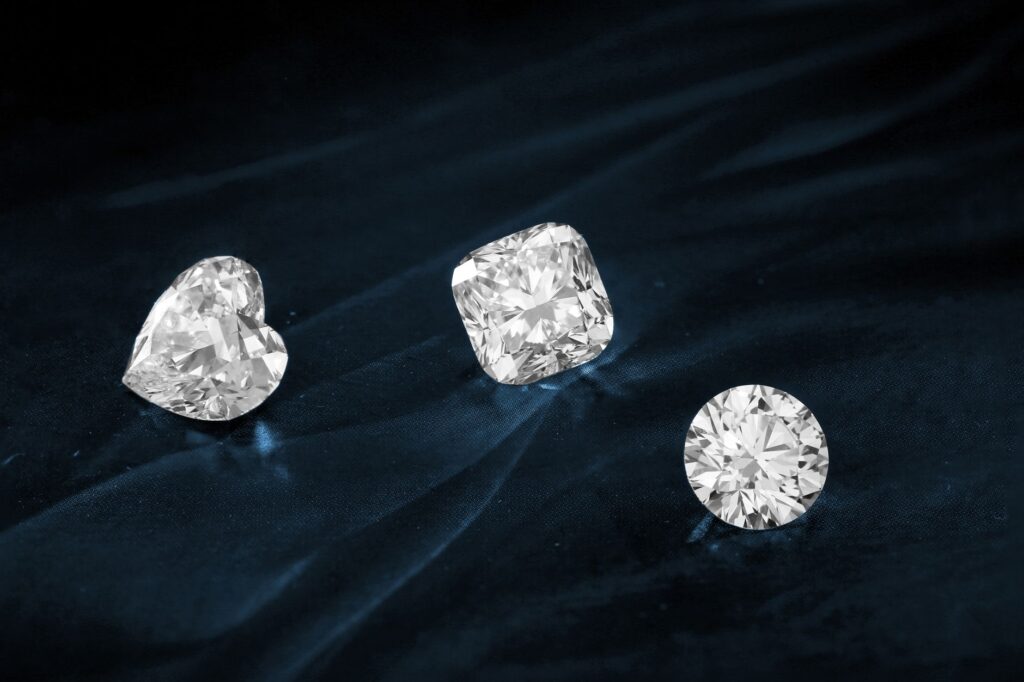
Shape is one of the biggest drivers of visible size. Even at the same carat weight, different shapes can look quite different.
| Shape | Typical Apparent Size Effect | Why It Looks That Way |
|---|---|---|
| Round | Baseline reference | Balanced spread, but usually less elongated finger coverage |
| Oval | Often looks larger | Elongated outline increases visible length |
| Marquise | Often looks very large | Long shape and pointed ends maximize spread |
| Pear | Often looks larger | Length creates stronger visual presence |
| Emerald | Can look large for its weight | Large open table and long shape emphasize size |
| Radiant | Moderate to large appearance | Rectangular forms may cover more area than round |
| Cushion | Often looks smaller | Rounded corners and deeper build can hide weight |
| Princess | Can look smaller than expected | Depth and corner structure can reduce visible spread |
There is no universally best shape for size. The right choice depends on whether you prioritize maximum spread, balanced sparkle, shape preference, or a specific ring style.
Cut and Proportions
Cut refers to how a diamond’s facets are arranged and proportioned. It affects sparkle, brightness, and visible spread. In round diamonds, an excellent cut usually offers the best combination of beauty and efficient face-up appearance.
However, a diamond cut too deep can carry excess weight where you cannot easily see it. This can make it look smaller than another diamond of the same carat weight with better proportions.
That said, buyers should not chase width at the expense of beauty. An overly shallow diamond may look slightly wider but can lose brightness, fire, or overall balance. Visible size is important, but it should be weighed alongside cut performance.
Depth Percentage
Depth percentage compares a diamond’s total depth to its width. If depth is too high for the shape, more weight sits below the face-up surface. That usually reduces apparent size.
This is especially relevant for fancy shapes, where cut grading is less standardized than it is for round diamonds. Two oval or cushion diamonds with the same carat weight can have noticeably different face-up measurements because of proportion differences.
Length-to-Width Ratio
For elongated shapes, length-to-width ratio affects how stretched or broad the diamond appears. A longer oval may look larger because it covers more of the finger lengthwise. A shorter, wider oval may look more compact.
This is partly a visual preference issue. Some buyers want a slender elegant look, while others prefer a fuller shape. Either way, ratio affects how size is perceived.
Setting Design
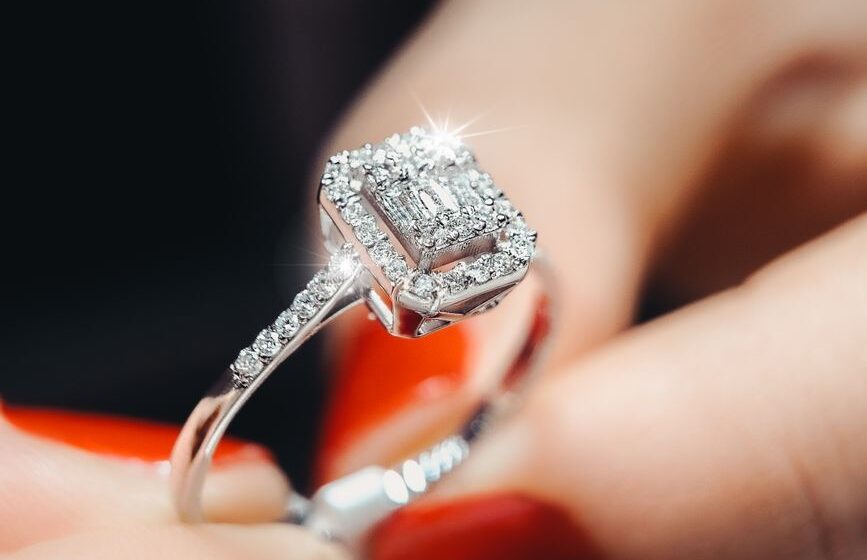
The ring setting can make a diamond look larger or smaller. A thin band tends to make the center stone appear bigger. A halo setting, which surrounds the center with smaller diamonds, can significantly increase the overall face-up impression.
Other size-enhancing design choices include:
- Delicate or narrow shanks
- Hidden halos that add sparkle without changing top-view size much
- Bright white metal around colorless diamonds
- Prong styles that expose more of the stone
By contrast, a thick band or heavy setting can visually reduce the center stone’s impact.
Finger Size and Hand Proportions
This factor is often overlooked. The same diamond can look quite different depending on finger width, finger length, and overall hand proportions. Larger fingers usually require more millimeter spread to achieve the same relative look.
That does not mean buyers with larger fingers need very large diamonds. It simply means expectations should be based on how the stone will appear once worn, not just on a carat label.
Real-World Size Examples
What a 1 Carat Diamond Looks Like on Different Finger Sizes
A well-cut round 1 carat diamond typically measures about 6.4 to 6.5 mm. On a size 4 finger, it often looks prominent and classic. On a size 7 finger, it still looks attractive and substantial, but it covers less of the finger visually.
| Finger Size | Visual Effect of a 1 Carat Round |
|---|---|
| Size 4 | Strong presence, noticeable finger coverage |
| Size 5 | Classic and balanced appearance |
| Size 6 | Moderate-to-strong presence |
| Size 7 | Elegant, but less dominant |
| Size 8+ | Refined and visible, though not oversized |
This is why “how big does 1 carat look?” has no single answer. The visual result depends heavily on the hand.
0.90 Carat vs 1.00 Carat
This is one of the most useful comparisons for value-conscious buyers. A well-cut 0.90 carat round might measure around 6.1 to 6.3 mm, while a well-cut 1.00 carat round may measure around 6.4 to 6.5 mm.
The visible difference is usually modest. In daily wear, especially once set, many people would not notice it unless the stones were compared side by side.
| Feature | 0.90 Carat Round | 1.00 Carat Round |
|---|---|---|
| Approximate Diameter | 6.1 to 6.3 mm | 6.4 to 6.5 mm |
| Visual Difference | Slightly smaller | Slightly larger |
| Price Position | Often better value | Often premium pricing |
| Best For | Buyers prioritizing value | Buyers who want the full 1 carat mark |
For many experienced buyers, this is a classic example of where paying for the carat milestone may not produce a proportionate visual benefit.
1 Carat vs 2 Carat Round Diamond
The difference between 1 and 2 carats is meaningful, but buyers often expect a more dramatic jump than they actually see. A 1 carat round measures about 6.5 mm, while a 2 carat round measures about 8.1 mm.
That increase is definitely visible. The 2 carat has much more presence and stronger finger coverage. But it does not look twice as wide.
| Feature | 1 Carat Round | 2 Carat Round |
|---|---|---|
| Approximate Diameter | 6.4 to 6.5 mm | 8.1 to 8.2 mm |
| Face-Up Presence | Classic benchmark | Bold and prominent |
| Finger Coverage | Moderate | Strong |
| Price Increase | Lower | Much higher |
| Visual Value | Efficient for many budgets | Noticeable upgrade, but costly |
2 Carat Oval vs 2 Carat Round
This is where shape becomes very important. A 2 carat oval often appears larger than a 2 carat round because its elongated dimensions create more finger coverage.
The oval may look longer and more spread out, even though both stones weigh the same. Some buyers interpret this as better value. Others still prefer round because of its facet pattern, classic look, and often stronger standardized cut quality.
Cushion and Princess Shapes Can Surprise Buyers
Buyers drawn to cushion or princess cuts sometimes expect them to look as large as rounds of the same carat weight. In reality, these shapes can face up smaller because of how their weight is distributed.
That does not make them poor choices. It simply means buyers should compare millimeter dimensions, not assume equal carat means equal visual size across shapes.
Price vs Visual Benefit
Diamond Pricing Does Not Rise in a Straight Line
As carat weight increases, price usually rises faster than visible size. This is especially true at popular thresholds like 1.00, 1.50, 2.00, and 3.00 carats.
So while a larger diamond does look bigger, the added cost often outpaces the added visual impact. This is a key concept in Carat Weight vs Diamond Size. Buyers are not just paying for size. They are paying for rarity, demand, and market psychology.
Diminishing Returns in Visible Size
Each additional carat does not create the same level of visible change. Moving from 0.50 to 1.00 carat feels significant to many people. Moving from 2.50 to 3.00 carats is also visible, but the cost jump may be very steep relative to the face-up change.
This is why many practical buyers shop slightly below milestone sizes. The visual compromise may be small, but the savings can be meaningful.
When the Upgrade Is Worth It
A higher carat weight may be worth the cost if:
- You strongly value a larger look and will notice the difference daily.
- You have a larger finger size and want more finger coverage.
- You prefer shapes or settings that benefit from more visible spread.
- Your budget comfortably supports the upgrade without forcing major sacrifices in cut quality.
When the Upgrade Is Probably Not Worth It
A bigger carat number may not be the best use of budget if:
- The visual increase is minimal, such as 0.90 to 1.00 carat.
- You would need to compromise too much on cut, color, or clarity.
- You can achieve a similar look through shape choice or setting design.
- You are paying mostly for a milestone number rather than a noticeable size difference.
Lab Grown Diamonds and Size Decisions
Why Lab Grown Changes the Conversation
Lab grown diamonds can significantly change the size options available within a given budget. Because lab grown diamonds often cost less than natural diamonds of comparable quality, buyers may be able to choose a larger carat weight without compromising as much on color or clarity.
From a visual perspective, a lab grown diamond and a natural diamond of the same shape, size, and quality can look the same. The main difference for most buyers is budget, origin, and long-term value considerations such as resale expectations.
How Lab Grown Can Improve Face-Up Size Value
For buyers whose top priority is visible size, lab grown diamonds often offer strong budget efficiency. Instead of stretching to a 1 carat natural diamond, a buyer may be able to choose a larger lab grown diamond with excellent cut and attractive proportions.
That said, lower cost does not remove the need to evaluate measurements carefully. A poorly proportioned lab grown diamond can still face up smaller than it should. The same principles apply. Check cut quality, millimeter spread, shape, and overall appearance.
Balanced Considerations
Lab grown diamonds can be a practical option for buyers who want more size for the money. However, it is important to keep the decision balanced. Resale value expectations differ from natural diamonds, and some buyers place personal value on natural origin. Neither choice is universally better. The right choice depends on budget priorities and buying goals.
Who Should Size Up
Buyers Who Prioritize Finger Coverage
If the visual presence of the ring is one of your top priorities, increasing carat weight may make sense. This is especially true for buyers who already know they prefer a more prominent center stone rather than a delicate look.
Buyers With Larger Finger Sizes
Hands with larger finger sizes often need more millimeter spread to create the same visual impact seen on smaller fingers. A size upgrade may help achieve the look you actually want.
Buyers Choosing Compact Shapes
If you love cushion, princess, or some deeper fancy shapes, sizing up slightly may help compensate for their smaller apparent face-up size.
Buyers Using Minimal Settings
Solitaire settings with thin bands can showcase the center stone beautifully, but they do not add much to total visual spread. If you want a larger overall look without a halo, going up in carat may be more justified.
Who Can Save Money
Buyers Open to Slightly Under-Magic Weights
Choosing 0.90 instead of 1.00 carat, or 1.80 instead of 2.00 carats, can be an efficient strategy. In many cases, the visible difference is modest compared with the price difference.
Buyers Open to Elongated Shapes
Ovals, pears, marquises, and some emerald cuts can create a larger face-up look for the same carat weight. If maximum apparent size matters, shape choice may deliver more benefit than chasing a heavier round.
Buyers Who Value Cut Quality First
Some shoppers are better served by staying slightly smaller and keeping excellent cut quality. A beautifully cut diamond often looks more lively and impressive than a larger but duller stone.
Buyers Considering Lab Grown Diamonds
For buyers comfortable with lab grown diamonds, budget savings can make it easier to prioritize both size and quality. This does not mean automatically choosing the biggest stone possible. It means you may have more flexibility to get a desirable face-up size without as many compromises.
Common Buyer Mistakes
Chasing the Carat Number Instead of the Look
It is easy to become focused on getting to 1.00 or 2.00 carats because those numbers feel meaningful. But visible beauty and size impression often matter more than crossing a threshold.
Ignoring Millimeter Measurements
A grading report may list a desirable carat weight, but the actual dimensions reveal whether the stone faces up efficiently. Buyers who skip measurements can overpay for hidden depth.
Sacrificing Cut Too Much for Size
A larger diamond that lacks brightness may not feel as impressive in person as buyers expect. Sparkle strongly influences perceived beauty. A slightly smaller but well-cut diamond often performs better visually.
Forgetting That Shape Changes Size Perception
Comparing a round and an oval by carat alone is not enough. The oval may look larger, even though both diamonds weigh the same.
Not Accounting for Finger Size
A carat target taken from someone else’s ring may not translate well to your own hand. Proportion is personal.
Overpaying for Magic Sizes
Milestone carat weights often bring pricing premiums that do not always translate into an equally meaningful appearance upgrade.
Using Photos Without Scale
Online images can distort expectations. Camera distance, angle, hand size, and editing all affect perceived size. Measurements are a more reliable guide.
How to Evaluate Diamond Size More Accurately
Start With Millimeter Measurements
For round diamonds, focus on diameter. For fancy shapes, check both length and width. This is the most direct way to understand how large the diamond will look face-up.
Compare Within the Same Shape
A 1 carat round and a 1 carat oval are not apples-to-apples for visual size. To judge spread accurately, compare diamonds within the same shape first.
Consider the Whole Ring Design
The center stone does not exist in isolation. Band width, prong style, halo use, side stones, and metal color all influence the overall impression of size.
Think About Daily Wear, Not Just Comparison Photos
A ring is worn in motion, under varied lighting, and usually without a direct comparison next to another diamond. Ask yourself whether the upgrade will matter in real life, not just under magnified product photography.
Frequently Asked Questions
Is carat the same as diamond size?
No. Carat measures weight, while diamond size usually refers to visible face-up dimensions. Two diamonds with the same carat weight can look different in size depending on cut, depth, and shape.
Why does my diamond look smaller than I expected?
Common reasons include deep proportions, a compact shape, a thicker setting, larger finger size, or unrealistic expectations created by close-up photos. Checking the stone’s millimeter measurements usually explains a lot.
Will a 0.90 carat diamond look much smaller than a 1 carat diamond?
Usually not by much. In many cases, the visible difference is small, especially once the diamond is set. That is why 0.90 carat diamonds are often considered strong value options.
Which diamond shapes look the biggest for their carat weight?
Marquise, oval, and pear shapes often appear larger because they spread weight across a longer outline. Emerald cuts can also look relatively large due to their open table and elongated shape.
Does a halo make a diamond look bigger?
Yes. A halo surrounds the center stone with smaller diamonds, increasing the overall face-up look of the ring. It does not make the center diamond itself larger, but it can noticeably boost perceived size.
Should I buy a larger diamond with lower cut quality?
Usually, major cut compromises are not ideal. Cut quality affects sparkle, brightness, and overall beauty. A slightly smaller well-cut diamond often looks better than a larger diamond with weak performance.
Do lab grown diamonds look larger than natural diamonds?
Not at the same actual size. A 1 carat lab grown diamond and a 1 carat natural diamond of similar shape and proportions should look the same. The advantage is that lab grown diamonds may allow you to afford a larger size within the same budget.
What matters more, carat weight or measurements?
For visible size, measurements matter more. Carat still matters because it affects pricing and rarity, but face-up appearance is better predicted by millimeter dimensions and shape.
Conclusion
The key lesson in Carat Weight vs Diamond Size is simple. A carat number tells you weight, but your eyes respond to visible spread, shape, proportions, sparkle, and finger coverage. That is why two diamonds with the same stated carat weight may not look equally large once worn.
For practical buying decisions, focus on the outcome you actually care about. Ask how large the diamond will look from the top, how it will appear on the intended finger size, whether the cut hides weight in depth, and whether a different shape or setting could create a larger visual effect.
Buyers often get the best value by avoiding automatic premiums for magic sizes, reviewing millimeter measurements carefully, and keeping cut quality high. For those considering lab grown diamonds, the budget flexibility can make larger visible size much more accessible, though the same size evaluation principles still apply.
A well-chosen diamond is not just a certain carat weight. It is a diamond whose actual appearance matches your expectations, your style, and your budget. That is the difference between buying by the numbers and buying with confidence.