An oval diamond and a round diamond can share the same carat weight yet look noticeably different once they are set in a ring. That difference often surprises buyers, because the eye responds to visible surface area and finger coverage, not just the number on a grading report. In practical terms, this is why shape matters so much when judging size.
For anyone comparing shapes, the question “Do Oval Diamonds Look Bigger Than Round Diamonds” is really about face-up appearance. Face-up appearance means how large the diamond looks when viewed from the top, which is the angle people see most often in daily wear. Carat weight still matters, but it does not tell the full story on its own.
Understanding this distinction can help you avoid overpaying for weight that is hidden in depth, choosing a shape that does not match your size expectations, or assuming two equal-carat diamonds will look equally large. Oval and round diamonds each have strengths, and the better choice depends on whether you value spread, sparkle pattern, symmetry, finger coverage, or price efficiency.
Quick Answer
Yes, oval diamonds usually look bigger than round diamonds of the same carat weight. In most cases, an oval has a larger face-up appearance because its elongated shape covers more visible surface area across the finger. It also tends to look longer and more substantial, even when the actual weight is identical.
That said, the difference is not unlimited. A poorly cut oval can hide weight in depth and look smaller than expected, while a well-cut round can look lively, bright, and balanced even if it appears slightly more compact. So the short answer is usually yes, but the real answer depends on measurements, proportions, and setting style.
Understanding the Carat Concept
What carat actually means
Carat is a unit of weight, not a unit of visible size. One carat equals 0.20 grams. That means two diamonds with the same carat weight can still look different if their shape, proportions, or cut quality distribute that weight differently.
This point is essential when comparing oval and round diamonds. A one carat oval and a one carat round each weigh the same, but the oval often spreads that weight across a larger visible area.
What face-up size means
Face-up size refers to the dimensions you can see from the top of the diamond. For a round diamond, that is mostly reflected in its diameter. For an oval, it is reflected in both length and width.
Because ovals are elongated, they can appear larger across the finger even if they do not have dramatically more surface area than a round. The shape creates a visual stretching effect, and that can make the diamond seem bigger than its weight suggests.
Why measurements matter more than carat alone
A grading report gives actual millimeter measurements, and those measurements often tell you more about visible size than carat weight does. Two one carat ovals can have different length-to-width ratios and different depths, which means one may look larger than the other. The same is true for round diamonds.
When buyers compare shapes only by carat number, they often miss the most important practical detail. What the eye notices is the outline, spread, and finger coverage, not the abstract weight category.
What Buyers Usually Expect
Assuming equal carat means equal visible size
A common expectation is that a one carat diamond should look the same size regardless of shape. That is understandable, but it is not how diamonds work in real life. Shape has a direct impact on the way a diamond occupies visual space.
With round and oval diamonds, this misunderstanding is especially common because both are classic shapes and both can be brilliant cut. Buyers sometimes assume the sparkle pattern is the main difference, when in fact the outline itself strongly affects size perception.
Expecting longer shapes to only look narrower
Some buyers worry that an oval may simply look stretched rather than bigger. In reality, a well-proportioned oval often looks both elegant and sizeable. The elongated silhouette creates more finger coverage from top to bottom, and that usually makes the ring feel more substantial on the hand.
However, if an oval is cut too narrow, it can start to look thin rather than broadly impressive. This is why length-to-width ratio matters. Not every oval that weighs more will automatically look better.
Assuming sparkle and size are the same thing
A round brilliant often has a very balanced, intense sparkle pattern. That brightness can make it feel visually strong and crisp, even if it does not technically face up as large as an oval. Buyers sometimes interpret that brightness as size, but sparkle and spread are different qualities.
An oval may look larger, while a round may look more symmetrical and more evenly brilliant. Neither quality is inherently better. It depends on what you want the ring to emphasize.
What It Actually Looks Like
How oval diamonds appear on the hand
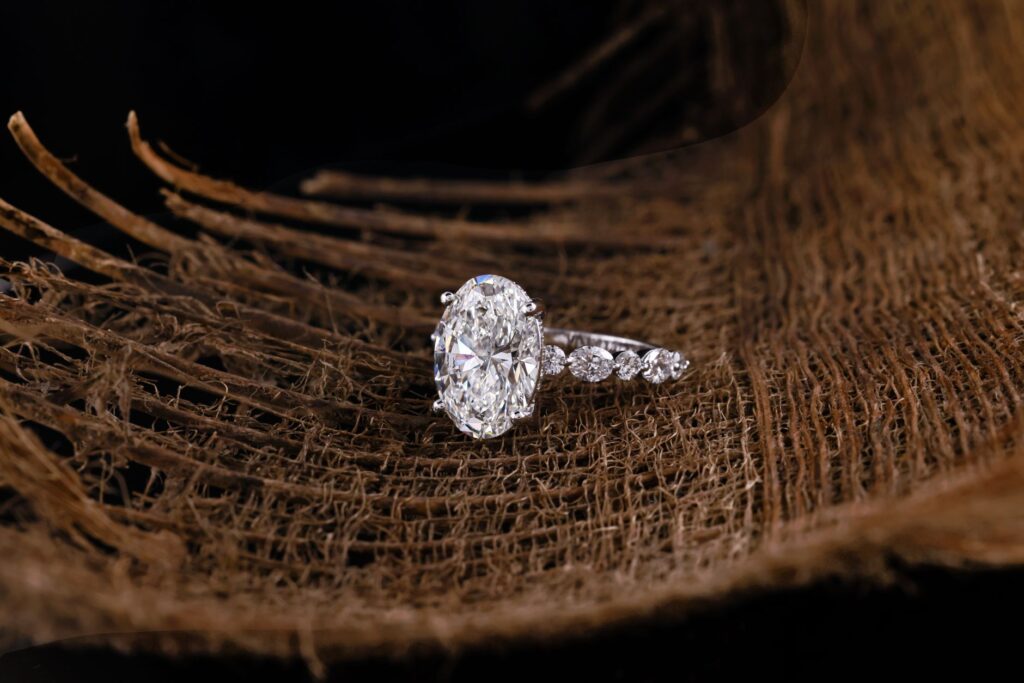
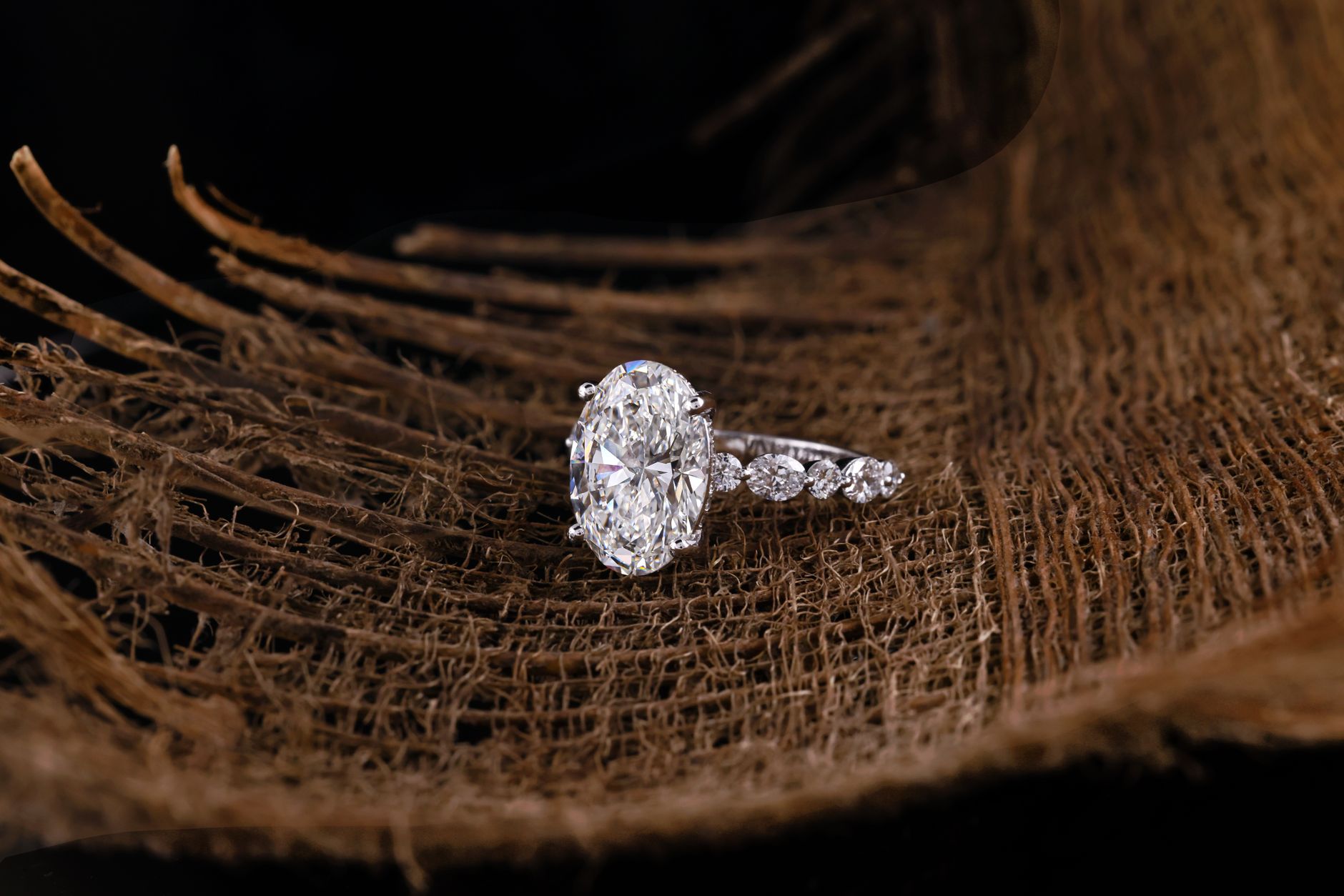
Oval diamonds tend to create an elongated look on the finger. They often cover more vertical space and can make the finger appear slightly longer and slimmer. This contributes to the impression that the diamond itself is larger.
In everyday viewing, most people notice the overall outline before they notice exact measurements. Since an oval stretches across the finger in a way a round does not, it often draws attention as a larger-looking stone.
How round diamonds appear on the hand
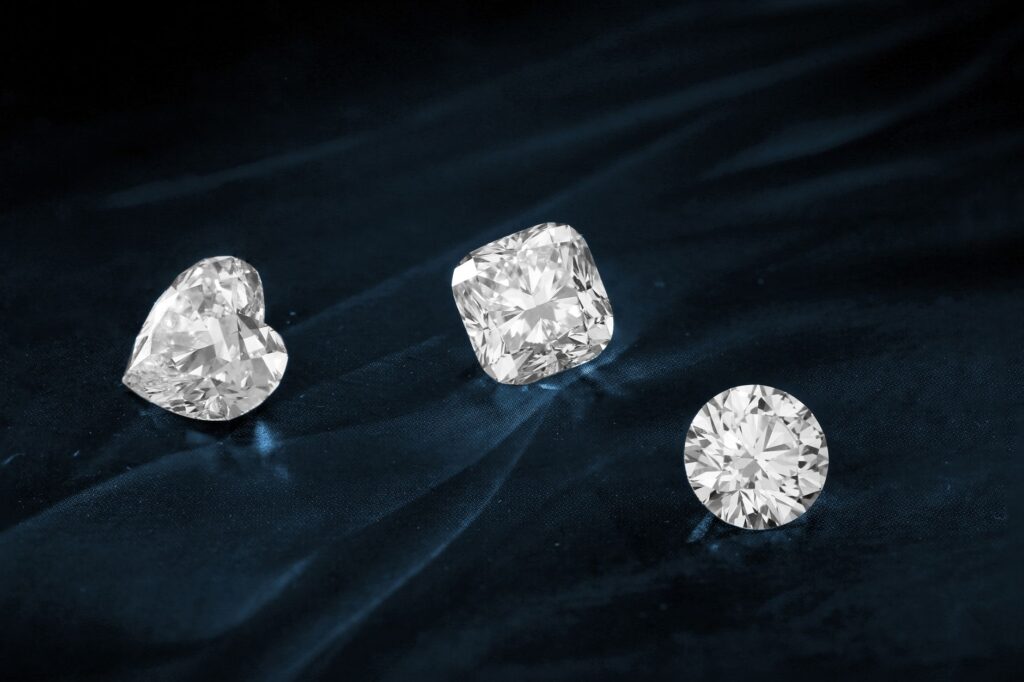
Round diamonds usually look more compact and more symmetrical. Their shape is balanced in every direction, and that gives them a classic, centered appearance. Even when a round appears slightly smaller than an oval of the same carat weight, it often looks refined and bright.
This matters because some buyers prefer a diamond that looks crisp and proportional rather than elongated. A round can feel a bit smaller face-up, but it may still create the visual impression a buyer wants, especially if maximum brilliance is the priority.
Finger coverage and the illusion of size
Finger coverage refers to how much of the finger width and length the diamond appears to occupy. Oval diamonds usually perform well here because the shape extends lengthwise and can visually dominate the center of the ring. That added coverage is one reason they are often chosen by buyers who want a larger appearance without a major jump in carat weight.
Round diamonds cover space more evenly but less expansively. They can still look substantial, especially in larger sizes, but for equal carat weights they usually do not create quite the same spread effect as an oval.
Typical size comparison by measurements
A well-cut 1.00 carat round diamond often measures around 6.4 to 6.5 mm in diameter. A well-cut 1.00 carat oval might measure roughly 7.7 x 5.7 mm, though actual dimensions vary. Even though these numbers are not directly interchangeable, the oval usually occupies more visual space when viewed face-up.
The difference becomes especially noticeable in settings with minimal metal around the center stone. A solitaire setting can make the shape contrast even clearer.
Oval vs Round Face-Up Comparison
| Feature | Oval Diamond | Round Diamond |
|---|---|---|
| Same carat visual size | Usually looks larger | Usually looks slightly smaller |
| Finger coverage | Strong lengthwise coverage | More compact coverage |
| Outline effect | Elongated, can look bigger and slimmer | Balanced, symmetrical, classic |
| Sparkle pattern | Brilliant, but can show bow-tie effect | Typically the most even brilliance |
| Cut consistency | More variation between stones | More standardized appearance |
| Value for visible size | Often strong | Often lower for spread alone |
Factors That Change Apparent Size
Shape
Shape is the first and biggest factor in this comparison. Oval diamonds generally look larger than round diamonds because they have a longer outline and often more face-up spread per carat. This does not mean every oval beats every round, but as a category, ovals usually offer more apparent size.
Cut quality
Cut quality affects both beauty and apparent size. A diamond that is cut too deep can carry excess weight below the visible surface, which means you pay for carat weight you do not really see. This can happen in both round and oval diamonds.
Round diamonds are easier to compare because their ideal ranges are more standardized. Ovals are less predictable. Two ovals with the same carat weight can look very different depending on how well they are cut.
Depth
Depth percentage describes how tall the diamond is relative to its width. If a diamond is too deep, more weight sits underneath rather than spreading across the top. That can make the stone look smaller.
This is especially important with ovals. A deep oval may lose the very advantage buyers seek, which is a larger face-up appearance. A shallow oval can look larger, but if it is too shallow, it may lose light performance and appear watery or less lively.
Length-to-width ratio
Length-to-width ratio affects the shape of an oval. Lower ratios look broader and more rounded. Higher ratios look longer and slimmer. Neither is objectively better, but they create different visual effects.
A moderately elongated oval often gives the best balance of large appearance and pleasing proportions. If the stone is too narrow, it may look long but not full. If it is too squat, it may lose some of the elongated size benefit.
Bow-tie effect
The bow-tie effect is a dark area that can appear across the center of some oval diamonds. A mild bow tie is common, but a strong one can make the diamond look darker in the middle and less lively. That can reduce its visual impact, even if the measurements are generous.
This is one reason a larger-looking oval is not automatically the better-looking diamond. Buyers should compare not just size, but also how evenly the stone returns light.
Setting style
The ring setting can change how large a diamond appears. Thin bands usually make the center stone look bigger. Halo settings can add visible spread around the center stone and make both oval and round diamonds appear larger. Prong style, bezel style, and side stones also affect perception.
An oval in a delicate solitaire can look especially large because the elongated outline is unobstructed. A round in a halo can compete very effectively on visual presence, even if the center stone itself faces up smaller.
Finger size
A diamond does not look the same on every hand. On a size 4 finger, a 1 carat round can look substantial. On a size 8 finger, the same stone may feel more modest. Since ovals tend to cover more length, they often maintain a strong presence across a wider range of finger sizes.
This is why buyers should think in terms of finger coverage, not just stone weight. The same shape can create very different impressions depending on hand proportions.
Real-World Size Examples
1 carat oval vs 1 carat round
In a direct comparison, a 1 carat oval usually looks bigger than a 1 carat round. The difference is not dramatic enough to make the round look small, but it is noticeable, especially side by side. The oval often appears longer and slightly more expansive on the finger.
If visible size is your main priority, the oval generally wins this comparison. If balanced brilliance and classic shape are your priority, the round may still be the better choice.
2 carat oval vs 2 carat round
At 2 carats, the visual gap often becomes easier to notice because both stones are already large enough for shape differences to stand out. A 2 carat oval can look impressively spread out and may seem more finger-covering than a 2 carat round. The round still offers a bold, luxurious look, but it usually appears more concentrated.
For buyers seeking a larger-looking center stone without moving above the 2 carat category, an oval can be a practical way to maximize apparent size.
On a smaller finger size
On a size 4 or size 5 finger, both round and oval diamonds can look larger than expected. In this context, an oval may look especially prominent because the elongated shape occupies a greater portion of the finger. The visual payoff of choosing an oval is often quite strong on smaller hands.
On a larger finger size
On a size 7 or size 8 finger, the difference between oval and round can become more meaningful. A round may still look beautiful, but it can seem more compact relative to the finger width. An oval may provide the extra coverage that helps the ring feel more balanced on the hand.
0.90 carat oval vs 1.00 carat round
This is an important value comparison. A well-cut 0.90 carat oval can sometimes look close in size to a 1.00 carat round, or even appear larger depending on dimensions. That does not make them identical, but it shows how shape can compensate for lower carat weight in visible size terms.
For budget-conscious buyers, this is one of the most useful lessons in diamond shopping. A slightly lower carat weight in an elongated shape can deliver more visual impact than a round at a higher benchmark weight.
Price vs Visual Benefit
Why round diamonds often cost more
Round diamonds often carry higher prices than fancy shapes such as oval, partly because demand is consistently strong and cutting rounds from rough can involve more weight loss. This means buyers can end up paying more for a round that looks slightly smaller than an oval of the same carat weight.
That does not mean round diamonds are overpriced in a simple sense. They are prized for their light performance, symmetry, and enduring popularity. But from a visible-size perspective, they are not usually the most efficient choice.
The visual return on extra spending
If you move from a round to an oval at the same budget, you may be able to increase apparent size without increasing cost. If you stay with round and increase carat weight instead, the price jump can be significant while the visible increase may be modest.
This is where shape becomes a value decision, not just a style decision. Buyers who care most about size perception often find more visual return in oval diamonds.
Diminishing returns in size upgrades
Diamond prices do not rise in a straight line. As carat weight increases, prices often rise faster than visible size does. This means paying much more does not always produce a proportionally bigger look.
An oval can soften that issue somewhat because it already faces up larger per carat. In contrast, upgrading from one round to the next carat tier may bring a noticeable price increase with a smaller-than-expected visual difference.
Who Should Size Up
Buyers with larger finger sizes
If finger coverage is a concern, increasing carat weight can make sense, especially on larger hands. A buyer who prefers round diamonds but wants a stronger presence may decide that a larger round is worth the additional cost.
Buyers choosing heavier setting styles
Wide bands, halos, split shanks, and side stones can change how the center stone reads visually. In some settings, a very small center stone can be overwhelmed by the design. A larger diamond may be justified to keep the center visually dominant.
Buyers who prioritize impact at a glance
Some people care strongly about first-impression size. In that case, either a larger oval or a size increase within round diamonds may be worthwhile. The key is to compare actual millimeter measurements and hand coverage, not just carat labels.
Who Can Save Money
Buyers open to oval shapes
If your main goal is to get a bigger-looking diamond for the budget, an oval is often a smart option. It usually offers more apparent size than a round at the same carat weight and may also cost less.
Buyers willing to avoid magic weights
Magic sizes are benchmark carat weights such as 1.00, 1.50, and 2.00 carats that often command pricing premiums. A 0.90 or 0.95 carat oval can look very impressive, especially compared with a 1.00 carat round. This can be a practical way to improve value without sacrificing visual impact.
Buyers focused on face-up spread
Someone who shops by measurements rather than carat labels often makes more efficient decisions. A well-cut oval with strong dimensions can outperform a heavier but deep-cut round in terms of apparent size. This is one of the clearest ways to save money intelligently.
Lab Grown Diamond Considerations
How lab grown changes the size decision
Lab grown diamonds have made larger carat weights more accessible in many budgets. That can reduce the pressure to choose a shape mainly for size efficiency. A buyer who loves round diamonds may be able to afford a larger round in lab grown form and no longer feel forced to compromise on shape.
At the same time, the size advantage of oval does not disappear in lab grown diamonds. A lab grown oval still usually looks bigger than a lab grown round of the same carat weight. The difference is that buyers may have more flexibility to choose based on style preference rather than strict budget limits.
Visual value in lab grown oval vs round
For buyers seeking the largest possible face-up appearance per dollar, a lab grown oval can be especially efficient. It combines the generally lower cost of lab grown diamonds with the spread advantage of an elongated shape. This can make larger-looking center stones achievable at lower budgets.
However, the same guidance still applies. Do not choose by shape and carat alone. Check measurements, cut quality, and the strength of any bow-tie effect.
Resale and long-term considerations
Natural and lab grown diamonds have different market dynamics, and resale value should be considered carefully in either case. The choice between oval and round is usually more about appearance and budget efficiency than investment outcome. From a wear and enjoyment perspective, the best choice is the diamond that gives you the look you want at a price you are comfortable with.
Common Buyer Mistakes
Chasing carat numbers instead of visible size
Choosing a round simply because it reaches a benchmark weight can lead to disappointment if visible size was the real goal. Measurements and shape often matter more than the label.
Ignoring oval proportions
Not every oval looks large and beautiful. Some are too deep, some are too narrow, and some have a strong bow tie. Buyers should evaluate the actual dimensions and visual balance, not assume all ovals outperform rounds equally.
Assuming round is always the safest option
Round diamonds are a reliable and classic choice, but “safe” should not mean automatic. If your priority is maximizing face-up size, an oval may suit you better. The safest decision is an informed one, not simply the most traditional one.
Overpaying for magic sizes
Paying a premium for exactly 1.00 or 2.00 carats may not be worthwhile if a slightly below-threshold oval delivers similar or better visual presence. This is particularly relevant for budget-conscious buyers.
Forgetting the role of the setting
A center stone never exists in isolation once it is worn. Band width, halo design, prongs, and overall ring proportions can all influence whether a diamond looks larger or smaller. Shape choice should be made alongside setting choice.
Practical Buying Tips for Oval vs Round
Compare millimeter measurements first
Before focusing on carat, compare the actual dimensions listed on grading reports. This gives you a much clearer sense of face-up size and helps prevent surprises.
View the shape on a hand when possible
Even approximate hand comparisons can be helpful. Ovals often look more elongated and prominent once worn, while rounds may look smaller but more balanced and bright.
Decide what “bigger” means to you
For some buyers, bigger means more finger coverage. For others, it means stronger sparkle or more visual presence from a distance. An oval often wins on spread. A round often wins on symmetry and classic light return.
Balance spread with beauty
The largest-looking diamond is not always the most attractive. A slightly smaller but better-cut stone may look more impressive in daily wear than a larger stone with weak brilliance or distracting darkness.
Frequently Asked Questions
Are oval diamonds always bigger-looking than round diamonds?
No. Oval diamonds usually look bigger than round diamonds of the same carat weight, but not always. A deep-cut oval with poor spread can lose that advantage, while a well-cut round may look more visually impressive overall.
How much bigger does an oval diamond look than a round?
There is no single percentage that applies to every comparison, because dimensions and proportions vary. In practical terms, the difference is often noticeable side by side but not extreme. Most buyers see the oval as longer, more finger-covering, and slightly larger-looking.
Do oval diamonds look bigger because they are cheaper?
No. Price and appearance are related but not identical. Oval diamonds often cost less than round diamonds of the same carat weight, and they also usually face up larger. Those are two separate advantages that can happen at the same time.
Does an oval diamond sparkle less than a round diamond?
Round diamonds are generally known for the most balanced and intense overall brilliance. Oval diamonds can still sparkle beautifully, but their light pattern is different and they may show a bow-tie effect. This does not make them inferior, but it is an important visual distinction.
What oval ratio looks biggest?
A very long oval may look bigger in one direction but can also appear too narrow. A moderately elongated ratio often gives the best combination of spread and pleasing shape. The ideal look is personal, but balance usually matters more than chasing the longest possible outline.
Can a smaller oval look like a larger round?
Yes, in some cases. A well-cut oval just under a benchmark carat weight can look close in size to, or even larger than, a round at a higher benchmark weight. This is one reason ovals are often considered efficient for visible size.
Is oval or round better for an engagement ring?
Neither is universally better. Oval may be better if you want a larger-looking diamond and elongated finger coverage. Round may be better if you prefer a classic shape with highly consistent brilliance and symmetry.
Does lab grown change whether oval looks bigger than round?
No. The visual relationship remains the same. A lab grown oval still usually looks bigger than a lab grown round of the same carat weight. The main difference is that lab grown pricing may make it easier to afford a larger stone in either shape.
Conclusion
Oval diamonds generally do look bigger than round diamonds of the same carat weight. The reason is straightforward. Ovals usually have more face-up spread and more elongated finger coverage, so the eye reads them as larger even though the weight is equal.
That does not mean oval is automatically the better choice. Round diamonds remain popular for good reasons, including their balanced brilliance, symmetry, and classic appearance. The best decision depends on what matters most to you. If your goal is maximum visible size for the weight or budget, oval often has the advantage. If your goal is the most traditional shape with reliable sparkle performance, round may still be the better fit.
The most useful way to compare them is not by carat alone. Look at millimeter measurements, cut quality, proportions, finger coverage, and setting style. Once you evaluate those factors together, it becomes much easier to predict how large the diamond will actually look in real-world wear.