The bow tie effect is one of those diamond features that can sound minor until you see it in person. A diamond may have excellent color, good clarity, and an attractive shape, yet still look uneven across the center if the cut is not managing light well. For buyers comparing lab grown diamonds or natural diamonds, understanding this issue is a practical part of choosing a stone that looks bright and balanced every day.
The effect shows up most often in elongated fancy shapes such as oval, pear, marquise, and some radiant or cushion cuts. It appears as a darker area across the middle of the diamond, sometimes subtle and sometimes very noticeable. A little contrast is normal in many shapes, but a strong bow tie can interrupt sparkle and make the diamond look less lively than expected.
If you are shopping for an engagement ring or any other diamond jewelry, learning how to spot and minimize a visible bow tie can help you make a better choice. The goal is not to find a diamond with no darkness at all. The goal is to choose one where the center remains bright enough that the contrast looks intentional rather than distracting.
Quick Answer: How to Avoid Bow Tie Effect in Diamonds
The most effective way to avoid a noticeable bow tie is to choose a diamond with strong cut quality, balanced proportions, and good light return in the center of the stone. This matters most in oval, pear, marquise, radiant, and cushion shapes. Even a well-cut diamond in one of these shapes may show some contrast, but it should not look like a dark stripe that dominates the middle.
Buyers can reduce the risk by looking at videos instead of relying only on still photos, comparing stones under different lighting, and paying attention to how bright the center looks when the diamond is viewed face-up. Lab grown or natural origin does not change this. Bow tie effect is a cutting and light performance issue, not a question of where the diamond came from.
In practical terms, a little darkness is not automatically a flaw. The concern is when the dark area is strong enough to reduce sparkle, make the diamond look uneven, or draw your eye away from the overall shape.
What Is the Bow Tie Effect?
The bow tie effect is a dark band or shadow that appears across the center of certain diamonds. It usually stretches from one side of the stone toward the other and can resemble the shape of a bow tie, which is where the term comes from. Depending on the diamond, it may look like a narrow band, a broad dark zone, or simply a center area that seems less lively than the rest of the stone.
This effect is caused by how the diamond handles light. When the cut sends more light away from your eye instead of back toward it, the center can appear darker. The shape of the diamond, its facet arrangement, and its proportions all influence how strong that darkness becomes.
Not every bow tie is a problem. In many fancy shapes, a little contrast is part of the visual pattern and can even contribute to sparkle. The concern is when the effect becomes so strong that it looks like a dead area in the middle of the stone.
Which Diamond Shapes Show It Most Often?
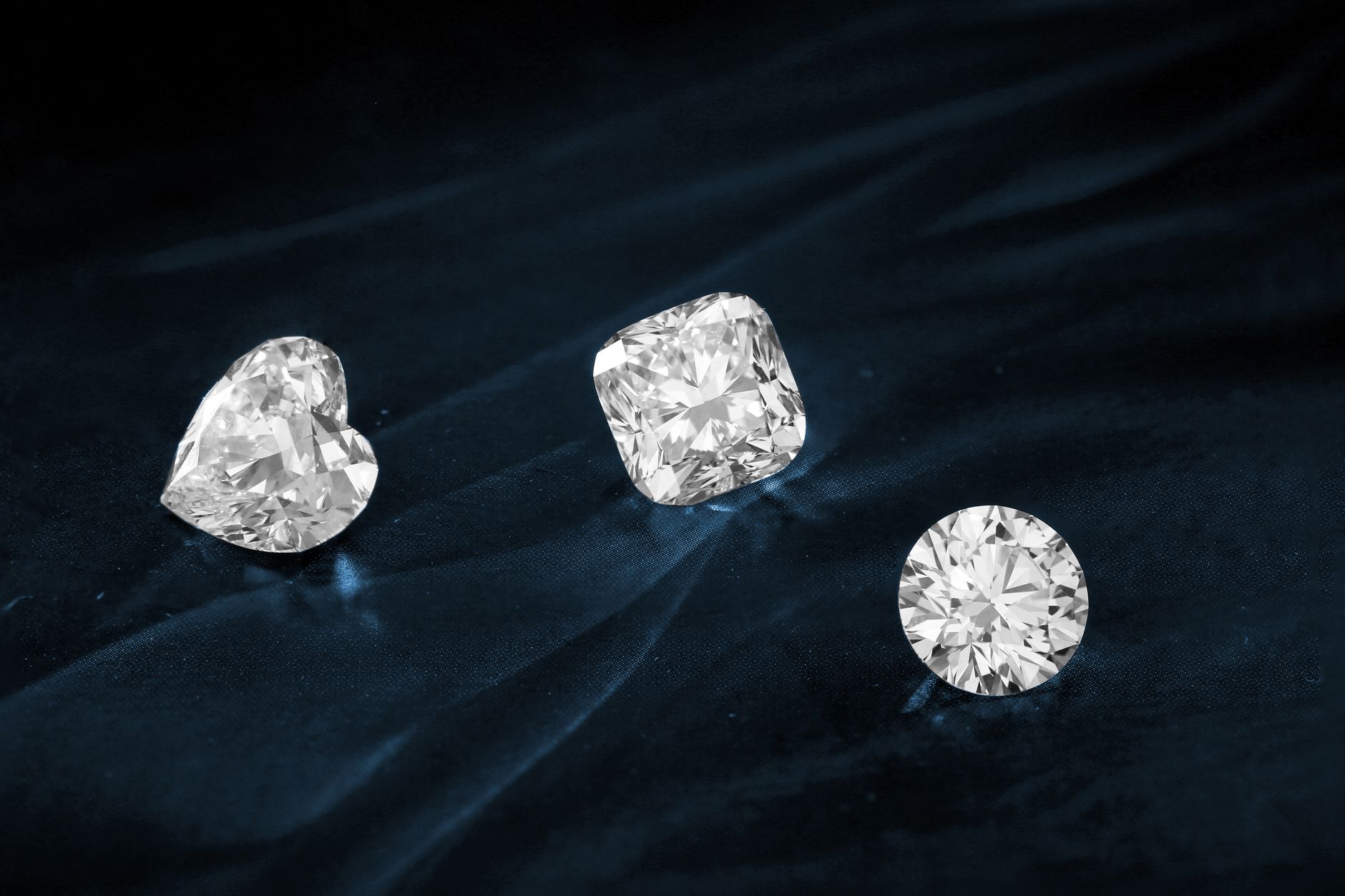
The bow tie effect is most common in elongated fancy shapes. These stones are more likely to show uneven light return because their outline and facet layout are less uniform than a round brilliant.
| Diamond Shape | Bow Tie Risk | Buyer Note |
|---|---|---|
| Oval | High | One of the most common shapes for visible bow tie issues |
| Pear | High | Often shows a dark center if proportions are off |
| Marquise | High | Elongated geometry makes light behavior more complex |
| Radiant | Medium | Facet pattern can reduce the look, but not always |
| Cushion | Medium | Can show contrast patterns that resemble a bow tie |
| Round Brilliant | Low | Traditional rounds usually have very little bow tie effect |
Round brilliant diamonds are usually the safest choice for buyers who want predictable sparkle and minimal center darkness. Their facet design is specifically engineered for balanced light return. That is one reason round diamonds are often easier to shop for than fancy shapes when appearance consistency matters.
Why the Bow Tie Effect Happens
The bow tie effect is mainly a light performance issue. Light enters the diamond, reflects around inside it, and should ideally return to the viewer’s eye. If the angles or proportions are not aligned well, some areas return less light and appear dark.
Elongated shapes are more difficult to balance because different parts of the stone are angled differently. The center can look darker if the pavilion, crown, and facet arrangement are not working together efficiently. The result is a visible shadow across the middle.
This does not mean every diamond with some bow tie is poorly cut. Many attractive stones in oval, pear, and marquise shapes naturally show a little center contrast. The key question is whether the darkness feels subtle and balanced or strong and distracting.
Light Return and Contrast
Light return is the amount of light that comes back to your eye after entering the diamond. Good light return is what makes a stone look bright and lively. Poor light return creates areas that appear flat, dark, or weak.
Contrast is the mix of light and dark areas that helps create sparkle and pattern. A diamond needs some contrast to look dynamic. But when the contrast becomes too strong in the center, the effect can look like a shadow instead of sparkle.
Buyers sometimes confuse contrast with brilliance. They are related, but they are not the same thing. A diamond can have attractive contrast without a visible bow tie, and it can also have a bow tie that reduces the overall brilliance of the stone.
Facet Arrangement and Shape Geometry
Facets are the flat surfaces on a diamond that interact with light. Their size, angle, and placement influence how the stone looks face-up. In fancy shapes, the facet patterns are often more complex than in round brilliants, which makes even light distribution harder to achieve.
A diamond can have an appealing outline and still have a weak center if the facet pattern is not well executed. This is why shape alone is not enough to judge beauty. Two oval diamonds of the same carat weight can look very different if one has a much stronger bow tie than the other.
How to Avoid Bow Tie Effect in Diamonds When Shopping
If your goal is to avoid a visible bow tie, the best approach is to judge the diamond visually rather than relying only on the certificate. Lab reports are useful, but they do not always tell you how noticeable the center darkness will be to the eye. A careful buyer uses both the grading data and the actual appearance.
1. Choose a Shape and Cut Style That Handles Light Well
Some shapes are simply more forgiving than others. If you want the lowest risk of a bow tie, a round brilliant is usually the easiest option. If you prefer an oval, pear, or marquise, then cut quality becomes much more important.
For buyers who love elongated shapes, the bow tie effect should be treated as part of the shopping process, not an unexpected surprise. The best stones usually show balanced proportions, even brightness across the center, and a bow tie that reads as mild contrast rather than a dark stripe.
2. Look at Videos, Not Just Still Photos
Still photos can hide or exaggerate the bow tie effect. Camera angle, lighting style, and image editing can all change how the diamond appears. A good video in neutral lighting usually gives a more realistic sense of the stone’s appearance.
When reviewing video, watch the center of the diamond as it moves. If the dark band stays visible from many angles and does not brighten as the stone turns, that is a warning sign. If the center brightens and darkens naturally with movement, the effect may be mild and acceptable.
3. Examine the Diamond in Different Lighting
Diamonds can look very different under store spotlights, daylight, office lighting, and home lighting. A stone that looks lively in a showroom may still show a more obvious bow tie in softer everyday light. This is especially important for online buyers who may only see polished studio images.
If possible, ask for images or videos in natural light and indoor lighting. The most useful test is how the diamond looks in ordinary conditions, not only under dramatic display lighting.
4. Prioritize Cut Quality Over Carat Weight
A larger diamond with weak cut can look less attractive than a slightly smaller diamond with better light performance. This is one of the most common trade-offs buyers face. If avoiding a bow tie is important, cut should usually come before size.
This is particularly relevant for lab grown diamonds, where larger sizes are often more affordable. Extra carat weight does not add much visual value if the center looks dark or flat. A well-cut diamond often appears more impressive because it has a brighter and more balanced face-up look.
5. Ask About Proportions and Visual Performance
Table percentage, depth percentage, length-to-width ratio, and facet pattern can all influence whether a bow tie appears. These measurements do not tell the whole story, but they can provide useful clues. In some cases, a stone that is too shallow or too deep is more likely to have poor light return.
For fancy shapes, a knowledgeable seller should be able to explain whether the diamond has been evaluated for visual performance. If the seller cannot discuss how the stone looks face-up, that is a reason to be cautious. Buyers who want a deeper understanding of measurements can also benefit from learning about diamond cut and diamond certification standards.
6. Compare Similar Stones Side by Side
Seeing two or more diamonds next to each other often reveals differences that are easy to miss in separate listings. A diamond with a mild bow tie may look fine on its own, but a better-cut stone beside it can show how much brighter and more even the center could be.
This side-by-side method is especially useful when shopping for ovals and pears. Small differences in darkness, symmetry, or length-to-width ratio can noticeably affect the face-up look, even when the certificates seem similar.
What Buyers Actually See in Real Life
The most important question is not what the bow tie means technically, but what it looks like in everyday wear. In real life, a strong bow tie usually appears as a dark center area that interrupts the sparkle. It can make the diamond seem less bright, less lively, and sometimes smaller than expected.
A mild bow tie is much less concerning. Many well-cut fancy shapes naturally have some center contrast that comes and goes as the stone moves. In those cases, the diamond can still look attractive and balanced, especially if the rest of the stone is bright.
Buyers usually notice the bow tie most when viewing the diamond face-up from a normal distance. If it is obvious in that position, it will likely remain obvious during daily wear. If it only appears at certain angles or under harsh lighting, it may be less important.
Sparkle, Brightness, and Fire
Sparkle is the overall effect of flashes of light as the diamond moves. Brightness refers to how much white light the stone returns. Fire is the colored flash created when light splits inside the diamond.
A strong bow tie can reduce the impression of sparkle because the center seems subdued. It can also reduce brightness if the dark area is wide enough. Fire may still be present, but the overall look often feels less balanced.
This is why a diamond with a noticeable bow tie can appear less impressive than a smaller diamond with cleaner light return. The eye naturally focuses on bright, even areas, so a dark strip in the middle can have a bigger visual impact than many buyers expect.
Scintillation and Movement
Scintillation is the pattern of light and dark flashes you see as the diamond moves. It contributes to the sense of life and motion in the stone. Good scintillation tends to feel crisp and lively, while weak scintillation can seem muddy or flat.
Some bow ties interfere with scintillation by creating a persistent dark band that does not break up enough as the diamond moves. When that happens, the stone can lose visual energy. On the other hand, a mild contrast zone can sometimes enhance sparkle by adding definition.
How Cut Quality Influences the Bow Tie Effect
Cut quality is the most important factor to consider when trying to minimize bow tie effect. Cut is not just one measurement. It includes proportions, symmetry, polish, and the way the facets work together to manage light.
In fancy shapes, there is rarely a single universal grade that guarantees a perfect appearance. Instead, buyers need to evaluate how the shape, proportions, and finish work together. A diamond can have a strong-looking report and still show a visible bow tie if its optical performance is weak.
What Cut Grade Can Tell You
For round brilliant diamonds, cut grades from major laboratories are more standardized and useful. For fancy shapes, cut grading is often less specific, so the certificate may offer limited guidance. That is why visual inspection matters especially in ovals, pears, marquises, and similar shapes.
It helps to separate the official grade from the real-world appearance. The grade can narrow your options, but your eyes should make the final judgment. That is especially true when shopping for lab grown diamonds, where many stones are available and small differences in appearance can matter more than buyers expect.
Symmetry and Polish
Symmetry describes how well the facets line up with each other. Polish refers to how smooth the facet surfaces are. Both affect how cleanly the diamond reflects light.
Excellent symmetry and polish do not automatically eliminate a bow tie, but poor symmetry can make light performance worse. A diamond with uneven facet alignment may show more darkness or irregular flashes across the center. Well-executed finishing helps the stone look cleaner and more refined.
Proportions and Light Leakage
Proportions are the measurements that affect the shape and depth of the diamond. Light leakage happens when light escapes through the bottom or sides instead of returning to the viewer. When leakage is concentrated in the center, the bow tie can become more visible.
Buyers do not need to memorize every proportion measurement, but they should understand the result. If the proportions are off, the diamond may lose brightness. If the proportions are well balanced, the stone usually looks livelier and more consistent face-up.
Why Heavier Stones Can Still Look Worse
It is easy to assume that a larger diamond should always look better, but the bow tie effect is one of the clearest examples of why that is not true. A stone can weigh more and still appear less attractive if the center is dark and the light return is weak.
In other words, carat weight is only part of the story. The face-up look is what most people actually notice, and that is where cut quality has the biggest impact.
Lab Grown Diamonds and the Bow Tie Effect
Lab grown diamonds can show the bow tie effect just like natural diamonds. The growth method does not cause or prevent the issue by itself. What matters is the final cut of the finished stone.
Because lab grown diamonds are often available in larger sizes and more shape options, buyers may encounter a wide range of bow tie visibility. Some lab grown ovals, for example, look excellent and show only a mild center contrast. Others can have a dark center that is easy to notice.
This is one reason it is useful to compare multiple stones, even when the prices and grades look similar. Lab grown shoppers should not assume that a certificate alone is enough to judge appearance. Visual performance still matters most.
Are Lab Grown Diamonds More Likely to Show It?
No, not inherently. Lab grown and natural diamonds follow the same optical rules. A well-cut diamond of either type can look excellent, and a poorly cut one of either type can show a strong bow tie.
The difference is that lab grown diamonds often offer more size for the money, which can make cut quality an even more important decision. When the budget allows a larger stone, some buyers may unintentionally accept weaker light performance. That trade-off is worth evaluating carefully.
Bow Tie Effect Versus Normal Contrast
One of the biggest mistakes buyers make is confusing normal contrast patterns with a problematic bow tie. A little darkness in a diamond is not always bad. In fact, contrast is part of what creates sparkle and visual interest.
The issue is whether the dark area feels intentional and balanced or dull and distracting. If the center is briefly dark as the stone moves, that may be normal. If it stays dark in many viewing positions and noticeably weakens brightness, that is more likely a true bow tie problem.
How to Tell the Difference
-
Normal contrast usually shifts as the diamond moves and does not dominate the center.
-
Problematic bow tie tends to look like a stubborn dark band that is easy to see straight on.
-
Acceptable contrast supports sparkle and pattern without making the center look dull.
-
Excessive darkness reduces brightness and can make the stone look less lively.
If you are comparing stones online, a calm video is usually more helpful than a stylized photo. The difference between contrast and bow tie often becomes easier to see when the diamond rotates slowly under consistent lighting.
Practical Examples Buyers Can Relate To
Real-world comparisons make the concept easier to understand. The bow tie effect matters because of how the diamond looks, not because of the term itself. Here are a few examples that show how the trade-offs can play out.
Example 1: A Well-Cut 1.5-Carat Diamond Versus a Poorly Cut 2-Carat Diamond
A 2-carat oval with a strong bow tie may technically look larger, but it can appear less bright and less attractive than a 1.5-carat oval with balanced light return. The larger stone may also draw attention to its dark center, which can make the outline feel less graceful.
For many buyers, the smaller but better-cut stone will look more impressive in everyday wear. This is a good example of how cut can matter more than size when the goal is beauty rather than just measurements.
Example 2: Excellent Cut Versus Very Good Cut in Everyday Lighting
In round diamonds, the difference between Excellent and Very Good can sometimes be subtle, depending on the specific stone. In fancy shapes, the visual difference may be more noticeable because the cut is less standardized. One diamond may have a softer center and more visible contrast, while another looks crisp and bright.
In home lighting, office lighting, and daylight, the better-performing diamond often looks more even and more lively. The difference is not always dramatic, but for buyers sensitive to visual balance, it can be worth attention.
Example 3: Higher Clarity With Poor Cut Versus Lower Clarity With Excellent Cut
A diamond with very high clarity but weak light return may still look disappointing because the eye is drawn to the dark center. A slightly lower clarity stone with excellent cut can appear more brilliant and more attractive because the sparkle helps mask minor inclusions.
Many inclusions are hard to see without magnification, especially in lab grown diamonds where clean-looking stones are common. For that reason, buyers often get more visible beauty from better cut than from chasing a higher clarity grade. Learning about diamond clarity can help put this trade-off in perspective.
Example 4: Same Shape, Different Face-Up Look
Two oval diamonds can share the same carat weight and still feel very different in person. One may have a bright center, clean edges, and a soft, balanced contrast pattern. The other may show a dark band that immediately catches your eye.
That difference can affect how expensive the stone feels, even if the listed specs are close. This is why visual comparison is so important in fancy shapes.
Advantages of Choosing a Diamond With Minimal Bow Tie
A diamond with a subtle or minimal bow tie usually offers a better face-up appearance. The center looks brighter, the sparkle feels more even, and the stone often appears more balanced from the top. This can make the diamond more satisfying to wear every day.
Another advantage is better value for the money. Instead of paying for a larger size that looks compromised, buyers can focus on a diamond that performs well. This is especially useful in engagement rings, where the center stone is viewed frequently and from close range.
A minimal bow tie also tends to make the diamond easier to enjoy under different lighting conditions. Whether the ring is worn indoors, outdoors, or under mixed light, a well-balanced diamond usually looks more consistent.
Disadvantages and Trade-Offs to Consider
It is not always possible to eliminate bow tie completely in fancy shapes. Buyers who want an oval, pear, or marquise silhouette may need to accept some amount of center contrast. The goal is to reduce the issue, not pretend it never exists.
Stones with the least bow tie may also be harder to find and sometimes cost more if they are cut to stronger visual standards. In some cases, a diamond that looks excellent in person may have a slightly less ideal carat weight or length-to-width ratio. That trade-off may be worthwhile for many buyers, but not for everyone.
Another limitation is that certificates do not always reveal the full story. A diamond can look good on paper and still disappoint in person. That means careful shopping takes time, especially when comparing lab grown diamonds online.
Buying Considerations That Matter Most
Budget
Your budget should guide the balance between size, cut quality, and the other grading factors. If avoiding bow tie effect is important, it is often smarter to choose a slightly smaller diamond with better visual performance than a larger stone with a distracting center shadow.
This is a practical place to save money on less visible factors. Many buyers can accept a slightly lower color or clarity grade if the cut is excellent and the stone looks more lively. That approach often creates a better real-world result.
Certification
Certification is helpful, but it is not the whole answer. A grading report can confirm identity, measurements, and general quality, but it may not tell you how noticeable the bow tie will be. For fancy shapes, the actual appearance of the diamond remains essential.
Look for reports from trusted laboratories and use them as part of the evaluation, not as the final word. This is especially important if you are comparing multiple shapes or shopping for engagement rings.
Lab Grown Diamond Considerations
Because lab grown diamonds often offer more size at a lower price, buyers may feel pressure to maximize carat weight. That can be a mistake if it leads to weaker light performance. A well-cut, slightly smaller stone often delivers more beauty than a larger diamond with a visible bow tie.
It is also important to compare lab grown stones with the same care you would use for natural diamonds. The origin of the diamond does not change how the eye perceives darkness, brightness, or symmetry. What matters is how the diamond is cut and how it looks in real viewing conditions.
Long-Term Satisfaction
Diamonds are usually chosen to be worn often and seen repeatedly over time. A stone with a strong bow tie may bother you every time you look at it, even if the price seemed attractive at first. A better-balanced diamond can feel more satisfying long after the purchase.
That is why many experienced buyers and jewelers put appearance ahead of numbers. The eye tends to remember the overall look more than the grading details.
Common Buyer Mistakes to Avoid
-
Prioritizing carat over cut and ending up with a larger diamond that looks dull in the center.
-
Assuming all ovals or pears look the same when bow tie intensity can vary a lot from stone to stone.
-
Relying only on photos that may hide or exaggerate the effect.
-
Ignoring lighting conditions and judging the diamond only in a showroom or studio setup.
-
Overlooking proportions that influence whether the center appears bright or shadowed.
-
Thinking a higher clarity grade automatically means better beauty when cut has a larger visual impact.
-
Assuming lab grown diamonds cannot have bow tie effect because they absolutely can.
-
Focusing only on lab report numbers and not on the stone’s face-up appearance.
What Experienced Buyers and Jewelers Often Look For
People who compare diamonds often develop a habit of checking the center first. If the middle looks bright and lively, they continue evaluating the rest of the stone. If the center looks dead or shadowed, many stop there.
Experienced jewelers also tend to look for balance. They ask whether the dark area seems intentional and proportionate or whether it dominates the face-up view. They may compare several stones with similar size and price because side-by-side viewing makes bow tie differences easier to spot.
Another common habit is to move the diamond slowly under moderate light. This helps reveal whether the shadow is static or simply part of normal contrast. A stone that stays attractive as it moves is usually a safer choice.
Frequently Asked Questions
Is the bow tie effect always bad?
No. A little contrast in the center of a diamond is common and can even help create sparkle. The problem is only when the dark area becomes strong enough to distract from the stone’s brightness and balance.
Can a bow tie be fixed after a diamond is cut?
Usually not in any practical sense. The bow tie is built into the diamond’s proportions and facet arrangement. Changing it would require recutting the stone, which often reduces carat weight and may not be worth the loss.
Do lab grown diamonds have less bow tie than natural diamonds?
Not inherently. Both types follow the same optical rules. The cut quality of the finished stone matters much more than whether it was grown in a lab or formed naturally.
Which shapes are easiest to buy if I want to avoid bow tie?
Round brilliant is usually the easiest because it is designed for strong, even light return. If you prefer fancy shapes, oval and pear can still be beautiful, but they require more careful selection to avoid a noticeable dark center.
Can I tell the bow tie effect from a grading report?
Usually not fully. A grading report may show proportions and measurements that hint at performance, but it does not always describe how strong the effect will look to the eye. Visual inspection is still important.
Does a bigger diamond mean a stronger bow tie?
Not automatically. Size alone does not create the effect, but larger stones can sometimes make proportion issues more noticeable. The cut and shape are the real factors to watch.
Is a very small bow tie acceptable?
For many buyers, yes. A subtle bow tie that comes and goes with movement may be perfectly normal in an elongated shape. The main question is whether it reduces brightness or distracts from the overall look.
Should I choose a smaller diamond to avoid bow tie?
Sometimes that is the better choice. If the larger stone has a distracting center shadow and the smaller one looks brighter and more balanced, the smaller diamond may offer better visual value. This is a good example of why cut quality should be considered alongside carat weight and diamond color.
Conclusion
Understanding how to avoid bow tie effect in diamonds comes down to one simple idea. You want a diamond that returns light evenly and looks bright and balanced face-up, especially in shapes that are more prone to center darkness. The bow tie effect is most common in oval, pear, marquise, and some radiant or cushion cuts, so these shapes deserve extra attention.
The most useful buying strategy is to focus on visual performance first, then use the grading report to support your decision. Compare videos, view the stone in different lighting, and be willing to choose better cut over larger size when needed. This is especially important for lab grown diamonds, where shoppers often have many size and price options.
If you remember only one takeaway, make it this: a diamond that looks bright, lively, and balanced will usually feel more satisfying than one that is larger but has a distracting dark center. That practical view is the best way to shop with confidence.