For many shoppers, the short answer is yes: oval diamonds are usually less expensive than round diamonds of the same carat weight and overall quality. That price difference comes from a mix of market demand, cutting efficiency, and how the two shapes are graded and sold. In practical terms, a buyer comparing these two shapes often finds that an oval can offer a larger-looking diamond for the money, while a round brilliant tends to cost more because it is the most popular and most standardized shape.
That does not mean every oval is cheaper than every round. Price still depends on carat weight, cut quality, color, clarity, and whether the diamond is natural or lab grown. But if you are comparing similar stones, the round diamond usually carries a premium.
Quick Answer
Are oval diamonds more expensive than round diamonds? Usually not. Round diamonds generally cost more than oval diamonds when all else is equal.
The main reasons are:
- Demand. Round diamonds are the most popular shape for engagement rings, so they often command higher prices.
- Cutting efficiency. More of the rough diamond is often lost when cutting a round shape, which raises production cost.
- Market standardization. Round brilliants are graded very tightly for cut quality, which increases competition for top stones.
Oval diamonds, by contrast, often provide a slightly larger face-up appearance for the same carat weight. This makes them appealing to shoppers who want strong visual size without moving into the higher pricing associated with rounds.
Why Round Diamonds Usually Cost More
The price gap between oval and round diamonds is not random. It comes from how diamonds are cut, how shoppers buy them, and how the market values each shape.
1. Round diamonds are the most in-demand shape
Round brilliant diamonds remain the most popular choice for engagement rings. Their classic appearance, balanced sparkle, and familiarity make them a default option for many buyers.
When a shape is in higher demand, prices usually rise. Retailers know round diamonds sell quickly, especially in the most desirable sizes and quality ranges. That demand supports a premium compared with many fancy shapes, including ovals.
2. More rough diamond is often lost in round cutting
Natural rough diamonds do not always fit neatly into a round outline. Cutting a round brilliant usually requires removing more of the original rough crystal than cutting an elongated fancy shape like an oval. Since cutting rough into polished diamonds creates waste, the finished round stone often costs more to produce.
This difference is one reason shoppers sometimes hear that fancy shapes are more cost efficient. While that is often true, it does not automatically mean one shape is better. It simply means the shape affects how much rough material becomes usable finished diamond.
3. Round diamonds are graded more strictly
Round diamonds are the only shape that receives a formal cut grade from major grading labs such as GIA. Cut quality has a major impact on sparkle, brightness, and visual performance. Because of that, top round diamonds with excellent cut grades can command a meaningful premium.
Oval diamonds are not graded with the same standardized cut system. Instead, buyers must judge them by proportions, polish, symmetry, and visual inspection. That can create more variation in the market, and it often leaves room for better value if you know what to look for.
How Oval and Round Diamonds Compare Side by Side
If you are deciding between the two shapes, it helps to compare them in the categories that matter most to buyers.
| Category | Oval Diamond | Round Diamond |
|---|---|---|
| Typical price | Usually lower for the same carat and quality | Usually higher for the same carat and quality |
| Face-up size | Often looks larger per carat | Smaller face-up than an oval of equal carat |
| Sparkle pattern | Brilliant sparkle, often with some edge-to-edge variation | Very even and balanced sparkle |
| Fire | Good fire, depending on cut | Excellent fire potential in well-cut stones |
| Scintillation | Can show lively flashes, with a longer shape and possible bow tie effect | Highly balanced scintillation |
| Cut evaluation | No universal cut grade, so proportions matter a lot | Formal cut grade available, making quality easier to compare |
| Finger appearance | Elongates the finger | Looks symmetrical and classic |
| Trend and style | Modern, elegant, and increasingly popular | Timeless and widely recognized |
Understanding Why Ovals Can Look Larger
One of the most practical reasons shoppers consider ovals is that they often appear larger than rounds of the same weight. This happens because an oval spreads its weight across a longer outline.
Carat measures weight, not visible surface area. Since an oval’s shape extends lengthwise, it can show more surface area on the finger than a round diamond with the same carat weight. For buyers focused on visual size, this can be a meaningful advantage.
That said, not every oval looks larger in every situation. Proportions matter. An oval that is too deep may hide weight in the pavilion, the lower portion of the diamond, reducing face-up spread. A well-proportioned oval usually gives the best balance of size, brilliance, and elegance.
Appearance: How Oval and Round Diamonds Look Different
Oval and round diamonds both belong to the brilliant family, which means they are designed to reflect lots of light. Still, they create very different visual impressions.
Round diamond appearance
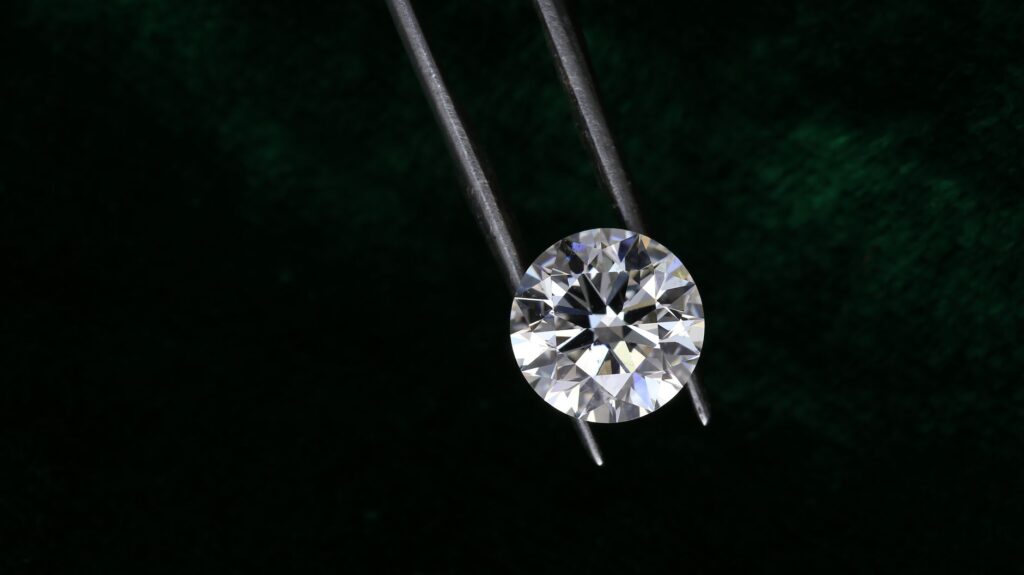
Round diamonds feel balanced and symmetrical. Their circular shape tends to draw attention to sparkle rather than outline. Because they are so familiar, many buyers see round diamonds as the safest or most classic option.
Round brilliants also tend to distribute light in a very even way when well cut. This helps create the strong, consistent sparkle pattern that rounds are known for.
Oval diamond appearance
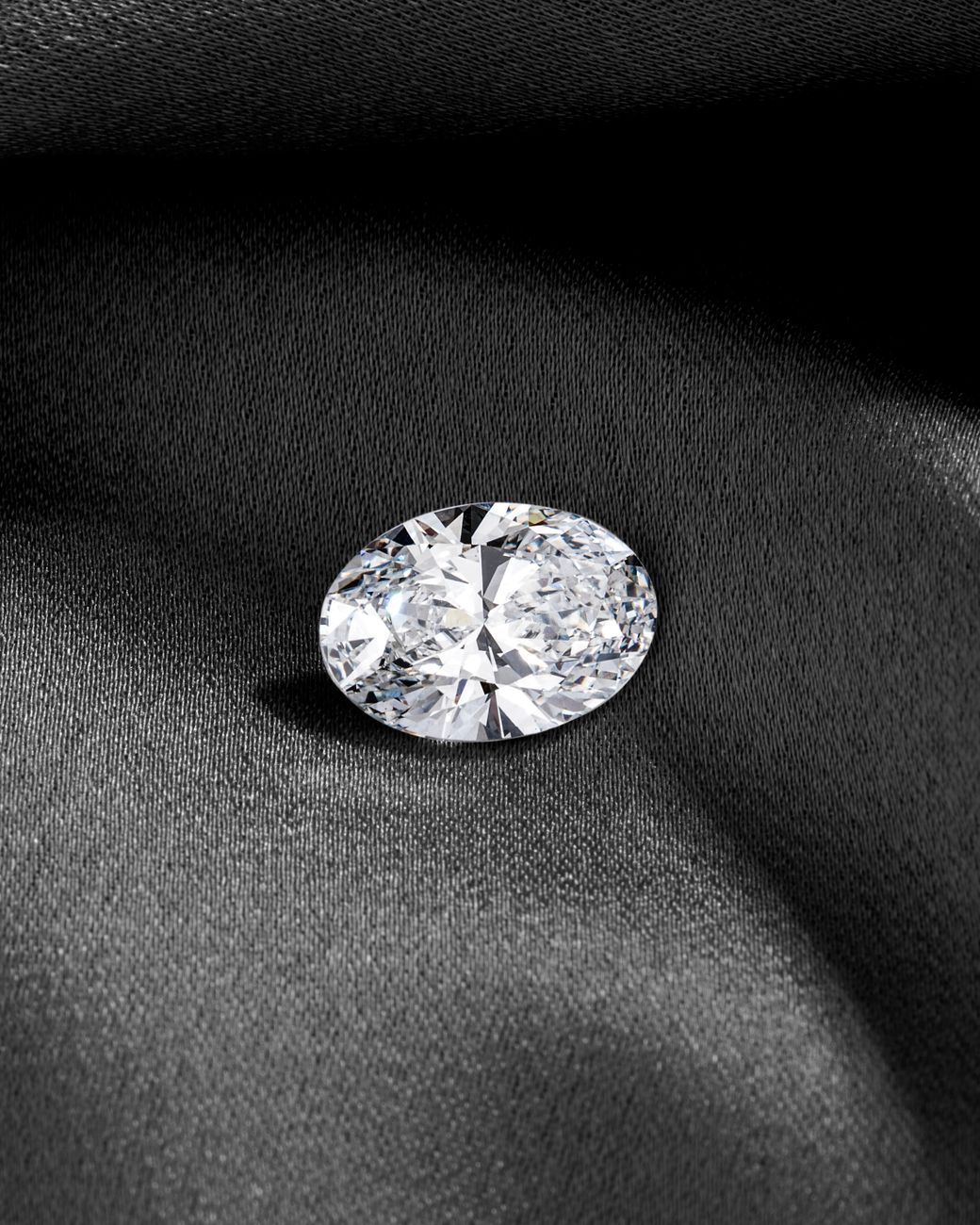
Oval diamonds are elongated, which gives them a softer and more graceful look. The shape can make a ring appear more slender and can visually lengthen the finger.
Because ovals are longer than they are wide, they create a different light pattern across the stone. Some buyers love the elegant shape, while others prefer the perfect symmetry of a round. Oval appearance also varies more from stone to stone, so viewing each diamond individually is important.
Sparkle, Fire, and Scintillation Explained
When shoppers compare diamond shapes, they often use the word sparkle broadly. In gemology, there are a few different components behind that effect.
Brilliance
Brilliance refers to the white light returned from a diamond. Round diamonds are generally known for exceptionally strong and even brilliance because their facet pattern is engineered for efficient light return.
Oval diamonds can also be very brilliant, but the distribution of light may be less uniform. This is why some ovals appear lively across most of the stone, while others may show darker areas or uneven brightness.
Fire
Fire is the dispersion of light into flashes of color. Both oval and round diamonds can show fire, especially in well-cut stones and under certain lighting conditions.
Rounds often have an edge in perceived fire because their facet symmetry helps split light very efficiently. Ovals can still display attractive fire, but performance depends more heavily on cut quality and proportions.
Scintillation
Scintillation is the sparkle created by light and dark contrast as the diamond moves. Round diamonds usually have very balanced scintillation, which is one reason they look lively from many angles.
Ovals can also have strong scintillation, but they sometimes show a bow tie effect. This is a darker area running across the center of the stone caused by light leakage. A slight bow tie can be normal in ovals, but a strong one may reduce visual appeal.
The Bow Tie Effect in Oval Diamonds
The bow tie effect is one of the most important things to understand before buying an oval diamond. It appears as a dark band or shadow across the middle of the stone, resembling a bow tie.
Not every oval has a noticeable bow tie, and some have only a mild one that does not distract from the overall beauty. But because ovals are cut in an elongated shape, they are more prone to this issue than round diamonds.
When comparing ovals, it is better to judge the diamond in person or with high-quality videos rather than relying only on numbers. Two ovals with similar carat weight can look very different because of the way they handle light.
Cut Quality: Why It Matters More for Ovals
Cut quality affects all diamonds, but it is especially important for oval shapes. Since ovals do not have a universal grading system like rounds do, buyers need to pay attention to visual performance and proportion details.
Round diamonds have a formal cut grade
For round diamonds, grading reports typically include cut grades such as Excellent, Very Good, or Good. This makes it easier to compare stones and predict sparkle performance. A round diamond with a top cut grade is usually a safer buy because the cut has already been evaluated by a respected lab.
Oval diamonds require more hands-on evaluation
Oval diamonds do not have a standardized cut grade from major labs. Instead, the buyer should look at:
- Length-to-width ratio
- Table size, which is the flat top facet
- Depth percentage
- Symmetry and polish
- Presence or absence of a strong bow tie
These factors help you judge whether the oval will look bright, balanced, and attractive on the finger. This is one area where educated shoppers can find strong value, especially when shopping for lab grown diamonds, where budget flexibility may allow a buyer to prioritize cut quality and size together.
Face-Up Size and Finger Coverage
Many buyers compare oval and round diamonds because they want the best visible size for their budget. Here, the oval often has an advantage.
A one-carat oval can appear larger than a one-carat round because its shape stretches across more finger space. That visual spread can make the ring feel more substantial without increasing carat weight.
Round diamonds, while gorgeous, often trade some visible spread for symmetry and sparkle balance. If your priority is maximizing face-up size, an oval may be more efficient. If your priority is classic visual perfection, the round may still be the stronger choice.
Durability and Everyday Wear
Both oval and round diamonds are durable enough for daily wear when set properly. Diamond is one of the hardest natural materials, but shape still influences how the stone handles impact.
Round diamonds and durability
Round diamonds have no pointed corners, which helps reduce the chance of chipping. Their symmetrical outline makes them one of the safest shapes for a frequently worn ring.
Oval diamonds and durability
Ovals also lack sharp corners, so they are generally durable in everyday jewelry. Their edges are smooth, which is helpful for engagement ring wear. However, because ovals are elongated, they can be more vulnerable if a thin setting leaves the sides exposed.
For both shapes, the setting matters just as much as the diamond. Prongs, bezels, and ring profiles all influence how well the stone is protected during daily wear.
Color and Clarity Visibility
Shape affects how diamond color and clarity are perceived. This matters when deciding whether to spend more on higher grades.
Color visibility
Round diamonds tend to hide slight color better than some fancy shapes because of their brilliant facet pattern and strong light return. Oval diamonds also hide color fairly well, especially compared with step-cut shapes like emerald cuts. However, the elongated structure of an oval can sometimes make body color more noticeable near the tips.
For buyers choosing a near-colorless grade, this means both shapes can perform well, but careful selection is still important. If you are shopping lab grown diamonds, where excellent color grades are more accessible, you may have more room to focus on size and cut rather than paying a large premium for top color alone.
Clarity visibility
Round diamonds usually hide inclusions well because their facet pattern helps break up the view. Ovals can also be forgiving, but certain inclusion types may be more noticeable in the center because of the shape’s open face.
Because ovals vary more in visual pattern, clarity should be judged by what you can actually see, not just the grade on the report. Many buyers can choose a slightly lower clarity grade if the diamond is eye-clean, meaning no inclusions are visible without magnification.
Popularity, Style, and Long-Term Appeal
Price is only one part of the decision. Many shoppers also care about how the shape will feel over time and whether it will still look appealing years later.
Round diamonds: the classic standard
Round diamonds have strong long-term appeal because they are timeless and widely recognized. Their popularity means they are unlikely to feel dated. They also tend to be easy to match with many ring settings and wedding bands.
Oval diamonds: modern but established
Oval diamonds have become especially popular in engagement rings because they combine a soft silhouette with a larger-looking presence. They feel current without being overly trendy, though their popularity has increased noticeably in recent years.
If you like a more distinctive look while still wanting a shape that has broad acceptance, the oval is a strong option. If you prefer the most universally recognized diamond shape, the round remains the benchmark.
Pricing Considerations Beyond Shape
Although shape has a major influence on price, it is only one factor. To understand whether an oval is truly a better value than a round, you need to look at the full picture.
1. Carat weight
Prices rise as carat weight increases, but not in a straight line. Certain carat milestones, such as one carat, 1.5 carats, and two carats, often carry noticeable price jumps. This applies to both oval and round diamonds.
2. Cut quality
For rounds, better cut grades can increase price significantly. For ovals, the best-looking stones with ideal proportions and minimal bow tie can also command a premium, even without a formal cut grade.
3. Color and clarity
Higher color and clarity grades increase price regardless of shape. Because ovals can hide some imperfections efficiently, many buyers choose slightly different grade combinations than they would for a round.
4. Natural vs lab grown
Lab grown diamonds often make both shapes more accessible. Since lab grown stones generally cost less than natural diamonds of similar appearance and grades, buyers may be able to choose a larger oval or a higher-quality round within the same budget.
That said, lab grown diamonds still follow the same basic shape logic. A round lab grown diamond usually costs more than an oval lab grown diamond of the same size and grade profile.
Advantages of Oval Diamonds
Oval diamonds have several practical benefits for buyers who are comparing shapes carefully.
- Better face-up size than many rounds of equal carat weight
- Often lower price than rounds with comparable quality
- Elegant elongated shape that flatters the finger
- Flexible style range, from classic solitaire rings to vintage-inspired settings
- Strong sparkle potential when cut well
These advantages make ovals attractive for shoppers who want a visually substantial diamond without paying the round diamond premium.
Disadvantages of Oval Diamonds
Oval diamonds also have trade-offs that buyers should understand before choosing one.
- No universal cut grade, so quality is harder to assess from a report alone
- Possible bow tie effect that can reduce visual appeal
- More variation from stone to stone, which means two ovals can look very different
- Shape preference is more subjective than round diamonds
These are not deal-breakers, but they mean oval diamonds require a more careful evaluation process. Buyers who want simplicity and consistency may find round diamonds easier to shop.
Advantages of Round Diamonds
Round diamonds remain the most popular shape for good reasons.
- Most balanced sparkle pattern
- Formal cut grading makes quality easier to compare
- Timeless and widely recognized
- Strong durability due to the symmetrical, corner-free shape
- Broad compatibility with many ring styles and settings
If you want a shape that is easy to understand, easy to compare, and consistently beautiful when well cut, the round diamond is hard to beat.
Disadvantages of Round Diamonds
Round diamonds also have limitations, especially for budget-conscious buyers.
- Usually the most expensive shape at the same size and quality
- Less face-up spread than many elongated fancy shapes
- Very common, which some buyers see as less distinctive
For shoppers comparing value, these factors often push them toward oval diamonds or other fancy shapes. The choice depends on whether you value classic sparkle or visual size efficiency more.
Who Each Shape Is Best For
The better shape depends on the buyer’s priorities, not just the price tag.
Oval diamonds may be best for buyers who want:
- A larger-looking diamond for the budget
- A soft, elegant silhouette
- A shape that elongates the finger
- More flexibility in style and setting design
Round diamonds may be best for buyers who want:
- The most classic and recognizable diamond shape
- Consistent sparkle performance
- A formal cut grade for easier comparison
- A shape with broad long-term appeal
If you are choosing for an engagement ring, the right answer often comes down to visual preference and budget balance. If you want the most sparkle in a traditional form, round is hard to surpass. If you want better size appearance and a slightly lower price, oval is often the stronger value.
Important Buying Considerations for Oval Diamonds
If you decide to shop for an oval, a few details matter more than they would for a round diamond.
Length-to-width ratio
This describes how elongated the diamond is. A lower ratio looks wider and rounder, while a higher ratio looks slimmer and more stretched. Many buyers prefer something in the middle for a balanced oval appearance, but personal taste matters.
Bow tie visibility
Check the center of the diamond under different lighting. A slight shadow is common, but a very dark bow tie can make the stone appear less lively. Videos and real-time images are helpful here.
Proportions
Depth and table percentages can influence how much a diamond sparkles and how large it looks face-up. These numbers are helpful, but they should never replace an actual visual review.
Setting style
An oval can look very different depending on the setting. A solitaire highlights the shape, while a halo setting can add more perceived size. Protective prong placement is also important for everyday wear.
Important Buying Considerations for Round Diamonds
Round diamonds are simpler to shop, but quality still matters.
Cut grade
For rounds, cut grade is one of the most important factors affecting sparkle. An excellent cut can make a noticeable difference in brightness and fire.
Color and clarity balance
Because rounds are often priced higher overall, some buyers try to save by lowering color or clarity too much. The smarter approach is to find a balanced combination where the diamond still looks clean and bright to the eye.
Setting compatibility
Round diamonds suit nearly every style of ring. Their symmetry makes them especially adaptable if you want a design that is easy to pair with a wedding band later.
Common Mistakes Buyers Make
When comparing oval and round diamonds, a few mistakes come up again and again.
- Comparing only carat weight and ignoring face-up size
- Choosing an oval based on numbers alone without checking for bow tie or proportion issues
- Assuming a round is always better when the buyer actually wants larger visual size for the money
- Overpaying for color or clarity when the shape already hides minor imperfections well
- Buying without considering the setting, which can change appearance and durability
A better approach is to compare diamonds the way they will actually be worn. Look at the stone face up, in lighting similar to everyday conditions, and in the intended setting whenever possible.
How Lab Grown Diamonds Change the Comparison
Lab grown diamonds are especially relevant in this comparison because they can make both oval and round shapes more accessible. Since lab grown diamonds typically cost less than natural diamonds of the same visible quality, buyers may be able to step up in size or quality without increasing the budget dramatically.
That can change the oval versus round decision in a useful way. A buyer may choose a round lab grown diamond that would have been out of budget in natural form, or select a larger oval with stronger proportions and a cleaner look.
Even so, the shape differences remain the same. A round lab grown diamond usually costs more than an oval lab grown diamond with similar carat weight and quality. The buyer still needs to compare sparkle, proportions, and setting style rather than assuming the lower price automatically means better value.
Frequently Asked Questions
Do oval diamonds always cost less than round diamonds?
Not always, but usually yes when comparing similar quality and carat weight. Rare or unusually well-cut ovals can still be expensive, especially if they have excellent proportions and strong visual appeal.
Why do round diamonds cost more than ovals?
Round diamonds are more in demand, often lose more rough material during cutting, and are graded more strictly for cut quality. Those factors push prices higher in many cases.
Does an oval diamond look bigger than a round diamond?
Often yes. Because oval diamonds are elongated, they can show more visible surface area per carat. The actual impression depends on the stone’s depth and proportions.
Which shape sparkles more, oval or round?
Round diamonds usually have the edge in consistency and overall sparkle pattern. Ovals can also sparkle beautifully, but quality varies more, and the bow tie effect can reduce brightness in some stones.
Are oval diamonds harder to buy safely online?
They can be, because ovals do not have a universal cut grade. Buyers need to rely more on proportions, videos, and vendor transparency. Rounds are easier to compare because cut grading is standardized.
Is an oval diamond a good choice for an engagement ring?
Yes, many buyers choose oval diamonds for engagement rings because they look elegant, often appear larger, and offer strong value. The main caution is to evaluate the bow tie effect and overall symmetry before buying.
Do lab grown diamonds make oval or round the better value?
Lab grown diamonds improve value for both shapes, but the relative pricing pattern usually stays the same. Round lab grown diamonds still tend to cost more than oval lab grown diamonds of similar quality.
Conclusion
So, are oval diamonds more expensive than round diamonds? Usually not. In most cases, round diamonds cost more because of higher demand, greater rough loss during cutting, and stricter cut grading standards. Oval diamonds often offer better visible size for the money, which is why many buyers see them as a strong value choice.
The best shape depends on what matters most to you. Choose a round diamond if you want the most classic look, the most consistent sparkle, and a straightforward buying process. Choose an oval diamond if you want a larger-looking stone, a softer and more elongated silhouette, and often a more budget-efficient path to a substantial ring.
For buyers comparing engagement rings, the smartest approach is to weigh shape, sparkle, proportions, and setting together. That is especially true when shopping for lab grown diamonds, where the lower overall price can make both oval and round options more accessible, allowing quality and appearance to guide the decision more than budget alone.