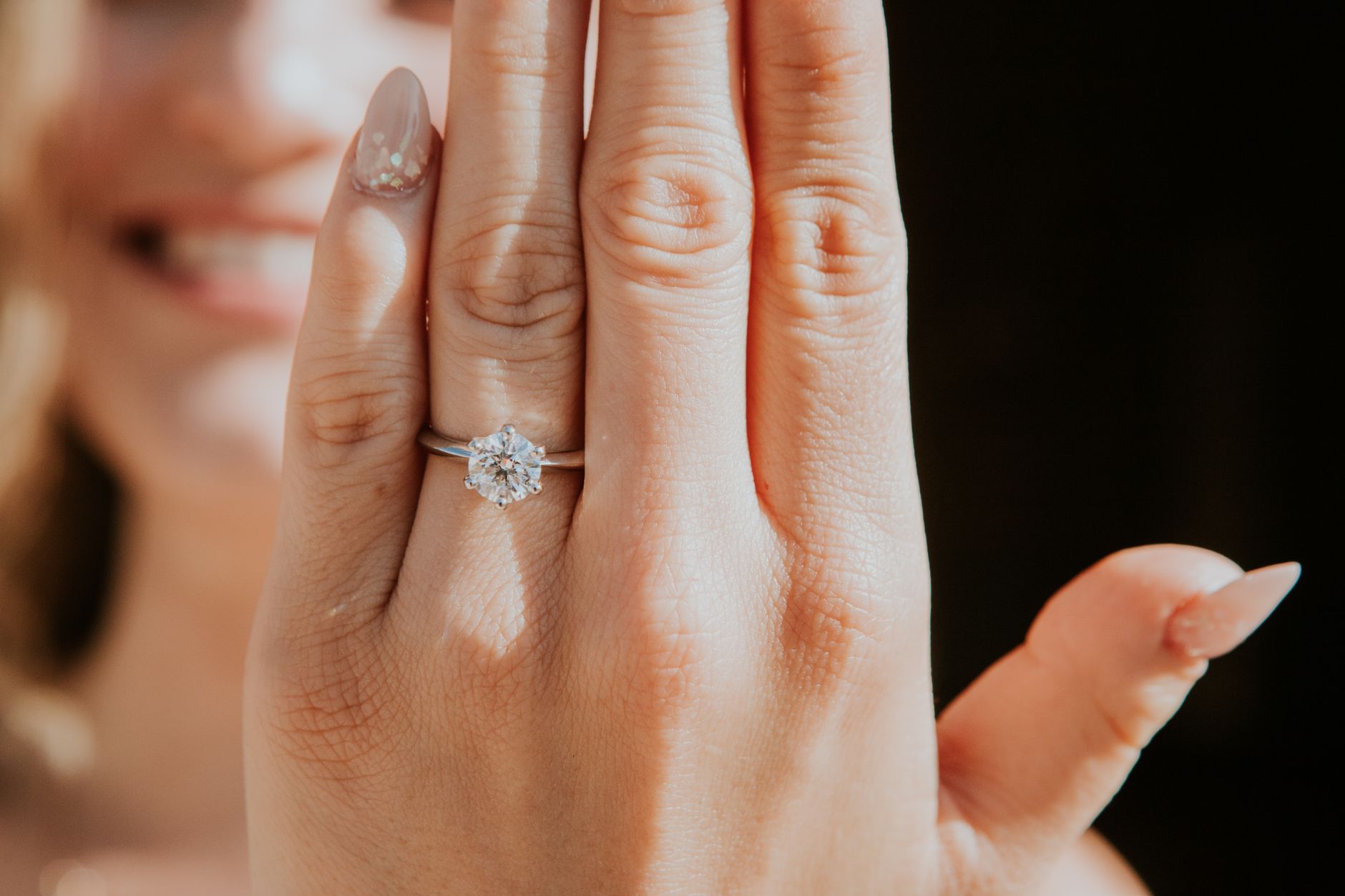
A diamond that looks balanced on one hand can look surprisingly small or noticeably large on another. Finger size changes the visual equation, and a size 6 finger sits close to the middle of the common ring-size range. That makes it a useful reference point, but it also creates confusion. A diamond that sounds large on paper does not always deliver the finger coverage buyers expect, and a modest carat weight can sometimes look better than expected with the right shape and setting.
The best diamond size for size 6 finger depends on what you want the ring to look like in daily wear. Some buyers want a refined, proportional look. Others want obvious presence across the finger. The right choice is not only about carat weight. It is also about millimeter measurements, shape, cut quality, and setting design.
This guide explains what diamond sizes actually look like on a size 6 finger, how much finger coverage different carat weights provide, and where buyers often spend more money than the visual difference justifies.
Quick Answer
For a size 6 finger, the best diamond size for most buyers is usually in the 0.90 to 1.50 carat range, depending on shape and budget.
- 0.70 to 0.90 carat often looks elegant, balanced, and practical for everyday wear.
- 1.00 to 1.25 carat is a popular sweet spot because it provides noticeable presence without looking oversized on most size 6 hands.
- 1.30 to 1.50 carat gives stronger finger coverage and a more prominent look.
- 1.75 carats and above begins to look more substantial and statement-oriented, especially in elongated shapes.
If the goal is overall visual value, a well-cut diamond just under a major carat milestone, such as 0.90, 1.20, or 1.40 carats, can be a smart choice. If the goal is maximum visible size for the budget, lab grown diamonds often allow buyers to move up in carat weight more easily than natural diamonds.
Understanding the Carat Concept
Carat Is Weight, Not Visible Size
Carat is a unit of weight, not a direct measurement of how large a diamond looks from the top. One carat equals 0.2 grams. That tells you how much the diamond weighs, but it does not tell you exactly how wide it appears once set in a ring.
This is one of the biggest sources of confusion in diamond shopping. Buyers often assume a higher carat number automatically means a much larger-looking diamond. In reality, two diamonds with the same carat weight can face up differently if their proportions, shape, or cut differ.
Face-Up Size Matters More Than Carat Alone
Face-up size means how large the diamond appears when viewed from the top, which is how it is normally seen in a ring. For round diamonds, face-up size is usually described by diameter in millimeters. For example, a well-cut 1 carat round diamond is typically about 6.4 to 6.5 mm in diameter.
On a size 6 finger, those millimeter measurements matter a great deal. A small change in diameter can create a noticeable change in finger coverage, especially once you move past 1 carat.
Finger Coverage Is the Real-World View
Finger coverage refers to how much of the finger width the diamond visually occupies. That is often the most practical way to think about size. A 1 carat round may sound modest or substantial depending on the buyer, but when you look at how much of a size 6 finger it covers, the appearance becomes easier to picture.
Because a size 6 finger is relatively average, it tends to show diamond proportions clearly. A diamond that looks balanced on size 6 will often look smaller on a size 8 finger and larger on a size 4.5 finger.
What Buyers Usually Expect
They Expect the Carat Number to Predict the Look
One common assumption is that a 1 carat diamond will always look like a standard engagement ring center stone and a 2 carat diamond will look twice as large. Neither assumption is fully accurate.
A 2 carat diamond weighs twice as much as a 1 carat diamond, but it does not look twice as wide from the top. Visible size increases more slowly than weight. That is why jumping in carat often costs much more than the size increase seems to justify visually.
They Underestimate How Much Shape Changes Appearance
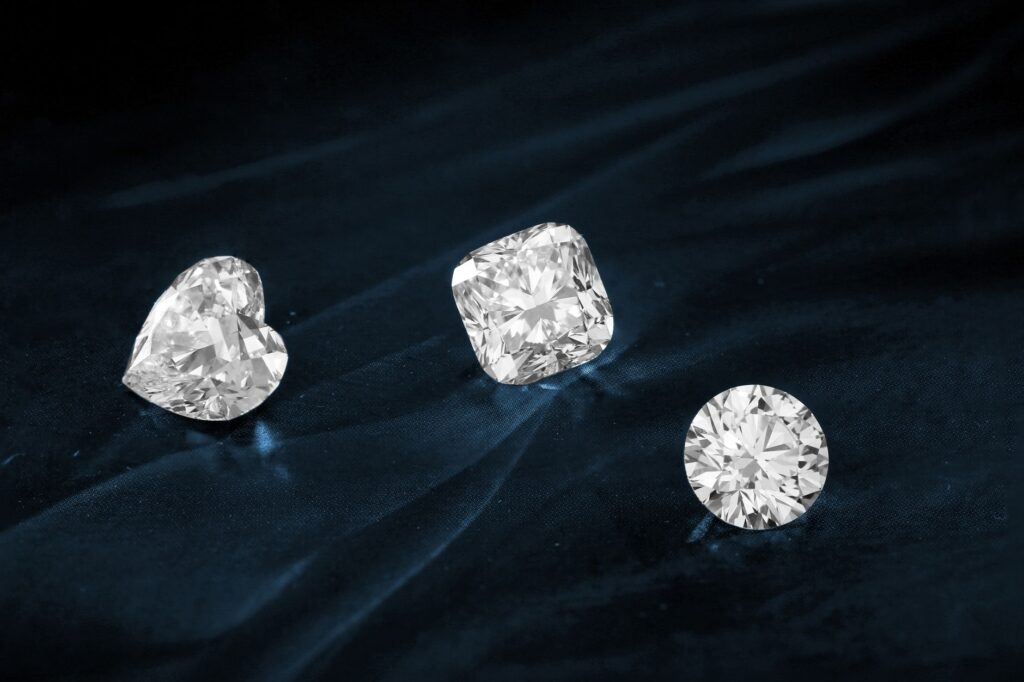
Buyers often compare carat weights across shapes without realizing how differently those shapes spread across the finger. A 1 carat oval, marquise, or pear often looks larger than a 1 carat round because elongated shapes tend to have more length and visual spread.
That does not mean elongated shapes are automatically better. It means shape choice affects apparent size, and that needs to be part of the decision.
They Overestimate What Major Carat Milestones Look Like
The jewelry market places a lot of emphasis on milestone weights such as 1.00, 1.50, and 2.00 carats. These are sometimes called magic sizes because they command stronger demand and often higher prices. Buyers may assume crossing one of these thresholds will create a dramatic visual change.
Sometimes the change is modest. For example, a 0.90 carat and a 1.00 carat diamond can look very similar in everyday wear, especially if both are well cut. The price difference may be much larger than the visible difference.
What It Actually Looks Like on a Size 6 Finger
The best diamond size for size 6 finger becomes easier to judge when you translate carat weights into approximate millimeter size and visual impact. The examples below are general estimates for well-cut diamonds. Actual measurements vary by shape and proportions.
Approximate Round Diamond Appearance on a Size 6 Finger
| Carat Weight | Approximate Diameter | Look on Size 6 Finger | Overall Impression |
|---|---|---|---|
| 0.50 ct | About 5.1 mm | Delicate, modest coverage | Classic and understated |
| 0.70 ct | About 5.7 mm | Noticeable but still refined | Balanced everyday size |
| 0.90 ct | About 6.2 mm | Good presence, near 1 carat look | Strong value point |
| 1.00 ct | About 6.4 to 6.5 mm | Clearly visible center stone | Popular sweet spot |
| 1.25 ct | About 6.9 mm | More finger coverage, more presence | Substantial without being extreme |
| 1.50 ct | About 7.3 to 7.4 mm | Strong visual presence | Bold but still widely wearable |
| 2.00 ct | About 8.1 mm | Large, prominent look | Statement size on size 6 |
How These Sizes Tend to Read Visually
On a size 6 finger, a 0.50 carat round usually looks elegant and modest. It does not dominate the hand, and it may feel smaller than some modern buyers expect from engagement ring photos online.
A 0.70 to 0.90 carat round often looks more substantial than buyers expect in person. This range can feel very well proportioned on a size 6 finger, especially in a solitaire or thin pavé setting.
A 1.00 to 1.25 carat round gives a strong center-stone look without usually overwhelming the hand. This is one reason it remains so popular. It offers visible presence while still feeling versatile for daily wear.
A 1.50 carat round starts to move into a more prominent category. On a size 6 finger, it is clearly noticeable and can look impressive without necessarily appearing oversized.
A 2.00 carat round looks large on a size 6 finger. It provides significant finger coverage and is often chosen by buyers who want a strong visual statement.
Factors That Change Apparent Size
Shape
Shape has one of the biggest effects on visual size. Round diamonds are the benchmark, but they do not always look largest for their weight. Elongated shapes often create more finger coverage.
| Shape | Typical Visual Effect on Size 6 Finger | Size Perception |
|---|---|---|
| Round | Balanced width and classic look | True benchmark appearance |
| Oval | Longer look, flattering coverage | Often appears larger than round |
| Pear | Lengthens the finger visually | Can look larger face-up |
| Marquise | Maximum length and spread | Often looks largest for weight |
| Emerald | Large table, broad flashes, elegant outline | Can look substantial, but less sparkle |
| Cushion | Softer outline, often deeper cut | May look smaller than round of same weight |
| Princess | Square shape with corners | Often looks slightly smaller face-up |
For a size 6 finger, oval and elongated cushion shapes are especially popular when the goal is to create more visible spread without moving dramatically higher in carat weight.
Cut Quality
Cut quality affects sparkle first, but it also affects apparent size. A diamond that is cut too deep can carry more weight in its height rather than its width. That means you pay for carat weight that is not fully visible from the top.
A well-cut diamond often looks livelier and, in some cases, slightly larger because it presents a better face-up spread. This is why cut should not be sacrificed just to hit a larger carat number.
Depth and Proportions
Depth is the distance from the table, which is the flat top of the diamond, to the culet, which is the point or tiny facet at the bottom. If a diamond is too deep, more of the weight hides below the setting. If it is too shallow, performance can suffer and the diamond may not return light well.
Good proportions help balance sparkle, spread, and overall appearance. For buyers focused on visible size, measurements in millimeters are often more informative than carat alone.
Setting Style
The setting can make a diamond look larger or smaller. A thin band, hidden halo, or classic halo can all increase visual emphasis on the center stone. A thick band can make the same diamond appear more modest by comparison.
On a size 6 finger, setting proportions matter because the finger is not especially narrow or especially wide. This means the band-to-diamond ratio is easy to notice.
Prong Style and Metal Color
Minimal, well-placed prongs can make a diamond feel more open and visible. Heavy prongs can visually crowd smaller stones. White metal around a colorless or near-colorless diamond may create a seamless edge, while yellow or rose gold can either emphasize contrast or frame the stone differently.
These are not huge size changes, but they do influence the overall impression.
Real-World Size Examples for a Size 6 Finger
0.70 Carat Round on Size 6
This size often surprises buyers in a positive way. It is large enough to be clearly noticeable, especially in a solitaire setting, but still understated. For someone who wants a classic look rather than a bold statement, 0.70 carat can feel very well judged.
It also tends to wear comfortably and pair easily with wedding bands. Buyers who prioritize quality, budget discipline, or everyday practicality often find this range appealing.
0.90 Carat Round on Size 6
For visual value, this is one of the strongest options. A well-cut 0.90 carat round often looks close to a 1 carat diamond once worn. On a size 6 finger, it gives strong presence without the full price jump that sometimes comes with crossing the 1.00 carat mark.
This is a particularly useful choice for buyers trying to balance size with better cut, color, or clarity.
1.00 Carat Round on Size 6
A 1 carat round is often considered the reference point for engagement ring size, and on a size 6 finger it usually looks appropriately centered and noticeable. It does not look tiny, and it does not automatically look oversized.
For buyers seeking a familiar, classic benchmark, 1 carat is easy to understand and easy to wear. The main caution is price. Sometimes the premium for the exact 1.00 mark is higher than the visual benefit over a 0.90 to 0.95 carat stone.
1.25 Carat Round on Size 6
This size begins to create a more substantial visual effect. It still fits comfortably within what most people would consider elegant and practical for everyday wear, but the center stone has more presence and stronger finger coverage.
For buyers who want a ring to look distinctly above average without entering statement territory, this is often an excellent middle ground.
1.50 Carat Round on Size 6
A 1.50 carat round has clear impact on a size 6 finger. It looks prominent and intentional. Most observers will perceive it as a larger center stone, even if they do not know carat weights.
This range often appeals to buyers who want visible presence and are comfortable with a more jewelry-forward look. It also works well for those who prefer a solitaire and want the center stone to carry the design.
2.00 Carat Round on Size 6
At 2 carats, a round diamond usually looks large on a size 6 finger. It provides strong finger coverage and an obvious focal point. For some buyers, this is exactly the goal. For others, it may feel more formal or more attention-grabbing than they want for daily wear.
In lab grown diamonds, 2 carats has become more accessible from a budget perspective, which has changed buyer expectations. Still, accessibility does not automatically make it the best visual fit for everyone.
1.00 Carat Oval on Size 6
A 1 carat oval often looks larger than a 1 carat round because of its elongated shape. On a size 6 finger, it can create graceful length and stronger spread across the finger. Buyers who want the appearance of more size without going up significantly in weight often prefer oval for this reason.
However, ovals vary widely in length-to-width ratio and cut quality. Some show a visible dark area across the center, often called a bow-tie effect. That can affect visual appeal more than raw size.
1.50 Carat Oval on Size 6
This is a large and visually striking look. The elongation can make the finger appear slimmer while increasing apparent stone size. For buyers who want noticeable presence but prefer a softer or more elongated shape than round, this can be a very effective option.
Price vs Visual Benefit
Size Increases Are Not Linear
Moving from 1.00 carat to 2.00 carats doubles the weight, but it does not double the visible width. In a round diamond, the diameter increases from roughly 6.5 mm to about 8.1 mm. That is a visible jump, but not a doubling.
This matters because diamond prices often rise sharply with carat milestones. The visual gain may be meaningful, but it is rarely proportional to the price increase.
Why Popular Milestones Cost More
Diamonds priced at 1.00, 1.50, and 2.00 carats often carry premiums because of demand. Buyers place emotional and social importance on those numbers, and the market reflects that.
For a size 6 finger, the best diamond size is not always the milestone size. A 0.90, 1.40, or 1.80 carat diamond may deliver very similar face-up impact at a better value, especially if that saved budget improves cut quality or setting design.
Where Diminishing Returns Start
Diminishing returns means each additional increase in carat weight gives less visible size per dollar spent. This concept often becomes noticeable once buyers move beyond about 1 carat in natural diamonds, though the exact point depends on budget and market conditions.
On a size 6 finger, the jump from 0.70 to 1.00 carat is usually quite noticeable. The jump from 1.00 to 1.20 carat is noticeable but smaller. The jump from 1.20 to 1.30 may be visible mostly to the wearer or to someone comparing side by side. That is why a good value strategy often involves avoiding the highest price pressure around exact milestone weights.
How Lab Grown Diamonds Change the Calculation
Lab grown diamonds have changed size decisions significantly because they often cost much less than comparable natural diamonds. Visually, a lab grown diamond and a natural diamond of the same quality can look the same to the eye. That gives buyers more flexibility in allocating budget toward size.
For a size 6 finger, a buyer considering a 1 carat natural diamond may find that a 1.50 or even 2 carat lab grown diamond is financially possible. The trade-off is not appearance or durability. It is mainly about budget priorities, market positioning, and resale expectations, which tend to be weaker for lab grown diamonds.
Who Should Size Up
Buyers Who Want Strong Finger Coverage
If your goal is to see the diamond clearly from across the room or to have the center stone dominate the ring design, sizing up makes sense. On a size 6 finger, this often means moving into the 1.25 carat and above range for round diamonds, or slightly less for elongated shapes.
Buyers Choosing a Simple Solitaire
In a solitaire, the center diamond does most of the visual work. Without side stones or a halo to add presence, some buyers prefer a larger center stone to achieve the look they want. On a size 6 finger, 1.00 to 1.50 carats is often where solitaires begin to feel distinctly substantial.
Buyers Using Lab Grown Diamonds for Budget Efficiency
If your budget allows a significantly larger lab grown diamond while still maintaining good cut quality and an attractive setting, sizing up can be reasonable. In that situation, the visual reward may be worth it because the price jump is not as steep as it would be in natural diamonds.
Buyers Who Prefer Elongated Statement Looks
Some people specifically want longer finger coverage from shapes like oval, pear, or marquise. On a size 6 finger, these shapes can create a large visual impression even at lower carat weights than round diamonds.
Who Can Save Money Without Sacrificing Much Visual Impact
Buyers Open to Just-Under Milestone Weights
A diamond weighing 0.90, 0.95, 1.40, or 1.90 carats may look very close to the next milestone once worn. On a size 6 finger, this is often one of the easiest ways to save money while preserving overall appearance.
Buyers Prioritizing Cut Over Carat
A well-cut diamond with better light performance can look more beautiful than a heavier diamond that is too deep or poorly proportioned. If budget is limited, choosing the better-cut stone is usually the wiser long-term decision.
Buyers Comfortable With Elongated Shapes
Oval, marquise, and pear diamonds often give more visible spread per carat. A buyer who wants the look of a larger stone may not need to increase carat weight as much if they choose one of these shapes.
Buyers Using Halo Settings
A halo adds a border of smaller diamonds around the center stone, increasing the overall top-view size of the ring. For a size 6 finger, a halo around a 0.70 to 1.00 carat center can create the impression of a larger ring without requiring a larger center diamond.
Common Buyer Mistakes
Chasing the Carat Number Instead of the Look
The number itself can become the goal, especially at 1.00 or 2.00 carats. That can lead buyers to accept weaker cut quality or pay a premium for a difference that is difficult to notice once the diamond is worn.
Ignoring Millimeter Measurements
Measurements are one of the most practical tools in diamond shopping. Two stones with the same carat weight can have different visible spread. Always check the dimensions, not just the carat number.
Overlooking Shape Differences
Comparing a 1 carat oval to a 1 carat round as if they should look equally large is misleading. Shape affects face-up size, finger coverage, and overall style.
Not Considering Finger Size
A diamond does not exist in isolation. It is seen on a hand. The same center stone can feel dainty or bold depending on finger size, band width, and setting style. For a size 6 finger, proportion is often easier to achieve than on very small or very large fingers, but it still matters.
Paying Too Much for Magic Sizes
Exact milestone weights are often priced disproportionately high. If visual value matters more than the label, just under those thresholds is often the better buy.
Sacrificing Too Much Quality for Size
Moving up in carat at the cost of obvious color tint, visible inclusions, or poor cut can backfire. A larger diamond that lacks life or appears dull may not be more satisfying in the long run.
Best Diamond Size for Size 6 Finger by Buying Goal
| Buying Goal | Suggested Round Size Range | Notes |
|---|---|---|
| Delicate and understated | 0.50 to 0.70 ct | Classic, refined look with modest coverage |
| Balanced everyday wear | 0.70 to 1.00 ct | Often the best mix of comfort, value, and presence |
| Popular sweet spot | 0.90 to 1.25 ct | Strong center-stone look on size 6 finger |
| Noticeable larger appearance | 1.25 to 1.50 ct | More finger coverage, still wearable for daily use |
| Statement look | 1.75 ct and above | Prominent, attention-grabbing appearance |
For most buyers, the best diamond size for size 6 finger is usually around 0.90 to 1.25 carats in round, or slightly lower in weight for elongated shapes if the goal is to maximize visible size.
Frequently Asked Questions
Is 1 carat big enough for a size 6 finger?
Yes. A 1 carat diamond is typically large enough to look clearly noticeable and well proportioned on a size 6 finger. In a round shape, it is often considered a balanced and classic size rather than too small or too large.
Does a 2 carat diamond look too big on a size 6 finger?
Not necessarily, but it does look large. Whether it feels too big depends on personal taste, setting style, and lifestyle. On a size 6 finger, 2 carats creates a prominent, statement-level appearance.
What round diamond size looks best on a size 6 finger?
For many buyers, 0.90 to 1.25 carats is the most versatile range. It offers noticeable presence, good balance, and practical wearability. Some prefer smaller for a minimalist look, while others prefer 1.50 carats or more for stronger impact.
Do oval diamonds look bigger than round diamonds on a size 6 finger?
Often, yes. Ovals usually have more elongated spread, which can make them appear larger than round diamonds of the same carat weight. They also tend to cover more of the finger lengthwise.
Should I buy just under 1 carat for better value?
In many cases, yes. A well-cut 0.90 to 0.95 carat diamond can look very similar to a 1.00 carat diamond on a size 6 finger, while sometimes costing less. The exact savings depend on the market and the diamond’s quality factors.
Does ring setting affect how big the diamond looks?
Yes. Thin bands, halos, hidden halos, and delicate prongs can make the center stone appear larger. Thick bands or bulky settings can make the same stone appear smaller by comparison.
Are lab grown diamonds a good way to get a bigger size?
They can be, especially for buyers focused on face-up size and budget efficiency. A lab grown diamond can offer significantly more carat weight for the price compared with a natural diamond. The main trade-offs are market perception and generally lower resale performance.
What matters more for visual size, carat or measurements?
Measurements usually tell you more about visible size. Carat tells you weight. Millimeter dimensions tell you how wide or long the diamond actually appears when viewed from the top.
Conclusion
The best diamond size for size 6 finger is not one fixed carat weight. It depends on the look you want, the shape you choose, and how efficiently you want to use your budget. For most buyers, the most balanced range is around 0.90 to 1.25 carats in round diamonds, with elongated shapes often creating a larger look at the same weight.
The most important lesson is that carat does not equal appearance. Face-up measurements, cut quality, shape, and setting all influence how large the diamond actually looks on the hand. A well-cut diamond just under a major carat threshold often offers better value than paying extra for a milestone number.
On a size 6 finger, proportion is relatively forgiving, which gives buyers flexibility. That makes it easier to choose based on personal style rather than arbitrary rules. The smartest approach is to judge the diamond by how it will actually look in millimeters and on the finger, not by carat weight alone.