Emerald cut diamonds are one of the most distinctive diamond shapes, known for their long, elegant lines and mirror-like flashes of light. They appeal to buyers who want a refined look rather than the intense sparkle of a round brilliant. That said, this shape is not ideal for every shopper or every ring style, which is why many people ask: Are emerald cut diamonds worth it?
The answer depends on what you value most. Emerald cuts tend to offer a larger visual presence for their carat weight, a clean and sophisticated style, and a timeless feel that has remained popular for decades. At the same time, they can show color and clarity more easily than some other shapes, and their open faceting style means they do not hide flaws as well as brilliant cuts.
For buyers who appreciate understated elegance and want a shape that looks polished and architectural, emerald cut diamonds can absolutely be worth considering. For buyers who want the most sparkle possible, another shape may be a better fit. The key is understanding how emerald cuts perform, what trade-offs they involve, and how those trade-offs affect value in a real purchase.
Quick Answer
Emerald cut diamonds are worth it if you want a shape with a clean, sophisticated appearance, strong finger coverage, and a classic look that does not rely on maximum sparkle. They can be especially appealing in engagement rings, lab grown diamonds, and larger center stones where the shape’s elegance is easy to appreciate.
They are less worth it for buyers who prioritize brilliance, fire, or the ability to hide inclusions and body color. Because emerald cuts are step-cut diamonds, their beauty comes from clarity, proportion, and transparency more than from sparkle alone.
What Makes an Emerald Cut Diamond Different?
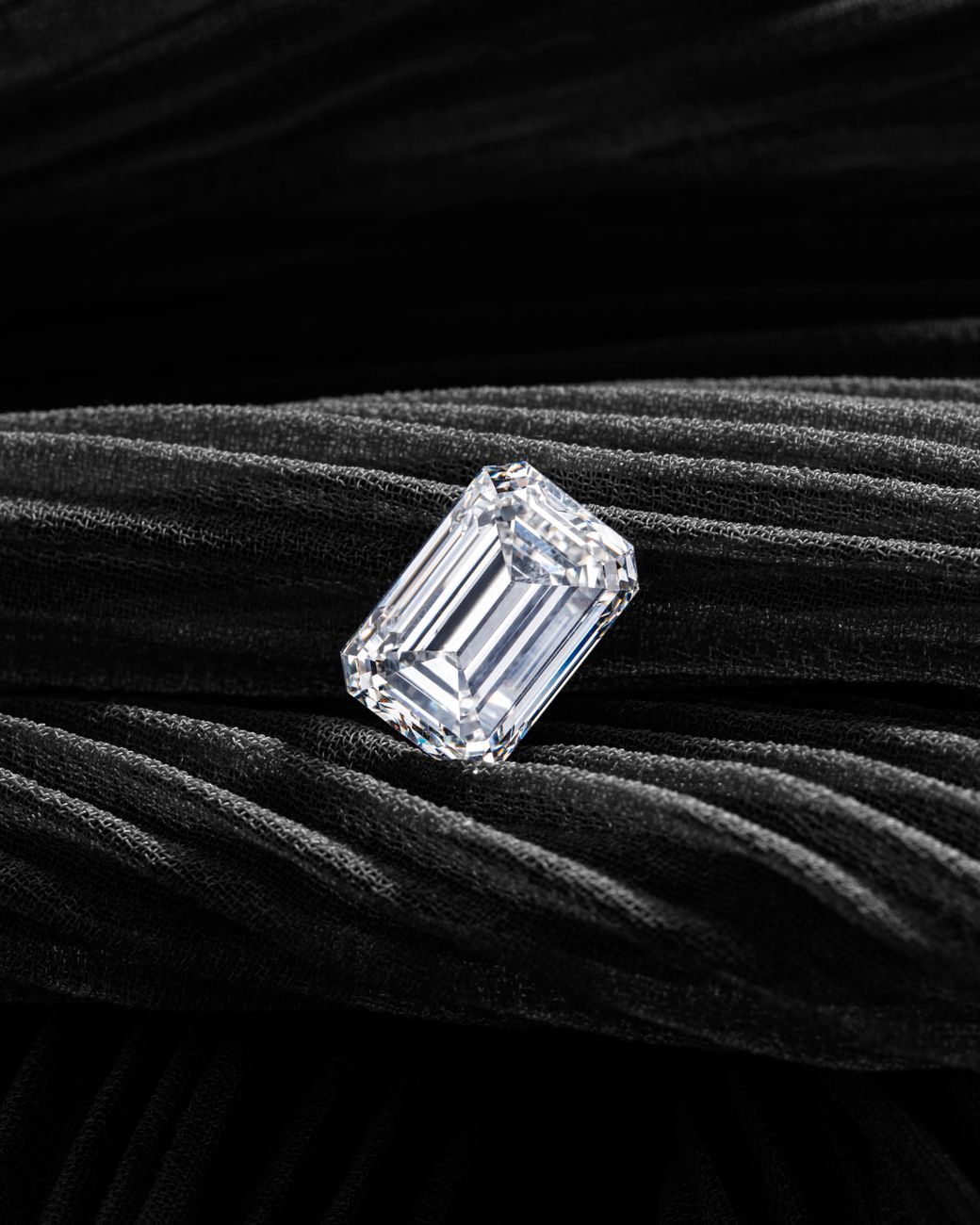
The emerald cut is a rectangular shape with cropped corners and long, straight facets. Unlike brilliant-cut shapes, which are designed to maximize sparkle, emerald cuts are designed to create broad flashes of light and a hall-of-mirrors effect. That visual style gives the diamond a calm, elegant appearance rather than a lively, glittering one.
This cut is classified as a step cut. Step cuts use parallel rows of facets that reflect light in a more structured way. The result is less scattered sparkle and more visible symmetry, depth, and open lines.
Because of this design, emerald cuts often appear larger than some other shapes of the same carat weight. Their elongated shape stretches across the finger, which can make them look especially graceful in engagement rings and other fine jewelry.
Why Buyers Choose Emerald Cut Diamonds
There are several reasons emerald cut diamonds continue to attract buyers, especially in the engagement ring market. Some are aesthetic, while others are practical.
1. They have a timeless, refined look
Emerald cuts are often associated with classic glamour. Their clean lines and understated sparkle create a look that feels polished without being flashy. Many buyers like that the shape stands out without depending on high-intensity brilliance.
2. They can look larger on the finger
Because the shape is elongated and has a broad face-up surface, emerald cuts often offer excellent visual spread. Face-up size refers to how large the diamond looks when viewed from above, and emerald cuts often compare well in this category.
3. They pair well with modern and vintage settings
Emerald cuts work in a wide range of ring styles, from simple solitaire settings to three-stone and Art Deco-inspired designs. Their geometric shape makes them especially versatile in settings with clean lines.
4. They suit buyers who prefer elegance over sparkle
Not every buyer wants a diamond that throws off intense fire and glitter. Emerald cuts provide a more subdued and sophisticated visual effect, which some people find more tasteful and enduring.
Appearance and Visual Performance
To judge whether an emerald cut diamond is worth it, it helps to understand how it looks under different lighting conditions and why it behaves differently from other shapes.
Brilliance
Brilliance refers to white light return, or how much white light the diamond reflects back to the eye. Emerald cuts usually have less brilliance than round brilliants or ovals because their facet pattern is not designed for maximum sparkle.
Instead, they produce broader flashes of reflected light. This can create a dramatic, elegant look, but it is a different kind of beauty. Buyers expecting a lot of sparkle may find emerald cuts underwhelming if they do not know what to expect.
Fire
Fire is the dispersion of light into spectral colors, such as rainbow flashes. Emerald cuts usually show less fire than brilliant cuts because their long, flat facets do not break light into as many tiny reflections.
This does not mean they look dull. It means their light performance is more restrained and architectural. For some buyers, that is exactly the appeal.
Scintillation
Scintillation refers to the sparkle effect created by movement, where light and dark areas shift as the diamond moves. Emerald cuts create slower, broader scintillation rather than fast glitter.
This is one reason emerald cuts feel elegant and calm. Instead of a constant burst of sparkles, the diamond shows large flashes and crisp contrast. The effect can be striking, but it is not the same as the lively sparkle of a round brilliant.
Transparency and clarity pattern
Because emerald cuts have an open table and step facets, they can be visually transparent. This means the viewer often sees into the stone more easily. As a result, clarity matters more than it does in many other shapes.
Inclusions that might be hidden in a round brilliant can be easier to notice in an emerald cut. The same is true for internal texture and some color differences. Buyers often need to pay closer attention to clarity grades and actual visual inspection.
Bow tie effect
The bow tie effect is more commonly discussed in shapes like ovals, pears, and marquises, where a dark area can appear across the center. Emerald cuts typically do not have a bow tie in the same way, but they can still show dark areas caused by facet contrast and lighting conditions.
This is one reason it is important to view photos or videos of the actual diamond rather than relying only on shape. Even within emerald cuts, proportions and facet alignment can change the visual result significantly.
Key Characteristics of Emerald Cut Diamonds
Emerald cuts have a few defining traits that affect both appearance and buying strategy. Understanding these characteristics helps explain why some emerald cuts are worth more than others, even when carat weight is similar.
| Characteristic | What It Means | Why It Matters |
|---|---|---|
| Step-cut facets | Long, parallel facets arranged in tiers | Creates broad flashes instead of intense sparkle |
| Rectangular shape | Longer than it is wide | Gives a sleek look and can make fingers appear longer |
| Cropped corners | The corners are cut off rather than pointed | Improves durability compared with pointed corners |
| Open table | The top surface is relatively large and open | Inclusions and color are easier to see |
| Hall-of-mirrors effect | Broad reflections created by facet arrangement | Gives the diamond its signature elegant look |
Length-to-width ratio
The length-to-width ratio describes how elongated the stone looks. A lower ratio means a squarer shape, while a higher ratio means a longer rectangle. Many buyers prefer emerald cuts in a ratio that looks balanced on the hand, though preferences vary.
Common ratios often fall somewhere around 1.30 to 1.50, but personal taste matters more than strict rules. A more elongated emerald cut can make the finger look slimmer, while a slightly squarer cut can feel more substantial and classic.
Facet arrangement
Emerald cuts usually have a smaller number of large facets compared with brilliant cuts. This matters because each facet acts like a mirror. Larger facets produce larger flashes of light, which is why the stone looks more elegant and less glittery.
Corner shape
The cropped corners are not just a design feature. They also reduce the risk of chipping compared with pointed corners found in shapes such as princess cuts. That said, the corners are still somewhat exposed, so a protective setting can be helpful for everyday wear.
Advantages of Emerald Cut Diamonds
Emerald cuts offer several practical and visual benefits. These are the main reasons many buyers still choose them over more sparkly shapes.
Elegant appearance
Emerald cuts have a sophisticated style that feels refined and intentional. The shape is often described as chic, clean, and graceful. For buyers who want a diamond with presence but not excessive flash, this is a major advantage.
Excellent finger coverage
Because of their elongated rectangular shape, emerald cuts can look large relative to their carat weight. This is especially noticeable in the center stone of an engagement ring. Buyers who want a larger-looking diamond may appreciate this effect, especially when comparing shapes of the same carat weight.
Good durability compared with pointed shapes
The cropped corners make emerald cuts more durable than shapes with sharp points, such as princess cuts. While no diamond is indestructible, the geometry of the emerald cut helps reduce some risk in daily wear.
Strong style versatility
Emerald cuts fit a variety of ring styles. They can look understated in a solitaire, dramatic in a halo, or elegant in a three-stone design. They also work well with both modern and vintage-inspired settings.
Can be a smart value choice in lab grown diamonds
Because lab grown diamonds often allow buyers to choose larger sizes or higher clarity within a fixed budget, emerald cuts can be especially attractive in this category. Their broad facet structure and face-up size can make a lab grown diamond appear quite substantial without requiring the same budget as a mined diamond of similar look and quality.
This does not mean all lab grown emerald cuts are automatically better value, but it does mean buyers may find more flexibility in size and clarity when shopping this shape in the lab grown market.
Disadvantages of Emerald Cut Diamonds
Emerald cuts are not the right choice for everyone. The same design features that create their elegance can also make them less forgiving in some areas.
They show clarity issues more easily
The open faceting and large table make inclusions more visible. That means buyers often need to be more selective about clarity than they would with a round brilliant or cushion cut. A lower clarity grade can still be acceptable if the stone looks clean to the eye, but visual inspection matters a lot.
They can reveal body color more readily
Emerald cuts may show color more easily than brilliant cuts because light does not mask color as effectively. This is especially important in colorless diamond shopping. Buyers who want a bright, icy appearance may need to pay more attention to color grade, particularly in larger stones.
They do not maximize sparkle
If your main goal is brilliance and fire, emerald cuts may feel restrained. Their visual appeal is more about contrast, line, and elegance than glitter. Some buyers love this. Others decide they want a more lively cut.
Proportions matter a lot
Because emerald cuts are so shape-sensitive, a well-cut stone can look dramatically better than a poorly proportioned one. If the length-to-width ratio, depth, or table size is off, the stone may look too shallow, too deep, or visually unbalanced. This makes selection more important than it is for some other shapes.
Not ideal for hiding imperfections
Emerald cuts are less forgiving of included crystals, feathers, and internal graining. They also do not hide slight body color as well. For buyers looking for maximum concealment at a lower budget, other shapes may offer better practical value.
Who Emerald Cut Diamonds Are Best For
Emerald cuts tend to work best for buyers with specific priorities. They are not universally better or worse than other shapes. They simply suit different tastes and shopping goals.
Best for buyers who want elegance over sparkle
If you prefer a refined, architectural look, emerald cuts are a strong option. They do not shout for attention. Instead, they offer a more measured and sophisticated appearance.
Best for buyers who like clean lines
People who are drawn to modern, minimalist, or Art Deco styling often gravitate to emerald cuts. The shape has a strong visual structure that pairs well with streamlined ring designs.
Best for buyers who want the stone to look larger
Emerald cuts often provide excellent face-up size. If visual spread matters to you, this shape can feel rewarding, especially when comparing it with round or princess cuts at the same carat weight.
Best for buyers who will inspect the stone carefully
Because emerald cuts expose clarity and color more easily, they reward thoughtful selection. Buyers who are comfortable reviewing videos, certificates, and magnified images often do well with this shape.
Less ideal for buyers who want maximum sparkle
If the goal is a diamond that flashes brightly from every angle, a round brilliant or some fancy shapes may be a better fit. Emerald cuts can still be beautiful, but they offer a different kind of light performance.
How Emerald Cut Diamonds Compare to Other Popular Shapes
Comparing emerald cuts to other shapes helps clarify whether they are worth it for your priorities. The table below summarizes the main differences buyers usually notice.
| Shape | Appearance | Sparkle | Clarity Visibility | Face-Up Size | Style Impression |
|---|---|---|---|---|---|
| Emerald cut | Rectangular, clean, elegant | Moderate, broad flashes | High | Strong | Refined and classic |
| Round brilliant | Round, balanced | Very high | Lower | Moderate | Traditional and lively |
| Oval | Elongated, soft | High | Moderate | Strong | Romantic and modern |
| Cushion cut | Soft square or rectangle | Moderate to high | Moderate | Moderate | Vintage-inspired |
| Princess cut | Square, angular | High | Moderate | Moderate | Sharp and contemporary |
| Radiant cut | Rectangular or square, faceted | Very high | Lower | Strong | Bright and energetic |
Emerald cut vs round brilliant
The round brilliant is the standard for maximum sparkle. It uses a facet structure engineered to return as much light as possible to the eye. Emerald cuts, by contrast, focus on broad reflections and symmetry rather than intense brilliance.
If sparkle is the top priority, the round brilliant usually offers better value for that specific goal. If you want a more refined and less common look, emerald cuts may be more appealing. The right choice depends on whether you value light performance or visual style more highly.
Emerald cut vs oval
Oval diamonds also create an elongated look, but they tend to show more sparkle and a softer outline. Many buyers like ovals because they combine face-up size with brilliance. Emerald cuts feel more structured and formal.
Ovals can also show a bow tie effect more obviously than emerald cuts. Emerald cuts usually avoid that issue, but they can still show contrast zones depending on the stone’s proportions and lighting.
Emerald cut vs cushion cut
Cushion cuts have rounded corners and a softer shape. They often look more romantic or vintage-inspired, while emerald cuts appear more crisp and architectural. Cushions can show more sparkle, especially in modern brilliant-style versions.
Buyers who want a softer appearance may prefer cushions. Buyers who want stronger lines and a more tailored look often prefer emerald cuts.
Emerald cut vs princess cut
Princess cuts are square and typically more brilliant in appearance. They can look sharp and modern, but their pointed corners are more exposed to damage. Emerald cuts sacrifice some sparkle for elegance and a more durable corner structure.
For buyers who want maximum brilliance in a square-ish shape, princess cuts often make more sense. For buyers who want a rectangular shape with a classic feel, emerald cuts stand out.
Emerald cut vs radiant cut
Radiant cuts are also rectangular, but they use brilliant-style faceting, which creates much more sparkle. Many lab grown diamond buyers compare these two shapes closely because both can look substantial on the finger.
Radiants are often a better option for buyers who want more brightness and better masking of inclusions. Emerald cuts are the better fit when clean lines and a restrained, elegant look matter more.
Important Buying Considerations for Emerald Cut Diamonds
When shopping for an emerald cut diamond, it is not enough to compare carat weight and price. The cut’s open style makes several quality factors more important than they are in some other shapes.
1. Prioritize clarity more than you might for other shapes
Emerald cuts make inclusions easier to see, so clarity has a real impact on appearance. Many buyers prefer to start with grades that offer a good chance of an eye-clean stone, then review actual images or videos before deciding.
This is especially relevant if you are comparing natural and lab grown diamonds, since lab grown stones may have different inclusion patterns depending on how they were created. A grading report and visual inspection both matter.
2. Pay attention to color grade
Color tends to show more in emerald cuts because the facets do not mask it as strongly. In a large stone, a slight tint may be noticeable, especially from the side. Buyers who want a bright white look often pay attention to the upper color grades.
That said, some buyers are perfectly comfortable with a warmer tone, especially if the stone is set in yellow gold or rose gold. Metal color and setting style can influence how color is perceived.
3. Look at proportion, not just carat weight
Two emerald cuts with the same carat weight can look very different. One may face up larger, while another may look heavier from the side due to extra depth. That is why shape proportion matters.
Useful factors to review include table size, depth percentage, and length-to-width ratio. These details help explain why some stones appear balanced and others appear too narrow, too long, or overly deep.
4. Review the stone in motion
Video is especially valuable with emerald cuts. The step-cut pattern creates broad reflections that change as the diamond moves, so still photos do not always tell the full story. A good video helps reveal whether the stone has pleasing contrast and even light return.
5. Choose a setting that protects the corners
The cropped corners are more durable than pointed ones, but they still deserve protection. Prong settings that secure the corners well are useful for daily wear. If you want a more secure design, a bezel or semi-bezel style may be worth considering, though it changes the look.
6. Consider the metal color
Metal color can influence how the diamond is perceived. White gold or platinum can emphasize the crispness of an emerald cut, while yellow gold can create a warmer, more vintage feel. Rose gold can also soften the overall appearance.
7. Evaluate whether lab grown makes sense for your budget
Emerald cuts are often purchased in lab grown form because the shape’s elegant appearance works well in larger sizes, and lab grown diamonds may allow for more size or clarity within the same budget. That can be useful if you want a stone with strong visual presence.
At the same time, lab grown diamonds do not hold resale value in the same way some buyers expect from natural diamonds. If long-term resale is a major concern, that should be part of the decision from the beginning. For many buyers, however, the value is in getting a larger or cleaner-looking diamond for the money rather than resale potential.
Common Mistakes Buyers Make with Emerald Cuts
Because emerald cuts are less forgiving than some other shapes, buyers sometimes make avoidable mistakes. Understanding them can save time and lead to a better final choice.
Choosing by carat weight alone
A large carat number does not guarantee a better-looking emerald cut. Depth, proportions, and visual balance matter a great deal. A stone that carries too much weight in the bottom may look smaller than expected from the top.
Ignoring clarity
Some buyers assume all diamonds hide inclusions equally well. That is not true for emerald cuts. The open facet structure often makes clarity issues more noticeable, especially in larger stones.
Overlooking color
Color can be visible in emerald cuts, particularly in larger sizes. Buyers who assume the shape will mask tint as well as a round brilliant may be disappointed.
Not checking the actual stone video
Photos can be misleading. Because emerald cuts depend heavily on broad reflection patterns, video is much more useful. It helps reveal how the stone handles light and whether the facet pattern looks balanced.
Buying without considering finger coverage
Some emerald cuts look much longer or wider than others. If the ratio does not suit the wearer’s hand, the ring may not look as expected. Trying to imagine the shape on the finger is an important part of shopping.
Are Emerald Cut Diamonds Good for Engagement Rings?
Yes, emerald cuts can be excellent engagement ring choices, provided the buyer appreciates their look. Their balance of elegance, presence, and versatility makes them a strong option for many ring styles.
They are especially appealing for people who want a ring that feels classic but not overly traditional. They also work well for buyers who value a larger-looking diamond and are willing to pay closer attention to quality details.
However, they are not the easiest shape for buyers who want instant sparkle or maximum forgiveness in lower grades. For those buyers, other shapes may be simpler to shop and more visually rewarding at a given budget.
Timeless or Trend-Driven?
Emerald cuts have both timeless and trend-related appeal. They have been worn for decades and have a long design history, which gives them staying power. At the same time, their popularity often rises and falls with broader fashion trends.
In recent years, elongated shapes have become more visible in engagement ring shopping, and emerald cuts have benefited from that interest. Still, the cut itself is not a passing novelty. Its strong geometry and classic structure help it remain relevant over time.
For buyers worried about long-term style, emerald cuts are generally a safe choice if they like the look today. The shape is distinctive enough to feel special, but not so trend-specific that it becomes dated quickly.
Price and Value Considerations
Emerald cut diamonds are not always priced the same way as round brilliants. In many cases, they may cost less per carat than rounds of similar size and quality because demand patterns and cutting yield differ. However, that does not automatically make them a bargain.
Value depends on what you are comparing. If you want the highest sparkle per dollar, round brilliants often deliver more of that specific effect. If you want a stone that appears larger and more elegant, emerald cuts can offer strong visual value.
Lab grown diamonds can shift the value equation further. A lab grown emerald cut may allow a buyer to choose a larger stone, higher clarity, or better color than would be possible in a mined diamond at the same budget. The trade-off is that lab grown diamonds typically have lower resale value, which matters to some buyers more than others.
It is useful to think about value in terms of your goal:
- Beauty value: How appealing the diamond looks in the setting
- Size value: How large it appears for the price
- Quality value: How much cut, color, and clarity you can afford
- Resale value: What the diamond might be worth later, which is a separate question from appearance
How to Shop Smart for an Emerald Cut Diamond
If you are comparing emerald cuts, start with the qualities that affect visible performance most: clarity, color, proportions, and setting style. Then look at the certificate and any available video or magnified images.
For readers comparing different diamond shapes, it often helps to review a broader guide to diamond cut grades, diamond color grades, and diamond clarity grades so the trade-offs are easier to judge. Emerald cuts are especially sensitive to these factors, which makes knowledge more valuable than guesswork.
When shopping online, make sure the listing includes a reliable grading report from a recognized lab. A diamond certification does not tell you everything about beauty, but it does provide important information about the stone’s measured properties.
What to prioritize first
In most cases, the order of importance for emerald cuts looks like this:
- Visual appeal and facet pattern
- Eye-clean clarity
- Color grade that suits your preference and metal choice
- Balanced proportions and length-to-width ratio
- Carat size within budget
This order is not fixed, but it reflects how emerald cuts usually behave in real buying situations. A beautiful, well-proportioned diamond with slightly lower carat weight is often more satisfying than a larger stone with poor balance or visible inclusions.
Frequently Asked Questions
Do emerald cut diamonds sparkle less than other shapes?
Yes, emerald cuts typically sparkle less than round brilliants, ovals, or radiant cuts. They are designed to produce broad flashes of light rather than intense glitter. This is not a defect, but a different visual style.
Are emerald cut diamonds flattering on the hand?
Many buyers find them very flattering because the elongated shape can make fingers look longer and slimmer. The effect depends on the stone’s length-to-width ratio and the setting style, but the overall shape is generally elegant on the hand.
Do emerald cut diamonds need higher clarity?
Usually, yes. Because the facets are open and the stone is less forgiving, inclusions may be easier to see. Buyers often focus on stones that look clean to the eye rather than relying on a grade alone.
Are emerald cuts a good choice for lab grown diamonds?
They can be an excellent choice. Lab grown emerald cuts often give buyers more room to prioritize size, clarity, or color within a fixed budget. The main consideration is still visual quality, not whether the diamond is natural or lab grown.
Do emerald cut diamonds show color more easily?
They often do. The step-cut structure does not hide color as effectively as brilliant cuts. If you prefer a very white-looking stone, you may want to pay close attention to color grade.
What is the best length-to-width ratio for an emerald cut?
There is no single best ratio. Many buyers like something moderately elongated because it looks balanced and elegant. The ideal ratio depends on personal taste, the size of the diamond, and how you want it to look on the hand.
Are emerald cuts durable enough for everyday wear?
Yes, they can be durable for daily wear when set properly. The cropped corners are an advantage, but the setting should still protect the edges. A secure mounting is especially important for engagement rings worn every day.
Are emerald cut diamonds a good value?
They can be, but value depends on what you want. If you care about elegance, face-up size, and a classic look, emerald cuts can offer strong value. If your goal is maximum sparkle, another shape may give you more of that for your budget.
So, Are Emerald Cut Diamonds Worth It?
Emerald cut diamonds are worth it for buyers who appreciate sophistication, structure, and a diamond that looks polished rather than flashy. They offer strong visual presence, a timeless shape, and a style that works well in both classic and modern jewelry.
They are less worth it for buyers who want the brightest sparkle, the easiest shape to shop, or the most forgiving cut when it comes to clarity and color. Because emerald cuts reveal more of the stone’s interior, they reward careful selection and a thoughtful approach to quality.
In practical terms, the shape is best for someone who values elegance, balanced proportions, and a clean aesthetic. If you are shopping for an engagement ring or comparing lab grown and natural stones, emerald cuts deserve serious consideration, especially if you understand how their step-cut faceting affects appearance and price.
The best way to decide is to compare a few well-proportioned examples, review the grading report, and look closely at how the stone performs in real light. For the right buyer, an emerald cut diamond is not just worth it. It is one of the most distinctive and enduring choices available.