When you shop for a pear shape diamond, cut quality plays a bigger role than many buyers expect. A pear can look elegant, bright, and flattering on the hand, but it can also show uneven sparkle, a noticeable dark area through the center, or a shape that feels too narrow or too heavy if the cutting is weak. That is why How to Evaluate Pear Shape Diamond Cut is such an important question for anyone comparing stones online or in person.
Unlike round diamonds, pear shapes do not have a single universal cut grade from the major labs that tells you everything you need to know. Instead, buyers need to look at proportions, symmetry, polish, face-up shape, light return, and how the stone performs in real lighting. That makes pear evaluation a blend of science and visual judgment, which can feel complicated at first but becomes manageable once you know what matters most.
If you are buying a lab grown pear shape diamond or a natural pear shape diamond, the goal is not simply to find the largest stone. The goal is to find a pear that looks balanced, lively, and attractive when worn. In practical terms, that means judging sparkle, shape, and overall visual appeal rather than relying on carat weight alone.
Quick Answer: How to Evaluate Pear Shape Diamond Cut
The best way to evaluate pear shape diamond cut is to look at shape, symmetry, proportions, and light performance together. A strong pear shape should have a pleasing outline, even sparkle across the stone, a graceful point, and minimal dark or dull areas when viewed face up.
For most buyers, the most useful clues are visual rather than technical. A pear shape with strong light return and balanced proportions often looks more attractive than a larger pear with a higher carat weight but weaker cutting quality.
If you cannot inspect the diamond in person, ask for high-quality images, videos, and a grading report. Use those tools to check whether the tip is well formed, whether the stone looks symmetrical from left to right, and whether the center appears bright rather than flat or shadowy.
What Makes Pear Shape Diamond Cut Different?
Pear shape diamonds belong to the family of fancy shapes, which means they do not follow the same standardized cut grading system used for round brilliant diamonds. Round stones are designed around a more consistent performance model. Pears allow more variation, which gives shoppers more style choices but also creates more room for inconsistency.
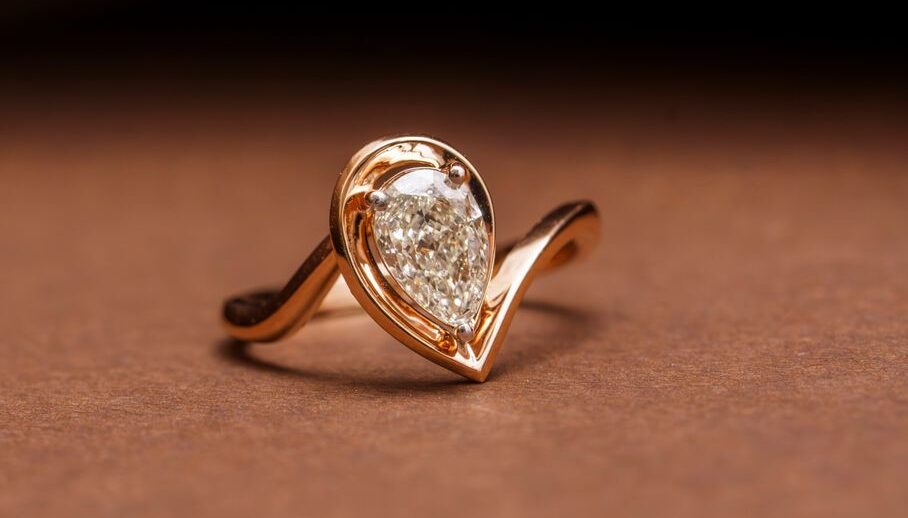
A pear shape has one rounded end and one pointed end. That outline can create a flattering look on the hand, and many buyers like the way it elongates the finger. However, the shape also means that cut quality can vary a lot from one stone to another, even when the carat weight, color, and clarity are similar.
Because of that, evaluating a pear shape diamond cut is less about memorizing a single formula and more about learning how the stone should look and perform. The key question is simple: does the diamond return light evenly and present a graceful shape when viewed as jewelry, not just as a loose stone on paper?
What Is Diamond Cut in a Pear Shape?
In plain English, diamond cut refers to how well the stone has been shaped and faceted so it reflects light. For a pear shape, cut includes the overall outline, the arrangement of facets, the depth, the table size, and the precision of symmetry. It is not the same as shape alone, although the two are closely connected.
When shoppers say a pear shape has a great cut, they usually mean it looks bright, sparkly, and balanced. When cut is weak, the diamond can look dull in some areas, awkward in shape, or visually smaller than its carat weight suggests. In other words, cut affects how much beauty you actually see.
For buyers, this matters because a pear shape with strong cut quality can often outperform a larger diamond with weaker proportions. That is one of the most important lessons in diamond buying, especially when comparing lab grown diamonds where size can be tempting but cut still determines appearance. If you would like a broader introduction before comparing different shapes, our guide on what diamond cut is explains how cut quality influences sparkle, brightness, and overall appearance across all diamond shapes.
Cut Is More Than Just Sparkle
Many buyers think of cut as sparkle alone, but that is only part of the picture. A well-cut pear shape should also have pleasing brightness, attractive contrast, and a shape that looks graceful instead of awkward. Sparkle matters, but so does how the diamond behaves across the entire face of the stone.
A diamond can flash brightly under direct lighting yet still have dead-looking zones in normal indoor light. Another diamond might not have the same dramatic flash, but it can appear more evenly lively and visually balanced. For a pear shape, that balance is often what separates an average stone from a better one.
Why Pear Shape Cut Quality Matters
Cut quality affects how a pear shape diamond looks in real life. Since fancy shapes are judged more visually than round diamonds, a poor cut is often easier to notice. The wrong proportions can make the diamond look too stretched, too round, too thin, or overly dark in the middle.
Buyers should care because cut influences both beauty and value. A pear shape with strong cut quality often commands more interest and is easier to enjoy long term. By contrast, a diamond with weak cut may seem appealing in a listing but disappoint once it is worn in natural light.
This is especially important for engagement rings, where the diamond will be seen in a wide range of settings, including office lighting, daylight, restaurant light, and movement on the hand. A pear shape that performs well across those environments usually offers a better ownership experience than one that only looks good in a still photo.
Why Lab Grown Diamond Buyers Should Care Too
Lab grown diamonds often give shoppers access to larger sizes and higher color grades for the budget. That can be a real advantage, but it does not reduce the importance of cut. In fact, when the price per carat is lower, some buyers become more focused on size and overlook cut quality, which can reduce the stone’s visual appeal.
Because lab grown diamonds are often compared side by side by size and price, cut becomes one of the main ways to separate an attractive stone from an average one. A well-cut lab grown pear shape can look noticeably more lively than a larger but poorly proportioned option.
How to Evaluate Pear Shape Diamond Cut in Practical Terms
When evaluating a pear shape, think like a visual buyer rather than only a technical buyer. The goal is to judge what the diamond actually looks like from above, from different angles, and in motion. The following factors matter most.
1. Overall Shape and Outline
The first thing to assess is the outline of the pear. A good pear shape usually has a smooth, graceful curve and a pointed end that feels proportional to the rounded end. It should not look like a teardrop that is too squat, too narrow, or uneven from side to side.
Some buyers prefer a fuller pear with a slightly wider belly, while others like a slimmer, more elongated look. Preference matters here, but the stone should still appear balanced. If one side looks noticeably different from the other, the shape may feel less refined even if the diamond has other strengths.
2. Symmetry
Symmetry means how well the left and right sides match and whether the facets are arranged cleanly. In a pear shape, symmetry affects how centered the point looks, how evenly the rounded end curves, and whether the stone feels visually stable.
What buyers actually see is simple: a symmetrical pear tends to look more polished and intentional. Poor symmetry can make the stone feel lopsided or cause the eye to drift toward one side. This is often easier to notice than many shoppers expect, especially once the diamond is set in a ring.
3. Proportions
Proportions refer to the relationship between length, width, depth, and table size. These numbers help explain why one pear shape looks elegant while another looks heavy or thin. They are useful, but they are best interpreted alongside images and videos.
A pear with very unusual proportions may have light performance issues or a shape that does not appeal to most buyers. For example, if it is too deep, the stone may face up smaller than expected. If it is too shallow, it may look watery or have reduced brightness.
4. Bow-Tie Pattern
The bow-tie is the dark area that can appear across the center of many fancy shapes, including pears. It is not always a defect, and some degree of contrast is normal. However, if the bow-tie is very dark or overly obvious, it can distract from the diamond’s sparkle and make the center look dull.
For buyers, the key is not to avoid every bow-tie. That is unrealistic. The goal is to avoid one that dominates the stone or becomes the first thing you notice. In a well-cut pear, the bow-tie should be controlled enough that it does not hurt the diamond’s overall liveliness.
5. Light Return
Light return is how much light enters the diamond, reflects internally, and comes back to the eye. Good light return is what makes a diamond look bright and lively instead of flat. In a pear shape, light return can vary from one area of the stone to another, so it is worth examining carefully.
If possible, view the diamond under multiple light sources. A pear shape with strong light return should still look lively in softer lighting, not only under bright showroom lights. This is one of the most useful real-world checks for cut quality.
6. Polish
Polish describes the smoothness of the diamond’s facet surfaces. High-quality polish helps light reflect cleanly and keeps the stone from looking rough or hazy. For most buyers, polish differences are subtle unless the finish is poor, but it still contributes to the overall sharpness of the stone’s appearance.
On a pear shape, polish is usually not the first thing a buyer notices. Still, when combined with symmetry and proportions, it supports a cleaner and more refined look. It matters more when comparing otherwise similar stones.
What Buyers Actually See in a Pear Shape Diamond
Many technical descriptions sound useful, but buyers really want to know what they will notice in a ring. In day-to-day viewing, the most visible effects of cut quality are brightness, sparkle distribution, shape balance, and whether the diamond appears to come alive when it moves.
A well-cut pear shape tends to show even brightness across the stone, attractive flashes of light, and a shape that feels graceful from the top. A weaker cut may show a dark center, dead zones near the tip or shoulders, or facets that look busy without creating much visual sparkle.
The difference is often more obvious in motion than in still photos. Pear shapes are especially sensitive to tilt and orientation, so a stone that looks acceptable in one image may reveal problems when viewed from different angles.
Sparkle, Brilliance, Fire, and Scintillation
These terms are related, but they are not identical. Brilliance refers to the white light return that makes the stone look bright. Fire refers to colored flashes of light. Scintillation refers to the sparkle pattern you see when the diamond moves.
In a pear shape, buyers usually notice brilliance first, then scintillation, and sometimes fire depending on lighting. A well-cut stone balances all three. Too much emphasis on one aspect can make the diamond feel unbalanced, such as bright but lifeless or flashy but uneven.
Face-Up Appearance
Face-up appearance means how the diamond looks from the top when it is worn. This is one of the most important evaluation points because that is the view most people see. A pear shape should look pleasing from this angle without obvious distractions.
Face-up size also matters. A stone with excellent proportions may appear larger than a deep stone of the same carat weight because more of its body is visible from above. This is one reason cut can influence perceived value so strongly.
Cut, Symmetry, and Polish on a Grading Report
Some grading reports provide cut-related information for pear shapes, but it is not as straightforward as the cut grade on a round diamond. Different labs may report symmetry, polish, proportions, and measurements, yet those numbers alone do not fully describe how the diamond looks in reality.
For a buyer, the report is still important. It provides basic quality information and helps you compare stones more consistently. But for fancy shapes like pears, the report should be treated as a starting point, not the final answer.
What a Good Report Can Tell You
A strong report can confirm that the stone has good symmetry, acceptable polish, and measurements that fall within a sensible range. It can also verify whether the diamond is natural or lab grown and provide color and clarity grades. That helps narrow the field before you evaluate visual performance.
For many shoppers, the report is most useful when paired with images or a video. This combination helps answer the practical question: does the diamond look as good as the paper suggests?
What a Report Cannot Tell You
A report cannot fully show how strong the bow-tie is, how evenly the stone reflects light, or whether the shape looks graceful to your eye. It also cannot tell you whether the diamond feels too narrow, too short, or too bottom-heavy in person.
That is why two pear shapes with similar grades can still look very different. One may appear crisp and bright, while another feels dim or awkward. Buyers should not assume that matching grades means matching beauty.
Useful Proportions to Consider in a Pear Shape Diamond
There is no single ideal set of numbers that works for every pear shape, but some ranges tend to be easier to wear and visually appealing. Think of these as guidelines, not rules. The best choice also depends on personal taste and the diamond’s individual light performance.
| Factor | What It Means | Why It Matters | What Buyers Often Notice |
|---|---|---|---|
| Length-to-width ratio | How long the pear looks compared with how wide it is | Affects whether the stone looks slender or full | Overall shape preference, finger coverage, elegance |
| Depth percentage | How deep the diamond is from top to bottom | Influences face-up size and light behavior | Whether the stone looks smaller or brighter than expected |
| Table percentage | Size of the flat top facet relative to the stone | Can affect brightness and fire balance | General liveliness and facet appearance |
| Symmetry | How well both sides and the point align | Influences beauty and visual balance | Whether the pear looks centered and refined |
These numbers are useful because they help identify stones that are unlikely to perform well. However, no table or ratio can replace actual visual assessment. Two diamonds with similar measurements can still behave differently under light because cutting style and precision matter.
Length-to-Width Ratio: A Matter of Taste and Balance
The length-to-width ratio is especially important in pear shapes because it defines the silhouette. Some buyers prefer a ratio that creates a longer, more elegant look. Others prefer a wider pear that feels softer and fuller on the finger.
What matters most is whether the shape feels intentional. If the ratio is too extreme in either direction, the stone can look awkward. A balanced ratio often makes the diamond easier to wear and more visually pleasing over time.
Depth and Table: Numbers That Affect How the Diamond Looks
Depth and table percentages can offer clues about performance, but they do not guarantee it. A pear with unusual depth may still look attractive if it was cut intelligently, while a stone with seemingly acceptable numbers can still have poor light return.
For buyers, the main practical point is this: if a diamond looks deep, dark, or smaller than expected for its carat weight, proportions may be part of the reason. If it looks flat or glassy, the table and facet arrangement may be contributing. The numbers help explain the visual result.
How to Compare Pear Shape Cut Quality Online
Many pear shape diamonds are bought without seeing them in person. That means online evaluation has to be careful and methodical. Photos, videos, and grading reports each reveal different things, and you need all three whenever possible.
Step 1: Review the Measurements
Start by checking the length, width, and depth. These measurements help you understand the stone’s outline and whether it seems proportionate. They also help you compare two diamonds with the same carat weight but different face-up sizes.
If one diamond has much better face-up spread, it may appear larger on the hand. That can matter more to many buyers than a small difference in total carat weight.
Step 2: Study the Shape in Photos
Look for symmetry, a centered point, and a smooth curve on both sides. Ask whether the pear looks balanced or if one shoulder seems stronger than the other. Small differences are normal, but obvious unevenness is a warning sign.
Photos can sometimes hide problems, so do not rely on a single top-down image. If the seller provides multiple angles, compare them carefully.
Step 3: Watch the Video for Light Movement
Video often reveals more than still photos because you can see how the diamond behaves as it moves. A strong pear shape should show sparkle that turns on and off across the stone rather than staying static in one area.
Look for dead zones that remain dark while the rest of the stone flashes. Also watch the center for a bow-tie that becomes overly prominent. These are some of the clearest clues that cut quality may not be ideal.
Step 4: Check for Consistency in Lighting
Some diamonds look good only in the intense lighting used for marketing. That does not always reflect daily wear. If possible, compare the diamond in different lighting conditions or ask for images that show it in softer, more natural light.
A pear shape with good cut quality should remain attractive across a range of environments. That consistency is often a better indicator of satisfaction than dramatic showroom sparkle alone.
How Pear Shape Cut Affects Value
Cut quality can influence value in two ways. First, it affects how much beauty you get for the money. Second, it affects how the diamond compares with other stones of similar size, color, and clarity.
In practical terms, a well-cut pear shape often provides better visual value than a larger stone with weak cut. Buyers may pay slightly more for stronger proportions, cleaner symmetry, or better light performance, but that premium is often justified if the diamond is visibly more attractive.
When Paying More Makes Sense
Paying more for better cut makes sense when the difference is visible. If one pear has noticeably better brightness, a cleaner shape, and less distracting darkness, the premium can be worth it. This is especially true for engagement rings or pieces meant for daily wear.
It also makes sense if you want a diamond that photographs well and looks refined in many lighting environments. Cut quality affects first impressions and long-term enjoyment more than many buyers initially expect.
When the Premium May Not Be Worth It
If two diamonds look very similar to your eye, a large price jump for minor technical differences may not be necessary. Some buyers are happy with a very good pear shape that performs well even if it is not the most precise stone in the group.
In that case, the better decision may be to balance cut with color, clarity, or budget. The right trade-off depends on what matters most to you visually.
Practical Comparison Examples
Real-world comparisons are often more helpful than abstract definitions. Here are a few examples of how cut affects the way pear shapes are experienced by buyers.
Example 1: A Well-Cut 1.5-Carat Diamond Versus a Poorly Cut 2-Carat Diamond
A well-cut 1.5-carat pear can often look more brilliant and balanced than a 2-carat pear with weaker proportions. The larger diamond may sound better on paper, but if it faces up dark, bulky, or uneven, the extra carat weight does not translate into better appearance.
For many buyers, this is one of the clearest examples of why cut matters. Size gets attention, but visual performance creates satisfaction.
Example 2: Excellent Cut Versus Very Good Cut in Everyday Lighting
In a round diamond, the difference between Excellent and Very Good can sometimes be subtle. In a pear shape, the difference can be more noticeable depending on the specific stone. A slightly lower cut may still look great, but it can also show more uneven brightness or a more obvious bow-tie.
Most buyers will not be able to spot every technical distinction. However, many can tell when one stone appears livelier and more balanced than another. That is the comparison that really matters.
Example 3: Higher Clarity with Poor Cut Versus Lower Clarity with Excellent Cut
A higher clarity pear that is poorly cut may not look as impressive as a lower clarity pear with excellent light performance. That is because cut affects the diamond’s overall presence more directly than small clarity differences that are not visible without magnification.
For a lot of buyers, a stone with very good eye appeal and acceptable clarity is the smarter choice than a technically cleaner stone that looks less lively. This is a common and practical trade-off in diamond buying.
Advantages of Choosing a Well-Cut Pear Shape
A well-cut pear shape offers several meaningful benefits. These are not just technical advantages. They affect how the diamond feels when worn and how satisfied the buyer is likely to be later.
- Better sparkle distribution, which makes the stone look more lively.
- More balanced appearance, which helps the pear shape look graceful.
- Improved face-up presence, which can make the diamond seem larger.
- Greater versatility in lighting, so it performs well in more settings.
- Stronger long-term satisfaction, because the stone looks attractive beyond a single viewing angle.
These advantages are especially valuable in engagement rings, where the diamond is worn often and seen repeatedly in different environments. A pear shape with good cut quality tends to age better visually than one chosen mainly for size.
Limitations and Trade-Offs to Keep in Mind
No pear shape diamond is perfect, and buyers should understand the trade-offs. Even a very well-cut pear can show some bow-tie presence, because that is part of how fancy shapes work. The goal is control, not perfection.
Another limitation is that visual preferences vary. Some people love a longer pear with a dramatic silhouette. Others prefer a fuller stone with a softer outline. There is not one universally ideal look, so the best diamond is the one that combines appealing shape with strong light performance.
Finally, cut quality can be harder to compare across sellers because not every listing provides the same quality of imaging or the same amount of information. This makes careful evaluation more important, especially when buying online.
Buying Considerations for Pear Shape Diamonds
When buying a pear shape diamond, it helps to think beyond the basic 4Cs and focus on how the stone will actually look in a ring. Cut should be viewed alongside color, clarity, carat weight, and certification, not in isolation.
Budget
Set a realistic budget before comparing stones. If the budget is tight, it is usually better to protect cut quality and accept a slightly smaller size or slightly lower clarity. That approach often produces a more satisfying diamond in daily wear.
With lab grown diamonds, buyers may have more flexibility because prices are typically lower than natural diamonds of similar appearance. Even so, the temptation to maximize carat weight should be balanced against cut performance.
Visual Performance
Ask yourself what matters most: brilliance, shape, size, or a combination of all three. If sparkle and balance are priorities, cut should sit near the top of your decision list. If you care most about finger coverage, you may accept a little less precision, but be aware of the trade-off.
Certification
Use a reputable grading report from a respected lab, but do not stop there. For pear shapes, certification confirms identity and quality basics, while visuals tell you how the diamond actually performs. Both matter.
For deeper research, shoppers often compare reports while also reviewing topics such as diamond cut, diamond color, diamond clarity, and diamond carat to understand the full picture.
Lab Grown Diamond Considerations
Lab grown pears can offer excellent value, but the same cut rules apply. Because buyers often get more size for the money, it is easy to overlook shape quality and optical performance. That can lead to a diamond that looks larger but less beautiful.
If you are comparing lab grown diamonds, do not assume that the lower price means every stone is equally good. Some will have better light behavior, cleaner symmetry, and more appealing proportions than others. If you are ready to compare complete diamond options rather than individual cut characteristics, our guide to the best lab grown diamonds highlights well-rounded choices across different budgets and preferences.
Long-Term Satisfaction
Think about how the diamond will look in real life over time, not just in the moment of purchase. A pear shape with strong cut quality is more likely to stay satisfying because it will look attractive in varied lighting and from different angles.
That matters especially in pieces worn daily, such as engagement rings or pendant center stones.
Common Buyer Mistakes When Evaluating Pear Shape Cut
Many first-time buyers make the same avoidable mistakes. Learning these patterns can save time and reduce regret.
- Prioritizing carat over cut, even when the larger stone looks less attractive.
- Assuming all pears sparkle equally, which is not true.
- Ignoring the bow-tie until the diamond is seen in person.
- Choosing based on a single photo instead of video and measurements.
- Overvaluing clarity grades when the cut quality is weak.
- Not checking symmetry, which can make the shape look off-center.
- Assuming the grading report tells the whole story for a fancy shape.
These mistakes are common because pear shape diamonds can look impressive in simplified listings. Buyers who slow down and compare visual performance usually make stronger decisions.
How Pear Shape Cut Compares With Round Brilliant Cut
It helps to understand that a pear shape diamond is not evaluated exactly like a round brilliant. Round brilliants have standardized cut grading in most major systems, while pears rely more on judgment, imaging, and proportion analysis.
That difference means pear buyers need to pay closer attention to detail. The upside is that pear shapes offer more style variety. The downside is that quality differences can be harder to judge quickly.
| Aspect | Pear Shape | Round Brilliant |
|---|---|---|
| Cut grading consistency | More variable, often requires visual evaluation | More standardized and easier to compare |
| Shape sensitivity | Very sensitive to outline and symmetry | Less shape variation |
| Bow-tie risk | Common consideration | Not usually a major issue |
| Buyer evaluation | Requires more attention to photos and video | Relies more easily on cut grade |
| Style appeal | Distinctive and elongated | Classic and symmetrical |
This is why pear shape buyers should not rely on the same shortcuts used for round diamonds. A pear can be beautiful, but it rewards careful shopping.
What Experienced Jewelers Often Look For
Jewelers and diamond professionals typically look beyond broad labels like “good” or “excellent.” They pay attention to whether the stone has a balanced silhouette, whether the point is well formed, and whether light returns evenly across the face of the diamond. They also look for consistency between the report and the stone’s actual appearance.
Another thing experienced buyers notice is whether the pear shape has a pleasing personality. Some stones feel bold and elongated, while others look soft and full. Neither is automatically better, but the diamond should look intentional rather than accidental.
Professionals also understand that minor technical differences can become more obvious once a diamond is mounted. A stone that seems acceptable loose may look less balanced after setting if its proportions are already marginal. That is one reason cut evaluation should happen before final purchase whenever possible.
Frequently Asked Questions
What is the most important part of pear shape diamond cut?
The most important part is the combination of symmetry, proportions, and light performance. A pear shape should look balanced and bright, with a point that feels centered and a bow-tie that does not dominate the center.
Can a pear shape diamond have a bow-tie and still be good?
Yes. Many pear shapes have some degree of bow-tie. The issue is not whether it exists, but whether it is too dark or distracting. A controlled bow-tie can be acceptable if the stone still looks lively overall.
Is cut more important than carat weight for pear shapes?
In most cases, yes. A well-cut smaller pear often looks better than a larger poorly cut one. Carat weight matters for size, but cut determines how attractive that size actually appears.
Do lab grown pear shape diamonds need the same cut evaluation?
Yes. Lab grown diamonds can offer strong value, but cut quality still drives visual performance. Buyers should inspect proportions, symmetry, and light behavior just as carefully as they would with a natural diamond.
Should I trust the grading report alone?
No. The report is important, but it does not show everything a pear shape can do in real lighting. Photos, video, and an understanding of proportions are also necessary.
What is a good length-to-width ratio for a pear shape?
There is no single perfect ratio. Many buyers prefer something in the middle range because it looks balanced, but the best ratio depends on your taste and how the diamond appears face up.
Are pear shape diamonds harder to buy online?
They can be, because fancy shapes are less standardized than rounds. But online buying can still work well if you review measurements, images, video, and grading details carefully.
Does better cut always mean a more expensive pear shape?
Not always, but better cut often carries some premium because it improves appearance. The key question is whether the improvement is visible enough to justify the price difference.
Conclusion
Evaluating pear shape diamond cut is about more than reading a grading report. It requires looking at the full picture, including outline, symmetry, proportions, bow-tie visibility, and real-world light performance. For most buyers, the best pear is the one that looks balanced, lively, and attractive in everyday conditions.
If you remember only one idea, make it this: a pear shape with strong cut quality can look more beautiful than a larger diamond with weaker proportions. That is true for both natural and lab grown diamonds. When you know what to look for, you can compare stones more confidently and choose the one that offers the best mix of beauty, value, and long-term satisfaction.