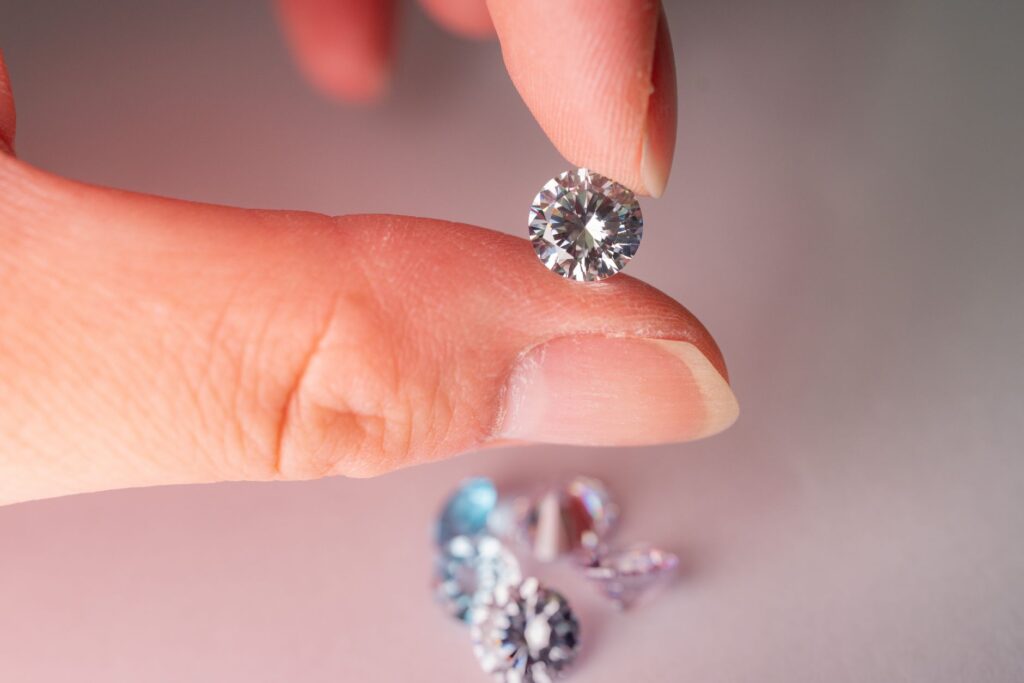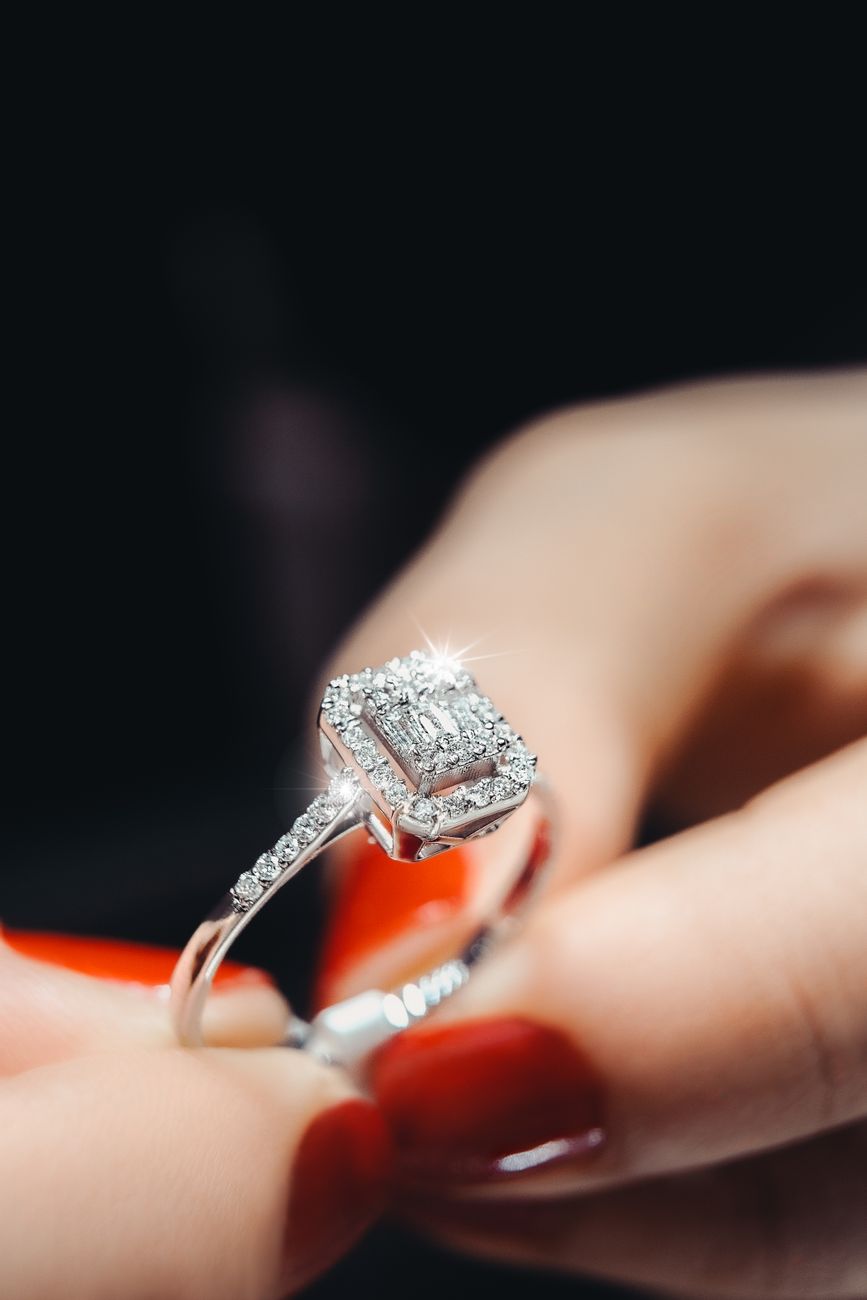
Diamond size looks very different on a size 4 finger than it does on a size 8 finger. That is why the best diamond size for small fingers is not just a carat number. It is a combination of carat weight, shape, finger coverage, and setting design. A diamond that appears balanced and prominent on a smaller hand can look much larger than its weight suggests, while an oversized stone can sometimes look top-heavy or less practical for daily wear.
Size expectations matter because most buyers picture a diamond in carats, but what they actually see is the face-up size. That means the visible width and length of the diamond from the top. Small fingers can make a diamond appear larger, so choosing the right size is often about proportion and visual impact rather than simply buying the highest carat weight possible.
Quick Answer
The best diamond size for small fingers is often between 0.70 and 1.50 carats, depending on finger size, diamond shape, and style preference. On ring sizes around 3.5 to 5, even a 0.75 to 1.00 carat diamond can look noticeably substantial. Elongated shapes such as oval, pear, and marquise can also create a larger look than round diamonds of the same carat weight.
For many buyers with small fingers, the strongest balance of appearance, comfort, and value is often:
- 0.70 to 0.90 carat for a refined, balanced look
- 1.00 to 1.25 carat for a more prominent center stone
- 1.30 to 1.50 carat for a larger look with strong finger coverage
That said, there is no single ideal size for everyone. The right choice depends on whether you want subtle elegance, noticeable presence, or maximum visual spread.
Understanding What “Best Size” Really Means
When people search for the best diamond size for small fingers, they are usually trying to solve a visual question. They want to know what will look proportional, flattering, and worth the money. That is a different question from asking what carat weight is most prestigious or most popular.
In practice, the best size is the one that gives you the appearance you want without feeling too small, too bulky, or unnecessarily expensive. On smaller fingers, proportions become more noticeable because the hand itself creates a stronger frame around the stone.
Carat Weight Is Not the Same as Visible Size
Carat is a unit of weight, not a direct measurement of how large a diamond looks. A 1 carat diamond weighs 0.20 grams. It does not automatically tell you the diameter, length, or how much of the finger the diamond will cover.
Two diamonds with the same carat weight can face up differently if they have different shapes or proportions. A deeper diamond carries more of its weight below the surface, which can make it look smaller from the top. A shallower diamond may look larger, although if it is cut poorly, it may lose sparkle.
Face-Up Size Is What You Actually See
Face-up size means the visible dimensions of the diamond when viewed from above. For a round diamond, this is usually discussed in millimeters of diameter. For an oval or pear, it is the length and width.
This matters because the eye notices millimeter spread far more than it notices carat weight on paper. A difference of a few tenths of a carat can be hard to see. A meaningful change in dimensions is easier to notice.
Finger Coverage Changes Everything
Finger coverage refers to how much of the finger width the diamond occupies. On a smaller finger, a stone takes up a greater percentage of the available space. That makes the same diamond look more substantial than it would on a larger finger.
For example, a 1 carat round diamond may look moderately sized on a size 7 finger, but it can look much more prominent on a size 4 finger. This is one of the biggest reasons buyers with smaller hands often do not need to size up as much as they first expect.
What Buyers Usually Expect
It is common to imagine that small fingers require a bigger diamond to stand out. In reality, the opposite is often true. Smaller fingers naturally make many center stones appear larger.
Another common assumption is that round-number carat milestones always offer the best visual result. A 1.00 carat diamond may sound significantly larger than a 0.90 carat diamond, but the visible difference can be very small. That is especially true when the 0.90 carat has a strong face-up spread.
Common Assumption: “I Need at Least 1 Carat”
This expectation often comes from marketing, social comparison, or hearing carat numbers discussed without context. On small fingers, though, a well-cut 0.80 or 0.90 carat diamond can already provide a clear center-stone look with good presence.
If the goal is a balanced ring rather than a statement ring, staying under 1 carat can be entirely appropriate. The diamond may look larger than expected once it is actually worn.
Common Assumption: “Higher Carat Always Means Better”
Carat weight increases cost, but it does not always increase beauty or practicality in equal measure. On small fingers, there can be a point where the diamond begins to dominate the hand rather than complement it.
That does not mean larger stones are wrong. It simply means that a visually pleasing result often comes from proportion, not maximum size alone.
Common Assumption: “All 1 Carat Diamonds Look the Same”
They do not. Shape, cut quality, proportions, and setting style can all change how large the diamond appears. A 1 carat oval can look larger than a 1 carat round. A 1 carat round with a smaller diameter due to excess depth can look less impressive than another 1 carat round with better spread.
What It Actually Looks Like on Small Fingers
On small fingers, even modest carat weights can create strong visual presence. The effect becomes more obvious once the diamond reaches the width of the finger in a balanced way. This is why buyers are often surprised when they try rings on in person.
The best diamond size for small fingers usually looks intentional and proportional. It should provide enough finger coverage to feel substantial, while still allowing the ring to sit comfortably and harmoniously on the hand.
Approximate Round Diamond Sizes by Millimeter Diameter
| Carat Weight | Approximate Diameter | General Look on Small Fingers |
|---|---|---|
| 0.50 ct | About 5.1 mm | Delicate and understated |
| 0.70 ct | About 5.7 mm | Balanced and clearly visible |
| 0.90 ct | About 6.2 mm | Noticeably substantial on size 4 to 5 fingers |
| 1.00 ct | About 6.4 to 6.5 mm | Prominent and classic |
| 1.25 ct | About 6.9 to 7.0 mm | Large look with strong finger coverage |
| 1.50 ct | About 7.3 to 7.4 mm | Statement-sized on many small hands |
| 2.00 ct | About 8.0 to 8.2 mm | Very bold, often dominant on small fingers |
These are approximate averages, not exact rules. Real diamonds vary based on cut proportions.
How Different Sizes Tend to Feel Visually
0.50 to 0.69 carat often looks graceful and refined on small fingers. It can be ideal for buyers who prefer subtle elegance, lower budgets, or a practical everyday ring.
0.70 to 0.99 carat is a strong sweet spot. This range usually gives enough presence to feel like a clear center stone without looking oversized. On small fingers, it often appears larger than buyers expect.
1.00 to 1.25 carat delivers a more prominent appearance. For many small-finger wearers, this is where the ring starts to have a more noticeable visual impact while still feeling balanced.
1.30 to 1.50 carat can look distinctly large. Some buyers love this effect. Others may find it less practical for daily wear, depending on lifestyle, setting height, and hand proportions.
Above 1.50 carats becomes more personal. It can be beautiful, but it is less about proportion and more about wanting a bold look. On very small fingers, stones in this range often read as statement pieces.
Factors That Change Apparent Size
Carat weight is only one part of the equation. Several factors affect how large a diamond looks once it is mounted and worn.
Diamond Shape
Shape has a major effect on visual size. Some shapes spread their weight across a larger face-up area, while others carry more weight in depth.
| Shape | Typical Visual Effect on Small Fingers | Notes |
|---|---|---|
| Round | Classic, balanced, slightly more compact look | Usually the benchmark for comparison |
| Oval | Looks larger and lengthens the finger | Popular for maximizing spread |
| Pear | Elongated look with flattering finger coverage | Can appear larger than round of same weight |
| Marquise | Very elongated, often the largest-looking shape | Strong finger-lengthening effect |
| Emerald | Elegant and elongated, but less sparkly than brilliant cuts | Large table can emphasize size |
| Radiant | Bold shape with good presence | Can vary widely in proportions |
| Cushion | Softer shape, often faces up smaller than round or oval | Appearance depends heavily on cut style |
| Princess | Sharp, modern look but may face up smaller than expected | Weight is often carried deeper |
For small fingers, elongated shapes are often especially flattering because they create finger length and more visual spread without necessarily requiring more carat weight.
Cut Quality and Proportions
A well-cut diamond reflects light effectively and can also have better visual balance. In round diamonds, cut quality is especially important because it affects both sparkle and spread.
A diamond that is too deep may hide weight in the lower portion of the stone. That can make it look smaller from above. A diamond that is too shallow may look wider, but it can lose brightness or appear glassy. The goal is balance, not the shallowest possible stone.
Setting Design
The ring setting influences how large the center stone appears. This is often overlooked, but it can have a major visual effect.
Settings that can make a diamond look larger include:
- Halo settings, which add a border of small diamonds around the center
- Thin bands, which make the center stone appear more prominent by contrast
- Hidden halos, which add some visual lift without changing the top outline as much
- Three-stone designs, which increase overall finger coverage
Settings that can make a center stone feel more compact include very wide bands, heavy metal surrounds, or design styles that visually compete with the diamond.
Finger Shape and Hand Proportions
Not all small fingers look the same. A person can have a small ring size but shorter fingers, longer fingers, narrow hands, or wider knuckles. The same diamond may look different depending on these features.
Elongated stones often suit shorter fingers because they create length. Round diamonds can look especially balanced on narrow, delicate hands. Squarer shapes can look more substantial and modern, but they may not create the same slimming effect.
Band Width
Band width has a surprisingly strong effect on perceived stone size. A 1.00 carat diamond on a 1.8 mm band will usually look larger than the same diamond on a 3.0 mm band.
This does not mean thinner is always better. Extremely thin bands may not suit every lifestyle or design preference. But on small fingers, a slimmer band often helps preserve proportion and showcase the center stone.
Real-World Size Examples
Practical examples help translate numbers into appearance. These are general visual expectations, not exact rules.
0.75 Carat Round on a Size 4 Finger
A well-cut 0.75 carat round, usually around 5.8 mm to 5.9 mm, often looks balanced and clearly noticeable on a size 4 finger. It does not usually look tiny. In many classic solitaire settings, it appears elegant and proportional.
For buyers who want timeless style without a large statement look, this size can be a very strong choice.
1.00 Carat Round on a Size 4 Finger
A 1.00 carat round on a size 4 finger often looks substantial. It tends to provide strong finger coverage and clear center-stone presence. For many people, this already reads as a generous size on a smaller hand.
This is one reason buyers with small fingers should be careful about assuming they need to exceed 1 carat to get visual impact.
1.00 Carat Round on a Size 6.5 or 7 Finger
The same 1.00 carat round appears more moderate on a larger finger. It still looks attractive and classic, but the relative coverage is lower. This comparison shows why finger size matters so much when evaluating diamond appearance.
1.25 Carat Oval on a Size 4.5 Finger
A 1.25 carat oval can look noticeably larger than a 1.25 carat round because of its elongated shape and larger surface spread. On a small finger, it often appears bold but still elegant, especially in a thin-band solitaire or simple pave setting.
This is one of the most effective ways to increase visible size without moving dramatically higher in carat weight.
1.50 Carat Round on a Size 5 Finger
A 1.50 carat round is often a statement stone on a size 5 finger. It can still be beautiful and proportional depending on style preference, but it usually looks distinctly large rather than simply classic.
For buyers who want presence and do not mind a more prominent ring, this can be a suitable range. For buyers seeking subtle balance, it may be more than necessary.
0.90 Carat vs 1.00 Carat on Small Fingers
This is an important real-world comparison. A 0.90 carat round may measure around 6.1 to 6.2 mm, while a 1.00 carat round may measure around 6.4 to 6.5 mm. The visible difference is often modest, especially once mounted.
On small fingers, both can look substantial. This means the 0.90 carat option may offer better value if the cut is strong and the measurements are attractive.
Best Diamond Shapes for Small Fingers
The best diamond size for small fingers is closely connected to shape. Some shapes create a balanced appearance more easily, while others maximize finger coverage.
Round Brilliant
Round is the most classic shape and the easiest benchmark for size comparison. It offers excellent sparkle when well cut and tends to look balanced on almost any hand.
For small fingers, round diamonds between 0.70 and 1.25 carats often hit a strong proportion sweet spot.
Oval
Oval diamonds are often one of the best choices for small fingers because they combine strong finger coverage with a flattering elongated outline. They usually look larger than rounds of the same carat weight.
Buyers who want a bigger visual effect without an extreme carat jump often gravitate toward oval.
Pear
Pear shapes can be very flattering on smaller hands. Their tapered design helps lengthen the look of the finger. They can also provide excellent visible size relative to weight.
The appearance depends on proportions, though. A pear that is too short or too wide may lose some of that elegant lengthening effect.
Marquise
Marquise diamonds usually create one of the largest face-up appearances for their carat weight. On small fingers, they can look dramatic and slenderizing.
This shape is best for buyers who like a distinctive outline rather than a classic round look.
Cushion and Princess
These shapes can still look beautiful on small fingers, but they often face up slightly smaller than elongated shapes at the same carat weight. Buyers choosing them for style should focus closely on measurements, not just weight.
Price vs Visual Benefit
One of the most useful questions a buyer can ask is whether paying more will actually create a visible difference. The answer is sometimes yes, but not always enough to justify the cost.
Magic Sizes Often Cost Disproportionately More
Diamonds at popular milestone weights such as 0.50, 1.00, 1.50, and 2.00 carats often carry price premiums. These are sometimes called magic sizes. Buyers are drawn to the psychological appeal of the number, so pricing tends to rise more sharply around those thresholds.
For small fingers, this matters because the visible gain from crossing one of these thresholds may be minor. A 0.92 carat or 0.95 carat diamond can look very close to a 1.00 carat diamond but cost less.
Diminishing Returns in Visible Size
Diamond prices generally rise faster than visible size. In other words, the bigger you go, the more you tend to pay for each additional bit of spread.
For example, moving from 0.75 to 1.00 carat can produce a noticeable change. Moving from 1.00 to 1.10 carats may be much less dramatic visually, even if the price increase is meaningful.
Better Value Strategies for Small Fingers
- Choose just under a magic size, such as 0.90 to 0.99 carat instead of exactly 1.00 carat
- Consider elongated shapes for more face-up size
- Prioritize measurements and cut over carat alone
- Use a slim, proportional setting to highlight the center stone
Lab Grown vs Natural Diamond Size Considerations
Lab grown diamonds have changed size decisions significantly because they often allow buyers to reach larger carat weights at lower prices than natural diamonds. For someone with small fingers, this can be helpful, but it also introduces a practical question: just because a larger stone fits the budget, does it fit the hand?
Where Lab Grown Diamonds Help
Lab grown diamonds can give buyers more flexibility to choose:
- A larger carat weight within the same budget
- A better cut or higher clarity without sacrificing size
- An elongated shape with strong visual spread
- A more substantial look while staying under a spending limit
This can be especially useful for buyers who want a 1.25 to 1.75 carat look on a small finger but would find those sizes too expensive in natural diamonds.
Where Buyers Should Be Careful
The lower cost of lab grown diamonds can make it tempting to size up quickly. On small fingers, though, a jump from 1.00 to 2.00 carats may create a ring that feels much bolder than expected.
That is not inherently negative. It just means budget freedom should be balanced against proportion, daily wear comfort, and personal style. A buyer may discover that the best diamond size for small fingers is still below the maximum size they can afford.
Value Trade-Offs
Lab grown diamonds often provide better size-per-dollar efficiency at the time of purchase. However, buyers should understand that resale expectations are typically different from natural diamonds. That does not affect beauty or durability, but it does affect value considerations.
From a purely visual standpoint, lab grown and natural diamonds look the same if quality is comparable. The decision is usually about budget, priorities, and how much size matters relative to origin and resale considerations.
Who Should Size Up
Choosing a larger diamond can make sense in several situations, even on small fingers.
You Prefer a Strong Visual Presence
Some buyers simply want a more noticeable center stone. If you like a bold look and understand that it will appear prominent on a small hand, sizing up can be the right choice.
You Want a Simple Solitaire With Minimal Side Detail
In a plain solitaire, the center stone does all the visual work. If there is no halo or side-stone support, a larger center diamond may better achieve your desired effect.
You Have Long, Narrow Fingers
Some people have small ring sizes but relatively long fingers. In these cases, a slightly larger or more elongated center stone may look especially well balanced.
You Are Choosing Lab Grown and Want More Spread
Lab grown diamonds can make a larger size financially realistic. If your preference leans toward more finger coverage and you are comfortable with a bolder look, sizing up may offer good visual satisfaction.
Who Can Save Money Without Sacrificing Appearance
Plenty of buyers do not need to chase larger carat weights to get an impressive look on small fingers.
You Have Very Small Ring Sizes
On size 3.5 to 4.5 fingers, even modest diamonds can appear substantial. In many cases, a 0.80 to 1.00 carat diamond already provides strong presence.
You Like Balanced, Classic Proportions
If your ideal ring is elegant rather than bold, there is often little reason to exceed the size range that naturally suits your hand. A smaller well-cut diamond can look more refined and cohesive.
You Are Open to Elongated Shapes
Oval, pear, and marquise diamonds can create a larger visual effect without requiring the same carat weight as a round. This is one of the easiest ways to save money while still maximizing apparent size.
You Are Choosing a Halo Setting
A halo can significantly increase the apparent size of the ring from the top view. Buyers who like this style may not need as large a center stone to achieve the look they want.
Common Buyer Mistakes
Several mistakes show up repeatedly when buyers choose a diamond for small fingers. Avoiding them can lead to a better-looking ring and better value.
Focusing Only on Carat Weight
Carat weight alone does not tell you how large the diamond will look. Always check the millimeter measurements and the shape.
Ignoring Finger Size
A 1.00 carat diamond is not a universal visual reference. It looks different on every hand. Small fingers can make a modest carat weight look surprisingly substantial.
Overpaying for Magic Sizes
Paying a premium to hit exactly 1.00 or 1.50 carats often makes less sense when the visible gain is minor. Stones just below these marks can be better value.
Choosing Poor Cut for the Sake of Weight
A badly proportioned diamond may look smaller, dimmer, or less lively. A well-cut stone with slightly lower carat weight often looks better overall.
Picking a Band That Is Too Wide for the Stone
Very wide bands can make a center diamond appear smaller, especially on small fingers. The balance between band width and stone size matters.
Sizing Up Too Much Because the Budget Allows It
This is increasingly common with lab grown diamonds. A larger budget does not automatically mean a larger stone is the best fit. Proportion and daily wear still matter.
Practical Guidelines for Choosing the Best Diamond Size for Small Fingers
While there is no universal answer, these practical ranges can help narrow the decision.
| Look You Want | Recommended Round Size Range | Recommended Elongated Shape Range |
|---|---|---|
| Delicate and subtle | 0.40 to 0.69 ct | 0.40 to 0.60 ct |
| Balanced everyday look | 0.70 to 0.99 ct | 0.60 to 0.90 ct |
| Classic but prominent | 1.00 to 1.25 ct | 0.90 to 1.20 ct |
| Bold and noticeable | 1.30 to 1.60 ct | 1.10 to 1.50 ct |
| Statement look | 1.75 ct and above | 1.50 ct and above |
These ranges are not rules. They are visual guidelines based on how diamonds tend to appear on smaller fingers.
Frequently Asked Questions
Is 1 carat too big for small fingers?
No. For many people with small fingers, a 1 carat diamond looks prominent but still balanced, especially in a solitaire or simple setting. Whether it feels too big depends more on personal taste and the ring design than on finger size alone.
Is 0.5 carat too small for small fingers?
Not necessarily. On a small finger, a 0.5 carat diamond can look delicate and elegant rather than tiny. It may be ideal for buyers who prefer understated style or want to prioritize value.
What diamond shape looks biggest on small fingers?
Marquise, oval, and pear shapes often look larger than round diamonds of the same carat weight because they have more elongated face-up spread. They also tend to lengthen the appearance of the finger.
What is better for small fingers, round or oval?
Neither is universally better. Round offers classic symmetry and strong sparkle. Oval usually looks larger for the same carat weight and can be especially flattering on small fingers. The better choice depends on whether you prioritize tradition or visual spread.
Should I choose a thin band for small fingers?
A thinner band often helps the center diamond appear larger and more proportional on small fingers. However, it should still be structurally appropriate for the design and durable enough for regular wear.
Do halo settings work well on small fingers?
Yes, often very well. A halo can increase the apparent size of the ring and create more finger coverage without requiring a much larger center stone. The effect can be especially noticeable on small hands.
Can a diamond be too large for small fingers?
Yes, depending on style preference and comfort. A very large diamond can look top-heavy or feel impractical for daily wear on a very small finger. That said, some buyers intentionally prefer that bold effect.
Are lab grown diamonds a good option for small fingers?
They can be. Lab grown diamonds often allow buyers to choose larger or higher-quality stones within budget. The key is to use that flexibility thoughtfully so the diamond still looks proportional to the hand and suits daily wear.
Conclusion
The best diamond size for small fingers is usually not the largest one available. It is the size that looks balanced on the hand, gives the visual impact you want, and makes sense for your budget. Because small fingers naturally make diamonds appear larger, buyers often need less carat weight than they first assume.
For many people, the most practical sweet spot falls between 0.70 and 1.25 carats, with elongated shapes offering even more visible size. A well-cut diamond with attractive measurements, a flattering shape, and a proportional setting often matters more than hitting a round-number carat milestone.
The clearest way to make a confident choice is to think in terms of face-up size, finger coverage, shape, and overall proportion. Once you do that, the right size becomes much easier to identify, and you are far less likely to overpay for carat weight that adds little real-world visual benefit.