Emerald cut diamonds can show inclusions more easily than many other diamond shapes. That is one of the most important things buyers should understand before choosing this cut, especially if they are comparing it with round, oval, cushion, or radiant diamonds. The reason is not that emerald cuts are inherently lower quality, but that their shape and faceting style make the interior of the diamond easier to see.
For buyers, this matters because clarity can affect both appearance and price. An inclusion that might be hidden in a brilliant-cut diamond can become noticeable in an emerald cut, particularly in larger stones or stones with very open facets. If you are shopping for an emerald cut diamond, whether natural or lab grown, clarity should be evaluated a little more carefully than it might be for a round diamond.
Quick Answer
Yes, emerald cut diamonds do show inclusions more readily because they use a step-cut faceting pattern with large open facets and a mirrored hall-of-mirrors look. This style reflects light in broad flashes rather than the intense sparkle seen in brilliant cuts, so the eye has an easier time looking into the stone.
That does not mean every emerald cut needs to be flawless. It does mean buyers usually need to pay more attention to clarity, especially if the diamond is large, near-colorless, or set in a simple mounting that does not conceal the stone. A well-chosen emerald cut can still look very clean and elegant at a reasonable budget if clarity is selected carefully.
What Makes Emerald Cut Diamonds Different
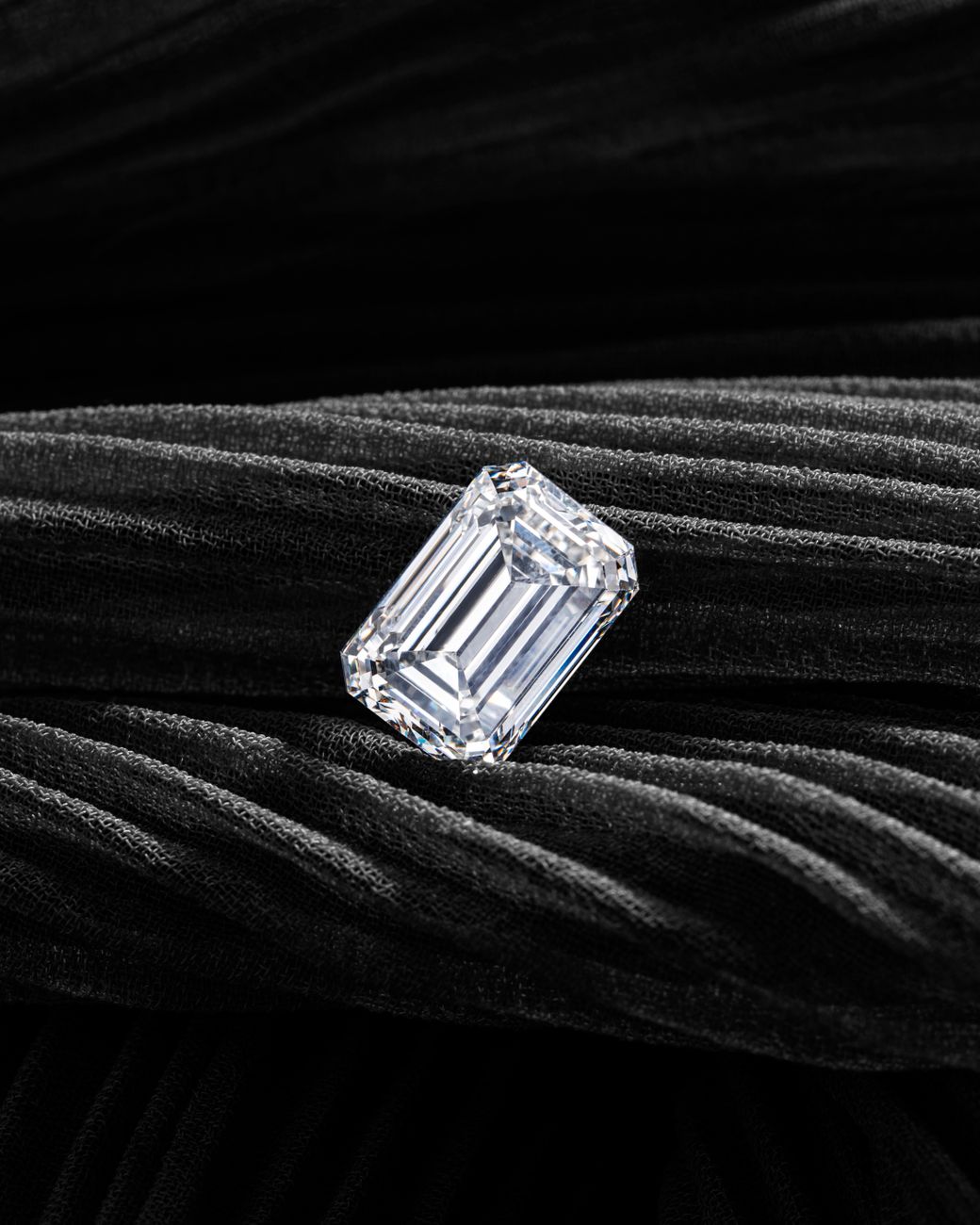
Emerald cut diamonds belong to the step-cut family. Instead of many small kite-shaped and triangular facets that create lots of sparkle, step cuts use rows of parallel facets arranged like steps. This produces a sleek, geometric appearance with long lines and broad flashes of light.
The most recognizable feature of an emerald cut is its open center. In many other shapes, the numerous facets scatter light in a way that can mask small imperfections. In an emerald cut, those imperfections are more visible because there is less visual complexity inside the stone. Buyers often describe this as a “hall of mirrors” effect, which is attractive, but also more revealing.
This is why questions like Do emerald cut diamonds show inclusions come up so often. The answer is tied directly to the cut style itself, not simply to the diamond’s overall quality.
Step-Cut vs. Brilliant-Cut Faceting
To understand clarity visibility, it helps to compare step cuts with brilliant cuts. Brilliant-cut diamonds, such as round brilliants, use many angled facets designed to maximize sparkle and hide minor inclusions. Light bounces around more aggressively, which can make the interior of the diamond harder to inspect with the naked eye.
Emerald cuts are different. Their broader facets create larger windows into the stone. That means color zoning, crystal inclusions, feathers, and cloudiness may be easier to detect. Even small imperfections can stand out if they are placed near the center of the diamond or under the table, which is the large flat top facet.
Why Emerald Cut Diamonds Show Inclusions More Easily
There are several reasons emerald cut diamonds tend to reveal inclusions more than other shapes. These reasons are practical, not theoretical, and they directly affect how a diamond looks once it is mounted in a ring.
1. Large Open Facets
Emerald cuts have broad, step-like facets that act almost like windows. Because there are fewer small reflective surfaces, your eye is not distracted by constant sparkle. That makes internal characteristics easier to spot.
2. Less Light Scattering
Brilliant cuts create a busy light pattern that helps conceal minor flaws. Emerald cuts reflect light in larger flashes, which is beautiful in a refined way, but less forgiving. This is especially noticeable in clean, high-clarity lighting such as jewelry store spotlights or direct daylight.
3. Long, Transparent Look
Many emerald cut diamonds have a relatively open and transparent appearance compared with other shapes. That transparency is part of their appeal, but it also means anything under the surface may be more noticeable. Inclusions near the center are usually more visible than those near the edges.
4. Shape Emphasizes the Center Area
Because the emerald cut is long and rectangular, the viewer’s eye tends to focus on the center of the stone. If there is a visible inclusion there, it is more likely to draw attention than a similar inclusion located near the edge.
How Clarity Affects Emerald Cut Appearance
Clarity refers to the presence of internal inclusions and external blemishes. For emerald cuts, clarity is often more important to the final look than it is for some other shapes. That does not mean you must buy a very high clarity grade, but it does mean the visible result matters more than the grading report alone.
A diamond graded VS2 may be completely eye-clean in one emerald cut and slightly noticeable in another, depending on the type, size, and position of the inclusion. SI1 can sometimes be a practical value choice, but only if the inclusions are not obvious from normal viewing distance. For some buyers, a lab grown emerald cut with a higher clarity grade can be more cost-effective than a natural stone of the same visible quality.
What “Eye-Clean” Means
Eye-clean means you cannot see inclusions without magnification under normal viewing conditions. This is the most useful standard for many buyers, because the diamond is worn at arm’s length, not under a microscope.
For emerald cuts, eye-clean is especially important. A grading report may list the stone as SI1 or even VS2, but if the inclusion is centered and dark, the diamond can still look visibly included. On the other hand, a stone with a slightly lower grade may appear clean if the inclusions are small, light, and hidden toward the edge.
Common Inclusion Types in Emerald Cuts
Not all inclusions affect appearance in the same way. Some are more visible than others.
- Crystals are small mineral deposits inside the diamond. Dark crystals are easier to see than light ones.
- Feathers are small internal fractures. They may be visible as white lines or wisps, especially if they are near the center.
- Clouds are clusters of tiny inclusions. A small cloud may not matter, but a dense one can reduce transparency and make the diamond look hazy.
- Needles are thin, elongated inclusions. They can be subtle, though their visibility depends on placement and density.
In emerald cuts, transparency matters almost as much as clarity grade. A diamond can have an acceptable grade on paper but still appear less crisp if the inclusion pattern creates a hazy or disturbed look.
Appearance and Visual Performance
Emerald cut diamonds are admired for their elegant, structured appearance. They do not produce the same intense sparkle as round or oval diamonds, but they offer a different kind of beauty that many buyers find sophisticated and distinctive. Understanding how they perform visually helps explain why inclusions matter more.
Brilliance
Brilliance refers to the white light returned by a diamond. Emerald cuts can have good brilliance, but it is distributed in broad flashes rather than a glittery pattern. Because the light return is less busy, the eye can more easily notice anything inside the diamond.
Fire
Fire is the colored flash you see when a diamond splits white light into spectral colors. Emerald cuts usually show less fire than brilliant cuts because their facet arrangement is not optimized for maximum dispersion. This is not a flaw. It is simply part of the style.
Since the diamond does less visual “work” to mask what is inside, clarity tends to play a larger role in the overall appearance.
Scintillation
Scintillation is the pattern of sparkle and contrast that changes as the diamond moves. Emerald cuts have a slower, more geometric scintillation than brilliant cuts. The flashes are larger and more controlled, which gives the shape a refined appearance.
Because the sparkle is not as intense, inclusions may be easier to detect when the diamond is still. This is another reason why buyers should assess emerald cuts in different lighting conditions before making a final decision.
Face-Up Size
One of the major attractions of the emerald cut is its face-up size. Face-up size is how large the diamond looks from above. Emerald cuts often appear larger than round diamonds of the same carat weight because of their elongated shape and shallow profile.
That visual spread can be a strong advantage, especially for buyers comparing sizes within a budget. However, the larger visible surface also makes the interior of the stone easier to inspect, which is why inclusion visibility becomes a key consideration.
Advantages of Emerald Cut Diamonds
Despite their more revealing nature, emerald cut diamonds offer several important advantages. Many buyers specifically choose this shape because it looks different from the more common round brilliant.
Elegant and Timeless Look
Emerald cuts have a classic, understated appearance. They are often associated with Art Deco design, clean geometry, and refined style. This makes them a strong option for buyers who prefer structure over sparkle-heavy brilliance.
Elongated Shape Flatters the Finger
The rectangular silhouette can make the finger look longer and slimmer. This effect is one reason emerald cuts remain popular in engagement rings, especially in solitaire and three-stone settings.
Face-Up Presence
Emerald cuts tend to look substantial for their weight. A well-proportioned stone can cover more surface area than a round diamond of equal carat weight. For buyers who want visible size, this is a practical benefit.
Can Be a Smart Value Choice
Because emerald cuts are generally less in demand than rounds, they may offer better pricing per carat. Buyers sometimes use that savings to prioritize a larger size, a better setting, or a higher clarity grade. In the lab grown diamond market, this effect can be even more noticeable because larger emerald cuts are often more accessible at a given budget.
Clarity Becomes a Conscious Design Choice
Some buyers appreciate that emerald cuts make clarity more visible. The stone feels open and transparent rather than busy or overly sparkly. When well selected, the result can look crisp, clean, and architectural.
Disadvantages of Emerald Cut Diamonds
Emerald cut diamonds are not the right choice for every buyer. Their beauty comes with a few practical trade-offs that are worth understanding before shopping.
Inclusions Are Easier to See
This is the most obvious drawback. If you are sensitive to visible flaws, you may need to shop in a higher clarity range than you would for a round diamond. That can increase cost, especially in natural diamonds.
Color Can Be More Noticeable
Emerald cuts may also reveal body color more easily than brilliant cuts. If the diamond is in the near-colorless range, a buyer may notice a warmer tone more quickly than they would in a round diamond. This matters most in larger stones and in settings with very little metal color influence.
Less Sparkle in Low Light
Some buyers love the quiet, elegant look of an emerald cut. Others find that it appears less lively than other shapes in everyday conditions. If you want intense sparkle from every angle, a brilliant cut may be a better fit.
Requires More Careful Selection
Shopping for an emerald cut usually takes more attention to detail. Buyers should review the grading report, ask about eye-clean status, and inspect the stone in different lighting if possible. The shape rewards careful selection, but it is less forgiving of shortcuts.
How Emerald Cut Diamonds Compare to Other Popular Shapes
If you are asking whether emerald cut diamonds show inclusions more than other shapes, the clearest answer comes from comparison. Different shapes handle light and clarity in different ways, which affects how visible imperfections appear.
| Shape | Inclusion Visibility | Sparkle Style | Color Visibility | General Buying Notes |
|---|---|---|---|---|
| Emerald cut | High | Broad flashes, step-cut pattern | Moderate to high | Best when clarity is selected carefully |
| Round brilliant | Low to moderate | Intense sparkle and fire | Lower | Most forgiving shape for minor inclusions |
| Oval | Moderate | Brilliant sparkle with elongation | Moderate | May show bow tie and uneven clarity zones |
| Cushion | Low to moderate | Soft sparkle, depending on cut style | Moderate | Can hide inclusions well, but varies by facet pattern |
| Radiant | Low | High sparkle, mixed cut | Lower | One of the most forgiving fancy shapes |
| Princess | Moderate | Bright, angular sparkle | Moderate | Corners need protection, but brilliance helps conceal flaws |
Emerald Cut vs Round Brilliant
Round brilliants are usually the most forgiving shape for inclusions because their many facets break up light in a way that can hide small internal features. They also tend to show the most sparkle and fire, which helps divert the eye.
Emerald cuts are the opposite. Their broader facets create a calmer appearance, so a small inclusion has a better chance of being seen. If your priority is maximum concealment, round brilliant is usually easier to buy with confidence. If your priority is elegance and shape, emerald cut can be worth the added attention to clarity.
Emerald Cut vs Oval
Ovals are brilliant-style diamonds with an elongated shape. They can hide inclusions fairly well, although the bow tie effect and facet arrangement can sometimes make certain areas more noticeable. Emerald cuts show inclusions more directly, but they also offer a cleaner, more geometric look.
Many buyers compare these two shapes because both elongate the finger. The main difference is that oval diamonds generally appear more lively, while emerald cuts look more structured and transparent.
Emerald Cut vs Radiant
Radiant cuts combine the rectangular outline of some fancy shapes with brilliant-style faceting. Because of that, they usually hide inclusions better than emerald cuts. They also tend to produce stronger sparkle and can be a practical option for buyers who want a rectangular shape without the same clarity sensitivity.
Emerald cuts, however, are more refined in appearance and less visually busy. Some buyers prefer that controlled look even if it requires a higher clarity grade.
Emerald Cut vs Cushion
Cushion cuts vary widely depending on their facet pattern. Some have a chunky antique look, while others are more brilliant and modern. In general, cushions can hide inclusions more easily than emerald cuts because their pattern is less open.
That said, cushion cuts do not give the same linear, architectural style. If a buyer values clarity concealment and soft sparkle, cushion may be easier. If the buyer wants sharp lines and a cleaner window into the diamond, emerald cut stands apart.
What Clarity Grades Make Sense for Emerald Cut Diamonds?
There is no single clarity grade that works for every emerald cut diamond. Much depends on the size of the stone, the type of inclusions, and whether the diamond is natural or lab grown. Still, there are practical guidelines that can help buyers narrow their search.
Common Practical Ranges
- VVS1 to VS1: Often very safe choices for buyers who want a very clean look.
- VS2: Frequently eye-clean, but should always be checked individually.
- SI1: Can be a good value if the inclusions are small and well placed.
- SI2 and below: More likely to show visible inclusions or transparency issues, especially in larger emerald cuts.
These are not hard rules. A VS2 with a dark center crystal may be less attractive than an SI1 with small edge inclusions. This is why buyers should look at the stone, not just the grade.
Lab Grown Emerald Cuts and Clarity
Lab grown diamonds often provide an opportunity to prioritize higher clarity at a lower price than a comparable natural diamond. This can be useful in emerald cuts, where clarity visibility is a bigger factor. Many shoppers use that advantage to choose a cleaner-looking stone without sacrificing size as much.
That said, lab grown diamonds can also include the same kind of inclusions or growth features that affect appearance. A report still matters, but visual inspection matters just as much.
Color Considerations in Emerald Cut Diamonds
Clarity is not the only grading factor that becomes more visible in emerald cuts. Color can also be easier to notice because the broad facets and open structure do not mask body color as effectively as brilliant cuts.
For many buyers, near-colorless grades such as G, H, or I can still look attractive depending on the setting and personal tolerance for warmth. But those who want a very bright, icy appearance may prefer higher color grades, especially in larger stones or in white metal settings.
How Setting Metal Affects Perceived Color
White gold and platinum can make color more noticeable if the diamond is slightly warm. Yellow gold and rose gold can sometimes soften that effect and make lower color grades appear more harmonious. This is not a rule, but it is a useful practical consideration when choosing an emerald cut.
How Face-Up Size and Proportions Affect Inclusions
Emerald cuts can vary a lot in how they look from the top. A longer or shallower stone may appear larger, but it can also create a more open window into the body of the diamond. That can make inclusions stand out more if they are placed in the center.
Proportions matter because they influence both beauty and visibility. A well-cut emerald cut should have a balanced length-to-width ratio, attractive step patterning, and good transparency. If the stone is cut too shallow or too deep, its look can suffer, and inclusions may be more noticeable.
Length-to-Width Ratio
Length-to-width ratio affects how rectangular the stone looks. Many buyers prefer a ratio around 1.30 to 1.50, although personal taste varies. A more elongated stone can make the finger appear longer, but it can also alter how the facets present the interior of the diamond.
Windowing and Transparency
Some emerald cuts have areas that appear too open or transparent, a problem sometimes called windowing. When this happens, you may be able to look too deeply into the stone, which can make inclusions more visible. A well-cut emerald cut should have crisp reflections without looking glassy or washed out.
How the Setting Can Hide or Highlight Inclusions
The ring setting does not change the diamond’s actual clarity, but it can influence how visible inclusions appear. Some settings provide a little visual protection, while others place the stone in full view.
Settings That May Conceal More
- Halo settings can draw attention to sparkle around the center stone, which may reduce focus on minor inclusions.
- Three-stone settings divide attention among multiple diamonds.
- Bezel settings can cover more of the stone’s perimeter, although they also change the overall look.
Settings That Highlight the Stone
- Solitaire settings expose the diamond fully and make clarity more visible.
- Tall cathedral settings can frame the diamond prominently, putting more emphasis on the center stone.
- Minimalist settings often show the diamond with very little distraction.
If you want the cleanest possible appearance from an emerald cut, a more protective setting may help. If you prefer an open, modern look, expect to spend a little more time evaluating clarity.
Buyer Priorities: When an Emerald Cut Makes Sense
Emerald cuts are best for buyers who value elegance, geometry, and a quieter kind of brilliance. They are also a good match for shoppers who understand that clarity and color deserve close attention.
Emerald Cut May Be a Good Fit If You:
- Prefer a refined, architectural look over maximum sparkle
- Like elongated shapes that flatter the finger
- Are comfortable reviewing clarity carefully
- Want a diamond that feels classic rather than flashy
- Are comparing larger lab grown diamonds and want a clean, elegant style
You May Want Another Shape If You:
- Want the most sparkle for the money
- Do not want to spend extra time evaluating inclusions
- Prefer a shape that hides minor flaws more easily
- Like a more lively or brilliant visual effect
Common Mistakes Buyers Make With Emerald Cut Diamonds
Because emerald cuts are more revealing, buyers sometimes make mistakes that are easy to avoid with the right information. These mistakes can affect appearance, value, and long-term satisfaction.
1. Choosing by Clarity Grade Alone
A grading report is important, but it does not tell the whole story. Two diamonds with the same grade can look very different to the eye. For emerald cuts, ask whether the diamond is truly eye-clean and where any inclusions are located.
2. Ignoring the Center of the Stone
Inclusions near the center are usually more visible than those near the edge. Buyers sometimes focus only on the grade and miss a central crystal or feather that is easy to see in normal viewing conditions.
3. Overlooking Color
Some shoppers focus so much on clarity that they forget color may also show more easily in an emerald cut. If you are sensitive to warmth, consider a slightly higher color grade or compare the stone in the intended setting metal.
4. Buying Without Seeing the Stone in Different Lighting
Emerald cuts can look different in office lighting, daylight, and warm indoor light. A stone that looks clean in one setting may reveal more detail in another. This is especially important when buying online, where videos and magnified images should be reviewed carefully.
5. Assuming Lab Grown Means No Clarity Concerns
Lab grown diamonds are physically real diamonds, and they can still show inclusions. The lower price may make it easier to buy a higher clarity grade, but the stone still needs to be judged by appearance, not by origin alone.
Practical Buying Tips for Emerald Cut Diamonds
If you are shopping for an emerald cut diamond, a few practical steps can help you make a better choice. These steps are especially useful if you are comparing natural and lab grown diamonds or trying to stay within a fixed budget.
- Prioritize eye-clean appearance over the grading letter alone.
- Look for inclusions that are not centered and not dark.
- Review high-quality images and videos when buying online.
- Check the stone in both daylight and indoor light if possible.
- Consider a slightly higher color grade if you want a bright, icy look.
- Compare the diamond in the intended setting, since metal choice can affect appearance.
- Use trusted diamond certifications and understand the report details before deciding.
These steps are not complicated, but they make a real difference. Emerald cut diamonds reward careful shopping more than many other shapes do.
Emerald Cut Diamonds in the Lab Grown Market
Lab grown emerald cut diamonds have become increasingly popular because buyers can often afford a larger size or a higher clarity grade for the same budget. This is especially helpful in a shape where clarity visibility matters.
Still, the same visual rules apply. A lab grown emerald cut with included center features will show them just as a natural one would. The benefit is that buyers may have more room in the budget to move up in clarity, color, or carat weight, which can improve the overall look.
For many shoppers, that makes lab grown emerald cuts a practical option. The key is to use the lower cost advantage strategically, not assume that every lab grown stone will automatically look clean.
How to Evaluate an Emerald Cut Diamond Before Buying
When assessing an emerald cut, focus on what you can actually see. That means looking past technical terms and paying attention to transparency, contrast, and whether anything draws the eye away from the diamond’s beauty.
Questions to Ask
- Is the diamond eye-clean from normal viewing distance?
- Are any inclusions centered or located near the edges?
- Does the stone look crisp or slightly hazy?
- Does the color appear acceptable in the chosen metal setting?
- Does the shape and length-to-width ratio match your style preference?
These questions are more useful than asking whether the diamond is “good” in the abstract. A diamond can be graded accurately and still be a poor fit for your visual standards.
Frequently Asked Questions
Do emerald cut diamonds show inclusions more than round diamonds?
Yes. Emerald cuts usually show inclusions more easily than round brilliants because their step-cut facets and open center make the interior of the diamond more visible. Round diamonds have many more facets that help mask small imperfections.
What clarity grade is best for an emerald cut diamond?
There is no single best grade, but many buyers aim for VS2 or higher for a safer eye-clean look. Some SI1 emerald cuts can still be excellent value if the inclusions are small and not centrally located. The most important factor is whether the diamond looks clean to your eye.
Do lab grown emerald cut diamonds need higher clarity?
Not necessarily, but many buyers choose higher clarity in lab grown emerald cuts because the lower price makes that upgrade more accessible. Since emerald cuts reveal inclusions more easily, using the budget advantage to improve clarity can be a smart approach.
Can an emerald cut with SI1 clarity still look good?
Yes, it can. Some SI1 emerald cuts are eye-clean and attractive. The key is placement, size, and type of inclusion. A well-chosen SI1 may look better than a poorly selected VS2.
Do emerald cut diamonds hide color well?
Generally, no. Emerald cuts can show body color more easily than brilliant cuts because of their open faceting style. Buyers who want a bright white appearance may want to consider a higher color grade or inspect the diamond in the intended setting metal.
Why do emerald cuts look less sparkly than other shapes?
They use step-cut faceting, which creates broader flashes of light instead of the tiny pinfire sparkle seen in brilliant cuts. This is part of their design and appeal. The trade-off is less glitter, but a more refined, architectural appearance.
Are inclusions more noticeable in larger emerald cut diamonds?
Often, yes. Larger diamonds have more surface area and can make internal features easier to see. That is why clarity becomes even more important as carat weight increases.
Is an emerald cut good for an engagement ring?
Yes, if the buyer likes its elegant look and is comfortable choosing clarity and color carefully. It is a strong engagement ring shape for those who prefer understated sophistication over maximum brilliance.
Conclusion
Emerald cut diamonds do show inclusions more easily than many other shapes, especially brilliant cuts. That is not a drawback unique to a bad diamond. It is a natural result of the step-cut style, which creates a beautiful, open, and geometric look that is less forgiving of internal features.
For buyers, the practical takeaway is simple. If you are considering an emerald cut, pay close attention to clarity, transparency, and color, not just the grading letter. Ask whether the diamond is eye-clean, look for inclusions near the center, and compare the stone in the intended setting and lighting conditions.
When chosen carefully, emerald cuts can be elegant, balanced, and visually striking. They are especially appealing for buyers who value shape and refinement over maximum sparkle. If you understand how and why emerald cut diamonds show inclusions, you can shop with more confidence and choose a stone that fits both your style and your expectations.