A half-carat increase can look dramatic in a jewelry store, then surprisingly modest once the diamond is set and worn every day. That gap between expectation and reality is a big reason size decisions feel difficult. Carat weight matters, but what buyers actually see is face-up size, shape, finger coverage, and overall presence.
Why lab grown diamonds make larger carats affordable comes down to one central fact. A lab grown diamond can offer the same basic visual and physical properties as a natural diamond, but at a significantly lower purchase price in many size categories. That price difference often lets buyers move into larger carat weights that would be far less attainable in a natural diamond, especially around popular milestones like 1.50, 2.00, 2.50, and 3.00 carats.
That does not mean every larger lab grown diamond is automatically the better choice. Bigger carat weights can bring trade-offs in cut quality, setting design, finger coverage, and long-term value expectations. The smart approach is to understand what carat really means, how much size you will actually see, and where lab grown diamonds can deliver the strongest visual value.
Quick Answer
Lab grown diamonds make larger carats affordable because they generally cost much less than natural diamonds of similar size and quality. Since carat weight strongly influences price, especially as diamonds get larger, the lower cost of lab grown production can open the door to noticeably bigger stones within the same budget.
For buyers, the practical result is simple. Instead of choosing between size and quality, a lab grown diamond often allows more flexibility. You may be able to buy a larger center stone, keep better color and clarity, or put more of the budget into the setting without exceeding your price range.
The key is to focus on visible size, not just the carat number. A well-cut lab grown diamond with strong face-up spread can look impressively large for the money, while a poorly proportioned stone may weigh more but appear smaller than expected.
Understanding the Carat Concept
What diamond carat actually means
Carat is a unit of weight, not a direct measurement of visible size. One carat equals 0.2 grams. That sounds simple, but it often creates confusion because two diamonds with the same carat weight can look different in size depending on their shape and proportions.
In practical terms, carat tells you how much the diamond weighs. It does not tell you exactly how wide the diamond looks from the top. Buyers usually care more about top-down appearance, which is where face-up size becomes important.
What face-up size means
Face-up size refers to how large the diamond appears when viewed from above, which is the angle people see most of the time. For a round diamond, this is closely tied to its diameter in millimeters. For fancy shapes such as oval, pear, emerald, and cushion, face-up size depends on length, width, and overall outline.
This is why a 2 carat diamond does not always look twice as big as a 1 carat diamond. Carat weight increases with volume, and volume grows in three dimensions. What your eye sees, however, is mostly the surface area from the top.
Why larger carats get expensive quickly in natural diamonds
Natural diamond prices do not rise in a straight line as carat weight increases. They tend to jump sharply at popular benchmark sizes, often called “magic sizes,” such as 0.50, 1.00, 1.50, 2.00, and 3.00 carats. A small increase in visible size can trigger a much larger increase in price.
This matters because buyers shopping for natural diamonds often hit a budget wall when trying to move up in size. Lab grown diamonds change that equation by lowering the cost of entry into those larger carat categories.
Why lab grown diamonds shift the size conversation
Lab grown diamonds are real diamonds. They have the same crystal structure as natural diamonds and can be graded by major gemological laboratories. In terms of hardness, sparkle potential, and everyday wear, they can perform like natural diamonds.
Because they are produced in controlled environments rather than mined from the earth, their market pricing is usually much lower. That lower price is the main reason buyers can consider larger carat weights that might otherwise be unrealistic.
What Buyers Usually Expect
Expecting carat weight to equal visual size
A common assumption is that a higher carat number will produce a proportionally larger-looking diamond. In reality, the visual difference often feels smaller than expected. The jump from 1.00 to 1.25 carats, for example, is usually noticeable up close, but it may not look dramatically bigger in everyday wear.
Lab grown diamonds can make those upgrades easier to afford, but the same visual rules still apply. Paying for more weight only helps if that weight translates into a larger face-up look.
Expecting all 2 carat diamonds to look alike
Two diamonds can both weigh 2 carats and still appear different. A round brilliant with deep proportions may face up smaller than another round of the same weight with better spread. An oval, marquise, or pear can also look larger than a round of the same carat weight because of shape and length.
That means buyers should compare millimeter measurements, not carat weight alone. This is especially important when size is the main goal.
Assuming larger means better
Size is important to many buyers, but it is only one part of diamond beauty. A large diamond with weak cut quality may look dull or dark. A slightly smaller diamond with better cut can look brighter, more lively, and sometimes even more impressive overall.
Lab grown diamonds make larger sizes more accessible, but that does not remove the need to balance cut, color, clarity, and setting style.
Assuming everyone notices subtle upgrades
In real life, most people do not compare diamonds from a few inches away under jewelry store lighting. They see a ring in motion, at conversational distance, on a hand. Upgrades such as 0.90 to 1.00 carat or 1.80 to 2.00 carats can matter emotionally and financially, but the visible difference may be smaller than buyers imagine.
This is one reason lab grown diamonds can feel especially attractive. The cost savings can make a meaningful size jump possible instead of a minimal one.
What It Actually Looks Like
How larger carats translate to real visual impact
The visible difference between diamond sizes is real, but it is gradual. Diamonds do not scale in appearance as dramatically as the carat numbers suggest. A 2 carat round diamond looks noticeably larger than a 1 carat round, but it does not look twice as wide. It looks larger because its diameter and top surface area increase, not because every dimension doubles.
That subtlety matters when deciding whether to allocate more budget to size. Lab grown diamonds often make larger jumps possible, and larger jumps tend to be more satisfying visually than very small upgrades.
Approximate round diamond size by carat
| Carat Weight | Approximate Diameter | General Visual Impression |
|---|---|---|
| 0.50 ct | About 5.1 mm | Classic, modest, elegant |
| 0.75 ct | About 5.8 mm | Noticeably larger without looking oversized |
| 1.00 ct | About 6.4 to 6.5 mm | Balanced and widely recognized benchmark size |
| 1.50 ct | About 7.3 to 7.4 mm | Strong presence on most hands |
| 2.00 ct | About 8.1 to 8.2 mm | Clearly substantial and eye-catching |
| 3.00 ct | About 9.2 to 9.4 mm | Large, bold, high visual impact |
These measurements are approximate because cut proportions vary. The table is useful as a visual guide, but millimeter spread should always be checked for the individual diamond.
Finger coverage changes the experience
A diamond’s apparent size depends heavily on the finger it is worn on. A 1.50 carat round can look prominent on a size 4 finger and more moderate on a size 8 finger. The stone itself has not changed, but the proportion relative to the hand does.
That is why some buyers feel satisfied with smaller carat weights while others want more. It is not only personal taste. Finger size, ring style, and expectations all influence what feels “large enough.”
Shape can make a diamond look bigger
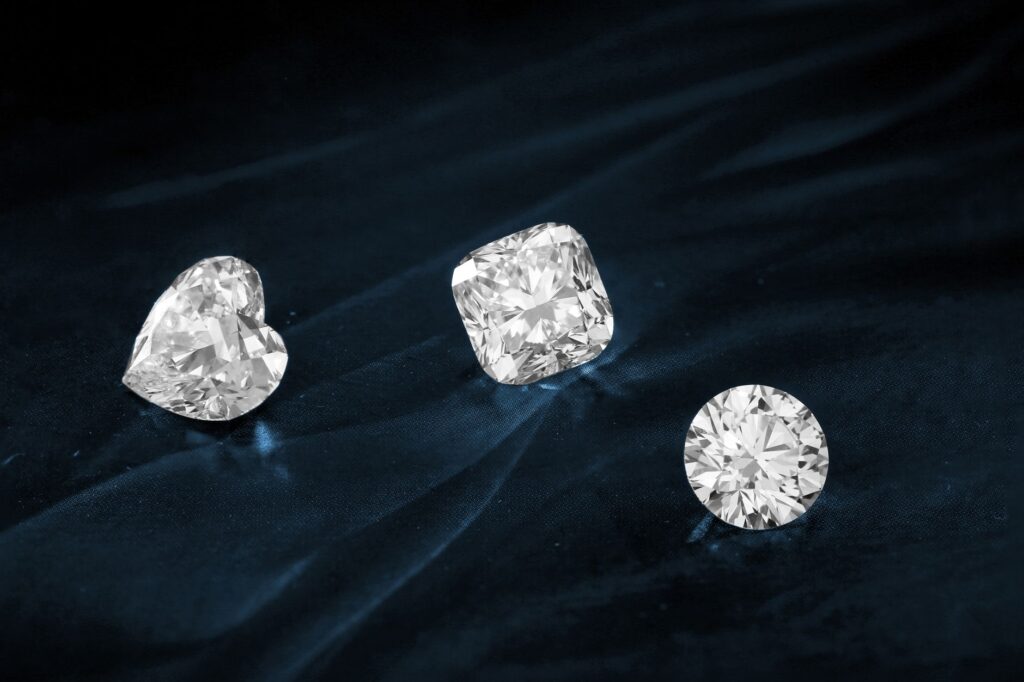
Fancy shapes often create a larger face-up impression than round diamonds of the same carat weight. Oval, marquise, and pear shapes tend to look especially elongated and can cover more finger length. Emerald and radiant cuts can also appear substantial because of their outline and spread.
For buyers using lab grown diamonds to maximize visible size, shape choice can be just as important as carat weight.
Factors That Change Apparent Size
Shape
Shape has a major influence on visual size. Round diamonds usually carry more weight below the surface compared with some elongated shapes. That means shapes like oval, marquise, and pear can appear larger per carat.
Here is a practical comparison. A 2 carat oval often looks longer and more finger-covering than a 2 carat round, even if the total weight is identical. Buyers focused on a larger look often prefer shapes that create that optical advantage.
Cut quality
Cut quality affects both sparkle and spread. A well-cut diamond balances brilliance, fire, and face-up appearance. A stone cut too deep may hide weight in the lower portion of the diamond, making it appear smaller from the top.
This is one of the easiest places to make a costly mistake. A heavier diamond is not necessarily the one that looks bigger. Good proportions often provide better visual value than simply chasing a higher carat number.
Depth and proportions
Depth percentage describes how tall the diamond is relative to its width. If the stone is too deep, more of the weight sits where it is harder to see. If the stone is too shallow, appearance and light performance can also suffer.
For rounds, buyers often compare diameter in millimeters alongside carat weight. For fancy shapes, length-to-width ratio and spread become especially important because those factors strongly affect the look on the hand.
Setting style
The setting can make a diamond look larger or smaller. A thin band can emphasize the center stone and increase its visual presence. A halo setting, which surrounds the center with smaller diamonds, can create a much larger overall look. A bezel setting can look sleek and protective, but may slightly reduce the apparent edge-to-edge size.
Lab grown diamonds often free up room in the budget for a more elaborate setting. In some cases, that combination produces more visual impact than putting every dollar into center-stone carat weight alone.
Color and clarity choices
Color and clarity do not directly change millimeter size, but they affect how the diamond is perceived. A bright, lively, eye-clean diamond may appear more impressive than a larger stone with visible inclusions or a noticeably tinted look. This is especially relevant in bigger sizes, where color and clarity characteristics can become easier to see.
One advantage of lab grown diamonds is that buyers can often maintain solid color and clarity grades while still moving into a larger size category.
Ring design and side stones
Three-stone settings, tapered baguettes, hidden halos, and certain band designs can all influence how large the center diamond appears. Side stones may increase the total visual footprint of the ring, while a high-profile solitaire can make the center stand out more.
Carat decisions should never be made in isolation from design. The full ring presentation matters.
Real-World Size Examples
1 carat round on a size 4 finger
On a smaller finger, a 1 carat round usually looks balanced and prominent. Its diameter of roughly 6.4 to 6.5 mm can cover a meaningful portion of the finger width without appearing oversized. For some buyers, this already feels like a substantial ring.
In this scenario, a lab grown diamond may make it possible to move from 1.00 to 1.50 carats without stretching the budget as far as a natural diamond would. That extra size will be very noticeable on a small finger.
1 carat round on a size 7 finger
On a size 7 finger, the same 1 carat round often looks more moderate. It still reads clearly as a diamond engagement ring center stone, but it may not have the same finger coverage it has on a smaller hand.
This is a common situation where lab grown diamonds make larger carats affordable in a very practical way. A buyer may find that 1.50 or 2.00 carats better matches their desired look, while still fitting within budget.
2 carat oval vs 2 carat round
A 2 carat round typically measures a little over 8 mm in diameter. A 2 carat oval may have dimensions around 10 x 7 mm, depending on the cut. That elongated outline often makes the oval look larger and cover more finger length.
The round may deliver a different style of brilliance and a classic look, but the oval often wins on perceived size. Buyers trying to maximize visual impact with a lab grown diamond frequently compare these two shapes closely.
0.90 carat vs 1.00 carat round
This is one of the best examples of why millimeters matter more than milestone numbers. A 0.90 carat round may measure around 6.2 mm, while a 1.00 carat round might measure around 6.4 to 6.5 mm. The visual difference is small.
In natural diamonds, that jump can come with a notable price increase because of the 1 carat threshold. In lab grown diamonds, the premium may still exist, but the total difference is often less painful. Even so, buyers should ask whether the extra cost creates enough visible benefit to matter.
1.50 carat round vs 2.00 carat round
This size jump is more visually meaningful. A 1.50 carat round typically sits around 7.3 to 7.4 mm, while a 2.00 carat round is often around 8.1 to 8.2 mm. That difference is easier to notice, especially once the ring is on the hand.
This is one of the areas where lab grown diamonds often change the buying decision most dramatically. A shopper who could only reach 1.50 carats in a natural diamond may find 2.00 carats realistic with lab grown.
2.00 carat round vs 3.00 carat round
The visual jump from 2 to 3 carats is substantial, but so is the increase in presence and attention. A 3 carat round can look bold and commanding, especially on smaller fingers. It also makes cut precision even more important, because poor proportions are easier to spot in larger stones.
Lab grown diamonds have made 3 carat sizes much more accessible than they once were, but buyers should be honest about lifestyle, comfort, and preferred style. Larger is not always better for every wearer.
Price vs Visual Benefit
Why price rises faster than visible size
As diamonds get larger, prices usually rise faster than their face-up appearance. That is true in both natural and lab grown categories, though the absolute cost difference is often far greater with natural diamonds. Buyers are paying for rarity, demand, and weight, not just visible surface area.
This creates an important buying principle. A 20 percent increase in carat weight rarely creates a 20 percent bigger-looking diamond. In many cases, the visual gain is meaningful but not dramatic.
How lab grown improves budget efficiency
The reason lab grown diamonds attract size-focused buyers is not that they break visual rules. It is that they make those visual gains much cheaper to obtain. Instead of paying a large premium for a modest size jump in a natural diamond, buyers may be able to make a larger upgrade for the same overall budget.
That can change the whole buying strategy. Rather than settling for a smaller magic-size natural diamond with lower color or clarity, a buyer may choose a larger well-cut lab grown diamond that better matches the desired look.
Comparison table: natural vs lab grown size flexibility
| Buyer Goal | Natural Diamond Budget Effect | Lab Grown Diamond Budget Effect | Practical Outcome |
|---|---|---|---|
| Reach 1.50 carats | May require compromises in quality or total budget | Often more attainable with balanced quality | Better flexibility on size and grades |
| Reach 2.00 carats | Can become dramatically more expensive | Often realistic for buyers who prioritize size | Major visual upgrade may fit same budget range |
| Choose better color and clarity at larger size | Costs can rise steeply | Usually easier to maintain stronger grades | Large diamond with fewer visible compromises |
| Allocate money to setting | Center stone often absorbs most of budget | More room for custom or more detailed setting | Better total ring design flexibility |
Diminishing returns still exist
Even with lab grown pricing, diminishing returns do not disappear. The jump from 2.00 to 2.25 carats may not feel as meaningful as the jump from 1.00 to 1.50. At some point, the better value may be stopping just below a size threshold, choosing a more spread-friendly shape, or improving cut rather than adding more weight.
A smart purchase is not simply the largest diamond available. It is the one that delivers the look you want at a price that still feels reasonable.
Who Should Size Up
Buyers who care most about visible presence
For some people, size is the top priority. They want stronger finger coverage, a more noticeable center stone, or a larger look in photos and daily wear. Lab grown diamonds can be especially useful in this case because they allow meaningful size increases without the same level of financial strain.
Buyers with larger finger sizes
Larger fingers often make smaller diamonds look more modest. A buyer with a size 8 finger may reasonably prefer a larger carat weight than someone with a size 4 finger. This is not about excess. It is about proportion.
Lab grown diamonds can help buyers find a size that looks balanced on the hand rather than simply hitting a standard carat milestone.
Buyers considering elongated shapes
Those choosing oval, marquise, or pear shapes often want maximum visual spread. Combining an elongated shape with lab grown pricing can produce impressive finger coverage for the budget.
Buyers who want fewer compromises elsewhere
Sometimes size-up decisions are not only about size. They are about avoiding harsh trade-offs. A lab grown diamond may let a buyer reach 2 carats while still staying in an eye-clean clarity range and near-colorless color range, rather than sacrificing multiple quality factors just to hit a target weight.
Who Can Save Money
Buyers comfortable just under magic sizes
Staying slightly below milestone weights can be a smart move. A 0.90 carat, 1.40 carat, or 1.90 carat diamond may look very close in size to the next benchmark while costing less. This principle is well known with natural diamonds, but it can still apply to lab grown stones.
Buyers who prioritize cut over weight
A well-cut diamond often gives more long-term satisfaction than a heavier but poorly proportioned stone. If budget is limited, choosing excellent cut and strong face-up spread in a slightly smaller size can be wiser than buying extra weight hidden in depth.
Buyers using design to increase presence
A halo, a slim band, or a well-planned three-stone design can create more visual impact without requiring a large center-stone jump. For some buyers, this produces a better balance of budget and appearance than simply increasing carat weight.
Buyers who do not need a dramatic size statement
Not everyone wants a bold ring. Some prefer a classic, practical, lower-profile look for work, comfort, or personal style. In those cases, the affordability of larger lab grown diamonds is helpful, but it does not mean you should automatically buy the biggest stone you can.
Common Buyer Mistakes
Chasing the carat number instead of the measurements
This is one of the most frequent mistakes. Buyers become attached to milestone numbers and overlook the actual millimeter dimensions. A diamond that weighs more but faces up small may not deliver the look they expected.
Ignoring shape effects
A buyer focused only on round diamonds may miss the fact that an oval or marquise could offer more visible size for the same weight. Shape is one of the strongest tools for maximizing face-up appearance.
Buying too deep a diamond
Deep stones can hide weight where it is less visible. This is especially disappointing when the main reason for buying lab grown is to get a larger look. The extra weight needs to be working for you visually.
Overpaying for magic sizes
Milestone carat weights can carry psychological appeal. But the difference between 0.97 and 1.00 carat, or 1.92 and 2.00 carats, may be tiny to the eye. A buyer who focuses on visible spread rather than the number alone often gets better value.
Neglecting finger size
Photos online can be misleading because they rarely show how a diamond will look on your specific hand. A stone that seems large in isolation may appear moderate once worn, or vice versa.
Assuming lab grown means “buy the biggest possible”
Affordability creates opportunity, but it can also encourage overbuying. A very large diamond may not suit the wearer’s taste, lifestyle, or setting choice. The goal should be value and satisfaction, not maximum weight for its own sake.
Overlooking certification and quality screening
Larger size does not remove the need for proper grading and quality review. Lab grown diamonds should still be evaluated for cut, proportions, color, clarity, fluorescence when relevant, and overall appearance. A grading report from a recognized laboratory remains important.
How to Evaluate a Larger Lab Grown Diamond Wisely
Start with your visual goal
Before comparing diamonds, decide what you want the ring to look like on the hand. Are you aiming for subtle, balanced, prominent, or bold? This helps determine whether the right answer is 1.25, 1.75, 2.00, or another size altogether.
Use millimeter dimensions as a primary filter
Carat weight should be paired with measurements. For rounds, look closely at diameter. For fancy shapes, evaluate length, width, and ratio. This tells you far more about visible size than the carat number alone.
Do not trade away cut for size
If a larger diamond is the goal, preserve cut quality as much as possible. Brightness, sparkle, and balance matter. A bigger stone that looks lifeless can feel disappointing despite its weight.
Choose practical color and clarity ranges
For many buyers, eye-clean clarity and near-colorless appearance are enough. Lab grown diamonds often make these combinations accessible at larger sizes, which is one of their strongest value advantages. There is usually little reason to overpay for technical perfection if it does not produce a visible benefit.
Think about the full ring, not only the center stone
Band width, prong style, side stones, and setting height all influence the final visual result. A slightly smaller center stone in a better-designed setting can outperform a larger stone in a design that visually compresses it.
Frequently Asked Questions
Do lab grown diamonds look different from natural diamonds in larger carat sizes?
Visually, a lab grown diamond can look the same as a natural diamond when comparable in cut, color, clarity, and shape. Larger sizes do not automatically reveal that a stone is lab grown. What becomes more noticeable in larger diamonds is quality variation, such as tint, inclusions, or poor proportions, regardless of origin.
Are larger lab grown diamonds durable enough for daily wear?
Yes. Lab grown diamonds are real diamonds and have the same hardness as natural diamonds. They are suitable for everyday jewelry, including engagement rings, as long as the setting is secure and the ring is worn with normal care.
Why does a 2 carat diamond not look twice as big as a 1 carat diamond?
Carat measures weight, not width. As a diamond gets heavier, some of that increase is distributed in depth as well as width. The face-up size increases, but not in direct proportion to the carat number. That is why a 2 carat diamond looks larger, but not literally twice as wide.
Is it better to buy a larger lab grown diamond or a smaller natural diamond?
That depends on your priorities. If visible size, budget efficiency, and flexibility matter most, a larger lab grown diamond may be the stronger fit. If natural origin is personally important and you are comfortable with a smaller size, a natural diamond may still be the right choice. Neither option is universally better for every buyer.
Do larger lab grown diamonds hold value the same way natural diamonds do?
Buyers should generally not expect lab grown diamonds to have the same resale patterns or value retention assumptions as natural diamonds. Lab grown diamonds are often chosen for purchase-price value and visual size rather than resale performance. This is an important trade-off to understand before buying.
What shapes give the biggest look for the money?
Oval, marquise, and pear shapes often create a larger visual impression per carat than round diamonds. Emerald and radiant cuts can also appear generous depending on proportions. The best shape depends on personal style, but elongated shapes often maximize finger coverage.
Should I buy just under a milestone carat weight?
Often, yes. Diamonds just under benchmark sizes can offer similar face-up appearance at a better price. This is a useful strategy in both natural and lab grown diamonds, though the cost savings may be more dramatic in natural stones.
Can a setting make a lab grown diamond look larger?
Yes. Halo settings, slim bands, elongated shapes, and certain prong styles can all increase perceived size. The setting will not change the diamond’s actual measurements, but it can change how large the ring looks overall.
Conclusion
Why lab grown diamonds make larger carats affordable is ultimately a question of budget efficiency. Because lab grown diamonds usually cost less than natural diamonds of similar visible quality, buyers often gain access to larger carat weights, better shapes for finger coverage, or stronger quality grades without the same financial pressure.
That affordability matters most when it is paired with smart evaluation. Carat weight alone does not determine appearance. Face-up size, shape, cut quality, depth, setting style, and finger size all influence how large a diamond will actually look once worn.
The best value is rarely just the biggest number on a grading report. It is the diamond that delivers the look you want, with sound proportions and balanced quality, at a price that feels justified. For buyers who want more visible size for their money, lab grown diamonds often provide a practical and compelling way to reach that goal.